Nevada’s Combination License Comes Before Any Tag
Navigating the world of hunting licenses can feel like trying to solve a complicated puzzle, especially when you're dealing with a state like Nevada that has specific requirements before you even think about applying for a tag. Many hunters, both residents and those dreaming of an epic western hunt, often hit a roadblock when they realize there's a foundational license they need before they can enter any of the big game draws or purchase over-the-counter permits. This comprehensive guide is designed to cut through that confusion, clearly outlining what Nevada's Combination License is, why it's absolutely essential, and how to get yours squared away so you can focus on the exciting part: planning your next adventure in the Silver State.
Understanding Nevada's Foundation for Hunting
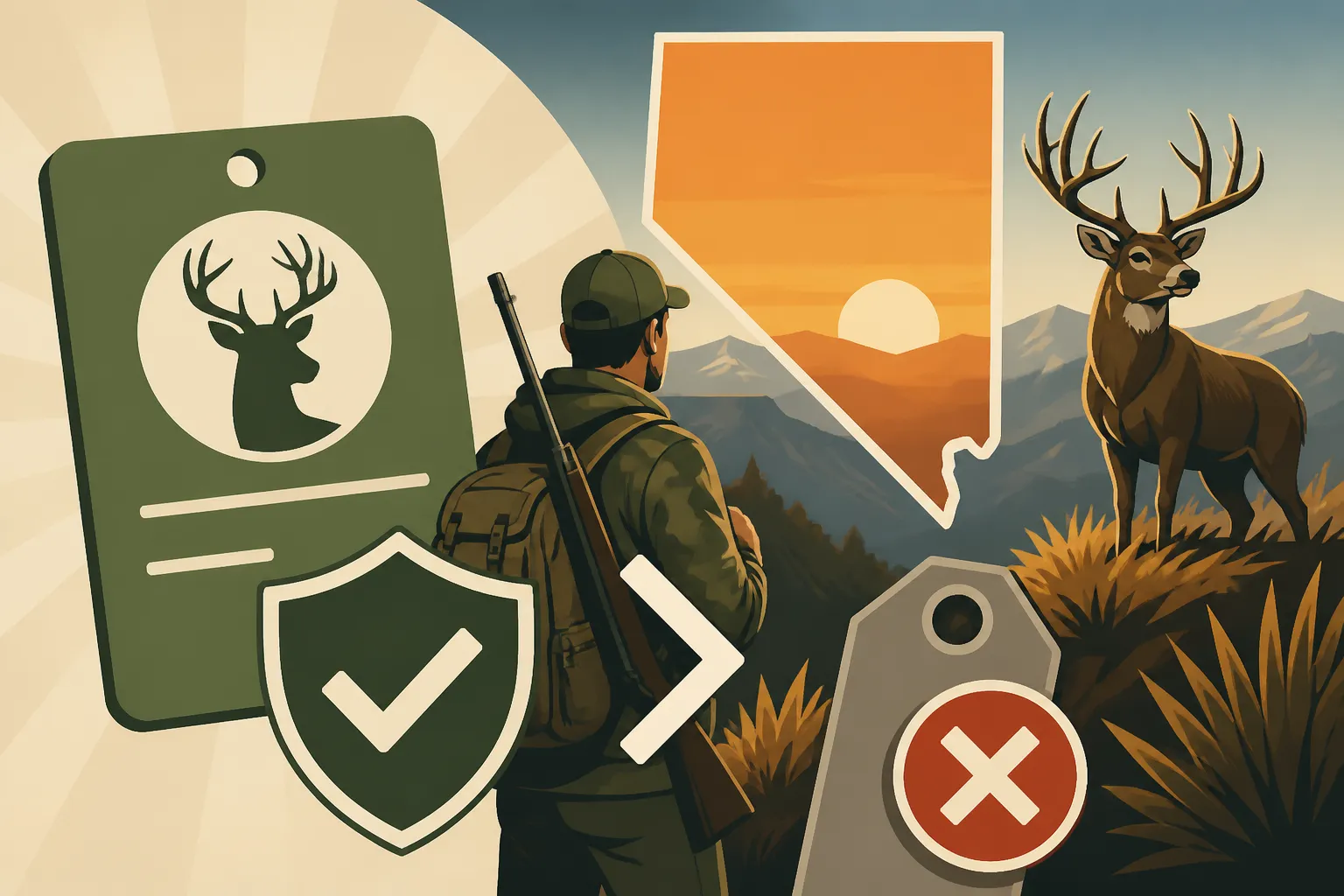
Before you can even dream of drawing that coveted mule deer or elk tag in Nevada, or even just heading out for a day of chukar hunting, there's a critical first step that often trips up new applicants: securing your Nevada Combination License. Think of it as your all-access pass to the state's wildlife opportunities, but it's crucial to understand it's just the entry ticket, not the whole show.
The "Base License" Concept
The Nevada Combination License isn't a tag; it's the fundamental license that validates your eligibility to apply for tags or purchase over-the-counter permits. It’s the base layer, the prerequisite, the very first item on your hunting checklist. Without it, you cannot participate in any big game draw, nor can you buy a small game, upland bird, or even a fishing license on its own. This often leads to frustration, especially for hunters new to western draw systems, who might assume they only need to pay for their desired tag.
Imagine trying to get a specialty driver's license, like a commercial driver's license (CDL), without first obtaining a standard driver's license. It just doesn't work. The Combination License serves that exact purpose in Nevada. It confirms you've met the basic requirements, such as hunter education, and provides the framework within which all other hunting and fishing privileges operate. It's truly the unlock for everything else, and many seasoned hunters will tell you that the easiest mistake to make is to forget this crucial first step, especially when the big game application period rolls around. Neglecting to purchase this base license before the application deadline means your big game applications will be rejected, a heart-wrenching scenario after years of building points.
Resident vs. Nonresident Requirements
While the necessity of the Combination License applies to everyone looking to hunt or fish in Nevada, the pricing structure and some of the eligibility criteria differ significantly between residents and nonresidents. Understanding these distinctions is key to a smooth application process.
For Nevada residents, proving residency typically involves a minimum duration of physical presence in the state, often six months, along with documentation like a driver's license, voter registration, or utility bills in your name. Once confirmed, residents benefit from substantially lower fees for the Combination License, reflecting their ongoing contribution to the state's economy and conservation efforts through taxes and other means. It’s a way for the state to acknowledge and support its local hunting community. Many resident hunters pick up their combination license annually as a matter of routine, often renewing it at the same time they apply for various draw tags or plan their fishing trips. This annual renewal is a straightforward process once your initial information is established in the Nevada Department of Wildlife (NDOW) system.
Nonresidents, on the other hand, face a higher price point for the Combination License. This higher fee is standard practice across most western states, designed to help fund wildlife management and conservation initiatives within Nevada, given that nonresidents typically visit for specific hunting opportunities without the same long-term residency contributions. It's an investment, pure and simple, but one that opens the door to some of the most sought-after big game hunting in the country. For many nonresidents, securing The Nonresident Nevada Combination License is the first tangible step toward realizing a dream hunt. While the cost might initially seem steep when combined with application fees and potential tag costs, it’s a necessary expenditure that ultimately supports the very wildlife populations and habitats that draw hunters from all over. Many planning tools, like those found on GoHunt, emphasize budgeting for this upfront cost when planning a Nevada hunting strategy.
What the Nevada Combination License Actually Covers
The name "Combination License" isn't just a catchy title; it accurately reflects the broad spectrum of outdoor activities it encompasses. It's a versatile permit that goes beyond just hunting, providing a singular document that serves multiple purposes for the outdoor enthusiast in Nevada.
Hunting Privileges
At its core, the Combination License is the gateway to all hunting opportunities in Nevada. Once you possess it, you are eligible to pursue various game species, provided you have the appropriate tags or stamps in addition to this base license. This includes big game animals like mule deer, elk, bighorn sheep, and pronghorn, for which you must participate in the annual draw and be successful in obtaining a tag. For anyone hoping to draw a Mule Deer Are the Reason Most Hunters Apply in Nevada or chase some of Nevada's impressive Nevada Elk Herds Grew From Nothing Into a Trophy Draw, this license is non-negotiable.
Beyond big game, the Combination License also covers your ability to hunt small game, upland birds, and migratory game birds (with the appropriate federal and state stamps). This means you're all set to chase cottontails, jackrabbits, or pheasants across Nevada’s diverse landscapes. Crucially, it legitimizes your presence in the field as a hunter, demonstrating you've fulfilled the primary legal requirement to engage in hunting activities. Without it, even if you managed to obtain a tag by some administrative error, you would technically not be legally hunting. It ensures that every hunter contributes to the system that manages and conserves Nevada's wildlife resources, allowing future generations to experience these same opportunities.
Fishing Privileges
One of the often-overlooked benefits of the Nevada Combination License is that it includes basic fishing privileges. This is fantastic news for those who enjoy a multi-faceted outdoor experience or who want to fill downtime during a hunting trip. Imagine you're waiting for your evening deer movement, and you have a nearby stream or reservoir – with your Combination License, you can legally cast a line.
Nevada offers incredible fishing, from the world-class trout waters of the Truckee River and Lake Tahoe to the bass fisheries of Lake Mead and Lahontan Reservoir. The Combination License allows you to pursue these opportunities without needing to purchase a separate fishing license. This adds significant value, especially for nonresidents who are already investing a substantial amount in their hunting venture. It's a genuine convenience, consolidating multiple outdoor pursuits under one license. Just remember, while the base fishing privilege is included, specific fishing regulations, such as trout stamps for certain areas or special permits for particular species, might still apply. Always check the current fishing regulations to ensure you're fully compliant with all local rules and requirements.
Trapping Privileges
While a more niche pursuit, the Combination License also grants the holder basic trapping privileges. This means that, in conjunction with any additional required permits or endorsements specific to trapping, you can participate in regulated trapping seasons for furbearers in Nevada. Trapping is a highly regulated activity, often requiring significant knowledge of species, methods, and specific reporting requirements.
For those interested in this aspect of wildlife management and harvest, the Combination License is the initial hurdle. Like hunting and fishing, trapping is managed to ensure sustainable populations and ethical practices. While most hunters will likely focus on the hunting and fishing components, the inclusion of trapping privileges further solidifies the "combination" aspect of the license, making it a truly comprehensive outdoor permit. If trapping is on your radar, make sure to delve into the specific trapping regulations published by NDOW, as additional educational requirements or permits are almost certainly needed beyond the base Combination License.
Step-by-Step: How to Purchase Your Combination License
Getting your Nevada Combination License is a pretty straightforward process, thanks to modern technology, but it does require attention to detail, especially regarding hunter education requirements. Knowing your options and what to expect can save you a lot of hassle.
Online Portal Walkthrough
For the vast majority of hunters today, purchasing their Combination License happens online through the Nevada Department of Wildlife (NDOW) website. It's by far the most convenient method and allows you to handle everything from the comfort of your home.
First, if you don't already have one, you'll need to create an account on the NDOW licensing portal. This involves providing personal details such as your name, address, date of birth, and contact information. This account will become your central hub for all Nevada hunting and fishing activities, including applying for draws, checking Nevada Draw Results Land at the End of May, and purchasing other permits. During this setup, you'll be prompted to provide your hunter education information. This is where many new hunters need to be careful. Nevada has a Nevada Hunter Education Birth Year Cutoff, meaning anyone born after January 1, 1960, must have a valid hunter education certificate. If you completed your hunter education in another state, Nevada generally accepts it. You'll need to input your hunter education certificate number and the state of issuance. NDOW will then verify this information, which can sometimes take a little time if the records aren't immediately accessible. It’s a critical step, as your license won’t be issued without proper verification. Once your account is set up and hunter education is verified, you can select the Combination License, add it to your cart, and proceed to payment. The system is designed to be user-friendly, guiding you through each step.
In-Person Options
While online is king, NDOW still offers in-person options for purchasing your Combination License, which can be particularly useful if you have specific questions, need immediate assistance, or simply prefer to deal with a person directly.
You can visit any of the main NDOW regional offices located in cities like Reno, Las Vegas, and Elko. These offices have staff dedicated to assisting hunters and anglers with licenses, permits, and general information. This can be a great option if you're a nonresident and need to understand specific nuances of your application or residency verification. Additionally, NDOW partners with numerous authorized license agents across the state. These are typically sporting goods stores, outdoor retailers, or even some convenience stores that are equipped to issue licenses. Places like Sportsman's Warehouse or Cabela's often serve as authorized agents, offering a convenient stop for hunters stocking up on gear. The advantage of using an agent is often accessibility, as they are usually more widespread than NDOW offices. The disadvantage might be less specialized knowledge if you have complex questions, though they can certainly handle the standard transaction. Regardless of whether you go online or in person, ensure all your details are accurate and that your hunter education proof is ready.
Hunter Education Requirement
The hunter education requirement is one of the most significant prerequisites for obtaining your Nevada Combination License and, by extension, any hunting tag in the state. Nevada is serious about safety and responsible hunting.
As mentioned, anyone born on or after January 1, 1960, must possess proof of having successfully completed a hunter education course. This rule is designed to ensure that all hunters have a foundational understanding of firearm safety, wildlife conservation, ethical hunting practices, and basic hunting laws. If you are subject to this rule and haven't completed a course, you will need to do so before you can purchase your Combination License. NDOW offers approved courses, often a combination of online learning and a mandatory field day, which covers practical skills like safe firearm handling and archery. However, Nevada is also quite accommodating for those coming from other states. The state generally accepts hunter education certifications from any other U.S. state or Canadian province, provided the course was approved by the International Hunter Education Association (IHEA-USA).
To verify your out-of-state certification, you'll typically enter the certificate number and the issuing state into the NDOW online licensing system. It's highly recommended to do this well in advance of any application deadlines. The system needs to recognize and validate your certificate before it will allow you to proceed with purchasing a license. If there's an issue with verification, you might need to contact NDOW directly to clarify or provide additional documentation. Don't wait until the last minute of the application window, because verification issues can cause significant delays and potentially lead to missing out on a draw. For more details on who needs hunter education, check out Who Nevada's 1960 Hunter Education Rule Covers and How Nevada Verifies an Out-of-State Certification.
Cost Breakdown: Resident and Nonresident Pricing
Let's talk brass tacks: what's this Combination License going to set you back? Understanding the costs upfront is crucial for budgeting your Nevada hunting adventure, especially given the state's reputation for highly sought-after tags.
Current Resident Costs
For Nevada residents, the Combination License represents a very reasonable investment for the array of opportunities it unlocks. The state aims to keep these foundational costs accessible for its local sportsmen and women, encouraging participation in hunting and fishing. As of the most recent regulations, a resident adult Combination License typically costs around $38.
This fee provides the base for all your hunting and fishing needs for the licensing year. While this covers your eligibility to hunt and fish, it's important to remember that it doesn't include specific tags for big game (like deer or elk), nor does it include federal stamps for migratory birds (like the Federal Duck Stamp) or certain state endorsements (like a Nevada Migratory Bird Stamp or Archery/Muzzleloader validations). These are additional purchases you would make on top of your Combination License, as needed for your specific hunting pursuits. However, for a general all-around hunting and fishing base, the resident Combination License offers excellent value. For example, a resident planning to hunt small game in the fall and fish for trout in the spring finds this single license covers their primary needs. Always check the official NDOW website for the absolute most current pricing, as fees can sometimes be adjusted.
Current Nonresident Costs
For nonresidents, the price tag for the Nevada Combination License is significantly higher than for residents. This is standard practice in western states, reflecting the unique draw and conservation burden placed on their wildlife resources by out-of-state hunters. A nonresident adult Combination License currently sits around $155.
While this might feel like a substantial upfront cost, it's a necessary investment for any nonresident planning to hunt or fish in Nevada. Without it, you cannot apply for any big game draws, nor can you purchase any general hunting or fishing permits. Think of it as your passport to the Nevada draw system and its incredible opportunities. This fee contributes directly to the Nevada Department of Wildlife's efforts in managing healthy wildlife populations, habitat improvement, law enforcement, and other crucial conservation programs that benefit all species across the state, including the trophy animals that draw so many hunters. Many nonresidents use platforms like GoHunt to thoroughly plan their Western hunting strategies, and these tools consistently highlight the Combination License as a fixed, mandatory cost in any Nevada hunting budget. It's often the first expense listed when calculating the total cost of a The All-In Price of a Nevada Mule Deer Hunt or a Why a Nevada Nonresident Elk Tag Costs So Much.
Youth and Senior Discounts
Nevada recognizes the importance of fostering hunting traditions in younger generations and honoring its senior hunters. As such, there are often reduced rates for youth and senior Combination Licenses, making these activities more accessible.
For youth, specific age categories (e.g., under 12, 12-17 years old) will have different pricing structures. Typically, the youth combination license is offered at a significantly reduced rate or even free for very young hunters, provided they meet hunter education requirements for their age group. This encourages parents and guardians to introduce their children to hunting and fishing early on, building a lifelong appreciation for the outdoors. Similarly, Nevada often provides discounts for senior residents, typically those 65 years or older. These senior rates acknowledge the long-standing contributions of older residents to the hunting and fishing community. These reduced fees are a testament to Nevada’s commitment to making wildlife recreation accessible across all age demographics. Always consult the official NDOW regulations for the precise age cutoffs and current pricing for Nevada Youth and Senior License Pricing to ensure you're getting the most accurate and up-to-date information.
Here’s a simplified breakdown of typical Combination License costs (always verify current fees on NDOW's official site):
| License Type | Estimated Resident Cost | Estimated Nonresident Cost | Notes |
|---|---|---|---|
| Adult Combination License | $38 | $155 | Required for all hunting/fishing; unlocks tag applications. |
| Junior Combination License | $15 | $15 | For hunters 12-17 years old (ages may vary, check current regs). |
| Senior Resident License | $15 | N/A | For residents 65+ (requires proof of age/residency). |
| 1-Day Fishing License | $9 | $13 | Alternative for fishing only, if no hunting planned. |
| 5-Day Fishing License | $19 | $35 | Alternative for fishing only, if no hunting planned. |
Note: Prices are estimates and subject to change. Always check the official Nevada Department of Wildlife (NDOW) website for the most current fees.
Timing is Everything: When to Get Your License
In the world of draw-based hunting, timing isn't just important; it's absolutely critical. Missing a deadline by even a day can mean missing an entire hunting season for your desired species. The Nevada Combination License is at the forefront of this timing sensitivity.
Before Any Tag Application
This cannot be stressed enough: you must possess a valid Nevada Combination License BEFORE you can apply for any big game tags in the state. This includes highly sought-after species like mule deer, elk, bighorn sheep, and pronghorn. The application period for Nevada's big game draw is typically from late March to mid-May. For instance, Nevada Applications Run March 23 to May 13 for many big game species.
Your Combination License needs to be active and registered to your NDOW account before you submit your draw applications. The online system will automatically verify if you hold a current Combination License when you attempt to apply for tags. If you don't, it will prevent you from proceeding with your application, or worse, your application might be deemed incomplete and rejected. Imagine spending years building bonus points for elk, meticulously researching units, only to have your application denied because you forgot to purchase your annual Combination License by the deadline. It's a heartbreaking, but entirely avoidable, scenario. Many hunters, especially nonresidents, will purchase their Combination License in February or early March, giving themselves plenty of lead time before the big game application period even opens. This ensures that their hunter profile is fully validated and ready to go when it’s time to choose their units and submit their choices.
Planning for Over-the-Counter Tags
While big game tags are primarily draw-based, many other hunting and fishing opportunities in Nevada are available over the counter (OTC). This includes general small game, upland bird seasons (like chukar and quail), and all general fishing. Even for these, your Combination License is a prerequisite.
For example, if you plan a late-summer trip to hunt chukar in the Ruby Mountains, you'll need your Combination License before you can purchase that upland bird stamp or simply head afield. Unlike the big game draw, there isn't a hard application deadline for purchasing these OTC permits, but you still need your Combination License in hand before you buy them or go afield. The benefit here is flexibility; you can often purchase your Combination License and then your small game permit even just days before your hunt, or even on the way to your destination if you stop at an authorized agent. However, it's always wise to purchase it well in advance to avoid any last-minute technical glitches or connectivity issues in remote areas. A good rule of thumb is to acquire your Combination License at the beginning of the calendar year if you plan on any hunting or fishing activities throughout the year, regardless of whether they are draw-based or OTC.
Avoiding Common Pitfalls
The most common pitfalls related to the Combination License almost always boil down to procrastination and overlooking critical details.
Firstly, never wait until the last day of the big game application period to purchase your Combination License. Technical issues with the NDOW website, payment processing delays, or hunter education verification problems can all derail your plans if you've left it to the wire. Give yourself a buffer of at least a week, preferably more. Secondly, ensure all your hunter education information is accurately linked to your NDOW account. If there's a discrepancy, resolve it with NDOW customer service before application season. Thirdly, understand the license year. Nevada's license year typically runs from March 1st to the end of February of the following year. This means you’ll need a new Combination License each year, even if you are only applying for bonus points without seeking a tag. Finally, if you're part of a group application for big game, ensure every member of your party has their Combination License in place before the lead applicant tries to submit the group application. A single missing license can invalidate the entire group's submission.
Beyond the Combination License: Other Permits and Stamps You Might Need
While the Nevada Combination License is your foundational entry ticket, it's crucial to understand that it’s just the beginning. Depending on what and how you plan to hunt, you’ll likely need additional permits and stamps layered on top of your base license.
Specific Big Game Tags
This is where the real excitement and challenge often lie for many hunters. The Combination License simply grants you eligibility to apply for big game tags; it does not come with any big game tags itself. Nevada's big game hunting is primarily managed through a limited-entry draw system. This means you must apply during a specific period (typically March to May) for a chance to draw a tag for species like mule deer, elk, bighorn sheep, or pronghorn.
Each species, and often each unit or hunt choice within a species, has a separate application fee and, if successful, a separate tag fee. The draw process itself is competitive, especially for trophy units or high-demand species. For example, to hunt mule deer, you'd apply for specific hunt codes based on units and season dates after purchasing your Combination License. If successful, you'd then purchase the actual mule deer tag. The same goes for elk; after securing your Combination License, you would apply for specific Nevada Elk Rifle Hunts Stretch From October Into December or Nevada Elk Muzzleloader Timing by Unit tags. This system allows Nevada to carefully manage its wildlife populations, ensuring sustainable harvest levels and quality hunting experiences. Understanding how the draw works, Reading a Nevada Hunt Unit Before You Apply, and strategizing your choices is a complex topic, often requiring years of dedicated research and point building. GoHunt offers extensive resources and draw odds data to help hunters navigate this challenging process effectively.
Specialty Stamps and Permits
Beyond big game tags, there are several other specialty stamps and permits you might need, depending on your hunting style and target species. These are generally inexpensive additions but are legally required.
- Migratory Bird Stamp: If you plan to hunt ducks, geese, doves, or any other migratory game birds, you'll need to purchase a Nevada Migratory Bird Stamp in addition to your Combination License. Hunters also need a Federal Duck Stamp if pursuing waterfowl. These stamps contribute directly to wetland and waterfowl conservation efforts.
- Archery Validation: For hunters who choose to pursue big game with a bow and arrow during archery-only seasons (e.g., Nevada's August Archery Deer Season Opens the Year or Nevada Elk Archery Season Runs), you'll need to purchase an Archery Validation. This is an endorsement that signifies your intent to hunt with archery equipment and often comes with its own set of regulations regarding draw weight, broadhead types, and crossbow legality.
- Muzzleloader Validation: Similarly, if you plan to hunt big game during a muzzleloader-only season (e.g., Muzzleloader Deer Runs One Week in Select Nevada Units), you’ll need a Muzzleloader Validation. This endorsement often has specific rules regarding projectile types, powder, and whether optics are allowed.
These validations are typically purchased online through your NDOW account after you have your Combination License. They act as an official record of your intent to participate in these specialized hunts and contribute to the specific management of those seasons and methods. Always ensure you have all the necessary validations before heading into the field, as enforcement officers regularly check for these specific endorsements.
Conservation and Habitat Stamps
Many states, including Nevada, incorporate various conservation or habitat stamps into their licensing structure. These are often small additional fees attached to your primary license or specific tags, and their purpose is critical: to generate funds specifically earmarked for wildlife habitat restoration, land acquisition, and other conservation projects.
While not always a standalone stamp you explicitly "buy" in the same way as a Federal Duck Stamp, these fees are often integrated into the cost of your Combination License or big game tags. They are a direct way for hunters and anglers to contribute to the long-term health and sustainability of Nevada's diverse ecosystems and wildlife populations. These funds are vital for maintaining the very resources that make hunting and fishing possible, from improving winter ranges for mule deer to enhancing wetland areas for waterfowl. Understanding that a portion of your license and tag fees goes directly back into conservation can make these costs feel more like an investment in the future of hunting.
Managing Your Nevada Account and License Information
Once you've navigated the initial steps of acquiring your Nevada Combination License and any associated tags or permits, it's essential to understand how to manage your account and keep your information current. The NDOW online portal is your go-to resource for virtually everything.
NDOW's Online Portal
Your online account with the Nevada Department of Wildlife is more than just a place to buy licenses; it's your personal hub for all your hunting and fishing records in the state. Regularly checking and updating this portal is key to a smooth hunting career in Nevada.
Through this portal, you can:
- Check Draw Results: This is often the most anxiously awaited feature. After the big game draw, you can log in to see if you were successful in drawing a tag. Nevada Draw Results Land at the End of May, and this portal is where you'll find out your fate.
- View License and Tag History: The portal keeps a comprehensive record of all the Combination Licenses, big game tags, and specialty permits you've purchased over the years. This history can be useful for your personal records, for verifying past hunts, or if you need to recall specific license numbers.
- Update Personal Information: If your address, phone number, or email changes, it's crucial to update it promptly in your NDOW account. Incorrect contact information can lead to missed notifications regarding draws, regulatory changes, or important wildlife alerts.
- Manage Bonus Points: For draw-based species, your bonus points accumulate in your account. The portal allows you to track your points and understand how Nevada Squares Your Bonus Points Into Draw Chances for future applications. This is vital for long-term draw strategy.
Familiarizing yourself with the layout and features of the NDOW online portal will empower you to manage your hunting profile effectively and stay informed about all opportunities and requirements in Nevada.
Lost or Damaged Licenses
It happens to the best of us: a license gets misplaced, washed out, or simply wears out after a tough week in the field. Thankfully, replacing a lost or damaged Nevada Combination License is usually a simple process.
The easiest way to get a replacement is often directly through your NDOW online account. Most licensing systems allow you to reprint your license and any associated tags multiple times. Simply log in to your account, navigate to your license history, and select the option to print or reprint your current licenses and tags. This is often available 24/7, which is incredibly convenient if you discover a lost license right before heading out on a weekend hunt. If you don't have access to a printer or prefer an in-person solution, you can also visit an NDOW office or an authorized license agent. They can look up your record in the system and print a duplicate for you, often for a small reprint fee. Always carry your physical license and tags with you while hunting, as electronic copies on a phone are generally not considered valid legal possession in the field. Having a backup plan for reprints can save a lot of stress during your hunt.
Understanding License Year
Each state operates on a specific "license year," and understanding Nevada's cycle is important for knowing when to renew your Combination License and avoid any gaps in coverage.
In Nevada, the big game application period often occurs within the existing license year, meaning you need the current year's Combination License to apply for hunts that will take place in the following license year. For example, Nevada's license year typically runs from March 1st through the last day of February. So, if you plan to apply for the big game draw in April, you'll need to have purchased the Combination License that is valid for the current March 1st to February 28/29th period. Then, if you draw a tag for a hunt that occurs later in the year or even into the next calendar year, that same Combination License will cover your eligibility for that drawn tag. However, you will need to purchase a new Combination License when the next license year rolls around on March 1st if you intend to apply for subsequent draws or hunt any other species. This annual renewal process ensures that all hunters contribute consistently to wildlife management efforts each year they participate in the state's outdoor activities.
Disclaimer
Please note that hunting regulations and fees are subject to change. While this guide provides comprehensive and up-to-date information at the time of writing, it is absolutely essential to consult the official Nevada Department of Wildlife (NDOW) website or their current regulations pamphlet for the most accurate and legally binding information before participating in any hunting or fishing activities.