Pronghorn Across Nevada’s Open Valleys
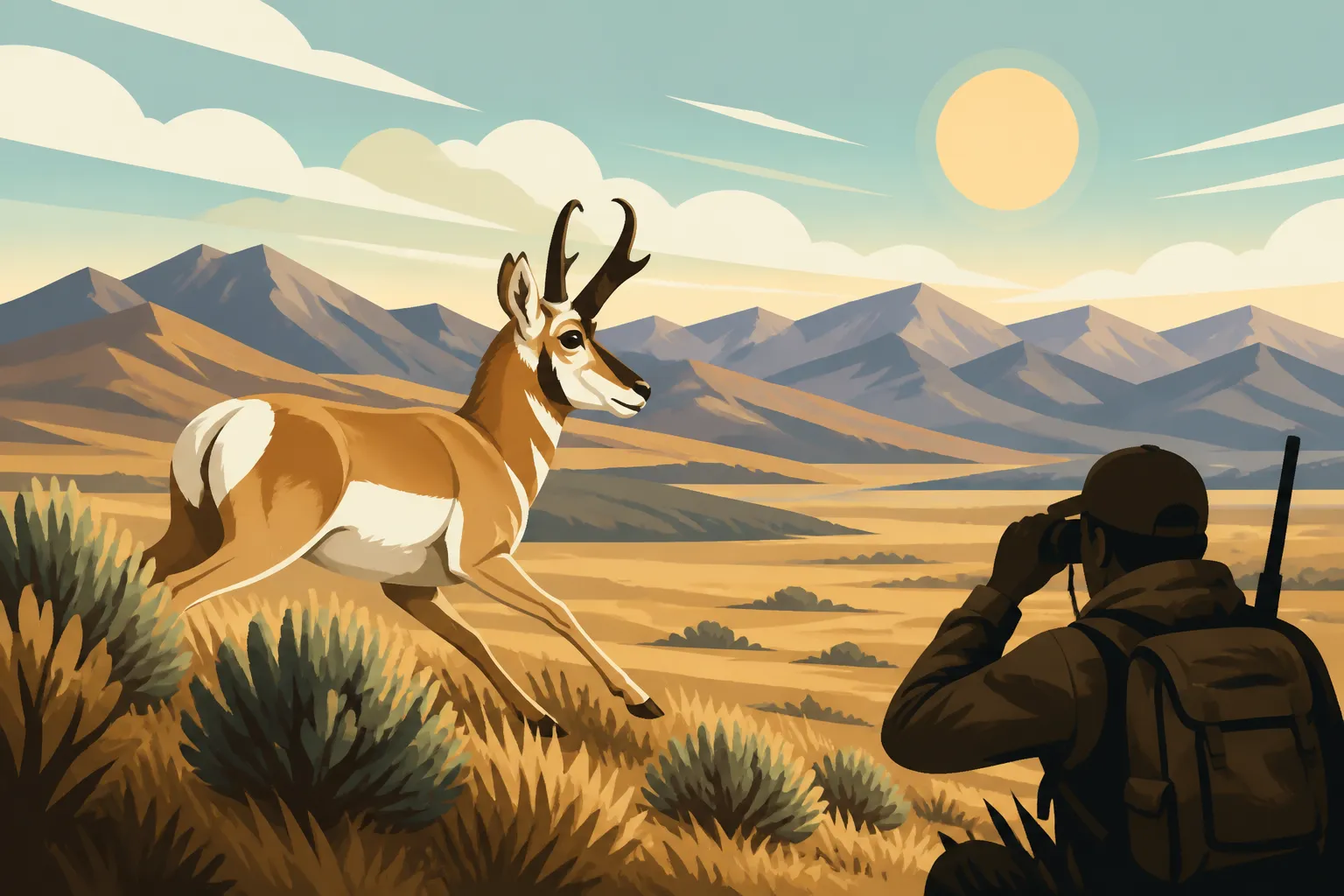
There's nothing quite like the sight of a pronghorn buck standing sentinel on the vast, open plains of Nevada. Many hunters feel a unique blend of excitement and frustration when pursuing these incredible animals. Their legendary eyesight, blistering speed, and preference for wide-open country make them an undeniable challenge, leading to many blown stalks and long-distance observation sessions. This guide will walk you through everything you need to know to tilt the odds in your favor, from understanding their habits to mastering the art of the open-country stalk.
Understanding Nevada's Pronghorn Population and Habitat
Nevada's landscape, characterized by its expansive sagebrush flats and sparse mountain ranges, is a haven for pronghorn. These unique animals, often mistakenly called "antelope," are North America's fastest land mammal, perfectly adapted to survival in wide-open country. Their very existence is tied to these vast, unfragmented spaces, making them a true icon of the Great Basin.
Where Pronghorn Numbers Are Strongest
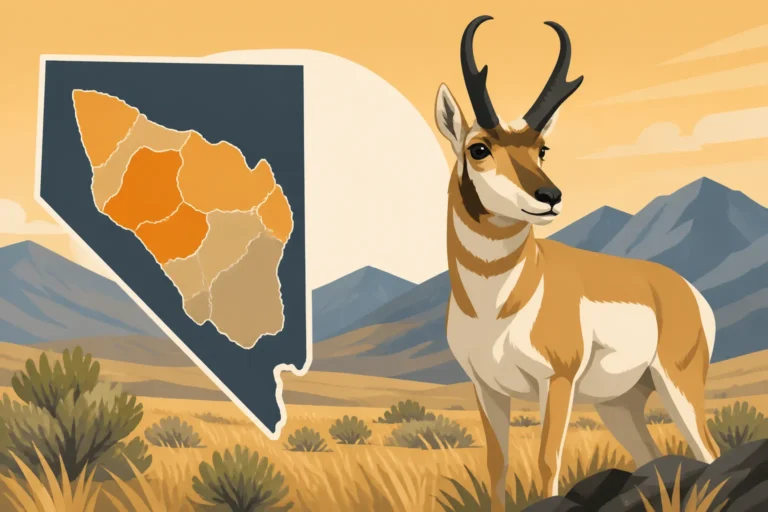
When you picture pronghorn, you're likely thinking of exactly the kind of country that dominates much of Nevada. These animals thrive in the state's expansive, relatively flat to rolling sagebrush steppes and semi-desert grasslands. They need that wide-open visibility to spot predators and that specific forage to sustain their diet. You'll find strong populations scattered throughout central, eastern, and northern Nevada, particularly in units with large, contiguous tracts of public land and minimal human disturbance.
Units like those surrounding the town of Winnemucca or extending into the vastness east of Ely often hold robust numbers. These areas are characterized by immense basins, low-lying hills, and an abundance of sagebrush and various forbs, which make up the bulk of a pronghorn's diet. The availability of water, though often scarce, is also a critical factor, concentrating animals around springs, creeks, and wildlife guzzlers, especially during the hotter months. Areas with a mosaic of different forage types, perhaps a mix of sagebrush, bitterbrush, and some pockets of crested wheatgrass, tend to support higher densities, as it provides both food and security cover for fawns.
Pronghorn Movement and Seasonal Patterns
Pronghorn are incredibly agile and can cover vast distances when they need to, but their movements are largely dictated by forage availability, water sources, and the breeding season. Unlike some deer or elk, they don't always undertake massive, dramatic migrations, but they will certainly shift between summer and winter ranges, especially if snowfall is heavy.
The rut, or breeding season, is a crucial time for hunters and typically peaks in late August through early September in Nevada. During this period, bucks become much more visible as they establish territories, gather harems of does, and aggressively defend them against rival bucks. This is when you'll see a lot of sparring and chasing, which can sometimes distract them enough to allow a stalk. Outside the rut, their movements are generally more subtle, revolving around feeding in the mornings and evenings and bedding down during the warmer parts of the day. They'll often graze across miles of country, following contours, but always with an eye to the horizon. Understanding these patterns, and recognizing that a particular valley might be empty one day and full of animals the next, is key to success.
What Limits Pronghorn Expansion in Nevada
Despite their resilience, pronghorn populations face several challenges that limit their expansion and sometimes even cause declines. Habitat fragmentation is a major concern. While Nevada has vast open spaces, new roads, power lines, and fences can carve up their preferred habitat, making it harder for them to move freely between seasonal ranges. Standard barbed wire fences, designed for cattle, are a significant obstacle for pronghorn, as they prefer to crawl under fences rather than jump over them. If the bottom wire is too low, it creates an impassable barrier.
Drought, a recurring theme in the Great Basin, is another critical limiting factor. Prolonged dry periods reduce the availability of palatable forage and dry up crucial water sources, impacting herd health and fawn survival. This puts immense pressure on existing water developments like guzzlers. Predation, primarily from coyotes, can also take a toll on fawns, especially in years with poorer fawn recruitment due to other environmental stressors. Additionally, the encroachment of invasive plant species like cheatgrass can degrade native forage, further reducing the carrying capacity of the land. These complex factors mean that while Nevada offers incredible pronghorn hunting, the health of the herds is constantly monitored and managed.
The Challenges of Spot and Stalk in Wide-Open Country
Hunting pronghorn in Nevada is, for many, the ultimate spot and stalk challenge. Forget the dense timber or broken terrain you might find in other hunts; here, you're often staring down miles of open sagebrush with nary a tree in sight. This unique environment demands a specific set of skills and an even greater measure of patience.
The Pronghorn's Incredible Eyesight
If you've never hunted pronghorn, you might underestimate just how incredible their vision truly is. Imagine staring through a 10x binocular all day, every day – that's essentially what a pronghorn does. Their enormous eyes are set far back on their head, giving them a nearly 360-degree field of view without turning their head. They can spot movement at incredible distances, often picking up a hunter from over a mile away, sometimes even further. This isn't just folklore; it's a physiological fact that dictates every aspect of a successful pronghorn hunt.
You cannot afford to be silhouetted against the skyline, ever. Even a slight glint off a buckle or scope, or a sudden, unnatural movement, can send them running. This exceptional vision is their primary defense mechanism in their wide-open habitat, and it means that a direct approach is almost always doomed to fail. You have to be thinking about how you'll break your outline and remain completely hidden during every single step of your stalk. It's a game of chess, and the pronghorn has the advantage of seeing the entire board.
Using Terrain to Your Advantage
Given their incredible eyesight, the only way to get within shooting range of a pronghorn is to use the terrain to your absolute advantage. This means becoming intimately familiar with the subtle undulations, draws, and rises that dot the Nevada landscape. What might look flat from a distance is rarely truly flat up close.
Small washes, dry creek beds, or even barely perceptible rises in elevation, sometimes no more than a few feet high, become your lifelines. These seemingly insignificant features are often the only things that can completely break your silhouette from a pronghorn's keen eyes. Before you even start a stalk, spend significant time glassing the route you plan to take, looking for every dip, hump, and patch of tall sagebrush that could provide cover. You'll often have to crawl on your hands and knees or even belly-crawl for hundreds of yards to stay out of sight. A slight rim can be enough cover to get you within range. It's painstaking, slow, and often frustrating work, but it's the only way to close the distance without spooking your quarry. The concept of Using a Rim to Break Your Silhouette is not just theoretical here; it's fundamental to success.
Reading Antelope Body Language on a Stalk
Even with the best planning and stealth, pronghorn are masters of their domain, and they will often sense something is amiss long before you can see them react. Learning to read their body language is absolutely crucial for deciding whether to push closer, hold still, or even retreat and try another angle. It's a high-stakes poker game where a twitch of their tail or the tilt of their head tells you everything.
The first sign of suspicion is often their head snapping up, eyes locked in your general direction. They might stand perfectly still, staring intently, trying to pick out what's bothering them. If they start to stiffen their posture, perhaps stomp a front foot, or flick their tail, it's a clear warning. A subtle, almost imperceptible twitch of their white rump patch is another red flag. When they start to walk away slowly, stopping frequently to look back, you've likely been made and your window is closing fast. Recognizing Reading Antelope Body Language on a Stalk means understanding these subtle cues and knowing when to freeze, when to ease back, or when to push for a shot if you're in range. Ignoring these signals will almost always result in a full-speed dash across the basin, leaving you frustrated and empty-handed.
Essential Gear for a Nevada Pronghorn Hunt
Success in Nevada's pronghorn country isn't just about skill; it's also about having the right tools for the job. The vast distances, bright sun, and specific challenges of spotting and stalking these wary animals demand specialized gear that can stand up to the rigors of the Great Basin.
Optics: Your Most Important Tool
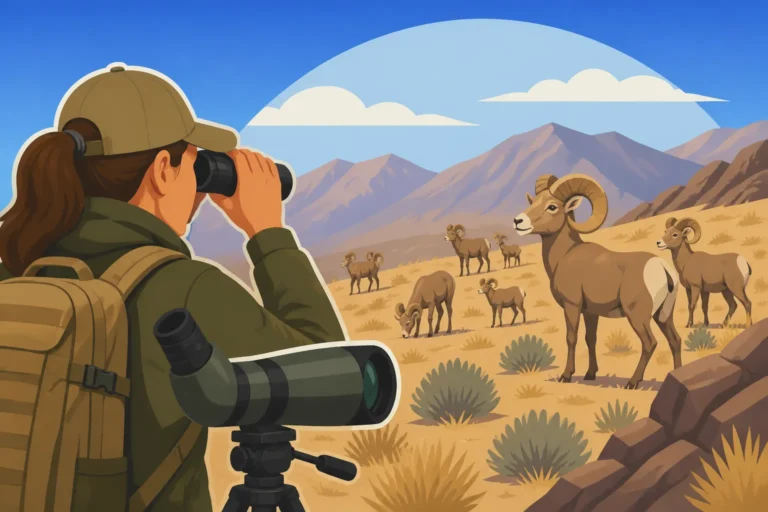
If there's one piece of gear you cannot skimp on for a Nevada pronghorn hunt, it's your optics. In this country, your eyes aren't enough, and a rifle scope alone is insufficient for locating game. You'll spend literally 90% of your time behind glass, scouring miles of terrain for that tell-tale flash of white or a distinct horn. A good pair of 10x binoculars is your primary searching tool. Invest in the best quality you can afford; the clarity, light transmission, and edge-to-edge sharpness will make a noticeable difference after hours of searching. Brands like Vortex, Leupold, and Swarovski are popular choices among serious Western hunters.
Beyond your binoculars, a high-quality spotting scope on a sturdy tripod is non-negotiable. For the vast distances you'll be covering, a 60-80x power spotting scope is ideal. This allows you to not only locate animals but also to critically evaluate bucks at extreme range, helping you decide if they're worth a multi-mile stalk. It also helps you spot subtle terrain features for your approach. You'll be using techniques like Glassing Grids Across a Nevada Basin to systematically break down huge areas, and clear, reliable optics are the backbone of this method. Before you apply for a tag, or even plan a trip, spend some time exploring resources like GoHunt, which often have detailed discussions and reviews on optics best suited for Western hunting, helping you choose wisely.
Rifles and Ammunition for Long Shots
Given the open nature of pronghorn habitat, shots can often be long, pushing the ethical limits of many hunters. While always strive for the closest, most ethical shot possible, preparing for a 300-400 yard shot isn't uncommon. This means selecting a rifle and ammunition combination that is inherently accurate and flat-shooting.
Popular calibers for pronghorn include the .25-06 Remington, 6.5 Creedmoor, .270 Winchester, and .300 Winchester Magnum. The key is a bullet with a high ballistic coefficient, designed to retain energy and resist wind drift over distance. Premium hunting bullets, like Hornady ELD-X, Berger VLD Hunting, or Nosler AccuBond, are excellent choices. They offer reliable expansion at various impact velocities, ensuring a clean, humane kill. Practice is paramount. Don't just zero your rifle at 100 or 200 yards; spend significant time shooting at 300, 400, and even 500 yards. Understand your rifle's trajectory and how to hold for distance. Familiarize yourself with concepts like Rifle Zero Distance for Long Sage Shots and practice shooting from prone with a bipod or shooting sticks, as this will be your most common shooting position in the field. Remember, a well-placed shot from a lesser-powered cartridge is far superior to a poorly placed shot from a magnum.
Clothing and Hydration for Desert Conditions
Nevada's desert environment can be brutally harsh, especially during the early antelope seasons in August and September. You'll often experience massive temperature swings, from freezing nights to scorching midday heat. Layering is not just a good idea; it's essential for comfort and safety. Start with a lightweight, moisture-wicking base layer, add an insulating mid-layer, and finish with a quiet, durable outer shell that offers sun protection. Camouflage is helpful, but blending with the muted tones of the sagebrush is more critical than a specific pattern.
Sun protection is also paramount. Wide-brimmed hats, sunglasses, and plenty of sunscreen are a must. The reflective nature of the open ground can intensify UV exposure. Most importantly, never underestimate the need for hydration. You will be walking miles, often crawling, under a relentless sun, and dehydration can set in quickly. Carry far more water than you think you'll need – a minimum of 2-3 liters for a day trip, and often more if you plan to be truly remote. Consider a quality hydration pack system to keep water accessible. For your feet, choose comfortable, broken-in hiking boots with good ankle support, as you'll be traversing uneven, rocky, and often abrasive terrain for long hours.
Strategies for Locating and Approaching Pronghorn
Locating and then successfully closing the distance on a pronghorn buck is where the rubber meets the road. It requires a blend of keen observation, meticulous planning, and an unwavering commitment to patience and stealth. This isn't a hunt for the faint of heart, but the rewards are immense.
The Art of Glassing and Locating Bucks
In Nevada's vastness, your legs are your last resort; your optics are your primary means of transportation. You must embrace the "sit and glass" strategy. Find a high vantage point – a low ridge, a prominent hill, or even the roof of your truck if you can safely stabilize your optics – and systematically pick apart the landscape. Early mornings and late evenings are prime times, as pronghorn are often most active, feeding in the cooler temperatures.
The key to effective glassing is not to just randomly scan. Use a grid pattern. Start at one end of the basin, scan horizontally, then drop your field of view slightly and scan back. This methodical approach ensures you don't overlook anything. You're not just looking for entire animals; often, you'll pick up a white rump patch, the dark contrasting against light of a horn, or a shimmering heat haze that indicates movement. Patience is your greatest virtue here. Many hunters make the mistake of glassing too quickly or not long enough in one spot. A good rule of thumb is to spend at least 20-30 minutes, or even longer, in each prime glassing location before moving on. For more detailed techniques, learning about Why Nevada Deer Hunting Is a Glassing Game can significantly enhance your pronghorn glassing skills.
Planning Your Stalk: Route Selection and Wind
Once you've located a desirable buck, the real work begins: planning your approach. This is where meticulous e-scouting with tools like onX or Basemaps combined with real-time observation becomes critical. Before you even take a single step, mentally trace your entire route from your current position to where you anticipate taking a shot.
Your primary considerations are cover and wind. Prioritize routes that offer the most concealment, even if it means taking a much longer, circuitous path. Look for dry washes, deep draws, or even sparse patches of taller sagebrush that can provide a visual break. Never, ever approach a pronghorn with the wind at your back, even though their sense of smell isn't as acute as deer or elk. They can still catch a whiff of human scent, and it's a completely avoidable mistake. Use a wind checker constantly; the wind in open country can swirl and change directions surprisingly often. If the wind isn't right, or if there's no suitable cover, you must be disciplined enough to abandon the stalk and either wait for the buck to move or try to circle around to a more favorable position. This sometimes means waiting hours or even relocating entirely. Always remember the critical lesson of Reading Wind on a Long Sage Stalk as it applies equally to pronghorn.
Decoys: A Game Changer for Close Encounters
Sometimes, despite your best efforts, the terrain simply won't allow you to get within comfortable shooting range. This is where a pronghorn decoy can be a legitimate game-changer, especially during the rut. Pronghorn are incredibly territorial, and a buck will often charge a perceived intruder into his domain.
Decoys come in two main types: buck and doe. A buck decoy can challenge a dominant buck, drawing him in for a confrontation. A doe decoy, on the other hand, can sometimes pique the interest of a buck looking to expand his harem. The most effective use often involves two hunters: one hunter stays far back, holding the decoy to draw the buck's attention, while the other hunter, hidden, moves into a shooting position. The decoy provides a focal point, drawing the buck's eyes away from the actual hunter. Always set up with the wind in your favor, and be ready for a fast, close shot. Decoys aren't a guarantee, but they can dramatically increase your odds of success when a traditional stalk falters. Understanding the nuances of Using a Decoy on Nevada Pronghorn can add a powerful tactic to your arsenal, especially when that last 100 yards feels impossible.
Drawing a Nevada Pronghorn Tag and Season Timing
Getting a pronghorn tag in Nevada is often part of the larger draw system for big game, which can feel like a complex puzzle. Understanding the application process, bonus point system, and season structures is key to planning your hunt and maximizing your chances.
Understanding the Nevada Draw for Antelope
Nevada operates on a bonus point system that significantly favors applicants who apply consistently over time. When you apply for a big game tag, you earn a bonus point if you're unsuccessful. These points are squared, meaning they multiply your chances in subsequent draws, unlike some states where points are merely preferential. This makes it a long-term game for coveted species, but even for pronghorn, accumulating points drastically increases your odds.
You'll need to purchase a Nevada Combination License before applying for any big game tags. The application period for Nevada big game runs annually, typically from Nevada Applications Run March 23 to May 13. During this window, you submit your application online, selecting your preferred units and hunt types. Resources like GoHunt provide invaluable data on draw odds, point requirements, and harvest success rates by unit, helping you make informed decisions about where to apply. They can show you the units where your points might give you the best chance, or help you identify long-shot trophy units. It's a strategic decision that requires research, balancing your desire for a trophy with the reality of the draw odds.
Nevada Antelope Season Dates and Timing
Nevada's pronghorn seasons are generally held from late August through September, offering a mix of archery and general rifle opportunities. The exact dates and units vary year by year, so always consult the latest Nevada Department of Wildlife (NDOW) regulations.
Archery seasons typically kick off in late August, sometimes running into early September. These hunts can be incredibly challenging due to the heat, the pronghorn's keen eyesight, and the difficulty of closing distance with a bow. However, they coincide with the very beginning of the rut, which can sometimes make bucks more aggressive and responsive to decoys. General rifle seasons usually follow, often starting in early to mid-September. The weather during these rifle seasons can still be quite warm, especially in the southern units, but generally begins to cool down slightly. The rut is often in full swing or just winding down during the rifle hunts, which can make bucks slightly more preoccupied, though still incredibly wary. Understanding Nevada Antelope Season Dates is your first step to planning when to hit the field.
Antelope Horns-Only Hunts and Opportunities
Nevada also offers a unique hunt type known as "Horns-Only" antelope tags. These hunts are specifically for bucks where only the horns need to be present on the carcass as evidence of sex, rather than the entire head or cape. This can sometimes translate into slightly different draw odds or offer opportunities in units where general buck tags are extremely difficult to draw.
The intention behind these hunts can vary, but generally, they aim to provide additional hunting opportunities while potentially focusing harvest on mature bucks without the same pressure on overall buck numbers as a general tag. For hunters primarily interested in the experience and the meat, a horns-only tag can be a viable option. It might be a good choice for someone with fewer bonus points looking to get into the field, or for those who prioritize a unique hunting experience over a specific trophy size. Always check the specific regulations for Nevada Antelope Horns-Only Hunts in the current year's proclamation, as rules around evidence of sex and unit availability can change. It's another avenue to explore in your quest for a Nevada pronghorn.
Ethical Considerations and Field Care
A successful hunt doesn't end with a pulled trigger; it extends to the ethical recovery of the animal and proper care of the meat. This is especially true for pronghorn in Nevada's often challenging and warm conditions.
Making Clean Shots and Ethical Recovery
In the open country of Nevada, making a clean, ethical shot is paramount. Pronghorn are not huge animals, and their body shape can sometimes be deceptive. Their vitals are relatively forward, so aiming for the shoulder or just behind it for a lung shot is usually the most effective approach. Given the potential for longer shots, practicing shooting at various distances is crucial, particularly from field positions like prone with a bipod or shooting sticks, which you'll most likely use.
After the shot, immediate follow-up is critical. Pronghorn can cover ground quickly, even when mortally wounded. If the animal runs, mark the exact spot where it was standing and where you last saw it. Then, immediately go to that spot and look for signs of blood, hair, or disturbed earth. Even if you don't find much, systematically grid search the area in the direction the animal ran. Never assume a miss; always follow up. If a wounded animal crosses onto private land, understanding Retrieving Game From Private Land in Nevada becomes vital. In such cases, contact the landowner or local game warden immediately to explain the situation and seek permission for retrieval. Ethical hunting demands that every reasonable effort be made to recover wounded game.
Field Dressing and Cooling in Warm Weather
Pronghorn season in Nevada, particularly during August and early September, often means dealing with significant heat. Antelope meat is notoriously delicate and can spoil quickly if not handled properly. Speed is of the essence. As soon as the animal is down, begin field dressing immediately to allow the carcass to cool.
Get the hide off quickly if possible, as it acts as an insulator, trapping heat. Gutting the animal removes the internal heat source. If you have ice, even a few bags placed in the body cavity can make a huge difference. Using quality game bags is essential to protect the meat from flies and dirt while allowing airflow. Get the meat out of direct sunlight and into the coolest possible environment as fast as you can. This might mean getting it back to your vehicle with a cooler full of ice, or if you're truly remote, hanging it in a shady spot with good air circulation. For those August hunts, being prepared for Field Dressing in August Heat is not just about meat quality; it's about respecting the animal and ensuring the harvest doesn't go to waste.
Respecting the Land and Other Hunters
Nevada's vast public lands are a shared resource, and ethical hunters understand the importance of respecting both the environment and other users. This means practicing Leave No Trace principles religiously. Pack out everything you pack in, and then some. Leave your campsite cleaner than you found it. Avoid driving off designated roads, as motorized travel can damage sensitive desert ecosystems and create unnecessary tracks. Understanding Motorized Travel Rules on Nevada Public Land is vital; staying on established routes protects the land and prevents conflicts with land management agencies.
Be mindful of other hunters. Pronghorn country is big, but successful spots often attract multiple hunters. Give other hunters ample space, especially if they are already engaged in a stalk or glassing a particular area. A simple wave or a polite conversation can prevent a frustrating encounter. Remember that public land is for everyone, and our actions reflect on the entire hunting community. Leave gates as you found them, be courteous to ranchers and landowners, and represent the ethical standards of hunting.
| Caliber | Bullet Weight (gr) | Typical Velocity (fps) | Energy at 300yds (ft-lbs) | Advantages | Disadvantages |
|---|---|---|---|---|---|
| .25-06 Rem | 110-120 | 3100-3000 | 1500-1400 | Flat trajectory, mild recoil, excellent for pronghorn | Can struggle in heavy wind, less energy for larger game |
| 6.5 Creedmoor | 120-143 | 2850-2650 | 1600-1400 | Excellent accuracy, low recoil, good wind resistance | Slightly less flat than .25-06, more affected by range |
| .270 Win | 130-150 | 3050-2900 | 1900-1700 | Flat shooting, plenty of power, versatile | Moderate recoil, not as common for long-range target shooting |
| .300 Win Mag | 165-190 | 3100-2950 | 2500-2000 | Most powerful, excellent for long range and wind | Heavy recoil, more expensive ammo, can be overkill |
Disclaimer
Please remember that hunting regulations, season dates, and unit boundaries can change annually. Always consult the most current Nevada Department of Wildlife (NDOW) regulations and official proclamations before planning or undertaking any hunting activity. This guide is for informational purposes only and should not be considered a substitute for official legal documents or professional guiding advice.