Nevada Mountain Lion Quotas and Zones
Figuring out the ins and outs of Nevada's mountain lion hunting can feel like trying to track a ghost in the vast Great Basin. With specific quotas, complex zone structures, and a management strategy aimed at maintaining a healthy balance, it's easy for even experienced hunters to get lost in the details. This comprehensive guide is here to untangle the complexities of Nevada's mountain lion quotas and zones, helping you understand how these elusive predators are managed and how you can successfully pursue them within the state's regulations.
Understanding Nevada's Mountain Lion Management Philosophy
Nevada's approach to mountain lion management isn't just about providing hunting opportunities; it's a careful balancing act designed to maintain healthy lion populations while also safeguarding prey species like mule deer and bighorn sheep. It's a tough job for wildlife biologists, especially given the sheer scale and diversity of Nevada's landscape. The state views mountain lions as an integral part of the ecosystem, and their management reflects that deep understanding.
Why Quotas and Zones Exist
The reason we have quotas and zones for mountain lions comes down to two main factors: population control and resource distribution. Unlike some species, lions aren't evenly distributed across the state. They tend to follow their prey, which means certain areas might have higher concentrations than others. Without carefully set quotas, localized overharvest could deplete populations in specific regions, creating an imbalance. Imagine if every hunter descended on one hotspot; that wouldn't be sustainable for the lions or their prey. These zones, therefore, help distribute hunting pressure more evenly across suitable habitats, ensuring that no single area bears too much impact. It's about protecting the long-term health of the species, not just for hunters, but for the ecosystem as a whole.
Furthermore, these systems allow the Nevada Department of Wildlife (NDOW) to react dynamically to changes in lion populations or prey numbers. For example, if a specific unit sees a significant increase in lion-related depredation on livestock or a noticeable decline in a vulnerable prey species, NDOW can adjust the quota for that particular zone in subsequent years. It's a data-driven approach, always aiming for that delicate ecological equilibrium.
Balancing Lion Populations and Other Game Species
This is where the rubber truly meets the road in Nevada's wildlife management. Mountain lions are apex predators, and their presence directly impacts populations of big game animals like mule deer, elk, and bighorn sheep. While a certain level of predation is natural and healthy, excessive lion numbers in specific areas can put undue pressure on struggling prey herds, especially during harsh winters or periods of drought. The management philosophy acknowledges that managing lions is often about managing their impact on other species, particularly those that are highly valued by hunters and conservationists.
Nevada's strategy isn't about eradicating lions; it's about fostering a sustainable predator-prey relationship. Biologists conduct extensive research, monitoring lion numbers, studying their diets, and assessing the health of prey populations. This data then informs the annual quota setting process. For instance, in areas where mule deer populations are struggling, a higher lion quota might be set to help reduce predation pressure and give the deer a chance to recover. Conversely, in areas with robust prey populations, quotas might be more conservative. This careful calculation ensures that lion hunting remains an effective tool in maintaining overall ecosystem health, rather than just a recreational pursuit.
Nevada's Mountain Lion Hunt Units and Zones
Navigating Nevada's vast public lands can be a challenge, and understanding how the state divides its hunting grounds for specific species adds another layer of complexity. For mountain lions, NDOW has established distinct hunt units and zones that dictate where and when you can hunt, and how many animals can be harvested. These aren't just arbitrary lines on a map; they're carefully drawn based on geographical features, known lion habitats, and population dynamics.
Mapping the Quota Zones
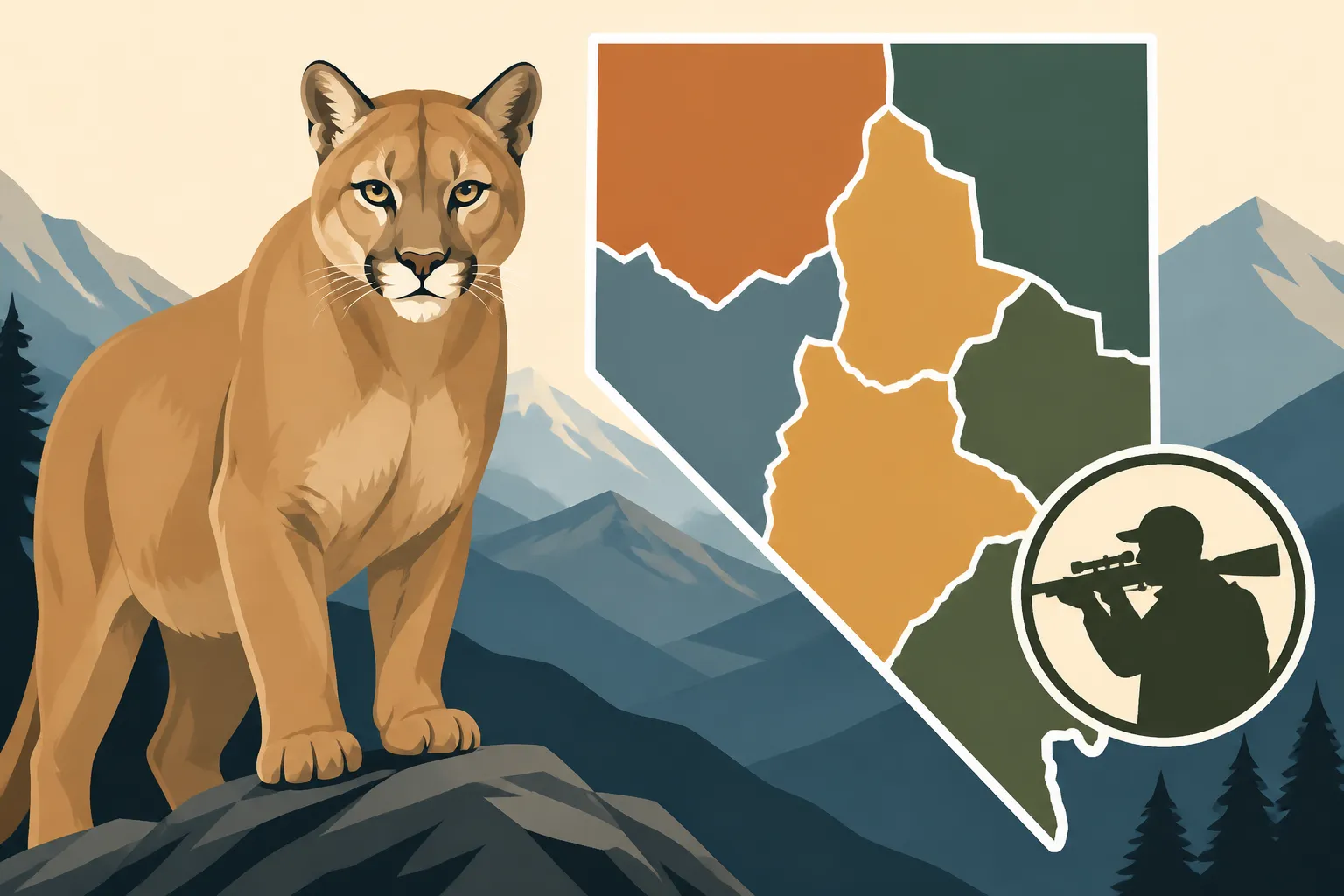
Nevada's mountain lion management utilizes what are known as "management areas" or "zones," which often combine multiple traditional big game hunt units. This approach allows for broader management strategies over larger contiguous habitats that lions tend to roam. Instead of thinking about individual units like you might for deer or elk, you'll need to familiarize yourself with these larger lion zones. These zones are meticulously mapped out by NDOW, and understanding their boundaries is absolutely crucial before you even consider applying for a tag or heading out into the field.
These maps are available through NDOW's official regulations, and many digital mapping applications like onX Hunt integrate these boundaries, making it easier to visualize where you can and cannot pursue lions. It’s imperative to E-Scouting a Nevada Unit Before the Season starts, especially for a predator hunt where movement can be unpredictable. You’ll find that some zones encompass massive tracts of BLM land, while others might include portions of National Forests, each with their own unique challenges and opportunities for a lion hunter.
Understanding Unit Groupings for Lions
When you delve into the Nevada hunting regulations, you'll quickly notice that individual hunt units are often grouped together under a larger "management area" or "quota zone" specifically for mountain lions. For example, what might be units 011, 012, and 013 for mule deer might all fall under "Lion Management Area A" for mountain lion hunting. This grouping allows NDOW to manage the lion population on a regional scale, acknowledging that individual lions don't typically adhere to our human-drawn unit lines. They roam vast territories, following food sources and maintaining their breeding ranges.
This structure also simplifies the quota system. Instead of setting a tiny quota for each small unit, a larger, more realistic quota is set for the entire management area. This provides flexibility for hunters to pursue lions across a broader landscape, increasing their chances of success while still ensuring the overall harvest remains within sustainable limits for that region. When you're researching potential areas, paying close attention to these specific lion management area designations is key. Resources like GoHunt often compile this information in an easily digestible format, which can be incredibly helpful when you're trying to make sense of the groupings. They simplify the complex task of Reading a Nevada Hunt Unit Before You Apply by presenting all the relevant data together.
How Nevada Sets Mountain Lion Quotas Annually
The process of determining how many mountain lion tags are issued each year, and for which specific zones, is far from arbitrary. It's a scientifically driven process that involves extensive data collection, analysis, and public input. Understanding this process can give you insight into why quotas fluctuate and what factors influence your chances of drawing a tag. It’s truly a testament to the dedication of Nevada’s wildlife managers.
Data Driving Quota Decisions
At the heart of Nevada's quota setting for mountain lions is hard data. NDOW biologists are constantly working to monitor lion populations across the state. This isn't an easy task, given the secretive nature of these animals and the rugged terrain they inhabit. Methods include tracking radio-collared lions, analyzing harvest data from previous seasons, studying lion depredation reports (e.g., livestock kills), and assessing the health and abundance of prey species. Fawn recruitment ratios for deer, lamb survival for bighorn, and even elk calf counts all play a role in painting a comprehensive picture of the ecosystem's health.
For example, if long-term trends indicate a stable or increasing lion population in a certain management area, and prey populations are also robust, NDOW might maintain or even slightly increase the quota for that zone. Conversely, if data suggests a decline in lion numbers, or if a particular prey species is struggling, quotas might be reduced or specific zones might even be temporarily closed to hunting. This ensures that lion harvest is a tool for adaptive management, directly responding to the ecological realities on the ground, and ultimately, How Nevada Manages Lion Harvest is a direct reflection of these complex data points.
The Role of Commission Meetings
Once NDOW biologists have compiled their data and formulated recommendations for mountain lion quotas by management area, these proposals are then brought before the Nevada Board of Wildlife Commissioners. This is a critical stage in the process, as the Commissioners, who represent various regions and interests within the state, ultimately make the final decisions. These meetings are open to the public, and it's where individuals, conservation groups, and hunting organizations have the opportunity to provide feedback, raise concerns, and voice their opinions on the proposed quotas.
The Commissioners carefully consider the scientific recommendations from NDOW, listen to public testimony, and debate the potential impacts of different quota levels. It's a transparent process, albeit sometimes lengthy, that seeks to balance scientific management with public values and concerns. The final quotas that are published in the hunting regulations each year are a direct result of these discussions and decisions. Staying informed about these meetings, especially in the months leading up to the application period, can give you a heads-up on potential changes to quotas in your preferred hunting areas. This is often where you'll get the first indication of significant shifts in management strategy.
Applying for a Nevada Mountain Lion Tag
Getting a Nevada mountain lion tag can be a bit different from drawing a deer or elk tag. While there are draw opportunities, the state also offers over-the-counter (OTC) options, though these come with their own set of rules and limitations. Understanding both pathways is key to successfully putting a lion tag in your pocket.
Tag Availability and Draw Odds
Nevada's mountain lion tags are primarily allocated through a draw system, similar to other big game species, particularly for the higher-demand zones or those with lower quotas. The number of tags available varies significantly by management area and is, as we discussed, directly tied to the annual quota. Some zones might have a handful of tags, while others might have none, or offer only OTC opportunities. Because mountain lions are highly sought after by a dedicated segment of hunters, drawing a tag can still be competitive, especially in areas known for producing large cats.
The application period for these draw tags typically aligns with the main big game draw, meaning Nevada Applications Run March 23 to May 13 each year. It’s crucial to get your application in on time, paying close attention to unit choices and understanding that your second or third choice might be the one that pulls through. While bonus points aren't usually a factor specifically for lion tags in the same way they are for deer or elk, consistently applying shows your dedication. You'll generally find out if you've been successful when Nevada Draw Results Land at the End of May, which is always an exciting (or nerve-wracking) time for hunters across the state.
Over-the-Counter Tags and When They Apply
Beyond the draw, Nevada offers over-the-counter (OTC) mountain lion tags, but with a significant catch: these tags are only valid for females and only become available after the male quota for a specific zone has been filled. This is a critical distinction that often confuses new lion hunters. Here's how it generally works: each management area has a total quota, which is then often broken down into a specific number of male tags and a flexible number of female tags.
Once the male quota for a zone has been met (usually through the draw or through general season harvest), hunters who hold an unfilled general mountain lion tag may then hunt for a female lion in that specific zone. This system is designed to allow NDOW to maintain healthy breeding populations of male lions while still providing additional hunting opportunities and population control through female harvest, if necessary. You absolutely must keep an eye on NDOW's website or call their offices for real-time updates on which zones still have available male quotas and when those quotas have been filled. Failing to do so could lead to an illegal harvest. This dynamic, real-time quota tracking is what makes lion hunting in Nevada so unique and often requires constant vigilance.
Legal Considerations and Hunting Methods for Mountain Lions
Hunting mountain lions in Nevada comes with a specific set of rules and traditional methods. It's not like still-hunting for deer or setting up over a water source; success often hinges on specialized techniques and equipment. Understanding these legalities and common practices is paramount for an ethical and successful hunt.
Using Hounds for Mountain Lions
Without a doubt, the most common and often most effective method for hunting mountain lions in Nevada is with the aid of trained hounds. The vast, rugged, and often sparse terrain of the Great Basin makes tracking these elusive predators on foot incredibly challenging. Hounds, with their superior sense of smell and relentless pursuit, are instrumental in trailing a lion's scent across miles of broken country, eventually baying or treeing the animal, allowing the hunter to approach. This is why you'll find that many successful lion hunters in Nevada either own and train their own pack of dogs or hire an experienced guide who does.
There are strict regulations around the use of hounds, including requirements for licensing dogs, restrictions on when and where they can be used, and ethical considerations for the pursuit itself. You can find deep dives into this topic, such as Hunting Lions Behind a Pack of Hounds, which details the specific techniques and legalities involved. It's a physically demanding style of hunting, often requiring long hours of hiking through rough country, sometimes in extreme weather conditions, to keep up with the dogs. For many, the thrill isn't just in the harvest, but in the incredible teamwork and the chase itself.
Calling and Incidental Take
While hounds are the predominant method, it is technically legal to attempt to call in a mountain lion in Nevada, though success rates are generally very low due to their wary nature and the expansive landscape. Hunters typically use distress calls, mimicking a wounded rabbit or fawn, hoping to pique a lion's curiosity. This method requires extreme patience, stealth, and a thorough understanding of the terrain to set up effectively. It’s a needle-in-a-haystack approach, but for those who prefer to hunt without dogs, it offers a challenging alternative.
Another crucial legal aspect to understand is "incidental take." This refers to situations where a hunter, primarily pursuing another big game species like deer or elk, encounters and harvests a mountain lion. If you possess a valid mountain lion tag, and all other regulations are met, you can legally harvest a lion that you stumble upon during another hunt. However, you must immediately validate your tag and report the harvest according to Mountain Lion Tagging Requirements in Nevada. It's important to remember that you cannot specifically hunt for lions while holding only a deer tag, but an incidental encounter, when properly tagged, is permissible. This often means that even if you're not specifically targeting lions, carrying a lion tag can provide an opportunistic advantage.
Essential Gear and Preparation for a Nevada Lion Hunt
Mountain lion hunting in Nevada is not for the faint of heart. It demands a significant investment in specialized gear and a high level of physical conditioning. The success of your hunt, and indeed your safety, will depend heavily on your preparation long before you ever step foot in the field.
Optics for Tracking and Glassing
Given the vast, open, and rugged terrain that mountain lions inhabit in Nevada, high-quality optics are not just a luxury—they are an absolute necessity. Whether you're hunting with hounds or attempting a calling strategy, you'll be spending countless hours scanning distant ridges, examining tracks, and evaluating potential habitat. Binoculars are your primary tool for Optics Power for Nevada's Long Sightlines, allowing you to pick apart far-off slopes for any sign of movement, or to locate your dogs if they've treed a lion on a distant mountain face. A good pair of 10x or 12x binoculars with excellent light-gathering capabilities will serve you well. Many experienced hunters also carry a spotting scope, especially if they plan on spending time on high vantage points glassing expansive basins.
Furthermore, a reliable GPS device or a robust mapping application like those offered by GoHunt is critical. This helps you navigate the complex terrain, mark tracks, follow dog collars if you're using hounds, and identify unit boundaries to ensure you stay within your legal hunting zone. Given the distances involved, you'll be constantly referring to your maps. Even something as simple as a compass and paper map, as a backup, can be a lifesaver when cell service inevitably disappears in remote areas.
Physical Demands and Remote Access
I cannot stress this enough: a mountain lion hunt in Nevada is one of the most physically demanding hunts you can undertake. This isn't a sit-and-wait game. Whether you're following hounds for miles through deep canyons, climbing steep, rocky ascents, or navigating dense juniper and sagebrush, you will be pushing your physical limits. You need to be in excellent cardiovascular shape, with strong legs and endurance to handle long days in challenging terrain. Thinking about Physical Conditioning for a Chukar Hunt is a good start, but elevate that intensity for lion hunting. The country is unforgiving, and a lion can lead you on an epic chase.
Accessing these remote hunting grounds often means driving on unimproved, rugged dirt roads that can quickly become impassable with adverse weather. A high-clearance 4×4 vehicle is essential, often equipped with extra fuel, spare tires, and recovery gear. Furthermore, many prime lion habitats exist within Wilderness Study Areas or designated Wilderness, meaning Wilderness Study Areas and Vehicle Limits will restrict motorized travel, forcing you to proceed on foot or horseback. This means you need to be prepared to hike in deep, carry all your necessities, and, if successful, pack out a significant amount of meat and skull/hide over arduous distances. Planning for severe weather swings, from scorching sun to bitter cold and snow, is also a must, necessitating appropriate layering and emergency supplies.
Hunting Season Dates and Quota Closures
Mountain lion hunting in Nevada isn't a set-it-and-forget-it season. It's a dynamic system, heavily influenced by real-time harvest numbers. Understanding how the season operates and how quotas can trigger closures is absolutely vital to avoid breaking the law or missing your opportunity.
General Season Structure and Zones
Nevada generally offers a long mountain lion season, often running from early autumn through late spring of the following year. However, this "general season" is always subject to the overarching quota system. Each of Nevada's lion management areas has specific quotas for male and female lions, as previously discussed. These quotas are not uniform; some areas might have a higher quota due to robust lion populations or specific management objectives related to prey species, while others might have very low quotas.
The season dates themselves are typically set by the Nevada Board of Wildlife Commissioners well in advance, but the actual "openness" of a zone can change daily or even hourly as harvest reports come in. This means that while the calendar might show a season running for many months, individual zones can and do close much earlier once their specific quotas are met. For hunters, this necessitates constant vigilance and communication with NDOW.
Real-time Quota Monitoring and Closures
This is perhaps the most critical aspect of Nevada mountain lion hunting. Unlike deer or elk seasons, which typically have fixed start and end dates regardless of harvest numbers, lion seasons operate on a real-time quota system. Once the established male quota for a specific management area is filled, that zone immediately closes for male lions. Similarly, if there's a female quota, once it's met, that zone closes for females. It's not uncommon for popular zones to close mere weeks or even days into the season if multiple hunters are successful.
Hunters are solely responsible for knowing the current status of quotas and closures before heading into the field. NDOW maintains an online system, often updated daily, that shows the harvest numbers and whether a quota has been met for each zone. Many experienced hunters will check this system religiously, sometimes multiple times a day, especially during peak hunting periods. Failing to do so and harvesting a lion after a quota has been met is a serious violation. This makes the "race" to fill a tag, especially for a male, an intense and time-sensitive endeavor.
Mountain Lion Harvest Reporting Requirements
After the incredible effort of locating, pursuing, and successfully harvesting a mountain lion in Nevada, your responsibilities don't end there. Proper reporting and submission of the animal for biological data collection are crucial legal requirements that contribute directly to the ongoing management of the species.
Mandatory Check-In and Biological Samples
Nevada has stringent regulations regarding the mandatory check-in of harvested mountain lions. Any hunter who successfully takes a mountain lion must present the unfrozen hide and skull to an authorized NDOW representative within a specified timeframe, usually within five working days of harvest. This is not optional; it is a critical step in the management process. During this check-in, NDOW personnel will validate your tag, attach a special seal to the hide, and collect important biological data.
This data includes details such as the lion's sex, age (determined by a tooth extraction), weight, and specific location of harvest. Biologists also examine the animal's condition and can often glean information about its health and diet. This direct interaction with the harvested animal provides invaluable information that feeds back into the quota-setting process for future seasons, ensuring that How Nevada Manages Lion Harvest is grounded in current biological realities. Preparing the skull and hide properly in the field, especially ensuring it remains unfrozen, is therefore an important part of your pre-hunt planning.
Evidence of Sex Requirements
When you harvest a mountain lion in Nevada, you are required to leave specific evidence of sex naturally attached to the carcass, at least until it is officially sealed by NDOW. For male lions, this means leaving the unskinned scrotum or penis sheath naturally attached to the hide. For female lions, the unskinned udder or vulva must remain naturally attached. This regulation is in place to allow NDOW officials to definitively confirm the sex of the harvested animal during the check-in process.
This is particularly important in the context of Nevada's quota system, where male and female quotas can be separate, and where over-the-counter tags are often only valid for females after male quotas are met. Misidentifying the sex of a lion in the field can lead to serious legal repercussions, especially if you harvest a male when only female tags are available or when the male quota has already been filled. It emphasizes the need for careful identification in the field and meticulous adherence to regulations, ensuring the integrity of the state's lion management program.
| Nevada Mountain Lion Hunting Summary | Details |
|---|---|
| Management Philosophy | Balances healthy lion populations with prey species (deer, bighorn) health. Data-driven decisions. |
| Quotas & Zones | Hunt units grouped into larger "management areas" or "zones." Specific male/female quotas per zone. |
| Quota Setting | Based on biological data (population trends, prey health, harvest data) and finalized by Nevada Board of Wildlife Commissioners. |
| Tag Types | Primarily draw tags. Over-the-Counter (OTC) tags available for females only after male quotas for a specific zone have been filled. |
| Application Period | Typically March 23 to May 13 for draw tags. Draw results late May. |
| Primary Method | Hunting with trained hounds is most common and effective. Requires strict adherence to regulations. |
| Other Methods | Calling is legal but has low success. Incidental take is permissible with a valid lion tag while pursuing other species. |
| Key Gear | High-quality optics (binoculars, spotting scope), reliable GPS/mapping (e.g., GoHunt), high-clearance 4×4 vehicle for access. |
| Physical Demands | Extremely high. Requires excellent cardiovascular fitness, endurance for rugged, remote terrain. |
| Season Closures | Dynamic and real-time. Zones close immediately when individual male/female quotas are met. Hunters must monitor NDOW website daily for current status. |
| Harvest Reporting | Mandatory check-in of unfrozen hide and skull to NDOW within five working days. Evidence of sex (scrotum/penis sheath for males, udder/vulva for females) must remain naturally attached until sealed. |
Disclaimer
Please remember that hunting regulations can change. While I strive to provide the most accurate and up-to-date information, it is always your responsibility to consult the official Nevada Department of Wildlife (NDOW) regulations and season proclamations before planning or engaging in any hunting activity. This guide is for informational purposes only and should not be considered a substitute for the official legal documents.