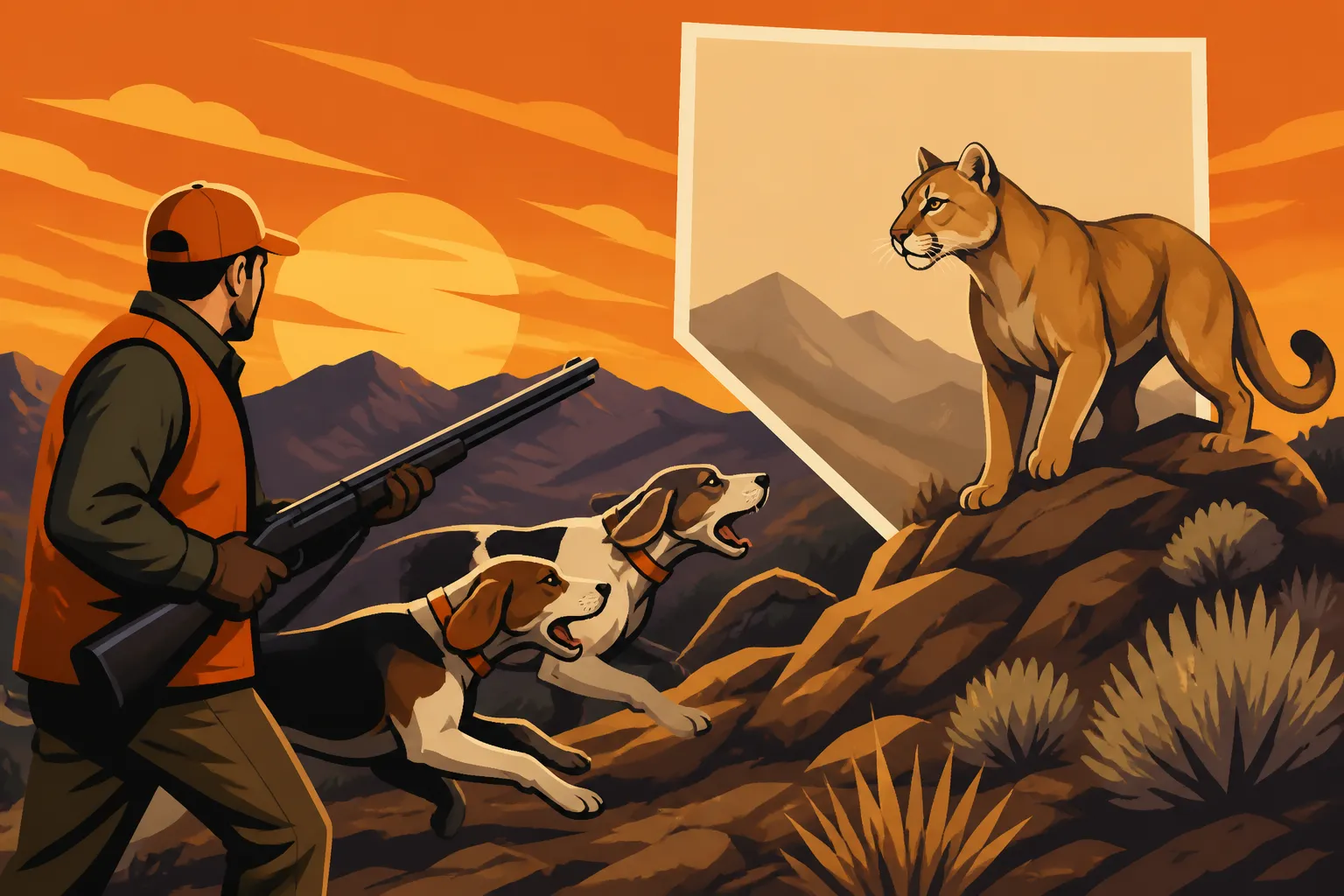
Hound Hunting for Nevada Lions
Hound hunting for mountain lions in Nevada is an experience unlike any other, demanding grit, endurance, and an intimate understanding of both the landscape and canine behavior. For many, it's the pinnacle of big game pursuit, navigating vast, rugged terrain in pursuit of one of North America's most elusive predators. This guide will walk you through the regulations, the essential role of hounds, necessary gear, and the practical steps to successfully and ethically hunt mountain lions in the Silver State.
Understanding Nevada's Mountain Lion Hunting Regulations
Before you even think about hitting the trail, it's absolutely critical to wrap your head around Nevada's specific regulations for mountain lion hunting. This isn't a casual pursuit, and the Nevada Department of Wildlife (NDOW) has very clear, often complex, rules in place to ensure both ethical hunting and sound wildlife management. Ignoring these details can lead to serious consequences, not just for your hunt but for the state's lion population.
Licensing and Tagging Requirements
First things first, you can't just head out with a rifle and a dream. To hunt mountain lions in Nevada, you'll need a valid Nevada hunting license – specifically, the combination license. This is your base permit for all hunting activities in the state. On top of that, you must purchase a separate mountain lion tag. These tags are available over-the-counter and are generally not subject to a draw, unlike many other big game species here. However, don't let that ease of access fool you; the hunt itself is anything but easy.
Once you harvest a mountain lion, the clock starts ticking. You are required to immediately attach your tag to the carcass as specified by NDOW regulations. Beyond the tag, there are strict reporting requirements that necessitate presenting the skull and hide to an NDOW office or authorized personnel within a specified timeframe. This isn't just a bureaucratic hurdle; it's a vital part of data collection for wildlife biologists to monitor the health and population dynamics of mountain lions across the state. They'll examine the animal, collect samples, and verify the harvest location and sex, all of which contribute to the larger management picture. Understanding these rules is paramount to ensuring your hunt is legal and contributes positively to conservation.
Season Dates and Quotas
Nevada's mountain lion season is often open year-round, which might sound surprising for a big game species. However, this flexibility comes with a critical caveat: unit-specific quotas. The state is divided into various management zones, and each zone has a predetermined quota for the number of lions that can be harvested in a given year, often broken down by male and female. These quotas are set based on population estimates, research, and conservation goals to ensure sustainable harvest levels.
The challenge for hunters is that these quotas can be met at any time. NDOW actively monitors harvest numbers, and once a quota is reached for a particular zone, that zone will close to mountain lion hunting immediately. This means that while the season might technically be "year-round," hunters must stay constantly informed about current closures. Checking the NDOW website or calling a regional office before and even during your hunt is absolutely essential. A hunt that was legal yesterday might be illegal today if a quota has been filled, making real-time information your most valuable asset. This dynamic system reflects the careful balance NDOW strikes between providing hunting opportunities and robustly managing these magnificent predators. You can learn more about specific zones and how many lions are allocated by reviewing the current Nevada Mountain Lion Quotas and Zones.
Legal Hound Use and Restrictions
When it comes to using hounds, Nevada has specific guidelines designed to promote fair chase and responsible hunting practices. It's not a free-for-all; there are rules about the number of hounds you can employ, how they must be managed, and what constitutes a legal pursuit. Typically, a hunter is allowed to use a specified number of dogs to pursue mountain lions, and it's crucial to know this exact number, as it can be modified. Exceeding this limit is a violation.
Furthermore, hunters must understand that the primary purpose of the hounds is to track and tree or bay the lion. It is not generally permissible for hounds to injure or kill the lion. Once a lion is treed or cornered, the hunter is responsible for approaching the animal and making a clean, ethical shot. There are also stipulations regarding the leashing of dogs after a track, particularly if the hunt is called off or if dogs are separated from the hunter. Understanding these intricate rules on legal hound use and Hound Hunting for Nevada Lions is key to ensuring your hunt remains within the bounds of the law and ethical hunting standards. These regulations aim to preserve the integrity of the hunt and the welfare of both the hounds and the quarry.
The Role of Hounds in Lion Hunting
Hound hunting for mountain lions isn't just a technique; it's a partnership. The dogs aren't merely tools; they are the highly specialized athletes and navigators that make this type of hunting possible. Without a well-trained, disciplined, and courageous pack, finding and pursuing a ghost-like predator across Nevada's vast and often unforgiving terrain would be an impossible task. Their unique abilities are truly the core of this endeavor.
How Hounds Track and Tree Lions
The magic of a hound hunt lies in the dogs' incredible sense of smell and their unwavering determination. Mountain lions, being incredibly stealthy and adept at covering vast distances without leaving much visible sign, are almost impossible for a human to track alone. Hounds, however, can pick up a cold scent trail left by a lion hours, sometimes even a day, earlier. They follow this scent, often across incredibly rugged, rocky, and brush-choked country, vocalizing their progress with distinct barks and howls.
As the dogs get closer to the lion, their "chop" or "bark" changes, becoming more urgent and focused. Their job is to push the lion, compelling it to either climb a tree (known as treeing) or corner it on a cliff face or in a dense thicket (known as baying). Once the lion is treed or bayed, the hounds will typically gather below, maintaining a consistent, excited "tree bark" to hold the lion's attention and alert the hunters to their location. This allows the hunters, who might be miles behind, to navigate to the dogs and the treed lion. It's a testament to their innate ability and training that they can effectively stop and hold such a powerful and dangerous animal.
Breeds Best Suited for Mountain Lion Hunting
Not all hounds are created equal when it comes to chasing big cats. Certain breeds have been selectively bred for generations for the specific traits required for mountain lion hunting: tenacity, stamina, a keen nose, and an unshakeable drive. The most common breeds you'll encounter in a quality lion pack include Bluetick Coonhounds, Treeing Walker Coonhounds, and Plott Hounds. Each brings slightly different strengths to the table, and often, a successful pack will be a mix of these.
Blueticks are renowned for their cold nose, meaning they can follow older scent trails that other dogs might miss. They are typically methodical and persistent. Treeing Walkers, on the other hand, are often faster and known for their speed on a track, covering ground quickly and driving a lion hard. Plott Hounds are famous for their courage and toughness, making them excellent in close-quarters baying situations and in rugged terrain, fearless when facing down a treed cat. A good pack combines these attributes, with some dogs excelling at finding the initial track, others at pushing the chase, and all working together to hold the lion. It's a symphony of specialized skills, all focused on one objective.
Training and Conditioning Your Hound Pack
Bringing together a successful lion pack takes years of dedicated effort, far beyond basic obedience. These aren't just pets; they're high-performance athletes with a job to do. Training for mountain lion hunting begins with instilling fundamental obedience commands, but quickly moves into specialized scent work. Dogs are often introduced to lion scent through hides, scent boxes, or controlled chases to develop their natural prey drive and teach them what to focus on. They need to learn to discriminate between lion scent and other animals like deer or coyotes, avoiding false tracks that waste valuable time and energy.
Conditioning is equally critical. Nevada's terrain is brutal – steep, rocky, and often covered in abrasive brush. Hounds need incredible endurance to run for hours, sometimes all day, often covering many miles over difficult ground. This means regular exercise, a high-quality diet, and careful monitoring of their physical health. Experienced hunters also teach their dogs to work as a cohesive unit, to recognize each other's barks, and to cooperate in pursuing and holding a lion. It's a continuous process, honing their skills and bodies to meet the extreme demands of the hunt. Many hunters even use GPS collars with remote training functions to reinforce commands and manage their dogs in real-time, especially when tracking across vast distances.
Essential Gear for a Successful Hound Hunt
Mountain lion hunting with hounds in Nevada isn't a minimalist pursuit. The combination of remote, challenging terrain, the speed and endurance of the dogs, and the potential for a long, arduous chase demands a carefully curated selection of gear. You're not just equipping yourself; you're outfitting a small expedition for both human and canine participants, ensuring safety, efficiency, and success far from any easy access.
Tracking Collars and GPS Systems
In the vast, trackless expanses of Nevada's mountains, losing sight of your hounds is almost a certainty, and losing track of them is a hunter's worst nightmare. This is where advanced tracking collars and GPS systems become absolutely indispensable. Traditional radio telemetry collars, while still used by some, have largely been supplanted by sophisticated GPS-enabled systems like the Garmin Alpha series. These devices allow you to see the real-time location of every dog in your pack on a handheld unit, often overlaid on detailed topographic maps.
These systems offer incredible advantages: knowing exactly where your dogs are, their speed, and whether they are moving, stopped, or "treed" (indicated by a specific bark or accelerometer reading). Many modern systems also allow for remote communication, such as sending a tone or vibration to a dog's collar, or even releasing them from a vehicle-mounted box. Given the sheer scale of the landscape and the speed with which hounds can cover ground, a reliable GPS tracking system isn't just convenient; it's a critical safety tool for both the dogs and the hunters. When planning your hunt, consider researching resources like GoHunt for detailed unit information that can complement your tracking technology.
Hunter Gear for Rugged Terrain
Following a pack of hounds through Nevada's lion country means traversing some of the most unforgiving landscapes imaginable. Your personal gear needs to be up to the task, focused on durability, comfort, and self-sufficiency. Start with your feet: high-quality, ankle-supporting, waterproof, and durable hiking boots are non-negotiable. You'll be climbing, descending, and scrambling over sharp volcanic rock, through dense sagebrush, and across loose scree. Prioritize boots that can handle the abrasion and provide excellent traction.
Layered clothing is crucial due to Nevada's often drastic temperature swings, from frosty mornings to scorching afternoons, even in winter. Tough, briar-resistant outer layers are advisable. Beyond clothing, you'll need a robust backpack to carry essentials: ample water (far more than you think you'll need, especially in the desert), high-energy snacks, a first-aid kit for yourself, and critical navigation tools like a dedicated GPS unit (separate from your dog tracker), a compass, and paper maps. A satellite messenger or two-way radio is also vital for communication in areas with no cell service, which is common in many of Nevada's remote units. Remember, you might be out there for many hours, possibly overnight, chasing a track. Preparing physically for long glassing days will also help with the endurance needed to keep up with a hard-charging pack.
Dog Care and Safety on the Trail
The welfare of your hounds is paramount, not just for ethical reasons but because they are the engine of your hunt. Equipping them properly for the harsh environment is as important as outfitting yourself. Many hound hunters use protective vests or chest plates on their dogs, especially in areas with sharp rocks, cactus, or dense, thorny brush, to prevent cuts and punctures. Paw protection, such as dog booties, can also be invaluable, especially if you're covering many miles over abrasive surfaces.
A comprehensive dog first-aid kit is non-negotiable and should include items like bandages, antiseptic wipes, pain medication, super glue for cuts, and tools for removing thorns or porcupine quills. Dehydration is a constant threat in Nevada's arid climate, so carrying water for your dogs and offering it frequently is crucial. High-energy dog food or supplements can help sustain their stamina on long chases. Just like you need to Prepare Physically for Long Glassing Days, your dogs need peak conditioning. After the hunt, inspect them thoroughly for injuries, ticks, or fatigue. Your dogs are your partners, and their health and safety should always be your top priority.
Executing a Nevada Mountain Lion Hunt
Bringing a mountain lion to bay or to a tree with hounds is a complex, multi-stage process that combines diligent preparation, keen observational skills, quick decision-making, and often, incredible physical exertion. It's a far cry from a leisurely stroll; it's a high-stakes chess match played across rugged, unforgiving terrain. Every step, from finding the initial sign to the final harvest, is a critical component of a successful hunt.
Locating Potential Lion Habitat
The first and often most challenging step in a hound hunt is finding a fresh track. Mountain lions are solitary and territorial, and their presence can be subtle. Successful hunters start by thoroughly researching their chosen hunt unit. This involves studying topographic maps, satellite imagery, and aerial photos (often through tools like GoHunt or onX maps) to identify prime lion habitat. Look for areas with dense cover, broken terrain, rimrock, and, most importantly, a healthy population of prey animals like mule deer and bighorn sheep. Lions follow their food source, so understanding the local deer and sheep movements is critical. Consider resources like Reading a Nevada Hunt Unit Before You Apply to gain an advantage.
Once in the field, it's about covering ground and actively "cutting" tracks. This often means driving slowly on remote dirt roads at dawn, looking for fresh footprints crossing the road. Experienced hunters also learn to "read" the landscape, identifying game trails, pinch points, and water sources that are likely travel corridors for lions. Snow cover can be an enormous advantage, making tracks much easier to spot and providing a clearer, fresher scent trail for the dogs. Without a fresh track to start on, the hounds have nothing to pursue, making this initial scouting phase absolutely foundational to the entire hunt. Water sources That Concentrate Desert Game are also key, as lions will frequent these areas.
Starting the Track and Following the Dogs
Once a fresh track is found, the real work begins. The dogs are brought to the track, carefully observing their initial response. A good "strike dog" will immediately show interest, sniff the ground intently, and then often "open up" with a characteristic bark or howl, indicating they've picked up the scent and are ready to run. The rest of the pack is then released, joining the chase and reinforcing the scent trail. It's an electrifying moment as the quiet morning is shattered by the excited music of the hounds.
Following the dogs is where the physical and navigational challenges truly intensify. Hounds can move incredibly fast, often covering miles in minutes, especially if the track is fresh. Hunters must use their GPS tracking units to monitor the dogs' progress, direction, and speed. Often, this means a combination of driving on rough two-track roads, strategically leapfrogging the dogs, and then, inevitably, getting out on foot to hike, climb, and scramble through incredibly difficult terrain. You'll be constantly evaluating the topography, anticipating where the lion might be heading, and deciding whether to push hard to keep up or conserve energy, knowing the dogs will eventually tree or bay the cat. The challenge of Motorized Travel Rules on Public Land can add to this complexity.
Treeing, Harvest, and Post-Harvest Procedures
The moment the GPS unit shows your dogs "treed" and their barks change to an excited, consistent baying, is the culmination of hours, or even days, of work. Navigating to the treed lion can still be a monumental task, often requiring steep climbs or traversing dense thickets. Once you arrive, it's crucial to approach cautiously and assess the situation. The dogs will be focused on the lion, but you need to ensure their safety and your own. The lion might be high in a tree, or perhaps bayed on a ledge, looking for an escape route.
An ethical harvest is paramount. This typically involves a close-range, well-placed shot that ensures a quick, humane dispatch of the animal. After the harvest, immediate tagging of the lion as required by NDOW is essential. Following this, there are strict post-harvest procedures. As mentioned earlier, hunters are required to present the skull and hide to an NDOW official for inspection and biological data collection. This typically involves a mandatory check within 48 hours. The official will record details, pull teeth for aging, and gather other vital information. Ensuring Mountain Lion Tagging Requirements in Nevada are met is non-negotiable. This process is crucial for effective wildlife management and ensures that the population of these magnificent predators remains healthy and sustainable for future generations.
Challenges and Ethics of Hound Hunting Nevada Lions
Mountain lion hunting with hounds, while a deeply traditional and effective method, comes with its own set of unique challenges and ethical considerations. The sheer scale of Nevada's wilderness, coupled with the nature of pursuing a powerful predator with dogs, requires hunters to be constantly mindful of their actions, their impact, and the broader perception of their sport. This isn't just about bagging a trophy; it's about responsible stewardship and ensuring the future of this unique hunting experience.
Navigating Nevada's Diverse and Rugged Landscape
Nevada's landscape is a hunter's paradox: breathtakingly beautiful and incredibly brutal. The state is dominated by the Basin and Range topography, meaning hunters and hounds will constantly be traversing steep, rocky mountain ranges separated by vast, open valleys. This presents immense physical demands. You might start a track in a flat, sagebrush-covered basin, only for the dogs to quickly push the lion into a rugged, boulder-strewn canyon or up a sheer cliff face.
The terrain varies wildly from sharp volcanic rock in some areas, to loose scree slopes, to dense thickets of pinion and juniper that can be impenetrable for a human. Vehicle access is often limited to primitive dirt roads, which can quickly become impassable with rain or snow, leaving you miles from your truck. Cell service is virtually nonexistent in much of the backcountry, making reliable satellite communication devices essential. The weather can also be a major challenge, swinging from intense heat to freezing cold, often within a single day. Hunters must be mentally and physically prepared for long days, unpredictable conditions, and the possibility of getting lost or stranded in remote country. This also ties into the need for Vehicle Prep for Remote Nevada Roads.
Ethical Considerations and Fair Chase
The use of hounds in hunting, particularly for predators, often draws scrutiny and raises ethical questions. For responsible hound hunters, upholding the principles of fair chase is paramount. This means ensuring that the hunt is challenging, the animal has a reasonable chance of escape, and the pursuit does not unfairly stress or injure the animal. The goal is to locate and tree a lion for a clean, ethical harvest, not to run it to exhaustion or cause undue suffering. Hunters must know when to call off a track, such as if the lion is in an unsafe location, if the dogs are too fatigued, or if conditions become too dangerous.
Another ethical consideration revolves around shot placement and preventing accidental injury to the hounds. When a lion is treed or bayed, the hunter must take extreme care to ensure the dogs are clear of the line of fire. It's a moment requiring calm nerves and precise execution. Additionally, responsible hunters recognize that not every treed lion needs to be harvested. There are times when, after a challenging track, a hunter might choose to simply observe the lion, praise the dogs, and let the animal go, preserving it for another day or for breeding purposes. These decisions reflect a deep respect for the animal and the spirit of the hunt.
Mandatory Reporting and Biological Data Collection
Beyond the immediate act of hunting, Nevada places significant importance on post-harvest reporting, and for good reason. This isn't just bureaucracy; it's the backbone of sound wildlife management. Every harvested mountain lion, as previously mentioned, must be presented to an NDOW official for inspection, tagging, and biological data collection. This might feel like an extra step, especially after a long, grueling hunt, but it provides invaluable information. Understanding How Nevada Manages Lion Harvest is important.
Biologists examine the animal's age, sex, and physical condition, often taking tooth samples to determine age more precisely. They also record the location of the harvest, which helps map lion distribution and movements. This collective data allows NDOW to accurately assess population health, track harvest trends, adjust quotas, and make informed decisions that ensure the long-term sustainability of Nevada's mountain lion population. By diligently adhering to these reporting requirements, hound hunters directly contribute to the conservation efforts that make future hunting opportunities possible. It’s a crucial feedback loop between hunters and wildlife managers, reinforcing the idea that hunting, when done responsibly, is a vital component of conservation.
Comparing Hound Breeds for Mountain Lion Hunting
When it comes to choosing the right canine companions for mountain lion hunting, specific hound breeds rise to the top due to their unique traits and generations of breeding for this demanding task. Each breed brings its own strengths to a pack, and understanding these differences can help a hunter build a more effective and versatile team.
| Hound Breed | Key Traits | Scenting Ability | Speed/Stamina | Temperament | Typical Role in Pack |
|---|---|---|---|---|---|
| Bluetick Coonhound | Cold nose, methodical, persistent, vocal | Excellent (cold tracks) | Moderate to High | Even-tempered | Finding and staying on older tracks |
| Treeing Walker Coonhound | Fast, aggressive, high energy, strong tree bark | Very Good (fresher tracks) | High | Driven, intelligent | Driving lion hard, quick treers |
| Plott Hound | Tough, courageous, strong baying instinct | Good | Moderate to High | Bold, tenacious | Baying on the ground, holding lion |
| Redbone Coonhound | Good cold nose, strong drive, durable | Good | Moderate | Amiable, focused | All-around tracker and tree dog |
| Black & Tan Coonhound | Deep bark, strong nose, good in heavy cover | Excellent | Moderate | Loyal, steady | Tracking in dense terrain, vocalizing |
Disclaimer
The information provided in this guide is for informational purposes only and is not a substitute for the official regulations and laws set forth by the Nevada Department of Wildlife (NDOW) or other governing bodies. Hunting regulations can change frequently. Always consult the most current Nevada hunting regulations, proclamations, and any specific unit closures before planning or engaging in any hunting activity. It is the individual hunter's responsibility to know and abide by all applicable laws and regulations.