Hungarian Partridge in Northern Nevada
Hunting Hungarian partridge in Northern Nevada can feel like chasing ghosts in a sea of sagebrush and high desert. Many hunters are drawn to the allure of chukar, but often overlook these incredible little birds, leading to missed opportunities and, frankly, a lot of head-scratching about where to even begin. This guide is here to shed light on finding, pursuing, and successfully hunting Hungarian partridge, affectionately known as Huns, in the rugged and beautiful landscapes of Northern Nevada, helping you understand their unique behaviors and the best strategies to put them in your vest.
Understanding Hungarian Partridge in Nevada
Hungarian partridge, or "Huns" as most folks call them, are a fantastic addition to Nevada's upland bird hunting scene. While they might not be as widely distributed or as notoriously difficult as our beloved chukar, they offer a fast-paced, challenging hunt that rewards patience, keen observation, and good dog work. These birds hail from Eurasia and were introduced to North America, finding a surprisingly comfortable home in certain niches of our vast landscape, particularly in the northern reaches of the Silver State.
Biology and Behavior of Huns
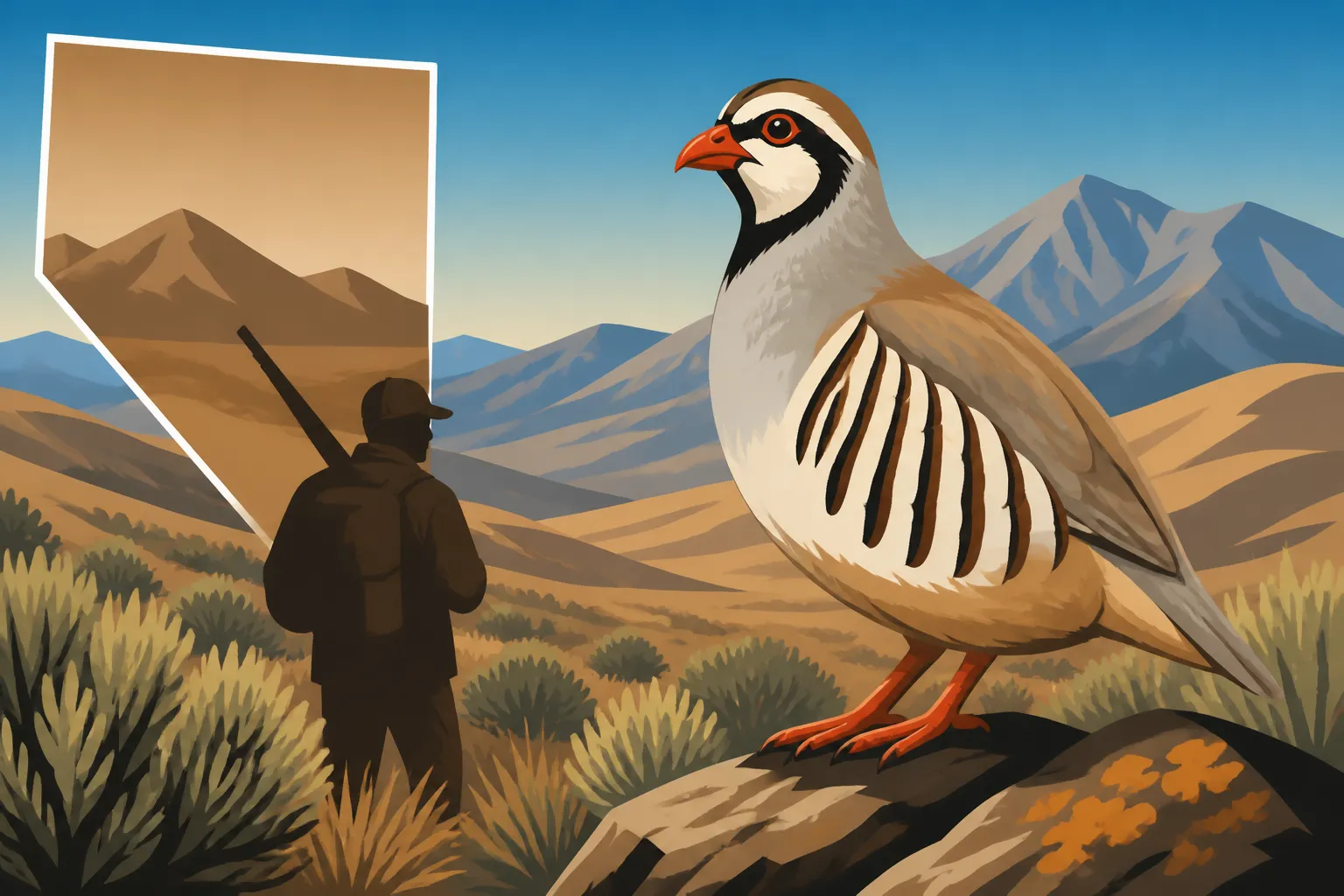
Huns are smaller than chukar, typically weighing in at about a pound, with a distinctive gray body, rusty-brown markings, and a unique horseshoe-shaped chestnut patch on their chest – more pronounced on the males. They're often found in coveys, ranging from a handful of birds to a dozen or more, which makes finding one bird often mean finding several. What sets them apart from chukar, behaviorally, is their preference for relatively flat or gently rolling terrain, often near agricultural fields or grasslands, rather than the steep, rocky canyons that chukar call home. When flushed, Huns explode into the air with a rapid wing beat and a characteristic whirring sound, flying fast and low, usually settling down within a few hundred yards. This makes them tough to track if you're not paying close attention.
They are primarily ground-dwelling birds, foraging for seeds, grains, and insects. During the early morning and late afternoon, you'll often find them actively feeding, while midday sees them hunkered down, usually in some sparse cover to escape predators and the elements. They rely heavily on camouflage, and they'll hold incredibly tight until you're nearly on top of them, which can be thrilling or frustrating depending on whether you have a dog or just your own two feet. Understanding this "hold tight" behavior is crucial, as it often means you need to be within spitting distance before they flush, making every step count.
Population Trends and Influencing Factors
Like all upland game birds, Hungarian partridge populations can fluctuate quite a bit from year to year, largely due to weather patterns. A cold, wet spring during nesting season can decimate chick survival, leading to fewer birds in the fall. Conversely, a mild winter followed by a warm, dry spring often sets the stage for a banner year. Northern Nevada, with its wide-ranging weather, certainly sees these ups and downs. Access to quality habitat is another huge factor. As agricultural practices change or certain areas get developed, prime Hun habitat can shrink, impacting overall numbers.
NDOW (Nevada Department of Wildlife) keeps an eye on these trends, and while Huns might not get the same spotlight as mule deer or elk, their management is still a part of the broader upland bird conservation efforts. Hunters often check resources like the Where Nevada Lists Unit Harvest Statistics to get an idea of where birds might be doing well year-to-year. Beyond direct observation, sources like GoHunt provide valuable insights into these population dynamics, often synthesizing data from various state agencies and field reports, which can be a huge help when you're trying to decide where to focus your efforts for the season. Understanding these underlying factors helps manage expectations and improves your chances of finding birds when you do get out into the field.
Key Habitats and Preferred Terrain in Northern Nevada
If you're looking for Huns in Nevada, you need to think broadly about Northern Nevada, particularly areas where there's a mix of agricultural influence, open grasslands, and sagebrush country. Unlike chukar who are almost exclusively tied to rocky, steep slopes, Huns prefer more gentle terrain where they can run, hide, and feed without constantly scaling cliffs.
Agricultural Edges and Grasslands
This is prime real estate for Hungarian partridge. Think about the rural valleys and plains of northern Nevada where dryland wheat, alfalfa, or other small grain crops are grown. The edges of these fields, especially where they transition into native grasslands or sagebrush, are absolute magnets for Huns. They provide an abundant food source from spilled grains and weed seeds, as well as crucial cover from the taller grasses and field margins. You'll often find coveys tucked into fence rows, irrigation ditches, or in patches of weedy cover adjacent to these cultivated lands.
These agricultural areas, like those found around Winnemucca, Lovelock, and into the northeastern parts of the state near Elko, offer some of the best opportunities. It’s important to remember that much of this land might be private, so always ensure you have permission before hunting. However, public land often borders these private fields, providing excellent hunting where the birds range out from the fields onto Bureau of Land Management (BLM) property. Key areas include the transition zones where stubble fields meet native rangeland, or where patches of bunchgrass offer concealment.
High Desert Valleys and Foothills
Beyond the immediate agricultural interface, Huns thrive in the expansive high desert valleys and lower foothills of Northern Nevada. Here, the landscape is dominated by sagebrush, native grasses, and often scattered patches of bitterbrush. They favor areas with a good mix of dense cover for hiding and open areas for feeding and running. These birds are masters of blending into the environment, so even in seemingly sparse country, they can be remarkably difficult to spot until they flush.
Look for areas with diverse vegetation, including pockets of taller grasses or forbs within the sagebrush steppe. Rolling hills and draws that offer some protection from the wind and predators are also common holding spots. The key is finding that sweet spot where food sources, escape cover, and loafing areas converge. These expansive public lands offer incredible opportunities, but they also demand thorough scouting and often a good pair of boots. When you're E-Scouting a Nevada Unit Before the Season, pay close attention to the transitions between different vegetation types and subtle changes in elevation, as these can often indicate potential Hun habitat.
Water Sources and Microclimates
While not as dependent on water as chukar in the blazing heat of August, Huns still benefit from proximity to reliable water sources, especially during drier periods. Pockets of greener vegetation around springs, small seeps, or even stock tanks can create crucial microclimates that provide better food and cover, attracting and holding coveys. In the generally arid landscape of Nevada, any consistent water source is a magnet for wildlife, and Huns are no exception.
These small, often overlooked features can be key to locating birds, especially later in the season when other vegetation has dried up. Knowing how to locate a guzzler from home or spot subtle changes in terrain that indicate a spring can be invaluable. However, it's worth noting that Huns can often go for extended periods without direct water, obtaining much of their moisture from dew or the food they consume. So, while water is a bonus, it's not always the absolute deal-breaker it might be for other species. Always consider how Hunting Water in Nevada's Driest Country might influence game movement, even for birds that seem less dependent on it.
Hunting Strategies and Techniques for Huns
Hunting Hungarian partridge requires a blend of keen observation, strategic movement, and often, the invaluable help of a good bird dog. These birds can be incredibly frustrating due to their tight holding patterns and explosive flushes, but that's precisely what makes a successful Hun hunt so rewarding.
Spot and Stalk vs. Walk-Up Approaches
Depending on the terrain and your hunting style, you might employ different methods. In more open, rolling terrain, a "spot and stalk" approach can be effective. This involves using optics like binoculars or a spotting scope to locate coveys from a distance before planning an approach. Huns are often visible feeding in the open during early mornings or late afternoons. If you can spot them, you can then try to use terrain features – draws, rises, or patches of taller sagebrush – to get within shooting range before they detect you. This strategy works well if you're trying to find Reading Wind on a Long Sage Stalk in vast, open basins.
More often, especially in areas with thicker cover, you'll be doing a "walk-up" hunt. This involves systematically covering likely habitat, hoping to flush birds as you move through. This is where a good zig-zag pattern across a field edge or through a sagebrush flat comes into play. Walk at a steady, deliberate pace, paying close attention to any subtle movements or sounds. Huns will hold incredibly tight, so you need to literally almost step on them sometimes. This means being ready to shoulder your shotgun and take a quick shot as they burst out. For a walk-up, covering ground efficiently and thoroughly is more important than speed.
Dog Work and Flushing
Let's be real: hunting Huns without a dog is an exercise in frustration and perseverance. While certainly possible, a well-trained bird dog is an absolute game-changer. Pointers can lock up on a covey, allowing you to walk in for the flush, while flushers can work through cover, pushing birds into the air within range. The dog's nose is far superior to ours for finding these camouflaged birds that hold tight.
When a dog goes on point, approach deliberately, ready for the explosive flush. Once the covey goes airborne, shoot quickly but accurately. Remember, Huns typically fly low and fast, often in a relatively tight group initially. If you manage to drop a bird, mark its fall precisely. This is where a retriever truly shines, as downed Huns can be tough to find in thick cover. If the covey scatters, mark where individual birds land. Often, scattered Huns will hold even tighter than the covey, offering single-bird opportunities if you can relocate them. This is also where a good map like those provided by GoHunt can help you mark your retrieve locations.
Reading the Birds and the Landscape
Becoming a successful Hun hunter is all about learning to read the subtle cues the birds and the landscape provide. Look for fresh tracks in dusty areas, feather piles indicating a predator kill, or even the distinct call of a scattered Hun trying to regroup. If you flush a covey but don't get a shot, observe their flight path carefully. They rarely fly over open ground for long and will typically drop into the nearest available cover, often a slight depression, a dense patch of sage, or an old fence line.
The landscape itself tells a story. Pay attention to changes in vegetation, subtle elevation shifts, and the presence of any water features. Understanding Terrain That Hides an Approach in Open Country can help you get closer without alerting the birds. For instance, a shallow wash might be where Huns often travel or seek cover. Wind direction is also crucial; Huns prefer to flush into the wind, which gives them lift, so position yourself downwind if possible to encourage a flight path towards you rather than away. Learning these patterns will drastically improve your success rate and make you a more intuitive hunter.
Essential Gear for a Northern Nevada Partridge Hunt
A successful Hun hunt in Northern Nevada isn't just about knowing where to go and what to do; it's also about being properly equipped for the unique challenges of the terrain and the birds themselves.
Shotguns and Ammunition
For Hungarian partridge, a fast-handling shotgun is key. These birds are quick, so you need something that comes to the shoulder smoothly and naturally. Most hunters opt for a 12-gauge or 20-gauge shotgun. A 20-gauge is often preferred for its lighter weight, which is a blessing after miles of walking, without sacrificing much effectiveness on these smaller birds. An improved cylinder or modified choke is generally ideal, allowing for a good spread pattern at the close ranges Huns are typically flushed.
Ammunition choice is also critical. Since Huns are small and their cover isn't usually dense, #6 or #7.5 shot is common. Some hunters even prefer #5 shot for a little extra punch, especially if they might encounter a bonus chukar or even a sage grouse. Carrying a variety of shells might be a good idea, as shot size needs can change depending on how tight the birds are holding and how dense the cover is. Always carry more shells than you think you'll need; fast-flushing coveys can lead to a lot of shooting, and it's always better to have too many than run out when the action heats up.
Optics and Navigation
Don't underestimate the value of good optics for Hun hunting, especially if you're trying a spot-and-stalk method in open country. A pair of 8x or 10x binoculars are indispensable for scanning distant field edges, spotting feeding coveys, or marking downed birds in sparse cover. They can save you a lot of walking by helping you identify promising areas from afar. A good quality pair like those from Zeiss or Swarovski can make a huge difference in clarity and light gathering during dawn and dusk.
Navigation is paramount in Nevada's vast and often featureless landscapes. A reliable GPS unit, whether a handheld device or a robust app on your phone (like onX Hunt), is a must-have. These tools allow you to pinpoint your location, track your progress, mark covey flushes, and safely navigate back to your vehicle. Downloading offline maps is critical, as cell service is often non-existent in many prime Hun hunting areas. Remember to carry a portable power bank for your phone or extra batteries for your GPS. For detailed maps and unit information, many hunters consult resources like GoHunt, which can layer crucial data over topographical maps, showing public and private land boundaries, and even historical harvest data.
Clothing and Footwear
Your clothing needs to be durable, comfortable, and adaptable to Nevada's often unpredictable weather. Layering is always the smartest approach. Start with a moisture-wicking base layer, add an insulating mid-layer (like fleece), and top it with a windproof and water-resistant outer shell. While Huns don't require the same level of briar protection as eastern quail, tough canvas or synthetic brush pants will protect against sagebrush, cheatgrass, and other abrasive vegetation. Blaze orange is often a smart choice for safety, even if not strictly required in certain seasons or for specific species, especially when hunting with others. See Legal Shooting Hours and Blaze Orange in Nevada for full regulations.
Footwear is arguably the most important piece of gear. You'll be covering miles over varied terrain, from rocky ground to dusty flats. A comfortable, supportive, and waterproof pair of hunting boots is non-negotiable. Look for boots with good ankle support to prevent twists and durable soles that can handle sharp volcanic rock and abrasive sand. Many hunters recommend brands like Schnee's or Crispi for their ruggedness and comfort. Pair them with quality wool or synthetic socks to prevent blisters and manage moisture. Remember, Choosing Boots for Sharp Volcanic Rock will make or break your ability to stay in the field all day. Don't forget a sturdy game vest with plenty of room for birds, water, and extra shells.
Conservation and Management of Hungarian Partridge
The health of Hungarian partridge populations, like all wildlife, relies heavily on sound conservation practices and effective management strategies. Understanding these efforts can give hunters a deeper appreciation for the resource and how their involvement plays a role.
Habitat Challenges and Preservation Efforts
Hungarian partridge face similar habitat challenges to many other upland game birds in the West. Habitat loss and degradation due to agricultural changes, urban sprawl, and invasive species like cheatgrass are significant concerns. Cheatgrass, in particular, can outcompete native grasses and forbs that provide better food and cover for Huns, and it also increases wildfire risk, which can decimate existing sagebrush ecosystems. Drought, a persistent reality in Nevada, further stresses these habitats, reducing available forage and water.
Conservation efforts often focus on habitat improvement and preservation. This includes managing grazing to promote healthy native grasslands, controlling invasive weeds, and sometimes even targeted revegetation projects with native plants. Hunters often contribute to these efforts through their license and tag fees, which directly fund NDOW's wildlife management programs. Organizations like Pheasants Forever and Quail Forever also play a vital role, often working with landowners and public agencies to create and enhance upland bird habitat. These grassroots efforts are critical for the long-term sustainability of Hun populations.
NDOW's Role and Season Setting
The Nevada Department of Wildlife (NDOW) is responsible for monitoring and managing Hungarian partridge populations within the state. This involves conducting surveys to assess population numbers, productivity (chick survival), and overall health of the birds and their habitats. Based on this data, NDOW sets hunting season dates, bag limits, and possession limits to ensure sustainable harvest opportunities while safeguarding the future of the species.
NDOW's approach is data-driven, considering factors like annual precipitation, spring weather patterns, and observed bird numbers. For instance, if there's been a particularly harsh winter or a very wet, cold spring, NDOW might adjust bag limits or season lengths to allow the population to rebound. These decisions are carefully balanced to provide recreational opportunities for hunters while ensuring the long-term health of the resource. Hunters can stay informed by regularly checking the official Nevada hunting regulations, which detail the specific seasons and rules for all upland game birds, including Huns. You can also gain insight from how NDOW manages other upland species like Nevada Chukar Season Opening Date.
Planning Your Northern Nevada Partridge Adventure
A successful Hun hunt is often the culmination of diligent planning, thorough scouting, and a good understanding of regulations. Don't just show up and expect birds to jump into your vest; put in the groundwork!
Scouting and Unit Selection
Before you even think about putting boots on the ground, good scouting is essential. This starts at home with maps and online resources. Tools like GoHunt or onX Hunt allow you to pore over satellite imagery and topographic maps, identifying potential Hun habitat: agricultural field edges, riparian zones, and areas with a mix of sagebrush and grass in the high desert valleys. Look for public land access points and plan your routes. Many hunters consult GoHunt for their comprehensive information, including hunt unit boundaries, public land ownership, and even historical harvest data, which can guide your initial unit selection.
Once you have a few promising spots identified, if possible, consider an in-person scouting trip before the season opens. Drive the roads, look for sign (tracks, feathers), and observe bird activity. Even a quick drive-through can tell you a lot about habitat quality and current conditions. Pay attention to private land boundaries and ensure you know who owns what; always get permission if you intend to hunt private land. Remember, Reading a Nevada Hunt Unit Before You Apply is a crucial first step for any species in Nevada, Huns included.
Permits and Regulations
Navigating Nevada's hunting regulations can feel like deciphering ancient texts sometimes, but it’s absolutely critical. First and foremost, you'll need a valid Nevada hunting license. Non-residents will also need to purchase The Nonresident Nevada Combination License Price. You don't need a separate tag specifically for Hungarian partridge; they fall under the general upland game bird regulations.
Always check the current year's regulations pamphlet from NDOW for specific season dates, bag limits, and legal shooting hours for Hungarian partridge. These can change annually, so never rely on last year's information. Pay attention to any special unit restrictions or specific rules regarding public land use. For example, some areas might have restrictions on motorized vehicle use. Understanding rules like Trail Camera Rules on Nevada Public Land or general Nevada Small Game Seasons at a Glance will ensure you hunt legally and ethically. It’s always a good idea to keep a copy of the regulations (digital or physical) with you in the field.
Physical Preparation and Safety
Hunting Huns in Northern Nevada involves a lot of walking, often over uneven, rocky, or dusty terrain. Being in good physical condition will significantly enhance your enjoyment and success. You'll be covering miles, potentially climbing over modest hills and through dense sagebrush. Start a walking routine, perhaps incorporating some inclines, weeks or months before your hunt. Preparing Physically for Long Glassing Days will benefit you even if you're not glassing for deer.
Beyond physical fitness, safety is paramount. Always handle firearms responsibly and be aware of your muzzle direction. If hunting with a dog or other people, know where everyone is at all times. Carry a well-stocked first-aid kit, especially for yourself and your dog if you have one. Nevada weather can be extreme, so be prepared for sudden changes in temperature. Carry plenty of water—more than you think you'll need—and snacks. Let someone know your hunting plan, including your intended route and expected return time, especially if you're venturing into remote areas where cell service is spotty. A satellite messenger device can be a lifesaver in these situations.
| Feature | Hungarian Partridge | Chukar |
|---|---|---|
| Preferred Terrain | Flat to gently rolling sagebrush, agricultural edges | Steep, rocky, volcanic canyons and slopes |
| Typical Covey Size | 6-20+ birds, often larger coveys | 10-30+ birds, can be massive coveys |
| Flush Behavior | Explosive, fast, low flight; often scatter | Explosive, fast, often fly uphill or across canyon |
| Holding Ability | Hold incredibly tight, almost step on them | Hold tight, often run uphill before flushing |
| Sound | Distinctive "whee-whistle" call, whirring flush | Loud, distinctive "chuk-chuk-chukar" call |
| Typical Habitat | Northern Nevada valleys, agricultural belts | Throughout Nevada's mountain ranges |
| Difficulty | Challenging due to tight hold & fast flush | Extremely challenging due to terrain & flight |
| Dog Benefit | Highly beneficial for finding & retrieving | Essential for finding & retrieving in tough cover |
Disclaimer
Please note that hunting regulations, seasons, and requirements can change frequently. It is the individual hunter's responsibility to consult the most current regulations published by the Nevada Department of Wildlife (NDOW) before planning and undertaking any hunting activity. This guide provides general information and should not be considered a substitute for official sources.