Nevada Quail Species and Where They Live
Hunting quail in Nevada isn't just a casual walk in the park; it's a test of endurance, strategy, and often, sheer will. Many hunters come to the Silver State dreaming of big game, but those in the know understand that Nevada offers some truly exceptional upland bird opportunities – and challenges. This guide is here to unravel the mysteries of Nevada's diverse quail populations, showing you where each species calls home, what makes them unique, and how you can increase your chances of finding these incredible game birds across the state's varied, often unforgiving, landscapes.
The Quail Hunter's Nevada Dream – An Overview
Nevada, with its vast stretches of public land, rugged mountains, and surprising pockets of water, presents a unique and often demanding environment for upland bird hunters. Unlike some other states where quail hunting might revolve around planted fields or specific preserves, Nevada's birds are truly wild, thriving in their natural, often harsh, habitats. This wildness is precisely what draws many dedicated hunters to the state, offering an authentic and deeply rewarding experience. However, it also means you're going to earn every bird in your vest.
Why Nevada is a Quail Hunter's Paradise (or Challenge)
Let's be real: chasing quail in Nevada isn't for the faint of heart. The terrain can be brutal – steep, rocky slopes, dense sagebrush, and endless drainages that all look the same after a few miles. But that's part of the allure. The challenge of finding these birds in their natural element, often miles from the nearest road, makes the reward of a covey flush absolutely electrifying. Nevada boasts a healthy population of three distinct quail species: the Gambel's, California, and Mountain Quail. Each offers its own unique hunting experience, requiring different strategies and leading you to vastly different parts of the state. It's not just about pulling a trigger; it's about understanding the land, reading the signs, and adapting to what Mother Nature throws at you. The solitude you find while trekking through an untouched basin, with only your dog and the vast Nevada sky for company, is a soul-refreshing experience that's hard to beat.
Understanding Nevada's Quail Diversity
Having three distinct species of quail means Nevada offers a variety of hunting experiences you won't find in many other places. It's not a one-size-fits-all situation; successful hunting means knowing which bird you're after and where they prefer to live. The Gambel's quail, with their distinctive topknot, are icons of the hot, arid southern deserts. Then you have the California quail, often found in more forgiving valley habitats, especially in the western and northern parts of the state, frequently near agricultural edges or riparian areas. Finally, the truly elusive Mountain quail hide out in the higher, brushier elevations, often requiring serious vertical hiking. Each species has adapted brilliantly to its niche, developing unique behaviors and habitat preferences that dictate how and where you'll find them. Understanding these differences is the first step to becoming a successful Nevada quail hunter and truly appreciating the state's amazing upland bird opportunities.
Gambel's Quail: The Desert Speedsters of Southern Nevada
Ah, the Gambel's quail. If you've ever dreamt of chasing birds through classic Southwestern desert landscapes, these are your quarry. They are undeniably charismatic, with their jaunty topknots and distinctive call, but they are also absolute masters of evasion. Hunting Gambel's often feels like a cross between a sprint and a chess match, all played out under the relentless Nevada sun. They thrive in the arid regions, making them a true desert specialist, perfectly adapted to the challenges of their environment.
Identifying Gambel's Quail and Their Unique Behavior
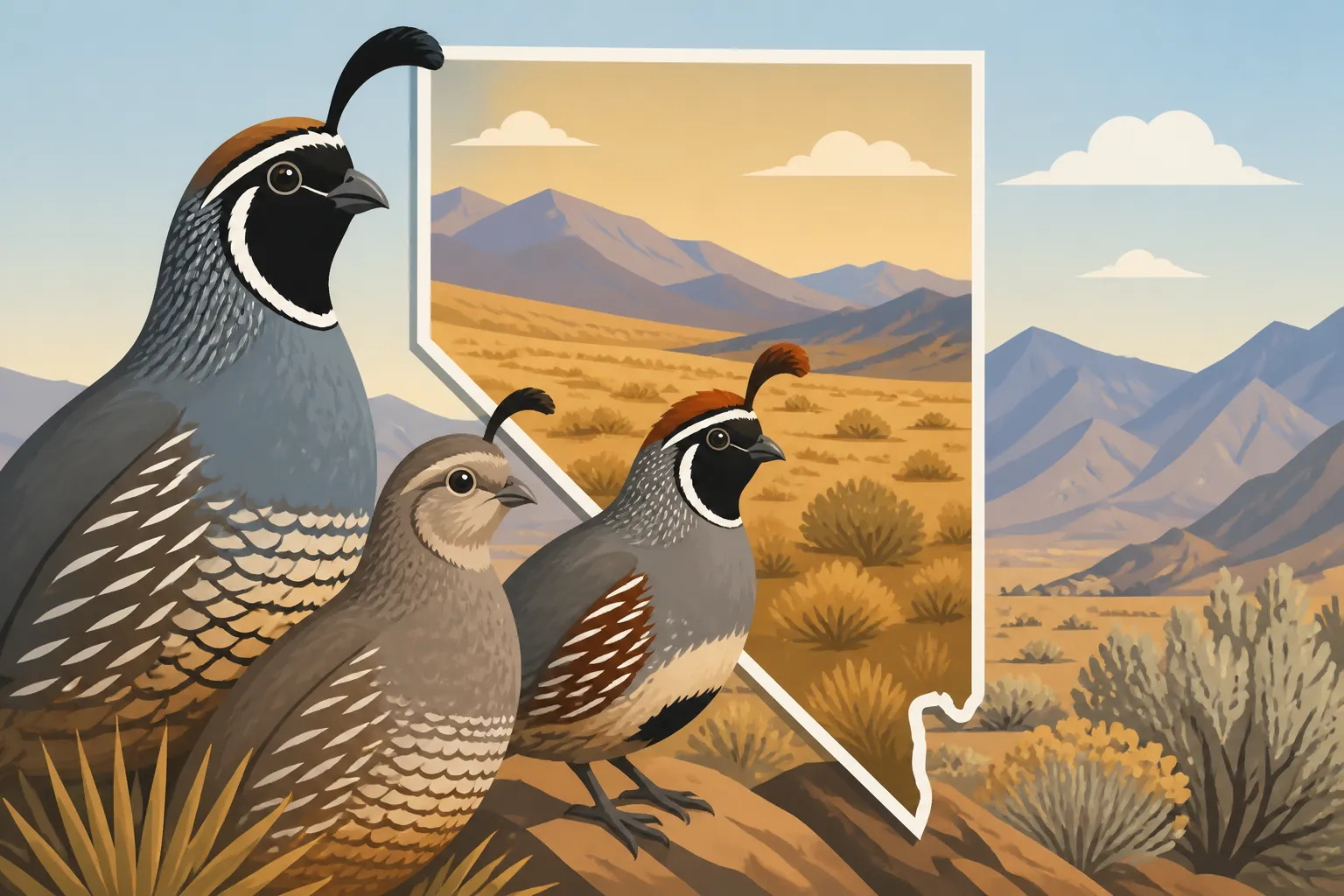
Spotting a Gambel's quail is pretty easy once you know what to look for. The males are striking, with a prominent black topknot (often called a "plume" or "comma") that curls forward, a black face, white stripes outlining the black bib, and a reddish-brown cap. Their flanks are streaked, and their bellies often show a dark patch. Females are similar but duller, with a smaller topknot and lacking the bold black and white facial markings. What truly defines Gambel's behavior, however, is their preference for running. They are champion sprinters, using their legs to escape predators and hunters rather than taking to the air. You'll often see a covey scattering in every direction, zipping through the thorny brush like tiny, feathered race cars, before finally flushing when cornered or when they feel truly threatened. This makes them incredibly frustrating and equally rewarding to hunt, as getting them to hold for a dog or for a clean shot requires strategic positioning and patience. Their "chi-CA-go" call is also distinctive, a common sound echoing through the desert mornings.
Prime Gambel's Quail Habitat in the Nevada Desert
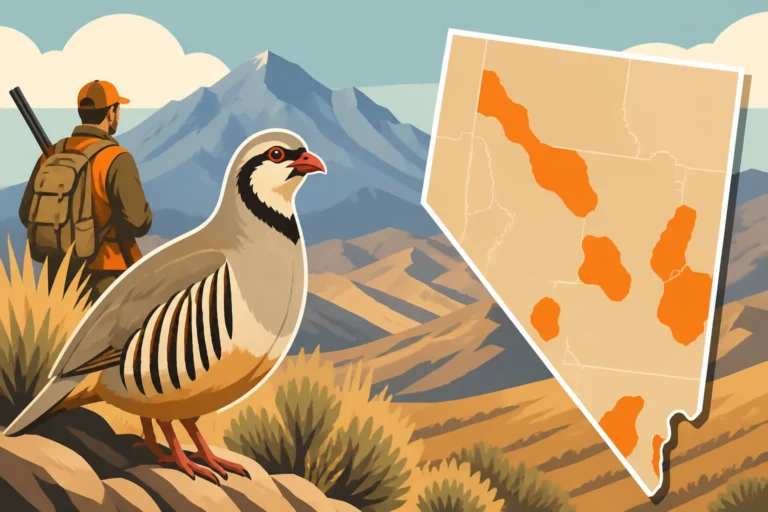
When you're looking for Gambel's quail, think classic Mojave Desert. These birds absolutely love the lower elevations of southern Nevada, thriving in areas with mesquite bosques, catclaw acacia, thorny brush, creosote bushes, and rocky washes. Critically, they need a reliable water source nearby, even if it's just a seep, a natural spring, or a man-made guzzler. These water points act as magnets, concentrating birds in otherwise vast, dry country. They also prefer areas with good escape cover – those thick, thorny bushes and dense thickets provide perfect refuge from aerial predators and a safe place to roost at night. You'll find strong populations around the areas south of Las Vegas, including the northern edges of the Mojave Desert. Places like the Desert National Wildlife Refuge, while having specific hunting regulations, give you an idea of the kind of habitat they utilize. When you're scouting, keep an eye out for areas where different types of cover meet, especially near those crucial water sources.
Tactics for Hunting Gambel's Quail
Hunting Gambel's quail is a full-body workout, often requiring miles of walking over uneven terrain. The key is to get ahead of their running behavior. Many hunters use pointing dogs, but even a seasoned bird dog can struggle with these birds, as they'll often run far ahead of the dog's point. A good strategy is to use blocking tactics: have a hunting partner or two positioned ahead or to the sides of a known travel corridor (like a wash or a line of dense brush) while you or your dog work through it. This can encourage the birds to flush rather than just run. Walking slowly and deliberately, especially through thick cover, can also get them airborne. Always be ready, because when they do flush, they erupt in a burst of speed, offering a challenging shot. Carry plenty of water for yourself and your dog, as the desert heat can be intense, even in cooler months. Don't forget to review Hunting Water in Nevada's Driest Country for tips on finding those critical resources.
California Quail: The Valley Birds of the West and North
While the Gambel's own the southern deserts, the California quail holds court in the more temperate, often lusher, areas of western and northern Nevada. These are the birds you're more likely to see scurrying across rural roads or hear calling from thickets near streams. They are sociable, often found in larger coveys than their desert counterparts, and provide a different, but equally exciting, hunting experience. Their adaptability has allowed them to thrive in a wider range of habitats across the state.
Recognizing California Quail and Their Social Nature
California quail, like Gambel's, have a distinctive topknot, but theirs is usually tear-shaped and leans forward. Males sport a black face bordered by a white stripe, a chestnut cap, and a scaly-patterned belly with a dark patch. Females are duller, lacking the bold facial patterns and having a smaller topknot. Their call is famously recognized as a "chi-ca-go" or "chi-ca-go-go," similar to the Gambel's but often with a slightly different cadence. What truly sets them apart is their strong social nature. You'll frequently find them in large coveys, especially outside of breeding season, often numbering in the dozens. This gregarious behavior means that when you find one, you've often found many, leading to exhilarating, explosive flushes. They are also known for their habit of "treetop" perching, often calling from a prominent branch or fence post before diving into cover.
Preferred Habitats: Farm Edges, Riparian Zones, and Foothills
California quail are far less tied to the deep desert than Gambel's. You'll find them concentrated in areas with more consistent water and denser, mixed vegetation. Their preferred habitats include agricultural edges, especially where fields meet brushy draws, riparian corridors along rivers and streams (like the Humboldt or Carson Rivers), and the brushy foothills that transition from desert valleys to higher elevations. Look for areas with dense willow thickets, rabbitbrush, wild roses, and patches of dense weeds or tall grasses that provide both food and excellent escape cover. They are particularly fond of areas where private farm ground meets public land, often utilizing the security of the private property before venturing out into huntable areas. When you're scouting, pay close attention to the transition zones where different habitat types converge, as these often create the perfect mosaic of food, water, and cover that California quail need. Checking out areas mentioned in California Quail on Nevada Farm Ground can give you more specific insights.
Effective Strategies for California Quail
Hunting California quail often involves working through denser cover than what you'd encounter with Gambel's. While they will run, they are typically more inclined to hold for a pointing dog, especially when nestled deep in thickets. Using a good pointing dog is highly recommended for these birds, as they can pinpoint coveys that would otherwise be impossible to find. Walking creek bottoms, the edges of agricultural fields, and brushy canyons are productive tactics. If you flush a covey and they scatter, mark where individual birds land. California quail often hold tight after the initial flush, offering opportunities for single-bird retrieves. Be mindful of property boundaries, especially when hunting near farmland, and always ensure you have permission if you're venturing onto private ground. The hunt can be fast-paced once you're on a covey, so having quick reflexes and an open choke can be beneficial.
Mountain Quail: Elusive High-Country Gems
Now, if you're looking for a true physical challenge and the reward of one of North America's most striking quail species, the Mountain quail is your bird. These are not your roadside birds; they demand effort, elevation, and often, solitude. Finding them requires dedication and a willingness to explore rugged, steep terrain, but the payoff of encountering these beautiful birds in their wild, high-country domain is truly unforgettable.
Characteristics of Mountain Quail and Their Solitary Ways
Mountain quail are the largest of the North American quail species, a robust bird built for the mountains. They are easily identified by their long, straight, black head plume, which often gives them a distinctive "horned" appearance. Their overall plumage is quite handsome: a rich chestnut throat bordered by white, an olive-brown back, and bold white and chestnut barring on their flanks. Unlike their more social cousins, Mountain quail are often found in smaller family groups or pairs, particularly early in the season. They are notoriously elusive, preferring to slink away silently through dense undergrowth rather than flushing, making them incredibly difficult to pin down. Their call is a loud, clear "woo-ooh" or "que-ark," often heard echoing across canyons, which can be a valuable locator in their vast habitat. Their solitary nature and preference for thick cover make them a formidable challenge for even experienced bird hunters.
Finding Mountain Quail in Rugged High-Elevation Terrain
As their name suggests, Mountain quail live in the mountains, specifically the brushy slopes and canyon bottoms of Nevada's higher ranges. They prefer elevations typically between 4,000 and 10,000 feet, often found in association with mixed conifer forests, aspen groves, and dense brush species like serviceberry, bitterbrush, and mountain mahogany. These birds need heavy cover for protection and a diverse understory for food. Look for them in steep, north-facing slopes, along creek drainages in the mountains, and in areas where old burns or timber cuts have created dense regeneration of brush. Critical areas can include the Humboldt-Toiyabe National Forest, the Ruby Mountains, and parts of the Jarbidge Wilderness, though they are certainly found in many other ranges across the state. They require a reliable water source, often springs or small mountain streams, which can be few and far between in some areas. Their habitat is demanding, often requiring significant vertical climbing, so physical fitness is paramount. Check out Mountain Quail in Nevada's Ranges for more specifics on their distribution.
Mountain Quail Hunting Challenges and Rewards
Hunting Mountain quail is arguably the most physically demanding of all Nevada quail hunts. The terrain is steep, rocky, and often covered in dense, thorny brush that can be miserable to walk through. These birds are experts at using the topography and vegetation to their advantage, often running uphill and disappearing before you can even get a bead on them. A well-conditioned dog is invaluable, especially one that can work dense cover effectively and has a good nose. Stealth and patience are key; you often have to slowly work through likely areas, listening for their calls and trusting your dog's subtle indications. When they do flush, they tend to fly downhill with incredible speed, presenting very challenging shots.
Despite the difficulties, the rewards are immense. The sheer beauty of the country you'll explore, the solitude, and the satisfaction of finally bagging one of these magnificent birds are unparalleled. It’s an adventure that pushes you physically and mentally, immersing you deeply in Nevada’s wild high country. Make sure you are prepared physically for days that will involve Preparing Physically for Long Glassing Days, even if you aren't glassing, the hiking will be intense.
Habitat Diversity and Why It Matters for Quail
Nevada is a land of extremes, from scorching desert floors to alpine peaks, and this incredible diversity of landscape directly impacts where and how its quail thrive. Understanding the specific habitat needs of each quail species isn't just academic; it's the foundation of successful hunting. Without the right combination of food, water, and cover, quail simply won't survive, let alone flourish. This intricate relationship with their environment means that environmental factors, like drought, play a huge role in year-to-year populations.
The Role of Water Sources in Quail Distribution
If there's one universal truth about quail in Nevada, it's that water is life. This is especially true in the arid regions where Gambel's quail roam. Quail, particularly during hot periods, need regular access to water for drinking, foraging, and even dust bathing. Natural springs, seeps, riparian corridors, and man-made guzzlers are absolute magnets for these birds. In many dry units, knowing the location of these water sources is the single most important piece of scouting information you can have.
These sources concentrate quail, often defining the very boundaries of their range in otherwise vast, dry country. While California and Mountain quail might benefit from more consistent moisture in their higher-elevation or riparian habitats, even they will gravitate towards reliable water during dry spells. A diligent hunter will always use tools like topo maps and aerial imagery, perhaps from a service like GoHunt, to pinpoint potential water sources before ever stepping foot in the field. These digital maps can help you identify subtle changes in vegetation that indicate hidden seeps or even the tell-tale shapes of guzzlers, allowing you to focus your efforts in the most productive areas.
Impact of Vegetation and Cover on Quail Survival
Beyond water, the type and density of vegetation are paramount for quail. They need cover for a multitude of reasons: protection from predators (both aerial and terrestrial), thermal regulation (shade from the sun, warmth from the wind), and roosting sites. Each species has its preferences. Gambel's quail favor the thorny thickets of mesquite and catclaw acacia in the desert, which offer impenetrable refuge. California quail thrive in denser brush like willows, rabbitbrush, and wild rose, often found along creek beds or agricultural field edges. Mountain quail depend on robust undergrowth within mixed conifer forests or dense mountain mahogany on steep slopes.
This cover provides crucial concealment for nesting, raising broods, and escaping danger. Without adequate cover, quail are far more vulnerable. The interspersion of different types of vegetation – an open area for foraging near a dense escape cover – creates ideal habitat. This mosaic allows quail to feed safely while having immediate access to protection. Understanding these cover preferences will guide your hunting efforts, leading you to the places where birds feel safe and can find sustenance.
How Drought Affects Quail Numbers
Nevada's climate is inherently arid, and drought is a recurring, often severe, factor that profoundly impacts wildlife populations, especially quail. Years of low rainfall mean less forage (seeds, insects, green shoots) and critically, diminished water sources. When springs dry up and guzzlers run low, quail populations suffer. Breeding success can plummet, as hens may not be in good enough condition to lay eggs, or chicks might not survive without sufficient food and water. This directly translates to lower bird numbers for hunters.
The frustrating reality for upland hunters is that a good quail year is often directly tied to the previous winter's moisture and the subsequent spring green-up. Hunters often find themselves carefully monitoring weather patterns and reports from the Nevada Department of Wildlife (NDOW) to gauge the health of the quail populations. A string of dry years can severely depress numbers, making hunting incredibly tough. Conversely, a wet winter can lead to an explosion in populations, making for banner seasons. It’s a harsh reminder of how fragile these populations can be in the face of environmental fluctuations, and why careful management and habitat preservation are so vital.
Planning Your Nevada Quail Hunt
A successful Nevada quail hunt doesn't start with the first flush; it begins long before, with meticulous planning and preparation. Given the challenging terrain and often remote locations, having your ducks in a row (or your quail, as it were) is crucial for both success and safety. From ensuring you have the right gear to leveraging modern scouting tools, every detail matters.
Essential Gear and Preparations
You absolutely cannot skimp on gear when hunting Nevada quail. First and foremost, footwear: you'll be covering miles over abrasive, often rocky terrain. Invest in high-quality, comfortable, and durable hiking boots. Good ankle support is non-negotiable. Next, hydration: the desert and high mountains are unforgiving. Carry a hydration pack and extra water bottles; you'll need far more water than you think. Refer to Water You Must Carry on a Desert Day Hunt for specific recommendations. For clothing, layers are key. Nevada's temperatures can swing wildly from chilly mornings to hot afternoons, even in fall. A good bird vest or pack with plenty of room for birds, shells, water, and emergency supplies is essential. Don't forget snake gaiters in the low country, as rattlesnakes are common. A GPS device or a reliable GPS app on your phone (with downloaded offline maps) is critical for navigation in areas with no cell service. Finally, if you're bringing a dog, ensure they are in peak physical condition and have protective gear like boots for their paws against the sharp ground.
Utilizing E-Scouting Tools for Quail Hotspots
In today's hunting world, e-scouting is no longer a luxury; it's a necessity, especially in a state as vast as Nevada. Tools like GoHunt's Insider platform or onX Hunt are game-changers. These mapping applications allow you to pour over satellite imagery, topographical maps, and public land boundaries from the comfort of your home. You can identify potential water sources (springs, guzzlers, creek beds), dense cover, and changes in elevation that might hold birds. For example, using GoHunt's detailed layers, you can mark potential travel corridors, pinpoint isolated patches of ideal habitat, and even overlay historical harvest data to identify units or areas that have traditionally been productive. This allows you to narrow down your focus and make the most of your valuable hunting time. Remember, identifying areas with the right combination of food, water, and cover before you even leave home will drastically improve your chances of success. Also, learning how to properly use Using onX Layers for Nevada Public Land can further enhance your e-scouting efforts.
Nevada Quail Bag Limits and Regulations
Before you head out, always double-check the current Nevada Department of Wildlife (NDOW) regulations. These can change year to year, and ignorance is no excuse. General statewide bag limits for quail are usually combined across species, meaning you can harvest a certain number of quail per day, regardless of whether they are Gambel's, California, or Mountain quail. Additionally, there's typically a possession limit, which is the total number of birds you can have on your person or in your vehicle at any given time.
It's crucial to understand the season dates, which vary by species and region, and any specific unit restrictions. For example, some wildlife management areas might have unique rules or closures. Having your Nevada hunting license and any required upland game bird stamps is a given. Always carry a copy of the current regulations in the field. Understanding these rules ensures a legal and ethical hunt, contributing to the sustainable management of Nevada's fantastic quail resources. For the most up-to-date information, specifically on daily and season limits, consult the NDOW official regulations or refer to our detailed guide on Nevada Quail Bag Limits by Species.
Here's a quick comparison of Nevada's quail species:
| Feature | Gambel's Quail | California Quail | Mountain Quail |
|---|---|---|---|
| Primary Habitat | Arid deserts, washes, mesquite, catclaw acacia | Valley floors, farm edges, riparian zones, foothills | Steep mountain slopes, dense brush, high elevation |
| Typical Location | Southern Nevada (Mojave Desert) | Western & Northern Nevada (valleys, foothills) | Higher ranges across the state |
| Identifying Male | Black topknot (comma), black face, white outline, dark belly patch | Tear-shaped topknot, black face with white stripe, scaly belly | Long, straight black plume, chestnut throat, barred flanks |
| Key Behavior | Prefers running, often in coveys, explosive flush when cornered | Runs but holds better for dogs, social coveys, often perches | Very elusive, prefers to sneak away, smaller groups, difficult to flush |
| Call | "Chi-CA-go" | "Chi-ca-go-go" | Loud, clear "woo-ooh" or "que-ark" |
| Hunting Difficulty | Medium to High (running birds, hot, open terrain) | Medium (denser cover, hold better) | High (steep terrain, elusive, less numerous) |
Disclaimer
Please remember that hunting regulations, seasons, and tag allocations can change. Always consult the official Nevada Department of Wildlife (NDOW) website or their current hunting regulations guide before planning any hunt. This article is intended for informational purposes only and should not be considered a substitute for official sources.