Which Units Hold Nevada’s Biggest Elk Herds
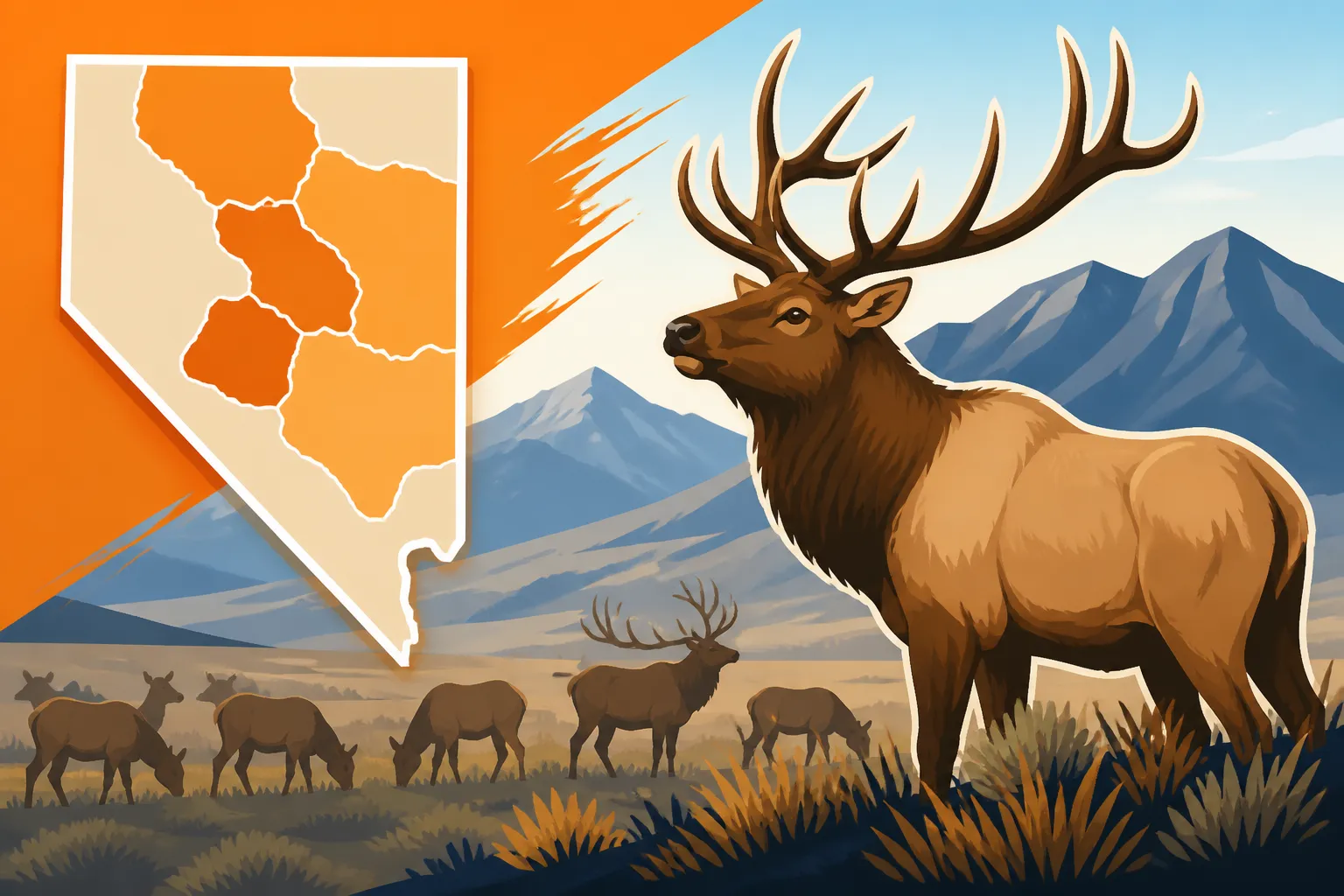
For many hunters, the dream of chasing elk in Nevada conjures images of massive bulls bugling across open country. While the state is absolutely capable of producing incredible elk hunting, pinpointing the units that consistently hold larger, more robust elk herds can feel like an overwhelming task. This guide is designed to cut through the vastness of Nevada, helping you understand where and why some units are more prolific for elk, and how to focus your efforts on finding those impressive herds.
Understanding Nevada's Unique Elk Landscape
Nevada’s elk story is truly one of modern conservation success, but it's important to recognize that elk aren't found in every mountain range or valley across the state. They thrive in specific environments, and understanding these factors is key to identifying the units with the biggest herds.
A History of Growth: From Sparse to Significant
It's hard to believe now, but elk were once largely absent from Nevada. The state’s current elk populations are a testament to dedicated wildlife management and successful transplant programs. You see, these magnificent animals didn't just appear overnight; they were reintroduced and carefully nurtured over decades. If you're interested in the full story, I've previously delved into how Nevada Elk Herds Grew From Nothing Into a Trophy Draw. It’s a fascinating look at how far things have come.
Over time, these initial herds established themselves, adapted to the Great Basin environment, and began to flourish in suitable habitats. This growth wasn't always linear, and various factors, from forage availability to winter severity, have played a role in the overall Nevada Elk Herd Growth Over Time. But the general trend has been upward, creating the exciting hunting opportunities we see today. Knowing this history helps paint a picture of why certain units are now strongholds.
Habitat Hotspots: What Elk Need to Thrive
Elk are creatures of habit and specific habitat requirements. In Nevada, these animals gravitate towards areas that offer a combination of necessities: good forage, reliable water, ample cover for security, and suitable winter range. The truly productive units typically boast diverse vegetation, often with a mix of mountain meadows, aspen stands, and sagebrush-covered slopes that provide both food and protection. Think higher elevations in the summer, with access to lower, more protected valleys when the snow flies.
Water is, without a doubt, a crucial component. While many units might have decent feed, consistent water sources are what truly hold elk in a given area, especially in Nevada's often arid climate. These can be natural springs, creeks, or even man-made guzzlers. Beyond summer range, understanding Where Elk Winter in the Northern Ranges can give you significant clues about overall herd health and density within a unit, as productive winter range directly impacts calf survival and herd recruitment. When scouting, or even just e-scouting, pay close attention to the availability and distribution of these key habitat components.
Key Units for Strong Elk Herds
When most hunters ask about units with "biggest elk herds," they're often thinking about units that offer the best chance at a tag and a successful hunt. While some units are indeed celebrated for producing trophy-class animals—and we’ve explored Which Nevada Units Grow the Biggest Bulls in another post—the focus here is on general herd size and density. These often overlap, as healthy, large herds tend to produce more mature animals.
Identifying Consistent Performers
Based on historical data and hunter success, several units and general regions in Nevada consistently stand out for their robust elk populations. The northern and eastern parts of the state, particularly within and surrounding the larger national forests like the Humboldt-Toiyabe National Forest, often feature prominently. Ranges such as the Ruby Mountains, Schell Creek Range, and areas near the Jarbidge Wilderness are frequently mentioned when discussing prime elk country.
However, pinpointing exact units with the absolute "biggest" herds isn't always straightforward. Herd numbers fluctuate with environmental conditions, management practices, and hunter harvest. The best way to get a current picture is to dive into the Nevada Department of Wildlife (NDOW) harvest statistics and population reports. These public documents are goldmines of information. Tools like GoHunt can significantly simplify this research, compiling draw odds, unit data, and harvest success rates into an easily digestible format, allowing you to quickly compare different units. Always look for units that consistently show high hunter success rates and decent harvest numbers over several years, as this indicates a healthy, harvestable population.
Factors Influencing Herd Size and Distribution in Specific Units
Several critical factors influence not just where elk live, but how many there are and how they're distributed within a specific unit. These dynamics are constantly shifting, and a savvy hunter keeps them in mind.
One of the most immediate influences is environmental conditions, particularly drought and winter severity. A series of dry years can reduce forage quality and water availability, stressing herds and potentially reducing calf survival. Conversely, good moisture years often lead to better forage, healthier cows, and more calves hitting the ground, boosting herd numbers. Similarly, harsh winters can increase mortality, especially among calves and older animals. We've discussed how Elk Herds Recover After a Burn which is another significant factor in habitat quality.
Wildlife management objectives also play a huge role. Each unit has a specific What a Herd Objective Actually Means—a target population size and age/sex ratio that biologists aim to maintain. These objectives dictate how many tags are issued each year, which directly impacts the harvest pressure and, in turn, herd density. By reviewing the annual hunt proclamation and harvest data, you can see how closely a unit is meeting its objectives and how that might translate to the number of elk you'll encounter. For a deeper look at the outcomes, checking Nevada Elk Harvest Success by Unit will give you practical insight into where hunters are actually finding animals.
Strategies for Researching and Accessing Prime Elk Units
Finding those units with the biggest elk herds is only half the battle; knowing how to research them effectively and prepare for the challenges of hunting them is just as crucial. It's a blend of desk work and real-world planning.
Diving into Draw Statistics and Biologist Reports
Your journey to finding the best elk units starts long before you ever set foot in the field. The NDOW provides a wealth of information that, once you learn to decipher it, can guide your application strategy and unit choice. First and foremost, you'll want to dive into the draw statistics. These tables, which you can often find readily compiled and analyzed by platforms like GoHunt, show how many tags were offered, how many applicants there were, and the success rates. This directly influences your odds of drawing a coveted tag for a high-density unit.
Beyond draw odds, studying harvest reports is paramount. These documents detail the number of animals harvested, success rates, and sometimes even the average antler size for bull hunts within specific units. By looking at Where Nevada Publishes Harvest Data and understanding Reading a Nevada Hunt Statistics Table, you can identify trends: Are success rates consistently high? Are the numbers of harvested animals stable or declining? This information is invaluable for predicting future herd health and hunting potential. Additionally, don't shy away from reading biological reports and herd management plans; these often provide deep insights into population estimates, habitat conditions, and what biologists consider to be the current herd status. Learning How Biologists Count a Desert Big Game Herd can give you a better appreciation for the science behind these numbers.
E-Scouting and Boots-on-the-Ground Reconnaissance
Once you've identified a few promising units, it's time to get a closer look, even if it's from your living room. E-scouting has revolutionized how hunters prepare, allowing you to virtually explore vast tracts of land. Using satellite imagery, topographic maps, and public/private land ownership layers (again, tools like GoHunt are excellent for this), you can identify key terrain features like bedding areas, water sources, natural travel corridors, and potential access points. Understanding E-Scouting a Nevada Unit Before the Season will save you countless hours of unproductive hiking.
Equally important is a solid grasp of the actual unit boundaries. Nevada's unit lines can be complex, following natural features like ridges, drainages, or even arbitrary straight lines on a map. Always make sure you understand Reading a Nevada Hunt Unit Before You Apply to avoid any unintentional trespass or hunting outside your permitted area. While e-scouting is fantastic, nothing beats boots-on-the-ground reconnaissance if you have the opportunity. Even a pre-season trip to get a feel for the terrain, identify specific access roads, and confirm water sources can make a huge difference in your hunting success.
Considering Access and Terrain Challenges
Nevada's vast public lands offer incredible opportunities, but they often come with significant access and terrain challenges. Units known for holding large, unpressured elk herds are frequently remote, located deep within mountain ranges that demand physical fitness and reliable equipment. Roads can be rough, unmaintained, and sometimes require high-clearance 4×4 vehicles.
Packing out a harvested elk from these areas can be an epic undertaking, often requiring multiple trips or the use of pack animals. Before committing to a unit, honestly assess your physical capabilities and your gear. Are you prepared for long hikes at elevation? Do you have the necessary navigation skills and emergency supplies for remote country? Understanding these logistical hurdles upfront will prevent unpleasant surprises and ensure a safer, more enjoyable hunt.
| Unit Characteristic | Impact on Elk Herds & Hunt | Hunter Preparation |
|---|---|---|
| High Elevation/Rugged Terrain | Provides security cover, diverse forage, less human pressure. | Excellent physical conditioning, durable footwear, knowledge of mountain navigation. |
| Abundant Water Sources (Springs, Guzzlers) | Critical attractant, especially during dry periods; concentrates elk. | E-scout for water, plan water carries, know how to filter. |
| Mixed Conifer/Aspen Forests | Offers shade, thermal cover, and high-quality browse/forage. | Focus scouting in these areas, understand how elk use them for bedding. |
| Extensive Roadless/Wilderness Areas | Allows elk to grow older, less pressured behavior, higher trophy potential. | Pack animals or strong packing crew, advanced backcountry skills, emergency communication. |
| Good Winter Range Connectivity | Predicts overall herd health, calf survival, and future population growth. | Research winter range reports, understand migration corridors. |
| Sparse Vehicle Access | Reduces hunting pressure, can make game retrieval very difficult. | High-clearance 4×4, winch, tire repair, extra fuel, physical stamina for packing. |
Disclaimer
This article is for general informational purposes only and does not constitute professional advice. Laws, prices and regulations vary by location and change over time. Consult a qualified professional for guidance on your specific situation.