Turkey Across Nevada’s River Corridors
For many hunters, the thought of turkey hunting conjures images of lush eastern hardwoods or the expansive oak flats of the Midwest. But in Nevada, the experience is a world apart. Finding and successfully pursuing turkeys here often means focusing your efforts on the vital, life-giving arteries of the desert: our river corridors. This guide will walk you through the unique challenges and rewarding opportunities of chasing turkeys in Nevada's riparian zones, helping you understand where to go, when to hunt, and what tactics truly work in this distinct landscape.
Understanding Nevada's River Corridor Turkeys
Nevada isn't historically known as a turkey state, and for good reason—our arid climate doesn't naturally support large, widespread populations like many other regions. However, thanks to successful introduction programs, we now have huntable populations, primarily concentrated in the lush, green ribbons of our river systems. These areas provide the water, diverse vegetation, and roosting trees that turkeys absolutely depend on in an otherwise unforgiving environment.
The Rio Grande Subspecies in Nevada
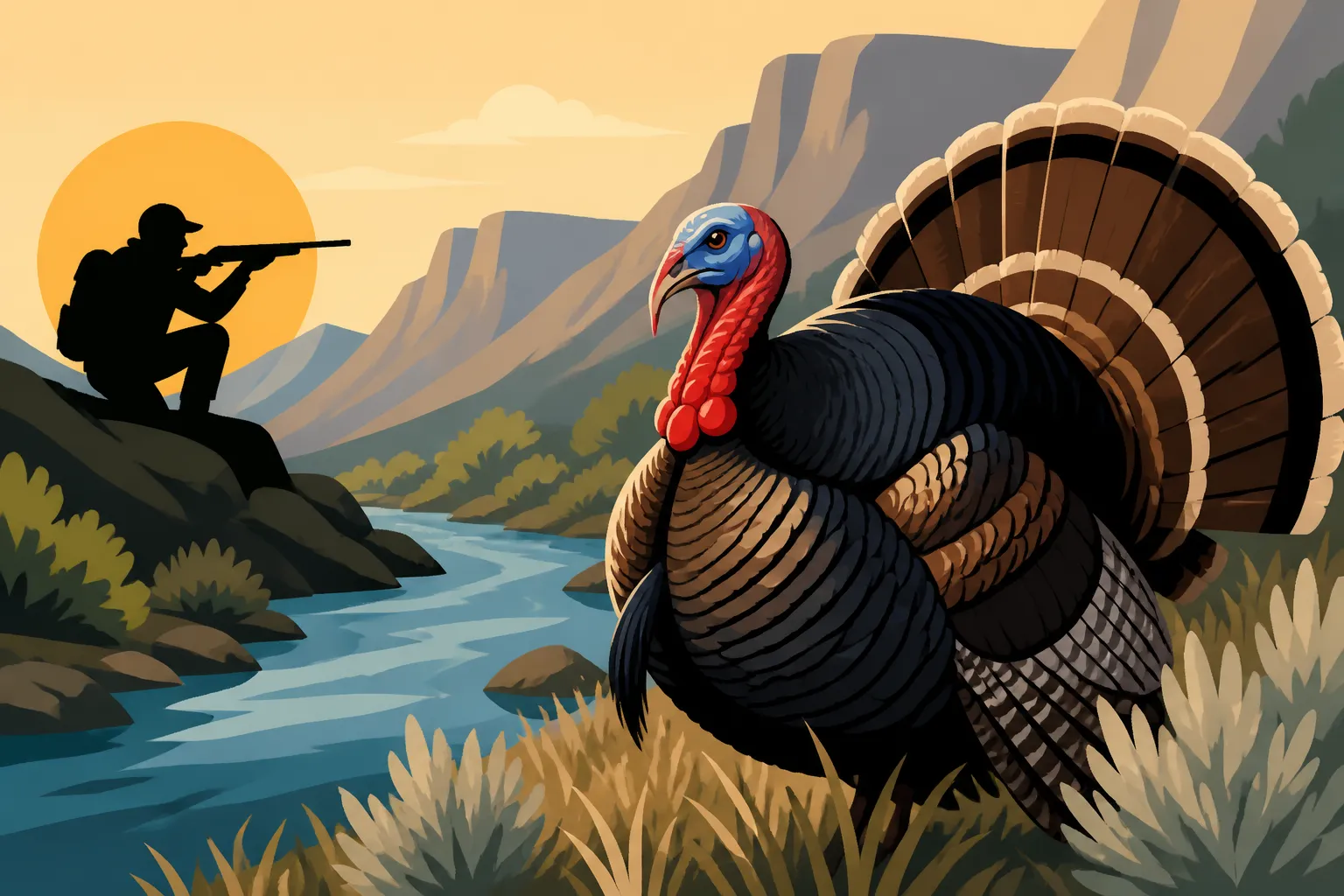
The predominant subspecies you'll encounter along Nevada's rivers is the Rio Grande wild turkey. These birds are renowned for their adaptability and hardiness, traits that serve them well in the Great Basin. While their cousins in Texas might roam vast ranchlands, Nevada's Rio Grandes are often confined to much narrower bands of habitat, making them both predictable and incredibly wary. Understanding that these birds rely almost entirely on these green zones for survival is key to your hunting strategy; stray too far from the water, and you're likely to be in barren country. This unique distribution is why focusing on river corridors is paramount when you're planning your Nevada turkey hunt. You won't find them scattered across vast timber stands; they're concentrated where life-sustaining water allows them to thrive.
The introduction of Rio Grande turkeys began decades ago, with birds sourced from states like Texas, Kansas, and Oklahoma. These efforts were often focused on establishing populations in areas with suitable riparian habitat, such as the Virgin River and parts of the Humboldt and Truckee River systems. The success of these transplants has created isolated but robust turkey populations that provide exciting hunting opportunities, especially for those who appreciate the challenge of pursuing birds in non-traditional landscapes. Knowing the history helps reinforce why these specific river systems are so vital and why scouting for available water and cover is always your first step.
Habitat Reliance on Riparian Zones
For Nevada's turkeys, the river corridors aren't just a preferred habitat; they're an absolute necessity. These ribbons of green provide everything a wild turkey needs to survive: a consistent water source, diverse forage including seeds, insects, and berries, and mature trees for roosting safely at night. Outside of these narrow strips, the landscape quickly gives way to sagebrush deserts, which simply don't offer the resources turkeys require. This extreme habitat dependency means that successful turkey hunting in Nevada is intrinsically linked to finding and understanding these riparian zones.
When you're looking at a map, whether it's a physical topographical map or using an e-scouting tool like GoHunt, you'll see how sharply defined these habitats are. The transition from lush river bottom to arid sagebrush can be stark, sometimes within mere yards. This funneling effect means that while turkeys have less country to roam, they are also highly concentrated in these areas, which can be a double-edged sword for hunters. It means birds are often localized, but it also means other hunters will be focusing on those same limited areas. Therefore, understanding the nuances of these specific riparian environments is crucial for finding unpressured birds or identifying escape routes.
Key River Systems and Their Turkey Populations
Nevada might be a desert state, but it boasts several significant river systems that create pockets of prime turkey habitat. Knowing which rivers hold turkeys and the general characteristics of those areas will significantly narrow down your search and increase your odds of success. Each river system presents its own unique challenges and opportunities, influenced by terrain, public access, and the density of turkey populations.
The Virgin River System
In the southernmost part of Nevada, the Virgin River carves its way through arid landscapes, creating an incredibly rich riparian corridor. This area, particularly near Mesquite and south of Overton, holds some of Nevada's most consistent turkey populations. The river bottom here is characterized by dense stands of cottonwoods, willows, and tamarisk, providing excellent cover and roosting sites. Access can be a mix of public and private land, so understanding boundaries is critical. A lot of hunters consider this one of the most reliable spots for Rio Grande Turkey in Nevada.
Hunting the Virgin River can be a truly challenging but rewarding experience. The birds can be incredibly vocal, but the dense cover often makes getting an ethical shot difficult. Hunters here often find success by carefully scouting for roost trees and listening for morning gobblers, then positioning themselves along known travel corridors or feeding areas within the thick vegetation. Patience is absolutely key, as is the ability to navigate through thorny thickets and thick riverine brush. Using a mapping tool like GoHunt can be invaluable for identifying public access points and delineating property lines along this stretch.
Humboldt and Truckee River Corridors
Moving north, the Humboldt and Truckee River systems offer different, but equally important, turkey habitats. The Humboldt River, stretching across much of northern Nevada, provides numerous riparian oases. While these areas can be more fragmented than the Virgin River's continuous corridor, they nonetheless support solid turkey numbers, especially in units with significant agricultural interfaces or established cottonwood groves. The Truckee River, flowing from Lake Tahoe through Reno and eventually into Pyramid Lake, also has pockets of habitat, though often closer to urbanized areas, requiring careful attention to regulations and potential access restrictions.
Hunting along these northern rivers often means dealing with more scattered populations and potentially less public access compared to some southern areas. However, for hunters willing to put in the legwork, these areas can yield some fantastic birds. Success here often depends on thorough E-scouting a Nevada Unit Before the Season, identifying stretches of public land with good roosting habitat and agricultural fields nearby. You might find yourself working smaller patches of timber or dense brush, making a good understanding of turkey behavior and effective calling even more crucial. These northern rivers also tend to have different hunting pressure dynamics, so research into specific unit statistics through resources like NDOW and GoHunt is highly recommended.
Other Significant Riparian Areas
Beyond the major river systems, Nevada also has numerous smaller streams, creeks, and even irrigated agricultural areas that create localized turkey habitat. These might include sections of the Walker River, certain drainages within the eastern mountain ranges, or even isolated springs and seeps that foster a lush environment. While these areas might hold fewer birds, they can offer unique, less-pressured hunting experiences for those willing to explore.
These smaller, more isolated pockets require extensive scouting, often starting with satellite imagery to identify green strips of vegetation in otherwise dry country. The birds in these areas may be even more wary due to their isolation, or conversely, more habituated if they are close to human activity. Understanding how Nevada sets its season framework and where these units fall in the regulations is vital. It’s also worth considering that access might be more challenging, potentially involving significant hiking or seeking landowner permission if adjacent to private property. The reward, however, can be a truly wild and memorable hunt far from the crowds.
Season Dates and Regulations for Nevada Turkey Hunts
Nevada's turkey seasons are carefully structured to provide opportunities while ensuring the long-term health of the state's modest populations. Unlike some states with very long seasons or multiple options, Nevada's turkey hunts are typically quite specific, often involving limited tags and defined windows. It's crucial for any hunter to be intimately familiar with the current year's regulations, as these can shift slightly from one season to the next based on population surveys and management goals.
Spring Gobbler Seasons
The spring gobbler season is undeniably the most popular turkey hunting opportunity in Nevada. This hunt typically occurs in April or May, coinciding with the peak of the turkey breeding season when gobblers are most vocal and active in their pursuit of hens. Tags for spring hunts are often limited and distributed through a draw system, making success in the application process as important as success in the field. Hunters really need to pay attention to the Nevada Turkey Season Dates and application deadlines, as missing them means missing out entirely.
These spring hunts are all about calling. Mimicking hen vocalizations to entice a lovesick gobbler into range is the classic strategy. Success hinges on being in the right place at the right time—usually near roosting areas at first light or along travel corridors—and being patient. Weather can also play a significant role, with calm, clear mornings often leading to more vocal birds. Remember that blaze orange requirements can vary, so always check if Blaze Orange Requirements Through the Season apply to your specific turkey hunt. Being prepared for varying conditions, from chilly mornings to warm afternoons, is also essential for staying comfortable and focused during long waits.
Fall and Youth Hunt Opportunities
While less common than spring hunts, Nevada sometimes offers limited fall turkey opportunities in specific units. These hunts are often geared towards harvesting hens or gobblers, typically without the intense calling action of the spring. Fall turkeys are usually in larger flocks and can be much harder to call in, often requiring more of a spot-and-stalk or ambush strategy. Keep an eye on the regulations for Nevada Youth and Senior License Pricing and specific youth hunt codes, as these are often designed to get younger hunters involved and may have slightly different season structures or units available.
Youth hunters have specific requirements in Nevada, and understanding these is key. For any hunt, especially for young participants, it's vital to review the Youth Hunting Requirements in Nevada to ensure compliance. Fall turkey hunts, while challenging, can be excellent learning opportunities for patience, tracking, and understanding flock dynamics. For these hunts, careful scouting to identify feeding areas and travel routes becomes even more paramount. Observing flocks from a distance to understand their patterns before making a move can dramatically improve your chances of success during the fall.
Permissible Methods and Tagging Requirements
Nevada has clear rules regarding the legal methods for hunting turkeys, which typically include shotguns using specific shot sizes and archery equipment. Electronic calls are generally not permitted for big game or turkey hunting in Nevada, so leave your remote-controlled gobblers at home. If you're wondering about specifics, knowing that Electronic Calls for Predators and Varmint Hunting are handled differently can clarify why they are excluded for turkey. Furthermore, baiting is strictly prohibited for wild turkeys, as detailed in the Baiting Rules That Apply in Nevada. It's crucial to understand these rules not just for compliance but for ethical hunting practices.
Upon harvesting a turkey, immediately validating and attaching your tag to the bird is non-negotiable. This process ensures proper record-keeping and is a legal requirement. Field dressing in warmer spring weather also means you need a plan for getting your bird cooled down quickly to preserve the meat. Understanding the legal shooting hours, which shift with the sunrise and sunset throughout the season, is also essential. Always double-check the current year's regulations for exact opening and closing times, as hunting outside of these hours is a serious offense. Being well-informed about all legalities protects you and helps maintain the integrity of turkey hunting in Nevada.
Effective Hunting Strategies for River Corridors
Hunting turkeys in Nevada's river corridors requires a nuanced approach, blending traditional turkey hunting tactics with an understanding of the unique riparian environment. The dense cover, linear nature of the habitat, and the wary nature of these birds mean that patience, stealth, and precise strategy are paramount. You can't just wander aimlessly; every move needs to be calculated.
Scouting for Roosts and Travel Routes
Before you even think about setting up, thorough scouting is absolutely non-negotiable. Turkeys in river corridors will often roost in the tallest cottonwood trees along the waterway. Identifying these roost sites is a huge advantage, as it tells you exactly where the birds will be at first light. Listening for gobblers on the roost the evening before your hunt, or even weeks prior, can give you a critical head start. Using mapping tools like GoHunt to mark potential roosting trees and then verifying them in person is a fantastic approach. Understanding Reading a Nevada Hunt Unit Before You Apply can help you discern the terrain that influences these patterns.
Beyond roosts, you need to identify key travel routes. Turkeys will often use natural pathways within the dense brush, along the edge of the water, or through more open strips of vegetation. They'll move from roost sites to feeding areas, which might be open patches within the riparian zone, agricultural fields adjacent to the river, or areas with abundant insects and berries. Look for tracks, droppings, and dusting bowls to confirm these routes. Playing thermals on a rimrock stalk, while more common for deer, highlights the importance of understanding wind direction and terrain when trying to close distance on wary game. Knowing these patterns allows you to set up ambushes or intercept birds as they move throughout the morning.
Calling Tactics for Dense Cover
Calling turkeys in dense river corridor cover is different than in open woodlands. Your calls need to be effective at close range, and often, less is more. Loud, aggressive calling might scare birds away if they can't pinpoint your exact location or feel exposed. Instead, focus on soft clucks, purrs, and subtle yelps that sound natural and inviting. Getting a bird to commit to coming through thick brush requires them to feel completely comfortable and convinced that a hen is waiting just out of sight.
Often, gobblers will "hang up" just outside visual range in dense cover, expecting the hen to come to them. This is where patience comes into play. If a gobbler is talking but not advancing, try using some soft clucks or even silence. Sometimes, a "decoy" strategy, using a motion decoy just visible from the edge of the cover, can be effective in drawing that last crucial few yards. However, ensure that any decoys are used safely and legally within the unit. Two-hunter calling setups that actually work can be particularly effective in these scenarios, with one caller drawing the bird's attention while the other positions for the shot. Remember, in thick stuff, getting him to show himself is half the battle.
Utilizing Terrain and Cover for Approaches
The linear nature of river corridors means you can often use the bends, rises, and drops in elevation, or even the river itself, to your advantage for stealthy approaches. Instead of trying to walk directly towards a gobbling bird in open view, use the natural contours of the land or the cover of dense vegetation to get closer undetected. This might mean crawling, belly-crawling, or making long detours to get into position. This is where preparing physically for long glassing days or arduous stalks really pays off, as you might need to exert yourself to get into the perfect ambush spot.
Setting up with natural back cover is crucial in these areas. You want to break up your silhouette and blend into the environment as much as possible, as turkeys have incredibly keen eyesight. Avoid sitting in wide open spots, and always have a tree or large bush behind you. Being able to use draws and rims to close distance on game is a skill that translates well from other Nevada big game hunts to turkey. The goal is to move silently and deliberately, getting as close as you can before making your final setup, ensuring you have a clear shot lane and are completely concealed from the bird's approach.
Essential Gear and Preparation for Nevada Turkey Hunts
Hunting turkeys in Nevada's river corridors demands a specific set of gear and a strong emphasis on preparation. The environment can be surprisingly rugged, with dense undergrowth, thorny bushes, and variable temperatures, even in spring. Being well-equipped means you can focus on the hunt itself, rather than battling discomfort or missing critical items.
Optics and Scouting Tools
While often associated with Western big game, quality optics are incredibly valuable for Nevada turkey hunting. Binoculars (10×42 are a great all-around choice) are essential for spotting distant birds, identifying roost trees, and observing turkey behavior without disturbing them. You’re not just looking for birds; you’re looking for subtle movements, flickers of color, and confirming that flock of birds isn't just a group of coyotes. In the open country bordering river bottoms, good binoculars can give you a crucial edge.
Beyond physical optics, digital scouting tools are almost mandatory. Apps like GoHunt, or other similar platforms with satellite imagery and public/private land layers, are your best friend. They allow you to E-scout a Nevada Unit Before the Season, mark potential roost sites, identify access roads, and avoid trespassing. You can pinpoint specific stretches of river with good cover, locate adjacent agricultural fields, and study elevation changes. This digital legwork saves countless hours in the field and helps you develop a strategic plan before you even leave home. Don't underestimate the power of a well-researched unit map.
Calls, Decoys, and Clothing
When it comes to calls, a versatile selection is best. A good box call or pot call can produce loud yelps to locate birds and softer clucks for close-range work. Mouth diaphragms are excellent for hands-free calling when a bird is closing in. Remember, subtlety can be key in dense riparian cover, so practice those soft purrs and clucks. Decoys can be highly effective, especially a single hen or jake decoy, to draw a gobbler those last few critical yards. Position them where they are visible but don't draw the bird's attention directly to your position.
Layered clothing is vital for Nevada's variable spring weather. Mornings can be chilly, especially near water, but temperatures can quickly soar into the 70s or 80s by midday. Moisture-wicking base layers, a warm mid-layer, and a quiet, camouflage outer layer are ideal. Waterproof outer shells are also a good idea for dew-covered mornings or unexpected spring showers. Comfortable, broken-in hunting boots that can handle rough terrain and potentially wet ground are also essential. Consider boots that offer good ankle support and are durable enough to push through thorny brush.
Essential Survival and Safety Items
No matter how short your planned hunt, carrying essential survival gear is crucial in Nevada's remote environments. This includes ample Water You Must Carry on a Desert Day Hunt, even if hunting near a river. A first-aid kit, headlamp, knife, fire starter, and navigation tools (GPS device or reliable phone app with downloaded maps, plus a compass and physical map as a backup) are non-negotiable. Cell service can be spotty to non-existent in many river corridors, so a satellite messenger or emergency beacon like a Garmin inReach is a wise investment for communication and emergencies.
Being aware of potential hazards is also part of preparation. Rattlesnakes are active in spring, so pay attention to where you step and reach. Heat management on an August Archery Hunt, while specific to a different season, still highlights the need to stay hydrated and cool during warmer spring days. Let someone know your hunt plan, including your intended location and expected return time. This practice is crucial for your safety and allows search and rescue to act quickly if something goes awry. Being prepared means you can focus on the gobbler, confident that you can handle unexpected situations.
Here's a quick comparison of popular Nevada river systems for turkey hunting:
| River System | Primary Turkey Subspecies | Key Habitat Features | Typical Access Considerations | Hunting Pressure (General) | Notes |
|---|---|---|---|---|---|
| Virgin River | Rio Grande | Dense cottonwood/willow, tamarisk, agricultural fringes | Mix of public (BLM) and private; clear boundaries needed | Moderate to High | Consistent populations, vocal birds, but dense cover can be tough |
| Humboldt River | Rio Grande | Fragmented cottonwood groves, agricultural fields | Mostly private; public access points require research | Low to Moderate | More scattered birds, rewards extensive scouting and landowner asks |
| Truckee River | Rio Grande | Urban/suburban riparian, some wilder stretches | Highly mixed public/private, often near populated areas | Varies, can be high near towns | Challenging due to proximity to development, very wary birds |
| Smaller Creeks/Drainages | Rio Grande | Isolated springs, small stringers of vegetation | Highly variable, often limited public access, remote | Very Low | "Hidden gem" potential, requires significant scouting and effort |
Conservation and Future of Nevada's Turkey
Nevada's wild turkey populations are a testament to successful wildlife management and conservation efforts. From initial introductions to ongoing habitat improvement projects, the Nevada Department of Wildlife (NDOW) works tirelessly to ensure these birds continue to thrive in their often-challenging environment. Hunters play a crucial role in this conservation success story, not just through license fees, but also through ethical hunting practices and supporting wildlife initiatives.
NDOW's Management Strategies
NDOW's management of wild turkeys focuses on several key areas, including population monitoring, habitat enhancement, and regulated hunting seasons. Biologists conduct surveys to estimate population numbers, assess recruitment (poult survival), and track health indicators. This data is critical for setting appropriate tag quotas and season lengths, ensuring sustainable harvest levels. For instance, How Nevada Sets Its Season Framework involves considering population trends, hunter success, and habitat conditions. NDOW also works with landowners and other agencies to protect and restore riparian habitat, which is the lifeline for these birds.
Habitat projects might involve planting native vegetation, managing water resources, or removing invasive species like tamarisk that can degrade turkey habitat. These efforts directly contribute to the turkeys' ability to find food, water, and shelter. Hunters often contribute to these projects through volunteer efforts or funding mechanisms. Understanding how Water Development Projects Built for Wildlife specifically aid species like turkeys helps underscore the importance of these initiatives. The goal is always to balance hunting opportunities with the long-term health and expansion of the turkey resource across suitable areas of the state.
The Hunter's Role in Conservation
Hunters are, and always have been, the primary drivers of wildlife conservation in North America, and Nevada is no exception. Through the purchase of hunting licenses, tags, and excise taxes on hunting equipment, hunters provide the vast majority of funding for wildlife management in the state. This financial contribution directly supports NDOW's work, from law enforcement and education to habitat restoration and scientific research.
Beyond financial contributions, ethical hunting practices are paramount. This means understanding and adhering to all regulations, ensuring clean and humane harvests, and respecting public and private lands. Reporting observations of turkey flocks, especially brood sightings, to NDOW can also contribute valuable data for population monitoring. Each successful Nevada turkey hunt isn't just a personal achievement; it's a small piece of a larger conservation puzzle, helping to ensure that these unique hunting opportunities continue for generations to come. Your participation is what makes it all possible.
Disclaimer
Please note that hunting regulations, season dates, and unit boundaries can change annually. It is your responsibility to consult the most current Nevada Department of Wildlife (NDOW) regulations booklet before planning or undertaking any hunting activity. This guide is for informational purposes only and should not be considered a substitute for official state regulations.