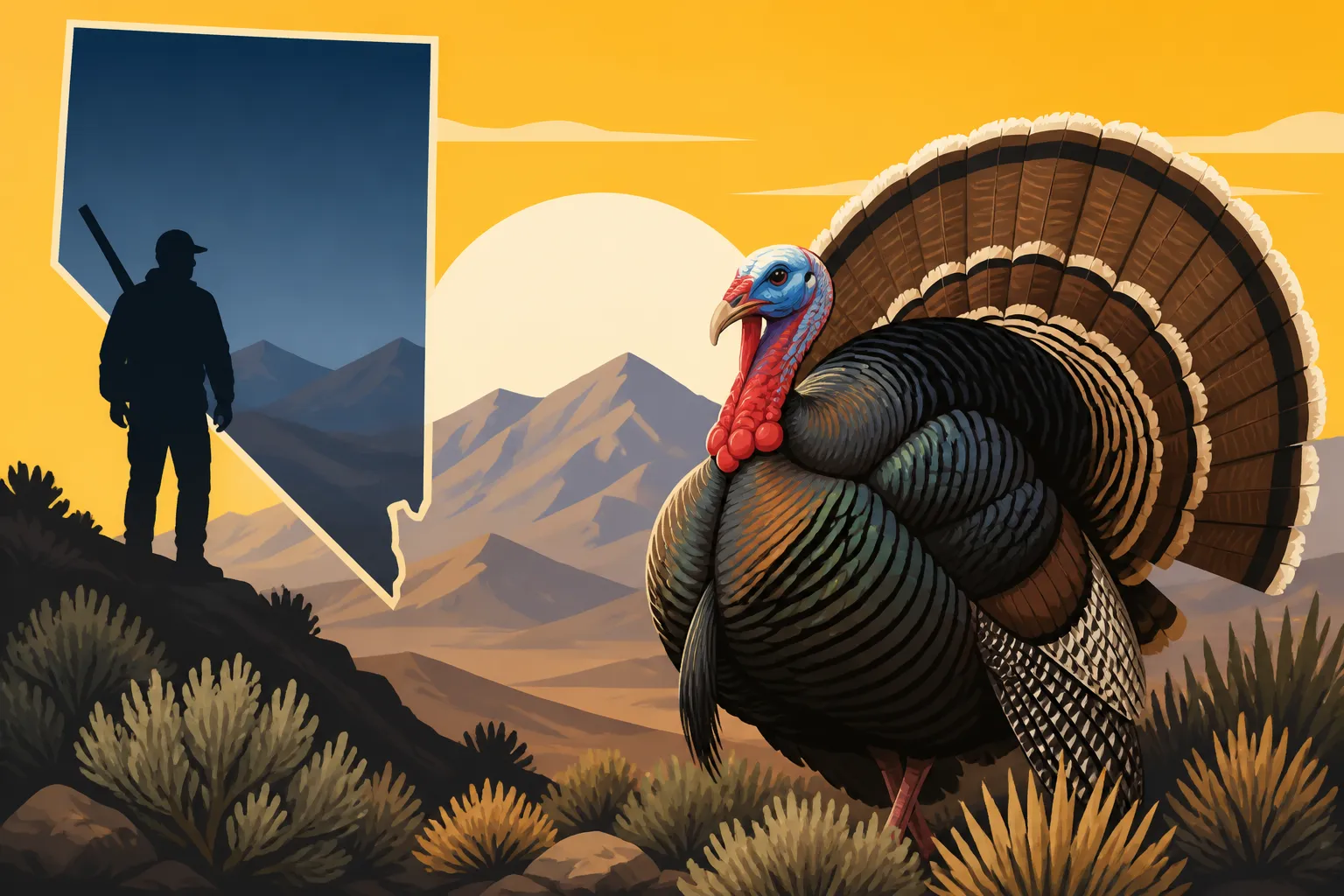
Rio Grande Turkey in Nevada
When people think of hunting in Nevada, images of big mule deer, trophy elk, or elusive chukar often come to mind. If you're like many hunters, you might be surprised to learn that the Silver State also offers some exciting opportunities for turkey hunting, specifically for the Rio Grande subspecies. This guide aims to pull back the curtain on chasing gobblers in Nevada, helping you understand where these birds thrive, how to navigate the draw, and what tactics might bring success in this often-overlooked desert pursuit.
The Unexpected Presence of Rio Grande Turkeys in Nevada
For many, the idea of turkeys in Nevada feels a bit like a mirage in the desert. You might picture arid landscapes, sagebrush flats stretching for miles, and craggy mountains. While that's certainly a large part of the Nevada experience, it's not the whole picture. The state actually harbors vibrant riparian corridors and pockets of suitable habitat that have allowed Rio Grande turkeys to establish themselves and even flourish in certain areas. It's a testament to the adaptability of these birds and the efforts of wildlife management.
Historically, wild turkeys were not native to Nevada. The populations you find today are the result of strategic transplant efforts by the Nevada Department of Wildlife (NDOW) and conservation partners. These efforts began decades ago, bringing in Rio Grande turkeys from other states with thriving populations. The goal was to introduce a new game species for hunters and to diversify the state's wildlife. And, slowly but surely, it worked. These birds found the right mix of cover, roosting trees, water, and forage along specific river systems and within certain mountain ranges, proving that Nevada has more to offer than just arid desert.
The challenges of establishing turkey populations in a predominantly dry state are considerable. Turkeys need reliable water sources, tall trees for roosting at night to escape predators, and a diverse understory that provides insects, seeds, and berries. Nevada, with its extreme temperatures and limited precipitation in many areas, isn't naturally teeming with such ideal conditions everywhere. This makes the pockets where turkeys do exist even more special and concentrated, leading to unique hunting dynamics. Understanding this history helps frame why turkey hunting here is so different from what you might find in, say, the oak bottoms of the Midwest or the pine forests of the Southeast.
Prime Locations and Habitat for Nevada Turkeys
Knowing where to find Rio Grande turkeys in Nevada is half the battle. They aren't spread out evenly across the entire state; instead, they concentrate in areas that meet their specific habitat requirements. The key is water, and with water comes the necessary vegetation. We're talking about river corridors, creek bottoms, and agricultural lands that often hug these water sources.
One of the most notable areas for Rio Grande turkeys in Nevada is along the Humboldt River corridor, particularly in the northeastern part of the state. This river, a lifeline through the Great Basin, provides crucial riparian habitat: cottonwoods for roosting, willows for cover, and a general abundance of insects and plant life. These conditions create ideal pockets where turkeys can thrive. Similarly, other river systems like the Virgin River in the south and certain tributaries feeding into reservoirs can also hold populations. These areas often run through both public and private lands, which means understanding land ownership is crucial for access. For example, Where Turkey Live Along Nevada Rivers goes into more detail about these specific locations.
Beyond major river systems, you'll also find turkeys in certain mountain ranges where higher elevations capture more moisture, leading to aspen groves and mixed conifer forests. These areas offer different challenges and opportunities than the river bottoms. Think about the eastern parts of the state, where mountain ranges like the Schell Creeks or the Ruby Mountains might surprise you with pockets of turkey activity. While these aren't as widely known for turkeys as the riparian zones, they offer more rugged terrain and potentially less pressure. When you're E-Scouting a Nevada Unit Before the Season, pay close attention to the green ribbons that indicate water or dense timber, as these are your primary indicators for potential turkey habitat.
| Characteristic | River Corridor/Riparian Habitat | Mountain/Mixed Conifer Habitat |
|---|---|---|
| Primary Draw | Water, dense cover, roosting trees | Elevation, diverse forest, less pressure |
| Terrain | Relatively flat, dense undergrowth | Steep, varied, more rugged |
| Vegetation | Cottonwoods, willows, tamarisks, grasses | Aspens, pines, junipers, sagebrush |
| Access | Often mixed public/private, roads | Often public, more remote, hiking required |
| Typical Turkey Behavior | Concentrated along water, vocal | Potentially more spread out, quieter |
| Hunting Style | Set up near known roosts/feeding areas | More run-and-gun, covering ground |
Nevada Turkey Season and Drawing a Tag
Hunting turkeys in Nevada isn't as simple as picking up an over-the-counter tag. Like many of the state's big game opportunities, turkey tags are typically allocated through a draw system. This means you'll need to apply for a limited number of permits in specific hunt units, adding an element of strategy to your turkey hunting plans. The limited nature of these tags helps manage the small but growing populations, ensuring sustainable hunting opportunities for years to come.
The application period for Nevada's big game draw, including turkeys, generally runs in the spring. You'll need to stay on top of the dates to ensure you get your application in on time. When Nevada Big Game Applications Open and The Nevada Application Deadline Date are critical resources for anyone planning to apply. It’s also important to remember that you’ll need a valid Nevada hunting license before you can even apply for a tag. This license covers the privilege of hunting in the state, and the turkey tag is an additional permit. You can find more details about setting up your account and getting licensed in articles like Setting Up a Nevada Online Account and Nevada License Year Start and End Dates.
When it comes to the draw itself, Nevada doesn't use a bonus point system for turkeys in the same way it does for deer or elk. Instead, it's typically a random draw, though the exact rules can vary year to year, so always check the current regulations. Because the number of tags is limited, draw odds can be challenging, especially in the more popular units. This is where researching prior year draw statistics can be helpful. Resources like GoHunt can provide historical draw odds and unit information, helping you make informed decisions about where to put in for a tag. Don't be discouraged by low odds; persistence is often rewarded in the Nevada draw. It’s important to select your first, second, and possibly third choice units carefully based on your research and desired hunting experience.
Effective Tactics for Nevada Rio Grande Turkeys
Once you've successfully drawn a Nevada turkey tag, the real fun (and challenge!) begins. Hunting Rio Grande turkeys in Nevada can be a unique experience, blending traditional turkey hunting tactics with the vastness and often unforgiving nature of the Great Basin landscape. It's not always the dense woods you might be used to, which means adapting your approach is key.
Early Morning Roosting and Locating Birds
Just like turkey hunting anywhere, locating birds at first light is crucial. Rio Grandes often roost in the tallest cottonwoods or other large trees along riparian corridors. Getting out before dawn and listening for gobblers on the roost can give you a significant advantage. Use locator calls—like an owl hoot or a crow call—to try and elicit a shock gobble without giving away your exact position too early. Once you hear a bird, try to get as close as possible without being detected, using terrain and vegetation for cover. Remember, these birds often have exceptional eyesight, especially in the more open country.
After they fly down from the roost, turkeys will typically move to feeding areas, which could be open fields, grassy bottoms, or even agricultural lands. Paying attention to travel corridors and natural funnels between roosting and feeding areas can be highly effective. If you can anticipate their movement, you can set up in a strategic location. Sometimes, especially in more open areas, simply Glassing Nevada's Basin and Range for Mule Deer techniques can even apply to turkeys—using good optics from a distance to spot birds as they move or feed, then planning your approach.
Calling and Decoy Strategies
Calling is, of course, a fundamental part of turkey hunting. For Rio Grandes, a mix of soft yelps, clucks, and purrs can often be effective. Don't be afraid to be aggressive if a bird is hot, but often, a more subtle approach works best, especially if birds have been pressured. Mimicking a contented hen can sometimes be the magic touch. Box calls, slate calls, and mouth diaphragms all have their place, so practice with a few to find what works best for you and the birds you're encountering.
Decoys can also play a significant role, particularly if you're hunting in areas with good visibility. A single hen decoy, or a hen and jake setup, can be very enticing to a dominant tom looking for companionship or a fight. Just be mindful of your setup and ensure that any decoys are placed in a safe location where approaching birds won't have a clear line of sight to you before they commit. In more open country, it's easier for a tom to hang up at a distance, inspecting your setup. Patience is paramount. Don't call too much; let the calls breathe and give the gobbler time to respond and work his way in.
The Role of Scouting and Persistence
Nevada's vastness means that scouting, both before the season and during the hunt, is incredibly important. Pre-season scouting, whether it's driving roads, hiking likely areas, or using online mapping tools, helps you identify potential roosting sites, water sources, and feeding areas. During the hunt, persistence and covering ground are often rewarded. If one area isn't producing, be willing to move and try another. Remember that Hunting Water in Nevada's Driest Country can apply to turkeys as well; knowing where the consistent water sources are will often show you where turkeys will be congregating.
One unique aspect of hunting in Nevada's turkey country is the potential for mixed public and private land. Always be aware of property boundaries, and if hunting near private land, make sure you have permission. Digital mapping applications can be immensely helpful for this, showing you exactly where you stand. Also, be aware of specific regulations regarding baiting and electronic calls. For instance, Baiting and Trail Camera Rules in Nevada will outline what is permissible and what isn't when pursuing game. Carrying enough water, knowing your route, and being prepared for varied weather conditions are also crucial for any Nevada hunt. The reward of calling in a gobbler against a backdrop of Nevada's stunning landscape makes all the effort worthwhile.
Disclaimer
This article is for general informational purposes only and does not constitute professional advice. Laws, prices and regulations vary by location and change over time. Consult a qualified professional for guidance on your specific situation.