Water Development Projects Built for Wildlife
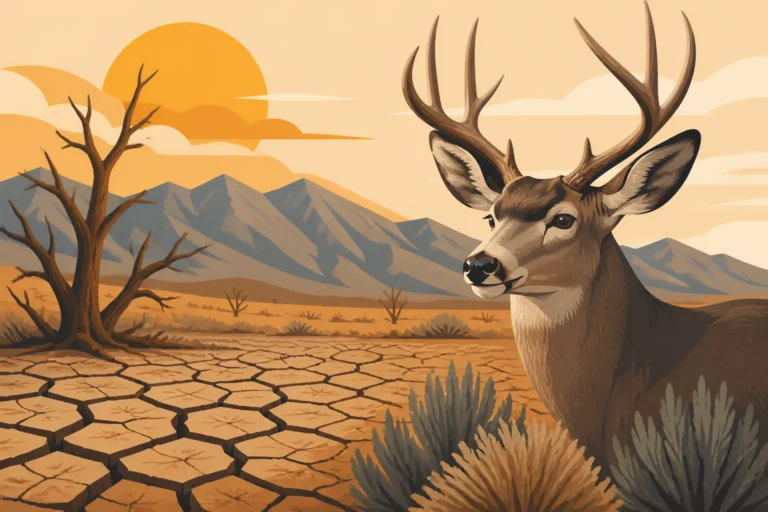
Nevada's vast, rugged landscape is breathtaking, but for its wildlife, it's also incredibly demanding. The sheer lack of consistent water sources across much of the Great Basin is arguably the biggest hurdle for deer, elk, bighorn sheep, and every other creature trying to survive out here. This guide is all about the unsung heroes of this dry land: the water development projects built specifically to give wildlife a fighting chance, and what that means for us as hunters.
The Lifelines of the Desert: What Are Water Development Projects?
When you spend enough time traversing Nevada's arid units, the one thing that will consistently catch your eye is how dry everything is. Rivers are few and far between, perennial springs are treasures, and vast tracts of land seem utterly devoid of surface water. This harsh reality makes human-engineered water sources incredibly vital, acting as genuine lifelines for the diverse array of wildlife that calls Nevada home. These aren't just puddles; they're thoughtfully designed and strategically placed projects that dramatically alter the landscape for survival.
Guzzlers: Engineered Oases for Wildlife
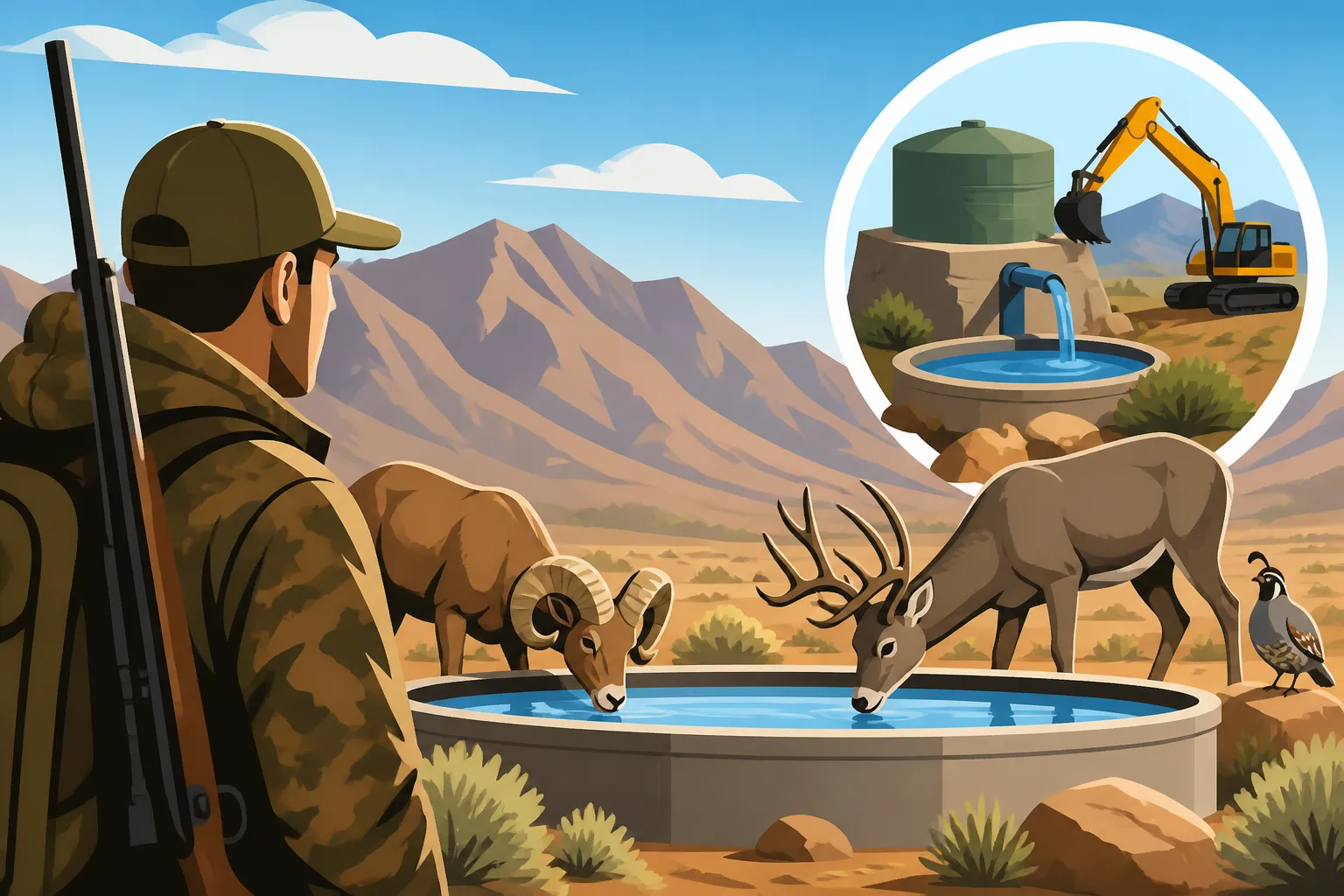
Perhaps the most iconic type of water development project in Nevada is the guzzler. If you've never heard of one, imagine a rain-collection system designed for animals in the middle of nowhere. A typical guzzler consists of a large collection apron, usually made of corrugated metal or heavy-duty plastic, laid out on a slope. This apron funnels rainwater and melting snow into a buried storage tank, protecting the precious water from evaporation and contamination. From this tank, a small drinker — often a low, shallow trough or ramp — extends out, allowing animals to access the water.
These ingenious systems come in various designs, tailored to the specific needs of different wildlife. You'll find small, bird-friendly guzzlers barely a foot high, designed for chukar, quail, and other upland birds. Then there are larger, more robust units, often with multiple drinkers, built for big game like desert bighorn sheep, mule deer, and elk. The beauty of the guzzler is its self-sufficiency; once built, it can provide a consistent water supply for years with minimal maintenance, turning otherwise uninhabitable tracts of desert into viable habitat. Many a hunter has stumbled upon one of these in a remote canyon and felt a profound appreciation for the effort that went into placing it. You can learn more about How Guzzlers Concentrate Desert Game.
Enhancing Natural Springs and Seeps
While guzzlers are entirely man-made, another crucial category of water development involves enhancing existing natural springs and seeps. Nevada does have natural water sources, but many are ephemeral, drying up during hot summer months, or are so boggy that access is difficult for animals and water quality suffers. Conservation efforts often focus on improving these natural occurrences.
This can involve anything from simply fencing off a delicate spring to protect it from trampling by livestock or wild horses, to more extensive projects. These might include piping water a short distance from the actual seep to a more accessible trough, or building small rock structures to create more reliable pools. The goal is to maximize the amount of usable water, make it accessible to a wider range of species, and ensure its longevity. The difference between an undisturbed, boggy seep and an enhanced spring with a clean, rock-lined pool and a small trough can be the difference between a few animals surviving and a thriving local population.
Wells and Pipelines: Deeper Solutions
Sometimes, the surface water and even enhanced springs just aren't enough, or the habitat demands a more robust, constant supply. In these cases, deeper solutions like wells and associated pipelines come into play. These projects are usually more involved and expensive, often requiring drilling deep into the water table to pump water to the surface.
Once the water is brought up, it might be stored in large tanks and then piped across considerable distances to a series of troughs or artificial ponds. These systems are particularly common in areas where livestock grazing is also present, with wildlife often benefiting from the shared infrastructure. While less "wild" in appearance than a remote guzzler, these wells and pipelines are engineering marvels that provide critical hydration to vast landscapes that would otherwise be barren. Understanding these large-scale systems can sometimes give you clues about where game might be moving, especially in more agricultural or ranching-influenced units.
Why These Developments Are Critical to Nevada's Ecosystems and Hunting
It's easy to take water for granted, especially if you come from a wetter climate. But in Nevada, water is everything. These development projects aren't just "nice to have"; they are fundamental to the survival of many species and profoundly shape how we experience hunting in the state.
Beating the Arid Reality of Nevada
Nevada is, for the most part, a desert. Its average annual rainfall is incredibly low, and temperatures during the summer months can soar, leading to extreme evaporation. Without reliable water sources, many areas would simply be unable to support big game populations year-round. Animals would be forced to concentrate in tiny pockets around the few natural perennial springs, leading to overgrazing, disease transmission, and increased predator pressure.
These water developments effectively expand the amount of livable habitat. They allow animals to disperse more widely, utilizing forage that would otherwise be out of reach. Think about a remote mountain range with excellent feed but no water within a day's travel for a deer. Add a guzzler, and suddenly that entire range becomes viable habitat. This doesn't just benefit the game species we hunt; it creates a ripple effect throughout the entire ecosystem, supporting everything from songbirds to predators. The health and distribution of wildlife in Nevada are inextricably linked to the availability of water, and these projects actively fight against the state's inherent aridity.
Concentrating Game for Survival and Hunters
One of the most immediate and impactful consequences of these water developments is how they concentrate game. In the vast, open spaces of Nevada, finding animals can be like finding a needle in a haystack. But when you know there's a reliable water source, especially during hot, dry periods, you know animals have to come to it. This makes water developments natural focal points for scouting and hunting. It's why seasoned hunters spend so much time learning about Hunting Water in Nevada's Driest Country and why practices like Sitting Water in Nevada's Dry Units are so effective.
For wildlife, these points are critical for survival. For hunters, they offer a predictable pattern, which is a rare commodity in such sprawling terrain. You're not necessarily just waiting at the water; often, it's about understanding the approach and departure routes, observing from a distance, and identifying bedding areas nearby. However, this concentration also brings ethical considerations. It's a delicate balance to appreciate the life-giving nature of these sources while also acknowledging their role in hunting strategy. We have a responsibility to respect these sites and the animals that rely on them.
A History of Conservation and Collaboration
The existence and maintenance of Nevada's water development projects are a testament to decades of dedicated conservation efforts. It's not just state agencies like the Nevada Department of Wildlife (NDOW) that build these; a huge part of this success comes from various conservation organizations, volunteers, and even local ranchers. Groups focused on specific species, like the Wild Sheep Foundation, or broader conservation groups have invested countless hours and resources into these projects.
Many hunters, too, contribute directly or indirectly through license fees, tag purchases, and voluntary donations. Platforms like GoHunt, which provide detailed mapping and research tools for hunters, also highlight the importance of these critical areas and often support conservation initiatives. This collaborative spirit underscores a core value in the hunting community: if we want healthy wildlife populations and robust hunting opportunities, we must be active stewards of the habitat. Understanding this history also helps us appreciate the fragility of these systems and why regulations exist, such as those covered in Reading Water Sources Before an August Hunt, to ensure their integrity.
Navigating Water Developments as a Hunter: Strategy and Ethics
As hunters, understanding water development projects isn't just about appreciation; it's about strategy and responsibility. These areas are magnets for game, but they also require a thoughtful, ethical approach to hunting.
Scouting and Locating Water Sources
Before you ever set foot in your chosen unit, your scouting efforts should absolutely include identifying all known water sources, both natural and developed. This is where modern e-scouting tools truly shine. High-quality satellite imagery can often reveal guzzlers, tanks, and spring enhancements. You'll want to layer in public land boundaries, topography, and even historical burn maps to get a complete picture. Many hunters rely on mapping tools and resources like GoHunt to pinpoint these crucial spots.
Think about the routes animals would take to reach these water points. Are there subtle draws, saddles, or benches that offer cover for an approach? Are there open flats they must cross, making them vulnerable? Consider the surrounding terrain: dense juniper, sagebrush, or rocky slopes that might provide bedding cover close to water. Don't just look at the water; look around it. This comprehensive pre-season work, often detailed in guides like E-Scouting a Nevada Unit Before the Season or How to Locate a Guzzler From Home, is foundational. When you're physically scouting, always approach water sources cautiously, using binoculars to glass from a distance before moving in, as animals might be bedded nearby. This is a critical step in Mapping Water Before an August Hunt.
Ethical Considerations and Rules Around Hunting Water
This is where things can get a little nuanced, and it's essential for every hunter to understand the ethics and regulations involved. While it's perfectly legal to hunt near a water source, there's a fine line between that and "baiting," which is generally prohibited for big game in Nevada. The key distinction is usually about intent and the introduction of foreign substances. A guzzler is a natural part of the habitat because it was built for wildlife. You're not putting out attractants. However, sitting directly on a water source and preventing other animals from drinking can be seen as unethical by many and might even fall under harassment rules in some specific contexts.
The spirit of fair chase is paramount. Always be aware of your state's specific regulations concerning "hunting over water" or "harassment" of animals at water sources. Some states have specific distances you must maintain, or rules about when you can hunt them. While Nevada generally allows hunting near these developments, it's crucial to consult the current regulations and apply a strong ethical compass. Never impede an animal's access to a life-sustaining resource, especially if it's the only one for miles. Respect the resource, and the animals. We also cover this in more detail in articles like Baiting Rules That Apply in Nevada and Hunting Over a Guzzler Legally.
Tactical Approaches to Hunting Near Water
So, once you've located these vital water sources and understand the ethical boundaries, how do you incorporate them into your hunting strategy? It's rarely about just setting up a blind directly on the guzzler and waiting. Animals in Nevada are notoriously wary, and they often approach water with extreme caution, especially mature animals.
Your best bet is often to set up a considerable distance away, perhaps on a vantage point overlooking the water and its approaches. This allows you to glass for animals coming in or leaving, without directly pressuring the water source itself. Pay close attention to wind direction; animals will almost always approach water with the wind in their favor, trying to scent any danger. Early mornings and late evenings are typically the most active times around water, especially during warmer seasons, as animals try to avoid the heat of the day. For tips on managing the heat, check out Heat Management on an August Archery Hunt.
You might identify specific draws or ridges that offer cover for a stalk as an animal moves away from the water. Remember, the water is a trigger for their movement, but the actual shot might happen a quarter-mile away. Use the terrain to your advantage, planning your approach and escape routes. Always prioritize leaving the water source undisturbed for other wildlife that needs it. By understanding the patterns around water, you significantly increase your odds of success while maintaining a respectful distance and ensuring the resource remains viable for all. This understanding of movement is also critical when considering Timing a Nevada Hunt Around the Rut.
| Water Development Type | Description | Primary Benefit for Wildlife | Hunting Relevance |
|---|---|---|---|
| Guzzler | Man-made collection system with apron, tank, and drinker | Provides consistent, clean water in arid areas | High concentration point, especially in dry periods |
| Enhanced Spring | Natural spring improved with fencing, troughs, piping | Increases water availability and reliability | Moderate concentration, often more natural cover |
| Well/Pipeline | Drilled well, often piped to multiple troughs | Large, continuous supply, often shared with livestock | Variable concentration, can be subtle patterns |
Disclaimer
This article is for general informational purposes only and does not constitute professional advice. Laws, prices and regulations vary by location and change over time. Consult a qualified professional for guidance on your specific situation.