How Mining Affects Nevada Wildlife Habitat
Navigating Nevada's vast, wild landscapes as a hunter often means encountering another prominent feature: mining operations. It's a reality that brings up valid questions and concerns for many of us who cherish these lands for their wildlife. How does the constant churn of extraction, the heavy machinery, and the sheer scale of these projects truly affect the deer, elk, and other game animals we pursue? This guide aims to pull back the curtain on the various ways mining impacts wildlife habitat across the Silver State, giving you a clearer picture of the challenges and the efforts made to balance industry with nature.
The Enduring Presence of Mining in Nevada's Landscape
Nevada's identity is deeply intertwined with mining. From the Comstock Lode in the 19th century to the vast gold mines operating today, it's an industry that has literally shaped the state's economy and its physical terrain. For hunters, this means that even in some of the most remote and seemingly pristine units, you might stumble upon old claims, active operations, or the tell-tale signs of exploration. This history means that mining isn't just a modern concern; it's a legacy that has had continuous, evolving impacts on wildlife habitat for generations. Understanding this historical and ongoing presence is crucial to comprehending its effects on the land and the animals that call it home.
The sheer scale of modern mining operations, particularly large open-pit mines for gold and silver, can be astounding. These aren't small, localized diggings; they are often massive endeavors spanning thousands of acres, requiring extensive infrastructure like roads, power lines, processing plants, and enormous waste rock piles. When you're glassing a distant basin, what might look like a natural anomaly could very well be a relic or an active part of a mining complex. This footprint is permanent, leading to significant changes in the landscape that wildlife must adapt to or abandon.
Direct Habitat Destruction and Alteration
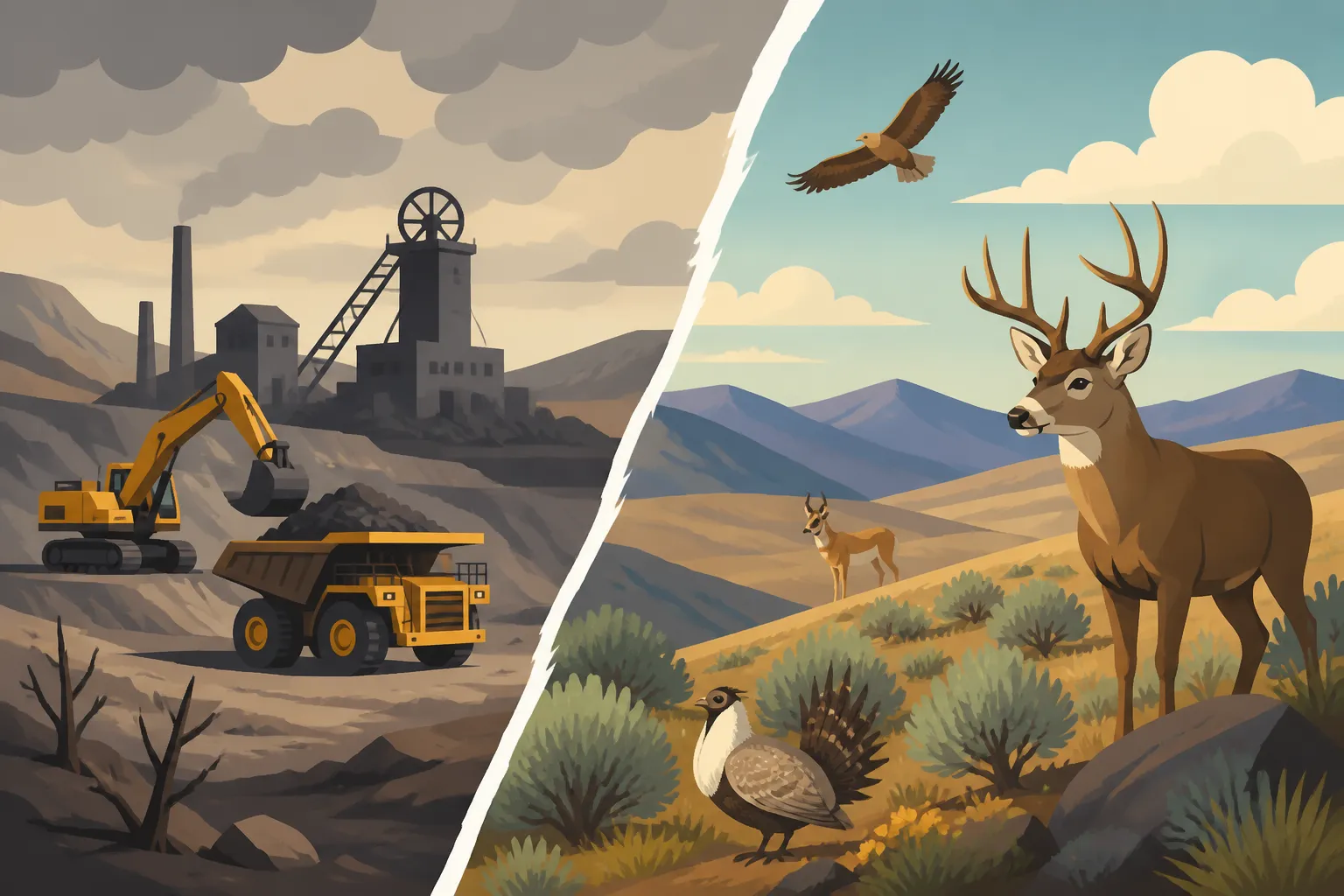
The most obvious impact of mining on wildlife habitat is the direct physical destruction and alteration of the land. When a new mine is established, or an existing one expands, the immediate area is stripped of vegetation, topsoil, and often, entire mountainsides are reshaped. This isn't just about removing a few sagebrush plants; it's about eliminating critical forage, bedding cover, and birthing areas for deer, elk, pronghorn, and countless smaller species. The scale of this initial disruption can be immense, permanently changing the character of the land.
Consider an open-pit mine: what was once a rolling sagebrush hill or a juniper-studded slope, offering shelter and browse, becomes a terraced chasm. The rock excavated from these pits is often piled into massive heaps, known as waste rock dumps or overburden piles, that might take decades or even centuries to revegetate, if at all. These areas offer little to no nutritional value for grazing animals and severely limit movement and cover. Cheatgrass and What It Did to Nevada Range is already a major problem, and mining disturbances can often create prime conditions for invasive species to take hold, further degrading the habitat quality in and around these altered zones.
Beyond the pits and dumps, the network of roads required to access and service these operations fragments the landscape. What might appear as a convenient shortcut for a hunter can be a perpetual disturbance for wildlife. These roads don't just consume land; they introduce noise, vehicle traffic, and a pathway for human activity deeper into otherwise undisturbed areas. This fragmentation can break up traditional migration corridors, isolate populations, and limit access to vital resources like water, especially in a state where Water Is the Access Problem in Southern Nevada.
Indirect Impacts on Wildlife and Ecosystems
While direct habitat loss is stark, mining's indirect impacts on wildlife are often more subtle but equally significant. One major concern revolves around water resources. Mining operations require substantial amounts of water, which can strain already scarce supplies in arid Nevada. Additionally, the process of extracting minerals can introduce contaminants into both surface and groundwater. Tailings ponds, where finely ground rock and chemical solutions are stored, pose a particular risk. If these impoundments leak or fail, heavy metals and processing chemicals can leach into water sources, rendering them toxic to wildlife. Even airborne dust from crushing operations can settle on vegetation, making it less palatable or even harmful for foraging animals.
Noise and light pollution are other indirect factors that can alter wildlife behavior. Constant machinery noise, blasting, and bright lights from 24/7 operations can displace animals from their traditional ranges, especially sensitive species or during critical periods like fawning or calving. Deer or elk that might typically use an area for bedding or security could be pushed into less optimal habitat, increasing stress and vulnerability. These disturbances can effectively create "no-go" zones for wildlife, even if the physical habitat hasn't been completely removed.
Furthermore, increased human presence associated with mining can impact game. While miners are typically focused on their work, the sheer number of people in a remote area can inadvertently lead to more vehicle encounters, accidental disturbances, or even illegal activities. This human footprint, combined with habitat fragmentation, creates a complex mosaic of challenges for animals trying to survive and thrive. Understanding these nuanced interactions is key to appreciating the full scope of how mining changes the equation for Nevada's wildlife.
Mitigation and Reclamation Efforts
Thankfully, mining companies and regulatory bodies are well aware of these impacts and significant efforts are made to mitigate damage and reclaim disturbed lands. Modern mining permits often include stringent requirements for environmental protection, including plans for water management, wildlife protection, and detailed reclamation strategies. These plans aim to restore mined areas to a productive state that can once again support wildlife, often requiring specific contours, topsoil replacement, and revegetation with native plant species. It's a long, complex process, but it's a vital one.
Reclamation efforts often involve stabilizing waste rock piles, re-sloping disturbed areas to blend with natural contours, and then seeding them with carefully chosen native grasses, forbs, and shrubs. The goal isn't just to make it green, but to make it functional habitat again. Companies may also be required to build new water sources, such as guzzlers, or enhance existing ones to compensate for any water lost or impacted by operations. How Guzzlers Concentrate Desert Game is a testament to the importance of water infrastructure in Nevada's arid environment. Sometimes, these mitigation projects can even create new habitat features that benefit specific species.
However, reclamation is never a perfect return to baseline. The ecosystem that took thousands of years to develop cannot be recreated in a few decades. The new habitat might look different, support a different mix of species, or have altered ecological functions. Despite best intentions and significant financial investment, the long-term success of some reclamation projects is still being evaluated, especially in slow-growing desert environments. Hunters and conservationists frequently monitor these efforts and advocate for the strongest possible outcomes, knowing that every acre of restored habitat is a win for Nevada's wildlife. Using tools like GoHunt, hunters can often see historical satellite imagery that shows the before-and-after of large mining operations, helping them understand the scale of impact and reclamation in specific units.
Navigating Mining Country as a Hunter
As hunters, encountering mining operations is almost inevitable in Nevada. Understanding their impact can help you make more informed decisions when scouting and hunting. First, always respect private property boundaries and active mine sites. Mining operations are often on private land or actively leased public land, and trespass is a serious offense. Before heading out, it's wise to consult land ownership maps, which are readily available through resources like GoHunt, to identify active mining claims or private holdings within your hunt unit. Reading a Nevada Unit Boundary carefully is always paramount.
Knowing where active operations are can also influence your hunting strategy. Animals near mining sites might be more wary or might have shifted their patterns to avoid constant disturbance. Consider how noise, light, and vehicle traffic might push game into quieter, less accessible areas. You might find that the best hunting is often concentrated in adjacent undisturbed pockets or migratory routes that avoid the immediate vicinity of a mine. Being flexible and adaptable is key. E-Scouting a Nevada Unit Before the Season can give you an early heads-up on potential mining activity or associated roads.
| Impact Category | Description | Examples for Wildlife |
|---|---|---|
| Direct | Physical removal or major alteration of land | Open pits, waste rock piles, new roads, cleared vegetation |
| Indirect | Changes to the environment that affect wildlife without direct physical contact | Water contamination, air pollution (dust), noise, light, habitat fragmentation, increased human presence |
While mining is a fundamental part of Nevada's economy and history, its effects on wildlife habitat are complex and far-reaching. By understanding these impacts – both direct and indirect – and recognizing the ongoing efforts at mitigation and reclamation, we as hunters can be better advocates for wildlife and more effective stewards of the land we cherish. How Wildfire Changes Sagebrush Habitat and How Drought Affects Great Basin Deer are other critical habitat factors often intertwined with how a landscape responds to mining disturbances.
Disclaimer
This article is for general informational purposes only and does not constitute professional advice. Laws, prices and regulations vary by location and change over time. Consult a qualified professional for guidance on your specific situation.