What Limits Elk Expansion in the Great Basin
It's a question many hunters ponder when looking at Nevada's vast, seemingly endless landscape: why aren't there more elk? While Nevada boasts some incredible trophy elk opportunities, the herds aren't as widespread or numerous as in some other western states. The reality is that the unique, often harsh, environment of the Great Basin, coupled with a complex interplay of ecological factors and human influences, places significant constraints on how much elk populations can truly expand. This guide will dive deep into those limiting factors, helping you understand the delicate balance that governs elk numbers in this challenging, yet rewarding, hunting landscape.
The Harsh Realities of the Great Basin Landscape
Nevada’s terrain is iconic for its "basin and range" topography, a series of north-south running mountain ranges separated by expansive, arid valleys. While stunning, this landscape presents a formidable set of challenges for any large ungulate, and elk are no exception. The very features that define the Great Basin also define the limits of its elk populations.
Scarcity of Water and Riparian Habitat
One of the most immediate and impactful limitations on elk expansion in the Great Basin is the profound scarcity of reliable water sources. Unlike deer, which can often subsist on metabolic water from forage, elk are much more dependent on free-standing water, especially lactating cows and bulls expending massive energy during the rut. The vast majority of Nevada's landscape is incredibly dry, with only intermittent streams, springs, and man-made guzzlers.
These limited water sources often act as focal points, concentrating elk and other wildlife, which can lead to overgrazing around these critical areas during dry periods. When droughts hit, which they do with increasing frequency and severity in the West, these already sparse water points become even more crucial, creating bottlenecks for herd movement and increasing competition. Elk simply cannot thrive and expand into areas where consistent access to water is not guaranteed, and the Great Basin has miles and miles of such country. You'll often find that even the most remote hunt units will have areas with established Water Development Projects Built for Wildlife, and understanding these locations is key to finding game.
Vastness of Sagebrush and Lack of Conifer Cover
When you picture elk country, you likely envision dense conifer forests, aspen groves, and lush mountain meadows. While Nevada certainly has pockets of these habitats in its higher mountain ranges, the dominant landscape across much of the Great Basin is the sagebrush steppe. While sagebrush provides critical forage for mule deer and can sustain antelope, it offers very little in terms of thermal or hiding cover for large herds of elk.
Elk require cover for bedding, for calving, and for escaping both predators and human disturbance. Mature conifer forests or dense aspen stands provide this vital shelter, helping elk regulate body temperature during scorching summers and harsh winters. The expansive, open sagebrush flats, while beautiful, leave elk exposed and vulnerable. They limit where elk can comfortably range and expand, forcing them to stick to the more timbered mountain islands that punctuate the basins. Even within these mountain ranges, the timber can be quite thin, making it a challenge for elk to remain hidden from glassing hunters, as you might learn when Glassing Nevada's Basin and Range for Mule Deer.
Extreme Temperature Swings and Harsh Winters
The high desert climate of the Great Basin is characterized by dramatic temperature swings. Summers can be brutally hot, with daytime temperatures soaring well over 100 degrees Fahrenheit, especially in the valleys. Conversely, winters can be fiercely cold, with deep snow in the higher elevations and freezing temperatures routinely dropping below zero. These extremes place immense physiological stress on elk.
During summer, elk need shade and water to escape the heat, pushing them into higher, more timbered areas or forcing them to be more nocturnal. The heat makes it difficult for cows to lactate effectively and for calves to grow robustly. In winter, deep snow in critical forage areas can limit access to food, leading to malnutrition and increased mortality, particularly among calves and older animals. While elk are incredibly resilient, their ability to expand is directly tied to their ability to survive these environmental stressors, and much of the Great Basin pushes those limits. Hunters planning to pursue early season elk need to consider Heat Management on an August Archery Hunt.
Forage and Food Source Limitations
Even when water and cover are present, elk still need consistent and nutritious food sources to maintain healthy populations, reproduce successfully, and grow those impressive antlers. The Great Basin’s unique vegetation, combined with competition from other animals, further restricts elk expansion.
Competition with Other Grazers
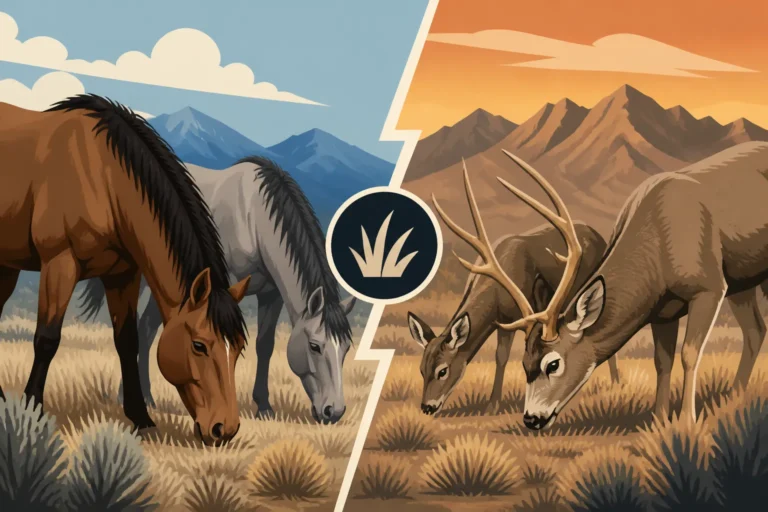
Elk are primarily grazers, meaning their diet largely consists of grasses, forbs, and some shrubs. In many parts of Nevada, they share their habitat with a variety of other large herbivores, both wild and domestic. Wild horses and burros, whose populations have exploded in certain areas, directly compete with elk for limited forage, often favoring the same critical riparian and meadow areas. Mule deer, while primarily browsers, will also graze on grasses and forbs, adding to the competition, especially during harsh winters.
Domestic livestock, particularly cattle, also graze on public lands throughout the Great Basin. While grazing allotments are designed to manage impact, high densities of cattle can reduce the quality and availability of forage for elk, especially in localized areas around water sources. This competition means that even if an area looks like it could support more elk, the actual carrying capacity is significantly reduced by the presence of these other animals vying for the same limited food resources. Understanding this competition is part of Reading a Nevada Hunt Unit Before You Apply.
Impact of Invasive Plant Species
One of the most insidious threats to forage availability in the Great Basin is the proliferation of invasive annual grasses, particularly cheatgrass. Cheatgrass, an introduced species, outcompetes native perennial grasses and forbs, especially after disturbance like wildfire. It grows quickly in the spring, dries out rapidly, and then becomes a massive wildfire fuel in the summer, burning hot and fast. After a fire, cheatgrass is often the first to re-establish, creating a monoculture that offers very little nutritional value for elk.
While cheatgrass can provide some early-season forage, its short growing season means it offers little sustenance through the summer and fall when elk need to build fat reserves. The loss of diverse native perennial grasses and forbs, which provide high-quality forage throughout the year, significantly degrades habitat quality for elk. Areas dominated by cheatgrass simply cannot support robust elk populations, limiting where new herds can establish or existing ones can expand.
Seasonal Forage Availability
The availability of suitable forage in the Great Basin is highly seasonal and heavily dependent on precipitation. In a good year, spring rains can bring forth a flush of green grasses and forbs, providing excellent nutrition for elk. However, these lush periods are often short-lived. By late spring or early summer, much of the lower elevation vegetation has dried out, forcing elk to seek higher elevations where snowmelt sustains green forage longer.
When drought conditions persist, as they often do in Nevada, even these high-elevation forage sources can be diminished. This variability means elk must constantly adapt their movements to find food, burning precious energy in the process. Lack of consistent, high-quality forage can impact calf survival rates, antler growth, and overall herd health. It’s a boom-and-bust cycle that prevents steady population growth and expansion into marginal habitats. Hunting seasons often try to account for these patterns, as explored in Nevada Elk Rifle Hunts Stretch From October Into December.
Human Influence and Management Challenges
Beyond the natural constraints of the environment, human activities and management strategies also play a significant role in limiting elk expansion. From land use to hunting regulations, the choices made by people directly affect where and how many elk can thrive.
Road Networks and Human Disturbance
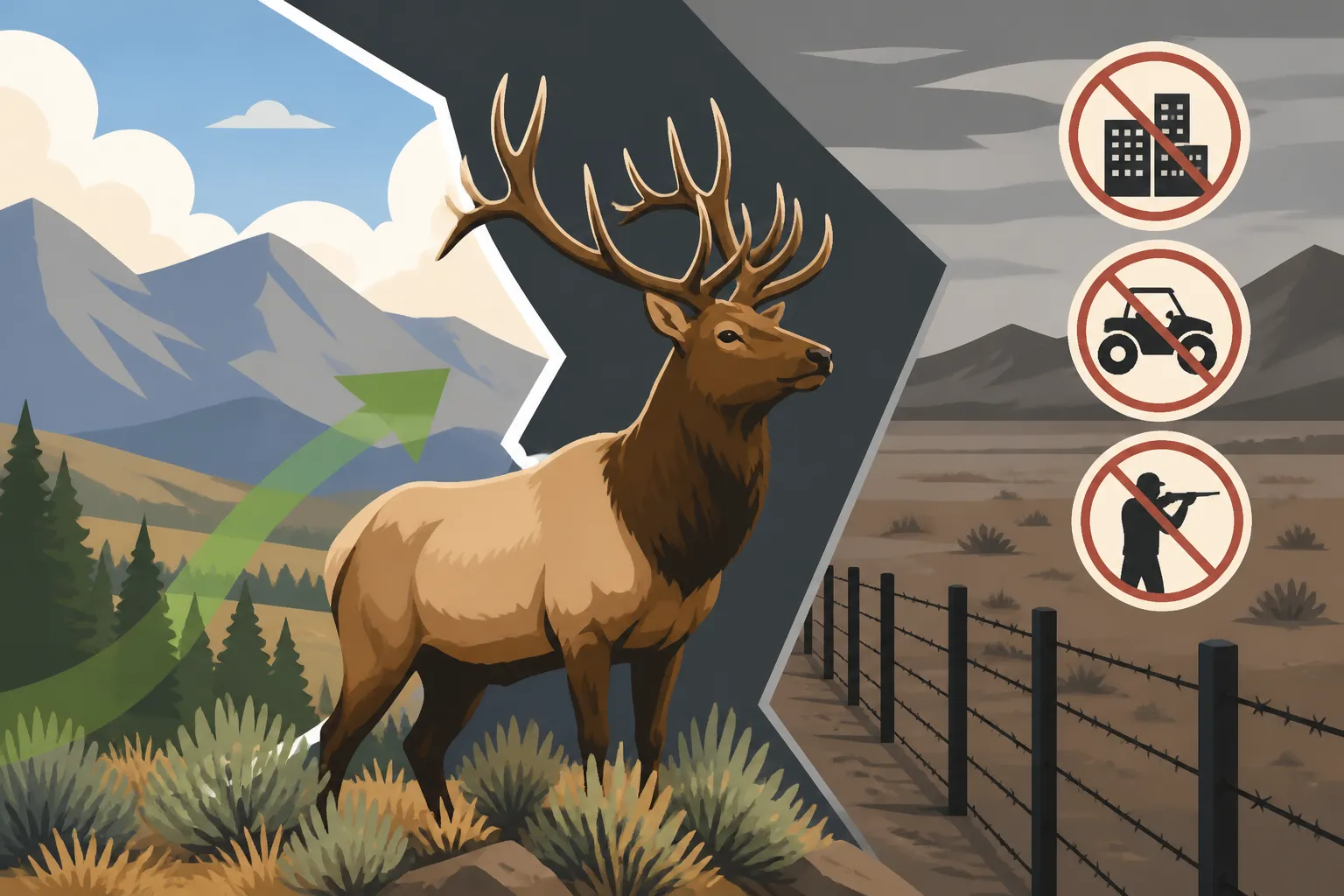
As human populations grow and access to public lands expands, so too does the network of roads, both paved and unpaved. While roads provide access for hunters and recreationists, they also bring increased human disturbance, which can push sensitive species like elk away from otherwise suitable habitat. Elk prefer solitude and security, especially during calving season and the rut. Frequent encounters with vehicles, hikers, and other outdoor enthusiasts can stress elk, causing them to abandon prime areas.
Furthermore, roads can act as barriers to movement, segmenting habitat and making it difficult for elk to access seasonal ranges or escape to new areas. While some roads are necessary for management and access, the proliferation of off-road vehicle use in some areas can create a constant low-level disturbance that keeps elk from utilizing otherwise good habitat. This isn't just about direct avoidance; it's about the cumulative impact of constant human presence altering elk behavior and distribution patterns. Hunters should always be aware of Motorized Travel Rules on Nevada Public Land.
Hunting Pressure and Herd Management
Nevada's elk tags are highly coveted, largely because the state manages its herds for quality over quantity, especially for bull elk. This management philosophy, which aims to produce trophy-class animals, often means that overall elk numbers are intentionally kept lower than they might be in states focused on maximizing opportunity for sheer numbers of tags. The goal is to balance herd health, forage availability, and trophy potential, which inherently means limiting population expansion in some areas.
Nevada Department of Wildlife (NDOW) biologists carefully monitor elk populations, assess habitat conditions, and set harvest quotas to maintain these balances. If an area's carrying capacity is deemed to be at its limit, or if managers want to encourage older age-class bulls, tag numbers might be kept low or specific hunt units might be structured to limit harvest. This controlled approach, while excellent for trophy hunting, naturally limits the rate and extent of elk expansion across the state. Understanding how Nevada How Nevada Sets Its Tag Quotas is crucial for applicants. Hunters can find a great resource to help navigate these choices with tools like those offered by GoHunt, which can help parse through complex draw odds and unit breakdowns.
Habitat Fragmentation and Development
While much of Nevada is federally owned public land, there are still areas, particularly in valleys and around expanding communities, where private land development contributes to habitat fragmentation. New housing developments, agricultural expansion, and mining operations can break up contiguous blocks of elk habitat, creating isolated pockets that are less resilient to environmental changes or disease.
Elk need large, interconnected landscapes to move freely between seasonal ranges – for example, moving from high-elevation summer pastures down to lower-elevation wintering grounds. When these migratory corridors are blocked by fences, roads, or new construction, elk can become bottlenecked or prevented from accessing vital resources. This fragmentation reduces the functional habitat available for elk, making it harder for herds to expand into new areas or for dispersed animals to find new breeding grounds.
Disease and Predation Pressures
Even in ideal conditions, elk populations are always subject to natural limiting factors like disease and predation. In the challenging environment of the Great Basin, these factors can be even more pronounced, impacting survival and growth rates.
Disease Transmission in Concentrated Herds
When elk populations are concentrated in smaller, fragmented patches of habitat, or around limited resources like water, the risk of disease transmission increases dramatically. Diseases such as pneumonia, various bacterial infections, or even parasites can spread more easily through a dense population, especially when animals are already stressed by environmental conditions or poor nutrition. While Nevada has been fortunate to largely avoid widespread outbreaks of some of the more devastating elk diseases, the potential is always there.
Maintaining healthy, dispersed herds helps reduce this risk. However, the natural tendency for elk to congregate in areas with better forage, water, and cover means that localized outbreaks could still occur. A significant disease event could quickly decimate a smaller, isolated herd, severely limiting any potential for expansion. Biologists regularly monitor herd health, but preventing disease in wild populations spread across vast areas is a monumental challenge. GoHunt insights can sometimes help hunters understand herd health trends by providing access to detailed wildlife reports.
Predation from Mountain Lions and Other Carnivores
Mountain lions are the primary natural predators of adult elk in Nevada, and their presence helps to regulate elk populations, particularly calves and older or weaker animals. While a healthy elk herd can sustain some level of predation, heavy predation pressure, especially on calves, can significantly impact recruitment rates – the number of young animals that survive to adulthood and join the breeding population.
Coyotes and bears (where they overlap with elk) can also prey on newborn calves. In areas where elk habitat is marginal or fragmented, and elk are already stressed by lack of water or poor forage, even a moderate level of predation can be a significant limiting factor. Predator populations naturally fluctuate with prey availability, but they are an ever-present force in the Great Basin ecosystem, ensuring that elk numbers remain within certain ecological bounds. You might learn more about Mountain Lion Hunting Across Nevada and how their populations are managed.
Summary of Limiting Factors for Nevada Elk Expansion
The Great Basin presents a complex web of challenges that collectively limit the expansion of elk populations in Nevada. It's not one single factor but rather the cumulative effect of these interconnected elements that defines the carrying capacity for elk in this unique landscape.
| Limiting Factor | Description | Primary Impact on Elk Expansion |
|---|---|---|
| Water Scarcity | Extremely limited and intermittent water sources across vast arid regions. | Restricts range, concentrates herds, increases competition. |
| Habitat Type | Predominance of open sagebrush steppe, limited dense conifer/aspen cover. | Lack of thermal/hiding cover, exposure to elements and predators. |
| Climatic Extremes | Harshly hot summers and very cold, snowy winters. | Physiological stress, reduced survival rates (especially calves). |
| Forage Competition | Shared resources with wild horses, burros, deer, and domestic livestock. | Reduced availability of high-quality forage, especially in key areas. |
| Invasive Plants | Proliferation of cheatgrass degrading native perennial forage. | Lower nutritional value, increased wildfire risk, reduced habitat quality. |
| Human Disturbance | Extensive road networks and recreational activity in sensitive areas. | Displaces elk, alters behavior, creates stress. |
| Management Goals | State's focus on trophy quality often means lower overall herd numbers. | Intentional limits on population growth and density. |
| Habitat Fragmentation | Development and infrastructure breaking up contiguous habitat. | Blocks migratory corridors, isolates herds, reduces functional habitat. |
| Disease Risk | Increased transmission potential in concentrated or stressed populations. | Localized mortality, hinders population growth. |
| Predation Pressure | Mountain lions and other carnivores preying on calves and adults. | Reduces recruitment rates, impacts overall herd health. |
Ultimately, Nevada's elk herds are a testament to their resilience, thriving in areas that provide the necessary combination of resources. While the Great Basin offers unparalleled hunting experiences, it also dictates the terms on which elk can truly expand. Recognizing these limitations helps us appreciate the magnificent animals that call this challenging landscape home and understand the careful balance required for their continued presence.
Disclaimer
This article is for general informational purposes only and does not constitute professional advice. Laws, prices and regulations vary by location and change over time. Consult a qualified professional for guidance on your specific situation.