Mountain Lion Hunting Across Nevada
The thought of chasing a phantom, a ghost of the mountains, is what draws many to the elusive mountain lion. It's a hunt that demands patience, grit, and an intimate understanding of their secretive nature, and let's be honest, it often leaves you feeling more like a detective than a hunter. This guide will walk you through everything you need to know about pursuing mountain lions across Nevada's diverse and challenging landscapes, from understanding their populations to mastering the art of the hunt.
Understanding Nevada's Mountain Lion Population and Management
Hunting mountain lions in Nevada isn't like drawing an elk tag; it's a completely different beast, pun intended. For many, it's a deeply engaging challenge that takes them to some of the most rugged, remote corners of the state. But before you even think about setting foot in lion country, it's vital to understand the "why" and "how" behind Nevada's approach to managing these incredible predators.
Historical Presence and Current Distribution
Mountain lions, also known as cougars or pumas, have always been a part of Nevada's wild tapestry. They are apex predators, playing a crucial role in maintaining healthy ecosystems by naturally culling deer, elk, and bighorn sheep populations, often targeting the old, sick, or weak. Historically, their numbers fluctuated with their prey base and human interaction, including past bounty programs that aimed to reduce their presence. Thankfully, those days are long gone, and modern wildlife management focuses on sustainable populations.
Today, you'll find mountain lions throughout much of Nevada, particularly wherever there's suitable prey and rugged, broken terrain for cover. From the high-elevation forests of the Humboldt-Toiyabe National Forest to the jumbled canyons of the desert ranges in the south, lions thrive in diverse environments. Their adaptability is truly remarkable, allowing them to exist even in areas surprisingly close to human habitation, though they are masters of stealth and rarely seen. Knowing that they are truly widespread means that potential lion country is far more extensive than many new hunters realize, opening up vast tracts of public land for pursuit.
While you might envision a lion only in dense timber, Nevada's lions are just as at home in the vast sagebrush seas and rocky outcrops of the Great Basin. This wide distribution means that understanding the local prey species – primarily mule deer – is key to finding lion concentrations. If you're Reading a Nevada Hunt Unit Before You Apply, paying close attention to historical deer data and the ruggedness of the terrain will often point you towards areas with potential lion activity. It's this intimate connection between predator and prey that shapes their current distribution across the state.
Quota System and Conservation Efforts
Nevada's approach to mountain lion management is built around a quota system, which is a bit different from the draw for other big game animals. Instead of a set number of tags drawn in a lottery, lion tags are often available over-the-counter or through specific application windows, but the harvest is strictly managed by quotas. What this means is that once a certain number of lions are harvested within a designated management zone or unit group, that zone closes for the remainder of the season, even if tags are still technically available. This system allows for flexible management, adapting to real-time harvest data and ensuring sustainable populations.
These quotas are not arbitrary; they are carefully determined by wildlife biologists at the Nevada Department of Wildlife (NDOW) based on population estimates, harvest data from previous years, and monitoring of prey populations. The goal is always to maintain a healthy and viable mountain lion population while also managing their impact on other big game species, and sometimes even addressing public safety concerns in certain areas. It's a delicate balance, and the quota system is one of the most effective tools to achieve it. You can track these quotas and closures on the NDOW website, often updated daily during the active season.
A critical component of this management is the mandatory reporting requirement after a harvest. Every successful lion hunter must report their kill to NDOW within a very specific timeframe, usually within 72 hours, and bring the skull and hide in for inspection and sealing. This mandatory check-in allows biologists to collect crucial data on the age, sex, and health of harvested lions, which then feeds back into their population models and future quota decisions. This detailed Mountain Lion Tagging Requirements in Nevada is a cornerstone of ensuring the long-term health of Nevada's lion population, a true commitment to conservation rather than just opportunity.
Nevada's Mountain Lion Hunting Seasons and Regulations
Navigating the regulations for mountain lion hunting in Nevada can feel a bit like trying to track a lion itself – there are lots of twists and turns, and you need to pay close attention to the details. Unlike the more structured deer or elk seasons, lion hunting offers a longer, more fluid window, but with the critical caveat of zone-specific quotas that can close a season at any moment. Missing these details can quickly turn a potential hunt into a frustrating legal misstep.
Season Structure and Unit Designations
Nevada's mountain lion hunting season is impressively long, often spanning from March or April all the way through February of the following year. This extended window gives hunters a broad opportunity, but it’s not a free-for-all. The state is divided into specific mountain lion management zones, which often align with or combine existing big game units. Each of these zones has its own individual quota for male and female lions. This is critical because a zone might close for females (sows) while still remaining open for males (toms), or vice-versa, or it might close entirely once the overall combined quota is met.
The long season is designed to offer flexibility, allowing hunters to adapt to changing conditions, whether that's waiting for fresh snow for tracking, or timing their hunt around other commitments. However, the fluid nature of the quota closures means constant vigilance is required. You absolutely cannot just assume a zone will be open when you plan to hunt. NDOW updates its website regularly with harvest numbers and closures, and it’s a non-negotiable part of your pre-hunt routine to check these updates, sometimes even daily if you’re actively in the field. This unique setup means that while a tag might be valid for an entire year, the actual huntable window within a specific zone can be much shorter and unpredictable.
Understanding these Mountain Lion Quotas and Zones is paramount. Some zones might be more popular and close quickly, especially if they have a history of producing larger lions or are more accessible. Other, more remote zones might remain open longer due to less hunting pressure or more challenging terrain. When you're poring over maps and e-scouting on platforms like GoHunt, make sure you're not just looking at the terrain, but also cross-referencing that with the specific lion zones and their historical quota closure patterns. This foresight can help you choose a zone that might offer a longer hunting opportunity.
License, Tag, and Reporting Requirements
To even begin your mountain lion journey in Nevada, you'll first need a valid hunting license. For nonresidents, this means purchasing a The Nonresident Nevada Combination License which allows you to then buy a mountain lion tag. The tag itself is often available over-the-counter or through a relatively simple application process outside of the main big game draw, which is a relief compared to the competitive process for deer or elk. However, once you have that tag in hand, the real responsibilities begin.
One of the most crucial aspects of lion hunting in Nevada is the strict reporting requirement. As mentioned earlier, if you are fortunate enough to harvest a lion, you must report it to NDOW within a specified window, typically 72 hours, though it’s always best to check the current year’s regulations for exact timing. This isn't just a recommendation; it's a legal obligation. During this reporting, you'll provide details about the harvest, and you'll often be required to bring the skull and hide to an NDOW office or designated check station for inspection and sealing.
This sealing process is vital for two reasons: it authenticates your harvest as legal, and it allows NDOW biologists to collect critical biological data. They will examine the age of the lion, determine its sex, and often take measurements or tissue samples. This information is invaluable for their ongoing How Nevada Manages Lion Harvest research and for setting future quotas. Failure to report a lion, or attempting to transport an unsealed hide or skull, can lead to serious legal consequences. It's a system built on accountability, ensuring that every lion harvested contributes to the scientific management of the species.
Hunting Methods for Mountain Lions in Nevada
Hunting mountain lions is less about sitting in a blind and more about relentless pursuit, often through some of the toughest country Nevada has to offer. The very nature of the animal—elusive, wide-ranging, and often nocturnal—dictates specialized methods. While the image of a hunter with a pack of hounds is iconic, it’s not the only way, nor is it always practical for every hunter. Understanding these different approaches is key to even beginning to formulate a strategy for your own hunt.
Hound Hunting for Mountain Lions
Without a doubt, the most common and often most successful method for hunting mountain lions in Nevada is with the aid of trained hounds. This isn't just a tradition; it's a highly specialized and effective technique perfectly suited to the lion's secretive nature and the vast, rugged terrain they inhabit. The dogs' ability to pick up a cold track and follow it through miles of broken rock, deep snow, or across bare ground is something no human hunter can replicate. This is why Hound Hunting for Nevada Lions is so prevalent.
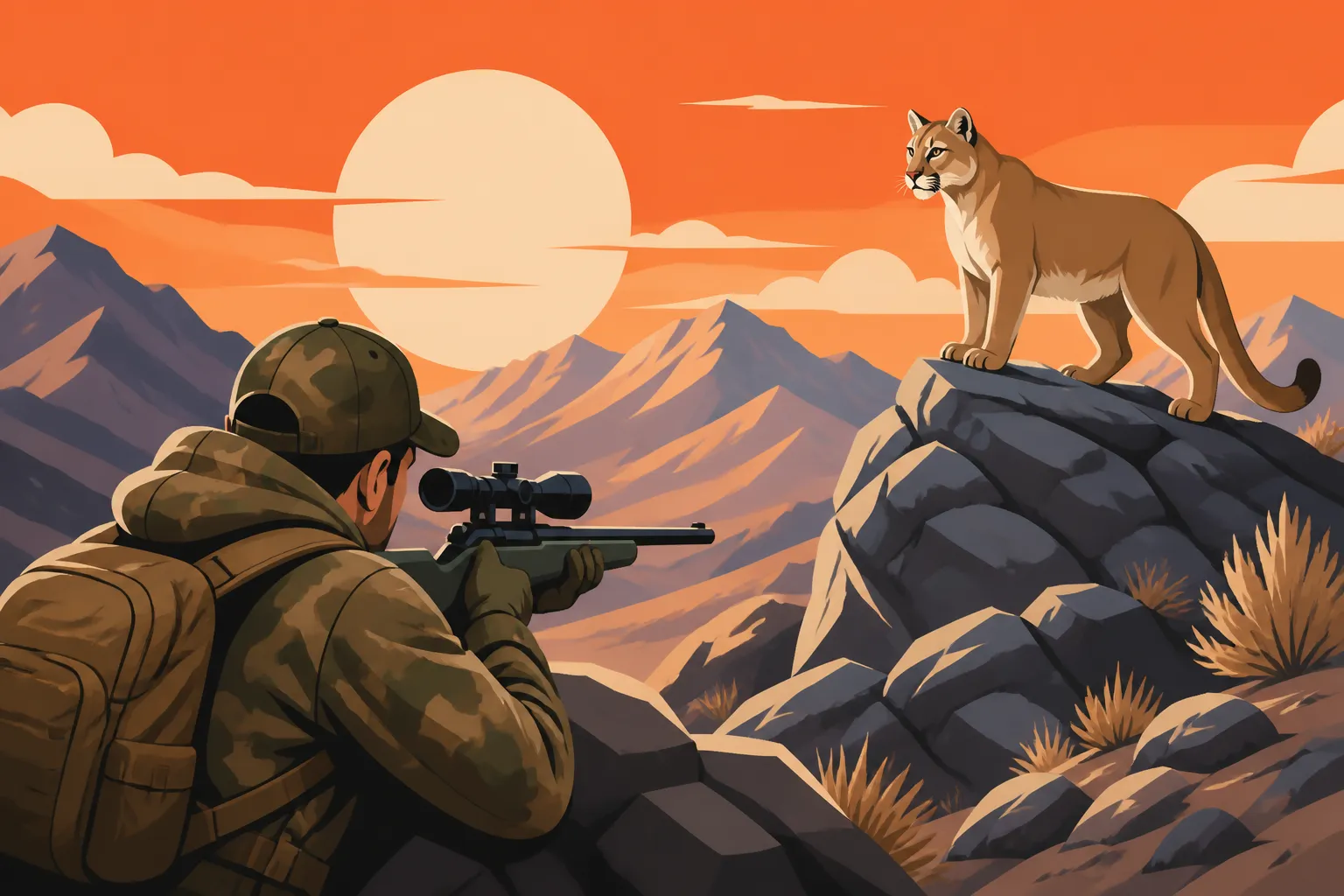
A typical hound hunt involves finding fresh lion sign—tracks, scat, or kills—and then releasing the dogs to "strike" the track. Once the dogs are on a scent, the real work begins for the human hunters. You'll follow the dogs, often for many miles and across incredibly difficult country, listening to their baying as they push the lion. Eventually, if all goes well, the dogs will "tree" or "bay" the lion, holding it at bay, usually up a tree or on a rock ledge, until the hunters can arrive. This pursuit can last hours, or even an entire day, requiring immense physical stamina and mental fortitude from both the dogs and the hunters.
Working with experienced houndsmen is often the path many take, as training and maintaining a pack of lion dogs is a significant investment of time, money, and expertise. These dedicated individuals spend countless hours in the field, honing their dogs' skills and learning the intricacies of lion behavior. If you're serious about hound hunting but don't own dogs, you might consider reaching out to a reputable Nevada Master Guides May Work the Whole State who specializes in lion hunting. Their knowledge of the terrain, lion habits, and the capabilities of their dogs can be the deciding factor in a successful hunt, turning what seems impossible into a reality.
Still Hunting and Incidental Harvest
While hound hunting dominates, it's not the only way to harvest a mountain lion in Nevada, though success rates are significantly lower without dogs. "Still hunting" for lions involves moving stealthily through known lion habitat, constantly looking for fresh tracks or other signs, and being prepared for a rare, opportunistic encounter. This method is incredibly challenging because lions are masters of camouflage and avoid human detection at all costs. It requires an exceptional amount of patience, an eagle eye for detail, and a deep understanding of lion behavior and preferred travel corridors.
Many lions harvested through still hunting are actually "incidental" takes by hunters pursuing other big game species, most commonly mule deer or elk. Imagine you're deep in the backcountry, Glassing Nevada's Basin and Range for Mule Deer, and you suddenly spot a lion moving through a draw or stalking its own prey. These encounters are rare but not impossible, especially for observant hunters spending a lot of time in lion country during seasons like the Late Rifle Deer Seasons in Nevada. Being ready for such an opportunity means always having your lion tag purchased, understanding the current zone quotas, and being prepared to make a quick, ethical shot.
The key to increasing your odds, even marginally, with still hunting is to focus on areas with high prey density and good cover. Look for pinch points, canyon bottoms, and areas with fresh deer or elk tracks, especially around recent kill sites. Fresh snow can dramatically improve your chances by making tracks visible, but even without snow, a keen eye for subtle signs like scat, scratch marks on trees, or partially covered caches can indicate lion presence. This method truly tests a hunter's woodcraft and ability to read the landscape, offering a unique, solitary challenge that appeals to those who enjoy the ultimate test of their stalking and tracking skills.
Gear and Preparation for a Successful Lion Hunt
Chasing mountain lions in Nevada is not for the faint of heart or the ill-prepared. It's an intense, physically demanding endeavor that will push you to your limits, often in remote, unforgiving terrain. The right gear isn't just about comfort; it's about safety, efficiency, and increasing your chances of success. Just as important is the physical and mental conditioning required to keep up with dogs or cover endless miles on foot.
Essential Equipment for Tracking and Pursuit
When it comes to gear for lion hunting, reliability is paramount. You'll be operating far from any services, traversing rugged landscapes that chew through lesser equipment. Your footwear, for instance, needs to be top-tier. Think sturdy, ankle-supporting boots with aggressive tread that can handle everything from loose scree and sharp volcanic rock to potential snow and ice. Good quality hiking gaiters are also a must to keep debris out of your boots and protect your lower legs.
Beyond your personal attire, communication and navigation tools are non-negotiable. Cell service is virtually nonexistent in much of Nevada's lion country. A satellite messenger like a Garmin inReach or Zoleo is absolutely essential for emergency communication and for tracking your position, especially if you're Preparing for Long Days in Open Terrain and following hounds. A reliable GPS unit, loaded with topographical maps and public land layers (GoHunt provides excellent map overlays), will guide you through complex terrain and ensure you stay on public land. Don't forget a backup compass and physical map – batteries die, and electronics fail.
Other crucial items include a high-quality backpack capable of carrying water, emergency supplies, and perhaps even a portion of a lion if you're successful. A good pair of binoculars (8x-10x) is vital for scanning ahead, especially when the dogs are pushing a lion toward a known treeline or rock face. And of course, your rifle or bow should be something you're intimately familiar with, capable of accurate shots in demanding conditions. For rifles, a versatile caliber like a .270 or .30-06 is more than adequate, paired with a tough, reliable scope. For archers, ensure your setup meets the Minimum Bow Draw Weight for Big Game and you have sharp, legal broadheads.
Physical and Mental Conditioning
Let's be blunt: mountain lion hunting is a brutal workout. Whether you're following a pack of baying hounds up and down canyons or still hunting through miles of steep, rocky terrain, your body will be pushed to its absolute limits. This isn't a casual stroll; it's a marathon on an obstacle course. If you neglect your physical conditioning, you'll not only struggle to keep up but could also put yourself and your hunting partners at risk in remote country. Think about it: you might be Packing an Animal Out of Roadless Country which takes immense strength.
Leading up to your hunt, focus on building both cardiovascular endurance and leg strength. Hiking with a weighted pack, trail running, and stair climbing are excellent ways to simulate the demands of the hunt. Incorporate exercises that strengthen your core, knees, and ankles, as these are areas prone to injury in uneven terrain. Don't just train in a gym; get outside and hike some of the steepest hills you can find, preferably in the boots you plan to wear. Your future self, gasping for breath on a steep climb, will thank you.
Equally important is mental conditioning. Lion hunting often involves long periods of intense effort followed by moments of high adrenaline, or long hours of searching without success. You need the mental toughness to push through fatigue, the patience to wait for a track to be found, and the resilience to keep going when the terrain seems insurmountable. This hunt is as much a mental game as it is a physical one. Practicing mindfulness and maintaining a positive attitude, even when faced with challenges like dealing with difficult terrain and weather, can make a huge difference in your overall experience and success.
Choosing a Unit and Scouting for Lion Sign
Picking a hunting unit for mountain lions in Nevada isn't like throwing a dart at a map. It requires careful research and an understanding of lion ecology. These animals are incredibly secretive, so you can't just drive around hoping to spot one. Instead, you need to identify habitat that consistently holds their prey and offers the kind of cover they prefer. This strategic selection and diligent scouting are the foundations of any successful lion hunt.
Identifying Productive Mountain Lion Habitat
Mountain lions are highly dependent on their prey base, primarily mule deer, but also elk, bighorn sheep, and various small game. Therefore, the first step in identifying productive lion habitat is to find areas with healthy populations of these animals. Look for units or zones that consistently produce good numbers of deer or elk. These areas will naturally attract and sustain lions. Beyond prey, lions seek out rugged, broken terrain that offers excellent cover for stalking and resting. Think steep canyons, rimrock country, dense juniper thickets, and areas with extensive rock formations.
Water sources, even in the driest parts of Nevada, are also critical. While lions don't necessarily 'water' like ungulates, their prey does, and areas around reliable springs, creeks, or even How Guzzlers Concentrate Desert Game will often see increased activity from deer and, consequently, lions. Consider units in the more mountainous regions of the state, such as those found in the Humboldt-Toiyabe National Forest, the Ruby Mountains, or the Schell Creek Range, which offer a combination of dense prey, rugged terrain, and scattered water. These areas provide the perfect blend of elements for a thriving lion population.
Conversely, vast, open, flat valleys with little cover are less likely to hold resident lions, though they might traverse such areas between mountain ranges. When you're looking at a topographical map, focus on areas with dramatic elevation changes, numerous drainages, and areas marked with dense vegetation. The more "jumbled" and inaccessible the terrain appears to you, the more likely it is to be good lion habitat. This is where truly understanding the Reading a Nevada Hunt Unit Before You Apply and its topographical features becomes invaluable.
E-Scouting and Boots-on-the-Ground Reconnaissance
In today's hunting world, e-scouting has become an indispensable tool, and for mountain lions, it's particularly effective for narrowing down vast tracts of land. Platforms like GoHunt, with their detailed satellite imagery, topographical maps, and public/private land overlays, allow you to identify potential lion habitat from the comfort of your home. Look for those dark timber pockets, north-facing slopes with good cover, and intricate canyon systems that could serve as travel corridors or denning sites. Pay close attention to historical harvest data if available, as units with consistent lion harvests are worth a deeper look.
However, e-scouting is only the first step. There's no substitute for boots-on-the-ground reconnaissance, especially when it comes to finding fresh lion sign. Once you've identified potential areas through e-scouting, plan scouting trips, ideally during periods when snow might be present, as fresh tracks in the snow are the holy grail of lion scouting. Even without snow, search for tracks in soft dirt near water sources, along game trails, and at the base of cliffs. Look for scat, which often contains hair and bone fragments of their prey, and scratch posts—trees or logs where lions sharpen their claws.
Finding a fresh kill site, especially a deer or elk carcass partially covered with dirt and debris, is a definitive sign of recent lion activity. These cache sites are often revisited by the lion, offering a potential opportunity, though approaching them requires extreme caution. Scouting for these subtle clues is an art form, and the more time you spend in potential lion country, the better you'll become at recognizing the signs. Remember that mountain lions are always on the move, so "fresh" sign is relative, but it provides the best indication of current presence in a specific area.
The Ethical Hunter: Responsible Lion Hunting Practices
Ethical hunting isn't just a set of rules; it's a mindset that emphasizes respect for the animal, the land, and the traditions of hunting. For mountain lions, an animal shrouded in mystique and often misunderstood, this ethical framework is even more critical. Ensuring you engage in responsible practices not only upholds the integrity of the hunt but also contributes to the positive perception and continued opportunity for future generations of lion hunters.
Fair Chase and Respect for the Animal
The principle of fair chase is paramount in all hunting, and for mountain lions, it means ensuring the animal has a reasonable chance of escape. This is particularly relevant in hound hunting. While dogs are incredibly effective at tracking and holding a lion, hunters must ensure that the lion is not unduly stressed or cornered in a manner that removes its ability to escape before a shot is taken. Reputable houndsmen are experts at reading a lion's behavior and the situation, advising hunters on ethical shot opportunities. It's not about an easy kill; it's about the challenge of the pursuit and the skill involved in the harvest.
Part of respecting the animal also involves ensuring a quick, humane kill. Mountain lions are incredibly tough animals, and a poorly placed shot can lead to a prolonged, agonizing pursuit and a lost animal. Take the time to ensure you have a clear, ethical shot opportunity, and be confident in your abilities. Practice extensively with your chosen weapon to ensure proficiency under pressure. If hunting with hounds, this often means waiting for the lion to be calmly treed or bayed, allowing for a steady, precise shot, rather than rushing. This ethical consideration extends to knowing How Outfitters Handle a Wounded Animal and having a plan for follow-up in difficult terrain.
Furthermore, respect for the animal extends to its gender and age. While quotas allow for the harvest of both male and female lions, many hunters choose to selectively harvest mature males to ensure breeding females remain in the population. It's a personal choice, but one rooted in conservation. Some hunters, when they find a lion with cubs, will pass on the opportunity entirely. This level of discernment, driven by a deep understanding of lion biology and a commitment to their long-term health, embodies the highest ideals of fair chase and respect for the magnificent creatures we pursue.
Meat Care and Trophy Preservation
Unlike some big game animals, mountain lions aren't primarily hunted for their meat, but that doesn't mean the meat should be wasted. Nevada, like many states, has The Meat Salvage Requirements for Big Game, meaning you are legally obligated to make a reasonable effort to salvage edible portions of any harvested big game animal. Lion meat, particularly from younger animals, can be quite palatable, often described as similar to lean pork. It's excellent in stews, chili, or ground for sausages. Therefore, after a successful harvest, properly field dressing and cooling the meat is an important step, especially if the weather is warm.
Field dressing a lion quickly after the kill is essential for preserving both the meat and the hide. If you plan to keep the hide as a trophy, whether for a rug or a full-body mount, careful skinning is critical. Avoid making unnecessary cuts or damaging the face, paws, or tail. If you're unsure about skinning a lion for a trophy, it's always best to consult with an experienced taxidermist beforehand or have an experienced guide assist you. The hide is thick and tough, and skinning can be arduous, especially in the field.
After skinning, the hide needs to be properly salted and cooled as quickly as possible to prevent hair slippage and spoilage. This is particularly important if you are several days from a taxidermist or freezer. Rolling the hide, flesh-side in, with plenty of non-iodized salt will help draw out moisture and preserve it. Transporting the hide and skull requires adherence to the aforementioned tagging and sealing regulations, ensuring your trophy is legally accounted for. The goal is to honor the animal through careful preparation and utilization, ensuring that no part of the harvest goes to waste.
Working with Outfitters and Guides
For many hunters, especially those new to mountain lion hunting or new to Nevada's vast landscapes, the idea of chasing a ghost with four legs can be daunting. That's where a reputable outfitter or guide comes into play. While a do-it-yourself (DIY) hunt is certainly possible, the specialized nature of lion hunting often makes professional assistance an invaluable investment, significantly increasing your odds of success and enhancing the overall experience.
The Value of a Reputable Lion Guide
Hiring a reputable mountain lion guide in Nevada is often the single biggest factor in a successful hunt, especially if you're traveling from out of state or don't have access to experienced hounds or local knowledge. These guides are more than just escorts; they are experts in lion behavior, the local terrain, and, critically, they usually have well-trained and conditioned packs of hounds. Training and maintaining lion dogs is a year-round commitment, requiring significant time, effort, and financial investment, which most individual hunters cannot realistically undertake.
A good guide will handle all the complex logistics, from knowing which Nevada Mountain Lion Quotas by Zone are open and have quotas remaining, to having intimate knowledge of the best hunting grounds for lion sign. They understand how snow conditions, recent deer kills, and weather patterns influence lion movement, giving you a distinct advantage. Beyond finding a lion, they provide invaluable assistance with tracking, navigating, and even the field care of your harvest. For a truly unique Western experience, some guides even offer The Logistics of a Horseback Drop Camp, allowing access to even more remote lion country.
Ultimately, a guide offers not just a higher chance of success but also an invaluable educational experience. You'll learn about lion ecology, tracking techniques, and hound handling from someone who lives and breathes it. They can help you judge a lion in the field, ensuring you make an ethical harvest decision. This partnership allows you to focus on the challenge and adventure of the hunt itself, rather than getting bogged down in unfamiliar logistics or struggling with unproven methods.
Vetting and Booking Considerations
Choosing the right mountain lion outfitter requires careful research, as not all guides are created equal. Start by looking for guides who specialize in lion hunting, ideally with their own established hound packs. Ask for references, and actually call them. Inquire about their success rates (which can vary wildly depending on weather and other factors), their approach to ethical hunting, and what exactly is included in their hunt package. A good outfitter will be transparent about costs, what equipment you need to bring, and their expectations of you as a client.
When you're looking for an outfitter, resources like GoHunt can be quite helpful. While GoHunt itself doesn't directly offer guide services, their platform often provides community forums, success stories, and unit-specific information that can indirectly lead you to highly regarded guides. Additionally, state wildlife agencies sometimes Where Nevada Lists Licensed Guides, providing a starting point for verifying credentials. Always ensure the guide is properly licensed by the Nevada Department of Wildlife and has any necessary federal permits for operating on public lands, such as BLM or National Forest ground.
Booking timing is also crucial. The best lion guides often book up well in advance, sometimes a year or more out, especially if they have a reputation for consistent success. Be prepared to put down a deposit, and always read the contract carefully, paying close attention to cancellation and refund policies. Given the unpredictable nature of quotas and weather, understand what happens if a zone closes or if adverse conditions prevent hunting. Being proactive in your research and thorough in your vetting process will ensure you partner with a professional who shares your values and commitment to an ethical, challenging, and ultimately rewarding mountain lion hunt.
Common Challenges and How to Overcome Them
Hunting mountain lions in Nevada is intrinsically challenging. It's not a numbers game like some other species; it's a test of endurance, determination, and adaptability. Facing these hurdles head-on is part of the experience, and understanding them beforehand can help you prepare mentally and physically, turning potential setbacks into valuable lessons.
Dealing with Difficult Terrain and Weather
Nevada's landscape, while stunningly beautiful, is notoriously rugged and unforgiving. Much of the prime mountain lion habitat is found in steep, rocky, brush-choked canyons, often at high elevations. Following hounds through this terrain, or still hunting it on foot, demands peak physical condition. You'll encounter loose scree that threatens to trip you, sharp volcanic rocks that can shred boots and tires, and dense stands of juniper or mahogany that are a nightmare to push through. The elevation alone can be a challenge for those not accustomed to it, leading to fatigue and shortness of breath.
Adding to the complexity is Nevada's unpredictable weather. While snow is often a preferred condition for hound hunting (as it makes tracks easier to follow), it also introduces its own set of challenges: bitter cold, strong winds, and treacherous icy conditions. Conversely, early or late season hunts might be hot and dry, leading to dusty trails, making tracking almost impossible, and increasing the risk of dehydration. This constant variability in Layering for Basin and Range Temperature Swings means your gear must be versatile, and your mental fortitude needs to be rock solid.
To overcome these terrain and weather challenges, meticulous planning and rigorous physical conditioning are essential. As discussed, invest in top-tier boots and clothing systems designed for layering. Stay hydrated consistently, even in cold weather. Carry a well-stocked first-aid kit, and know how to use it. When conditions become genuinely dangerous, whether due to extreme weather or unsafe terrain, having the discipline to pull back and try another day is a sign of a responsible hunter. Remember, a lion hunt is a marathon, not a sprint, and sometimes the smartest move is to wait for more favorable conditions.
Managing Expectations and Persistence
One of the biggest mental challenges in mountain lion hunting is managing expectations. This is not a high-percentage hunt. Lions are incredibly elusive, and even with the best hounds and an experienced guide, there are no guarantees. You might spend days covering vast amounts of ground, encountering nothing but old tracks, or losing a fresh track after miles of grueling pursuit. The excitement of finding fresh sign can quickly turn into exhaustion and disappointment if the chase doesn't pan out. This emotional rollercoaster requires a significant amount of mental resilience.
The key to overcoming this is persistence and a realistic outlook. Understand that simply being out in lion country, seeing the signs, and engaging in the chase, is a victory in itself. Focus on the process, the incredible teamwork with the dogs and guide, and the challenge of navigating remote wilderness. Don't let the "kill" be the sole measure of success. Every day spent in the field teaches you something new about lions, about the landscape, and about yourself. This pursuit truly embodies the idea that the journey is often more rewarding than the destination.
Embrace the learning experience, celebrate the small victories—a fresh track found, a puzzle pieced together, a difficult climb conquered. Building A Practice Routine Before Opener for both physical and mental preparedness can help. And when that rare moment comes, and you're finally standing before a treed lion, the hard work and persistence will make the achievement that much sweeter. It’s a hunt that demands humility, respect, and an unwavering spirit, but for those willing to commit, the rewards are deep and profound, creating memories that last a lifetime.
Mountain Lion Hunting Quick Reference
| Aspect | Details |
|---|---|
| Season Dates | Generally runs from March/April through February of the following year (check current regulations annually). |
| Quotas | Zone-specific quotas for males and females; zones close when quota is met. Check NDOW website for real-time updates. |
| Licenses/Tags | Requires a valid Nevada hunting license and a mountain lion tag. Often available over-the-counter or through specific application windows (not the main big game draw). |
| Reporting | Mandatory reporting of harvest to NDOW within 72 hours. Skull and hide must be presented for inspection and sealing. Failure to report leads to legal penalties. |
| Primary Method | Hound hunting is most common and successful. Requires well-trained dogs and experienced handlers. |
| Alternative Method | Still hunting (walking and stalking) or incidental harvest during other big game seasons is possible but has significantly lower success rates. Requires exceptional tracking skills. |
| Key Gear | Rugged footwear, satellite communication, GPS, quality optics, versatile layering system, adequate water/food. |
| Physical Demands | Extremely high. Requires excellent cardiovascular endurance and leg strength for traversing steep, rough terrain. |
| Habitat | Rugged, broken terrain with good cover (canyons, rimrock, dense brush) and high prey density (mule deer, elk, bighorn sheep). |
| Ethics | Strict adherence to fair chase. Humane kill, meat salvage, and respectful hide/trophy preservation are mandatory. Consider selective harvest of mature males. |
| Guides | Highly recommended, especially for non-residents or those without hounds. Guides provide expertise, hounds, and handle complex logistics. Vet thoroughly. |
Disclaimer
Please remember that hunting regulations, season dates, and quotas can change annually. Always consult the most current Nevada Department of Wildlife (NDOW) hunting regulations proclamation before planning or embarking on any hunt. This guide provides general information and should not be used as a substitute for official legal documentation. It is the hunter's responsibility to know and follow all applicable laws and regulations.