Why Chukar Hunting Is So Physically Hard
For anyone who’s ever glanced at a picture of a chukar hunter grinning over a strap of birds and thought, "That looks like fun, how hard can it be?" – let me tell you, that grin is often a mask for pure, unadulterated exhaustion. Chukar hunting in Nevada isn't just a walk in the park; it's a brutal, relentless, lung-burning, leg-shredding test of will that makes most other upland pursuits feel like a leisurely stroll. This guide will dive deep into exactly why chasing these incredible birds across Nevada's rugged landscape is such a monumental physical challenge and how you can best prepare for the ordeal.
The Relentless, Unforgiving Terrain
When we talk about chukar country in Nevada, we're not talking about gentle rolling hills or flat farm fields. We're talking about sheer, steep mountainsides, broken by jagged rock, loose scree, and basalt formations that seem designed to punish every step you take. This is the primary reason why chukar hunting becomes a supreme physical test. The birds don't live in easy places; they thrive in the gnarliest, most inaccessible reaches of the desert mountains.
Steep, Rocky Slopes That Never End
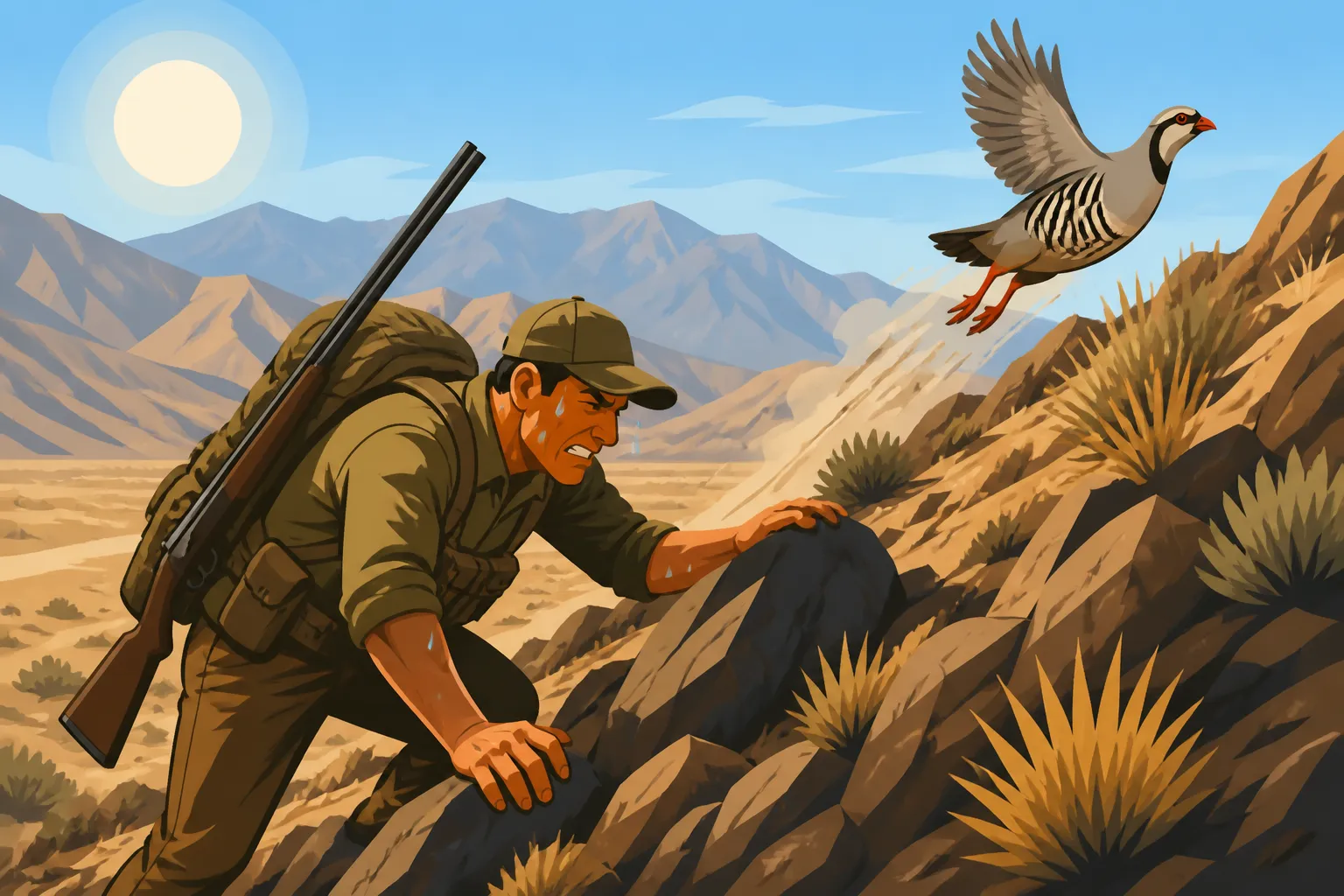
Imagine climbing a flight of stairs, but those stairs are a mile long, covered in loose ball bearings, and have no handrail. That's a pretty good approximation of much of Nevada's chukar habitat. These birds love south-facing slopes, which means you're often hunting directly into the sun, scrambling up inclines that feel like 45-degree angles or more. Every step requires immense effort, engaging muscles you didn't even know you had. The ascent is tough enough, but the descent can be even more treacherous, demanding constant vigilance to avoid a debilitating fall. You'll often find yourself trying to maintain purchase on slick, weathered rock or negotiating fields of talus that shift underfoot like a conveyor belt. It's a dance between aggressive climbing and cautious footing, all while scanning for birds.
Treacherous Volcanic Scree and Basalt
Nevada is a land shaped by ancient volcanoes, and that legacy is evident in the hunting grounds. You'll encounter vast expanses of volcanic scree—tiny, angular rocks that slide downhill with every step, making forward progress feel like you're on a treadmill. It's two steps forward, one slide back. Then there are the basalt formations: sharp, broken chunks of rock that are notorious for shredding boots, tearing up pant legs, and delivering painful twists to ankles and knees. There's no soft soil to cushion your fall here, just more rock. Trying to keep your balance, stay upright, and still pay attention to your dog's movements or potential bird flushes on this type of ground is incredibly taxing. It's a relentless assault on your body and your gear, forcing you to slow down, pick your path, and conserve energy, even when the birds are running.
The Absolute Lack of Defined Trails
Forget about following game trails or marked paths. In prime chukar country, well-worn trails are as rare as flat ground. You are often bushwhacking, creating your own path through thick stands of sagebrush, bitterbrush, and cheatgrass, all while battling the elevation. This means every foot of progress is earned. You’re not just walking; you’re pushing, pulling, climbing over, or crawling under vegetation, often on an incline, with no clear line of sight beyond the next ridge. This isn't like hunting pheasants in a cornfield where you can just walk a straight line. Here, navigation becomes a skill unto itself, often requiring you to consult your GPS or mapping apps like GoHunt constantly to ensure you don't get disoriented in the maze of washes and ridges. You're constantly calculating the most efficient, yet still safe, route, which adds a significant mental load to the physical burden.
The Chukar's Elusiveness and Speed
It’s not just the terrain that makes chukar hunting hard; the birds themselves are perfectly adapted to make your life miserable. Chukar are notorious for their evasive tactics, their incredible speed, and their ability to use the unforgiving landscape to their advantage. They don't just sit and wait; they run, they fly, and they disappear like ghosts into the broken ground.
Uphill Burst and Downhill Glide: Masters of Gravity
Chukar are built for this country. When disturbed, their first instinct is often to run uphill, using those powerful legs to scramble over rocks and through brush with incredible speed. They know the terrain better than any hunter ever will, picking routes that are too steep or too broken for a human to follow easily. Once they reach a ridgeline or gain enough elevation, they'll burst into a phenomenal downhill glide, covering vast distances in seconds. You'll see them peel off a peak and sail hundreds of yards down into the next canyon, often landing precisely where the cover is thickest, or the rocks are steepest. This means that after a grueling climb to reach them, you might only get a quick, difficult shot before they're out of range, forcing you to start the whole arduous process over again by chasing them down and across the next draw. It’s a constant battle of vertical chess, where the chukar always seem to be two moves ahead.
Using Cover and Contour to Disappear
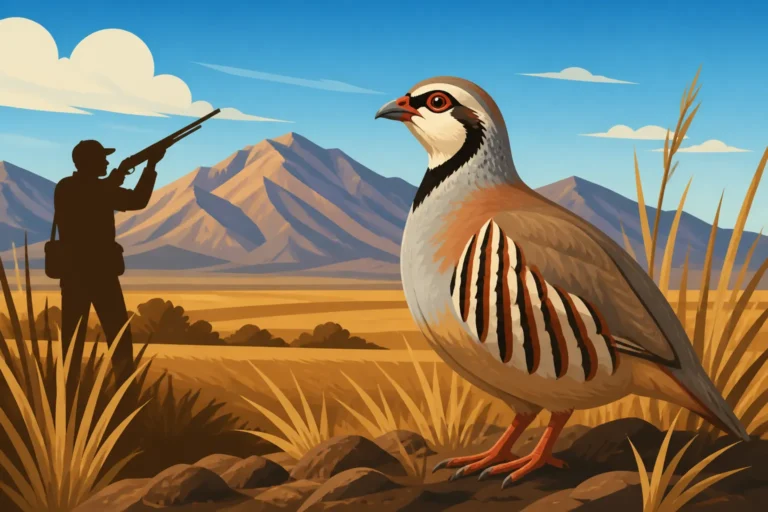
These birds are camouflaged perfectly for their rocky, sage-dotted environment. Their striped flanks blend seamlessly with the layered rock and shadows, making them incredibly difficult to spot, even when you know they are there. They utilize every crease, every rock outcropping, and every clump of sage to melt away into the landscape. You might see a covey of twenty birds land, mark the spot, and then spend fifteen minutes combing the area only to have them flush from an entirely unexpected direction, or worse, never see them again. Their ability to "go to ground" and simply disappear among the rocks is legendary. This forces hunters to move slowly, deliberately, and with extreme focus, constantly scanning, which adds to the mental fatigue. Optics like good binoculars or a spotting scope can help when trying to locate them after a long flight. Optics Power for Nevada's Long Sightlines is a topic many chukar hunters study to maximize their spotting abilities in this wide-open country.
Covey Dynamics and the Challenging Scatter
Chukar are typically found in coveys, which is fantastic when you find them, but the way they scatter can be incredibly frustrating. When a large covey flushes, it’s often an explosion of birds in every direction, offering a challenging volley of shots, if you're quick enough. But the real work begins after the initial flush. Unlike some other upland birds that regroup quickly, chukar often scatter far and wide. This means you’re then left to hunt single birds, which are even harder to find in the dense cover and steep terrain. Hunting singles requires a well-trained dog that can pinpoint individual birds with precision, and a hunter with the patience and persistence to follow up on every scent trail. Often, you might get one or two birds from a covey, and then spend another hour trying to find the scattered singles, only to have them flush wild or run off the ridge. It's a game of diminishing returns, testing your resolve with every step.
The Sheer Physical Demand and Preparation
Given the brutal terrain and the bird's elusiveness, it's no surprise that chukar hunting demands peak physical condition and meticulous preparation. This isn't a sport for the faint of heart or the out of shape; it will find every weakness in your physical and mental armor.
Cardiovascular Endurance and Leg Strength are Paramount
If you don't have good cardio, chukar hunting will quickly expose it. You're constantly climbing, often at altitude, carrying a shotgun, shells, water, and gear. Your heart will pound, your lungs will burn, and your legs will scream for mercy. Strong legs are non-negotiable—you need the power for sustained climbs and the stability for precarious descents. Many dedicated chukar hunters train rigorously in the off-season, focusing on hill repeats, stair climbing, and long, strenuous hikes with a weighted pack. It’s not just about being able to walk a few miles; it’s about being able to walk vertical miles, relentlessly, hour after hour. Preparing Physically for Long Glassing Days offers excellent insights into the kind of conditioning needed for long days in open Nevada country, which directly translates to chukar hunting.
Essential Gear for Survival and Success
Your gear isn't just about comfort; it's about survival and efficiency. The right boots are perhaps the most critical item. You need sturdy, high-ankle boots with excellent traction and support to navigate the treacherous volcanic rock and prevent ankle rolls. Choosing Boots for Sharp Volcanic Rock details the specific demands of footwear in this environment. Hydration is another massive concern. You will sweat, a lot. Carrying enough water, often multiple liters, is crucial, especially in Nevada's arid climate. Dehydration can quickly become a serious issue, leading to cramps, exhaustion, and potentially dangerous situations. Consider a hydration pack system to make carrying and accessing water easier. Water You Must Carry on a Desert Day Hunt explains just how much liquid you'll need. Layering your clothing is also important, as temperatures can swing wildly from crisp mornings to hot afternoons. Layering for Basin and Range Temperature Swings provides guidance on dressing for Nevada's unpredictable weather. Beyond that, a good quality shotgun that handles well for quick shots, plenty of shells, a reliable GPS or mapping app, and even a satellite messenger for emergencies are all part of the essential kit.
Mental Fortitude and Unwavering Persistence
Beyond the physical, chukar hunting is a profound mental challenge. There will be moments of doubt, frustration, and the temptation to give up. You’ll bust your butt climbing a mountain, only to have the birds fly to another one. You’ll miss easy shots, stumble over rocks, and feel utterly defeated. This is where mental toughness comes into play. The ability to push through the pain, to keep going when your body is screaming for a break, and to maintain a positive attitude despite the setbacks is what separates successful chukar hunters from those who quit early. It’s about being persistent, about understanding that every step, every scramble, brings you closer to an opportunity. Having a hunting partner who can share the load and keep spirits up is invaluable. The reward for this persistence, of course, is a handful of hard-earned birds and the profound satisfaction of conquering one of the most challenging upland hunts out there.
Nevada's Arid and Extreme Conditions
As if the terrain and the birds weren't enough, Nevada's high desert environment throws in a few more curveballs that amplify the difficulty of chukar hunting. The vast, arid landscape is beautiful, but it's also incredibly harsh and demands respect.
Dramatic Temperature Swings and the Hydration Battle
Nevada is famous for its extreme temperature fluctuations. A crisp, cool morning that requires a jacket can quickly turn into a scorching afternoon where you're desperate for shade and water. This makes managing your energy and hydration a constant battle. The sun beats down with incredible intensity, rapidly dehydrating you. It's not uncommon for hunters to start layered up in the morning and be down to a single shirt by midday, only to need those layers again as evening approaches. Proper hydration isn't just about carrying water; it's about continuously sipping throughout the day, even when you don't feel thirsty, to stay ahead of dehydration. Electrolyte supplements can be a game-changer.
Intense Sun Exposure and Limited Shade
Chukar habitat, particularly on those coveted south-facing slopes, often means you're operating in direct, unrelenting sunlight for hours on end. Natural shade is sparse, usually limited to the north side of a ridge or the occasional juniper tree in a draw. This constant sun exposure contributes to fatigue, increases your risk of sunburn, and makes staying cool even harder. Wearing wide-brimmed hats, sunglasses, and sun-protective clothing is not a fashion statement; it's a necessity. Planning your hunt to utilize morning and late afternoon shadows, or taking advantage of any natural breaks in the terrain for quick rests, becomes a critical strategy.
Navigating Remote, Roadless Areas
Much of the best chukar hunting takes place in truly remote areas, far from paved roads, cell service, or any form of assistance. This isn't a hunt where you can easily call for help if you run into trouble. Access often involves long drives down rough, unmaintained dirt roads that can be unforgiving on vehicles and tires. Once you leave the truck, you're on foot, often miles from your starting point. This remoteness amplifies the need for self-sufficiency, robust planning, and a deep understanding of your capabilities. Vehicle Prep for Remote Nevada Roads is a useful read for anyone planning a venture into the backcountry, highlighting the importance of a well-equipped truck and emergency supplies. Knowing how to use topographical maps and a GPS is absolutely essential for safe navigation, especially if you get turned around chasing birds down a steep canyon. Even after a successful hunt, Packing an Animal Out of Roadless Country (even if it's just a limit of birds and your gear) can be a significant undertaking, emphasizing the physical demands even on the way back to the truck.
Chukar hunting in Nevada is a unique beast. It’s a hunt that will test you, humble you, and push you to your absolute limits. But for those who embrace the challenge, who prepare diligently, and who possess the grit to keep going when others would quit, the rewards are immense. The beauty of the landscape, the camaraderie with a good dog and hunting partners, and the sheer satisfaction of earning every single bird make it an experience unlike any other in the hunting world. Just remember to train hard, pack smart, and never underestimate those tough little desert rockets.
Disclaimer
This article is for general informational purposes only and does not constitute professional advice. Laws, prices and regulations vary by location and change over time. Consult a qualified professional for guidance on your specific situation.