How Long the Online Hunter Education Course Takes
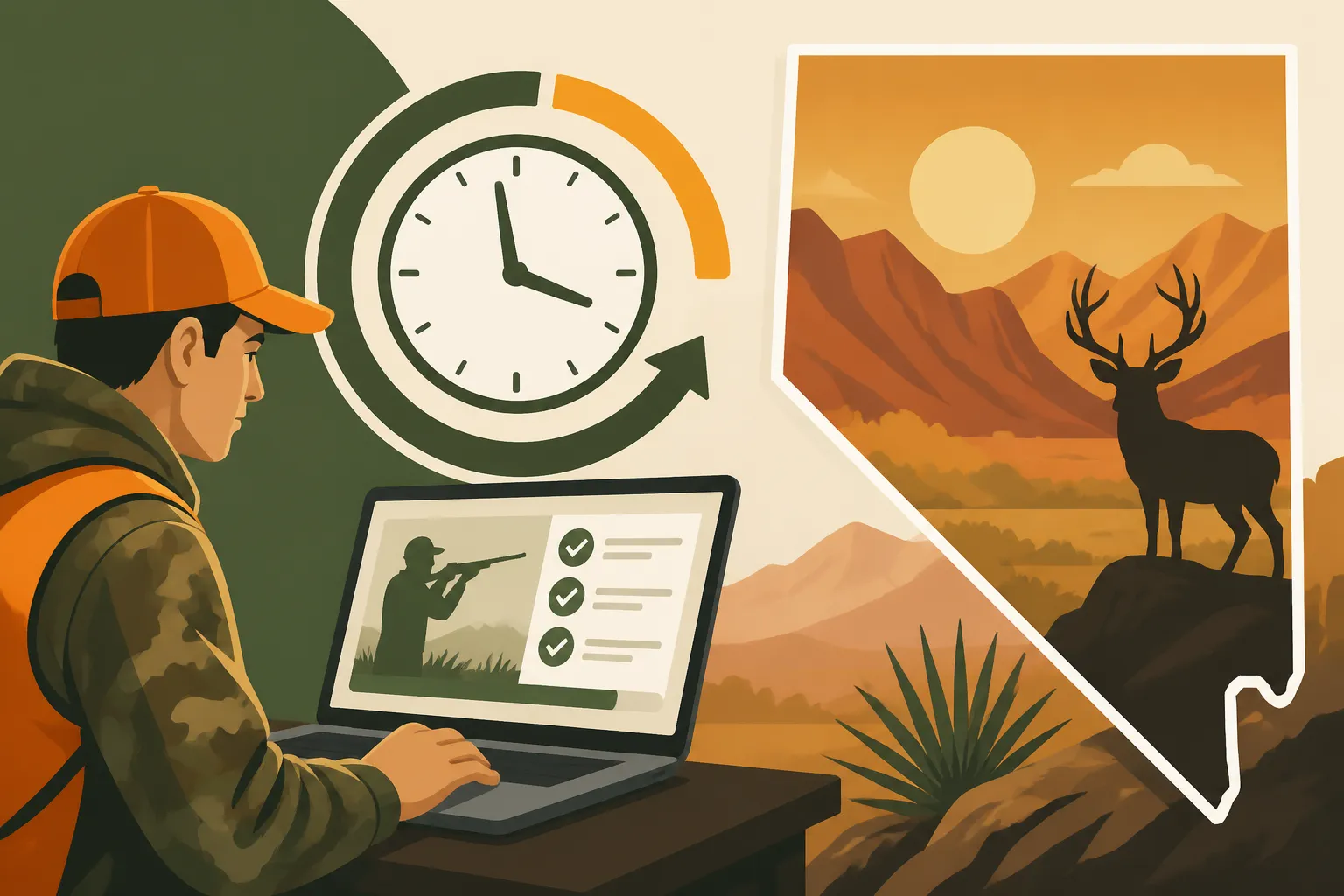
Getting your hunter education certification is one of those crucial steps many of us face, whether we're seasoned hunters looking to expand into new states or brand new to the sport. It can feel like a daunting hurdle, especially with life's other demands, and the big question always looms: "How long is this actually going to take?" You might be looking for a quick fix, an easy button to get that card in hand, but the truth is, a quality online hunter education course, one that truly prepares you for the field and is accepted by the state of Nevada, involves a genuine time commitment. This guide will walk you through what to expect, how much time you'll realistically need, and how to approach it without cutting corners.
Understanding Nevada's Hunter Education Requirements
Before we dive into the nitty-gritty of course duration, it's essential to grasp why hunter education is even a requirement in the first place, and what Nevada specifically looks for. It's not just a bureaucratic hoop; it's about safety, ethics, and ensuring new hunters understand their responsibilities.
Why Hunter Education Matters for Everyone
Let's be honest, for many of us who grew up in hunting families, it might feel like we already know it all. But even experienced shooters and outdoorsmen can benefit from formal hunter education. It reinforces critical safety principles, covers specific state regulations, and delves into ethical considerations that are paramount to responsible hunting. Think about it: every year, unfortunate accidents happen, and often they could have been prevented with a stronger foundation in safety. Beyond that, the course teaches you about wildlife conservation, how to properly care for game meat, and the legal aspects of hunting that can be surprisingly complex, especially if you're traveling across state lines. It's about preserving our hunting heritage by being informed and responsible participants.
Who Needs Hunter Education in Nevada
Nevada has a very clear cut-off date for hunter education. If you were born on or after January 1, 1960, you absolutely need to complete a hunter education course before you can purchase a hunting license in the state. This rule applies to both residents and nonresidents. It's not just about getting a tag; it's a fundamental requirement to legally hunt big game, upland birds, or waterfowl. Even if you've hunted for years in another state, if you fall into that birth year category and haven't taken a course, Nevada will require it. The good news is, Nevada is quite flexible and generous in accepting certifications from other states. You can learn more about Anyone Born After 1959 Needs Nevada Hunter Education and also find details on Who Is Exempt From Nevada Hunter Education if you believe you might qualify for an exception. It's always best to double-check the official regulations, as these things can sometimes have specific nuances.
Accepted Course Formats in Nevada
Nevada offers flexibility when it comes to completing your hunter education. You're not just stuck with a classroom setting anymore, which is a huge relief for folks with busy schedules or those who live far from major population centers where in-person courses might be offered. The two primary formats accepted are:
- Traditional Classroom Courses: These are typically multi-day events, often held over a weekend or a series of evenings. They involve direct instruction from certified instructors, hands-on demonstrations, and often a live-fire component or practical field day. Many hunters prefer this for the direct interaction and ability to ask questions in real-time.
- Online Hunter Education Courses: This is the increasingly popular option, especially for its convenience. You can complete the coursework from the comfort of your home, at your own pace. However, it's crucial to understand that many online courses require a mandatory "field day" or "skill session" to complete the certification. This practical component ensures you still get that hands-on experience with firearms safety and ethical hunting practices that can't be fully replicated online. It's an important distinction to make when considering the overall time investment. Nevada accepts Online and Classroom Hunter Education Compared, so you have options, but make sure the online course you choose is approved by the Nevada Department of Wildlife (NDOW) or an equivalent state agency. Nevada Accepts Hunter Education From Any State as long as it's a recognized program.
The Real-World Time Commitment of Online Hunter Education
Alright, let's cut to the chase: how long does it really take to complete an online hunter education course that satisfies Nevada's requirements? While the advertised times can sometimes seem short, the actual effort and time you'll invest often stretch a bit longer.
Advertised Course Durations vs. Actual Study Time
Most reputable online hunter education courses, like those offered by providers such as Hunter-Ed.com or IHEA-USA certified programs, typically advertise a completion time ranging from 6 to 10 hours of coursework. This usually refers to the minimum time required to click through all the modules, read the material, and complete the quizzes.
However, here’s the realistic take: very few people actually complete it in the absolute minimum time. Think of it like a college course; while the lecture might be an hour, you're expected to spend additional time reading, reviewing, and ensuring you truly understand the material. For hunter education, you're not just passively absorbing information; you're learning critical safety procedures, wildlife identification, and legal regulations that have real-world consequences in the field. If you rush through, you're not truly learning, and you're jeopardizing your safety and the integrity of your hunt.
Therefore, for most individuals, especially those who take their learning seriously, you should realistically budget anywhere from 8 to 15 hours to complete the online portion thoroughly. This accounts for:
- Active Reading: Not just skimming, but truly comprehending the rules and safety guidelines.
- Module Quizzes: Taking your time to answer correctly and reviewing mistakes.
- Reviewing Material: Going back over sections you found tricky.
- Breaks: Stepping away from the screen for a bit to avoid burnout and let information sink in.
This timeframe doesn't even include the mandatory field day, which we'll discuss next.
The Mandatory Field Day Component
Many online hunter education courses require a separate, in-person field day or "skill session" to complete your certification. This is a critical point that often gets overlooked when people calculate their time commitment. The field day is where you put your online learning into practice. These sessions typically last 4 to 8 hours, depending on the state and the specific activities included.
During a field day, you might:
- Demonstrate safe firearm handling.
- Practice various shooting positions.
- Learn about blood trailing and game recovery.
- Engage in discussions about ethical hunting scenarios.
- Review critical safety rules with a certified instructor.
- Take a proctored final exam if one wasn't administered online.
It's vital to check the requirements of the specific online course you choose and the state you intend to hunt in (or the state whose certification you want Nevada to accept). Some online courses are "100% online" if your state allows it, but many, including those aiming for Nevada acceptance, will require this in-person component. Make sure to factor in travel time to and from the field day location as well, which can add several hours depending on where you live in Nevada's vast landscape.
What Happens if You Fail a Section or the Final Exam?
Nobody wants to fail, but it happens! The good news is that most online hunter education courses allow you to retake quizzes and even the final exam if you don't pass on your first attempt. This is a huge benefit of the online format compared to a one-shot in-person exam.
However, each retake costs you time. If you need to review material and retake a module quiz, that could easily add another 30 minutes to an hour per module. If you fail the final exam, you might need to spend several hours reviewing the entire course material before attempting it again. Some courses have limits on how many times you can retake an exam, so it's always best to aim for a solid understanding the first time around. Don't just guess your way through; truly learn the material to save yourself stress and time in the long run.
Factors Influencing Your Course Completion Time
While we've given some general estimates, the actual time it takes you to complete an online hunter education course can vary significantly based on several personal factors. It's not a one-size-fits-all experience.
Prior Experience with Firearms and Hunting
This is a big one. If you grew up around firearms, have taken gun safety courses, or have been exposed to hunting practices through family or friends, you'll likely move through the material more quickly. Many of the concepts around safe gun handling, ethical shot placement, and even basic wildlife identification might already be familiar to you.
Conversely, if you're completely new to firearms and the hunting world, you should anticipate needing more time. You'll be learning entirely new terminology, safety protocols that are paramount, and a whole new way of thinking about the outdoors. This isn't a bad thing at all – it just means you should be patient with yourself and dedicate the necessary time to truly absorb everything. Think of it as building a solid foundation from scratch, which is crucial for safety and success in the field.
Learning Style and Reading Comprehension
Everyone learns differently. Some people are visual learners who benefit from diagrams and videos, while others prefer to read and highlight. Online courses typically integrate a mix of text, images, and videos, but the primary mode of information delivery is often text-based.
If you're a fast reader and have strong reading comprehension skills, you'll likely progress through the modules more quickly. If you tend to read slower, like to re-read sections for clarity, or struggle with absorbing information solely from text, you'll need to allocate more time for each module. Don't push yourself to rush just to meet an arbitrary time goal. The goal is to learn, not just to finish. Taking notes as you go can also be a helpful strategy, though it adds to the overall time investment.
Distractions and Dedication to Study
Let's face it, taking an online course from home comes with its own set of challenges. The dog needs walking, the kids need attention, the phone keeps buzzing, and suddenly, that 60-minute module has stretched into two hours because of constant interruptions.
Your ability to dedicate uninterrupted time to the course will significantly impact your completion speed. If you can set aside focused blocks of time, free from distractions, you'll be much more efficient. Trying to squeeze in modules during lunch breaks at a busy office or while multitasking with other chores will inevitably prolong the process and likely diminish your retention of the material. Consider scheduling your study time just like you would any other important appointment.
State-Specific Minimum Time Requirements
While Nevada itself doesn't impose a specific minimum time on online course completion beyond verifying the content, some online hunter education providers do have built-in timers. These timers are often a requirement from the state agencies that approve their curriculum. The purpose of these timers is to prevent students from simply clicking through pages without actually viewing the content.
If an online course has these timers, you won't be able to advance to the next section until a certain amount of time has elapsed on the current page or module, regardless of how quickly you read or understand the material. This ensures that you're exposed to the information for a reasonable duration. Always check the specific online provider's website or FAQ for details on any minimum time requirements they might enforce. This is less about your speed and more about the course's design to ensure compliance and adequate exposure to content.
Tips for Efficiently Completing Your Online Hunter Ed
While it's crucial not to rush, there are definitely ways to optimize your time and ensure you're learning effectively without feeling bogged down. Think of it as smart studying, not speed studying.
Choose a Reputable and Approved Course Provider
The first step to an efficient and successful experience is selecting the right online course. Ensure the course is officially approved by the Nevada Department of Wildlife (NDOW) or by the International Hunter Education Association (IHEA-USA), as Nevada accepts certifications from any state's IHEA-USA approved program. Popular providers like Hunter-Ed.com, Kalkomey, or Bowhunter-Ed.com are usually reliable choices.
Why this matters for efficiency:
- Clear Structure: Reputable courses are well-organized, making it easier to follow the material and understand the progression.
- Quality Content: They use clear language, good graphics, and sometimes video to explain concepts, reducing confusion and the need to re-read.
- Technical Reliability: You won't waste time battling broken links, slow loading pages, or glitchy quizzes, which can be a huge time sink with less reputable sites.
- Accepted Certification: The most efficient course is one that actually gets you certified, avoiding the nightmare of realizing your hours of work were for naught because the certification isn't recognized. You can find out more about How Nevada Verifies an Out-of-State Certification to ensure your chosen course fits the bill.
Schedule Dedicated Study Blocks
Treat your online hunter education like any other important appointment. Block out specific times in your calendar – whether it's an hour each evening, a solid chunk on a Saturday morning, or whatever fits your life.
Benefits of dedicated blocks:
- Minimizes Distractions: When you've committed to a specific time, you're more likely to silence your phone, inform family members, and create a distraction-free environment.
- Improved Focus: Knowing you have a dedicated block helps you get into a study mindset, making it easier to concentrate on the material.
- Consistency: Breaking the course into manageable, consistent sessions (e.g., 2 hours a day for 4-5 days) is often more effective than trying to cram 10 hours into one exhausting sitting. This consistency also aids in long-term retention of the safety rules and regulations.
Take Notes and Use Practice Quizzes
Active learning strategies, like note-taking, can dramatically improve retention and actually make the overall process more efficient by reducing the need for extensive review later. Jot down key safety rules, critical regulations, and anything you find particularly challenging.
Most online courses also include practice quizzes at the end of each module. Don't skip these! They are invaluable for:
- Self-Assessment: Identifying areas where your understanding is weak before you get to the final exam.
- Reinforcement: Solidifying the information you just learned.
- Exam Prep: Getting used to the types of questions you'll see on the final exam.
If you consistently do well on the module quizzes, you'll build confidence and likely spend less time worrying about and preparing for the final exam. This proactive approach saves time and stress.
What to Do After You Get Your Card
Once you've successfully completed your online hunter education and received your official certification (and, if required, finished your field day), congratulations! You've cleared a major hurdle. But remember, the education doesn't stop there.
This certification is your ticket to legally purchase a hunting license in Nevada and start applying for tags. You'll want to immediately link your hunter education number to your Nevada Department of Wildlife (NDOW) account, which you might have already set up when looking into Setting Up a Nevada Online Account. This ensures that when you go to apply for tags, the system recognizes your qualification.
Now, with your certification in hand, the real fun begins: planning your hunts. This involves researching units, understanding draw odds, and scouting. Tools like GoHunt can be incredibly valuable here, providing data, draw odds calculators, and filtering tools to help you identify promising units and strategize your applications for species like mule deer or elk. They can help you look at things like harvest success by unit, or even specific terrain features you might encounter, complementing your hard-earned knowledge from hunter education. The hunter education course gives you the foundation; tools like GoHunt help you apply that knowledge to target specific opportunities. Whether you're looking into Reading a Nevada Hunt Unit Before You Apply or dreaming of Nevada Elk Rifle Hunts Stretch From October Into December, your certification is the gateway.
| Feature | Online Course (Self-Paced) | Traditional Classroom Course |
|---|---|---|
| Typical Time (Online Portion) | 6-10 hours (advertised), 8-15 hours (realistic study) | N/A (entirely in-person) |
| Mandatory Field Day | Often required (4-8 hours additional) | Integrated into the course schedule (no separate field day needed) |
| Total Estimated Time | 12-23 hours (including field day) | 10-16 hours (all inclusive, often spread over multiple sessions) |
| Flexibility | High – learn at your own pace, on your own schedule | Low – fixed schedule, specific dates and times |
| Interaction | Limited (online forums, email to instructors) | High (direct with instructors, fellow students) |
| Self-Discipline | High requirement for self-motivation and focus | Lower requirement (structure provided by instructor/schedule) |
| Cost | Typically $20-$40 for the online course | Often free or low cost ($10-$20 for materials) |
| Instant Feedback | Yes (quizzes, immediate score results) | Yes (direct questions, hands-on correction) |
| Hands-on Experience | Primarily through mandatory field day if required | Integrated throughout the course |
No matter which path you choose, remember that the time invested in hunter education is an investment in your safety, the safety of others, and the future of hunting. Don't view it as a chore, but as an essential part of becoming a responsible and ethical hunter.
Disclaimer
The information provided in this article is for general guidance and informational purposes only, and does not constitute legal advice. Hunting regulations and requirements, including those for hunter education, can change. Always consult the official regulations and guidelines published by the Nevada Department of Wildlife (NDOW) or the relevant state agency before engaging in any hunting activities.