How Elk Herds Recover After a Burn
Wildfires are a devastating force of nature that can leave vast tracts of Nevada's landscape looking like a moonscape, and it's completely natural for hunters and conservationists alike to wonder about the fate of our beloved elk herds. When you see that blackened earth and scorched timber, a deep concern for the wildlife that calls it home is inevitable. This guide will walk you through the intricate process of how Nevada's resilient elk herds recover after a wildfire, from the immediate aftermath to the long-term changes that shape their habitat and hunting opportunities.
The Immediate Impact of Wildfire on Elk Habitat
When a wildfire rips through a landscape, the impact is immediate and often catastrophic in the short term. For elk, their survival hinges on their ability to react quickly and adapt to sudden, dramatic changes in their environment.
Direct Threats and Displacement
The most pressing concern during an active wildfire is the direct threat to the animals themselves. Elk are powerful, intelligent creatures, and their first instinct is typically to flee. They will move away from the smoke and flames, seeking refuge in unburned areas, often migrating to lower elevations or into adjacent mountain ranges that haven't been affected. This displacement can be temporary, lasting only until the fire is contained and the immediate danger passes, but it can also lead to more permanent shifts if their core habitat is utterly destroyed. Think about an elk herd that habitually uses a particular canyon for bedding and feeding; if that canyon burns severely, they'll be forced to find new ground, potentially pushing into areas already occupied by other herds or closer to human development.
It's not just the flames; smoke inhalation can also be a serious issue, though elk are quite robust. The stress of being chased by fire, the lack of immediate food and water in their escape routes, and the sheer energy expended in moving large distances can take a toll, especially on calves or older, weaker animals. Reading a Nevada Winter Range Report often highlights how crucial undisturbed habitat is, and a wildfire can obliterate that sense of security for a herd.
Loss of Forage and Cover
Once the flames die down, the true scale of habitat loss becomes starkly apparent. Elk rely on a diverse diet of grasses, forbs, and browse, as well as dense cover for security, bedding, and thermal regulation. A severe wildfire can decimate all of these. In areas with high-severity burns, all vegetation can be consumed, leaving only ash and bare soil. This means no food, no shade from the relentless Nevada sun, and nowhere to hide from predators or the elements.
This loss is particularly acute on winter ranges, where elk need accessible forage to survive the lean months. If a winter range burns extensively, the herd might struggle to find enough to eat, leading to poorer body condition, reduced calf survival, and even direct mortality. Summer ranges, while equally important, often recover faster due to more abundant moisture and warmer temperatures. However, even there, the loss of mature aspens or conifers for bedding can leave elk exposed and vulnerable. Imagine an elk in the middle of an open, burned slope with no tall timber to break the wind or offer shade. That's a huge problem, especially during a Nevada Elk Rifle Hunts Stretch From October Into December when they need to conserve energy.
The Surprising Resilience of Nevada's Elk Herds
Despite the initial devastation, the Great Basin's ecosystems, and by extension, its elk, have an incredible capacity for recovery. Fire is a natural process here, and many plant communities are adapted to it.
Initial Post-Fire Green-Up and Forage Boom
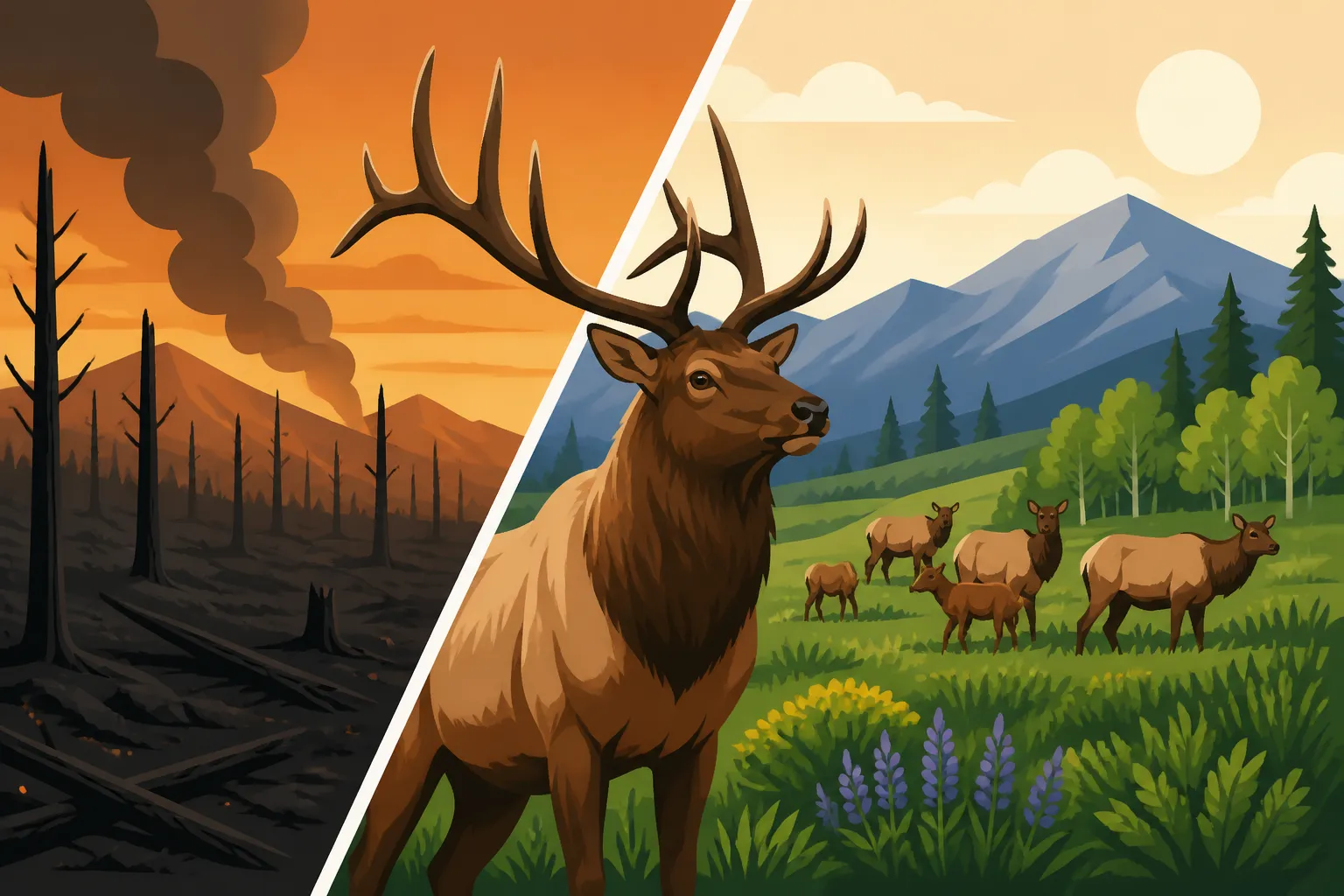
One of the most remarkable aspects of wildfire recovery is the rapid "green-up" that often follows, sometimes as quickly as the next spring. The ash from burned vegetation acts as a natural fertilizer, returning nutrients to the soil. With sunlight now reaching the forest floor, and competitive overstory removed, a flush of new growth can explode. Many grasses and forbs, critical components of an elk's diet, are pioneer species, meaning they are among the first to colonize disturbed ground.
This new growth can be incredibly nutritious and palatable. In fact, some studies show that elk and deer will actively seek out recently burned areas in subsequent years because of this forage boom. The diversity of palatable forbs increases, and grasses often produce a higher protein content. This isn't universally true – a burn that turns a sagebrush steppe into a sea of non-native Cheatgrass and What It Did to Nevada Range is a problem – but often, a moderate-severity fire can create a temporary buffet for grazers. This initial flush of new forage can be a significant boon, improving the body condition of elk and potentially boosting calf survival in the years immediately following a fire.
Habitat Diversification and Edge Effect
While a large, intensely burned area might look barren, fire often creates a mosaic of burned, partially burned, and unburned patches. This mosaic effect leads to increased habitat diversity, which is often beneficial for wildlife. The "edge effect," where different habitat types meet, typically results in a greater variety of plant species and structural complexity.
Elk, like many big game animals, thrive on this diversity. They might use the dense, unburned stands of timber for security and thermal cover, while venturing into the adjacent burned areas to feed on the fresh, nutritious regrowth. A partially burned area might still offer some cover from scattered trees, while opening up the understory to sunlight and new vegetation. This creates a much more dynamic landscape than a uniformly dense forest or an unbroken sagebrush flat. For hunters, understanding this mosaic is key. You might find elk moving between these different zones, perhaps bedding in the thick stuff during the day and moving to the succulent new growth on the burned edges at dawn and dusk. Why Elk Numbers Vary Across Nevada often comes down to these subtle habitat differences.
Long-Term Recovery and Management Strategies
The recovery of an elk herd after a fire isn't a one-year event; it's a long-term process influenced by many factors, including the type of fire and ongoing human efforts.
The Role of Fire History and Severity
Not all fires are created equal, and their impact on elk habitat varies greatly with their severity and the ecosystem's historical fire regime. A low-severity fire might simply clear out underbrush, rejuvenate grasses, and leave most of the mature trees standing. These fires are often beneficial, mimicking natural processes that have shaped these landscapes for millennia. Elk can recover quickly from these, sometimes benefiting almost immediately from new forage.
High-severity, stand-replacing fires, however, are a different beast. These fires consume everything, including the seed bank in the soil and large, mature trees. Recovery from such intense fires can take decades, sometimes even centuries. In these areas, the loss of thermal and hiding cover is profound, and the soil itself can be damaged, leading to erosion. An area that experiences repeated high-severity fires without sufficient time to recover may shift to an entirely different vegetation community, potentially less suitable for elk in the long run. Biologists pay close attention to the "fire history" of a unit, as it directly informs their predictions for elk recovery and management. This is why How Wildfire Changes Sagebrush Habitat is such a critical topic.
Human Intervention and Habitat Restoration
While nature does most of the heavy lifting, sometimes human intervention can accelerate recovery or mitigate negative impacts. After a large, severe fire, efforts might include:
- Seeding and Planting: Broadcast seeding native grasses and forbs can help stabilize soils and provide immediate forage. Tree seedlings might be planted in areas where natural regeneration is slow, particularly for species like aspen or conifers that provide critical cover.
- Erosion Control: Burned hillsides are highly susceptible to erosion, especially during heavy rain. Techniques like contour felling, applying straw wattles, or building check dams can help slow water runoff and prevent soil loss, which is essential for future plant growth.
- Weed Management: Invasive species often colonize burned areas aggressively. Management efforts focus on controlling weeds like cheatgrass that can outcompete native forage and create a cycle of more frequent, intense fires. This is a constant battle across the Great Basin.
- Water Development: In an arid state like Nevada, water is always a limiting factor. Water Development Projects Built for Wildlife like guzzlers or enhancing natural springs can help support elk in recovering burned areas by providing a crucial resource while new vegetation establishes itself. You might use resources like GoHunt to scout for these water sources when planning a hunt in a recovering area.
Monitoring Elk Recovery and Future Outlook
Understanding how elk respond to fire is an ongoing process, and wildlife agencies use various methods to keep tabs on these resilient animals.
Tracking Herd Movements and Health
Biologists routinely track elk herds through various means, including radio collars and aerial surveys. After a fire, these tools become even more critical. They help determine if elk are returning to burned areas, how they're utilizing the new mosaic of habitats, and how their movements might have shifted permanently. Examining harvest data also provides insights into herd health and population dynamics. How Biologists Count a Desert Big Game Herd often involves flights to get accurate numbers, which can be particularly challenging in post-fire landscapes where cover might be reduced.
For those of us interested in drawing a tag, resources like GoHunt often compile data from game agencies, giving us a clearer picture of herd distribution and overall health in units impacted by fire. This kind of research is vital for understanding Nevada Elk Herd Growth Over Time.
| Fire Severity | Immediate Impact on Elk Habitat | Short-Term Recovery (1-5 years) | Long-Term Recovery (5+ years) |
|---|---|---|---|
| Low | Minimal direct threat, some forage removal. | Rapid flush of nutritious grasses/forbs. Enhanced foraging. | Improved understory diversity, healthier forests. |
| Moderate | Displacement, significant forage/cover loss. | Strong forage regrowth, mosaic of burned/unburned areas. | Gradual return of diverse vegetation, new bedding areas. |
| High | Extensive displacement, total loss of forage/cover. | Soil stabilization, pioneer species, slow woody regrowth. | Decades for full forest/shrub recovery, potential habitat type shift. |
Predicting Future Opportunities
For hunters, understanding fire ecology can actually unlock new opportunities. A burned unit that might initially seem devastating could, in a few years, become a hotspot for elk. The renewed forage, combined with the "edge effect" and potential changes in elk travel patterns, can make these areas attractive.
However, success in a post-fire landscape often requires a different approach. Hunters might need to focus on glassing newly opened slopes for feeding elk, or carefully scouting the interface between burned and unburned areas where elk find both food and cover. It might mean longer walks into areas where old roads have been obliterated, or adapting to a landscape where traditional landmarks are gone. Keep an eye on reports from the Nevada Department of Wildlife (NDOW) and other reputable sources like GoHunt for their assessments of post-fire habitat conditions and how they might influence upcoming seasons. Ultimately, elk are incredibly adaptable, and with time and sound management, they often not only survive wildfires but thrive in the revitalized landscapes they leave behind. When Nevada Elk Rifle Seasons Open, you might just find that burned areas are holding some impressive animals.
Disclaimer
This article is for general informational purposes only and does not constitute professional advice. Laws, prices and regulations vary by location and change over time. Consult a qualified professional for guidance on your specific situation.