How Nevada Verifies a Course From Another State
It's completely understandable to feel a little lost when you're trying to figure out if your hunter education certification from back home will actually fly in a new state like Nevada. You’ve put in the time and effort, learned the safety rules, and passed the course, but the last thing you want is to show up for your hunt only to find out your paperwork isn't quite right. This guide is here to walk you through exactly how the Nevada Department of Wildlife (NDOW) verifies out-of-state hunter education courses, ensuring you can hit the field with confidence.
The NDOW's Reciprocity Policy for Hunter Education
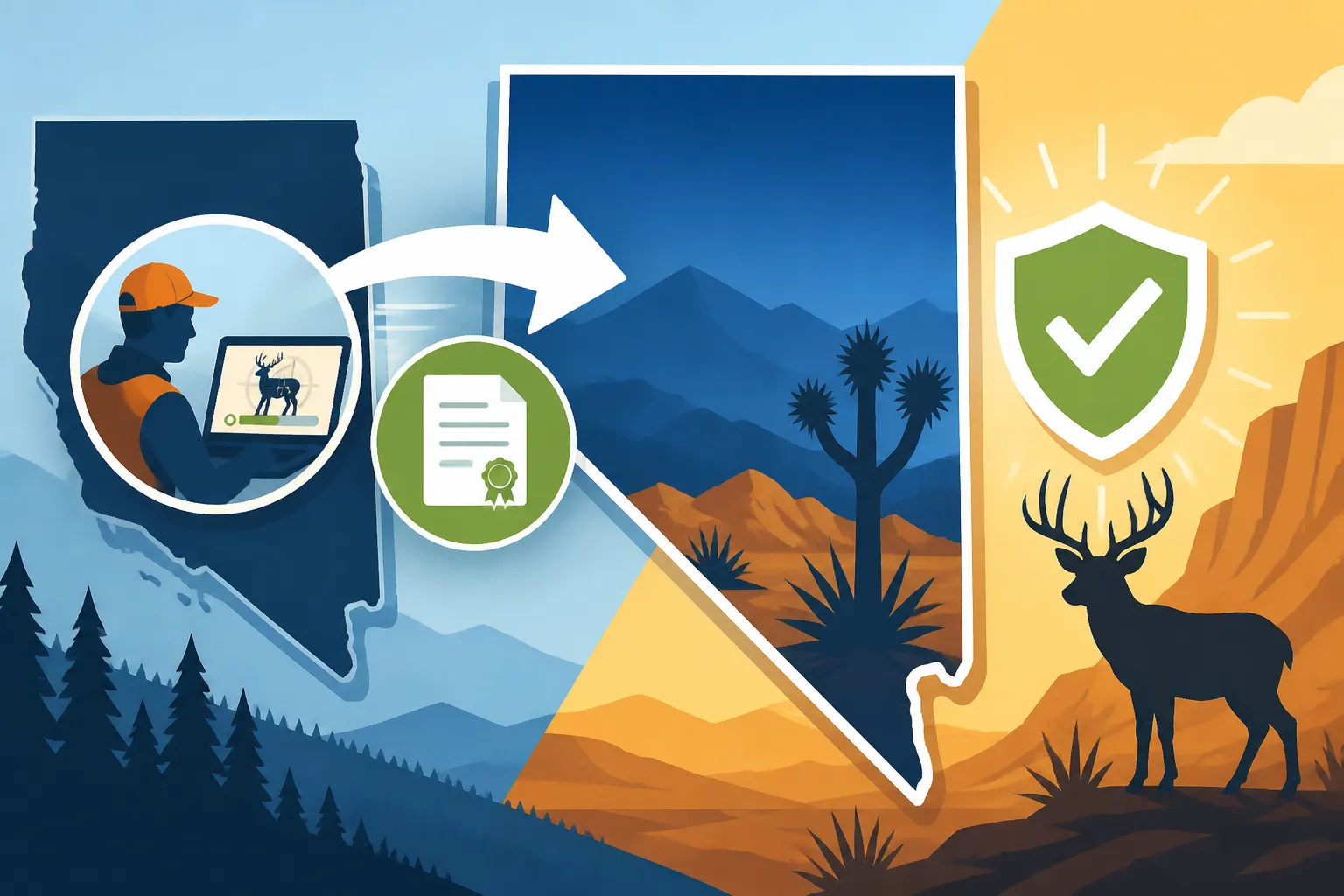
When you're looking to hunt big game or even specific small game in Nevada, you’ll quickly discover that hunter education isn't just a good idea; it's often a legal requirement. Nevada, like many other states, has a deeply practical approach to hunter education requirements, especially for those who've already completed a course elsewhere. The good news is that the Nevada Department of Wildlife (NDOW) generally recognizes and accepts hunter education certifications issued by other states and Canadian provinces. This principle, known as reciprocity, is a real blessing for traveling hunters, saving you the hassle of having to retake a course you've already aced.
The core idea behind this policy is simple: safety standards for hunter education are largely consistent across North America. Organizations like the International Hunter Education Association (IHEA-USA) have worked tirelessly to standardize curricula and best practices, meaning that a hunter education course completed in, say, Montana or Pennsylvania, covers much of the same essential material as one taught right here in the Silver State. NDOW trusts that if another state's wildlife agency certified you, you've already demonstrated the necessary knowledge of firearm safety, wildlife conservation, and ethical hunting practices. It’s a pragmatic approach that acknowledges the shared commitment to responsible hunting across different jurisdictions.
This widespread acceptance isn't just about making things easy for you, though that's certainly a nice benefit. It also reflects a recognition that hunters are a mobile community. Whether you've just moved to Nevada, or you're a nonresident planning a dream hunt for mule deer or elk, NDOW wants to facilitate responsible hunting, not create unnecessary bureaucratic hurdles. So, rest assured, if you've got a valid hunter education card from another state, you're likely already on the right track. This means you can focus on the exciting parts, like figuring out When Nevada Archery Deer Season Opens or Hunting Water in Nevada's Driest Country, rather than stressing about basic compliance.
What Nevada Looks For in an Out-of-State Certificate
While Nevada generally accepts hunter education from any other state, there's a method to their madness for verification. It’s not just about having a card; it’s about that card representing a legitimate, recognized program. NDOW has a few key criteria they look for to ensure that your out-of-state certification meets their standards. It's less about scrutinizing your individual test score and more about validating the integrity of the program that issued your certificate.
Verifying the Issuing State's Program
The linchpin of Nevada's reciprocity policy lies in verifying that your issuing state's hunter education program meets nationally recognized standards. The vast majority of hunter education programs across the United States and Canada are certified by the International Hunter Education Association (IHEA-USA). This organization sets a high bar for content, instructor training, and overall program quality. When you present an out-of-state certificate, NDOW primarily checks if the state that issued it is an IHEA-USA member and if their program is up to snuff.
This verification process is usually seamless because most states adhere to these common standards. NDOW doesn’t typically need to delve into the specifics of your individual course curriculum, but rather confirms that the program itself is accredited. If, by some rare chance, your certification comes from a state or entity whose program isn't IHEA-USA certified, you might encounter a hiccup. In such unusual cases, NDOW might require additional information or even suggest you take a Nevada-approved course to ensure full compliance. This proactive measure ensures that all hunters operating in Nevada, regardless of where they initially learned, share a foundational understanding of safety and ethics. Understanding How Nevada Verifies an Out-of-State Certification can ease a lot of pre-hunt anxiety.
Acceptable Proof of Completion
Once the issuing state's program is deemed valid, the next step is providing acceptable proof that you successfully completed it. This isn't the time to pull out a dusty notebook with your class notes; NDOW needs official documentation. The most common and widely accepted forms of proof include your physical hunter education certification card, a state-issued printout from their wildlife agency’s system, or even an official online verification from the issuing state’s website. Many states now offer digital proof or allow you to print a replacement card directly from their portal, which is incredibly convenient for hunters on the go.
It’s absolutely crucial that this documentation clearly shows your full name, the date of completion, and the state or province that issued it. Think of it like your driver’s license or passport – it needs to be official and verifiable. A simple printout from a generic online course provider without clear state affiliation might not pass muster, as it lacks the official backing NDOW looks for. If you’ve misplaced your original card, don't panic. Most state wildlife agencies have a process for Replacing a Hunter Education Card You Lost, which usually involves a small fee and a quick online application. Having this proof readily available, whether it's a physical card in your wallet or a digital copy on your phone, is a non-negotiable part of proving your certification out in the field.
How to Present Your Certification to NDOW
Alright, you've got your certificate, you know it's valid, now how do you actually get that information to the Nevada Department of Wildlife? There are two main scenarios where you'll need to present your hunter education proof: during the license and application process, and potentially out in the field if a game warden asks to see it. Being prepared for both will ensure your hunt goes smoothly.
Online and Application Process
For most hunters these days, the first point of contact with NDOW regarding hunter education will be during the online license purchase or big game application process. When you create an account on the NDOW licensing portal, or if you're navigating the complex world of applications, perhaps through a platform like GoHunt that helps analyze draw odds and units, you'll be prompted to provide your hunter education information. This typically involves inputting the certificate number, the state of issuance, and the year you completed the course.
NDOW's system is generally quite user-friendly. Once you enter the details, their system will often perform an instant cross-reference with the IHEA-USA database or directly with the issuing state's records if they have an integrated system. If a direct electronic verification isn't possible, you might be asked to upload a clear scan or photograph of your certification card. It’s always a good idea to have a digital copy of your card saved on your computer or phone for this purpose. This online submission is critical, as your application for tags or even the purchase of a basic hunting license might be held up or denied if your hunter education isn't properly documented, especially if you fall under The Nevada Hunter Education Birth Year Cutoff. It streamlines the process so you can quickly move on to scouting your unit using digital tools.
In-Person and During a Field Check
While the online system handles much of the initial verification, the responsibility doesn’t end there. Nevada law requires that anyone required to have hunter education must be able to furnish proof of certification upon demand by a game warden or other authorized law enforcement officer while hunting. This means you need to carry your hunter education card, or an official, legible copy thereof, with you at all times when you are in the field and hunting. This isn’t just a suggestion; it’s a legal requirement.
Imagine you're out deep in a remote basin, having just finished a long, satisfying stalk, perhaps utilizing draws and rims to close distance. Suddenly, a game warden approaches. They’ll likely ask for your hunting license, tags, and often, your hunter education card. Being able to produce it immediately shows respect for the law and speeds up the interaction. Fumbling around, or worse, not having it at all, can lead to delays, citations, or even having your hunting privileges suspended. It’s a simple piece of paper or plastic, but its importance can't be overstated. Always ensure you're ready for Proving Your Certification Out in the Field so your hunt isn't interrupted by unnecessary complications.
Common Questions and Potential Hiccups
Even with a straightforward policy like reciprocity, there can still be questions and unique situations that pop up. Understanding these common points of confusion and knowing how to navigate them can save you a lot of headache before and during your Nevada hunt.
Age Requirements and Exemptions
One of the most frequent questions revolves around who actually needs hunter education in Nevada. The rule is pretty clear: if you were born after January 1, 1960, you must possess a valid hunter education certificate to hunt big game or certain small game species in Nevada. This birth year cutoff is a critical piece of information that determines whether you even need to worry about the verification process. If you were born before that date, you are generally exempt from the hunter education requirement, though taking a course is always a good idea for safety and skill refinement.
However, there are also specific exemptions that don't hinge on your birth year. For instance, if you are hunting under the direct supervision of an adult who is legally allowed to hunt and who has a valid Nevada hunting license, you might be exempt, especially if you are a youth hunter. There are also specific provisions for active military members or those who have successfully completed certain military marksmanship or hunting courses. It’s always best to check the current NDOW regulations for the most up-to-date information on Youth Hunting Requirements in Nevada or to confirm Who Is Exempt From Nevada Hunter Education, as these rules can sometimes have nuances.
Special Cases and What to Do
What if your out-of-state course isn't easily verifiable, or you’re running into an issue with the online system? While rare, these situations can occur. Perhaps you took a course in a very small state or a jurisdiction outside the IHEA-USA network, or maybe the name on your certificate doesn't perfectly match your current ID. In these "special cases," the best course of action is always to contact the Nevada Department of Wildlife directly. Their licensing division or local game wardens are the ultimate authority and can guide you through any unique verification challenges. Don't guess, and certainly don't assume; pick up the phone or send an email.
It's far better to clarify any ambiguities before your season starts than to deal with potential legal issues in the field. If you find yourself in a bind, or if you simply prefer the peace of mind, taking a Nevada-specific hunter education course is always an option. Nevada offers both traditional classroom courses and approved online options, followed by a required field day. This ensures you’re fully compliant and up-to-date on Nevada-specific regulations and ethics. For some, the comprehensive nature of Online and Classroom Hunter Education Compared might even offer new insights into hunting safety and conservation.
Here's a quick reference table to help keep things straight:
| Aspect | Description | What NDOW Looks For | Action for Hunter |
|---|---|---|---|
| Reciprocity | Nevada accepts hunter education from other states/provinces. | IHEA-USA accreditation of the issuing state's program. | Ensure your course was state-approved. |
| Proof of Completion | Official document showing successful completion. | Your name, completion date, and issuing state/province clearly visible. | Keep physical card or official digital copy readily accessible. |
| Online Application | Inputting hunter ed details during license/tag application. | Match between input data and official records. | Accurately enter certificate number, state, and date. Upload scan if requested. |
| Field Check | Game wardens may request proof while hunting. | Immediate production of valid hunter ed proof. | Carry your card/copy on your person at all times when hunting. |
| Birth Year Cutoff | Born after Jan 1, 1960 requires hunter education. | Your birth date on file. | Confirm if you need hunter ed based on your birth year. |
| Lost Card | Need to replace a misplaced hunter education card. | Official replacement process from original issuing state. | Contact your original issuing state's wildlife agency for replacement instructions. |
| Unusual Cases | Non-IHEA certified courses, name discrepancies, or other verification issues. | Direct consultation with NDOW. | Contact NDOW directly for guidance or consider taking a Nevada course. |
Disclaimer
Please remember that hunting regulations can change. While this guide aims to provide accurate and up-to-date information, it is always your responsibility to consult the official Nevada Department of Wildlife (NDOW) regulations or contact them directly for the most current and authoritative guidance before participating in any hunting activities.