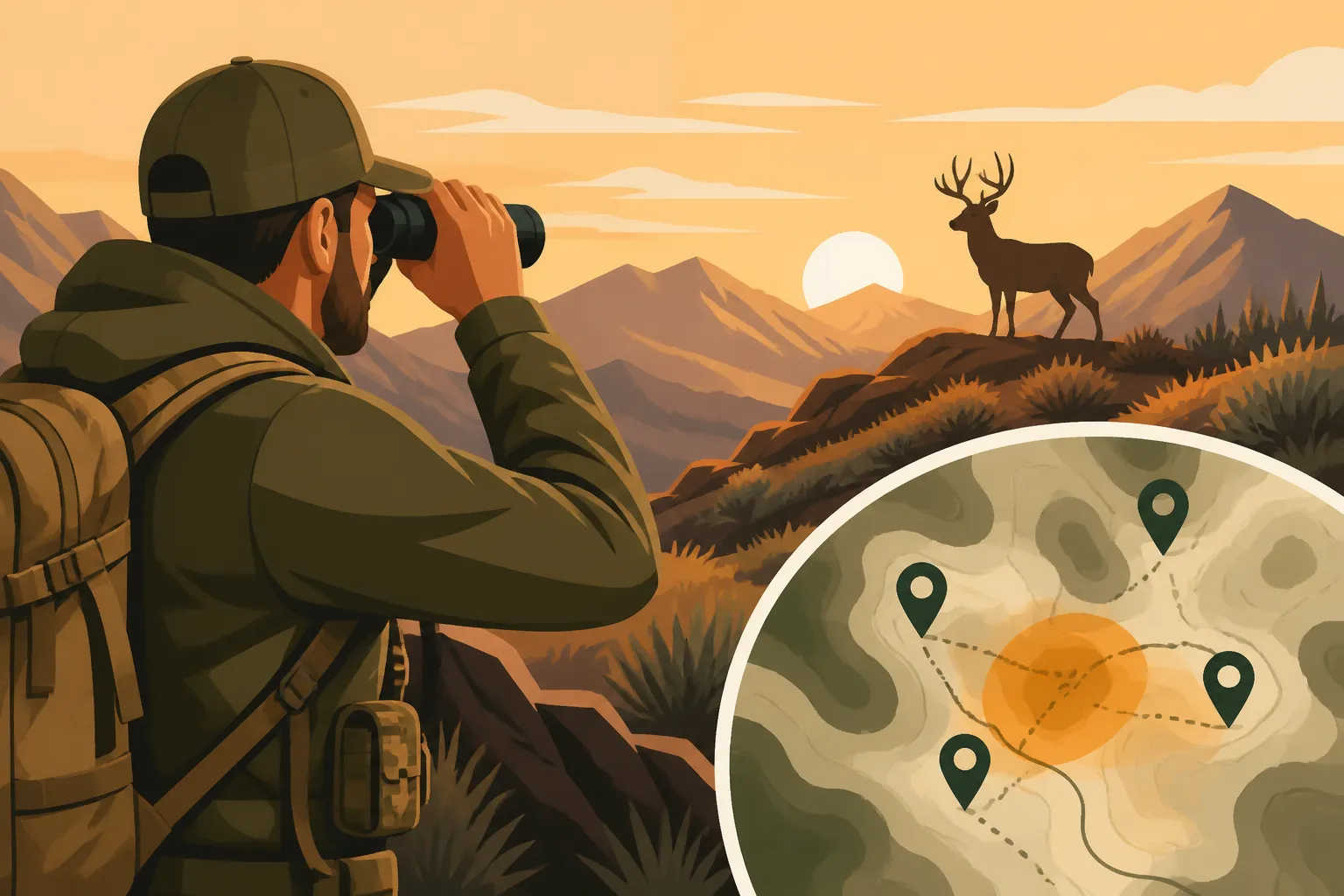
How Outfitters Scout Before Your Arrival
One of the biggest anxieties for any hunter, especially when planning a long-distance hunt in a vast, wild state like Nevada, is the uncertainty of finding game. You invest time, money, and emotional energy into drawing a tag, only to wonder, "Will there even be animals where I'm going?" This guide is all about pulling back the curtain on a crucial part of an outfitter's job: the dedicated, relentless scouting they do before you ever set foot in their camp, ensuring they have the best possible chance to put you on an animal.
The Foundation of Pre-Season Scouting: Mapping the Blueprint
Before an outfitter ever puts boots on the ground, a significant portion of their scouting efforts takes place behind a screen, meticulously planning and analyzing potential hunt areas. This initial phase is about understanding the landscape, historical patterns, and broad movements of game, laying the groundwork for more intensive field work.
E-Scouting and Data Analysis
Think of e-scouting as an outfitter's digital dive into a unit long before the snow melts or the heat sets in. They're pouring over satellite imagery, studying topography, and dissecting land ownership maps. This isn't just about finding big swaths of public land; it's about identifying key terrain features that dictate where animals will live, feed, and travel. They're looking for those subtle draws, isolated pockets of cover, and the intricate network of ridges and canyons that might hold a big mule deer buck or an elk herd. Understanding elevation changes is critical in Nevada, as animals move up and down in response to weather and forage. An experienced outfitter will also be reviewing historical harvest data and herd reports, trying to understand population trends and success rates in specific zones. They are essentially building a virtual roadmap of the entire hunt unit, highlighting areas of high potential and noting potential challenges. For hunters considering a DIY approach, resources like GoHunt provide valuable data and mapping tools that can mimic some of an outfitter's initial e-scouting efforts, giving them a taste of this analytical work. It's about combining geographical understanding with biological data to form a strategic hypothesis. E-Scouting a Nevada Unit Before the Season is a common starting point for outfitters and self-guided hunters alike, and it often involves hours poring over maps and statistics.
Identifying Key Habitat Features
Once the digital map is a messy canvas of waypoints and highlighted areas, the outfitter begins to zoom in on specific habitat features. They're looking for consistent bedding areas—south-facing slopes for warmth in winter, north-facing timber for shade in summer. They're pinpointing crucial feeding grounds, whether that's sagebrush flats for mule deer, aspen groves for elk, or cheatgrass-free areas offering more nutritious forage. Water sources are paramount in Nevada's arid environment; a seasoned outfitter knows that water isn't just a place animals drink, it's a critical congregation point and a lifeline. They're searching for natural springs, seeps, and even man-made guzzlers. Beyond these, they're identifying travel corridors—the easiest paths between bedding, feeding, and water that animals will naturally use. These corridors often run along drainages, saddles between peaks, or benches on mountainsides. The goal is to build a comprehensive understanding of the animal's daily and seasonal routines based on these fundamental habitat components. This meticulous groundwork from afar gives them a huge advantage when they finally hit the dirt.
Boots on the Ground: The Critical Field Reconnaissance
While e-scouting is invaluable for planning, nothing replaces the intelligence gathered from actually walking the ground. This is where an outfitter verifies their digital predictions, adapts to reality, and truly starts to piece together the current puzzle of where the animals are holding.
Locating Fresh Sign and Animal Patterns
This is the nitty-gritty work: putting miles on boots and visually confirming animal presence. An outfitter isn't just looking for animals; they're looking for sign. Fresh tracks, droppings, rubs on trees, elk wallows, and deer beds tell a story. They reveal not just that animals are in an area, but how recently they were there, their general size, and what they're doing. A fresh rub from a big bull elk speaks volumes about his presence and antler development, while worn trails leading to a water source indicate consistent use. They’ll identify specific feeding preferences by examining clipped vegetation and determine bedding locations based on sun exposure and wind patterns. This real-world verification helps them discern current animal patterns, which can shift dramatically from year to year based on feed, water, and even pressure from previous seasons. Understanding these nuances helps the outfitter hone in on where their clients will have the best chance. You can't get this level of detail from a satellite image, no matter how good your software is. Reading Fresh Elk Sign in Thin Timber is an art form, and it's a core skill for any successful outfitter in Nevada.
Water Sources and Concentration Points
In Nevada, water isn't just important; it's often the most critical factor, especially during early seasons like the August archery hunts. An outfitter will physically check every known spring, seep, and guzzler within their prospective hunting areas. Are they dry? Are they being used? What kind of sign is around them? Is there fresh mud, tracks, or droppings? A spring that ran strong last year might be barely a trickle this year, completely altering animal distribution. They’re looking for evidence of consistent game use, as these spots act as natural magnets in the desert. In an arid landscape, a reliable water source means life, and animals will travel significant distances to reach it. Knowing which water sources are active, and which ones are being consistently visited by mature animals, can make or break a hunt. This knowledge allows an outfitter to plan ambush points or strategic glassing locations with high confidence. For more on this vital element, consider Hunting Water in Nevada's Driest Country and Finding Guzzlers and Springs on a Map—these are crucial areas of research for any serious Nevada hunter or outfitter.
Understanding Access and Terrain Challenges
Scouting isn't just about finding animals; it's also about understanding how to get to them. Outfitters will drive every two-track road, hike every potential access route, and assess the terrain. Are roads passable for client vehicles? Are there new washouts? Are certain areas now restricted due to new land management rules or private land encroachment? They're evaluating the physical demands of the hunt unit. Is it steep and rocky, requiring a high level of physical fitness? Or is it more open and rolling, suited for glassing vast distances? This information is crucial for matching a hunt to a client's physical capabilities. They also assess potential pinch points, escape routes, and how easy or difficult it will be to Packing an Animal Out of Roadless Country. An outfitter wants to ensure they can not only find game but also execute the recovery efficiently and safely. This practical assessment of the landscape is often overlooked but is absolutely fundamental to a successful guided hunt.
Adapting to Dynamic Conditions: The Ever-Changing Hunt Landscape
The Nevada landscape is rarely static. Weather patterns, human pressure, and the animals themselves are constantly in flux. A top-tier outfitter doesn't just scout once and call it good; they monitor conditions right up until opening day and even throughout the season, adjusting their strategies as needed.
Monitoring Weather and Its Impact
Weather is perhaps the biggest variable in Great Basin hunting. Drought conditions, for instance, dramatically impact forage quality and water availability, which in turn affects where animals will be. An outfitter constantly monitors rainfall, snowpack, and temperature forecasts. An early snowstorm in the high country can push mule deer into lower elevations, triggering migrations that might not normally occur until later in the season. Conversely, a prolonged heatwave can make animals almost entirely nocturnal, requiring a completely different approach. They understand how these elements affect animal behavior, diet, and even the best times of day to hunt. This knowledge allows them to adapt their game plan, whether it's shifting their focus to different elevation bands or adjusting hunting hours to capitalize on cooler parts of the day. The impact of conditions like How Drought Affects Great Basin Deer cannot be overstated, and proactive monitoring is key. Furthermore, understanding how Layering for Basin and Range Temperature Swings becomes crucial for hunters in these conditions.
Adjusting to Hunting Pressure and Herd Movements
Another dynamic factor is human pressure. Opening weekend in popular units can see an influx of hunters, and animals, especially mature ones, quickly learn to avoid areas with heavy activity. An outfitter pays close attention to where other hunters are concentrating, and they’re prepared to pivot to more remote or overlooked areas if their primary spots become too crowded. They might also notice subtle shifts in herd movements based on forage conditions or predator activity. This continuous monitoring isn't just about finding animals; it's about finding unpressured animals, which are often the key to client success. They use their in-depth knowledge of the unit to identify sanctuaries where animals retreat when pressure mounts, having already scouted these less accessible spots during their pre-season efforts.
Leveraging Technology in the Field
While e-scouting is done from a desk, technology extends into the field as well. Many outfitters utilize trail cameras year-round in key areas, though they strictly adhere to Trail Camera Rules on Nevada Public Land. These cameras provide invaluable, real-time intelligence on specific animals, their patterns of movement, and their physical development throughout the summer and fall. Handheld GPS units loaded with custom waypoints from their e-scouting and initial field scouting ensure they can navigate precisely, even in unfamiliar terrain or low light. Satellite communicators, like those often seen by clients booking through platforms such as BookYourHunt, ensure safety and communication in Nevada's vast, cell-service-free expanses. Additionally, while GoHunt primarily aids hunters in draw odds and unit selection, an outfitter's understanding of its extensive data layers allows them to discuss these resources with clients, further validating their own meticulous scouting strategies. This blend of traditional woodsmanship and modern tech creates a robust scouting program.
| Scouting Method | Primary Benefit | Key Tool/Activity | Best for Outfitter When… |
|---|---|---|---|
| E-Scouting | Broad understanding of terrain and habitat | Satellite imagery, topo maps, data | Initial planning, identifying potential hotspots, overall strategy |
| Boots on the Ground | Verifying sign, current animal patterns, access | Hiking, glassing, track reading | Confirming e-scouting, finding fresh sign, assessing conditions |
| Trail Cameras | Real-time animal intelligence, pattern confirmation | Cameras, remote data access | Monitoring specific animals, confirming active areas |
| Local Intel | Understanding historical trends, seasonal changes | Talking to locals, other hunters | Gathering long-term knowledge, verifying general patterns |
The Outfitter's Promise: Translating Scouting into Success
All of this meticulous work, from pouring over maps to walking endless miles and monitoring conditions, culminates in one goal: to provide the client with the best possible hunting experience and the highest chance of success. An outfitter's reputation hinges on their ability to consistently deliver on this promise, and that starts long before you arrive.
Customizing the Hunt Plan
The beauty of an outfitter's extensive scouting is that it allows them to tailor the hunt specifically to you, the client. They're not just taking you to a random spot; they've identified multiple potential areas, assessed current animal movements, and considered your physical capabilities and hunting preferences. If you're an archery hunter after a big bull, they'll have specific water sources, wallows, or bugling setups identified from their pre-season work. If you're a rifle hunter capable of long stalks, they'll know the best ridges for glassing and the most effective approach routes. This isn't a one-size-fits-all approach; it's a dynamic plan that’s constantly refined based on their scouting and the real-time conditions. They'll have backup plans for backup plans, knowing that the mountains can be unpredictable. This level of preparation ensures that when you show up, the focus can be entirely on the hunt, not on scouting for animals that may or may not be there.
Communicating Expectations and Realities
A good outfitter doesn't just promise success; they manage expectations based on the realities their scouting reveals. They'll share what they've been seeing, the challenges the weather might present, and the potential for a trophy animal. This transparent communication, often a hallmark for reputable outfitters listed on platforms like BookYourHunt, builds trust and ensures you’re prepared for the hunt ahead. They might share photos from trail cameras, describe recent sightings, or explain how a particular weather pattern is influencing animal movement. This is where their deep knowledge of Reading a Nevada Hunt Unit Before You Apply truly comes into play, as they can explain the nuances of the terrain, the historical success rates, and the current conditions. They'll likely also provide you with a detailed gear list, reminding you of the specific challenges of the Nevada wilderness, such as the amount of Water You Must Carry on a Desert Day Hunt or the need for tough boots for Choosing Boots for Sharp Volcanic Rock. Ultimately, the outfitter's comprehensive pre-season scouting is a commitment to maximizing your opportunity and delivering a memorable, well-planned hunt in the incredible landscapes of Nevada.
Disclaimer
This article is for general informational purposes only and does not constitute professional advice. Laws, prices and regulations vary by location and change over time. Consult a qualified professional for guidance on your specific situation.