Santa Rosa Range Hunting Ground
The Santa Rosa Range in northern Nevada presents a unique, often intimidating, challenge for hunters. If you've ever stared at a map of these mountains, feeling overwhelmed by the sheer vastness and ruggedness, you're not alone. This guide aims to demystify hunting in the Santa Rosas, providing practical insights into its diverse landscape, how to access its public lands, and what it takes to successfully pursue game in this wild corner of the Silver State.
Exploring the Santa Rosa Range: A Hunter's Overview
The Santa Rosa Range is one of Nevada's true gems, rising dramatically from the high desert floor in Humboldt County. For hunters, understanding its unique geography and the life it supports is the first step toward a successful outing. It's not just another sagebrush flat; these mountains hold diverse ecosystems that demand respect and a solid plan.
Location and Geographic Features
Nestled in north-central Nevada, the Santa Rosa Range stretches roughly 70 miles from north to south, peaking at Santa Rosa Peak at over 9,700 feet. The range is characterized by steep, rugged slopes, deep canyons carved by ancient waterways, and high alpine basins. Unlike some of Nevada's more subtle ranges, the Santa Rosas are prominent, standing as a true mountain island in the Great Basin. This extreme elevation change creates distinct habitat zones, from the lower sagebrush-covered foothills to the scattered aspen groves and subalpine conifer forests higher up.
Traveling through these mountains, you'll encounter a maze of drainages and ridges that can quickly disorient an unprepared hunter. The sheer scale of the landscape means that a "short hike" on a map can easily turn into an all-day epic with thousands of feet of elevation gain. The geology is a mix of volcanic and sedimentary rock, often creating sharp, unforgiving scree fields that test both boots and patience. Understanding the general north-south orientation of the range and the primary east-west drainages is crucial for planning any deep penetration into the backcountry. It’s a place where contour lines matter more than anything else on a topographical map.
Dominant Vegetation and Water
The Santa Rosas showcase a remarkable diversity of vegetation, a direct result of the elevation changes and varied terrain. At lower elevations, the classic Great Basin sagebrush steppe dominates, providing crucial browse and cover for mule deer and antelope in the adjacent valleys. As you climb, you'll transition into pinyon pine and juniper woodlands, which offer thicker cover and cooler temperatures, especially important during early-season hunts. Higher still, often tucked into north-facing slopes and protected canyons, are stands of aspen and mountain mahogany. These deciduous trees are magnets for deer and elk, particularly during the rut, offering both forage and security. Some of the highest elevations even host scattered limber pine.
Water, as always in Nevada, is the lifeblood of the Santa Rosa Range. While not as arid as some southern Nevada ranges, natural springs and seasonal creeks are still critical points of focus for wildlife. Many of these sources are mapped, but others are ephemeral or require keen eyes to spot. Animals will often concentrate around these precious water sources, making them prime locations for scouting and patiently waiting. Hunters often find themselves Hunting Water in Nevada's Driest Country, and the Santa Rosas are no exception, even with their relatively higher moisture content compared to the true desert. These natural seeps and springs not only sustain wildlife but also define their travel corridors and bedding areas, influencing everything from daily routines to migratory patterns.
Key Game Species
The Santa Rosa Range is renowned for its diverse big game and upland bird opportunities, drawing hunters from across the state and beyond.
- Mule Deer: Without a doubt, mule deer are the primary draw for many hunters in the Santa Rosas. The range consistently produces mature bucks, though tags are highly coveted and require significant bonus points in the draw. Hunters often focus on the aspen and pine pockets at higher elevations, as well as the transition zones between sagebrush and timber. The ruggedness of the terrain helps these deer grow old, providing a true challenge for even the most seasoned hunter. Success here often depends on extensive glassing and a willingness to put in the miles on foot, navigating steep slopes and thick brush.
- Elk: While not as numerous as deer, elk herds have established a presence in the Santa Rosas, offering limited but highly sought-after trophy opportunities. These elk tend to inhabit the more secluded, higher-elevation timbered areas, particularly during the archery and muzzleloader seasons. Finding elk here often means covering serious ground and being prepared for Bugling Bulls in Nevada's Northern Mountains during the September rut. Their preferred habitat often takes them into the thickest, most inaccessible parts of the range, away from human disturbance.
- Chukar: For those who love a challenge, the Santa Rosas are legendary chukar country. These wily upland birds thrive on the steep, rocky, cheatgrass-covered slopes, often near water sources. A successful chukar hunt here is less about shooting and more about physical endurance and tenacity. Expect to climb, descend, and climb again, covering thousands of feet of elevation in a single day. Hunting Chukar Is Nevada's Signature Upland Bird in the Santa Rosas is often considered one of the most physically demanding hunts Nevada offers, but the rewards of a full strap of these delicious birds are worth the effort.
- Mountain Lion and Black Bear: The Santa Rosa Range also supports populations of mountain lion and a growing number of black bear, especially on the western slopes that transition into the forests of the Humboldt-Toiyabe National Forest. Lion tags are available over the counter, but success typically requires hounds and specific knowledge of lion habitat. Mountain Lion Hunting Across Nevada is a specialized pursuit. Bear tags are highly limited and managed by quota, making them incredibly difficult to draw. These apex predators are a testament to the wildness and health of the Santa Rosa ecosystem, though encounters for hunters are rare. Black Bear Returned to Western Nevada, and the Santa Rosas are part of that expanding population.
| Species | Primary Habitat | Key Hunting Challenge |
|---|---|---|
| Mule Deer | High-elevation aspen/pine, transition zones | Rugged terrain, glassing long distances, limited tags |
| Elk | Secluded timber, high mountain basins | Low population density, physically demanding, rare tags |
| Chukar | Steep, rocky, cheatgrass slopes near water | Extreme physical exertion, finding coveys |
| Mountain Lion | Rocky breaks, dense cover, deer winter range | Specialized tactics (hounds), elusive prey |
| Black Bear | Timbered slopes, dense riparian areas | Extremely limited tags, opportunistic encounters |
Accessing the Santa Rosa Range: Roads, Trails, and Boundaries
Getting into the Santa Rosa Range is an adventure in itself. While much of it is publicly owned, navigating the network of roads and understanding land designations is crucial for planning your hunt. The range is remote, and services are few and far between, requiring a high degree of self-sufficiency.
Navigating Roads and Terrain
Access into the Santa Rosa Range primarily relies on a network of unimproved dirt roads that branch off State Route 140 to the north, State Route 290 and 291 to the east, and various county roads from the west. These roads vary greatly in quality; some are relatively well-maintained two-tracks that might be passable for high-clearance 2WD vehicles in dry conditions, but many quickly deteriorate into rocky, rutted tracks that absolutely require a high-clearance 4×4. Always assume the worst and prepare for it. A flat tire or a broken axle deep in the range can turn a hunting trip into a survival situation. Carrying extra fuel, water, and essential vehicle recovery gear is not just recommended, it's mandatory. You'll often be many miles from any cell service, so communication plans are vital.
The sheer remoteness means that what seems like a short drive on a map can take hours, especially if you encounter unexpected washouts, deep mud from recent rains, or large rocks. Always check weather forecasts and recent road conditions before heading out. Some of the most productive hunting areas are furthest from the main access points, requiring a combination of driving and then substantial hiking. Learning to read your maps for road quality indicators and elevation changes will help you pick an appropriate route. Consider the impact of weather events, as even a light rain can make some of these roads impassable for days.
Public Land vs. Private Inholdings
The vast majority of the Santa Rosa Range is public land, managed primarily by the Bureau of Land Management (BLM) and the Humboldt-Toiyabe National Forest at higher elevations. This makes it an attractive destination for public land hunters. However, like many Western ranges, private ranch lands often checkerboard the valley bottoms and lower canyons, particularly where water is present. It’s absolutely vital to carry accurate land ownership maps, such as those provided by onX Hunt or GoHunt. These tools become indispensable in the field, clearly delineating public and private boundaries.
Respecting private property is paramount. Trespassing, even accidentally, can lead to serious consequences and reflects poorly on the hunting community as a whole. Always verify your location, especially when skirting property lines or accessing public land through narrow corridors. While much of BLM Ground Is Where Most Nevada Hunting Happens, the presence of private land in critical access areas or along riparian zones means you need to be constantly aware of where you are. Identifying these parcels during your e-scouting phase will save you headaches once you're on the ground. When in doubt, avoid crossing unmarked or questionable boundaries.
Wilderness and Restricted Areas
While the Santa Rosa Range doesn't have designated Wilderness Areas within the traditional sense (like federally designated Wilderness), it does contain Wilderness Study Areas (WSAs). These areas are managed to preserve their wilderness characteristics until Congress makes a final decision on their designation. For hunters, this means strict limitations on motorized travel. Within WSAs, vehicle use is generally restricted to existing, designated roads and trails, and cross-country travel is prohibited. This effectively means many areas are foot or horseback access only, which can be both a challenge and an opportunity to escape pressure.
Always double-check your maps for WSA boundaries and understand the specific Motorized Travel Rules on Nevada Public Land that apply. These restrictions are in place to protect the wild character of these landscapes and ensure a primitive experience. While they might mean a longer hike, they also mean a greater chance of finding undisturbed animals. Being prepared for extended periods away from your vehicle, including carrying sufficient water, food, and emergency supplies, is essential for hunting in or near these areas. The Humboldt-Toiyabe National Forest areas within the range will also have their own specific rules regarding vehicle use and dispersed camping, so a quick check of their district regulations is always a good idea. Nevada National Forests in the North and East often provide different access challenges than BLM lands.
Hunting Strategies for Big Game in the Santa Rosa Range
The Santa Rosa Range is a physically demanding place, but with the right strategies, it can yield incredible hunting experiences. Success often comes down to preparation, patience, and a willingness to adapt to the unique challenges of the terrain.
Mule Deer: Glassing and High-Elevation Stalks
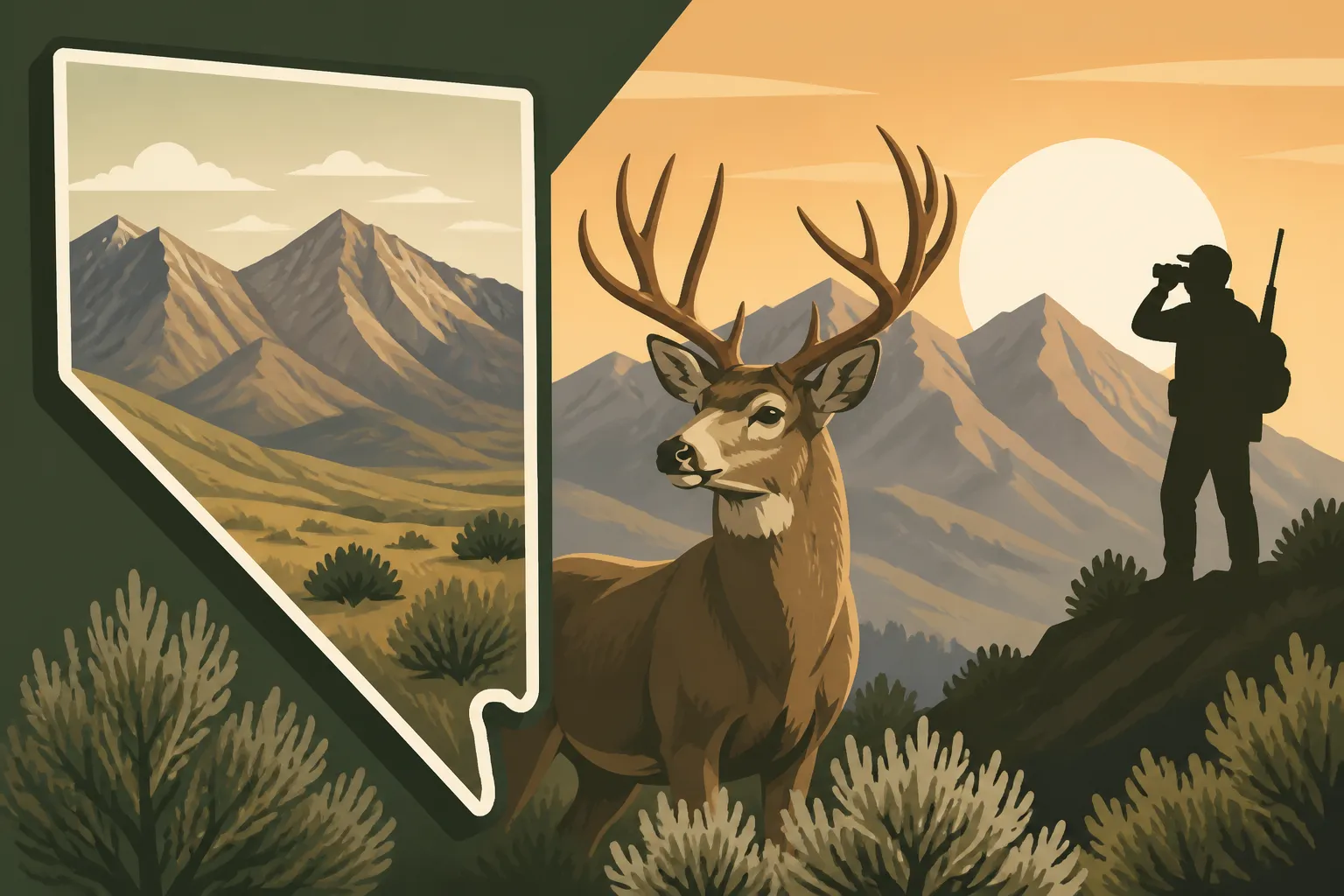
Mule deer hunting in the Santa Rosas is primarily a glassing game, especially for those pursuing mature bucks. The open, broken terrain, combined with pockets of aspen and pine, means that covering ground with your boots is important, but covering ground with your eyes is even more so. You'll want quality binoculars (10×42 or 15×56) and a good spotting scope (20-60x or 27-60x) on a sturdy tripod. Positioning yourself on a high vantage point at first light and systematically picking apart opposing slopes, basins, and timber edges is the name of the game. Glassing Nevada's Basin and Range for Mule Deer is a skill that will pay dividends here. Pay close attention to north-facing slopes, as deer often bed in the shade and cooler temperatures during the day, especially during early seasons.
Once a buck is spotted, the real work begins: the stalk. The Santa Rosas are notorious for their steep, loose, and noisy terrain. Planning an approach that utilizes draws, ridges, and vegetation to break up your silhouette and mask your movement is critical. Wind direction is everything; thermals will often rise in the morning and fall in the evening, sometimes swirling unpredictably in complex canyons. Be prepared for multiple failed stalks before you close the distance. Patience is a virtue, and sometimes waiting for a deer to move into a more favorable position or waiting for thermals to stabilize is the best strategy. Remember, Optics Power for Nevada's Long Sightlines is crucial for initially locating animals, but quiet movement and wind awareness seal the deal.
Elk: Bugling in Timber and Tracking in Snow
Elk hunting in the Santa Rosas is a tough draw and an even tougher hunt, but the rewards are significant. These elk tend to be found in the more remote, higher-elevation timbered areas and aspens. During the archery and muzzleloader seasons in September, bugling can be an effective tactic, but don't expect the same responsive bulls you might find in denser, more populated elk ranges. These Nevada elk are often pressured and highly wary, so subtle calling, locator bugles, and cow calls may be more effective than aggressive challenges. Focusing on transition areas between bedding and feeding, or around secluded water sources, is often productive.
For later rifle seasons, especially if snow arrives, tracking can become a viable strategy. Fresh snow can reveal travel patterns, bedding areas, and allow for a quieter approach. However, even with snow, the steepness of the terrain makes any stalk a grueling endeavor. Elk here will often use the thickest timber for security, making close-quarters hunting challenging. Understanding their movement patterns, particularly how they utilize different elevation bands based on weather and forage, is key. Hunters must be prepared for Packing an Animal Out of Roadless Country if successful, as elk often fall in the most inaccessible spots.
Mountain Lion and Bear: Specific Seasons and Challenges
Hunting mountain lion in the Santa Rosas is typically a winter pursuit, when snow allows for tracking with hounds. Nevada offers over-the-counter lion tags, but this is a highly specialized hunt that almost always requires a good pack of dogs and experienced handlers. The rugged canyons and rocky breaks provide ideal lion habitat, full of deer and wild horses, their primary prey. Success hinges on finding fresh tracks, turning out the dogs, and then following them through incredibly difficult terrain. It's an intense, physically demanding hunt that can cover many miles in a day, often in challenging winter conditions.
Black bear hunting, on the other hand, is a very limited draw, with specific units, including parts of the Santa Rosa Range, having small quotas. Bear seasons typically run from late summer into the fall, often coinciding with deer and elk seasons. Bears are frequently found in areas with good food sources like berries, acorns, or other mast crops, often near dense riparian areas or heavy timber. Hunting is typically done by spot-and-stalk or still-hunting. It's an opportunistic hunt, requiring keen observation and a deep understanding of bear behavior. Due to the limited number of tags, it's truly a once-in-a-lifetime opportunity for most.
Upland Bird Hunting: The Santa Rosa Chukar Experience
While big game often takes center stage, the Santa Rosa Range offers some of the most challenging and rewarding chukar hunting in the West. It's a test of will, endurance, and your dog's capabilities.
Finding Chukar: Steep Rocky Slopes, Water Sources
Chukar thrive on the steep, rocky, sparsely vegetated slopes of the Santa Rosas. They love north-facing slopes that hold moisture longer, and they are almost always found within reasonable proximity to water. This means focusing your efforts on canyons and drainages that contain springs, seeps, or reliable seasonal creeks. The presence of cheatgrass, a non-native invasive grass, is also a strong indicator, as chukar will feed on its seeds. These birds don't just stay at the bottom of the canyons; they'll often be found high on the sidehills, sometimes even near the very top of the ridge lines.
A key strategy is to hunt from the top down. Parking at the highest accessible point and walking down into a drainage allows you to hunt birds that flush uphill, giving you better shots, and it saves your knees and energy for the grueling climb out. However, don't be surprised to find birds anywhere on the slope. They are masters of using the terrain to their advantage, often flushing around a ridge or into an adjacent canyon, forcing you to chase. Listening for their distinctive "chuk-chuk-chuk" call is a critical part of locating coveys, especially in the early morning or late evening.
Gear and Tactics for Chukar: Boots, Dogs, Endurance
Chukar hunting in the Santa Rosas is not for the faint of heart. The physical demands are immense. You need to be in excellent physical condition, capable of climbing thousands of feet of elevation over uneven, rocky, and often slippery terrain. Your boots are your most important piece of gear. Invest in high-quality, ankle-supporting, waterproof boots with aggressive traction. Many hunters bring multiple pairs, or at least two pair of socks for each day, to manage blisters. A comfortable, well-fitting pack is also essential to carry water, snacks, extra layers, and your birds.
Dogs are incredibly helpful for chukar hunting, both for locating birds and retrieving them from steep terrain. A well-conditioned bird dog can significantly increase your success rate and reduce the number of lost birds. However, even the toughest dogs will struggle in this terrain; ensure your canine companion is also in top physical shape and bring plenty of water for them. Tactic-wise, it's about covering ground and being prepared for quick shots as birds flush. Shotguns in 20-gauge or 12-gauge are common, with open chokes and smaller shot sizes (7.5 or 6) being popular choices. Carrying ample water is paramount for both yourself and your dog; this isn't a place to skimp on hydration.
Preparation and Safety for a Santa Rosa Hunt
A successful and safe hunt in the Santa Rosa Range depends heavily on thorough preparation. The remote and rugged nature of this country demands a higher level of self-sufficiency and awareness.
Physical Demands and Conditioning
The Santa Rosa Range is unforgiving. Whether you're chasing mule deer high on a ridgeline, calling elk in the timber, or pursuing chukar on a steep hillside, you will be climbing. Elevations can range from 4,500 feet in the valleys to nearly 10,000 feet at the peaks. This means not only significant elevation gain but also adjusting to thinner air if you're coming from sea level. Prior physical conditioning is not just advised; it's practically required to avoid injury and maximize your hunting enjoyment. Activities like hiking with a loaded pack, stair climbing, and general cardiovascular fitness will make a huge difference.
Beyond just physical strength, mental toughness is equally important. Long days, challenging terrain, unpredictable weather, and the inevitable frustration of a missed opportunity or a blown stalk can wear you down. Being prepared to push through discomfort and maintain a positive attitude is key. Consider simulating your hunt conditions during your training: hike with the boots you'll wear, carry the pack you'll use, and practice shooting after a strenuous climb to get a feel for breath control. Preparing Physically for Long Glassing Days will ensure you can take advantage of opportunities when they arise.
Essential Gear for Backcountry Travel
Given the remoteness and ruggedness, a well-thought-out gear list is non-negotiable. Beyond your weapon and optics, consider these essentials:
- Navigation: A reliable GPS unit (or a smartphone with mapping apps like onX Hunt or GoHunt with downloaded offline maps) is critical. Couple this with a physical map and compass, and know how to use them. Cell service is spotty to non-existent.
- Communication: A satellite communication device (like a satellite messenger or phone) is highly recommended for emergencies. Even if you have a hunting partner, being able to call for help if separated or injured is priceless.
- First Aid: A comprehensive first-aid kit, tailored for backcountry use, should always be in your pack. Know how to use it.
- Water and Filtration: Carry more water than you think you need, especially for early-season hunts. A water filter or purification tablets are also a must if you plan to refill from natural sources. Water You Must Carry on a Desert Day Hunt is a good baseline to consider.
- Shelter and Fire: Even for day hunts, a lightweight emergency shelter (tarp, bivy sack) and fire-starting tools (lighter, waterproof matches, fire starter) can be lifesavers if you get stranded overnight.
- Layers: Nevada weather, especially in the mountains, can change rapidly. Layering clothing is essential to adapt to temperature swings, from freezing mornings to warm afternoons. Layering for Basin and Range Temperature Swings is a skill you'll master quickly.
Weather and Environmental Considerations
The Santa Rosa Range experiences significant weather variations. Early archery seasons (August) can be scorching hot during the day, requiring extreme caution regarding hydration and Heat Management on an August Archery Hunt. Later seasons in October and November can bring anything from mild, sunny days to fierce snowstorms and freezing temperatures. Always check multiple weather forecasts before and during your hunt, and be prepared for drastic changes. Snow can make roads impassable, and slick, icy conditions can make steep slopes treacherous.
Environmental hazards extend beyond just weather. Rattlesnakes are present at lower elevations, particularly during warmer months, so Snake Awareness on an August Archery Hunt is important. The terrain itself, with its loose rock and steep cliffs, presents a constant hazard for falls. Wildfires are also a perennial concern in dry years, and fire restrictions can be in place, impacting camping and cooking plans. Always be aware of your surroundings, tell someone your hunting plans and expected return time, and err on the side of caution.
Disclaimer
This article is for general informational purposes only and does not constitute professional advice. Laws, prices and regulations vary by location and change over time. Consult a qualified professional for guidance on your specific situation.