Landowner Access Through a Nevada Outfitter
Finding quality hunting ground in Nevada can feel like an endless puzzle, especially when you're dreaming of those bigger, less pressured animals often found on private property. For many hunters, the thought of securing access to these exclusive lands feels out of reach, but this guide is here to shed light on a highly effective, though often misunderstood, pathway: gaining landowner access through a Nevada outfitter. We’ll dive deep into how these relationships work, what to expect, and how to make the most of such an opportunity.
The Reality of Private Land in Nevada's Hunting Landscape
Nevada is famous for its vast expanses of public land, and rightfully so. It's often said that Nevada Is the Most Federally Owned State in the Lower 48, which is fantastic for the do-it-yourself hunter. However, this doesn't mean all the best hunting is open to everyone. In fact, some of the most productive wildlife areas, particularly for big game, are intertwined with or entirely comprise private ground. This creates a unique set of challenges and opportunities that every hunter should understand.
Why Private Land Matters in a Public Land State
While the sheer acreage of public land is impressive, the reality on the ground often tells a different story. Many of Nevada's fertile valleys, crucial water sources, and productive agricultural fields – which serve as prime forage and wintering grounds for deer, elk, and antelope – are privately owned. These properties can act as refuges where animals grow older and larger with less hunting pressure. Imagine spending countless hours glassing a vast public basin, only to see deer consistently dropping off into a nearby private ranch at first light. It's a common, frustrating scenario.
Moreover, the "checkerboard" pattern of land ownership, especially in areas with historical railroad grants, means that public and private parcels can be intermingled in a way that makes consistent public access incredibly difficult, even if technically legal. A small, inaccessible public parcel surrounded by private ground might hold great game, but without permission, it's off-limits. This is where the strategic value of private land access really comes into play, offering a different caliber of hunting experience that often stands apart from the heavy pressure sometimes found on accessible public tracts.
The Challenges of Direct Landowner Permission
For most hunters, the dream is to simply knock on a rancher's door, introduce themselves, and secure permission to hunt. And while that can happen, especially for local residents with long-standing community ties, for most of us, it's an uphill battle. Landowners are understandably wary. They face liability concerns, want to protect their property from irresponsible individuals, and often have already established relationships with a select few hunters or, more commonly, with professional outfitters.
You might spend days driving rural roads, seeking out "For Lease" signs or trying to track down owners, only to be met with polite refusals or simply no response at all. Many ranchers, particularly those with prime game habitat, have already committed their access to outfitters who provide a consistent, reliable income stream and manage the hunting pressure according to their needs. This isn't a judgment, it's simply the business reality for many agricultural operations trying to diversify income. The frustration of being turned away, or feeling like you're intruding, is a common sentiment for hunters trying to navigate Getting Landowner Permission in Nevada on their own.
How Outfitters Facilitate Private Land Access
So, if direct access is so tough, how do hunters get on those coveted private lands? This is precisely where outfitters become invaluable. They don't just guide; they often act as crucial intermediaries, cultivating and maintaining relationships with landowners that would be nearly impossible for an individual hunter to forge.
Outfitters as Bridges to Exclusive Property
Nevada outfitters have spent years, sometimes decades, building trust with local ranchers and private property owners. These relationships are the bedrock of their business model. They understand the landowners' concerns about liability, property damage, and managing game populations. In exchange for exclusive hunting rights or guaranteed access, outfitters pay lease fees to landowners. These fees provide a steady, predictable income for the rancher, often much more substantial and reliable than piecemeal permission requests from individual hunters.
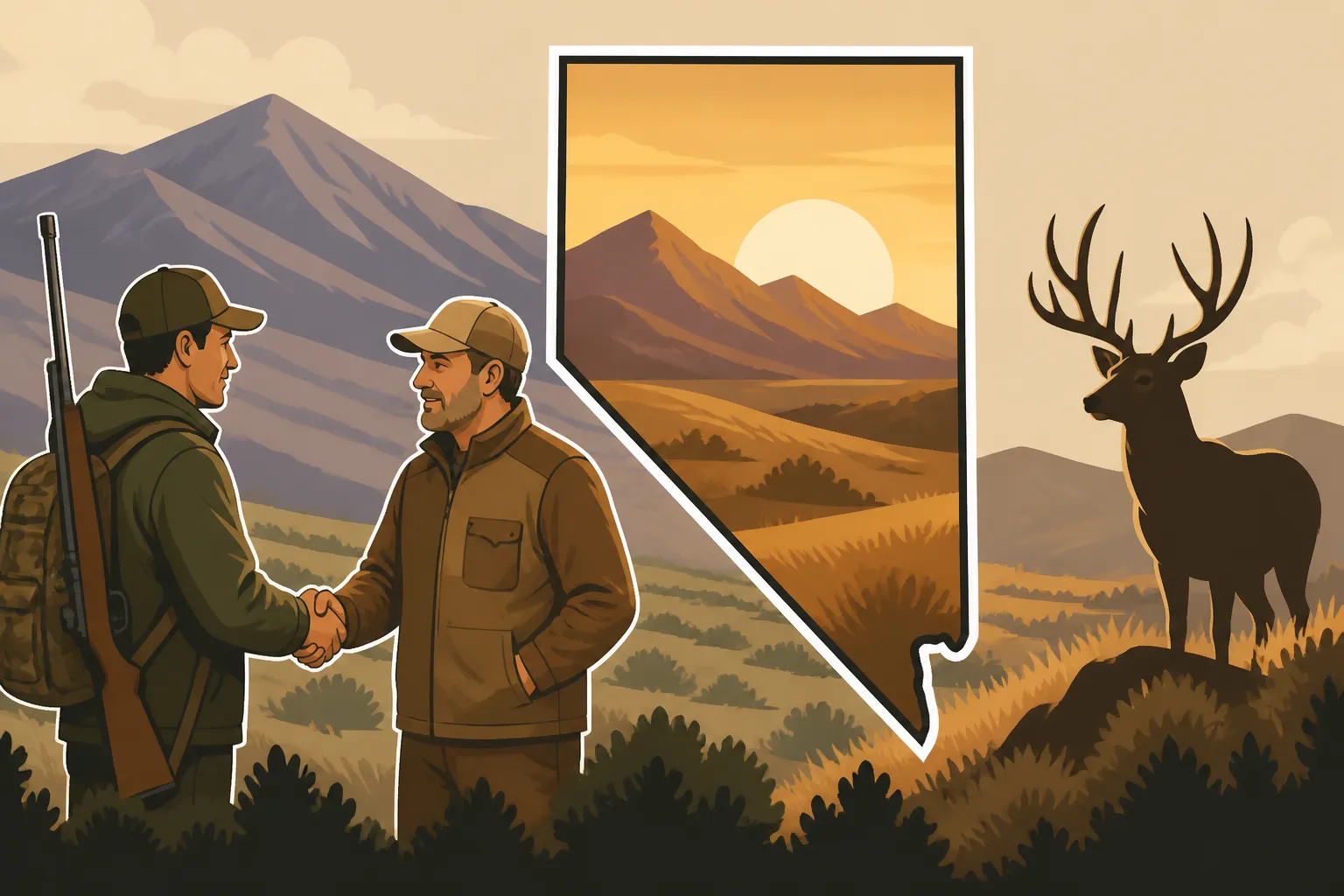
This arrangement benefits everyone: the landowner gets compensated and has a single point of contact responsible for managing hunters; the outfitter gains access to prime, often low-pressure ground, which they can then offer to their clients; and hunters, like you, get a legitimate pathway to hunt areas that would otherwise be off-limits. It's a professional service that turns a seemingly impenetrable barrier into a navigable route, providing opportunities on properties where prime winter range for deer and elk might be found, or where antelope roam fertile valley floors.
Types of Private Land Access Offered by Outfitters
When considering an outfitter, it's important to understand that "private land access" isn't a one-size-fits-all offering. Outfitters structure these opportunities in a few different ways, each with its own benefits and considerations.
-
Fully Guided Hunts on Leased Land: This is perhaps the most common and comprehensive option. Here, the outfitter has secured exclusive hunting rights to a specific private ranch or a combination of private and adjacent public land. You pay a fee that covers not only access to this prime ground but also the services of a professional guide, lodging, meals, and often transportation during the hunt. This allows the outfitter to manage the game, control hunter numbers, and offer a truly curated experience. You're leveraging their long-standing relationships and expertise. Many of these hunts are designed to be an all-inclusive experience, right down to scouting the property weeks before your arrival to locate target animals.
-
Trespass Fee Arrangements: Sometimes, an outfitter might offer a "trespass fee" service. This means you pay the outfitter (who then pays the landowner) solely for the right to hunt a specific private property. Unlike a fully guided hunt, the outfitter's involvement beyond facilitating access is minimal, if any. You're largely on your own for scouting, guiding yourself, and providing your own logistics like camping and food. It's essentially buying permission to hunt private land, which can be an excellent option for experienced hunters who prefer to call their own shots but want the advantage of less pressured ground. We'll delve deeper into this specific option next.
-
Guided Hunts on Outfitter-Owned Property: Less common, but still an option, is an outfitter who actually owns the hunting property themselves. This gives them ultimate control over game management and hunter experience. While the details of the hunt would be similar to a fully guided hunt on leased land, the unique aspect is that the outfitter is also the landowner, simplifying some of the arrangements and responsibilities. Regardless of the specific structure, the common thread is that the outfitter has secured the necessary permissions, bypassing the often-frustrating process of individual hunters trying to negotiate access.
Understanding Trespass Fee Arrangements
The term "trespass fee" can sometimes sound a bit intimidating, but in the hunting world, it refers to a legitimate, agreed-upon payment made to a landowner or their agent (like an outfitter) for the right to access and hunt their private property. It's a transactional agreement for access, distinctly different from a fully guided hunt.
What a Trespass Fee Entails
When you enter into a trespass fee arrangement, you are essentially purchasing permission to be on a specific piece of private land for a set period, typically for hunting purposes. The fee covers your right to "trespass" on that private property, which would otherwise be illegal without permission. This is often arranged through an outfitter who has already established the larger lease agreement with the landowner.
What you get for your trespass fee typically includes:
- Access to Private Property: The core offering is legal entry to private hunting grounds that would otherwise be inaccessible. This land is often carefully managed, potentially holding higher numbers of quality animals due to reduced pressure.
- Designated Hunting Area: You'll be given clear boundaries of where you are permitted to hunt on the property. This is crucial for avoiding accidental trespass onto adjacent private parcels.
- Limited Services: Generally, a trespass fee doesn't include guiding, lodging, meals, or transportation once you're on the property. You're expected to be self-sufficient, bringing your own gear, setting up your own camp (if allowed), and finding the animals yourself. Some outfitters might offer basic information about recent game sightings or the lay of the land, but this should not be confused with active guiding.
- Rules and Regulations: You'll be expected to adhere strictly to the landowner's rules, which might include specific vehicle restrictions, gate protocols, or even harvest limits beyond state regulations. These rules are put in place to protect the property, livestock, and wildlife resource.
It’s important to clarify all these details upfront. Will the outfitter check you in? Are there specific areas that are off-limits? Is there a designated parking spot? Don't assume anything; ask every question before committing.
Pros and Cons for Hunters
Deciding if a trespass fee hunt is right for you involves weighing its unique advantages against its limitations.
Pros of a Trespass Fee Arrangement:
- Access to Quality Ground: This is the biggest draw. You gain legal access to private lands that are often managed for wildlife, potentially offering better trophy potential and less hunter competition than public land. This can be particularly appealing for species like mule deer or elk that may gravitate to private agricultural lands or secluded pastures.
- DIY Freedom: For experienced hunters who prefer to call their own shots, a trespass fee allows for a completely self-directed hunt. You scout, you strategize, you execute, all without a guide dictating your movements.
- Potentially Lower Cost (Compared to Fully Guided): While still a significant investment, a trespass fee is usually less expensive than a fully guided hunt since you're not paying for the guide's time, lodging, and meals.
- Exclusive Experience: Depending on the arrangement, you might be the only hunter, or one of a very small group, on a large tract of private land, leading to a truly remote and undisturbed hunting experience. This means less competition for game and a more peaceful hunt.
Cons of a Trespass Fee Arrangement:
- No Guiding Services: You are responsible for all aspects of the hunt, from locating game to field dressing and packing out. If you're unfamiliar with the area or inexperienced in self-guided hunts, this can be a steep learning curve.
- Significant Cost: While cheaper than fully guided, trespass fees are still a substantial expense. This is in addition to your Nevada Nonresident Tag Pricing by Species and other travel costs.
- Limited Support: If something goes wrong—a breakdown, a lost animal, or an injury—you're largely on your own or relying on emergency services. The outfitter's role is typically limited to providing access.
- Unfamiliar Terrain: You'll likely be hunting ground you've never set foot on. Extensive e-scouting and on-the-ground reconnaissance (if permitted before the hunt) become absolutely critical. You might be walking into an area you've only seen on a Reading a Nevada Unit Boundary Before You Apply map.
Here's a quick comparison to help you visualize the differences:
| Feature | Trespass Fee Arrangement | Fully Guided Hunt on Private Land |
|---|---|---|
| Primary Service | Legal access to private land | Access + professional guiding, expertise |
| Cost | Generally lower than fully guided | Significantly higher |
| Inclusions | Access, often explicit land rules | Guide, access, lodging, meals, field care |
| Hunter Responsibility | All aspects: scouting, finding game, logistics | Focus on hunting, guide handles logistics |
| Support Level | Minimal to none (beyond access) | High, direct assistance throughout |
| Best For | Experienced DIY hunters seeking exclusive ground | Hunters seeking full support, less stress |
| Risk/Reward | Higher risk, potentially higher personal reward | Lower risk, curated experience |
The Costs and Considerations of Outfitter-Assisted Private Land Hunts
Let's be real: hunting in Nevada, especially for big game, is an investment. When you add the layer of private land access through an outfitter, that investment naturally increases. It’s crucial to have a clear understanding of the financial commitment and what that money actually buys you.
Breaking Down the Investment
The cost of a private land hunt facilitated by an outfitter isn't just one lump sum; it's a combination of several factors. First and foremost is the outfitter's fee itself. This fee directly reflects their service, their overhead, and the lease payments they make to landowners. For species like elk or mule deer, particularly on prime private ground, this fee can be substantial. While I can't give you exact figures, know that this is often the largest component of your hunting budget for this type of experience. You'll need to contact outfitters directly for their current pricing structures.
Beyond the outfitter's fee, remember these other crucial expenses:
- Nevada Combination Hunting License: Before you can even apply for a tag, you need a general hunting license. For nonresidents, this is a separate and mandatory purchase.
- Application Fees: Each species you apply for in the Nevada draw typically has a non-refundable application fee.
- Big Game Tag Cost: If you are successful in the draw, you'll pay the full tag fee, which for nonresidents can be significant. For example, A Nonresident Nevada Elk Tag Runs $1,200 is just one example of the tag costs.
- Travel Expenses: This includes getting to Nevada, often to a regional hub like Reno or Las Vegas, and then potentially a long drive to the hunt area. Factor in fuel, potential vehicle rentals, and possibly flights.
- Gear and Equipment: While you likely have most of your hunting gear, consider any specialized items needed for the terrain or climate, or perhaps upgrades to your optics, like a high-power spotting scope for those long Nevada vistas.
It's paramount to get a detailed breakdown of all costs from any outfitter you consider. Don't be shy about asking for an itemized list of what's included and what isn't, especially when it comes to the lease portion of the fees.
What to Expect and What's Often Extra
One of the biggest pitfalls for hunters booking an outfitter-assisted hunt is making assumptions about what's included. A "fully guided hunt" sounds comprehensive, but there are always nuances.
What's Generally Included (in a fully guided private land hunt):
- Guided Services: Professional guides who know the land and the animals.
- Private Land Access: Your legal right to hunt the leased property.
- Lodging: This could range from a comfortable ranch house to wall tents, depending on the outfitter and location.
- Meals: Often home-cooked and hearty, designed to fuel long days in the field.
- Field Care of Game: Assistance with field dressing and getting the animal back to camp.
- Transportation During Hunt: Getting you from camp to prime hunting spots on the property.
What's Often Extra or Not Included:
- Big Game Tags: The outfitter cannot provide your actual state-issued hunting tag. You must draw it yourself through the Nevada system.
- Pre-Hunt Scouting: While outfitters scout their areas, don't expect them to provide extensive, personalized scouting reports prior to your arrival unless explicitly stated.
- Meat Processing and Shipping: Getting your animal processed and the meat shipped home is almost always your responsibility and an additional cost.
- Taxidermy: If you harvest a trophy, the cost of taxidermy and shipping the cape and horns is yours.
- Gratuities: Tipping your guide and camp staff is customary and a significant expense to factor in. This is part of the hunting culture and acknowledges their hard work.
- Personal Gear: Your rifle, ammunition, hunting clothes, optics, and other personal equipment are all your responsibility.
- Travel To/From Nevada: Flights, rental cars, and fuel to get to the outfitter's base camp are usually not included.
- Alcoholic Beverages: Most outfitters don't provide alcohol, though they may allow you to bring your own.
- Trophy Fees: Some outfitters, especially for specific species or large trophies, might charge an additional "trophy fee" on top of the base hunt price. This is vital to clarify upfront. What Outfitters Prices Almost Never Include can really add up if you don't budget for them.
Make sure your contract clearly states all inclusions and exclusions. It’s better to be over-informed than caught off guard by unexpected expenses after a successful hunt.
Vetting Outfitters for Private Land Opportunities
Choosing an outfitter, especially one who promises access to coveted private land, is a big decision. This isn't just about finding someone who can put you on animals; it's about investing your time and money with a reputable professional who adheres to ethical practices and delivers on their promises. You'll want to employ strategies similar to Vetting a Nevada Outfitter Before You Send a Deposit.
Key Questions to Ask About Land Access
When you're speaking with potential outfitters, don't be afraid to ask pointed questions about their private land arrangements. This isn't rude; it's smart due diligence.
- "Can you describe the specific private land I'll be hunting?" Ask about the acreage, the type of terrain, and its proximity to public land. Is it a contiguous block or multiple parcels? How long have they leased it?
- "How many hunters will be on this specific private property during my hunt period?" Understanding hunter density is key to gauging pressure. Less pressure often equates to better opportunities.
- "What kind of game management practices does the landowner/outfitter implement on this property?" Do they run trail cameras? Do they limit harvest on certain age classes? Are they actively improving habitat? This shows a commitment to the resource.
- "What are the landowner's specific rules and expectations for hunters on their property?" This can include everything from gate closures, driving on certain roads, where you can walk, and even how you retrieve downed game. Knowing this upfront helps prevent misunderstandings.
- "Will my hunt be exclusively on private land, or will we also be accessing adjacent public land?" Sometimes, private parcels are small but provide access to larger public tracts. Understand the full scope of the hunting area.
- "How do you handle trespass fee arrangements versus fully guided hunts on your private land?" If you're interested in a trespass fee, make sure you understand the distinct lack of guiding services.
- "Are there specific water sources or key habitat features on this private land that concentrate game?" This demonstrates the outfitter's knowledge of the property and its potential. This can tie into How Outfitters Plan Around Water Sources.
Platforms like BookYourHunt and GoHunt can be excellent resources for finding outfitters and seeing their listed offerings. Many outfitters provide detailed descriptions of their hunts, including land type and inclusions. While these platforms are a great starting point for discovery, always follow up with direct communication and verification.
Verifying Licenses and References
Any reputable Nevada outfitter working on private or public land must be licensed by the state. This isn't just a formality; it's a legal requirement designed to protect you, the hunter. How NDOW Licenses Guides and Outfitters is information readily available through the Nevada Department of Wildlife (NDOW). Do not book with an unlicensed individual. It puts you, and the resource, at risk.
Once you have an outfitter's name, you should:
- Verify their NDOW License: Contact NDOW directly or check their online licensee database (if available) to confirm the outfitter holds a current, valid license. Ask what their What a Nevada Master Guide License Allows entitles them to do.
- Ask for References: A good outfitter will gladly provide a list of past clients, ideally within the last one to three years, who hunted the specific species and type of hunt you're interested in (e.g., private land elk).
- Contact References: When you call references, ask specific questions:
- Did the outfitter deliver on their promises regarding private land access?
- Was the property as described?
- How was the guide's knowledge of the private land?
- Were the accommodations and meals (if included) as expected?
- Would they hunt with this outfitter again?
- How did the outfitter handle any unexpected challenges?
- Check Online Reviews and Forums: While not always definitive, online hunting forums, social media, and dedicated review sites can offer additional perspectives. Look for consistent themes, both positive and negative. Remember to take extreme reviews with a grain of salt, but consistent feedback can be very telling.
This thorough vetting process will give you confidence that you're booking with a legitimate and capable outfitter who can truly deliver on their promise of private land access.
Maximizing Your Private Land Hunt Experience
You've secured private land access through an outfitter, whether it's a trespass fee or a fully guided experience. Now it's time to ensure you make the absolute most of this unique opportunity. A successful hunt isn't just about the outfitter; it's about your preparation and conduct.
Preparing for the Specifics of a Leased Hunt
Hunting private ground often comes with slightly different dynamics than public land. While the animals are still wild, their behavior can be influenced by the property's size, adjacent land use, and how often they're pressured.
- Pre-Season Communication: Stay in regular contact with your outfitter. Ask about conditions leading up to your hunt: recent weather, game movements, and any changes on the property. This information can be invaluable for fine-tuning your strategy.
- Study the Property Maps: Utilize tools like GoHunt's mapping features or onX Hunt to thoroughly study the private land, paying close attention to terrain features, elevation changes, water sources, and potential bedding and feeding areas. Understanding Terrain That Hides an Approach in Open Country will be critical. If the outfitter can provide specific details or boundary files, that's even better.
- Physical Conditioning: Don't underestimate the physical demands. Even if you're on private land, you might still be covering vast distances, climbing steep slopes, or packing out an animal in challenging conditions. Preparing Physically for Long Glassing Days and tough stalks is always a good idea in Nevada.
- Gear for the Environment: Nevada's high desert climate and rugged terrain can be unforgiving. Ensure you have appropriate footwear for volcanic rock, proper layering for drastic temperature swings, and enough water for long days afield. This is particularly true for early archery seasons where Heat Management on an August Archery Hunt is paramount.
- Be Flexible: While you've likely envisioned a specific type of hunt, remain flexible. Game animals don't read the script, and conditions can change. Trust your outfitter's advice (if fully guided) or adapt your own strategy (if trespass fee) to current realities.
Respecting the Landowner and the Resource
This point cannot be stressed enough. Your conduct on private land directly impacts the outfitter's relationship with the landowner, and potentially, future hunting access for everyone. You are a guest, and your actions reflect on all hunters.
- Adhere Strictly to Rules: Follow every single rule and instruction given by the outfitter or landowner. This includes gate protocols (always close gates you open!), vehicle restrictions, designated hunting areas, and any off-limits zones. Ignorance is not an excuse.
- Leave No Trace: Pack out everything you pack in. This means all trash, spent casings, and any other refuse. Leave the property cleaner than you found it. Respect for the land is paramount.
- Ethical Hunting Practices: Uphold the highest standards of ethical hunting. Ensure clean shots, diligent tracking of wounded animals, and proper field dressing. This reflects well on you and the hunting community.
- Protect the Landowner's Interests: Be mindful of livestock, fences, and any equipment on the property. Report any issues or damage you observe, even if it wasn't caused by you. If you see something that looks amiss, let the outfitter know.
- Communicate Any Issues: If you accidentally cause a problem, or observe something concerning (e.g., unexpected trespassers, sick animals), report it immediately to your outfitter. Open communication is key to maintaining trust.
- Show Gratitude: A simple "thank you" to the landowner (if you have the opportunity) or expressing your appreciation to the outfitter for providing such access goes a long way. Building positive relationships ensures that these valuable private land opportunities continue for years to come.
By following these guidelines, you not only increase your chances of a successful hunt but also ensure that the privilege of private land access remains available for future generations of hunters.
Disclaimer
This article is for general informational purposes only and does not constitute professional advice. Laws, prices and regulations vary by location and change over time. Consult a qualified professional for guidance on your specific situation.