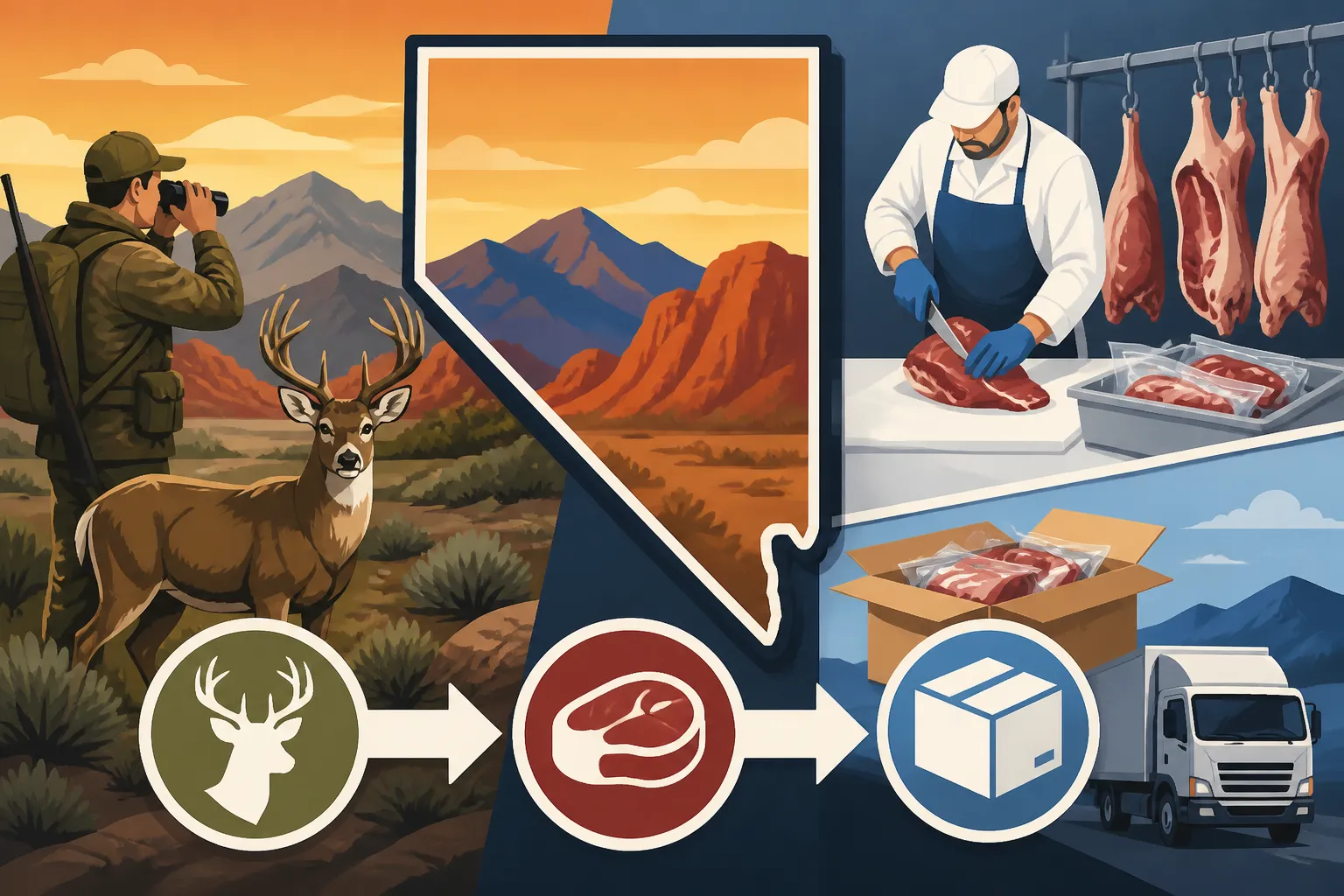
Meat Processing and Shipping Costs
You've just wrapped up an incredible hunt in the vast, open country of Nevada, and you're staring at a magnificent animal. The adrenaline is still coursing, but a new, very real challenge quickly sets in: how do you get this hard-won meat from the backcountry to your freezer, especially if home is hundreds or even thousands of miles away? The thought of navigating meat processing and the potential shipping costs can feel overwhelming, almost as daunting as the hunt itself. This guide is here to walk you through the practicalities, helping you understand what to expect and how to budget for the crucial steps after the shot.
Initial Field Care and Transport: The Nevada Challenge
Let's be honest, Nevada can be a land of extremes. From the scorching August sun of an early archery deer hunt to the freezing temperatures of a late-season rifle elk hunt, the environment is always a factor in how you handle your animal. Proper field care isn't just about respect for the animal; it's about preserving every ounce of that delicious wild game.
Battling the Elements: Why Speed is Paramount
When that animal hits the ground, especially in Nevada's warmer units, the clock starts ticking. Heat is the enemy of fresh meat. Bacteria thrive in warmth, and without proper cooling, spoilage can set in incredibly fast. You've heard the stories, or perhaps even experienced it yourself – the heart-sinking moment when you realize meat has "gone bad" because it wasn't cooled quickly enough. In the high desert or sagebrush country, ambient temperatures can climb well into the 80s or 90s even in the shoulder seasons, let alone during Nevada's August Archery Deer Season Opens the Year. Even a seemingly cool autumn day can hide pockets of heat, especially if your animal falls in a sunny draw or against dark rock.
Your immediate priority after ensuring the animal is dispatched safely and legally tagged is to get it gutted. This process, known as evisceration, allows the body cavity to begin cooling. Removing the internal organs dissipates a tremendous amount of heat. If you're hunting solo or far from a vehicle, this initial step is critical. Don't waste time admiring your trophy for too long; pictures can wait until the immediate work is done. Think about the conditions you're hunting in: if it's hot, you'll need to move even faster. If it's below freezing, you might have a bit more leeway, but internal temperatures can still remain high for a surprising amount of time.
Your Role in the Field: Quartering and Cooling
For most big game animals in Nevada, especially mule deer or elk, simply gutting the animal won't be enough if you're not within minutes of a cooler or processing facility. You'll need to quarter your animal. Quartering involves breaking the animal down into its primal sections—the four legs, backstraps, and tenderloins. This not only makes the animal much easier to pack out, especially if you're deep in a wilderness study area or Packing an Animal Out of Roadless Country, but it also exposes more surface area to the air, accelerating the cooling process. Many experienced hunters will cape the animal for a shoulder mount in the field as well, separating the hide from the meat with meticulous care.
While quartering, it’s crucial to keep the meat as clean as possible. Carry game bags, preferably made of breathable cloth, not plastic. These bags protect the meat from dirt, insects, and flies while allowing air to circulate. Once quartered and bagged, if you're still in the field, find shade, preferably on north-facing slopes or in dense timber if available. Some hunters even carry a small, collapsible game hoist to hang quarters in the shade, allowing air to circulate around them. This attention to detail in the field, even when you're exhausted, directly impacts the quality of the meat you'll eventually put on your table. Don't underestimate the impact of good Field Dressing in August Heat on the final product.
Getting it Home: Protecting Your Meat During Local Transport
Once you've got your quarters off the mountain, the next hurdle is getting them to a processor or your personal cooling setup. This often means a drive, sometimes a long one, across Nevada's expansive roads. You need a plan to keep that meat cold. Large coolers are non-negotiable. Fill them with plenty of ice – block ice lasts longer than cubed ice, but a combination can work. Drain meltwater regularly, as standing water can compromise meat quality. Some hunters prefer to keep meat directly on ice, while others layer it in heavy-duty contractor bags within the cooler to prevent waterlogging, ensuring ample ice surrounds the bags.
If you're making a multi-hour drive, consider wrapping the coolers in sleeping bags, tarps, or moving blankets to insulate them further from the sun and ambient heat. Even better, if you have access to chest freezers at a camp or a buddy's place, transfer the quarters into those as soon as possible. Remember, Nevada's roads can be rough, and long distances are common. Ensure your cooler setup is secure in your truck or trailer to prevent shifting and potential damage to your precious cargo.
Professional Meat Processing: What to Expect
Once you've done your part in the field, handing your harvest over to a professional meat processor can be a huge relief. They have the facilities and expertise to turn your quarters into neatly packaged, freezer-ready cuts.
Services Offered and What They Mean for Your Harvest
A good wild game processor offers a range of services designed to maximize your take-home meat. At a minimum, they'll cut and wrap your meat to your specifications. This means you can often choose how thick your steaks are, what cuts you want (roasts, stew meat), and whether you prefer vacuum sealing or traditional butcher paper. Vacuum sealing is fantastic for long-term freezer storage, protecting against freezer burn much better than paper.
Beyond basic cuts, most processors offer specialty services. Grinding is very common, often with pork or beef fat added (usually for an additional fee) to improve flavor and texture for burger or sausage. Speaking of sausage, many places can turn your trim into breakfast sausage, Italian sausage, brats, or even specialty flavors. Jerky is another popular option, though it's often the most expensive per pound due to the labor and drying time involved. If you've taken a big bull elk or a large mule deer, these specialty items can be a wonderful way to enjoy your harvest in diverse ways throughout the year. It's smart to call ahead and discuss their offerings before you even head out on your hunt.
Understanding the Cost Structure
The cost of professional meat processing varies quite a bit depending on the size of your animal, the services you choose, and the processor's location. Generally, you can expect processors to charge in one of two ways:
- Per Pound: Some processors charge a set rate per pound of hanging weight or final packaged weight. This is straightforward but can add up quickly for larger animals.
- Flat Fee plus Add-ons: Others might have a flat base fee for basic cut and wrap, with additional charges for things like adding fat to grind, making sausage, jerky, or vacuum sealing.
It's important to understand that these costs are separate from your tag fees or the investment you've made in your hunt. A mule deer will naturally cost less to process than a large elk simply due to the difference in overall weight. Specialty items like jerky can significantly increase your total bill, sometimes making up a substantial portion of the overall cost. For instance, turning 20 pounds of trim into jerky might cost as much as the basic processing of the entire animal. Always ask for a detailed price list or estimate when you drop off your animal, and don't be afraid to compare a few local options if time allows. Remember, these are custom services, and you're paying for their expertise, equipment, and time.
How to Choose a Processor: Local Insights
Choosing a good processor is just as important as choosing your gear. Word of mouth is often the best referral. Ask other hunters who they use and trust. If you're an out-of-state hunter, reaching out to local hunting groups or even calling a few sporting goods stores in the area you'll be hunting can yield great recommendations. For example, if you're hunting a unit around Elko, you'll want to find a processor nearby to minimize travel time with unchilled meat. The closer the better when it comes to getting that meat into a cold facility.
Look for a processor that is clean, organized, and has good reviews. Don't be shy about asking questions when you call:
- What are their hours, especially during hunting season? (Some will have extended hours on opening weekend).
- What's their turnaround time? During peak season, it might be a week or more.
- Do they handle your meat individually, or is it combined with other animals? (Most reputable wild game processors keep individual orders separate).
- What are their specific charges for different services?
Having a processor lined up before you even hit the field can save you a ton of stress after a successful hunt. This is just another piece of the puzzle when you're Reading a Nevada Hunt Unit Before You Apply and planning your logistics.
| Service Category | Typical Offering | Cost Impact (General) | Notes for Nevada Hunters |
|---|---|---|---|
| Field Care Supplies | Game bags, knives, sharpening, rope | Low to Moderate | Essential for preserving quality in the field. |
| Basic Processing | Cut, wrap, freeze | Moderate (per lb or flat fee) | Standard service, foundation of your take-home meat. |
| Specialty Processing | Sausage, jerky, snack sticks | High (per lb, often premium) | Adds significant cost but yields diverse products. |
| Vacuum Sealing | Extends freezer life | Moderate add-on | Highly recommended for long-term storage. |
| Adding Fat to Grind | Pork or beef fat | Low add-on (per lb of fat) | Improves flavor and texture of ground meat. |
| Trophy Prep | Caping, skull cleaning | Moderate (flat fee) | Separate from meat processing; specialized service. |
| Shipping | Packaging, dry ice, freight | High (variable by weight/distance) | Potentially the most expensive part for out-of-staters. |
Shipping Your Trophy Meat: A Logistics Deep Dive
For many out-of-state hunters, or even residents with a long drive home, shipping your processed game meat is a necessary consideration. This is where the costs can really start to climb, but with careful planning, it's absolutely manageable.
Packaging for the Long Haul: Regulations and Best Practices
Shipping meat isn't like sending a regular package. It requires specific preparation to ensure it arrives frozen and in good condition. First and foremost, the meat must be frozen solid. Don't attempt to ship partially frozen or fresh meat unless it's a very short, controlled trip. Secondly, you'll need the right containers. Heavy-duty, insulated coolers are the standard. The thicker the insulation, the better.
Dry ice is your best friend here. It's much colder than regular ice and sublimates (turns directly from solid to gas) without creating any meltwater, which can ruin packaging and potentially cause issues with carriers. However, dry ice requires careful handling (always use gloves!) and has its own shipping regulations, particularly with air cargo. The amount of dry ice needed depends on the cooler size, the amount of meat, and the transit time, but a good rule of thumb is about 5-10 pounds per 24 hours of transit time for a standard 50-quart cooler filled with meat. Pack the dry ice on top of the frozen meat, as cold air sinks. Each package should be clearly labeled as "Frozen Game Meat" and include your contact information.
Exploring Your Shipping Options
When it comes to actually moving your meat, you generally have two main avenues:
- Commercial Air Cargo: Major airlines often have cargo divisions that can ship frozen goods. You'll typically need to drop off your properly packaged and frozen coolers at their cargo facility at a major airport (e.g., Reno-Tahoe International Airport or McCarran International Airport in Las Vegas). The costs are based on weight, dimensions, and destination, and you'll often pick it up at the cargo terminal of your destination airport. This can be a very efficient way to get meat home quickly, but it requires coordinating drop-off and pick-up times, and you'll need to adhere strictly to their dry ice and packaging regulations. Always call the specific airline's cargo department well in advance to understand their current policies and pricing.
- Specialty Wild Game Shippers: There are companies that specialize in shipping wild game and trophies. These services often handle all the logistics, from picking up your processed meat at the butcher shop, preparing it with dry ice, and shipping it directly to your home or a local pick-up point. While potentially more expensive, they take much of the hassle out of the process, which can be invaluable after a long hunt. They are experts in regulations and packaging. These services can be found through online searches or recommendations from outfitters and processors.
General parcel carriers (like UPS or FedEx) may also offer options for shipping perishables, often requiring specific services like overnight or two-day air, and stringent packaging guidelines. You'll need to check their specific terms for shipping frozen meat and dry ice, as these policies can change.
Navigating Interstate Regulations
This is a critical area that many hunters overlook until the last minute. Every state has its own regulations regarding the import of wild game meat. These rules are in place to prevent the spread of diseases like Chronic Wasting Disease (CWD). While Nevada has specific Carcass Transport Rules After a CWD Detection, your home state might have even stricter rules.
Some states require that only deboned meat be brought across their borders. Others might have specific labeling or inspection requirements. For instance, you might not be allowed to bring skull plates or spinal columns across certain state lines. It is your responsibility to know the regulations of your home state and any states you might pass through during transport. Ignorance is not an excuse, and violating these rules can lead to fines, confiscation of your meat, or worse. Before you even head out on your hunt, make a quick call to your state's fish and wildlife agency or check their website for their wild game import regulations. This foresight will prevent a major headache after a successful hunt.
Budgeting Beyond the Tag: Comprehensive Costs
The cost of a Nevada hunt extends far beyond the price of your combination license and tag. Accounting for meat processing and shipping is a crucial part of your overall budget, especially for out-of-state hunters.
Factoring in All the Meat Costs
Let's break down a realistic budgeting scenario for your meat:
- Field Care Supplies: Think knives, sharpener, game bags, a good tarp, and initial coolers. These are usually one-time or infrequent purchases, but factor them in.
- Ice: You'll need plenty of it for cooling meat in the field and during transport to the processor. This can be a recurring cost, especially for longer hunts or if you need to resupply.
- Processing Fees: As discussed, this depends on the animal size and services requested. A mule deer might run a few hundred dollars for basic cut and wrap, while a large elk with specialty sausage and jerky could easily be double or triple that.
- Shipping Materials: Insulated coolers (if you don't already own enough), heavy-duty tape, and plenty of dry ice.
- Shipping Costs: This is highly variable but can range from a few hundred dollars for a single deer to well over a thousand for a large elk shipped across the country. Costs are driven by weight, dimensions, and speed of service.
It's not uncommon for the total cost of processing and shipping an elk to approach or even exceed the cost of the tag itself for a nonresident. For a more conservative budget, consider adding 15-25% of your tag cost for meat processing and another 20-40% for shipping if you're traveling a long distance. Always try to get firm quotes from processors and shipping companies before committing.
Don't Forget the Trophy: Capes, Skulls, and Horns
If you've taken an animal worthy of the wall, remember that trophy care is a separate, but equally important, logistical and financial consideration.
- Caping: This is the meticulous process of skinning an animal for a shoulder mount. Many processors offer this service, but some hunters prefer to do it themselves in the field or take it to a dedicated taxidermist. The cost for caping is usually a flat fee.
- Skull Cleaning: If you want a European mount (skull only), the skull needs to be cleaned. This can be done by boiling, dermestid beetles, or maceration. Processors or taxidermists often offer this service.
- Antler/Horn Transport: Antlers and horns, especially large ones, can be cumbersome to transport. While they don't require refrigeration, they still need to be protected from damage. Some airlines will allow them as checked baggage (often oversized), while others require them to be shipped as cargo. Taxidermists can also prepare and ship them for you.
If you plan to use an out-of-state taxidermist, you'll need to ship the cape (frozen) and skull/antlers to them. This will involve additional shipping costs, often through freight services for larger items. Make sure the cape is frozen solid, securely packaged in a heavy-duty bag within a sturdy cooler, and clearly labeled. Researching Shipping Capes and Horns Home well in advance will save you stress.
When Shipping Isn't an Option: Alternatives
Sometimes, after crunching the numbers, shipping just isn't feasible or worth the expense for every pound of meat. This is particularly true for smaller animals, if you're on a tight budget, or if your home state has overly restrictive import regulations.
In such cases, you have a couple of ethical and practical alternatives:
- Local Consumption: If you have friends or family in Nevada, or a hunting camp with cooking facilities, you could plan to consume some of the meat locally. This is a great way to celebrate a successful hunt.
- Donation: Many states, including Nevada, have programs that allow hunters to donate legally harvested game meat to food banks or charities. This is a fantastic way to ensure the meat doesn't go to waste and helps feed those in need. Always check with the local game and fish department or a nearby processor for information on approved donation centers. Donating Game Meat After a Hunt is a responsible and generous option.
Regardless of how you choose to handle your meat, the key takeaway is planning. Don't wait until you've pulled the trigger to start thinking about these logistics. A well-thought-out plan for processing and shipping will ensure that the culmination of your Nevada hunting adventure is a freezer full of delicious, well-preserved wild game.
Disclaimer
This article is for general informational purposes only and does not constitute professional advice. Laws, prices and regulations vary by location and change over time. Consult a qualified professional for guidance on your specific situation.