Basin and Range Terrain Shapes Every Nevada Hunt
For anyone venturing into Nevada's vast and often intimidating hunting grounds, the sheer scale and unique characteristics of the Basin and Range province can feel overwhelming. It's easy to look out across seemingly endless sagebrush flats or up at jagged, distant peaks and wonder where you even begin to find an animal, let alone devise a strategy. This guide aims to demystify Nevada's iconic topography, helping you understand how the landscape actively shapes every single aspect of your hunting experience, from scouting to stalking.
Understanding the Basin and Range Topography
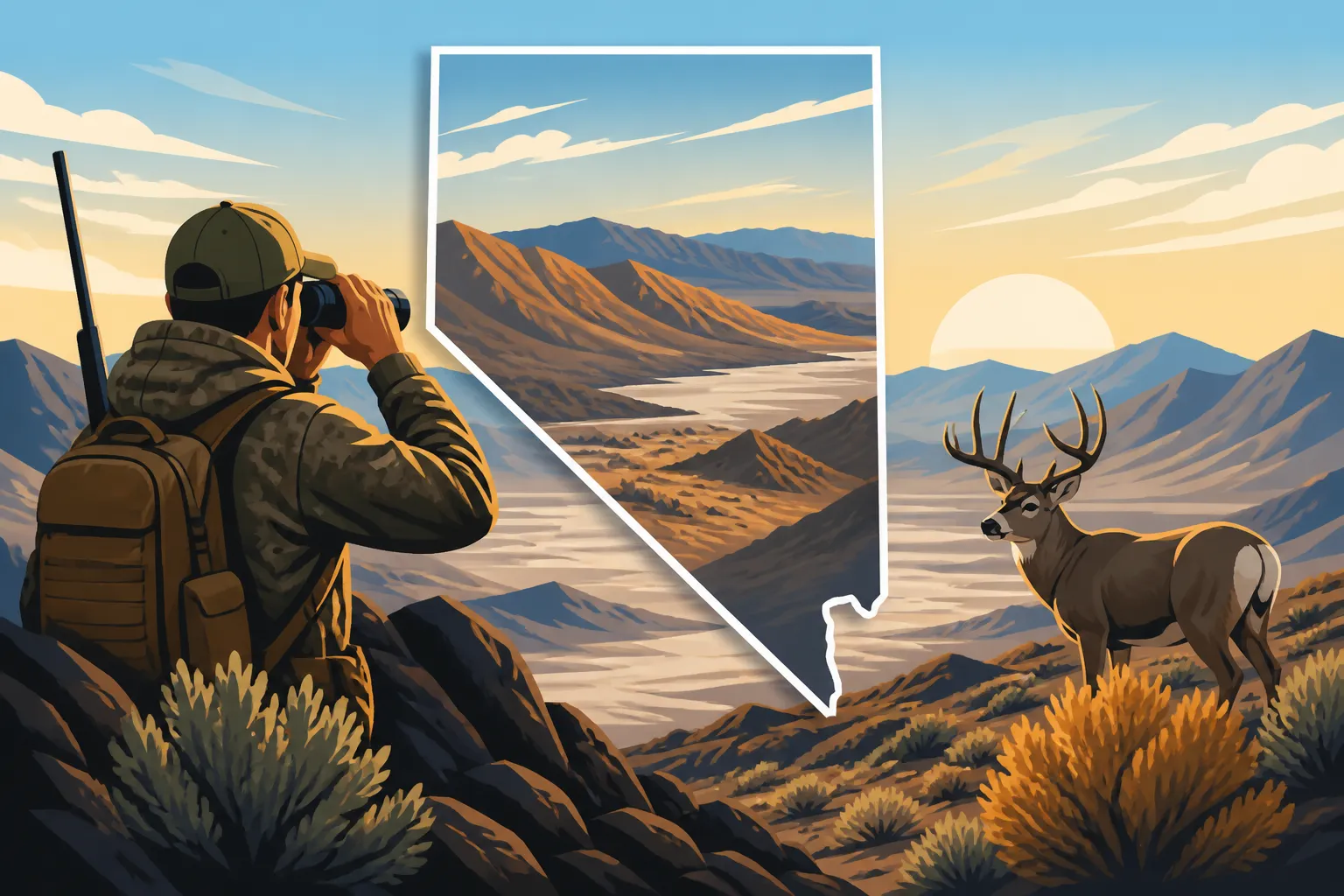
Nevada isn't just "the desert"; it's a magnificent, complex geological tapestry known as the Basin and Range province. Imagine a series of parallel mountain ranges, like wrinkles in a giant rug, separated by wide, flat valleys or "basins." This isn't just a pretty description; it's the fundamental structure that dictates everything from water flow to vegetation, and ultimately, where the game animals live and how you'll hunt them. Forget dense forests or rolling hills; this is a land of extremes, defined by abrupt changes in elevation and vast, open spaces.
The Anatomy of a Nevada Range
These mountain ranges, often running north-south, are the lifeblood of Nevada's big game. They can rise dramatically from the valley floor, sometimes reaching elevations of 10,000 to 12,000 feet, creating distinct ecological zones. While they might look barren from a distance, these ranges often hold pockets of aspen, pine, or juniper, especially at higher elevations or on north-facing slopes that retain more moisture. This timber provides crucial cover and forage for elk, mule deer, and even bighorn sheep.
The ruggedness of these ranges cannot be overstated. Expect steep ascents, rocky outcroppings, and often limited road access as you climb. This means physically demanding hunts, but also opportunities to escape pressure and find animals that prefer solitude. The sheer vertical relief and rocky terrain create natural barriers, funnels, and bedding areas that, once understood, can be invaluable to a hunter. These ranges are also where you'll find most of the perennial water sources, springs that trickle down from melting snowpack or ancient aquifers, drawing wildlife to their vicinity.
Basins: The Valleys Between
In stark contrast to the rugged ranges are the expansive basins – the flat, sagebrush-covered valleys that lie between the mountains. These can be miles wide, stretching to the horizon, and often appear featureless to the untrained eye. While they might seem empty, these basins are critical habitats, especially for species like pronghorn, but also serve as important wintering grounds and travel corridors for deer and elk moving between ranges.
The basins are typically dominated by sagebrush, greasewood, and various grasses, offering vast open country for glassing. However, this openness also means a lack of cover for a hunter, making stalks incredibly challenging. Temperatures in these basins can be extreme, especially during early seasons, with scorching heat in the day and surprising drops at night. Understanding the subtle nuances of these basins, like low ridges, dry washes, or areas with slightly denser vegetation, is key to success.
How the Landscape Dictates Hunting Strategy
The Basin and Range topography isn't just scenery; it's a giant chess board on which every hunting move is played. Your strategy for finding and approaching game will be almost entirely dictated by whether you're in the steep, broken terrain of a range or the wide-open expanse of a basin. Failing to adapt your approach to these distinct environments is a recipe for frustration.
Hunting the Ranges: Vertical Challenges and Hidden Gems
Hunting the mountain ranges means embracing the vertical. Game animals, especially mule deer and elk, often gravitate to higher elevations for cooler temperatures, better forage, and security from predators and human disturbance. This requires physical conditioning and a willingness to put in the miles and elevation gain. Packing an Animal Out of Roadless Country becomes a very real consideration when you're far up a mountain.
Your strategy here will revolve around glassing vast areas from strategic high points, often just below the peaks. Look for benches, north-facing slopes, and pockets of timber where animals might bed during the day. Once you spot an animal, the terrain will either offer myriad opportunities for a covered stalk using draws and ridges, or it will present an impossible task of closing the distance across open rock slides. Understanding wind direction and thermals is paramount, as they often shift dramatically with elevation changes throughout the day.
Hunting the Basins: The Long Game of Spot and Stalk
The basins demand a completely different approach. Here, "spot and stalk" takes on a whole new meaning. With little to no tall cover, your primary tool becomes your optics, scanning for hours across immense distances. Glassing Grids Across a Nevada Basin is not just a technique; it's a necessity. Pronghorn are the quintessential basin animal, but mule deer will also utilize these flats, especially near agricultural fields or isolated water sources.
Once an animal is spotted, the real challenge begins. Stalks in the basins are often long, exposed, and require incredible patience and discipline. Every slight rise, every dry wash, every patch of taller sage becomes a potential piece of cover. You must be prepared to crawl, duck-walk, and move agonizingly slowly, all while constantly re-evaluating the wind and the animal's position. Using mapping tools like onX Hunt can be invaluable here for identifying subtle terrain features that might offer concealment, helping you plan your approach before you even take a step.
Navigating the Vastness: Access and Logistics
One of the most profound impacts of the Basin and Range structure is on access and logistics. Nevada is a state of enormous distances, and its public lands are vast, often sparsely roaded, and can be brutally unforgiving. Understanding how this terrain dictates your travel and planning is crucial for a safe and successful hunt.
Remote Road Conditions and Vehicle Prep
The sheer scale of Nevada means that paved roads quickly give way to gravel, then to rough two-track, and eventually to no roads at all. The roads into and across these basins and up the lower slopes of the ranges are often unmaintained, rocky, washboarded, and prone to blowing dust or mud depending on the weather. A good 4×4 vehicle with plenty of ground clearance and robust tires isn't just a luxury; it's often a necessity. You might spend hours covering what looks like a short distance on a map, only to find the road impassable or washed out.
It's not just about getting there, but about getting back. Carrying extra fuel, multiple spare tires, a high-lift jack, and recovery gear like a shovel and traction boards should be standard practice. Cellular service is spotty at best and completely non-existent in most of the remote basins and high ranges. A satellite communication device is a smart investment for emergency situations. Understanding Remote Road Conditions Across Nevada and planning for every contingency will save you a lot of grief.
Understanding Unit Boundaries and Public Land Access
With so much public land, it's easy to assume you can just go anywhere. However, the checkerboard nature of land ownership, especially along the fringes where ranges meet basins, can be tricky. Public lands (BLM, National Forest) dominate, but private ranch land, especially in the fertile valleys and near water sources, is interspersed throughout. Navigating these boundaries effectively is paramount.
Using a reliable mapping application like onX Hunt is not just helpful, it's essential for identifying public and private land boundaries in real-time. This helps you avoid accidental trespass and ensures you're hunting legally. Additionally, understanding how Nevada's hunt units are drawn—often encompassing entire ranges and their adjacent basins—is key to Reading a Nevada Hunt Unit Before You Apply. Knowing the public land percentage within your chosen unit can give you a better idea of accessible hunting grounds.
Water: The Ultimate Concentrator of Game
In an arid state like Nevada, water isn't just important; it's the single most critical factor influencing wildlife distribution and, by extension, your hunting success. The Basin and Range topography dictates where water collects, flows, and ultimately, where game animals will congregate. Overlooking water sources is perhaps the biggest mistake a hunter can make in this environment.
Springs, Seeps, and Guzzlers in the Ranges
Within the mountain ranges, water often manifests as natural springs and seeps, especially in canyons, draws, and on north-facing slopes where snowmelt persists longer. These small, often hidden sources are magnets for mule deer and elk. Finding them can be challenging, but historical maps, satellite imagery, and onX Hunt's water source layers can be incredibly helpful. Learning to read the terrain for subtle signs of moisture, like greener vegetation or distinct drainage patterns, can lead you to these vital locations.
Furthermore, Nevada has an extensive network of artificial water developments known as "guzzlers." These are carefully placed structures designed to collect rainwater and provide drinking sources for wildlife in otherwise dry areas. Often tucked into the foothills or within smaller, isolated ranges, How Guzzlers Concentrate Desert Game cannot be overstated. They can be legitimate ambush points, especially during early archery seasons when animals are desperate for water.
Ephemeral Water and Basin Drainages
The basins, while drier, are not entirely devoid of water. During wetter periods, ephemeral pools can form in low-lying areas or clay pans, providing temporary relief. More consistently, dry washes and drainages, particularly those leading out of the mountains, act as natural funnels and travel corridors for animals moving between water and forage. While these might not hold standing water, the cooler, denser vegetation they support can attract game.
Hunting these basin water sources or associated drainages requires extreme stealth and patience. Often, animals will only visit in the low light hours of dawn and dusk. Setting up a strategic glassing point overlooking a known water source or a major drainage can pay dividends. However, remember that game animals in Nevada are notoriously wary around water, and their senses are on high alert. Hunting Water in Nevada's Driest Country demands a delicate touch.
Vegetation Zones and Their Impact on Wildlife
The dramatic elevation changes inherent in the Basin and Range topography create distinct vegetation zones, each supporting different forage and cover, and thus attracting different species or even different age classes of the same species. Understanding these zones is like having a roadmap to where your target animal is likely to be.
Lower Elevations: Sagebrush and Browse
The lower slopes of the ranges and the vast expanses of the basins are dominated by the sagebrush-steppe ecosystem. Here, you'll find various species of sagebrush, bitterbrush, rabbitbrush, and a mix of grasses. This environment is prime habitat for pronghorn, which thrive on the open visibility and the diverse browse. Mule deer also utilize these areas, especially during cooler months or when migrating to winter ranges.
Hunting in these lower elevations often means covering immense ground, relying on your optics to pick out a deer or antelope. The vegetation, while abundant, rarely provides dense cover for a hunter, forcing creative stalking strategies. Look for areas where the sagebrush grows taller or thicker, offering slightly more concealment for bedded animals or a better approach path for you. These lower zones are also where you'll find many of the artificial guzzlers, critical water sources that draw game from miles around.
Mid to High Elevations: Juniper, Pinyon, and Aspens
As you gain elevation into the mountain ranges, the vegetation transitions. Pinyon pine and juniper woodlands begin to appear, providing denser cover and a different food source. This transition zone is a favorite of mule deer, offering both security cover and nutritious browse. Higher up, particularly on north-facing slopes or in areas with persistent moisture, you'll find pockets of aspen, mountain mahogany, and even some true conifer forests, such as ponderosa pine or white fir.
These higher, timbered zones are where elk will often concentrate, particularly during the rut. They offer cooler temperatures, deep cover for bedding, and a rich variety of forage. Hunting these areas requires different tactics, often involving still-hunting through timber, using calls, or focusing on tracking fresh sign. The broken terrain and dense cover can make glassing more challenging but offers more opportunities for a concealed approach once an animal is located. Reading Fresh Elk Sign in Thin Timber becomes a crucial skill.
Weather and Elevation: Unpredictable Allies and Foes
The Basin and Range's extreme elevation changes create highly localized and often unpredictable weather patterns, which can drastically impact animal behavior and hunter comfort. From scorching early-season heat to late-season blizzards, understanding these dynamics is paramount for planning and safety.
Thermal Winds and Localized Storms
The sun beating down on the vast, dark sagebrush flats of a basin creates powerful updrafts, pulling air up the mountain slopes during the day. As the sun sets and the basin cools, these thermals reverse, sending cooler air down into the valleys. These predictable thermal winds are a constant factor when planning stalks, especially in the morning and evening. However, the towering ranges themselves can also create their own microclimates, leading to sudden, localized thunderstorms or snow squalls, even when the forecast for the broader area seems clear.
These sudden weather shifts can be both a challenge and an opportunity. A heavy rain or snow event can push animals to lower, more accessible elevations, or conversely, make already challenging roads impassable. Always pack for extreme changes. Layering for Basin and Range Temperature Swings is not just advice; it's a survival strategy. What starts as a crisp morning could quickly turn into a sweltering afternoon or a freezing, wet evening.
Snowpack and Migration Patterns
For late-season hunts, snowpack in the higher ranges becomes the ultimate driver of animal movement. Heavy snows at higher elevations will push mule deer and elk down to their winter ranges in the lower foothills and basins. These migrations can concentrate animals, creating incredible hunting opportunities, but also make them more vulnerable if not managed properly. Understanding these migratory corridors and timing your hunt around anticipated snow events can be highly advantageous.
However, mild winters or inconsistent snow can mean animals stay higher longer, making them harder to find and access. This variability means that relying solely on historical migration patterns isn't enough; staying informed about current weather and snow conditions is vital. Resources like GoHunt can provide valuable insights into snowpack and how it's affecting specific units, helping you make informed decisions about where and when to hunt.
Mastering Optics for Nevada's Long Sightlines
Given the vast, open nature of the Basin and Range, your optics are arguably your most important piece of hunting equipment. You simply cannot effectively hunt Nevada without a keen understanding of how to use binoculars, spotting scopes, and even rangefinders to their fullest potential.
Binoculars for Broad Scanning
High-quality binoculars are your primary tool for surveying the expansive landscapes of Nevada. While a typical 10x binocular is a good starting point, many experienced Nevada hunters opt for 12x or even 15x power to really reach out and pick apart distant slopes. The goal isn't just to spot an animal, but to identify what that animal is—a deer or an elk, and more importantly, if it's a legal buck or bull. This requires immense patience and disciplined glassing.
When glassing, try to break down the landscape into grids, methodically scanning each section before moving on. Don't just look for an entire animal; often, the first thing you'll see is an ear flick, a patch of hide, or the tell-tale glint of an antler. A sturdy tripod for your binoculars is almost as important as the binoculars themselves, eliminating shake and allowing for hours of comfortable, focused observation. This is where Optics Power for Nevada's Long Sightlines truly pays off.
Spotting Scopes for Detailed Evaluation
Once you've spotted something with your binoculars, a high-power spotting scope becomes indispensable for evaluation. In Nevada, you'll often see animals miles away, and trying to judge antler size, tine length, or even the species itself without a spotting scope is next to impossible. A 60-80mm objective lens with 20-60x magnification is common, offering the brightness and detail needed for long-distance observation in harsh desert light.
The spotting scope allows you to sit back, watch the animal's behavior, and make a confident decision about whether it's worth a several-hour stalk. It's also crucial for identifying potential shooting lanes or obstacles during your approach, helping you plan your stalk more effectively. Remember to position yourself so that the sun is behind you, illuminating your target, and always use a rock-solid tripod to maximize clarity and minimize shake. Judging a Mule Deer Buck at Distance accurately is a skill honed through countless hours behind a spotting scope.
Planning for the Unexpected: Safety in the Sagebrush Sea
The rugged and remote nature of Nevada's Basin and Range demands a high level of self-sufficiency and preparation. The unexpected isn't just a possibility; it's a probability. From vehicle breakdowns to sudden weather shifts, being prepared for emergencies is as much a part of the hunt as scouting or shooting.
Emergency Gear and Communication
Given the vast distances and lack of services, a well-stocked emergency kit in your vehicle is non-negotiable. This should include extra food and water (far more than you think you'll need), blankets or a sleeping bag, a first-aid kit, a shovel, tire repair supplies, and a robust set of tools. Beyond the vehicle, your personal pack should always contain essentials like a headlamp, fire starter, knife, shelter, and a water filter or purification tablets.
Communication is key when cell service is unreliable. A satellite messenger or satellite phone allows you to send and receive messages or call for help, even from the most remote corners of the state. Always share your hunt plan with someone responsible back home, including your specific unit, planned routes, and expected return time. This is particularly important when considering a multi-day backcountry trip or a solo hunt.
Physical Fitness and Environmental Awareness
Hunting in the Basin and Range is physically demanding. You'll often be hiking steep, rocky terrain, covering miles of uneven ground, and doing it all at elevation. Good cardiovascular fitness and strong legs are crucial. Don't underestimate the physical toll of Preparing Physically for Long Glassing Days or the effort required to pack an animal out. Start training well in advance of your hunt.
Beyond fitness, environmental awareness is vital. Learn to identify venomous snakes, like rattlesnakes, especially during warmer months. Understand the signs of heat exhaustion and dehydration, and constantly monitor your water intake. Be aware of private land boundaries, even if you're far from any discernible fence line. Respect for the land, its wildlife, and other users ensures a safe and ethical hunting experience for everyone.
Disclaimer
This article is for general informational purposes only and does not constitute professional advice. Laws, prices and regulations vary by location and change over time. Consult a qualified professional for guidance on your specific situation.