Private Ranch Ground Along the Valleys
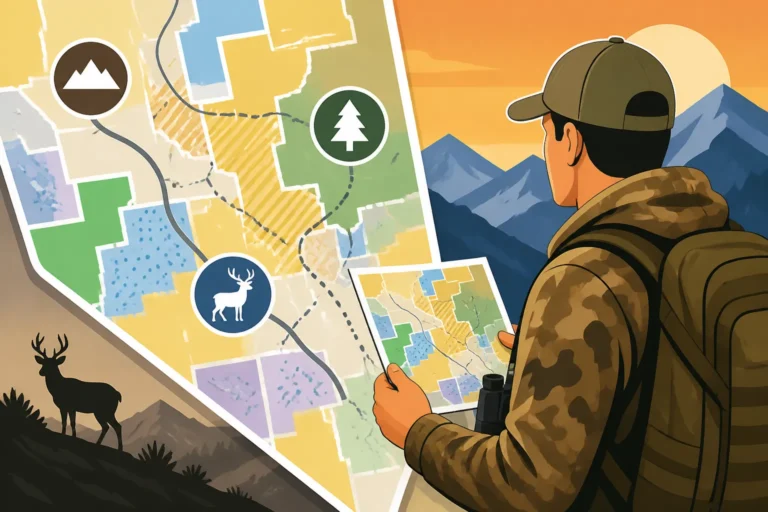
It's a familiar sight for anyone who's spent time planning a Nevada hunt: poring over maps, picking out what looks like miles of open, untouched public land, only to realize that the most promising-looking stretches—the low-lying valleys, the easy water access, the prime winter range—are often marked in solid white. That white, of course, signifies private ranch ground, creating a complex puzzle for hunters trying to navigate the state's vast but often checkerboarded landscapes. This guide will walk you through understanding these private holdings, how they impact your hunting, and how you can ethically and legally navigate these areas to maximize your chances in the Silver State.
Understanding the Landscape of Nevada's Valleys
Nevada is a land of extremes, famous for its "basin and range" topography: vast, flat valleys punctuated by tall, rugged mountain ranges. While the mountains often boast expansive public lands, the valleys—especially those with water or productive agricultural ground—are frequently held in private ownership. This creates unique challenges and opportunities for hunters.
The Checkerboard Challenge and Fragmented Access
The biggest frustration many hunters face isn't a lack of public land, but the way it's fragmented. Imagine looking at a map and seeing a prime piece of BLM ground, only to realize it's completely surrounded by private ranches. You can see the deer moving off the mountains into the alfalfa fields, or the elk seeking refuge in thickets along a private creek, but actually getting there feels impossible. This "checkerboard" pattern is incredibly common, particularly in the fertile valleys where historical homesteading and ranching operations established deep roots. It means that while you might have public land access, the effective hunting access is severely limited by private parcels blocking routes, or even worse, creating completely landlocked public sections that are nearly impossible to reach without landowner permission. It's a reality that demands careful e-scouting and a pragmatic approach to planning your hunt.
Historical Context of Private Ownership
To truly understand why Nevada's valleys are so often private, you have to look back at the state's history. When settlers moved west, they naturally sought out the most arable land, which was almost universally found along rivers, creeks, and valley floors where water was accessible and the soil was richer. These locations were ideal for ranching, farming, and establishing towns. The surrounding mountains, often too steep, dry, or rocky for agriculture, remained largely federal land. Over generations, these private holdings were established and passed down, often growing in size as ranches expanded. This historical pattern means that critical wildlife corridors, wintering grounds, and essential water sources frequently fall within private boundaries today, creating the access issues we grapple with.
Impact on Game Movement and Hunting Strategies
This mosaic of public and private land has a profound impact on how game animals behave and where they can be found. Deer, elk, and antelope are smart; they learn quickly where they can find sanctuary. During hunting season, animals often retreat to private lands where pressure is minimal, only venturing onto public ground at night or during brief, unpredictable periods. For instance, Hunting the Post-Rut Migration for Big Bucks might see those bucks moving across private alfalfa fields before they reach accessible public winter range.
This means hunters on public land need to adapt. Instead of pushing through vast tracts, you might find yourself focusing on the fringes of private land, looking for pinch points, transition zones, or small public parcels that act as funnels. Water sources, even small springs or man-made guzzlers, become even more critical on public ground because private land often controls the larger, more reliable water features. Understanding these dynamics is key to developing effective strategies, especially if you're hunting species like mule deer or elk that frequently utilize both public and private habitats.
Navigating Private Land and Seeking Access
Dealing with private land means more than just avoiding "No Trespassing" signs; it involves careful planning, clear communication, and a deep respect for property rights.
Identifying Private Boundaries with Mapping Tools
Gone are the days of guessing. Modern technology has revolutionized how hunters identify land ownership. Tools like onX Hunt have become indispensable for mapping out Nevada's complex public and private land boundaries. With a few taps on your phone, you can see exactly where federal, state, and private lands begin and end, often down to the individual parcel. This clarity is crucial not only for staying legal but also for strategizing your approach. You can identify those small public fingers that extend into private ranch land, or pinpoint a remote corner of BLM ground that might be accessible via a less-traveled road. Reading a Land Ownership Layer Correctly is a skill every Nevada hunter needs to master before heading afield. Using these apps means you're not just hoping you're on public land; you know where you stand, literally. This precision helps prevent accidental trespassing and allows for much smarter hunt planning.
The Art of Asking for Permission
For many hunters, the idea of knocking on a rancher's door feels intimidating. But in Nevada, where so much prime habitat sits on private ground, it's a skill worth developing. It’s important to remember that asking for permission is about building a relationship, not making a demand. Start well in advance of the season, if possible. Dress respectfully, leave your hunting gear in the truck, and be polite. Introduce yourself, explain why you're there, and clearly state what you're asking for (e.g., foot access for deer, or retrieve a downed animal).
Be prepared for "no," and accept it graciously. There are countless reasons a landowner might decline, from active cattle operations, previous bad experiences with hunters, or simply wanting to keep their property private. If they say no, thank them for their time and move on. If they say yes, be clear about the terms: where you can go, what gates you can open (and must close), and any specific rules they have. Leave them your contact information and offer to call when you're leaving or if you see anything concerning. A positive interaction, even if it doesn't result in immediate access, can sometimes open doors in future seasons. Getting Landowner Permission in Nevada is often about persistence and respect.
Respecting Posted Property and Avoiding Trespass
This should go without saying, but it’s critical: respect "No Trespassing" signs and private property boundaries without question. Trespassing in Nevada can lead to serious fines, loss of hunting privileges, and even confiscation of game and equipment. Beyond the legal consequences, it damages the reputation of all hunters, making it harder for others to gain access in the future.
Modern mapping tools eliminate any legitimate excuse for accidental trespassing. If you're using an app like onX Hunt, you have a clear picture of property lines in real-time. If you find yourself approaching a boundary, turn around. Never assume that unposted land is public; always verify. Trespass Law on Posted Property in Nevada is clear, and ignorance is not a defense. When in doubt, err on the side of caution. Your integrity and the future of hunting access depend on it. This also means being mindful of your projectiles; know your backstop and ensure any shot you take, even if you are on public land, won't carry onto private property.
The Realities of Private Land Access and Alternatives
Gaining access to private land can be a game-changer for a Nevada hunt, but it's not always easy or free. Understanding the different avenues and realities can help manage expectations.
Why Some Landowners Grant Access and Others Don't
The decision to grant hunting access to private land is deeply personal for landowners, and it's influenced by a myriad of factors. Many ranchers run active cattle operations, and they might worry about gates being left open, spooked livestock, or even liability concerns if a hunter were to get injured on their property. Some have had negative experiences with disrespectful hunters in the past, leading them to close their land entirely. They might already have family, friends, or a limited number of trusted individuals who hunt their property.
On the other hand, some landowners are genuinely generous and understand the value of hunting for wildlife management. They might be open to controlled access, especially if it helps manage wildlife populations that are impacting their crops or forage. Sometimes, they're simply looking for responsible individuals who respect their land and their rules. Building trust takes time, and often, initial "no's" are simply a filter to ensure they're only dealing with serious, respectful individuals. Don't take a rejection personally; it's rarely about you, but rather their past experiences or current operational needs.
Trespass Fee Arrangements and Leasing Opportunities
While knocking on doors for free access is one route, another increasingly common option is paying for access. This can take several forms. A "trespass fee" is a payment to the landowner simply for the right to step foot on their property to hunt. These fees vary wildly depending on the landowner, the quality of the hunting, and the species. It might be a daily fee, a per-animal fee, or a flat rate for a season. This is particularly common for antelope or mule deer on prime private ground.
More formally, hunters or groups might "lease" hunting rights to a property for a season or multiple years. Leasing often grants exclusive access and might include certain amenities, but it comes with a significantly higher price tag. This model is more common for larger, well-funded hunting groups or individuals seeking guaranteed access to specific, high-quality areas. Before entering into any paid agreement, make sure all terms are in writing, clearly outlining access areas, season dates, species allowed, and any other rules.
Hunting Landlocked Public Parcels
One of the most frustrating scenarios in Nevada is discovering a prime piece of public land that's completely surrounded by private property. These "landlocked" parcels are legally public, but reaching them without crossing private land is often impossible, creating an access dilemma. While corner crossing can be legally ambiguous and controversial, simply trespassing is not an option.
In such cases, your best bet is to approach the surrounding landowners for permission to cross their property to access the public land. Frame your request around accessing public land, not necessarily hunting their private ground. Emphasize your commitment to staying on the designated access route and respecting their property. Sometimes, landowners will grant a right-of-way, especially if they understand the distinction. If that fails, you might have to write off that particular parcel, or find out if there are specific public easements or traditional access points that exist, which can sometimes be identified through county records or advanced mapping tools. It's a tough situation, but legal and ethical access is paramount.
Planning Your Hunt Around Private Holdings
Even if you can't hunt on private land, understanding where it is and how it influences game behavior is critical for a successful hunt on adjacent public ground.
Scouting Strategies for Units with Mixed Ownership
When a hunt unit has a significant amount of private land, your scouting strategy needs to be particularly sharp. Before you even set foot in the field, use tools like GoHunt or onX Hunt to thoroughly e-scout. Identify the private sections, note where they butt up against public ground, and look for natural funnels, draws, or ridges on the public side that might direct animal movement. Pay close attention to water sources—ponds, creeks, or even subtle seeps—especially if the more obvious water on the valley floor is private. E-Scouting a Nevada Unit Before the Season is not just a convenience; it's a necessity in units with mixed ownership.
Once you're on the ground, focus your efforts on the public fringes near private property. Look for tracks, scat, and other sign indicating where animals are moving on and off the private land. Early morning and late evening are often the best times to catch animals transitioning. Consider sitting water sources or glassing from a high point on public land that offers views into the private fields, not with the intent to trespass, but to observe patterns and understand where animals are spending their time.
Using Natural Barriers to Your Advantage
Nevada's rugged terrain often provides natural barriers that can dictate game movement, regardless of land ownership. Steep canyons, dense stands of pinyon-juniper, or deep washes can act as boundaries or corridors for wildlife. When private land extends into these features, animals might still use the public portions of these natural highways.
For example, a deer herd might feed in private alfalfa fields at night, but they will likely retreat into a steep, timbered canyon on public land during the day. By understanding these natural escape routes and bedding areas, you can position yourself strategically. Look for saddles, benches, or rimrock formations on public land that offer cover and elevated vantage points. Animals might feel secure moving through these areas, even if they're close to private property, because the terrain itself offers protection. Using Draws and Rims to Close Distance effectively leverages these natural features.
Understanding Animal Behavior Influenced by Private Land
Animals, especially mature bucks and bulls, quickly learn where they are safe from hunting pressure. Private ranches often become de facto sanctuaries where they can feed and bed undisturbed. This means that if you're hunting adjacent public land, you're often hunting animals that are already on high alert or are only using the public ground as a transitory space.
Your approach needs to reflect this. You might need to hunt harder, push deeper into less accessible public areas, or focus on periods of low light. Recognize that animals leaving private land will likely be moving quickly and cautiously. Patience becomes paramount. Instead of trying to chase them, consider setting up ambushes along their likely travel routes from private feeding areas to public bedding grounds. Knowing that a big buck might spend his entire day bedded on a private hillside, only to emerge at dusk, shifts your strategy from active stalking to patient observation and interception. It truly boils down to Deciding on a Buck Before He Moves and understanding the full scope of their movement patterns, even across land you can't legally access.
Comparing Public vs. Private Land Hunting Considerations
When planning your Nevada hunt, it's helpful to weigh the pros and cons of focusing on purely public land versus attempting to gain private land access.
| Feature | Public Land Hunting | Private Land Hunting (with access) |
|---|---|---|
| Access | Generally unrestricted (barring closures), but can be challenging to reach remote areas or landlocked parcels. | Requires landowner permission; can be exclusive and easier to access. |
| Hunting Pressure | Often high, especially on easily accessible areas and opening weekends. | Typically lower, leading to less wary animals. |
| Game Quality/Numbers | Varies widely; animals can be pressured off, but big animals are found in remote, unpressured public areas. | Often higher due to less pressure, better feed, and sanctuary. |
| Cost | Primarily license/tag fees and travel expenses. | License/tag fees PLUS potential trespass fees or lease costs. |
| Flexibility | High; you can move freely within public boundaries. | Limited by landowner rules (specific areas, times, methods). |
| Ethics/Legality | Focus on rules of fair chase, conservation, staying within boundaries. | Adherence to landowner rules is paramount, beyond state regulations. |
| Planning Effort | Extensive e-scouting for access, water, terrain. | Effort in securing permission; less on finding "hidden" spots. |
This table isn't about saying one is better than the other, but highlighting the fundamental differences that will shape your hunt. Public land offers incredible freedom and the challenge of true backcountry hunting, while private land, if accessible, often provides a more controlled and potentially higher-success environment. Both require dedication and ethical conduct.
Disclaimer
This article is for general informational purposes only and does not constitute professional advice. Laws, prices and regulations vary by location and change over time. Consult a qualified professional for guidance on your specific situation.