How Outfitters Handle Breakdowns Far From Town
Breaking down in the middle of nowhere, miles from pavement, with no cell service and a trophy animal on the ground, is a hunter's worst nightmare. In Nevada's vast, wild landscapes, where towns can be hours apart and roads often turn into faint tracks, vehicle trouble isn't just an inconvenience—it can be a serious safety issue. This guide delves into how experienced Nevada outfitters meticulously prepare for and expertly manage vehicle breakdowns in remote country, ensuring your hunt remains focused on the adventure, not the roadside drama.
The Harsh Reality of Remote Nevada Roads
Nevada's public lands are a hunter's paradise, offering incredible opportunities across millions of acres of BLM ground and national forests. But these lands come with a price: the access roads are often brutal. We're not talking about graded gravel here; think sharp volcanic rock, deep sand, washouts, and long stretches where you might not see another vehicle for days. This rugged terrain is incredibly tough on vehicles, making breakdowns a very real and constant threat. It's a key reason why many hunters choose to go with an experienced outfitter who understands these challenges inside and out.
What Nevada Backroads Demand from a Vehicle
Anyone who's spent time exploring Nevada's hunting units knows that what passes for a "road" out here can be anything from a two-track through sagebrush to a shelf road clinging to the side of a mountain. These routes are unforgiving, quickly testing the limits of tires, suspension, and driveline components. Dust, sharp rocks, and extreme temperature swings—especially during those early season archery hunts or late season elk dashes—put immense stress on every part of a truck or UTV. What Nevada Backroads Do to a Tire is a common concern, as punctures are perhaps the most frequent issue. But beyond tires, you have to consider cracked rims, broken springs, fuel line issues from jostling, and electrical shorts from constant vibration.
Imagine you're deep in the Humboldt-Toiyabe National Forest, miles from the nearest paved road, and suddenly you hear that tell-tale clunk or feel the steering go soft. Without proper preparation, that's where your hunt ends, and your survival situation begins. This is precisely why a reputable outfitter doesn't just "hope" for the best; they plan for the worst. They know that every mile traveled off the main drag increases the odds of something going wrong, and they build their entire operation around mitigating that risk.
Why Services are So Far Apart
One of the most defining characteristics of hunting in Nevada is the sheer distance between everything. You can drive for hours across vast basins and through mountain ranges without passing a single town, let alone a gas station or a mechanic's shop. Cell service is spotty at best and completely non-existent in many of the prime hunting units. This isolation is part of Nevada's charm for many, but it amplifies the stakes when something goes wrong with a vehicle.
A flat tire that might take 20 minutes to fix near a town could turn into a multi-hour ordeal, or worse, an overnight stay in the middle of nowhere, if you're unprepared. How Far Apart Nevada Fuel Stops Are is a critical piece of information for any hunter, but for an outfitter responsible for clients, it's a fundamental operational consideration. They can't just call a tow truck to an unmarked two-track miles from the nearest highway. The absence of readily available services means that any breakdown must be handled largely independently, relying on thorough preparation and a deep understanding of self-reliance.
Proactive Measures: An Outfitter's First Line of Defense
The best way to handle a breakdown far from town is to prevent it in the first place. Nevada outfitters understand this better than anyone. Their approach to vehicle maintenance and preparedness goes far beyond the average hunter's checklist, almost like a military operation, because they know the consequences of failure are so high.
Meticulous Vehicle Preparation and Maintenance
Before a single client steps foot in their camp or their truck heads out on a scouting mission, an outfitter's vehicles undergo rigorous inspections and maintenance. This isn't just an oil change and tire rotation; it's a full-scale assault on potential weaknesses. Every hose, belt, battery, and fluid is checked, replaced, or reinforced. Tires are usually heavy-duty, off-road specific, and often brand new for the season. Brake systems, suspension components, and steering linkages are scrutinized for any signs of wear.
Many outfitters will have multiple identical vehicles, not just for capacity, but for parts commonality. They know that a specialty part for one obscure model could be impossible to find in a remote Nevada town. They keep detailed service logs, often going above and beyond manufacturer recommendations, because the operating conditions are so much harsher. Think about a 4×4 truck that might tow a camp trailer for hundreds of miles, then spend weeks crawling over rocks and through washes, carrying heavy loads of gear and harvested game. This isn't just commuting; it's extreme duty, and the vehicles are prepped accordingly. This level of Vehicle Prep for Remote Nevada Roads is what sets a professional operation apart.
Redundancy and Essential Gear on Board
A good outfitter doesn't just carry a spare tire; they carry at least two, sometimes three, especially if they're running multiple vehicles or covering vast distances. These spares aren't just tucked away; they're easily accessible, often mounted externally. Beyond tires, their vehicles are essentially mobile workshops.
Essential Gear Carried by Outfitters:
| Category | Items | Why It's Crucial in Nevada |
|---|---|---|
| Tire Repair | Multiple spare tires (full size), robust jack, lug wrench, tire plug kit, air compressor, patch kits, bead sealer, tire irons | Punctures are common; quick, reliable repairs are essential to avoid stranding clients. |
| Vehicle Recovery | Winch, tow straps, shackles, high-lift jack, shovel, traction boards, axe/saw | Getting unstuck from mud, sand, or snow is inevitable. Recovery gear prevents minor mishaps from becoming major expeditions. |
| Mechanical Spares | Belts, hoses, fluids (oil, coolant, brake), fuses, basic tool kit, jumper cables, extra battery, zip ties, duct tape, baling wire | Remote repairs are often necessary. Having common failure items on hand can save hours or days of waiting. |
| Navigation & Comm. | Satellite phone/messenger, GPS devices, paper maps, compass, extra batteries/power banks, two-way radios | Satellite Messenger Use in Remote Country is non-negotiable where cell service is absent. Communication is paramount for safety and coordinating help. |
| Emergency Supplies | First-aid kit (comprehensive), emergency blankets, extra food/water, fire starter, headlamps, warm clothing, emergency shelter | If stranded, survival is the priority. These items bridge the gap until the vehicle is operational or help arrives. |
This detailed list isn't just for show. Every item has a purpose, tested and proven in the field. An outfitter's investment in this gear is directly tied to your safety and the success of your hunt. They might also carry extra fuel in proper containers, understanding that Carrying Extra Fuel on a Nevada Hunt is not just about extending range but about having a buffer in case of a problem.
Reacting to the Unexpected: On-the-Spot Solutions
Even with the most meticulous preparation, things can still go wrong. That's when an experienced outfitter's problem-solving skills and field expertise truly shine. They're not just guides; they're often highly capable mechanics, improvisers, and wilderness first responders, all rolled into one.
Field Repairs and Improvisation
The first step in any breakdown scenario is assessing the problem. Is it a simple flat that can be plugged and aired up? Is it a broken belt that can be replaced from the spares kit? Or is it something more serious, like a blown differential or a fuel line issue that requires more specialized tools or parts? Outfitters carry a wide range of basic and sometimes specialized tools to address common issues on the spot. They know how to change a tire quickly, often under less-than-ideal conditions, like on a steep incline or in soft sand.
They're also masters of improvisation. A broken hose might be temporarily patched with duct tape and baling wire to get to a more accessible location. A minor electrical issue could be traced and bypassed. They understand the limits of their repairs and when it's safe to proceed versus when it's absolutely necessary to stop and call for more robust help. Their goal is always to get the vehicle moving, even if it's just a few miles, to improve their position for communication or further repairs.
Recovery from Being Stuck
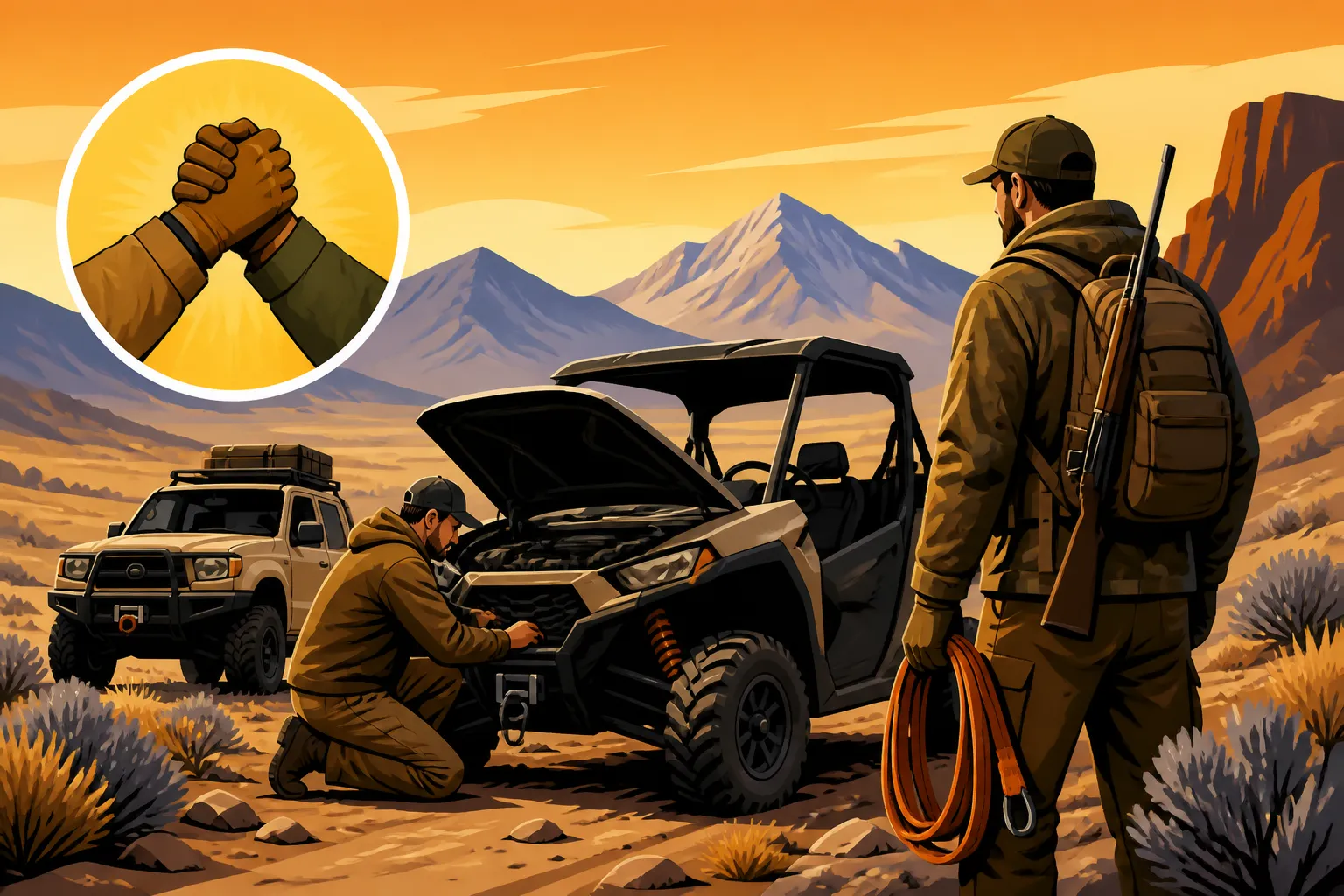
Getting stuck is another common scenario in Nevada's varied terrain, whether it's deep mud after an unexpected rain, soft sand in a wash, or snow on a late-season mountain pass. Outfitters are experts in vehicle recovery. They understand how to safely use a winch, properly anchor it, and employ tow straps and traction boards without damaging the vehicle or injuring anyone.
They also know how to read the terrain to avoid getting stuck in the first place, or at least how to choose a path that offers the best recovery options. If one vehicle gets stuck, another outfitter vehicle might be used to pull it out. If a client happens to find an outfitter's camp through a platform like BookYourHunt, they're often implicitly trusting that the outfitter has these recovery skills and resources readily available. The ability to quickly and safely recover a vehicle from a challenging situation prevents minor inconveniences from escalating into dangerous, multi-day affairs.
The Network and Contingency Plans
While self-reliance is key, no outfitter works in a vacuum. A robust network and well-practiced contingency plans are the ultimate backup for major breakdowns or emergencies that can't be resolved in the field.
Communication Protocols and Emergency Contact
In areas without cell service, communication is critical. Outfitters rely heavily on satellite phones or satellite messengers for their primary communication. These devices allow them to send and receive messages or make calls even in the most remote locations. Each outfitter usually has a strict communication protocol: regular check-ins with base camp, predetermined emergency contacts, and clear procedures for when a check-in is missed. This ensures that if they do get stranded and can't self-recover, someone knows their approximate location and that they need help. Satellite Messenger Use in Remote Country isn't just a convenience; it's a lifeline.
Beyond satellite communication, many outfitters also utilize two-way radios for short-range communication between vehicles or hunting parties. This is invaluable when scouting or hunting in groups, allowing immediate contact for minor issues or coordination, saving precious satellite battery life for true emergencies.
Leveraging External Resources
For breakdowns that are beyond field repair—a broken axle, a blown engine, or something that requires specialized heavy equipment—outfitters have a network of external resources. This might include:
- Local Mechanics and Towing Services: They'll have contacts in the nearest towns, however small, who are willing to come out into the backcountry. These are often small, independent shops with hardy equipment and drivers who know the local terrain.
- Other Outfitters or Ranchers: In some areas, there's a strong sense of community. Outfitters often have relationships with other guides or local ranchers who might be able to lend a hand, provide a part, or offer a tow with heavier equipment if they're closer.
- Family or Staff at Base Camp: The base camp is usually stocked with additional spare parts, tools, and another capable vehicle. If a retrieval is needed, a fresh driver and another truck might be dispatched, sometimes with specific parts, to reach the stranded party.
This network isn't built overnight; it's forged over years of operating in these remote areas. When considering an outfitter, platforms like BookYourHunt or GoHunt can sometimes offer insights or reviews that speak to an outfitter's reliability and preparedness, giving you a better sense of their operational backbone.
Prioritizing Client Safety and Comfort
Above all, an outfitter's primary responsibility is the safety and well-being of their clients. If a vehicle breaks down and cannot be repaired or recovered quickly, the focus immediately shifts to securing the clients. This means ensuring they have adequate shelter, warmth, food, and water. Outfitters always carry emergency supplies beyond what's needed for daily operations, including extra layers, emergency blankets, and a robust first-aid kit.
In a worst-case scenario where clients might need to hike out or wait for an extended period, the outfitter manages the situation, keeping spirits up and ensuring everyone remains safe and hydrated. They understand that a breakdown, while frustrating, shouldn't become a dangerous situation for their clients. Their extensive planning and redundant systems, including having multiple vehicles or even pre-arranged drop camps, are all part of How Outfitters Plan Emergency Evacuations or extended stays in the field, ensuring that even if the truck dies, the hunt isn't completely ruined, and more importantly, no one is put at undue risk.
Disclaimer
This article is for general informational purposes only and does not constitute professional advice. Laws, prices and regulations vary by location and change over time. Consult a qualified professional for guidance on your specific situation.