Nevada Small Game Seasons at a Glance
Navigating the myriad of hunting seasons in Nevada, especially when it comes to small game, can feel like trying to hit a chukar at 50 yards on a dead run – a real challenge. You're trying to figure out when you can chase those elusive desert birds, what the limits are, and if you even need a special tag on top of your general license. This guide is here to untangle all that, giving you a clear, comprehensive look at Nevada's small game seasons so you can plan your hunts with confidence.
Understanding Nevada's Diverse Small Game Opportunities
Nevada isn't just a big game state, though it certainly shines there. For many of us, the real joy and consistent opportunity lie in the pursuit of small game. Whether it's the explosive flush of a covey of quail or the subtle twitch of a jackrabbit's ear, small game hunting offers a dynamic, often more accessible, way to experience the Silver State's vast landscapes.
Why Small Game Hunting is So Popular in Nevada
Small game hunting often serves as an incredible entry point into the hunting world, and for seasoned veterans, it's a way to stay active and sharp throughout the year without the intense competition and draw odds associated with big game tags. Unlike the often years-long wait for a coveted mule deer or elk tag, small game seasons are generally annual, statewide (with some unit-specific nuances), and require only a general hunting license, sometimes with an additional stamp. This means more time in the field, more opportunities to hone your skills, and frankly, more chances to fill your freezer with some fantastic wild protein.
The accessibility is also a huge draw. While chukar hunting can push you to your physical limits, many rabbit or quail hunts can be enjoyed by a wider range of ages and physical abilities. It's about spending time outdoors, understanding animal behavior, and connecting with the land without the immense pressure of a once-in-a-lifetime draw tag hanging over your head. It's often the perfect hunt for a family outing, teaching younger generations the ethics and joys of hunting in a less demanding environment.
Furthermore, the sheer diversity of small game species available in Nevada is impressive. From various upland birds like chukar, quail, and sage grouse to migratory birds such as ducks and geese, and a healthy population of rabbits and jackrabbits, there's almost always something in season. This variety keeps things interesting and allows hunters to adapt their pursuits to different times of the year and different parts of the state, showcasing the incredible ecological tapestry of Nevada.
General Regulations and Licensing Requirements
Before you even think about hitting the field for small game, you need to ensure you're squared away with the Nevada Department of Wildlife (NDOW) regarding your license. Every hunter, regardless of residency or the species they're pursuing, must possess a valid Nevada hunting license. This isn't just a formality; it’s your ticket to legal hunting and contributes directly to wildlife conservation efforts across the state. Without it, you're not just breaking the law, you're missing out on supporting the very resource you enjoy.
Beyond the general hunting license, certain small game pursuits might require additional endorsements or stamps. For instance, if you're planning to chase any upland game birds, you'll need to purchase an Upland Game Bird Stamp. Similarly, federal and state migratory bird stamps are mandatory if you're targeting ducks, geese, or other migratory species. Always double-check the current year's regulations booklet for the most up-to-date information, as these requirements can sometimes change.
It's also crucial to be aware of general hunting rules that apply across the board, such as Legal Shooting Hours and Blaze Orange in Nevada. These regulations are in place for safety, fair chase, and to manage wildlife populations responsibly. Respecting daily bag limits and possession limits is non-negotiable, ensuring sustainable hunting for generations to come. Familiarize yourself with these basics before embarking on any hunt, as ignorance of the law is never an excuse.
Upland Birds: Chukar, Quail, and Sage Grouse
Nevada's upland bird hunting is legendary, offering a mix of accessible hunts and truly punishing endeavors that test even the most seasoned hunters. The diverse habitats, from the steep, rocky slopes of chukar country to the lowland riparian areas favored by quail, mean there's an adventure for every taste.
The Thrill of Chukar Hunting
If you've never chased chukar in Nevada, prepare for a workout that will make you question your life choices—and then immediately want to do it again. Chukar hunting typically kicks off in early September and runs well into January, giving hunters a long window to pursue these incredibly challenging birds. The season often starts with warm, dry conditions, which makes finding water sources critical for both birds and hunters. As the season progresses into late fall and winter, colder temperatures can make birds hold tighter and offer different challenges.
Bag limits are usually quite generous, often around 8 birds daily with a possession limit of 16, but honestly, earning even a fraction of that is a badge of honor. These birds thrive on steep, rocky, cheatgrass-covered slopes, often found high up in the rugged basin and range country. The phrase "Why Chukar Hunting Is So Physically Hard" is not an exaggeration; expect relentless uphill climbs, precarious footing, and the need for excellent physical conditioning. You'll be climbing thousands of vertical feet in a day, often in search of a single covey, only to have them flush hundreds of yards below you after a missed opportunity.
Many hunters rely heavily on good hunting dogs, often pointers or flushers, to locate and retrieve these crafty birds. Effective scouting, whether on foot during the off-season or using mapping tools like GoHunt to identify promising habitat and water sources, is key to success. You'll want to focus on areas with a mix of rocky outcrops for cover, cheatgrass for food, and reliable water, especially earlier in the season. Don't underestimate the importance of quality footwear with ankle support for navigating this unforgiving terrain.
Chasing Nevada's Quail Species
Nevada is home to several species of quail, each offering its own unique hunting experience. The seasons for quail typically align with chukar, often opening in early September and extending through January. This provides ample opportunity to combine a chukar hunt with a quail chase if you find yourself in the right transition zones between habitat types. The daily bag and possession limits for quail are usually combined, often 10 birds daily with 20 in possession, allowing for a good day's take.
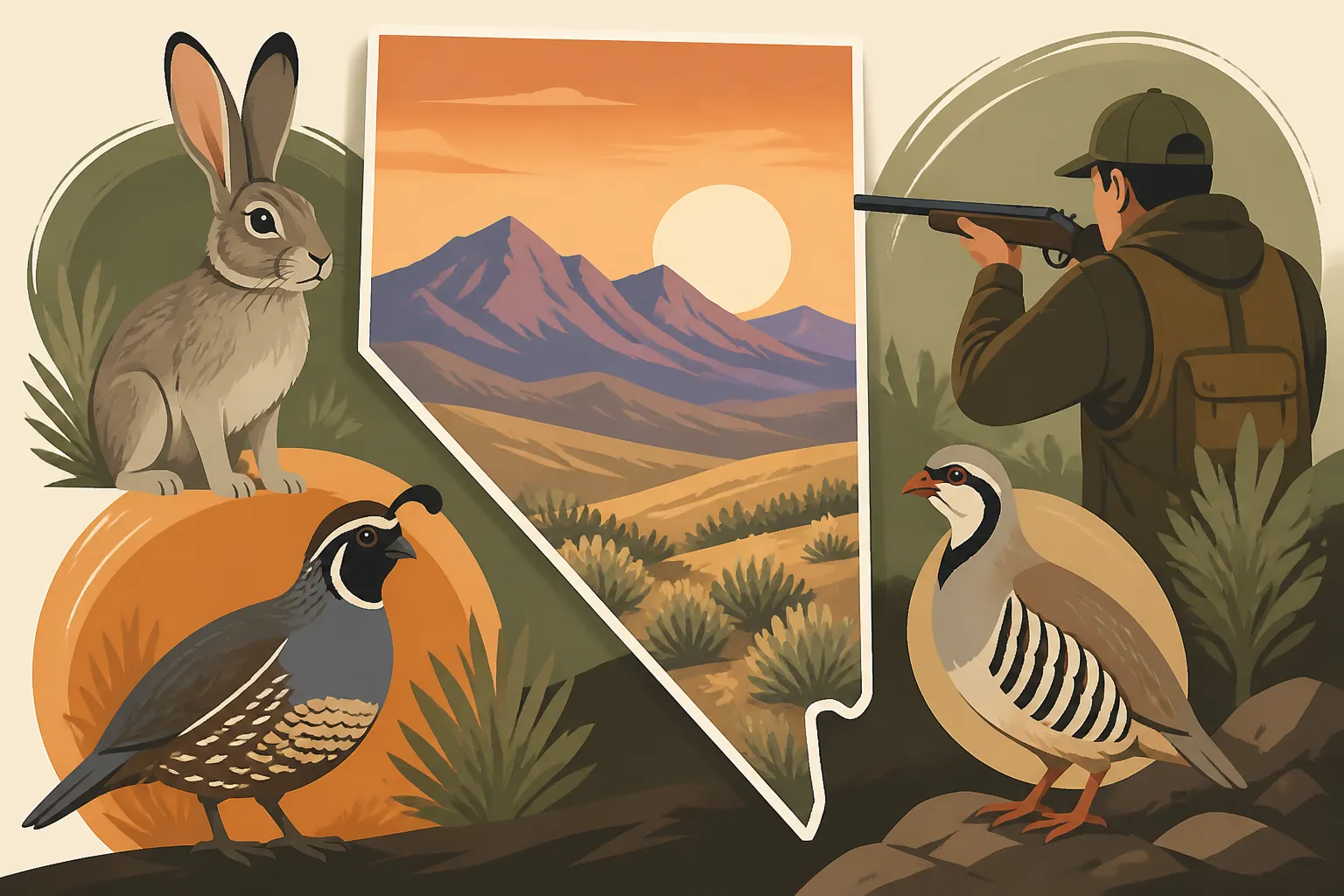
The most common quail species you'll encounter are California quail, Gambel's quail, and mountain quail. California quail are often found in the northern parts of the state, particularly in riparian areas, agricultural fields, and brushy draws near water. Gambel's quail, with their distinctive topknots, are desert dwellers, thriving in the warmer, drier southern regions among mesquite, catclaw, and cholla cacti. Mountain quail, true to their name, prefer higher elevations and denser brush, often found in the higher ranges where they can be quite elusive. Understanding Quail Species Found in Nevada is crucial for pinpointing where to focus your efforts.
Hunting quail can range from walking riparian corridors and jump-shooting to working dogs through dense cover. Early season hunts might find coveys congregating near water, while later in the season, they'll spread out and be tougher to pin down. The key to success is often identifying their preferred cover, which provides both food and protection from predators. Unlike chukar, which tend to run uphill when pressured, quail often hold tight or scatter into dense brush, making for fast, close-range shooting opportunities.
The Unique Challenge of Sage Grouse
The sage grouse season in Nevada is a truly special, and often brief, opportunity. These magnificent birds are a symbol of the sagebrush sea, and their conservation is a high priority. Because of this, sage grouse hunting is tightly regulated, with very limited seasons, often only a few days in September, and requires a special permit in addition to your general hunting license and upland bird stamp. Understanding Nevada Sage Grouse Permit Requirements is paramount, as quotas and hunt areas can change annually based on population surveys.
Hunting sage grouse often involves covering vast tracts of sagebrush country, looking for birds on the ground or spotting them as they flush. While they are large birds, their camouflage is excellent, and they can be surprisingly difficult to see until they burst into flight with a characteristic "thump-thump-thump" of their wings. Hunters often use optics to scan the sage flats at dawn and dusk, looking for feeding birds. Early morning or late evening can be the most productive times, as birds are often moving between roosting areas and feeding grounds.
Due to the sensitive nature of their populations, bag limits are very conservative, typically only one bird per season. This isn't a hunt for meat volume but rather for the experience and the deep connection to the unique sagebrush ecosystem. Using resources like GoHunt can be invaluable for staying informed about specific season dates, permit application windows, and draw odds, ensuring you don't miss out on the chance to pursue these iconic birds. It's a hunt that demands respect for the species and its habitat, and a deep appreciation for the vastness of the Nevada landscape.
Other Upland Birds: Pheasant and Hungarian Partridge
While chukar, quail, and sage grouse typically steal the spotlight, Nevada does offer limited opportunities for other upland bird species, namely pheasant and Hungarian partridge. These hunts are generally far more localized and dependent on specific habitat conditions, often tied to agricultural areas or specific game management units.
Pheasant seasons are usually short, often confined to specific units or wildlife management areas where habitat supports them, typically in November. Bag limits are modest, reflecting the limited populations. These birds offer classic flushing action and are often hunted with pointing or flushing dogs. Hungarian partridge, smaller and faster than pheasants, are found primarily in northern Nevada's agricultural and native grassland areas. Their seasons usually mirror those of other upland birds, from September through January, with bag limits often similar to quail. Finding "Huns" requires covering a lot of ground, and they can be just as evasive as chukar, often running before flushing. While not as widespread, these species add to the diverse small game tapestry of Nevada for those willing to seek them out.
Waterfowl and Migratory Birds
Beyond the rugged uplands, Nevada offers fantastic opportunities for waterfowl and other migratory bird hunting, particularly in its wetlands and agricultural areas. From the bustling marshes of the Lahontan Valley to the scattered ponds and reservoirs across the state, waterfowling provides a completely different, yet equally rewarding, challenge.
Duck and Goose Seasons
Nevada's duck and goose seasons are structured around federal frameworks, typically running from early October or November through late January, often with split seasons to accommodate different migration patterns. The state is divided into various zones, and hunters need to consult the specific regulations for their chosen area, as dates and bag limits can vary significantly. Understanding the Nevada Waterfowl Season Framework is essential, as these seasons are complex and highly regulated.
Hunters can expect to find a wide array of duck species, including mallards, pintails, gadwall, wigeon, and various diving ducks, as well as Canada geese, snow geese, and white-fronted geese. Bag limits are species-specific and can be quite detailed, often limiting the number of certain species within your daily bag. This requires hunters to be proficient at identifying birds in flight, a skill that comes with practice and experience.
Prime waterfowl hunting areas include the vast wetlands of the Lahontan Valley, such as the Stillwater National Wildlife Refuge and the Fallon Paiute-Shoshone Reservation (with proper permits), which are critical stopovers for millions of migratory birds. Waterfowl on the Lahontan Valley Marshes is a massive draw for hunters from across the region. Other significant areas include state wildlife management areas like Mason Valley and Key Pittman, as well as various reservoirs and private agricultural lands. Successful waterfowl hunting often involves decoys, blinds, and excellent calling skills, along with a keen understanding of bird movements and weather patterns.
Dove and Snipe
The small game season often kicks off with the fast-paced action of dove hunting, usually opening on September 1st. This early season hunt is incredibly popular, offering a fantastic warm-up for the longer upland bird and waterfowl seasons. Nevada primarily hosts mourning doves, and their seasons typically run in two segments: an early season in September and a shorter late season in November. Bag limits are usually generous, allowing for 15 birds daily with a 45-bird possession limit.
Dove hunting is generally done by pass-shooting or field hunting, where hunters position themselves along flight paths between roosting areas, feeding grounds, and water sources. Areas near agricultural fields, especially those growing grains like wheat or safflower, and stands of large trees are often productive. It's a social hunt, perfect for groups, and offers plenty of shooting practice due to the doves' erratic flight patterns.
Snipe, a less commonly pursued migratory bird, also offers hunting opportunities in Nevada's wet meadows and marshy areas, often overlapping with duck season. Their season usually runs from September through January, with a daily bag limit of 8 birds and a possession limit of 24. Snipe hunting requires patience and quick reflexes, as these small, brown birds flush vertically from cover with a distinctive "scaipe" call, presenting a challenging target. While not as popular as dove or duck hunting, snipe offer a unique opportunity for hunters looking to explore different facets of migratory bird hunting.
Small Mammals: Rabbits, Jackrabbits, and More
Beyond the feathers, Nevada's small game landscape offers plenty of opportunity to pursue furry critters. Rabbits and jackrabbits are abundant and provide excellent table fare, while the state's predator and furbearer seasons can offer year-round excitement.
Cottontails and Jackrabbits
For many hunters, the pursuit of cottontail rabbits and jackrabbits offers consistent action throughout the year, with generally long seasons. Cottontail rabbit season typically runs from early September through February, providing a substantial window for hunting. Jackrabbits, on the other hand, often have year-round open seasons, although checking the current regulations is always a good idea. Understanding Cottontail and Jackrabbit Seasons is straightforward, making them highly accessible targets.
Cottontails are found in a variety of habitats, from dense brush in riparian areas to sagebrush flats and rocky hillsides. They tend to stick to thicker cover and make short dashes when flushed. Hunting them often involves walking through brushy areas, jump-shooting, or working with beagles. They are excellent eating and provide a satisfying hunt.
Jackrabbits, primarily black-tailed jackrabbits in Nevada, are creatures of the open sagebrush country. These larger hares rely on their incredible speed and camouflage to evade predators. They are often spotted sitting tight in the shade of a sagebrush bush, and when flushed, they bolt with impressive speed. Hunting jackrabbits can be done by walking wide-open flats, often using optics to spot them before they flush, or by driving slowly along remote two-tracks, often in conjunction with other small game pursuits. While not everyone's cup of tea for the dinner table, they offer a thrilling hunt and are a great way to hone your shooting skills.
Predator and Furbearer Opportunities
Nevada also offers extensive opportunities for hunting predators and furbearers, with some species having open seasons year-round. The most popular among these is the coyote, which can be hunted Hunting Coyotes Year Round in the Great Basin without a closed season or bag limit. Coyote hunting is a fantastic way to stay active, refine calling skills, and potentially contribute to local game management, particularly for deer and antelope fawns. It involves strategic calling, often with electronic calls, and patience to draw in these intelligent canids.
Other furbearers like bobcats, red fox, and raccoons also have designated trapping and hunting seasons, typically during the colder months when their pelts are prime. These seasons are usually from November through February or March. It's important to note that hunting these species often requires specific licenses or tags, and special regulations apply to pelt tagging and sale. Badger and skunk also have open seasons, often year-round, adding to the list of opportunities. Always consult the NDOW regulations for specific dates, methods of take, and any required permits. Using mapping applications with public land overlays, like those found on GoHunt, can help identify potential hunting grounds and understand unit-specific regulations for these diverse species.
Nevada Small Game Seasons at a Glance
To make things a little easier, here's a general overview of Nevada's common small game seasons. Always confirm with the current year's NDOW regulations booklet for precise dates and unit-specific details, as seasons can shift.
| Species | General Season Start | General Season End | Daily Bag Limit (Approx.) | Possession Limit (Approx.) | Common Habitat / Notes |
|---|---|---|---|---|---|
| Upland Game Birds | |||||
| Chukar Partridge | Early Sept. | Late Jan. | 8 | 16 | Steep, rocky, cheatgrass slopes. |
| California Quail | Early Sept. | Late Jan. | 10 (combined) | 20 (combined) | Riparian, agricultural, brushy draws (N. NV). |
| Gambel's Quail | Early Sept. | Late Jan. | 10 (combined) | 20 (combined) | Desert washes, mesquite, catclaw (S. NV). |
| Mountain Quail | Early Sept. | Late Jan. | 10 (combined) | 20 (combined) | Higher elevation, dense brush. |
| Sage Grouse | Mid-Sept. | Mid-Sept. | 1 | 1 | Sagebrush plains (special permit required; short season). |
| Pheasant | Nov. | Nov. | 2 | 4 | Agricultural areas, specific WMAs (limited). |
| Hun. Partridge | Early Sept. | Late Jan. | 6 | 12 | Northern NV agricultural/grasslands (often combined with quail limit). |
| Migratory Birds | |||||
| Mourning Dove | Sept. 1 | Sept. / Nov. | 15 | 45 | Agricultural fields, riparian corridors, water sources. |
| Ducks & Geese | Oct./Nov. | Late Jan. | Varies by species | Varies by species | Wetlands, marshes, reservoirs (Federal/State stamps required; consult zone regs). |
| Snipe | Sept. | Late Jan. | 8 | 24 | Wet meadows, marshy areas. |
| Small Mammals | |||||
| Cottontail Rabbit | Early Sept. | Late Feb. | 10 | 20 | Brushy areas, riparian corridors, rocky hillsides. |
| Jackrabbit | Year-round | Year-round | No Limit | No Limit | Open sagebrush country, desert flats. |
| Coyote | Year-round | Year-round | No Limit | No Limit | Statewide, various habitats. |
| Bobcat | Nov. | Feb. | 4 | 8 | Statewide (requires trapping/hunting license, pelt tag). |
| Fox (Red & Gray) | Nov. | Feb. | No Limit | No Limit | Statewide (requires trapping/hunting license, pelt tag). |
| Raccoon | Nov. | Feb. | No Limit | No Limit | Riparian areas, near water sources. |
Planning Your Nevada Small Game Hunt
Successful small game hunting in Nevada, much like big game, relies heavily on preparation, understanding the terrain, and adapting to the conditions. It's a vast state, and what works for chukar in the north might be entirely different from chasing Gambel's quail in the south.
Essential Gear and Preparation
Before you head out, think about the specific hunt you're planning. For upland birds, comfortable and durable boots are non-negotiable – Choosing Boots for Sharp Volcanic Rock is a crucial consideration given Nevada's unforgiving terrain. Layered clothing is always a good idea, as desert temperatures can swing wildly from chilly mornings to warm afternoons, even in winter. Don't forget a good vest or game bag for carrying your harvest.
Hydration is key, no matter the season. Water You Must Carry on a Desert Day Hunt is not just a recommendation, it's a survival imperative. Even on cooler days, the dry air will dehydrate you quickly. Optics, even for small game, can be incredibly useful. A good pair of binoculars, perhaps a Binocular Size That Survives an All-Day Session, can help you spot birds on distant slopes or identify potential cover. And of course, your shotgun and plenty of appropriate ammunition are essential. For those long treks, a good backpack with snacks, first-aid, and navigation tools (GPS or mapping app) will make a world of difference.
Physical conditioning cannot be overstated, especially for chukar or mountain quail. These hunts are demanding, and being in reasonable shape will not only increase your success but also your enjoyment. Preparing Physically for Long Glassing Days applies equally to climbing chukar mountains; the more fit you are, the further and safer you can go.
Finding Public Land Access for Small Game
Nevada is truly a public land hunter's paradise, with the vast majority of the state owned by federal agencies. This means abundant access for small game hunting. BLM Ground Is Where Most Nevada Hunting Happens, providing endless opportunities. National Forests in the eastern and northern parts of the state also offer excellent bird and rabbit hunting.
Navigating these vast expanses requires good mapping tools. Apps like GoHunt or Using onX Layers for Nevada Public Land are indispensable. They allow you to overlay public and private land boundaries, identify roads and trails, and even pinpoint water sources or topographical features that might hold game. Always pay close attention to land ownership. While public land is plentiful, private land often checkerboards these areas, especially in valley bottoms or near water sources. Respecting posted property and understanding trespass laws is fundamental to ethical hunting.
Adapting to Nevada's Conditions
Nevada's diverse geography translates into a wide range of hunting conditions. Early season hunts in August and September, especially for dove or chukar, can be brutally hot. Heat Management on an August Archery Hunt offers relevant advice for coping with extreme temperatures, which definitely carries over to small game. Staying hydrated, planning hunts around cooler parts of the day, and being aware of heatstroke symptoms are critical.
Later in the season, particularly for waterfowl and late-season upland birds, you might encounter snow, ice, and biting winds. Proper layering, windproof outer shells, and insulated boots become paramount. Furthermore, ecological factors like drought can significantly impact small game populations and distribution. How Drought Affects Great Basin Deer is a reminder that dry conditions also limit water and forage for birds and rabbits, concentrating them around fewer, more vital water sources, which savvy hunters can use to their advantage. Always be prepared for rapid weather changes and carry emergency supplies, as help can be a long way off in Nevada's remote landscapes.
Disclaimer
Please note that hunting regulations, seasons, and licensing requirements can change annually. This guide provides general information based on typical patterns. It is the responsibility of every hunter to consult the most current Nevada Department of Wildlife (NDOW) regulations publication before planning and undertaking any hunt. NDOW is the official source for all hunting rules and regulations in Nevada.