Cottontail and Jackrabbit Seasons
Hunting in Nevada often brings to mind images of massive mule deer or trophy-class elk, the kind of animals you spend years, sometimes decades, trying to draw a tag for. But let's be real – the draw can be brutal, and waiting for that coveted tag can leave you itching for some time afield. That's where small game, specifically cottontail rabbits and jackrabbits, step in to fill that void, offering accessible, challenging, and incredibly rewarding hunting opportunities almost year-round. This guide is all about diving into the details of hunting these often-overlooked but always exciting game animals in the Silver State.
The Allure of Small Game: Why Rabbits in Nevada?
For many of us, the big game draws in Nevada are a rite of passage, a yearly lottery ticket filled with hope and, more often than not, a polite rejection. It's frustrating, isn't it? You put in the time, build those points, and still, the dream hunt feels miles away. But while you're accumulating those Nevada Squares Your Bonus Points Into Draw Chances, there's a whole world of hunting available that doesn't require a special draw or years of patience: small game. And when it comes to small game, cottontails and jackrabbits are king in much of Nevada, offering a fantastic way to sharpen your skills, explore new country, and put some delicious, lean meat on the table.
The beauty of rabbit hunting is its accessibility. You don't need highly specialized gear or a massive budget. A good .22 rifle or a shotgun, a pair of hiking boots, and a general Nevada hunting license are often all it takes to get started. Beyond that, the sheer amount of public land in Nevada means you're almost never far from a potential rabbit patch. It’s a chance to immerse yourself in the landscape, read the terrain, and refine your stalking and shooting abilities without the immense pressure of a once-in-a-lifetime big game tag.
A Tale of Two Rabbits: Cottontail vs. Jackrabbit
While both are commonly referred to as "rabbits," cottontails and jackrabbits are distinctly different creatures, and understanding these differences is key to hunting them effectively in Nevada. They occupy different niches, behave differently, and often require slightly varied approaches from a hunter.
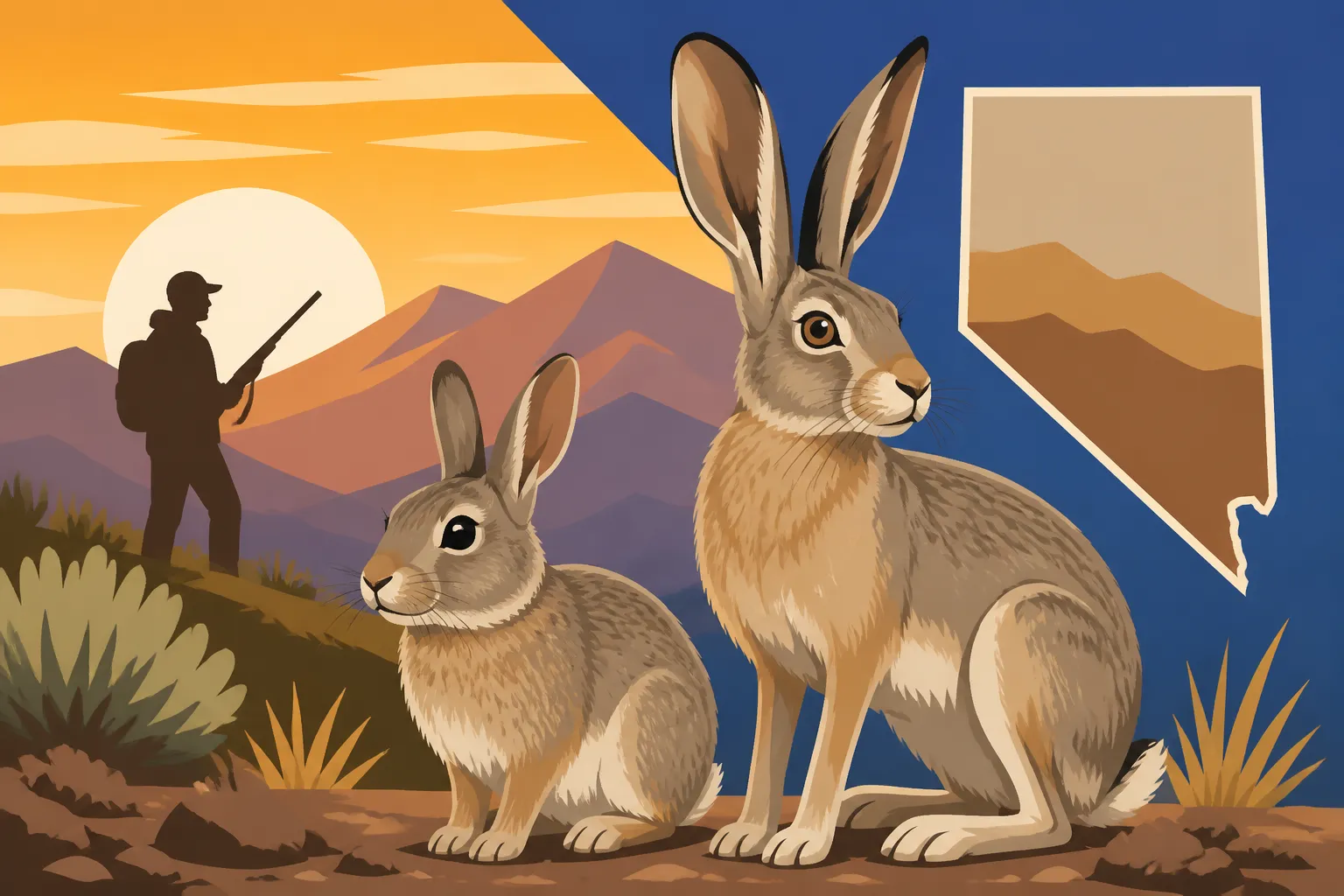
Cottontail rabbits are what most people picture when they think of a bunny. They're relatively small, typically weighing a few pounds, with a fluffy white tail that gives them their name. They prefer dense cover – think thick sagebrush, rocky outcroppings, brushy creek bottoms, and junipers. They rely on their camouflage and ability to dive into cover at high speeds. When flushed, they'll often run a short distance and then freeze, hoping to blend in. Their season is usually more restricted, and they have bag limits, much like other upland game.
Jackrabbits, on the other hand, are actually hares, not true rabbits. They are larger, with long ears and powerful hind legs built for speed. They're creatures of the wide-open spaces, preferring sparse sage flats, playas, and desert grasslands where they can use their incredible speed to escape predators. They're often spotted at much greater distances, and when spooked, they're more likely to run for hundreds of yards rather than dive into immediate cover. Their seasons are typically very long, often year-round, and they usually have no bag limit, a testament to their abundance and different ecological role. These distinctions mean that while you might find both in the same general area, your tactics for each will likely differ.
Cottontail Rabbit Season in Nevada
The cottontail rabbit season in Nevada offers a fantastic opportunity for hunters looking for challenging small game in diverse habitats. Unlike the long, open seasons for jackrabbits, cottontail seasons are regulated with specific start and end dates and bag limits, reflecting their place as a more traditional game species.
General Season Dates and Biological Timing
Typically, Nevada's cottontail season will open in the late summer or early fall, often around August or September, and run through February. These season dates are set by the Nevada Department of Wildlife (NDOW) to coincide with periods when the rabbits are most active and when hunting pressure won't negatively impact their breeding cycles. Opening in late summer allows hunters to take advantage of the year's new litters, ensuring a robust population. The season stretching into the colder months also means hunters can pursue them when they're more visible against sparse vegetation or even snow, and when issues like parasites (often called "warbles") are less prevalent.
It's crucial to always check the current year's NDOW regulations for the exact dates. These dates are subject to change based on population trends, habitat conditions, and other biological factors. While the general framework remains consistent, a week or two difference can impact your planning.
Preferred Habitats and Hunting Strategies
Cottontails are masters of cover. You'll find them in thickets of sagebrush, especially where there are rocky outcrops, junipers, or riparian areas along desert washes and seasonal creeks. Think about terrain that offers them immediate escape routes – piles of rocks, dense brush, or even old farm equipment. In these areas, still hunting (moving very slowly and pausing frequently to scan) or slowly walking through likely cover are effective strategies.
Many successful cottontail hunters work in pairs or small groups, with one person "pushing" through dense brush while others wait on the edges for rabbits to flush. A good pair of binoculars, like those you might use for Optics Power for Nevada's Long Sightlines, can be surprisingly useful for spotting a camouflaged rabbit before it bolts. When a cottontail does flush, it often runs a short distance, then stops, attempting to blend into its surroundings. This momentary pause is your window of opportunity. A .22 caliber rifle is a classic choice for cottontails, offering precision for stationary shots, while a shotgun with small game loads (like 6 or 7.5 shot) is excellent for flushing shots in thicker cover.
Remember to pay close attention to water sources. Even small game concentrates around them, especially in the dryer parts of Nevada. Hunting Water in Nevada's Driest Country isn't just for big game; rabbits need it too, and scouting these spots can be highly productive.
Bag and Possession Limits
Unlike jackrabbits, cottontails have specific daily bag and possession limits. A typical daily bag limit might be around 10 rabbits, with a possession limit of 20. These limits are in place to ensure sustainable hunting and prevent overharvesting. Respecting these limits is part of being an ethical hunter and contributes to healthy rabbit populations for years to come.
These numbers can vary by year and region, so always, always consult the current NDOW regulations. This information is usually readily available online or through physical pamphlets at license vendors.
Licensing and Hunter Education Requirements
To hunt cottontail rabbits in Nevada, you'll need a valid Nevada hunting license. For residents, this is generally straightforward. Nonresidents can purchase a nonresident hunting license. Additionally, anyone born after January 1, 1960, must have completed an approved hunter education course to purchase a Nevada hunting license. The good news is that Nevada Accepts Hunter Education From Any State, so if you've completed a course elsewhere, it likely transfers. It's a fundamental requirement to ensure safety and responsible hunting practices across the state.
Jackrabbit Season in Nevada
If cottontails are the elusive, cover-loving sprites of the desert, jackrabbits are the wide-open speed demons. Hunting jackrabbits offers a completely different experience, often characterized by longer shots and endless public land.
The Year-Round Opportunity
One of the biggest appeals of jackrabbit hunting in Nevada is that, for many species (like the Black-tailed Jackrabbit), the season is open year-round. This means that if you're feeling the cabin fever in July or looking for something to do after your deer tag goes unfilled, jackrabbits are waiting. This liberal season structure reflects their abundant populations across much of the state and their often-prolific breeding cycles.
However, just because the season is open year-round doesn't mean every day is ideal for hunting them. Extreme summer heat can make hunting uncomfortable and make meat care difficult. Winter conditions, while making them more visible against snow, can also make access to certain areas challenging. Spring can be good, but be mindful of young animals. Generally, the cooler months of fall, winter, and early spring offer the most enjoyable hunting conditions.
Prime Habitats and Hunting Tactics
Jackrabbits thrive in the vast, open, and often stark landscapes of Nevada. You'll find them in sparse sagebrush flats, greasewood patches, and even on the edges of agricultural fields. They prefer areas where they have long sightlines and plenty of room to run. They don't rely on dense cover as much as cottontails do; instead, their primary defense is their phenomenal speed, which can reach up to 40 miles per hour.
Hunting jackrabbits often involves covering a lot of ground, either on foot or slowly by vehicle on designated routes. Glassing is an incredibly effective tactic. Using binoculars or a spotting scope, scan the wide-open flats and gentle slopes, looking for the tell-tale long ears or the distinctive brown/gray body of a jackrabbit. Once spotted, a patient stalk is often required to get within shooting range.
Because they tend to run at the first sign of danger and are often encountered at longer distances, a flat-shooting rifle is often preferred. A .22LR can work if you're patient and the rabbits let you get close, but many hunters opt for small centerfire calibers like a .17 HMR, .22 WMR, or even a .223 Remington, especially when the intent is longer-range target practice or varmint control. These calibers allow for ethical shots at greater distances. For close-range flushes, a shotgun can still be effective, especially if you're walking through light cover. Choosing a Rifle for Basin and Range Country often highlights the need for flatter trajectories, and that applies to jackrabbits as well.
No Bag Limits: Understanding the Approach
For many jackrabbit species, there are typically no daily bag or possession limits in Nevada. This "unlimited" harvest structure is not an invitation to waste game but rather a reflection of their population dynamics. Jackrabbits are often considered a prolific species, and in some agricultural areas, they can even be seen as pests due to crop damage. This lack of limits gives hunters maximum flexibility, but ethical hunting still dictates only taking what you will use.
Licensing and Hunter Education
Just like with cottontails, a valid Nevada hunting license is required to hunt jackrabbits. The hunter education requirement for those born after January 1, 1960, also applies. It's the same general license that covers a wide array of game species, making it a valuable investment for any hunter in the state. Always confirm the specific regulations, as there can be regional variations or special provisions depending on the exact species or land management area.
Essential Considerations for Rabbit Hunters in Nevada
Hunting rabbits in Nevada, whether cottontails or jackrabbits, requires a bit of planning and attention to detail. The vast, often remote landscape of Nevada presents unique challenges and opportunities that every small game hunter should be aware of.
Accessing Nevada's Public Lands
Nevada is famously the most federally owned state in the lower 48, with a huge percentage of its land managed by the Bureau of Land Management (BLM) and the U.S. Forest Service. This means incredible access for hunters. BLM Ground Is Where Most Nevada Hunting Happens, and for small game, this is particularly true. Most prime rabbit habitat is found on these public lands.
Before you head out, though, it's vital to know where you are. Land ownership can be a patchwork, and accidentally trespassing is a serious offense. This is where tools like GoHunt become invaluable. Their mapping system allows you to easily identify public versus private land boundaries, pinpoint water sources, and even scout potential cover remotely. Learning to use a program to aid in E-Scouting a Nevada Unit Before the Season and specifically for Reading a Land Ownership Layer Correctly will save you headaches and ensure you're hunting legally and ethically.
Gear Up for the Nevada Backcountry
Even for small game, being properly equipped for Nevada's rugged terrain and unpredictable weather is essential.
- Footwear: Sturdy, comfortable hiking boots are a must. You'll be covering miles, often over rocky, uneven ground, and through abrasive sagebrush.
- Optics: As mentioned, binoculars are crucial for spotting jackrabbits at a distance and even for picking out camouflaged cottontails. A quality pair, 10×42 or similar, will serve you well.
- Firearm & Ammunition: Your choice depends on the rabbit and your preferred method, as discussed earlier. Always carry plenty of ammunition.
- Water: This cannot be stressed enough. Even in cooler months, the desert can dehydrate you quickly. Always carry more water than you think you'll need. Water You Must Carry on a Desert Day Hunt is not an exaggeration; it's a survival imperative.
- Navigation: A GPS device or a reliable smartphone app with downloaded maps is critical. Cell service is spotty to nonexistent in much of rural Nevada. Don't rely solely on your phone.
- First-Aid Kit: Small cuts, scrapes, and blisters are common. Be prepared.
- Game Bag: To protect your harvested rabbits from dirt and heat.
- Sun Protection: Hat, sunglasses, and sunscreen, regardless of the season.
Safety First: Heat, Snakes, and Remote Roads
Nevada hunting often means facing extreme conditions.
- Heat Management: If hunting in late summer or early fall, be acutely aware of the heat. Plan to hunt during cooler parts of the day (early morning, late evening). Stay hydrated, wear light clothing, and know the signs of heat exhaustion. Heat Management on an August Archery Hunt offers excellent advice that applies directly to early season rabbit hunting.
- Snake Awareness: Rattlesnakes are present throughout Nevada, especially in warmer months. Always watch where you step and where you put your hands. Wear appropriate footwear and keep an eye on your dog if hunting with one. Snake Awareness on an August Archery Hunt is another resource that can help you stay safe.
- Vehicle Preparation: Many prime hunting spots are at the end of long, unpaved, and sometimes rough roads. Ensure your vehicle is in good working order, with good tires (and a full-sized spare), extra fuel, and basic recovery gear. Vehicle Prep for Remote Nevada Roads is essential reading before any remote Nevada trip.
Environmental Factors and Rabbit Populations
Rabbit populations, especially cottontails, can fluctuate significantly year to year, largely influenced by environmental factors. Drought conditions, common in Nevada, can reduce forage and water availability, leading to lower reproduction rates and higher mortality. Conversely, years with ample rainfall often see a boom in rabbit numbers. Wildfires can temporarily displace populations but can also lead to new growth that benefits them in the long run. Understanding How Drought Affects Great Basin Deer is crucial for big game, but these same factors ripple down to affect small game populations, too. Consulting resources like GoHunt's data or NDOW's wildlife reports can give you a better idea of current population trends in specific units.
Comparing Nevada's Rabbit Hunting Opportunities
To summarize the key differences and considerations for hunting cottontail and jackrabbits in Nevada, here's a quick reference table.
| Feature | Cottontail Rabbit (e.g., Desert Cottontail) | Jackrabbit (e.g., Black-tailed Jackrabbit) |
|---|---|---|
| Species Type | True Rabbit | Hare |
| Typical Weight | 2-4 lbs | 5-9 lbs |
| Preferred Habitat | Dense cover: sagebrush, rocky areas, riparian zones | Open flats, sparse sagebrush, playas |
| Primary Defense | Freezing, quick dash to dense cover | High speed, long-distance running |
| Season Length | Defined season, typically late summer through winter | Often year-round |
| Bag Limits | Yes, specific daily and possession limits (e.g., 10/20) | Often none |
| Recommended Calibers | .22LR, Shotgun (.410, 20ga, 12ga) | .22LR (close), .17 HMR, .22 WMR, .223 (longer range) |
| Hunting Style | Still hunting, pushing brush, close quarters | Glassing, stalking, covering ground |
| Visibility | Blends in well, often close shots | Visible at distance, longer shots |
Making the Most of Your Nevada Rabbit Hunt
Rabbit hunting is more than just bagging game; it's about connecting with the land, honing your skills, and enjoying the simple pleasure of being outdoors. It's an excellent way to introduce new hunters to the sport or for seasoned veterans to stay sharp during the long off-season.
Remember that Reading a Nevada Hunt Unit Before You Apply isn't just for deer and elk. Understanding the terrain, vegetation, and access points for any unit you plan to visit can drastically improve your small game success. Utilize those mapping tools, identify areas with good cover for cottontails or expansive flats for jackrabbits, and pinpoint those crucial water sources.
Whether you're after the quick dash of a cottontail diving into a juniper thicket or the long-distance challenge of a jackrabbit streaking across the flats, Nevada offers incredible opportunities. Don't let the big game draw results dictate your entire hunting year. Grab your .22 or your shotgun, pack extra water, and hit the vast public lands. You might just find that some of the most satisfying hunting memories are made chasing these humble, yet challenging, creatures of the desert.
Disclaimer
This article is for general informational purposes only and does not constitute professional advice. Laws, prices and regulations vary by location and change over time. Consult a qualified professional for guidance on your specific situation.