How Fast a Pronghorn Can Actually Run
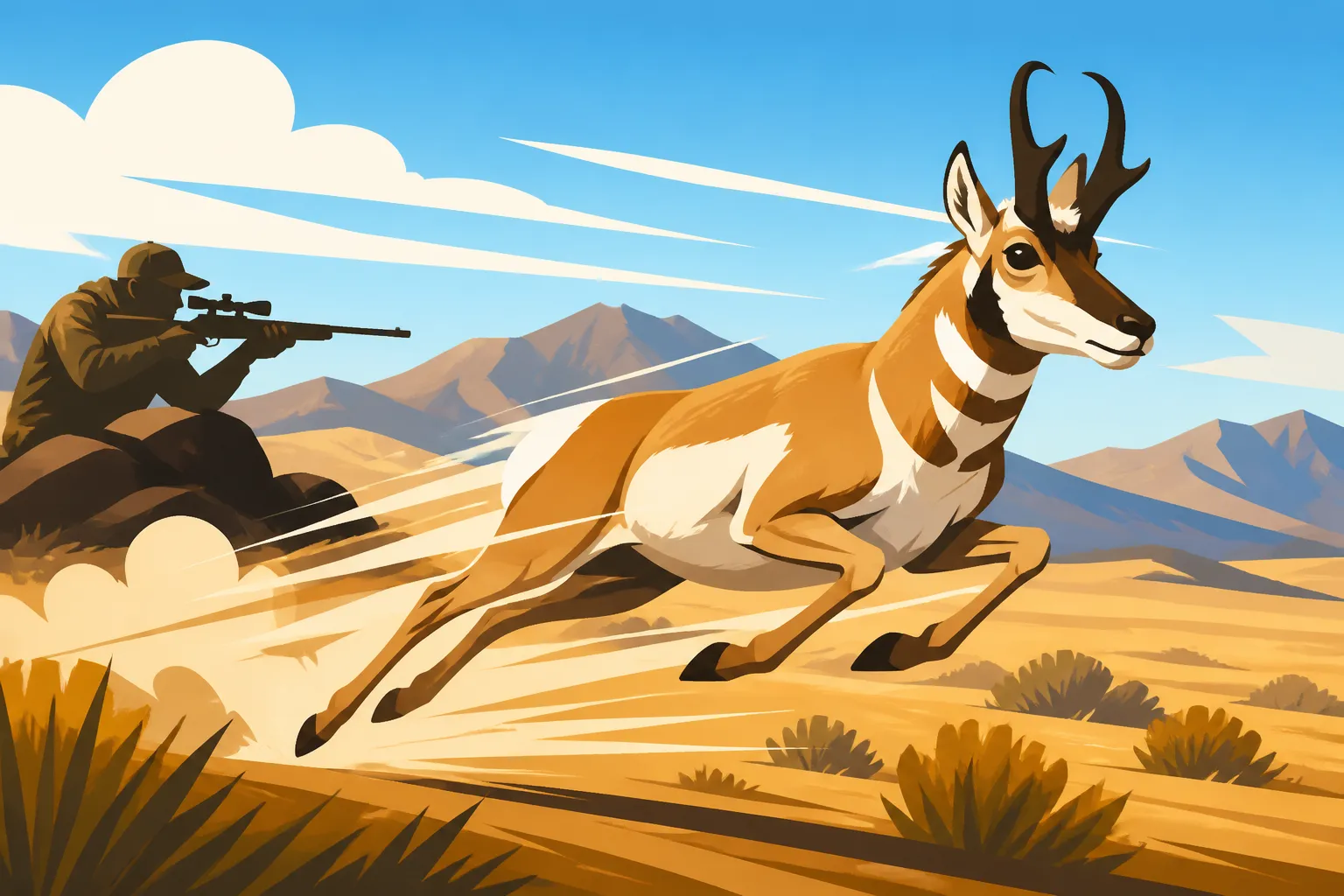
You’ve spotted them a mile out, grazing peacefully in a vast Nevada basin. You plan your stalk, use every bit of available cover, and finally, after what feels like an eternity, peek over a rise. But the moment you do, they’re gone—a flash of white rump, a blur of tan and speed, leaving you wondering how anything could move that fast. It's a frustrating, yet all too common, experience for anyone who has pursued pronghorn. These magnificent creatures, often mistakenly called antelope, are truly the rockets of the high desert, and their incredible speed is something every hunter needs to understand. This guide is dedicated to dissecting just how fast a pronghorn can actually run, what makes them such speed demons, and how this knowledge can inform your hunting strategy in the vast, open country of Nevada.
The Pronghorn's Unmatched Speed: A Biological Marvel
There's a reason pronghorn are often cited as the fastest land animal in North America, and for good measure, the second fastest in the world over short distances, only outpaced by the cheetah. But what makes them so exceptionally quick? It's not just one thing, but a suite of evolutionary adaptations that have honed them into a finely tuned, high-speed running machine, perfectly suited for survival on the wide-open plains and sagebrush flats of places like Nevada. This isn't just about a quick burst; it's about a complete package of speed and endurance that is truly unparalleled.
Anatomy of Pure Velocity
Think of a pronghorn's body as a high-performance engine, designed from the ground up for acceleration and sustained velocity. Their skeletal and muscular structure is a marvel of efficiency. They possess long, slender legs with minimal lower leg muscle, concentrating muscle mass higher up near the body. This reduces the weight at the extremities, allowing for quicker limb recovery and a faster stride. Their powerful hindquarters are built for propulsion, driving them forward with immense force.
Unlike many deer species that bound with high, arching leaps, pronghorn run with a relatively flat, ground-skimming gait, maximizing forward momentum. Their spine is incredibly flexible, allowing for a deep arch and extension that adds significant length to each stride, similar to how a cheetah uses its back. This spring-like action propels them further with each push off the ground. When you watch them disappear over the horizon, it’s not just their legs moving fast; it’s their entire body working in concert as a perfectly articulated running machine.
The Cardiovascular Powerhouse
Speed isn't just about strong legs; it's about getting enough oxygen to those muscles to fuel their incredible output. Pronghorn have an astonishingly efficient cardiovascular and respiratory system. They boast disproportionately large lungs and a massive heart for their body size, allowing them to process and pump oxygenated blood at an extraordinary rate. This translates directly to their stamina and ability to maintain high speeds for extended periods.
Furthermore, their blood has a higher concentration of red blood cells, meaning each liter of blood can carry more oxygen. This biological advantage means they can keep those powerful muscles working harder and longer before fatigue sets in. It's why they don't just hit a peak speed and then quickly fade; they can maintain blistering paces across miles of terrain, making them incredibly difficult to outrun or outlast. They truly are the marathon runners of the animal kingdom, capable of sprints and sustained runs that would leave most other species in the dust.
Efficient Design: Hooves and Coat
Even their hooves and fur contribute to their speed. Pronghorn have soft, cushiony pads on their hooves, providing excellent traction on various terrains—from rocky ground to soft sand—and absorbing the impact of their rapid strides. These specialized hooves are lightweight and designed for speed, not for plowing through deep snow or navigating dense timber like a deer.
Their coat, a blend of coarse, hollow hairs, is also unique. While it provides insulation, it's also incredibly lightweight and smooth, reducing air resistance as they sprint. This may seem like a minor detail, but at top speeds, every bit of aerodynamic efficiency counts. They are literally built for speed from head to hoof, with every physical characteristic optimized for escaping predators in the open expanses of the Great Basin. Understanding this complete picture helps explain why they can go from zero to sixty in what feels like an instant, and then keep going without breaking stride.
Burst Speed Versus Sustained Endurance
When we talk about "how fast" a pronghorn runs, it's important to differentiate between their incredible burst speed and their phenomenal sustained endurance. Most animals have one or the other; pronghorn have both, making them truly unique and a formidable challenge for any hunter. This combination of raw power and staying power is what truly sets them apart in the animal kingdom.
The Blistering Burst: Instant Acceleration
A pronghorn's burst speed is nothing short of astonishing. They can accelerate from a standstill to around 60 miles per hour (mph) in a matter of seconds. Some estimates even put their top speed closer to 70 mph over very short distances, making them, arguably, the fastest land animal in North America. This raw acceleration is a critical defense mechanism, allowing them to quickly outdistance predators like coyotes or even the occasional bobcat that might try its luck in the open.
This initial burst is what often catches hunters off guard. One moment you might see a pronghorn standing, seemingly oblivious, and the next it's a rapidly shrinking speck on the horizon. This immediate acceleration is fueled by those powerful hind legs and an incredible lung capacity that allows them to quickly oxygenate muscles for maximum output. It's a sprint that few creatures on earth can match, and it's why Reading Antelope Body Language on a Stalk is so crucial—you need to anticipate their movements long before they decide to hit the gas.
The Marathon Runner of the Plains: Sustained Pace
Where pronghorn truly shine, arguably even more than in their top burst speed, is in their ability to maintain high speeds for incredibly long distances. While a cheetah can hit over 70 mph, it can only sustain that for perhaps 30 seconds before tiring. A pronghorn, however, can comfortably cruise at speeds of 30-40 mph for miles, even up to 6 miles or more without stopping. This sustained endurance is what really separates them from other fast animals.
They evolved in an environment where speed was their primary defense against persistent predators like now-extinct American cheetahs. This meant not just being fast, but being able to outrun a predator over the long haul. This trait makes them incredibly difficult to pursue once they've decided to leave a basin. You might think you can track them, but their ability to cover immense distances at a rapid clip means they can put miles between themselves and a perceived threat with startling efficiency. For a hunter, this emphasizes the importance of making that first shot count, because once they're running, they're likely gone for good.
Environmental Factors and Terrain Impact
While pronghorn are built for speed, their performance isn't entirely unaffected by the environment. Flatter, firmer ground allows them to reach and maintain their top speeds more easily. Rough, rocky terrain or soft, sandy washes can slow them down, though perhaps not as much as you'd hope! Thick sagebrush can also impede their progress slightly, forcing them to jump or weave, which expends more energy than running across open flats.
Weather can also play a role. Strong headwind might slightly reduce their top speed, but they are incredibly resilient. In fact, cold weather often sees them more active and less prone to overheating, which is a major factor for speedsters. Understanding these nuances, and how they might use certain terrain to their advantage or where they might be slightly slower, can be a valuable piece of your hunting puzzle. Platforms like GoHunt can be incredibly useful for e-scouting a unit to understand the types of terrain—flat, rolling, broken—that might influence pronghorn movement and escape routes, helping you predict how fast and in what direction they might flee.
What Pronghorn Speed Means for the Nevada Hunter
Understanding the incredible speed of a pronghorn isn't just an interesting fact; it's absolutely critical for anyone hoping to successfully hunt them in Nevada. Their velocity impacts every aspect of the hunt, from how you plan your approach to your shot considerations. Ignoring their speed is a recipe for a lot of frustration and empty tags.
The Stalking Challenge: Closing the Distance
Their speed creates immense challenges for the stalk. Pronghorn have exceptional eyesight, often described as comparable to an 8x binocular, and they are masters of detecting movement from incredible distances. Combine this keen vision with their ability to cover ground in seconds, and you realize how quickly a blown stalk can turn into a lost opportunity. You literally can't afford a mistake.
This means that Closing the Last Hundred Yards on a Pronghorn becomes a monumental task. Every piece of cover, every fold in the terrain, and every available rim or draw becomes critical. You have to move deliberately, slowly, and often, take very circuitous routes to stay out of sight. Their speed dictates that you must be in position, undetected, for a shot before they ever know you're there. If they see you move, even at 600 yards, they can be out of range before you even have a chance to bring your rifle up.
Shot Opportunities and Considerations
Because pronghorn can disappear so rapidly, shot opportunities often arise and vanish in a flash. This places a premium on quick target acquisition and steady shooting. You might only have a few precious seconds to get on target before they've covered enough ground to make the shot impossible or unethical. When they decide to run, they don't dilly-dally.
Furthermore, their speed also influences ethical shot placement. A running pronghorn is an incredibly difficult target, and their rapid movements make accurate bullet placement extremely challenging. Most experienced pronghorn hunters will advise against taking a running shot unless the animal is gravely wounded and close, or if you are an exceptionally skilled shot. It's far better to wait for a standing or slowly moving animal, even if it means sacrificing the shot, than to risk a wounding shot on a creature that can carry a hit for miles across unforgiving terrain. Their speed means a wounded animal can quickly vanish, making recovery incredibly difficult.
The Vanishing Act: When They Spook
There's nothing quite like the sight of a spooked pronghorn herd. They don't just run; they instantly coalesce into a single, flowing unit, turning on a dime and then streaking across the flats. The moment they feel threatened, their natural instinct kicks in, and they will use every bit of that biological horsepower to put distance between themselves and danger. This "vanishing act" is precisely why careful scouting and a well-executed plan are paramount.
When they bolt, they aren't looking back. This is why Using a Decoy on Nevada Pronghorn can sometimes be effective, especially during the rut when bucks are territorial and curious, momentarily overriding their flight instinct. However, if that decoy doesn't convince them, their speed ensures a rapid exit. Hunters often describe watching a pronghorn herd simply melt into the horizon, becoming indistinguishable from the background sagebrush in minutes. For you, this means if your initial approach or shot doesn't pan out, the chances of a second opportunity on that same animal or herd often vanish with them. It forces a more precise, patient, and often, more long-range hunting style than other big game.
Pronghorn Speed in Context: Comparative Animal Speeds
To truly appreciate the pronghorn's speed, it helps to put it into perspective by comparing it to other fast animals, both those you might encounter in Nevada and those famous for their velocity worldwide. This comparison highlights not only their raw speed but also their unique combination of sprint and endurance.
The World's Fastest (Over Distance)
While the cheetah holds the title for the fastest land animal over very short bursts, reaching speeds well over 70 mph, its stamina is limited. The pronghorn, while slightly slower in peak burst speed (topping out around 60-70 mph), utterly dominates in sustained running. No other animal on earth can maintain such high speeds for such extended distances. They are truly the long-distance sprinters of the terrestrial world, a testament to their unique evolutionary path.
This distinction is crucial. A cheetah might catch its prey in a lightning-fast dash, but if it misses, it’s done. A pronghorn, on the other hand, can simply run away from almost anything that pursues it for as long as it needs to. This characteristic makes them a fascinating study in evolutionary biology and a formidable adversary for hunters.
Pronghorn vs. Other Nevada Big Game
When you consider other big game species in Nevada, the pronghorn's speed stands out dramatically. Let's look at a quick comparison:
| Animal | Top Burst Speed (approx.) | Sustained Speed (approx.) | Primary Defense Strategy |
|---|---|---|---|
| Pronghorn | 60-70 mph | 30-40 mph (for miles) | Speed and endurance |
| Mule Deer | 35-40 mph (bounding) | 15-20 mph | Agility, bounding, cover |
| Elk | 40-45 mph | 25-30 mph | Power, herd defense, cover |
| Bighorn Sheep | 30-35 mph (climbing) | 10-15 mph | Agility, steep terrain |
As you can see from the table, mule deer, while surprisingly quick and agile, don't hold a candle to a pronghorn's straight-line speed. A mule deer might bound at 35-40 mph, but it's typically over shorter distances, often utilizing broken terrain and thick cover to escape. An elk is also fast and powerful, especially in dense timber or across rolling hills, reaching speeds of 40-45 mph. However, an elk's endurance at high speed is far less than a pronghorn's. Bighorn sheep, masters of vertical terrain, use their climbing prowess and incredible agility as their primary defense, not raw speed across flats.
This means your hunting tactics for pronghorn must be fundamentally different. For mule deer, you might focus on Hunting the Post-Rut Migration for Big Bucks through timbered canyons. For elk, you might be Bugling Bulls in Nevada's Northern Mountains. But for pronghorn, it's all about navigating that open landscape where their speed gives them an overwhelming advantage. You need to identify Pronghorn on Nevada's Valley Floors and devise a strategy that respects their vision and speed, often relying heavily on optics for Glassing Grids Across a Nevada Basin and then a painstaking, covert approach. Using an advanced mapping tool like GoHunt can help you analyze the topography of potential hunting units, identifying subtle terrain features that might offer a hidden approach or cut off an escape route, giving you a slight edge against their incredible velocity.
Implications for Escape and Survival
The pronghorn's speed isn't just for showing off; it's their ultimate survival tool. In a landscape largely devoid of dense cover, outrunning predators is paramount. This evolutionary pressure has produced an animal that can simply leave danger behind, exhausting anything that tries to follow. This is why you rarely see a pronghorn caught by a coyote in open country unless the pronghorn is sick, injured, or very young.
For the hunter, this translates into a need for meticulous planning, excellent fieldcraft, and often, long-range shooting proficiency. You're not just hunting an animal; you're hunting one of the fastest and most enduring creatures on the planet, in its natural arena where its speed is its greatest weapon. Respecting this incredible attribute is the first step towards a successful pronghorn hunt in Nevada. Understanding their speed helps you appreciate the challenge, hone your skills, and ultimately, become a more effective and ethical hunter. Whether you're researching Best Units to Draw for Nevada Antelope or practicing your shooting, always keep the pronghorn's lightning-fast escape in mind. It's truly a hunt where patience and precision are rewarded, because speed, in this case, belongs to the game.
Disclaimer
This article is for general informational purposes only and does not constitute professional advice. Laws, prices and regulations vary by location and change over time. Consult a qualified professional for guidance on your specific situation.