Where to Find Chukar in Nevada
Chasing chukar in Nevada is less a hunt and more a pilgrimage of pain and triumph, often starting with the frustrating question of where these elusive birds even live. It's easy to look at the vast, arid landscape and feel overwhelmed, wondering if you're just wandering aimlessly. This guide is designed to cut through that confusion, helping you pinpoint the prime chukar habitat and understand the birds' patterns so you can plan your next, hopefully successful, hunt.
Understanding Chukar Habitat and Behavior in Nevada
Chukar are not like other upland birds you might find skulking in creek bottoms or timber. These birds are creatures of the high desert, sculpted by the harsh, unforgiving Nevada landscape. To find them, you first have to understand the specific, often brutal, environment they thrive in and how their daily lives are dictated by it.
The Steep, Rocky Terrain They Call Home
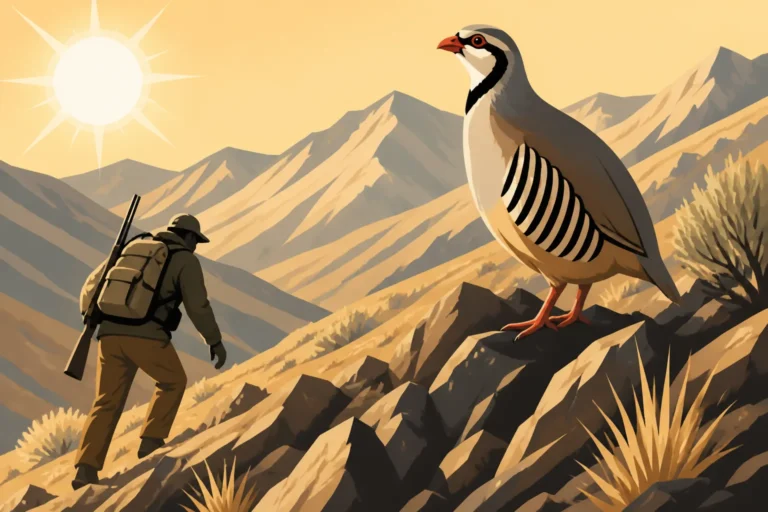
If you're picturing rolling plains or gentle hills, you're looking in the wrong place for chukar. These birds are synonymous with steep, rocky country. Think of basaltic outcrops, volcanic scree slopes, and rimrock canyons – the kind of terrain that makes your knees ache just looking at it. They prefer elevations generally between 4,000 and 8,000 feet, but you can find them lower or higher depending on the specific mountain range and local conditions. The key is the grade. They love slopes that challenge gravity, providing them with both escape routes from predators and sunning spots. They need that broken, jumbled rock to disappear into when a hawk circles overhead or a hunter appears on the skyline. It’s no wonder so many stories of chukar hunting involve precarious climbs and breathtaking descents. This rugged environment is their fortress. You can learn more about specific terrain in Chukar Country on Nevada's Steep Slopes.
The Importance of Water and Cheatgrass
While chukar love steep rock, they absolutely depend on two crucial elements that often dictate their presence: water and food. In Nevada's arid environment, water is life, and chukar are no exception. They require daily access to water, especially during the hotter parts of the year. This means focusing your search on areas with springs, seeps, guzzlers (man-made wildlife watering devices), or even just dew-covered vegetation in the early morning. These water sources often serve as central hubs for chukar coveys. You might find birds a mile or two from water, but they will be hitting it at least once a day, usually in the mid-morning or late afternoon.
As for food, their primary diet in Nevada consists largely of the seeds and leaves of cheatgrass. While often seen as an invasive nuisance, cheatgrass is a chukar buffet. Areas with good cheatgrass cover, especially when combined with steeper terrain and nearby water, are prime real estate for chukar. They'll also munch on other grasses, forbs, and even some insects, but cheatgrass is often the primary driver for their presence and abundance. Understanding How Rainfall Drives Chukar Numbers is critical here; a good moisture year often means more cheatgrass, which in turn means more chukar.
Their Daily Routines and Preferred Cover
Chukar are early risers. As dawn breaks, you'll often hear their distinctive "chuk-chuk-chukar" call echoing across the canyons, which they use to locate other birds in their covey. They'll typically move from their roosting sites on high, rocky ledges down to feeding areas in the cheatgrass below. After a good meal, they'll head to water, then often sun themselves on south-facing slopes, blending perfectly with the rocks. As the day heats up, they'll seek shade in the sparse brush or under rocky overhangs, sometimes moving back up to higher, cooler elevations. In the late afternoon, they'll embark on another feeding foray before heading back to their roosts as dusk settles.
Their preferred cover isn't thick timber or dense brush, but rather the broken rock and sparse sagebrush that allows them to run and hide. When startled, chukar prefer to run uphill rather than fly, using their powerful legs to scramble over rocks at incredible speed. If pushed hard enough, they'll erupt into strong, cackling flight, typically flying downhill and away, quickly putting multiple canyons between themselves and any perceived threat. This behavior is exactly what makes them so challenging – and rewarding – to hunt.
Key Regions and Specific Units for Chukar Hunting
Nevada is a vast state, and while chukar are widespread, some regions and specific unit characteristics consistently produce better opportunities. Knowing where to focus your efforts can save you countless miles and a lot of frustration.
Northern Nevada Hotspots
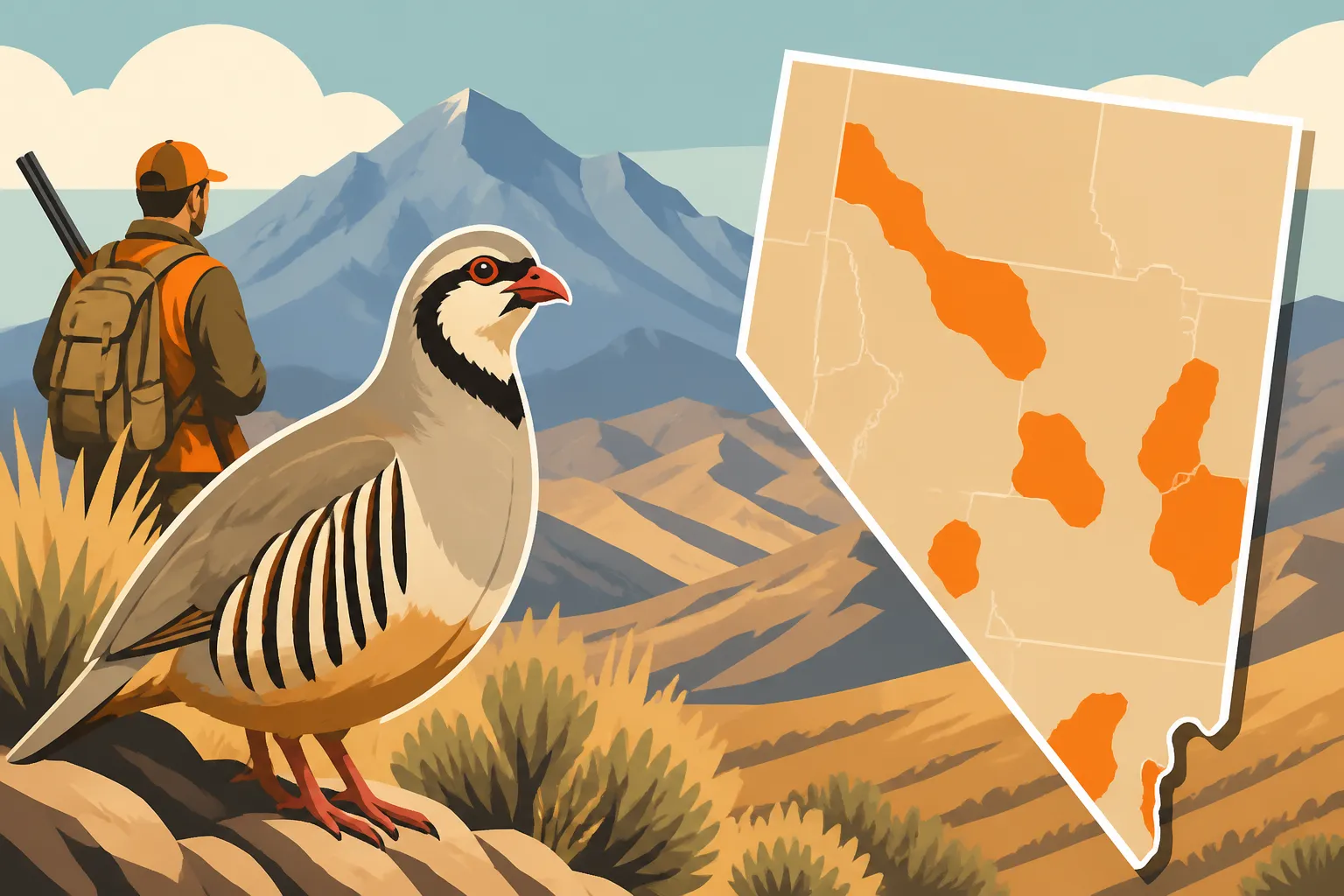
Northern Nevada, particularly the northeastern and north-central parts of the state, are often considered the traditional strongholds for chukar. The mountain ranges in areas around Elko, Winnemucca, and Battle Mountain offer expansive tracts of ideal habitat. The Santa Rosa Range, for example, is well-known for its steep slopes and chukar populations. You'll find plenty of public land managed by the Bureau of Land Management (BLM) here, crisscrossed with old mining roads and two-tracks that can get you into the general vicinity, though the real hunting often begins where the road ends.
Table: Key Chukar Habitat Indicators
| Feature | Description | Why it's Important |
|---|---|---|
| Steep Slopes | 30-60 degree grades, often rocky | Provides escape terrain and sunning spots |
| Volcanic Rock | Basalt, rimrock, talus slopes, scree fields | Excellent cover for hiding, running, and roosting |
| Cheatgrass | Dominant invasive grass, particularly on disturbed soils | Primary food source (seeds and leaves) |
| Water Sources | Springs, seeps, guzzlers, livestock troughs | Essential for daily hydration, especially in dry periods |
| Elevation | Typically 4,000-8,000 feet, but varies locally | Balances temperature regulation and vegetation zones |
| Aspect | South-facing slopes for sunning, shaded canyons for midday refuge | Optimizes thermal comfort throughout the day |
When scouting these areas, look for the convergence of steep, broken ground, decent cheatgrass growth, and most importantly, water. These elements are the triumvirate of chukar country. Remember, Remote Road Conditions Across Nevada can be brutal, so prepare your vehicle accordingly.
Central and Eastern Nevada Opportunities
Don't overlook central and eastern Nevada. Ranges like the Schell Creek Range, Ruby Mountains, and even some of the more isolated ranges around Ely and Austin can hold fantastic chukar populations. These areas often have higher elevations and more diverse vegetation, but the core principles of steep, rocky ground, water, and cheatgrass still apply. The hunting pressure might be slightly less in some of these more remote areas, though access can be equally challenging. You might find a blend of sagebrush and pinyon-juniper interspersed with the open, rocky slopes where the chukar thrive. While you might not find the sheer density of some northern Nevada units, the opportunity for a quality hunt is definitely there, especially if you’re willing to hike.
Overlooked Areas and Lesser-Known Ranges
Part of the thrill of chukar hunting is discovering those hidden gems. Many smaller, isolated mountain ranges across the state that might not be famous for big game still offer excellent chukar potential. These could be short, abrupt mountain chains rising out of a vast valley floor, often overlooked because they don't seem "big" enough. However, if they have the essential combination of steep, rocky habitat, cheatgrass, and water, chukar will be there.
These lesser-known ranges might require a bit more legwork in terms of e-scouting and on-the-ground exploration, but they often yield less pressured birds and a more solitary hunting experience. The trick is to identify those smaller, isolated uplifts that mimic the bigger ranges in terms of habitat. Sometimes, even the fringes of popular deer or elk units can offer fantastic chukar hunting, as other hunters are focused on larger game.
Practical Scouting and Hunting Strategies for Chukar
Finding chukar isn't just about knowing the general areas; it's about understanding how to effectively scout and then employ smart hunting tactics once you're on the ground. This game is all about efficiency and maximizing your efforts in unforgiving terrain.
E-Scouting Before You Go
Before you even think about putting boots on the ground, spend significant time e-scouting. This is where modern technology truly shines for the chukar hunter. Use satellite imagery on platforms like GoHunt or other mapping apps to identify key habitat features from the comfort of your home. Look for:
- Steep, broken slopes: Identify areas with significant elevation changes and visible rock outcroppings.
- Drainages and canyons: These often funnel birds and can lead you to water sources.
- Green areas: Even faint hints of green on satellite images, especially in late summer or early fall, can indicate springs or thicker cheatgrass.
- Old roads and trails: These provide access points and potential routes for hiking.
- Water sources: Actively search for springs, seeps, and guzzlers marked on maps.
- South-facing slopes: In the cooler months, these will get more sun and be favored by chukar.
Layering different map types, such as topo maps with satellite views, helps you get a comprehensive picture of the terrain. Platforms like GoHunt often have features that can help identify public land boundaries and even historical burn areas, which can sometimes lead to good cheatgrass regrowth. For a deeper dive into this, check out E-Scouting a Nevada Unit Before the Season and Using onX Layers for Nevada Public Land. The more you scrutinize maps, the better your chances of identifying promising areas and planning efficient attack routes.
Boots-on-the-Ground Reconnaissance
Once you've narrowed down your e-scouting targets, it's time for actual reconnaissance. This doesn't necessarily mean a full-blown hunting trip, but rather a dedicated scouting mission a week or two before the season opens, if possible.
- Look for sign: Chukar droppings are distinctive – small, dark, and often tubular. You'll find them concentrated around roosting sites, feeding areas, and especially near water. Feather piles can indicate predation, but also a healthy population.
- Listen: In the early mornings and late evenings, park your vehicle in a good glassing spot and simply listen. Chukar calls carry far in the quiet desert air. Their "chukar" call is unmistakable and will lead you right to them.
- Glass extensively: Use binoculars and a spotting scope to scan distant slopes. Chukar blend in incredibly well, but sometimes you can pick out movement or a tell-tale silhouette against a rock. Focus on those areas where you've identified water and good cover. Why Nevada Deer Hunting Is a Glassing Game has principles that apply well to chukar; patience with your optics is key.
- Check water sources: This is paramount. Visit identified springs and guzzlers. Look for tracks, droppings, and signs of recent bird activity. If a water source is dry, move on.
The more time you spend in the field observing before the actual hunt, the more refined your strategy will be.
Hunting Tactics: Uphill, Downhill, and Dogs
Chukar hunting is often described as a vertical endeavor. The classic strategy is to get above the birds and hunt downhill. Chukar prefer to run uphill when startled, and if you're above them, you can often push them towards a bench or a break in the terrain where they're more likely to flush. A downhill shot is also generally easier than an uphill shot, though still very challenging given their speed.
Hunting with a good bird dog is a significant advantage. Pointers or flushers can help locate birds, hold them, and retrieve downed game in thick cover and steep terrain, making a huge difference in your success and recovery rates. The best chukar dogs are tenacious, have incredible endurance, and aren't afraid of sharp rocks or cactus. If you don't have a dog, a hunting partner can be invaluable for safety and to help cover ground. Consider a two-person strategy where one hunter works the lower slope and the other works higher up, trying to sandwich the birds.
Always remember that chukar country is unforgiving. Pace yourself, hydrate constantly, and take breaks. This is Why Chukar Hunting Is So Physically Hard is such a common sentiment among chukar enthusiasts.
Gear and Preparation for a Nevada Chukar Hunt
You simply cannot go into chukar country unprepared. The right gear and a solid physical foundation are not luxuries; they are necessities for a safe and successful hunt.
Essential Gear for Steep Country
Your gear choices can literally make or break your chukar hunt.
- Footwear: This is arguably the most critical piece of equipment. You need sturdy, high-quality hiking boots with excellent ankle support and a stiff sole that can handle sharp rocks and scree. Break them in well before the hunt! Blisters in chukar country are a nightmare. Look for something specifically designed for mountain hunting or rugged terrain. Choosing Boots for Sharp Volcanic Rock is an article worth reading.
- Hydration: Carry more water than you think you need. A hydration pack with a 3-liter bladder is a minimum, and many hunters carry additional bottles. Dehydration is a serious threat in the desert. Water You Must Carry on a Desert Day Hunt cannot be stressed enough.
- Layered Clothing: Nevada's high desert experiences drastic temperature swings. You'll often start in freezing temperatures and be shedding layers by midday. A good base layer, insulating mid-layer, and a durable, wind-resistant outer shell are essential. Think about breathability for those steep climbs. Refer to Layering for Basin and Range Temperature Swings for more insights.
- Navigation: A GPS device or a reliable mapping app on your phone (with downloaded offline maps!) is non-negotiable. It's incredibly easy to get disoriented in the undulating terrain. A compass and paper map are excellent backups.
- Optics: Binoculars are vital for glassing distant slopes and spotting birds before they see you. A good pair of 10×42 or 12×50 will serve you well.
- Shotgun and Ammunition: A fast-swinging 12- or 20-gauge shotgun is typical, often with improved cylinder or modified chokes for quick, close-range shots. Bring plenty of shells; you'll miss more than you hit. Number 6 or 7.5 shot is common.
Physical Conditioning and Mental Toughness
Chukar hunting is perhaps the most physically demanding upland hunt there is. You will climb. You will descend. You will scramble. Often, it's straight up or straight down with no flat ground in between.
- Cardio: Incorporate hiking with a weighted pack, stair climbing, or incline treadmill work into your fitness routine months before the season.
- Leg Strength: Lunges, squats, and calf raises will build the muscle needed for those steep climbs and descents.
- Ankle Stability: Work on exercises that strengthen your ankles to prevent rolls and twists on uneven terrain.
- Mental Grit: Beyond physical strength, you need mental toughness. There will be moments of exhaustion, frustration, and doubt. Pushing through these moments, maintaining a positive attitude, and reminding yourself of the reward is part of the chukar experience. Many of the concepts in Preparing Physically for Long Glassing Days can be adapted to the demands of chukar hunting.
Safety Considerations in Remote Chukar Country
Safety is paramount when venturing into Nevada's remote chukar haunts.
- Tell someone your plan: Always let a non-hunting contact know your route, where you're going, and when you expect to return.
- First aid kit: Carry a comprehensive kit and know how to use it.
- Snake awareness: Rattlesnakes are present, especially in warmer weather. Be vigilant, watch where you step and put your hands, and know basic snakebite protocol. Snake Awareness on an August Archery Hunt offers good general advice.
- Emergency communication: Cell service is often nonexistent. A satellite messenger or satellite phone is highly recommended for emergencies.
- Sun protection: Hats, sunglasses, and sunscreen are essential to prevent burns and heatstroke.
- Navigation skills: As mentioned before, a reliable GPS and map are lifesavers. Know how to read them.
- Respect the terrain: Don't attempt climbs or descents that are beyond your skill level or comfort zone. A broken leg far from any road is a life-threatening situation.
Chukar hunting in Nevada offers a unique challenge and an incredibly rewarding experience. By understanding their habitat, focusing on key regions, employing smart scouting and hunting tactics, and coming prepared with the right gear and physical conditioning, you significantly increase your chances of finding these formidable game birds.
Disclaimer
This article is for general informational purposes only and does not constitute professional advice. Laws, prices and regulations vary by location and change over time. Consult a qualified professional for guidance on your specific situation.