Where Turkey Live Along Nevada Rivers
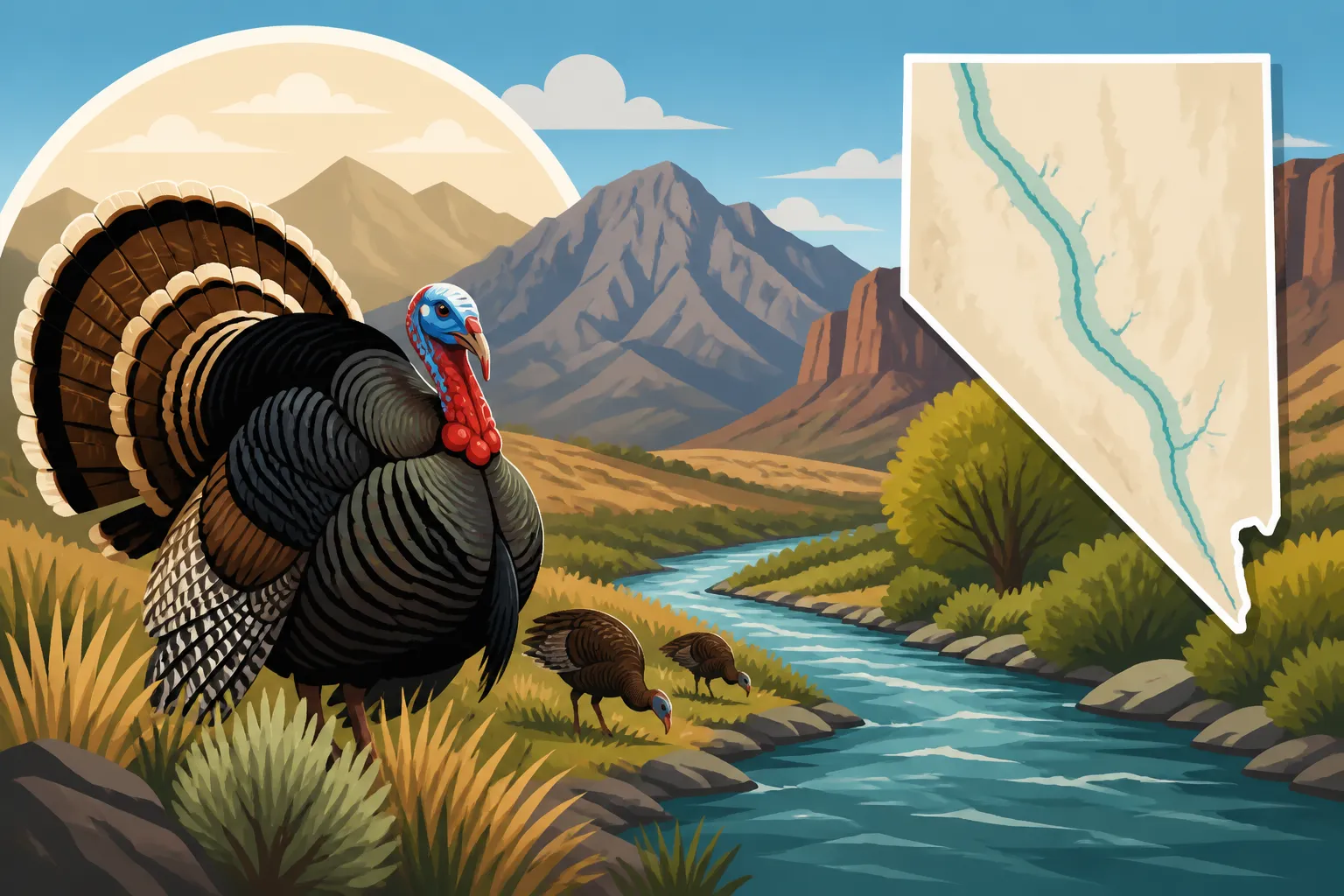
When you picture Nevada, your mind probably jumps to vast sagebrush flats, stark mountain ranges, and shimmering desert heat. It's a landscape that screams mule deer, antelope, and bighorn sheep. What most people don't picture, however, are strutting wild turkeys. Yet, they're here, carving out an unexpected existence in the ribbons of green that crisscross the state. If you've ever wondered where to find these elusive gobblers in the Silver State, this guide is going to walk you through the surprising habitats they call home, focusing on the lifelines of Nevada's rivers.
The Green Veins: Why River Corridors Are Turkey Magnets in Arid Nevada
It's easy to assume that turkeys, being woodland birds, wouldn't thrive in a state like Nevada. But that's where the unique ecology of the Great Basin comes into play. While you won't find sprawling oak forests or dense pine stands in most of the state, what you will find are critical riparian corridors – the strips of lush vegetation that hug Nevada's perennial rivers and streams. These are not just water sources; they are oases in a desert landscape, providing everything a wild turkey needs to survive and, in many cases, flourish.
More Than Just Water: The Riparian Ecosystem's Appeal
Think about what a turkey truly needs: consistent water, diverse food sources, safe roosting trees, and protective cover for nesting and escaping predators. In the vast, open, and often stark landscape of Nevada, these essentials are not found just anywhere. The river corridors, however, offer a microclimate and a concentrated burst of biodiversity that is simply absent elsewhere. These narrow bands of green become linear islands of habitat, drawing wildlife from miles around.
These areas provide a stable water supply, which is the absolute foundation for any thriving ecosystem in an arid region. Without that constant flow, the cottonwoods, willows, and other hardy plant species that turkeys rely on simply wouldn't exist. It's a stark contrast to the surrounding dry country, making these green ribbons stand out like a beacon for all sorts of wildlife. Hunters who focus on Hunting Water in Nevada's Driest Country often discover these pockets of life.
Crucial Cover and Roosting Sanctuaries
One of the most immediate benefits of river corridors for turkeys is the dense cover they provide. Unlike the scattered juniper and sagebrush that dominate much of Nevada, riparian zones boast thickets of willows, wild rose, and especially mature cottonwood trees. These trees grow tall and strong, offering ideal roosting sites, often with branches extending over the water for added predator protection. At dawn and dusk, these cottonwood giants become literal turkey hotels.
Beyond roosting, the dense undergrowth and tangled branches along the riverbanks offer unparalleled concealment. Hens can safely nest away from the prying eyes of coyotes, bobcats, and raptors, and poults have plenty of places to hide as they grow. Trying to find a camouflaged turkey in a willow thicket along a river can be incredibly challenging, even when you know they're there. This thick cover means turkeys can often exist surprisingly close to human activity without being easily detected.
Hidden Food Buffets in an Otherwise Lean Landscape
While the desert proper might offer limited foraging, the river environment is a different story. These riparian zones are bursting with a variety of food sources that sustain turkeys throughout the year. In spring and summer, insects are abundant – grasshoppers, beetles, and other invertebrates provide critical protein for growing poults and breeding hens. As the seasons change, various berries, seeds, and even some scattered acorns from native oak species found in certain drainages become vital.
The leaf litter and moist soil along the riverbanks also host a myriad of smaller creatures and plant matter that turkeys scratch and peck for. This consistent food supply, combined with the permanent water, means turkeys don't have to range nearly as far as their counterparts in drier areas to meet their daily needs. It creates a self-sustaining pantry that makes these river corridors indispensable for their survival and allows them to live in relatively confined areas.
Pinpointing the Prime Turkey Havens: Nevada's Key River Systems
Nevada's river systems are diverse, each offering unique characteristics that make them suitable for turkey populations. While these birds are not found universally across every river, certain drainages stand out as consistent homes for the Silver State's gobblers. Knowing which rivers to focus on is key to locating these birds and understanding their habits.
The Truckee River: A Western Nevada Gem
The Truckee River, flowing from Lake Tahoe through Reno and Sparks before emptying into Pyramid Lake, is perhaps one of the most surprising turkey habitats. Despite flowing through urban and suburban areas, pockets of dense riparian habitat persist. These birds are incredibly adaptable, often coexisting near human development, utilizing the dense riverine cover for sanctuary. You might not expect to find turkeys just minutes from a bustling city, but the Truckee provides exactly what they need.
Along the Truckee, you'll find extensive stands of cottonwood, willow, and Russian olive. These areas offer excellent roosting and nesting cover. While public access can be fragmented due to private land ownership, diligent scouting, often using mapping tools like GoHunt, can reveal stretches of public access, especially in the more rural areas downstream from Reno. Hunters targeting this area will need to be particularly mindful of land boundaries, using resources like Reading a Nevada Unit Boundary to stay legal.
Carson River's Lifeblood for Central Nevada Birds
Just south of the Truckee, the Carson River flows from the Sierra Nevada through Carson City, Dayton, and into the Lahontan Valley. This river system also supports a healthy, albeit localized, population of wild turkeys. The Carson's riparian corridor is often flanked by agricultural fields, which can provide additional food sources when turkeys venture out of the river bottoms. This mix of dense riverine cover and adjacent open fields creates a productive environment.
The Carson River, particularly the East and West Forks, provides excellent habitat characterized by mature cottonwoods and dense undergrowth. Access along the Carson can be a blend of public and private, with many ranch lands bordering the river. Gaining permission from landowners is often crucial here, though some public easements and state lands offer opportunities. Understanding Nevada Turkey Hunting Units is vital, as these birds are often confined to very specific unit boundaries.
The Humboldt River and Its Expansive, Yet Fragmented Reach
The Humboldt River is Nevada's longest river, stretching across the northern part of the state from its headwaters in the Ruby Mountains to the Humboldt Sink. This vast, meandering waterway offers potential turkey habitat, though often more fragmented than the Truckee or Carson. As the Humboldt flows through extensive ranch lands and more arid regions, the riparian zone becomes even more critical – a thin green line across a vast, dry landscape.
Along the Humboldt, turkeys tend to be more spread out and can be harder to locate. However, where dense stands of cottonwood and willow thrive, especially near springs or in areas less impacted by grazing, turkeys can establish themselves. These populations are often more isolated and wilder than those closer to urban areas. This is a place where patience and extensive E-Scouting, perhaps using GoHunt's satellite imagery to identify green pockets, will pay off. Looking at E-Scouting a Nevada Unit Before the Season can provide valuable insights for this type of habitat.
Smaller Drainages and Isolated Pockets of Green
Beyond the major rivers, don't overlook smaller perennial streams, creeks, and even certain springs in the more mountainous regions of Nevada. These lesser-known drainages, often tucked away in canyons or mountain valleys, can harbor small, self-sustaining turkey populations. They might not be as widespread or numerous as those on the larger rivers, but they represent unique hunting opportunities for those willing to explore.
These smaller drainages often have fewer mature cottonwoods but may feature a mix of aspens, chokecherry, and other brush that provides suitable cover and food. Access can be challenging, often requiring more rugged travel or hiking into roadless areas. Examples might include sections of the Owyhee River drainage in the north, or isolated creeks flowing out of ranges like the Ruby Mountains or Schell Creek Range. These areas might require a more rigorous physical approach, as suggested in Preparing Physically for Long Glassing Days, even for turkey hunting.
Understanding Nevada Turkey Behavior and Hunting Approaches
Hunting turkeys in Nevada's riverine environments is a unique challenge that requires an understanding of how these birds interact with their linear, often fragmented, habitat. Their behavior is often dictated by the proximity of water, cover, and food, all concentrated along these green corridors.
Adapting to the Landscape: Roosting, Feeding, and Movement Patterns
Nevada's river turkeys are masters of their linear domain. They will typically roost in the tallest available cottonwoods or sycamores along the river at night, seeking safety from ground predators. At first light, they'll pitch down, often into fields adjacent to the river or into dense riparian undergrowth to begin foraging. Their movement patterns tend to be less about wide-ranging travel and more about following the river's course, often sticking close to the water and cover.
During the day, they'll work their way along the river, feeding on insects, seeds, and any available mast crops. Mid-day might find them loafing in dense shade, especially during warmer spring days. Understanding these patterns is critical for setting up calling positions or intercepting birds. Unlike turkeys in vast forests, Nevada's river turkeys often have a limited escape route – up or down the river, or across it. This can be an advantage for hunters who can predict their travel.
Scouting Smart: Tools and Techniques for Finding Birds
Successful turkey hunting in Nevada starts with meticulous scouting. Given the fragmented nature of their habitat, identifying key areas on a map before you even step foot in the field is paramount. Satellite imagery, which you can easily access through platforms like GoHunt, is your best friend. Look for the darkest green bands indicating mature trees and dense riparian growth. These are your potential roosting and feeding zones. Pay attention to bends in the river where vegetation might be particularly thick or where it opens up to adjacent fields.
Ground scouting is equally important. Look for fresh tracks in the soft soil near the water, droppings, and scratch marks where they've been feeding. Listen for gobblers at dawn from different vantage points along the river corridor. A pre-season scout can tell you a lot about turkey numbers and their preferred hangouts. Remember, these birds often stick to surprisingly small sections of river if the resources are good, so don't give up on a spot too quickly. Knowing How Guzzlers Concentrate Desert Game in other areas can help you understand how water draws in species, even if these aren't traditional guzzlers.
Navigating Access: Public Land Challenges and Private Opportunities
Access is often the biggest hurdle when hunting Nevada's river turkeys. Many of the most productive river sections, especially along the Truckee and Carson, flow through private ranch land or residential areas. Respect for private property is absolutely non-negotiable. Always obtain explicit permission from landowners before venturing onto private land. A polite knock on the door or a well-written letter can sometimes open up fantastic opportunities.
However, there are public access points. State Wildlife Management Areas (WMAs), Bureau of Land Management (BLM) lands, and some county or city parks (where hunting is permitted) can offer opportunities. Utilize public land mapping tools, like those found on GoHunt, to identify these parcels. Understanding Reading a Nevada Hunt Unit Before You Apply will help you find the boundaries and ownership types of potential hunting areas. Be prepared to hike a bit to get away from road access and find less pressured birds.
Hunting Nevada Turkeys: Strategy, Seasons, and Success
Once you've done your homework and located some potential turkey hot spots, it's time to think about the actual hunt. Nevada's turkey seasons are generally in the spring and sometimes a limited fall season, offering different challenges and opportunities.
Calling Tactics Tailored for Riverine Environments
Turkeys in river corridors can be vocal, especially in the spring. Your calling strategy should account for the linear nature of their habitat and potential noise from the river itself. Aggressive calling can sometimes work, but often a more subtle approach is better in areas where birds might be accustomed to human presence or are pressured. Start with soft tree yelps at dawn to locate birds on the roost.
Once you get a response, try to position yourself strategically where the gobbler will naturally want to come towards you along the riverbank or through a break in the cover. Don't be afraid to use locator calls like owl hoots or crow calls to get a shock gobble without giving away your exact position too early. Remember to use the terrain and cover to your advantage, especially if trying a Two-Hunter Calling Setups That Actually Work, with one caller pulling the bird into the other's shooting lane.
Season Timing and What to Expect
Nevada typically offers a spring turkey season, which usually runs for several weeks. This is your prime opportunity to call in strutting gobblers. The spring season often coincides with peak breeding activity, making males more responsive to calling. Nevada Turkey Season Dates will give you the precise window each year. Fall seasons, when available, are generally over-the-counter and target either-sex birds. Fall hunting typically involves more "run and gun" or "still hunting" tactics, trying to break up flocks and call birds back in.
During the spring, expect warm to hot weather in many of Nevada's river bottoms, particularly as the season progresses. Proper hydration and lightweight clothing are essential. For youth hunters, checking Youth Hunting Requirements in Nevada is also important before planning a trip.
Essential Gear for a Nevada Turkey Hunt
While many turkey hunting essentials apply, a few specific items are particularly useful for Nevada's riverine environments:
- Mapping App: A robust GPS mapping application on your phone, like GoHunt, is invaluable for navigating public/private land boundaries and identifying key habitat features.
- Good Optics: A pair of quality binoculars will help you pick apart dense cover and spot birds from a distance, especially if they are moving along an open stretch of river.
- Waterproof Boots: You'll likely be walking through damp ground, tall grass, and potentially mud, so waterproof footwear is a must.
- Decoys: A fan or full-body turkey decoy can be very effective in these environments, especially in areas where birds have good sight lines along the river or across fields.
- Comfortable Vest/Pack: You'll need to carry calls, water, snacks, and any harvested bird comfortably.
Remember to also be mindful of all general hunting regulations, including Baiting Rules That Apply in Nevada, as they pertain to all big game and upland species. While turkeys might not be the first thing that comes to mind when you think of Nevada hunting, they offer a challenging and rewarding experience for those willing to seek them out in their unexpected riverine homes.
| River System | General Location | Primary Habitat | Access Challenges | Best for Scouting |
|---|---|---|---|---|
| Truckee River | Western Nevada (Reno/Sparks area) | Mature cottonwoods, willows, urban/suburban interface | Fragmented public land, private development | Satellite imagery, pre-season driving/listening |
| Carson River | Central Nevada (Carson City, Dayton) | Cottonwood galleries, agricultural fields | Private ranches, some state/BLM | Permission requests, mapping apps for public pockets |
| Humboldt River | Northern Nevada (East to West) | Scattered cottonwood/willow, vast ranchland | Long distances, isolated public sections | Extensive e-scouting, focus on denser pockets |
| Smaller Drainages | Throughout mountainous regions | Mixed brush, aspens, isolated timber | Rugged terrain, limited roads | Topographic maps, physical exploration |
Disclaimer
This article is for general informational purposes only and does not constitute professional advice. Laws, prices and regulations vary by location and change over time. Consult a qualified professional for guidance on your specific situation.