How Guzzlers Support Desert Wildlife
Hunting in the vast, often parched landscapes of Nevada presents a unique challenge: finding water. For hunters and wildlife alike, water is the lifeblood of the desert, and its scarcity dictates movement, survival, and opportunity. This guide will dive deep into one of the most vital, yet often overlooked, elements supporting Nevada's desert wildlife: the guzzler, exploring how these ingenious systems not only sustain a multitude of species but also influence hunting strategies and success in the driest corners of the state.
What Exactly Is a Guzzler and Why Are They So Crucial?
When you envision a desert, you probably picture endless sagebrush, sparse mountains, and searing sun. What's often missing from that picture is readily available water. That's where guzzlers come in. These aren't natural springs, but rather man-made water collection and storage systems designed to provide a consistent water source in arid environments where natural water is scarce or nonexistent. Without them, vast tracts of Nevada's public land would be virtually devoid of many of the game animals we pursue.
The Lifeline in a Land of Little Water
Imagine a desert bighorn sheep herd or a mule deer buck trying to survive in an area that might only see significant rainfall a few times a year, often in short, intense bursts that quickly evaporate or soak into the dry earth. Natural springs are few and far between, and their reliability can fluctuate wildly with drought cycles. Guzzlers fill this critical gap. They capture rainwater and funnel it into underground storage tanks, then slowly release it into a drinker. This design protects the precious water from evaporation and keeps it cool, offering a year-round, reliable water source that can literally mean the difference between life and death for desert wildlife.
The impact of guzzlers is hard to overstate. They create pockets of biodiversity, turning otherwise uninhabitable landscapes into viable habitat. Think about it: an area with forage and cover might be completely unusable if there’s no water within a reasonable distance for an animal to safely access it. Guzzlers essentially expand the functional range for numerous species, allowing them to utilize resources they otherwise couldn't. This is especially vital for species like desert bighorn, mule deer, and chukar, which can't travel vast distances daily for water without expending too much energy or exposing themselves to predators. The presence of a guzzler can influence How Guzzlers Concentrate Desert Game in specific areas, making these locations prime spots for scouting and hunting.
Types of Guzzlers You Might Encounter
Not all guzzlers are created equal, though they all serve the same fundamental purpose. The type you encounter will often depend on the terrain, the intended species, and when it was built. Understanding the different designs can give you clues about the area and the animals it's meant to support.
The most common are "big game" guzzlers, often characterized by a large collection apron, usually made of corrugated metal or a similar impervious material, sloping down into a large underground storage tank. From the tank, a pipe leads to a drinker trough, which is often a low-profile concrete or metal basin. These are built to hold thousands of gallons and are designed for larger animals like deer, elk, and bighorn sheep. You might find these tucked into the side of a remote mountain, strategically placed where historical game trails intersect or where there's good browse nearby.
Then there are "upland bird" guzzlers, sometimes called "Chukar guzzlers" or "Gambel's guzzlers." These are smaller, designed for species like chukar, quail, and other small birds and mammals. Their collection aprons might be smaller, or they might utilize natural rock outcrops to funnel water into smaller tanks. The drinker is typically shallower and often includes small rocks or gravel so birds can safely access the water without falling in. These are incredibly important for bird populations, especially in the rocky, steep terrain where chukar thrive. Why Rainfall Drives Chukar Numbers is a huge factor, and guzzlers help buffer those dry periods.
You might also come across what are sometimes called "modified natural springs" or "trickle tanks." These aren't entirely man-made from scratch but involve enhancing a natural seep or spring by piping the water into a small tank or drinker to prevent evaporation and ensure a more reliable supply. While less common than dedicated guzzlers, they serve a similar purpose in providing protected water.
Here’s a quick overview of common guzzler types:
| Guzzler Type | Primary Species Targeted | Collection Method | Storage Capacity | Drinker Design | Typical Location |
|---|---|---|---|---|---|
| Big Game | Deer, Elk, Bighorn, Pronghorn | Large corrugated metal/concrete apron | Large (1000s gal) | Large, low-profile trough | Remote mountain slopes, high desert plateaus |
| Upland Bird | Chukar, Quail, Doves, Small Game | Smaller apron, often uses natural rock | Small (100s gal) | Shallow basin with gravel/rocks | Steep, rocky hillsides, lower desert canyons |
| Trickle Tank | Various, often opportunistic | Enhances natural seep/spring with piping | Variable (small) | Small trough or basin, often at ground level | Near existing natural water sources |
How Guzzlers Transform Desert Ecosystems for Wildlife
Guzzlers are more than just water holes; they are catalysts for life in the desert. Their strategic placement and reliable nature fundamentally alter how wildlife utilizes vast swaths of Nevada, creating new opportunities for survival and, consequently, for hunters. They've been a crucial part of the state's wildlife management efforts for decades, providing stability in an inherently unstable environment.
Concentrating Game for Survival and Hunting Opportunities
One of the most significant impacts of guzzlers is their ability to concentrate game. In areas where natural water is sparse, a guzzler becomes an essential hub. Animals will often establish their territories and daily patterns around these dependable water sources. This is particularly evident during dry spells or in the heat of an August archery hunt, where animals must water regularly. A buck might spend the bulk of its day in a distant canyon, but you can bet it's got a route planned to a nearby guzzler. This concentration makes guzzlers prime areas for scouting, especially for big game like mule deer and bighorn sheep.
For hunters, understanding this concentration is key. It doesn't mean you sit directly on top of a guzzler—that's generally not ethical or effective for a hunt, and in many places, specific distances are legally required to be maintained. However, it does mean that the terrain and cover around a guzzler become highly valuable for finding game. You might find more fresh tracks, rub lines, and droppings in the vicinity. Animals will often bed in cover that offers a clear path to water or provides vantage points to spot predators before approaching. Experienced hunters often study maps from providers like GoHunt to pinpoint not just guzzlers, but also the surrounding terrain, potential travel corridors, and bedding areas. Knowing Sitting Water in Nevada's Dry Units is a tactic, but it's more about understanding game movement relative to the water.
This concentration isn't just about finding game; it's about survival. By providing reliable water, guzzlers help maintain healthier animal populations. Stronger, well-hydrated animals are more resilient to disease, better able to escape predators, and ultimately contribute to more robust herd numbers overall. This stability is crucial for ensuring sustainable hunting opportunities year after year.
Supporting Diverse Species Beyond Big Game
While big game animals like mule deer, elk, and bighorn sheep are often the poster children for guzzler benefits, these water sources actually support a much broader array of desert wildlife. Think of the intricate web of life that depends on water in an arid land.
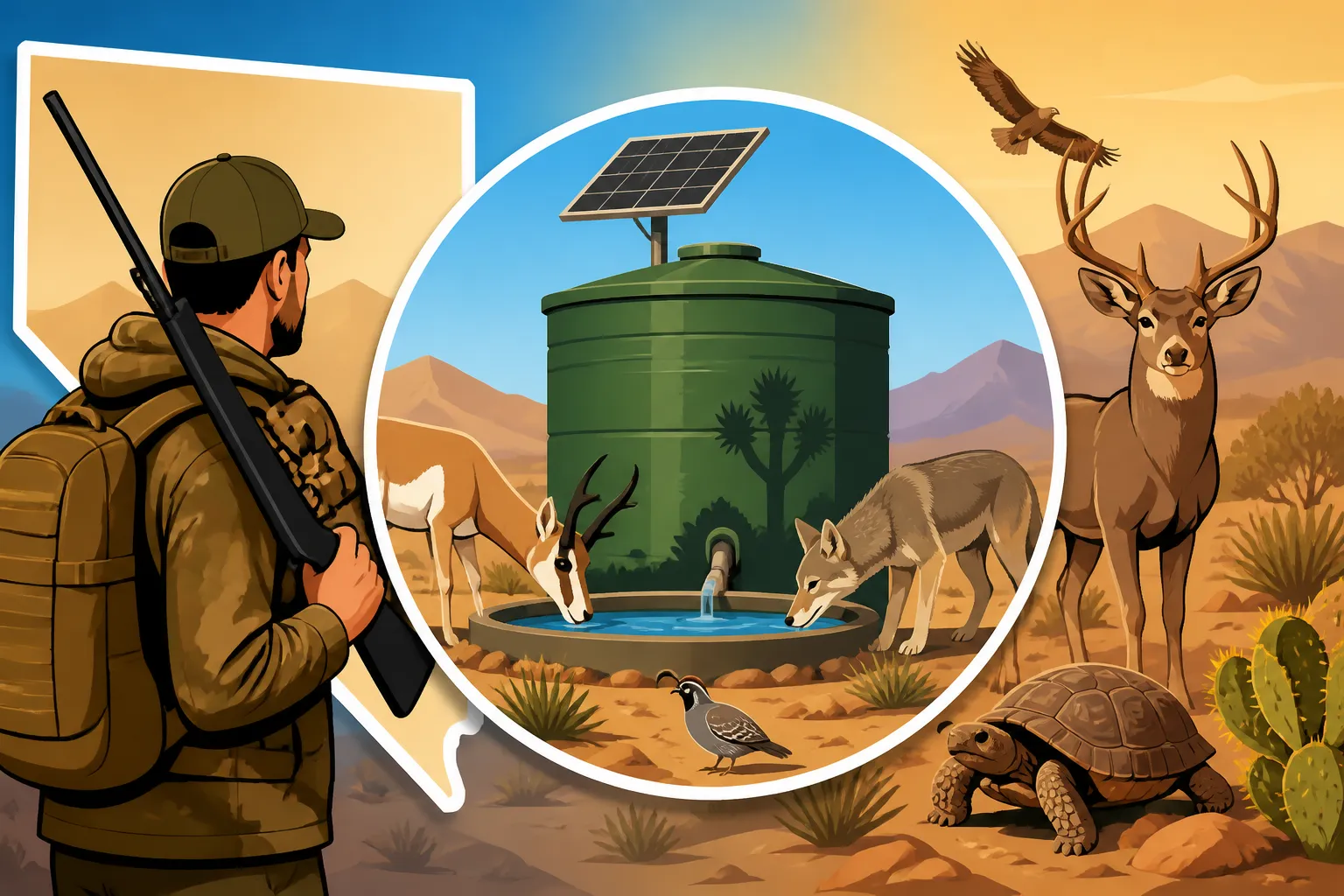
Upland birds, as mentioned earlier, are incredibly dependent on guzzlers. Chukar, Gambel's quail, and valley quail will flock to guzzlers, especially during the hottest parts of the day. Without these sources, their populations would be severely limited in many areas. Similarly, predators like coyotes, bobcats, and mountain lions also utilize guzzlers – not just for water, but as ambush points for the prey animals that gather there. This creates a miniature ecosystem of its own.
Beyond game species, a multitude of non-game animals also benefit. Small mammals like rabbits, ground squirrels, and various rodents need water. Many species of reptiles and amphibians, even those adapted to arid conditions, will make use of any available moisture. Even migratory birds will briefly visit guzzlers as they traverse the dry expanses. The small insects and vegetation that grow around the drinker can also provide food for various small creatures. Essentially, a guzzler becomes an oasis, fostering a greater diversity of life in an otherwise harsh environment. This holistic benefit underscores the importance of these structures not just for hunting, but for the ecological health of Nevada's deserts.
The Hunter's Role in Guzzler Maintenance and Ethics
As hunters, we have a unique relationship with the land and its resources. We benefit directly from the presence of guzzlers, and therefore, we have a responsibility to ensure their continued functionality and to approach them with respect and ethical consideration. Our actions around these vital water sources directly impact wildlife and the future of hunting.
Respecting and Reporting Guzzler Conditions
Finding a guzzler in a remote corner of Nevada can feel like discovering a hidden treasure. It's a place where you're almost guaranteed to see signs of life, even if the animals themselves aren't present at that moment. Because these systems are so critical, it's paramount that hunters treat them with care. This means never tampering with the collection apron, storage tank, or drinker. Don't leave trash, food waste, or anything that could contaminate the water or attract unintended wildlife, like bears or non-native species, or simply leave an unsightly mess.
Sometimes, guzzlers can fall into disrepair. A collection apron might be damaged, a pipe might leak, or the drinker could be clogged with debris. If you encounter a guzzler that appears damaged or isn't functioning correctly, it's incredibly helpful to report it to the Nevada Department of Wildlife (NDOW) or the managing land agency (like the BLM or Forest Service). Many state wildlife agencies, and even private conservation groups like the Wild Sheep Foundation or Mule Deer Foundation, have dedicated programs for guzzler maintenance and rely on reports from people like us who are out in the field. Documenting its location, taking photos, and providing a brief description can make a big difference. Utilizing mapping tools, perhaps even those from GoHunt, can help you get precise GPS coordinates for your report. Knowing How to Locate a Guzzler From Home is a great first step, but verifying its condition in the field is just as important.
Ethical Hunting Around Water Sources
The concentration of game around guzzlers brings up important ethical considerations for hunters. While guzzlers are natural attractants for wildlife, hunting directly over them is often frowned upon or even illegal in many jurisdictions, including parts of Nevada. The goal is to provide a safe, reliable water source for animals, not to create an unfair advantage for hunters. Always check the current Nevada hunting regulations, which can be found where The Current Nevada Regulations Are Posted, for specific rules regarding hunting distances from man-made water sources. These rules are in place to ensure fair chase and prevent undue pressure on animals at their most vulnerable.
Even if it's legally permissible to hunt near a guzzler, consider the spirit of fair chase. The animals need that water to survive, especially in harsh conditions. Sitting directly on a guzzler for prolonged periods can disrupt their natural patterns, scare them away from a vital resource, and cause unnecessary stress. Instead, use guzzlers as an intelligence gathering point. Scout the area for fresh sign, identify travel corridors leading to and from the water, and then position yourself a reasonable distance away, using terrain and wind to your advantage. Focus on intercepting animals as they move through their natural patterns, rather than ambushing them at a life-sustaining drink. This approach shows respect for the animal and the resource, preserving the integrity of the hunt.
Finding and Interpreting Guzzlers on Your Hunt
Successfully incorporating guzzlers into your hunting strategy requires more than just knowing they exist; it means knowing how to find them and how to interpret the information they provide. This is where modern tools and old-fashioned tracking skills come together.
Using Technology to Locate Guzzlers
Gone are the days when you had to stumble upon a guzzler by chance. Today's technology makes locating these vital water sources much easier. Digital mapping applications are your best friend here. Many popular hunting apps, including those from GoHunt, have layers that specifically show known guzzlers, springs, and other water sources. You can view these on your computer before your hunt, plan your routes, and then carry them on your phone or GPS device in the field.
When using these tools, don't just look for the guzzler icon. Zoom in and study the surrounding terrain. What kind of cover is nearby? Are there steep ridges that might funnel game towards the water? Are there open flats where pronghorn might water? Identifying potential bedding areas, escape routes, and feeding grounds in relation to the guzzler can help you predict game movement. For example, knowing How Springs Shape Nevada Hunting Patterns can provide additional context, as animals will often prefer natural sources if they're available and reliable.
Satellite imagery is another powerful tool. Once you've identified a guzzler on a map, switch to satellite view. Sometimes, you can even make out the collection apron or the disturbed earth around the drinker, confirming its presence and giving you a visual of the immediate surroundings. This can also help you judge vehicle access – Reading a Nevada Unit Boundary Before You Apply often involves looking for access roads and trails, and guzzlers are frequently placed where they can be serviced, meaning there might be a faint two-track leading to them, even if it's not marked on all maps. Remember to download your maps for offline use, as cell service is often non-existent in the remote areas where guzzlers are typically found.
Reading Animal Sign Around a Guzzler
Locating a guzzler on a map is only the first step. Once you're on the ground, the real scouting begins. The area around a guzzler is a treasure trove of information about local wildlife activity. Take your time approaching it, watching for fresh tracks on game trails leading in. Animals often travel specific paths to water, and these trails can tell you what species are using the guzzler, how recently, and in what numbers. Look for distinct tracks of mule deer, elk, bighorn, or even chukar.
Examine the ground directly around the drinker. Is the mud fresh or dried and cracked? This tells you about recent activity. Look for droppings – fresh droppings indicate very recent use. You might also find hair caught on fences or low branches around the guzzler, providing clues about the size and species of animals using it. Pay attention to rub lines on trees or bushes if you're in an area with some vegetation; these can indicate buck or bull activity.
Beyond immediate sign, consider the broader area. Where might animals bed during the heat of the day? Where do they typically feed? Look for signs of browsing on nearby vegetation. Are there dusty wallows or areas where birds have been dust-bathing? All of these clues, combined with the presence of a reliable water source, paint a detailed picture of how wildlife is utilizing that specific piece of habitat. Remember, the guzzler is the anchor, but the story of the animals unfolds in the landscape around it. Understanding Hunting Water in Nevada's Driest Country isn't just about finding the water, but about understanding the entire pattern of movement it creates.
In conclusion, guzzlers are silent heroes of Nevada's arid landscapes. They are a testament to effective wildlife management and conservation efforts, providing life-sustaining water that allows desert ecosystems to thrive. For hunters, they are crucial focal points for understanding game movement, planning effective strategies, and ultimately, connecting with the wild spirit of the Great Basin. Respecting these resources and understanding their role is part of being a responsible steward of Nevada's incredible hunting heritage.
Disclaimer
This article is for general informational purposes only and does not constitute professional advice. Laws, prices and regulations vary by location and change over time. Consult a qualified professional for guidance on your specific situation.