Why Rainfall Drives Chukar Numbers
Anyone who has spent a season, or even just a grueling morning, chasing chukar across Nevada's steep, rocky hills knows the feeling of immense frustration when the birds just aren't there. It's easy to blame your boots, your calling, or just plain bad luck, but often, the most significant factor is something far beyond your control: the rainfall. Understanding the intricate dance between desert moisture and chukar populations is absolutely critical for any hunter hoping to fill a vest, and this guide will peel back the layers on precisely why rainfall drives chukar numbers, helping you read the landscape for a more successful hunt.
The Delicate Dance of Desert Rainfall and Chukar Life
Nevada's landscape is defined by its aridity. It's a land of extremes, and chukar partridge are uniquely adapted to thrive here, but they are far from immune to the whims of the weather. While many factors play a role in their survival, nothing sets the stage for a good chukar year quite like the right amount and timing of rainfall. It’s not just about a wet winter; the when and how of the moisture truly make all the difference for these wily birds.
The Critical Role of Spring and Summer Moisture
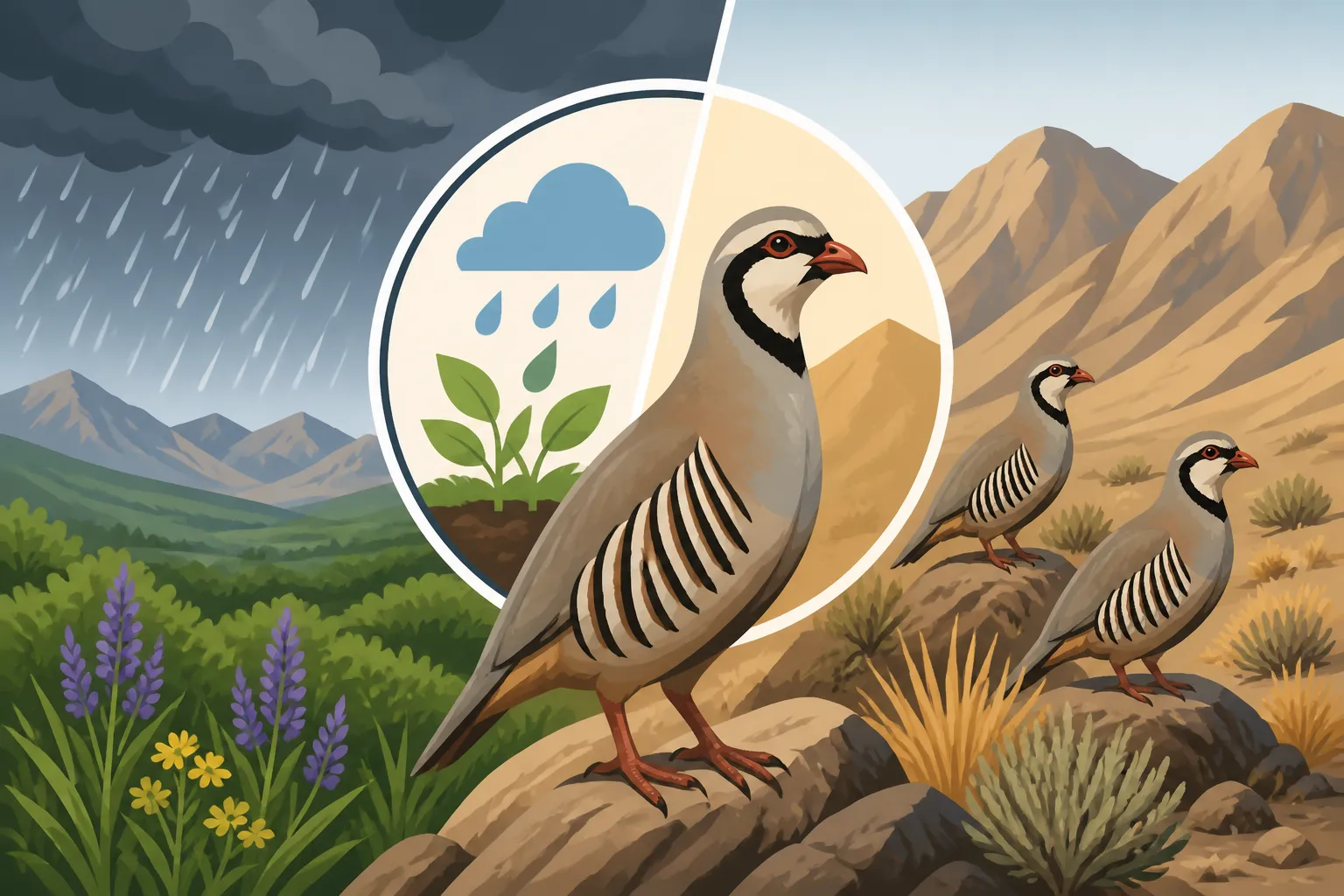
Think about what a baby bird needs to survive: food, water, and cover. For chukar chicks, born typically in late spring, these needs are met almost entirely by the bounty that follows a good rain. If the spring brings enough moisture, you'll see a lush "green-up" of annual grasses and forbs across the slopes. This isn't just pretty scenery; it's a buffet and a nursery.
Firstly, this greenery supports an explosion of insect life. Grasshoppers, beetles, ants, and various other invertebrates become abundant. These tiny protein packages are absolutely vital for growing chukar chicks. They need a high-protein diet to develop quickly, and without a robust insect population, chick mortality skyrockets. Imagine trying to feed a dozen hungry mouths with only dry crackers; that's what a drought-stricken landscape is like for a chukar hen.
Secondly, those green plants provide crucial cover. Young chukar are incredibly vulnerable to predators, both aerial and terrestrial. Thick, green vegetation offers places to hide, to forage safely, and to escape from the harsh desert sun during the hottest parts of the day. Without this natural canopy, chicks are exposed targets for hawks, eagles, and coyotes. A good spring rain sets off a chain reaction: more plants mean more bugs, more cover, and ultimately, more surviving chukar chicks, creating a strong "recruitment" year that translates to more birds in the fall. You'll often hear veteran hunters in Nevada talking about the spring rains – it’s because they instinctively know this is the primary indicator of what the fall hunting will look like.
How Drought Squeezes Chukar Populations
On the flip side, when the rains don't come, or when they are too sparse and poorly timed, chukar populations take a massive hit. Drought years are absolutely brutal for these birds, and if you’ve hunted chukar in Nevada during one, you know the soul-crushing effort required to find even a single covey. It's not just that there's less water; the entire ecosystem supporting the chukar falls apart.
The most immediate impact is on the food chain. Without moisture, there's no widespread green-up. Those crucial annual plants either don't sprout or shrivel quickly. This means a severe lack of insects for the chicks. Hens struggle to find enough protein for their brood, and the chicks, if they hatch at all, often starve or are too weak to escape predators. The limited green forage that does exist quickly dries out, becoming unpalatable and offering minimal nutritional value. This scarcity of resources puts immense stress on the entire population, weakening adults and making them more susceptible to disease or further predation.
Furthermore, drought creates a landscape with very little cover. The steep, rocky slopes that chukar call home become stark and exposed. Chicks have nowhere to hide, making them easy prey. Even adult birds, usually masters of camouflage among the rocks, become more visible as they search desperately for any available food or water. Water sources themselves become critically scarce. While chukar are known for their ability to go long periods without free water, relying on metabolic water from their diet, prolonged drought pushes them to seek out isolated springs and guzzlers. This concentrates them, ironically making them easier targets for predators who also learn these critical water points. Hunting Water in Nevada's Driest Country becomes a survival strategy for the birds, not just a hunting tactic for us. It’s a cascading effect where every link in their survival chain is weakened, leading to fewer birds surviving into hunting season.
Beyond the Rain: Other Factors Influencing Chukar Numbers
While rainfall is undeniably the star player in the chukar numbers game, it's not the only player. The health of their habitat, the presence of predators, and even human hunting pressure all contribute to the overall picture. Ignoring these other elements would give you an incomplete understanding of why those chukar populations ebb and flow. It’s like trying to understand a complex recipe by only looking at one ingredient.
Habitat Condition and Cheatgrass Infestation
Chukar thrive in specific habitat: steep, rocky canyon country, often dominated by sagebrush, bitterbrush, and various perennial grasses. These native plants provide consistent food sources, thermal cover, and nesting sites. When this habitat is healthy and diverse, chukar have a strong foundation to weather environmental fluctuations.
However, a major threat to chukar habitat across Nevada and the Great Basin is the rampant spread of cheatgrass. Cheatgrass and What It Did to Nevada Range is a grim reality that impacts countless species, including our beloved chukar. Cheatgrass is an invasive annual grass that germinates early, quickly outcompetes native vegetation, and then dries out by late spring, creating a highly flammable fuel source. In areas heavily infested with cheatgrass, the beneficial native plants are choked out. This means less nutritious forage for chukar, fewer insects, and less stable cover.
Perhaps even more devastatingly, cheatgrass fuels massive wildfires. These fires burn hotter and faster than historical fires, destroying the very sagebrush and bitterbrush that chukar rely on for long-term cover and food. After a severe burn, cheatgrass often returns with a vengeance, further entrenching its dominance and creating a cycle of degradation. A landscape choked by cheatgrass, even with good rainfall, won't support as many chukar as a healthy, diverse native habitat. This makes e-scouting tools from companies like GoHunt incredibly useful, as they often provide vegetation maps that can help you identify areas with healthy native plant communities versus those dominated by invasive species. You can then use this information in conjunction with historical rainfall data.
Predation and Hunting Pressure
Predators are a natural part of any ecosystem, and healthy chukar populations can generally withstand typical predation levels. Raptors like red-tailed hawks and golden eagles are common aerial predators, while coyotes, bobcats, and even snakes will prey on chukar, especially vulnerable chicks and eggs. In years with strong chick production due to good rainfall, the sheer numbers of chukar can outpace predator efficiency, meaning a higher percentage of birds survive to adulthood.
The problem arises when chukar populations are already stressed, such as during a drought year. With fewer birds, any predation can have a disproportionately larger impact. Weakened birds are easier targets, and what would be a sustainable level of predation in a good year can become a significant limiting factor in a poor one. Wildlife agencies carefully monitor predator populations and chukar numbers, adjusting management strategies as needed.
Hunting pressure is another factor. While chukar hunting is Why Chukar Hunting Is So Physically Hard and generally self-regulating – few hunters can withstand endless hours of climbing for limited success – agencies like the Nevada Department of Wildlife (NDOW) manage seasons and bag limits to ensure sustainability. Nevada Chukar Bag Limits are set based on population estimates and harvest data. In general, recreational hunting doesn't typically depress chukar populations as much as habitat loss or severe drought, but it is a factor that wildlife managers consider, especially during lean years. Hunters, too, can use resources like Where Nevada Publishes Harvest Data to get a sense of past success rates, which often correlate with population health.
Reading the Landscape: Predicting Chukar Numbers Before Your Hunt
Given how much rainfall and habitat influence chukar, you might feel like it's all up to Mother Nature. But that's not entirely true. Smart hunters can become better naturalists, learning to read the clues the landscape offers. This doesn't guarantee birds, but it certainly increases your odds and helps you choose where to invest your precious time and energy. It's about working smarter, not just harder, when you're looking for Where to Find Chukar in Nevada.
Tracking Rainfall Data and Green-Up
One of the most powerful tools in your chukar scouting arsenal doesn't require hiking boots; it requires a computer and an internet connection. Start by tracking rainfall data for the specific Nevada units you're interested in. You're looking for consistent, well-timed spring and early summer moisture. Websites like the National Oceanic and Atmospheric Administration (NOAA) or even local weather stations can provide historical and current precipitation maps. Many sophisticated hunting apps and scouting platforms, such as those offered by GoHunt, integrate this data, making it easier to visualize.
Beyond just rainfall numbers, pay attention to the "green-up." Satellite imagery, especially from sources like Google Earth or dedicated mapping platforms (again, GoHunt excels here with its satellite layers), can show you how much vegetation growth occurred in the spring. Look for vibrant green patches in the usually arid terrain. A strong, widespread green-up in late spring/early summer is a very positive indicator for chick survival and, consequently, higher chukar numbers in the fall. Conversely, if the satellite images show brown, parched slopes by June, it's a strong signal that chick production was likely poor. This kind of E-Scouting a Nevada Unit Before the Season can save you countless miles of walking in unproductive country.
| Indicator | Positive Outlook (More Chukar) | Negative Outlook (Fewer Chukar) |
|---|---|---|
| Spring Rainfall | Consistent, moderate rainfall in April-June. | Dry spring, or very heavy, short-duration deluges. |
| Summer Green-up | Widespread, sustained green vegetation visible on satellite. | Parched, brown hillsides by early summer. |
| Insect Activity | Reports of abundant grasshoppers, crickets, and other bugs. | Noticeable absence of insect swarms. |
| Native Vegetation | Healthy stands of sagebrush, bitterbrush, perennial grasses. | Sparse natives, dense cheatgrass monocultures. |
| Water Sources | Numerous small springs and seeps holding water. | Only major guzzlers or permanent springs have water. |
| Last Season's Count | Good numbers of birds observed, decent harvest success. | Low numbers, difficult hunting. |
Scouting for Sign and Habitat Assessment
Once you're on the ground, your eyes become your most valuable tool. Learn to assess the habitat quality firsthand. Are there diverse native grasses and forbs, or is it a sea of dry, brittle cheatgrass? Look for patches of bitterbrush or sagebrush that offer good cover. Chukar prefer steep slopes with a mix of open areas for sunning and rocky outcroppings for quick escape and protection from raptors. When you’re considering which areas hold the best potential for Best Chukar Country in Northern Nevada, you’re really looking for these specific habitat elements.
Beyond the general habitat, look for direct chukar sign. Tracks in dusty areas near water sources or along rocky benches are a great indicator. Their distinctive "V"-shaped droppings, often found on prominent rocks or under roosting areas, are another clear sign. Dust baths, which look like small, shallow depressions in dusty soil, are also a definite indicator that birds are using the area. Listen, too. Even if you don't see birds, hearing their distinctive "chuk-chuk-chuk" call from a distance tells you they're in the vicinity.
Combine this ground scouting with your remote research. Use a good mapping app to plan your attack, focusing on areas with promising rainfall data and healthy habitat. Consider how terrain helps or hinders your approach, recalling what makes Why Chukar Hunting Is So Physically Hard. Even if the numbers are down overall due to poor rainfall, localized pockets with better microclimates or more resilient habitat might still hold birds. This attention to detail, born from understanding the fundamental role of rainfall, is what separates a truly prepared chukar hunter from someone simply hoping for luck. Remember, Choosing Boots for Sharp Volcanic Rock will make or break your day, but knowing where to wear them is half the battle.
Disclaimer
This article is for general informational purposes only and does not constitute professional advice. Laws, prices and regulations vary by location and change over time. Consult a qualified professional for guidance on your specific situation.