Water Is the Access Problem in Southern Nevada
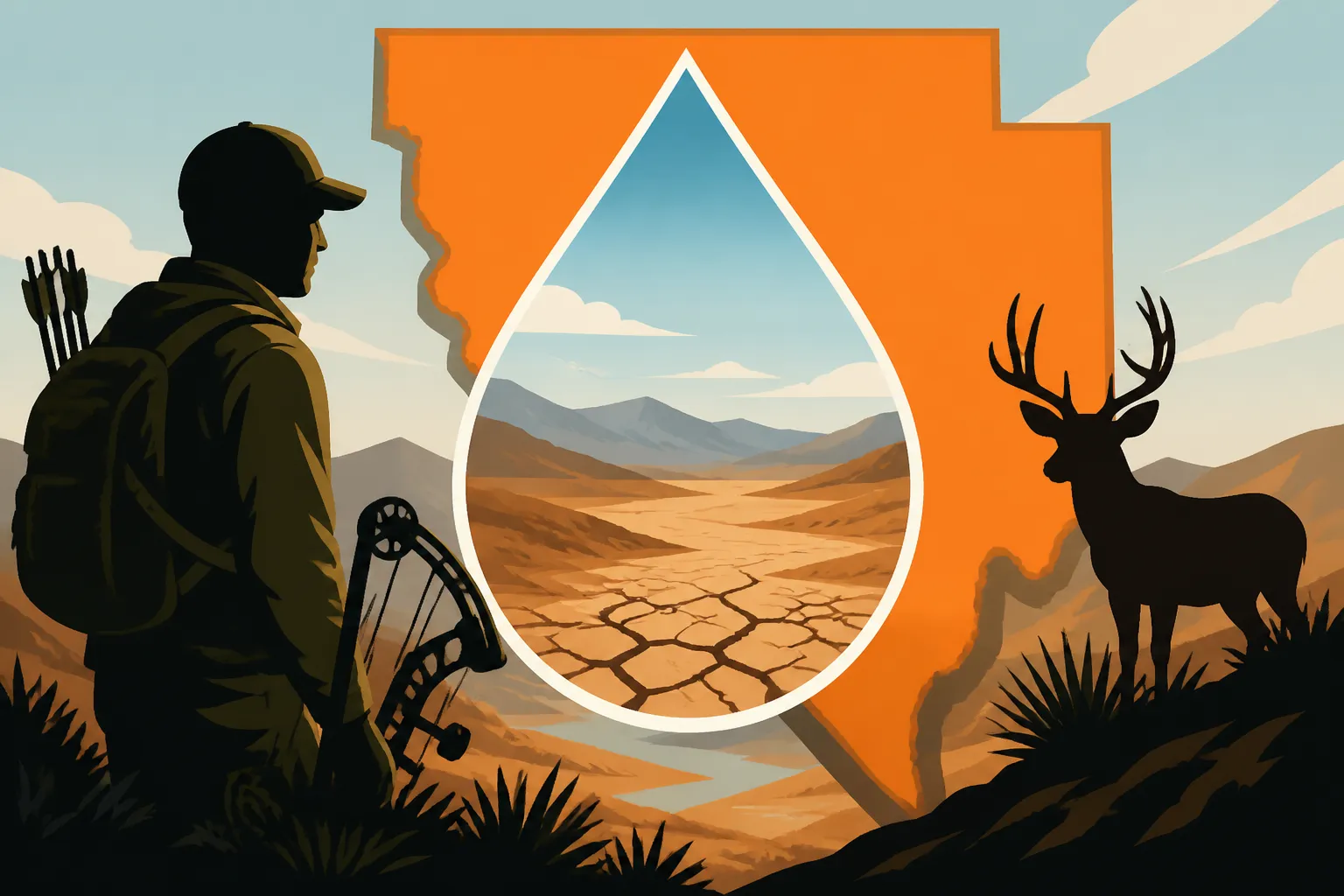
Hunting in Southern Nevada presents a unique set of challenges, and one of the biggest, often overlooked until you're out there feeling the sun beat down, is water. It's not just about finding it for yourself; it's about understanding how the scarcity of water fundamentally dictates where big game lives, moves, and offers opportunities for hunters. This guide is here to walk you through how water scarcity isn't merely an inconvenience, but the defining factor in planning and executing a successful hunt in the arid expanses of Southern Nevada.
The Harsh Reality of Southern Nevada's Arid Landscape
Southern Nevada isn't like the lush forests of the Pacific Northwest or the rolling hills of the Midwest. This is high desert, a land sculpted by extreme temperatures, sparse rainfall, and unforgiving dryness. When you're planning a hunt here, you have to throw out much of what you might know about tracking game in wetter environments. Here, the landscape itself is a constant reminder that water is life, and its absence is a powerful force shaping everything from animal behavior to your own hunting strategy. The vast, open basins and sharp, rocky mountain ranges are beautiful, but they are also profoundly dehydrating, both for the wildlife and for the hunters pursuing them.
Beyond the Oasis: The Scarcity of Natural Springs
While maps might show a few blue dots or lines indicating springs or seasonal creeks, the reality on the ground in Southern Nevada can be starkly different. Many of these "springs" are merely seeps that barely produce enough moisture to keep a patch of grass green, or they dry up entirely during the hotter months and drought years. You can't just assume a water source will be flowing; it requires thorough research and often on-the-ground verification. This scarcity means that any reliable water source, no matter how small, becomes a magnet for wildlife. Animals will travel considerable distances from bedding and feeding areas just to get a drink, creating predictable patterns that astute hunters can learn to exploit. Ignoring this fundamental truth is not just inefficient; it can be dangerous.
The truly perennial springs, those that flow reliably year after year, are few and far between, often tucked away in remote canyons or high mountain pockets. Finding these can be like discovering hidden treasure, as they sustain pockets of habitat that might otherwise be barren. However, even these reliable sources can be subject to extreme drought conditions, reducing their output significantly. Understanding the history of a particular spring or water hole through local knowledge or historical data can be crucial. For hunters, this means treating every potential natural water source as a critical piece of the puzzle, deserving of your full attention in your scouting and planning.
Why Every Drop Counts: Wildlife Dependence on Water
In an environment where water is a luxury, every drop becomes a vital resource for survival. Mule deer, bighorn sheep, elk, and even smaller game animals like chukar and quail, are utterly dependent on consistent access to water. Their entire daily and seasonal movements are often choreographed around these precious sources. During the scorching summer and early fall archery seasons, animals might drink multiple times a day, particularly during cooler periods of dawn and dusk. This dependence creates a vulnerability that hunters can capitalize on, but it also means that pressure around these sources can quickly make animals nocturnal or push them to less accessible, less reliable spots.
Think about a desert bighorn ram, perfectly adapted to the dry, rugged mountains. Even these incredibly tough animals need water. Their diets might provide some moisture, but it's not enough to sustain them indefinitely. They will make the long, arduous trek down to a water source and then back up to their escape terrain. Understanding these daily pilgrimages is key to intercepting them. Similarly, for Nevada's August Archery Deer Window, when temperatures can routinely climb into the triple digits, a deer's need for water is paramount. Knowing where these animals are likely to quench their thirst provides a significant advantage for hunters willing to brave the heat and the dry conditions.
Guzzlers: Lifelines in the Desert
Given the extreme scarcity of natural surface water, Nevada’s wildlife managers have developed an ingenious solution: guzzlers. These artificial water developments are strategically placed throughout arid regions to provide dependable water for a wide array of wildlife, from big game to upland birds. Without these crucial installations, many of Southern Nevada's huntable species would struggle to survive, let alone thrive, in units that receive minimal natural precipitation. Understanding what guzzlers are and how to locate them is absolutely fundamental to hunting in these desert environments.
The Engineering Behind Desert Water Developments
A guzzler isn't just a trough in the desert. It's a carefully engineered system designed to capture, store, and dispense rainwater or snowmelt in areas where no natural surface water exists. Typically, it consists of a collection apron or roof made of metal or synthetic material, which funnels precipitation into a large underground storage tank. From this tank, water flows into a small drinker box or trough, often with a float valve, ensuring a consistent, accessible supply for wildlife. These systems are designed to be self-sustaining and low-maintenance, a testament to thoughtful conservation efforts. They are built to withstand the harsh desert environment, from intense sun to flash floods, and are often tucked away into subtle depressions or against hillsides to be less visible and more accessible for animals. They are truly vital Water Development Projects Built for Wildlife.
The location of these guzzlers isn't arbitrary either. Biologists spend countless hours studying game movements, habitat, and precipitation patterns to determine the most impactful places to install them. They are typically placed in areas that offer good forage and cover but lack water, effectively expanding the viable habitat for species like mule deer and bighorn sheep. This careful planning means that guzzlers are not just random water points; they are integral components of the ecosystem, designed to support wildlife populations in units that would otherwise be marginal. Their impact on game distribution and density cannot be overstated, making them a critical feature for any hunter to understand.
How Guzzlers Concentrate Desert Game and Hunters
Because guzzlers offer a reliable, year-round water source in a parched landscape, they act as powerful magnets for game. Animals learn quickly where these water sources are and will adjust their daily routines and seasonal movements to access them. This concentration effect is a double-edged sword for hunters. On one hand, it can make finding game more predictable, especially during hot, dry periods when animals are more reliant on water. Knowing the location of guzzlers allows hunters to focus their scouting efforts and plan ambush points along known travel corridors to and from these vital water sources. This is directly relevant to How Guzzlers Concentrate Desert Game.
On the other hand, this concentration also means that guzzlers can become areas of significant hunting pressure, particularly during opening weekends or high-demand seasons. If not approached carefully, a guzzler can quickly be "burned out," with animals becoming wary and changing their patterns. Smart hunters know that just because game uses a guzzler doesn't mean they'll be standing right next to it in broad daylight. Often, the best strategy involves understanding the terrain and cover leading to and from the guzzler, setting up far enough away to intercept animals before they are completely exposed or after they've had their fill.
Locating Guzzlers for Hunting Strategy
Finding guzzlers is a non-negotiable step for anyone planning a hunt in Southern Nevada. Fortunately, wildlife agencies often provide resources, and modern mapping applications have made this task significantly easier. Online platforms like onX Hunt and GoHunt often have layers that show water sources, including known guzzlers, as well as springs and wells. These digital tools can save countless hours of scouting by allowing you to identify potential water sources from your computer before you even set foot in the field. Cross-referencing these digital maps with topographic maps can also help identify potential natural seeps or springs in canyon bottoms or shaded north-facing slopes that might not be explicitly marked as guzzlers.
When you're E-Scouting a Nevada Unit Before the Season, prioritize identifying all potential water sources, both natural and artificial. Look for distinct roads or trails leading to remote locations, as these often indicate a guzzler maintenance access point. Once you have a list of potential spots, consider the surrounding terrain. Are there good bedding areas nearby? What kind of cover is available for a stalk or an ambush? Understanding how animals will approach and depart these water sources is just as important as knowing where they are. Remember, a guzzler isn't just a drinking hole; it's a hub around which the entire ecosystem revolves in many parts of the desert. This applies directly to Finding Guzzlers and Springs on a Map.
| Water Source Type | Description | Hunter's Approach & Pros | Challenges & Cons |
|---|---|---|---|
| Natural Springs | Seeps, trickles, or small pools; often seasonal. | Less human disturbance, can find secluded game. | Unreliable, hard to locate, may dry up, often steep access. |
| Guzzlers | Man-made collection systems with drinker troughs. | Reliable, often marked on maps, concentrate game. | High hunter pressure, game can be wary, ethical considerations. |
| Wallows/Puddles | Temporary rainwater collections, often after storms. | Unique opportunities post-rain, can draw animals rapidly. | Extremely short-lived, unpredictable, location varies greatly. |
| Creeks/Rivers | Perennial or intermittent flowing water (rare south). | Consistent water, good cover, often draw multiple species. | Rare in Southern Nevada, limited to specific areas/drainages. |
Mapping Your Hydration Strategy: For Wildlife and Yourself
Successfully hunting Southern Nevada hinges on water, not just for the game, but for your own survival and performance. The dry air and relentless sun can dehydrate you faster than you realize, even in cooler months. Therefore, integrating water source identification into your pre-hunt planning and having a robust personal hydration strategy are absolutely crucial. This isn't just about packing an extra bottle; it's about a holistic approach to water in one of the driest hunting environments in North America.
Utilizing Digital Tools for Water Source Identification
Modern technology has revolutionized how hunters approach water in the desert. Mapping applications like onX Hunt and GoHunt provide invaluable layers that can pinpoint guzzlers, springs, and even historical water developments. Before you ever leave home, you can overlay public land boundaries with water sources, identify potential travel corridors connecting bedding areas to water, and mark points of interest for scouting. onX Hunt often includes a "Water" layer that highlights these crucial locations, making it easy to see where animals might be concentrating. Similarly, GoHunt offers detailed unit information and mapping tools that can help visualize these critical resources.
When using these tools, don't just look for blue dots. Zoom in, examine the topography around each water source. Is it in a deep canyon where thermals might carry your scent? Is it on an open flat, requiring a long, exposed stalk? Are there roads or trails leading directly to it, indicating potential human presence? Consider the bigger picture: how does this water source fit into the overall movement patterns of game in that specific unit? This level of detail in E-Scouting a Nevada Unit Before the Season can give you a significant edge, helping you prioritize where to focus your limited time in the field. Remember, the goal isn't just to find water, but to understand its tactical implications.
Traditional Map Reading for Hidden Springs and Seeps
While digital maps are powerful, don't completely discount traditional topographic maps. Sometimes, the most subtle seeps or ephemeral springs that might not be marked on a digital layer can be discerned by carefully studying contour lines and vegetation patterns. Look for areas where contour lines suggest a natural depression or drainage, especially on north-facing slopes that receive less direct sunlight and retain moisture longer. A patch of slightly greener vegetation in an otherwise parched landscape could indicate a hidden seep, drawing in animals that prefer less disturbed water sources.
These subtle water sources, often missed by the casual observer, can be goldmines for hunters seeking solitude and undisturbed game. Animals accustomed to pressure around larger, known guzzlers might opt for these quieter spots. Identifying these requires a keen eye and a good understanding of micro-terrain features. It also reinforces the idea that Reading Water Sources Before an August Hunt isn't just about finding big, obvious sources, but anticipating the subtle nuances of the land that reveal hidden hydration points. Pack a good physical map as a backup, too, especially in areas with no cell service – which is most of Southern Nevada.
Personal Hydration: Beyond Just a Water Bottle
Your own hydration plan is just as critical as finding water for wildlife. The desert environment is relentless, and neglecting your water intake can lead to serious consequences like heat exhaustion or dehydration, jeopardizing your hunt and your safety. You need to carry significantly more water than you might in other environments. For a full day of hiking and glassing in Southern Nevada, even in cooler seasons, you should plan on carrying at least a gallon of water, possibly more, depending on your exertion level and the temperature. On a sweltering August archery hunt, this might mean two gallons.
Beyond simply carrying enough water, think about how you carry it. Hydration bladders are great for accessibility, but having backup bottles is a smart move if a bladder punctures. Consider electrolytes to replenish salts lost through sweat. And always, always pack an emergency supply, like a Sawyer filter or purification tablets, as a last resort, even if you don't plan to use them. Your personal water strategy must be as robust and well-researched as your game strategy, especially when you're Preparing for Long Days in Open Terrain or facing Heat Management on an August Archery Hunt. Never underestimate the desert's ability to dehydrate you. This becomes critical when you consider Water You Must Carry on a Desert Day Hunt.
Legal and Ethical Considerations Around Water Sources
Given the critical nature of water in Southern Nevada, it's no surprise that there are specific legal and ethical guidelines that hunters must adhere to when operating near these vital sources. These rules are in place to ensure fair chase, protect wildlife, and maintain the integrity of hunting in the state. Ignoring them not only puts you at risk of fines or license revocation but also damages the reputation of hunters as conservationists.
Understanding Setbacks and Proximity Rules
Nevada has regulations concerning how close a hunter can be to certain water sources, especially during specific seasons or for particular species. These "setback" rules are designed to prevent unethical harvesting of animals that are simply trying to survive. For instance, some states have rules about hunting within a certain distance of a guzzler. While specific distances can vary and it's imperative to check the most current Nevada Department of Wildlife (NDOW) regulations each year, the spirit of these laws is universal: don't exploit an animal's vulnerability at its most crucial resource. Always consult the official NDOW regulations for the most up-to-date and unit-specific rules on hunting near water.
Beyond official regulations, there are often unwritten rules of respect among hunters. Crowding a guzzler, especially if other hunters are already present or have set up an ethical blind, is generally frowned upon. Doing your homework on Reading a Nevada Hunt Unit Before You Apply should also include researching any special unit rules regarding water sources. These rules are in place to ensure that all hunters have a fair opportunity and that wildlife isn't unduly stressed or over-pressured at its most vital points.
Ethical Behavior at Shared Water Sources
Even without explicit regulations, ethical considerations dictate how hunters should behave around water sources. If you find a guzzler or spring, especially a natural one, remember that it's a shared resource for all wildlife and, indeed, for all users of public lands. This means minimizing your impact. Avoid contaminating the water with trash, human waste, or chemicals. Leave the area cleaner than you found it. If you're setting up for a "water sit" or an ambush, consider the long-term impact of your presence. Constant human activity around a water source can make animals nocturnal or push them out of the area entirely.
It's also important to be aware of other hunters. If you arrive at a water source and find another hunter's vehicle, camp, or even just fresh tracks indicating their presence, respect their space and consider moving on to another location. The vastness of Nevada's public lands means there's usually another spot, even if it requires a bit more effort. Prioritizing cooperation and respect over confrontation fosters a healthier hunting community and reduces stress on wildlife. Remember, our actions reflect on all hunters, and ethical conduct around water sources is a prime example of responsible stewardship. This includes understanding broader ethical concerns like Baiting and Trail Camera Rules in Nevada, which might apply to how you scout or hunt near water.
Seasonal Dynamics of Water Availability
Water availability in Southern Nevada is not static; it ebbs and flows with the seasons, impacting everything from vegetation growth to animal movement. Understanding these seasonal dynamics is crucial for timing your hunt, predicting game behavior, and maximizing your chances of success. A water source that's a magnet in August might be far less critical come November, and vice versa.
Post-Rainfall Opportunities and Challenges
When the desert finally gets a good rain, especially during the monsoon season or a decent winter, the landscape transforms, if only temporarily. Ephemeral pools might form, and dry washes could flow briefly. This sudden abundance of scattered water can disperse game, making them less reliant on established guzzlers and perennial springs. While this might sound like a challenge, it also creates unique opportunities. Animals might be found in new areas, accessing forage that was previously too far from water. Water You Must Carry on a Desert Day Hunt becomes even more critical when animals are dispersed and you might be covering more ground to find them.
However, the challenge lies in the unpredictability and short lifespan of these temporary water sources. You can't plan a hunt around a specific puddle. Instead, you need to be adaptable and observant. Fresh tracks in mud after a rain, or a sudden proliferation of green feed, can indicate a temporary shift in animal patterns. The trick is to find those new pockets of activity before they dry up again. Conversely, heavy rains can also make remote roads impassable, creating its own set of access problems for hunters, transforming dusty tracks into muddy quagmires.
Drought's Devastating Impact on Desert Hunts
Conversely, prolonged drought is a persistent and devastating reality in Southern Nevada. Years of below-average precipitation can turn once-reliable springs into dry dust, reduce guzzler reserves, and shrivel vegetation. During drought years, the importance of perennial water sources, both natural and artificial, intensifies dramatically. Animals will cluster even more tightly around the few remaining reliable water points, increasing competition for resources and making them incredibly vulnerable. How Drought Affects Great Basin Deer is a critical factor every hunter must consider.
For hunters, drought means even more meticulous pre-scouting of water sources. A guzzler that was full last year might be bone dry this year. You'll need to confirm water availability, and you might find that animals are moving longer distances between feed and water, or becoming more nocturnal to conserve moisture. Drought years often lead to tougher hunting conditions, smaller antler growth, and sometimes even reduced tag allocations as wildlife populations suffer. It emphasizes the absolute necessity of water and underscores why hunters must be intimately familiar with the condition of water sources in their chosen unit.
Planning for the Unseen: Emergency Water Preparedness
In the vast, remote expanses of Southern Nevada, failing to plan for emergency water situations isn't just irresponsible; it can be fatal. Cell service is often nonexistent, help is hours away, and the environment itself is a formidable foe. Your emergency water plan should be as detailed and rehearsed as your hunting strategy. This isn't about being paranoid; it's about being prepared for the inevitable curveballs the desert will throw your way.
Carrying Redundant Water Supplies
Never rely on a single water source or carrying method. Redundancy is key when it comes to water in the desert. If you're using a hydration bladder, always carry at least one or two backup bottles in your pack. A punctured bladder or a leaking hose can quickly turn a manageable situation into a crisis. Consider stashing emergency water in your vehicle at strategic points along your route, ensuring it's easily accessible but out of direct sunlight. These caches can be literal lifesavers if your primary supply runs out or your vehicle breaks down miles from anywhere.
For longer excursions or backcountry trips, having a combination of methods is ideal: a large hydration reservoir, individual water bottles, and a small, purified personal supply for absolute emergencies. Think through every scenario: What if you get lost? What if your vehicle breaks down and you have to hike out? What if your planned water source is dry? Each potential failure point needs a backup. This mindset directly addresses Water You Must Carry on a Desert Day Hunt. Always err on the side of carrying too much water, rather than not enough.
Emergency Filtration and Purification Methods
Even if you carry ample water, having a means to filter or purify additional water from an unknown source can be a lifesaver. A compact water filter, like a Sawyer Squeeze or Katadyn BeFree, can remove bacteria and protozoa from dubious water sources like stagnant puddles or questionable springs. While you should avoid drinking untreated water whenever possible, these devices provide a critical last line of defense. Purification tablets (e.g., iodine or chlorine dioxide) are another lightweight, effective backup, though they take longer to work.
It's not enough to just carry these items; you need to know how to use them, and understand their limitations. Some filters don't remove viruses (though these are less common concerns in most natural Nevada water sources for hunters, it's good to know). Practice using your filter at home, not when you're desperate in the middle of nowhere. Having these tools provides peace of mind and the ability to convert potentially undrinkable water into a safe supply, extending your survival window significantly if unforeseen circumstances arise.
Hunting Strategies Dictated by Water
Ultimately, the scarcity of water in Southern Nevada isn't just a concern for survival and ethics; it’s a powerful influence on every hunting strategy. Animals behave differently here, and successful hunters are those who adapt their approach to this fundamental reality. You can't hunt the desert like you hunt the timber; water changes everything.
Sitting Water in Nevada's Dry Units
During hot periods, especially early season archery or muzzleloader hunts, "sitting water" can be a highly effective tactic. This involves finding a reliable water source—a guzzler, a known spring, or even a stock tank—and setting up a quiet, concealed ambush point within shooting range. Animals will eventually come to drink, often during the cooler parts of the day at dawn and dusk. This strategy requires immense patience and meticulous attention to wind direction, as your scent will carry far in the dry air. You need to identify key approach and escape routes for the animals and set up accordingly. This is a direct application of Sitting Water on a Nevada August Hunt.
However, sitting water isn't foolproof. Animals can be incredibly wary, especially if the water source sees a lot of human activity. They might approach cautiously, often circling downwind to test for danger. Therefore, your blind needs to be well-concealed, and you need to be absolutely motionless and quiet. Consider the sun's position throughout the day to ensure you remain in shadow and can see effectively. While it can be a slow game, for a bowhunter needing to get How Close a Bowhunter Needs to Get on Mule Deer, patiently waiting at a water source can often be the best, and sometimes only, way to seal the deal.
Understanding Travel Corridors to and From Water
Animals don't just appear at a water source; they travel to and from it. Identifying these travel corridors, or "game trails," is a critical component of hunting in dry country. These corridors often follow the path of least resistance: along the bottoms of washes, over saddles in ridges, or through sparse cover that offers some concealment. By understanding where animals are moving, you can intercept them away from the immediate vicinity of the water source, often catching them while they are less wary.
Use your maps and scouting to identify potential bedding and feeding areas, and then look for logical paths connecting these to water. Sometimes, animals will use different routes to approach versus depart a water source. Fresh tracks, scat, and rubbed trees are all indicators of active travel corridors. Setting up along one of these routes, perhaps a quarter-mile or more away from the water source itself, can be far more effective than trying to hunt directly over the water. This tactical approach is crucial for any successful desert hunt.
The Impact on Animal Behavior and Movement Patterns
The constant search for water profoundly impacts animal behavior in Southern Nevada. During dry spells, animals may become more nocturnal, moving primarily under the cover of darkness to avoid the heat and conserve moisture. They might travel longer distances between foraging areas and water, making them harder to pattern. During the rut, however, the drive to breed can sometimes override caution, and bucks and bulls may expose themselves more frequently in search of mates, even near water. When the Mule Deer Rut Actually Starts is a key piece of information that needs to be cross-referenced with water availability.
For species like pronghorn, who can often go extended periods without drinking if they can access sufficient succulent forage, water might be less of a daily draw compared to deer or elk, but it still plays a role, especially in extreme drought. Reading Antelope Body Language on a Stalk might also give clues about their hydration levels. Understanding these nuances of behavior, and how they shift with temperature, season, and water availability, allows hunters to adapt their strategies and increase their odds of success. In Southern Nevada, water isn't just a feature of the landscape; it's the invisible hand guiding the entire rhythm of life and death in the desert.
Disclaimer
This article is for general informational purposes only and does not constitute professional advice. Laws, prices and regulations vary by location and change over time. Consult a qualified professional for guidance on your specific situation.