How to Verify a Nevada Guide License
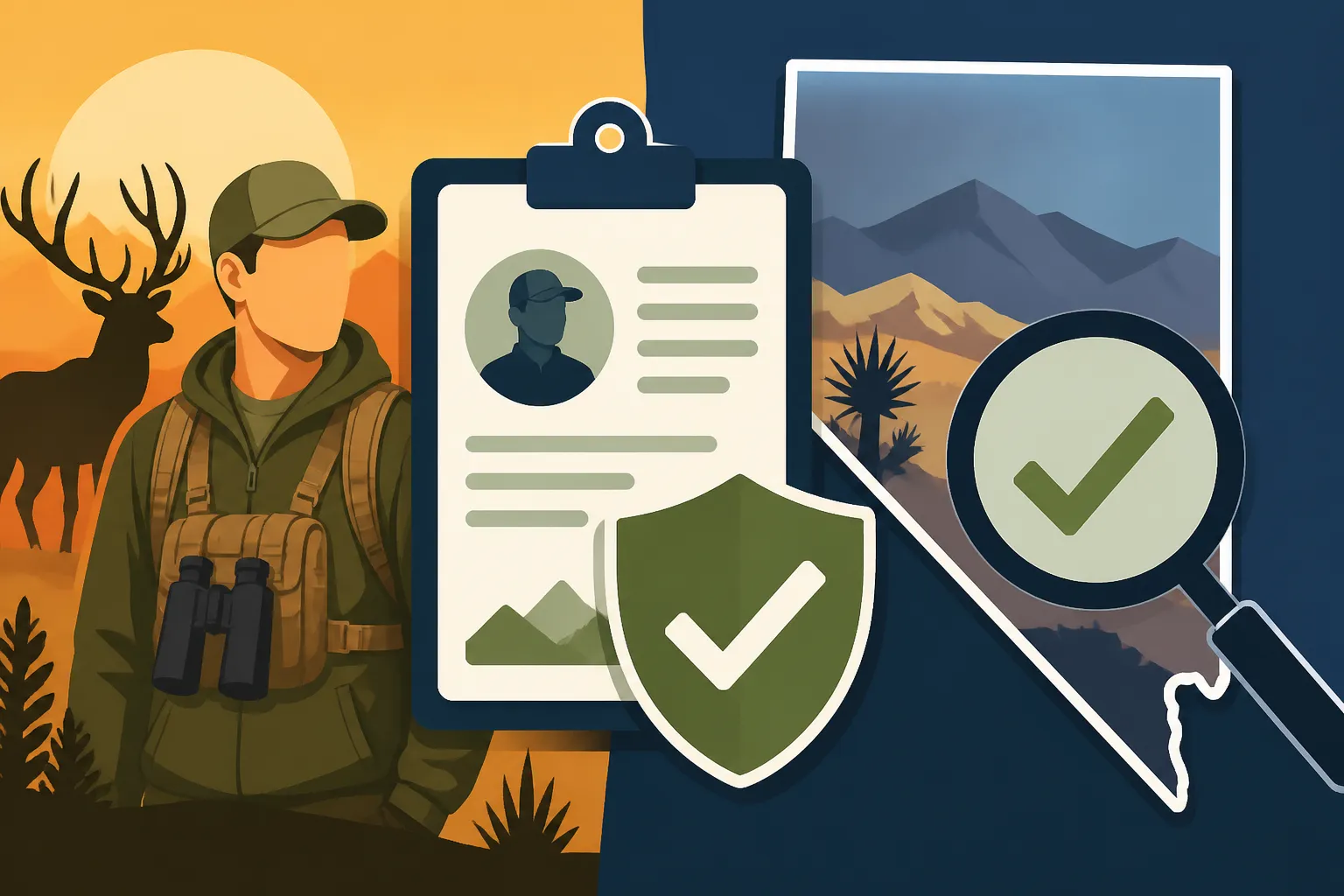
When you're dreaming of that once-in-a-lifetime Nevada hunt, the excitement can quickly turn to anxiety when it comes to finding a trustworthy guide. The thought of investing a significant amount of money and precious draw points into a hunt, only to find out your chosen guide isn't legitimate, is a real fear for many. This guide will walk you through the essential steps to verify a Nevada guide's license, giving you peace of mind and protecting your hunting investment.
Why Verifying a Guide's License is Non-Negotiable
It's tempting to jump straight to the reviews or the glossy photos on a guide's website, but pausing to verify their licensing is the single most important due diligence step you can take. Nevada is a state with vast public lands, and guiding on these lands requires specific state and often federal permits. Without proper licensing, a guide might be operating illegally, which could put your hunt, your investment, and even your safety at risk.
Protecting Your Investment
Think about the time, effort, and money you've already poured into just getting to the point of considering a guided hunt. You've likely spent years building Nevada Squares Your Bonus Points Into Draw Chances for that coveted elk or mule deer tag. The application fees, the cost of the tag itself – which for a nonresident Nevada elk tag can be substantial – all of that adds up long before you even consider an outfitter. Handing over a large deposit to an unverified guide could mean losing that money with no recourse if they suddenly disappear or aren't actually authorized to operate. It’s not just about the financial hit; it’s about the crushing disappointment of a ruined hunt that you’ve waited so long for.
Imagine showing up for your hunt, only to have a federal land manager or state game warden inform you that your guide is not permitted to operate in that area. This isn't just an inconvenience; it can mean your hunt is over before it even begins, and you're left with a tag you can't fill and a substantial hole in your wallet. A legitimate guide is bonded and insured, offering a layer of protection that an unlicensed operator simply cannot. This foundation of legality provides a crucial safety net for hunters who are often traveling great distances and making significant financial commitments.
Ensuring Legal and Ethical Practices
A licensed guide has demonstrated a commitment to operating within the law. They've gone through the process of applying, often passing exams, and adhering to specific regulations set forth by the Nevada Department of Wildlife (NDOW) and potentially federal agencies like the Bureau of Land Management (BLM) or the U.S. Forest Service. This isn't just bureaucratic red tape; it's a safeguard for the resource and for the hunter. A guide operating without proper licensing might be cutting corners in other areas too, possibly employing unethical hunting practices, trespassing, or ignoring game laws. You don't want to be associated with that, nor do you want your hard-earned trophy to be tainted by illegal activity.
Furthermore, licensed guides are often part of a community that self-regulates to a degree, upholding standards of professionalism and ethical conduct. When you hire a verified guide, you're tapping into this network of accountability. Should a problem arise, there are established channels to Filing a Complaint About a Nevada Guide, giving you a path to resolution. An unverified guide, on the other hand, operates outside these channels, making it incredibly difficult to address any issues that may arise during or after your hunt. This commitment to legal and ethical practices extends to understanding and respecting the land, the wildlife, and the hunting traditions that we all cherish.
Steps to Verify a Nevada Guide License
Verifying a guide’s license doesn't have to be a complicated process. It requires a bit of detective work, but the peace of mind it brings is absolutely worth the effort.
Step 1: Confirm State-Level Licensing with NDOW
The first point of contact for verifying any hunting guide in Nevada should be the Nevada Department of Wildlife (NDOW). They are the primary authority for issuing state guide licenses. You want to make sure the guide or outfitter you're considering is currently licensed and in good standing. NDOW maintains a list of licensed guides, and it's your right as a hunter to confirm this information.
You can often find information on Where Nevada Lists Licensed Guides directly on the NDOW website or by contacting their main office. Don't be shy about calling them. It’s their job to ensure that operators are legitimate, and they are usually happy to assist hunters in verifying credentials. When you call, have the guide's full name and the outfitter's business name ready. This will help the NDOW staff quickly look up the information. It's important to remember that a state license is just one piece of the puzzle, but it's the fundamental starting point. Without this, no other permits matter.
Step 2: Inquire About Federal Land Permits
Many of Nevada's most productive hunting grounds are on federal land—think vast stretches of BLM acreage or portions of the Humboldt-Toiyabe National Forest. Guiding on these federal lands requires additional special use permits, often issued by the specific federal agency managing that land. This is a critical distinction, and it's where many unlicensed "guides" fall short. A guide might have a state license but lack the federal permits to operate in the unit where your hunt is planned.
It’s not enough to just ask a guide if they have federal permits; you need to ask which federal agency issued them (BLM, Forest Service) and for which specific hunting units or areas. The guide should be able to provide this information readily. Sometimes these permits are "joint permits" as described in How BLM Nevada Issues Joint Permits, which simplify the process somewhat but still require specific authorization. You can also contact the local BLM field office or National Forest ranger district directly for the units you are interested in. They can confirm if a particular outfitter holds current permits for that area. This extra layer of verification is absolutely crucial for ensuring your hunt is legitimate from start to finish.
Step 3: Cross-Reference with Online Resources and Booking Platforms
While direct verification with NDOW and federal agencies is paramount, reputable online platforms can also offer a layer of convenience, though they should never replace direct checks. Many platforms, like BookYourHunt, strive to list licensed and vetted outfitters. You might start your search there, using their listings to identify guides operating in Nevada, and then take the names you find to perform your official verification steps. These platforms often serve as a directory, making it easier to discover potential guides.
Similarly, resources like GoHunt, which are excellent for researching specific units and drawing odds, may also occasionally feature or discuss outfitters. While GoHunt primarily focuses on draw statistics and hunting strategy, any mention of a guide can be a starting point for your own independent verification. Always treat any online listing or recommendation as a lead, not a definitive confirmation. No third-party platform can replace contacting the government agencies directly to ensure full compliance. Use these tools as part of your broader research, but always circle back to the official sources for the final word on licensing.
Here’s a quick overview of the essential verification steps:
| Step | Action | Primary Contact | What to Ask/Check | Why it Matters |
|---|---|---|---|---|
| 1. State License | Contact Nevada Department of Wildlife (NDOW) | NDOW Licensing Division | Is Guide/Outfitter Name currently licensed? License number? | Legal to operate in Nevada, basic accountability. |
| 2. Federal Permits | Contact relevant Federal Land Agency (BLM, USFS) | Local Field Office/Ranger District | Does Guide/Outfitter Name have a special use permit for Unit #/Area Name? | Legal to operate on specific federal lands. |
| 3. Online Cross-Reference | Search reputable online platforms and forums | BookYourHunt, GoHunt, Forums | Check for consistency, reviews, and start your list of potential guides. | Initial research, find leads, gather testimonials. |
| 4. Insurance/Bonding | Ask the guide directly, request proof | The Guide/Outfitter | Can you provide proof of liability insurance and bonding? | Financial protection for you and the guide. |
Understanding Nevada's Guide Licensing Tiers
Nevada's guide licensing isn't a one-size-fits-all situation. There are different tiers of licenses, each with specific authorizations and limitations. Understanding these can help you better evaluate the guide you're considering and ensure they are qualified for the type of hunt you're planning.
Guide vs. Master Guide
The Nevada Department of Wildlife issues licenses for both "guides" and "master guides." The distinction is important. A standard guide license typically means that individual is working under the umbrella of a master guide or outfitter who holds the overarching permits and business license. A master guide, on the other hand, is authorized to operate their own outfitting business and directly employ other guides. This means a master guide carries a higher level of responsibility and often has a broader scope of operation.
When you're dealing with an outfitter, it's the master guide who holds the primary business license and often the federal permits. The individual guide leading your hunt might be a standard guide working for that master guide. It's crucial that both the master guide (the business owner) and the individual guide leading your trip are properly licensed. You can learn more about What a Nevada Master Guide License Allows and how these different roles fit together. Always ask for the name of the master guide or outfitter overseeing the operation, even if you're communicating with a specific guide who will be in the field with you.
Federal Permits Beyond State Licensing
As we touched on earlier, even a perfectly valid state license doesn't grant automatic access to all hunting areas in Nevada. Why a State License Is Not Enough in Nevada really comes down to land ownership. With so much of Nevada being federal land, guides need additional permissions. These permits are typically issued by the specific land management agency (e.g., BLM or U.S. Forest Service) for defined areas or units, and they usually come with strict operating conditions. These conditions might dictate the number of clients a guide can take, the specific areas they can operate in, and even the types of activities allowed.
For example, a guide might have a state license but only have a federal permit to operate on BLM land in Unit 111, not on Forest Service land in Unit 072. If your tag is for Unit 072, that guide, despite being state-licensed, cannot legally guide you there if they lack the correct federal permit. This is why digging into Which Federal Permits a Nevada Guide Needs is so critical. Always confirm the specific units and land management agencies covered by their federal permits to ensure they align with your hunting plans. This layer of detail can feel tedious, but it is an absolute game-changer for a legal and successful guided experience.
Beyond Verification: What Else to Look For in a Guide
Once you've confirmed that a guide or outfitter is fully licensed and permitted, your due diligence isn't over. Verification covers legality, but you also want to ensure they're a good fit for your hunt and your expectations. This is where experience, communication, and reputation come into play.
Experience and Specialization
A guide might be legally cleared, but do they have the experience for the specific hunt you're pursuing? Nevada is a vast state with incredibly diverse terrain and hunting opportunities. A guide specializing in Spot and Stalk Antelope on Nevada's Open Flats might not be the best choice for a late-season Hunting the Post-Rut Migration for Big Bucks in mountainous country, and vice-versa. Ask about their experience in the specific unit you drew, their success rates for that species and season, and how long they've been guiding in Nevada.
Don't be afraid to ask for references from past clients who hunted the same species and unit. A reputable guide will be happy to provide them. Pay attention to what those references say about the guide's knowledge of the area, their hunting tactics, and their ability to put clients on game. For example, if you're considering a high-dollar elk hunt, you'd want to know their track record on Boone and Crockett Bulls From Nevada and specifically in the unit you drew. This kind of detailed experience is often what makes the difference between a good hunt and a truly memorable one.
Communication and Transparency
Effective communication starts long before the hunt. A good guide will be responsive, clear, and transparent about what to expect. This includes providing a detailed contract outlining services, costs—like The Average Cost of a Guided Nevada Elk Hunt—what's included and what's not, and their cancellation policy. Beware of guides who are difficult to reach, vague about their services, or reluctant to provide a written agreement. Transparency also extends to discussing the realities of the hunt, including potential challenges like weather, physical demands, and the inherent uncertainties of hunting.
Discussing things like Questions Worth Asking Before You Book will help you gauge their communication style. Ask about their pre-hunt scouting process and what kind of information they share with clients beforehand. Do they provide a detailed gear list? What are their expectations for client fitness? These are all indicators of a professional operation. Even after verification, if the communication feels off, it might be a Red Flags When Booking a Guided Hunt. A clear, open dialogue builds trust and sets the stage for a positive experience.
Reputation and Reviews
While reviews aren't a substitute for direct verification, they offer valuable insights into a guide's reputation. Look for reviews on multiple platforms, including hunting forums, dedicated outfitter review sites, and social media. Pay attention to consistent themes—both positive and negative. Do clients consistently praise their professionalism, knowledge, and effort? Or do you see recurring complaints about disorganization, lack of effort, or unethical practices? Keep in mind that every outfitter will have a disgruntled client occasionally, but a pattern of negativity is a serious warning sign.
Also, consider how the guide interacts with the hunting community online. Do they participate in discussions, offer advice, and present themselves professionally? A guide with a strong, positive reputation built over time is often a safer bet. For high-stakes hunts, it can also be beneficial to check with regional hunting organizations or even local sporting goods stores, as they often have a pulse on which guides are consistently delivering for their clients. Ultimately, Vetting a Nevada Outfitter Before You Send a Deposit means looking at the whole picture, not just individual pieces of the puzzle.
Disclaimer
This article is for general informational purposes only and does not constitute professional advice. Laws, prices and regulations vary by location and change over time. Consult a qualified professional for guidance on your specific situation.