Why Unit Size Changes How You Hunt
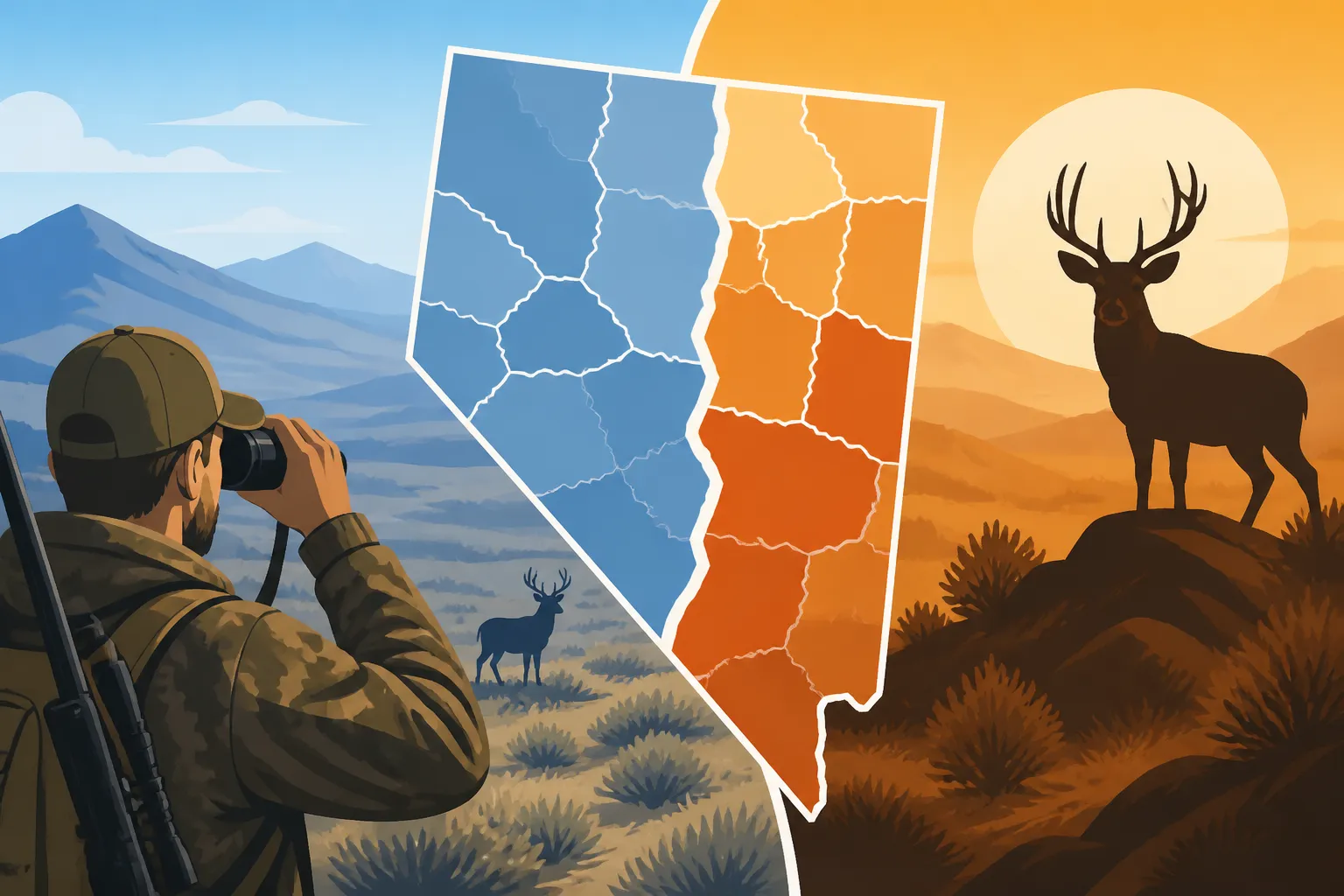
One of the biggest eye-openers for hunters new to Nevada, or even seasoned folks coming from other states, is just how vast and varied the hunting units can be. You might be used to units defined by winding rivers or specific roads, but here, you're often staring at maps where a single unit covers thousands of square miles, dwarfing entire counties in other states. This sheer scale isn't just a number on a map; it fundamentally changes every aspect of your hunt, from how you scout to how you physically hunt and even how you think about your chances. It's a reality that can feel overwhelming, but understanding these differences is key to planning a successful Nevada big game hunt.
The Scale of Nevada's Hunting Units
When you first look at a Nevada big game map, you might do a double-take at the sheer size of some of the units. We're talking about units that can be larger than some small states, encompassing multiple mountain ranges, vast sagebrush basins, and everything in between. This isn't your typical local woodlot hunt, or even a several-thousand-acre national forest block. This is big country, and its immensity is a defining characteristic of hunting here. It influences everything from how much fuel you carry to how much water you need for yourself and your animals, and even how you approach finding a needle in a haystack.
Understanding Nevada's Unique Geography
Nevada's landscape is overwhelmingly characterized by its "Basin and Range" topography. Imagine a series of long, parallel mountain ranges, like ripples in a blanket, separated by wide, flat, arid valleys or basins. This pattern repeats endlessly across much of the state. These basins can be 10-20 miles wide and run for 50 or more miles, with the mountain ranges themselves stretching even further. When a hunting unit is drawn, it often encompasses several of these full mountain ranges, complete with their associated valleys. This means a single unit can contain diverse habitats, from the high, timbered peaks where elk might find refuge, down to the sagebrush flats favored by mule deer and pronghorn.
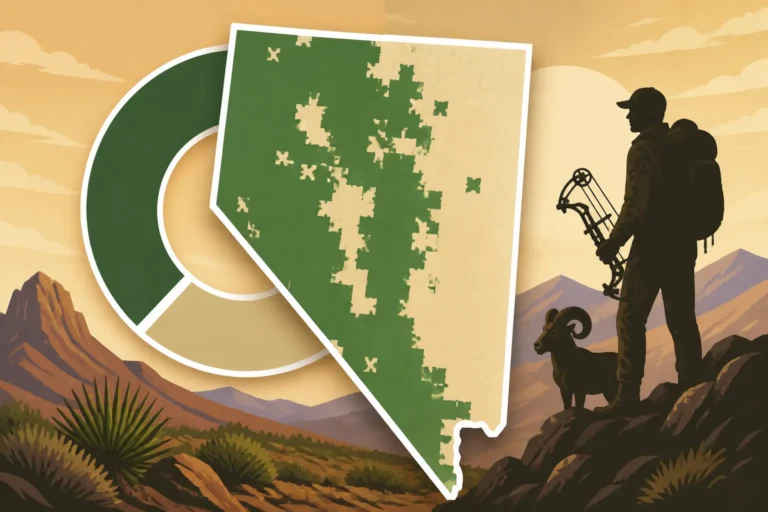
The sheer openness means that while you might have vast tracts of public land, seeing animals often requires significant effort and specialized optics. Nevada Is the Most Federally Owned State in the Lower 48, so you generally won't run into private land issues blocking access to huge areas, but the challenge becomes finding the game within that immense public domain. This unique geography means that what might be "one unit" on a map is actually a collection of ecosystems, each demanding different scouting and hunting approaches.
How Unit Boundaries Are Defined
Unlike some states where unit boundaries might closely follow natural features or major roads, Nevada's units, while often incorporating these, frequently cut across vast expanses. They can follow county lines, major highways, or even imaginary lines of longitude and latitude across the desert floor. Understanding How Nevada Numbers Its Hunt Units can give you some clues, but it's crucial to dig deeper into the actual geography.
For instance, a boundary might be defined as "all lands within X County west of Highway 93 and north of Highway 50." On a map, that looks like a clean line. On the ground, it can mean you're in a massive, roadless area that spans multiple mountain ranges and basins. This can be a blessing and a curse. It means fewer "hard" boundaries that funnel animals or hunters, but it also means immense areas to cover. It's not uncommon for a single unit to encompass hundreds, if not thousands, of square miles. This forces hunters to become proficient with digital mapping tools like onX Hunt, not just for seeing public/private land, but for truly understanding the vastness they're stepping into and precisely locating those invisible boundary lines. Reading a Nevada Unit Boundary Before You Apply isn't just a suggestion; it's absolutely essential.
Impact of Unit Size on Scouting and Planning
The size of a Nevada hunting unit directly dictates how you approach scouting and, by extension, your entire hunt plan. What works for a 50,000-acre unit simply isn't feasible for a 5,000,000-acre unit. This means a fundamental shift in strategy from more restrictive areas you might have hunted elsewhere. You can't just drive every road or hike every ridge in some of these places.
E-Scouting Strategies for Large Units
E-scouting becomes your absolute best friend when dealing with these colossal units. Before you even set foot on the ground, you need to spend countless hours poring over satellite imagery, topographical maps, and public land ownership layers. Tools like GoHunt's Insider research platform or onX Hunt are invaluable here. You'll be looking for potential water sources, isolated pockets of feed, rimrock country, north-facing slopes, and travel corridors that animals might use between different habitats.
For a massive unit, you can't realistically scout every square mile, so you need to identify "areas of interest" – smaller, manageable zones within the larger unit that show promise. These might be a specific mountain range, a basin with good looking cover, or an area known for holding a particular species. You're effectively breaking the giant unit down into smaller, more digestible chunks. E-Scouting a Nevada Unit Before the Season is a critical first step, helping you eliminate vast swaths of unproductive terrain and focus your limited time and resources on where animals are most likely to be. Without this methodical, digital approach, you'd be truly lost in the enormity of it all.
Ground Scouting Realities in Expansive Units
Once you've narrowed down your areas of interest through e-scouting, the ground scouting phase begins, and it's here that the size of the unit really hits home. You'll quickly realize that even an "area of interest" can be hundreds of square miles. Driving every dirt road is often out of the question due to time, fuel, and the sheer ruggedness of the terrain. Instead, ground scouting becomes more about confirming your e-scouting suspicions and identifying specific access points.
You might drive a few key roads to get a feel for the country, then focus on hiking into promising glassing points identified from satellite maps. It's less about "walking out" an area and more about finding vantage points from which to observe. You're looking for fresh sign, water sources, and escape routes. You often won't find the animals during scouting; you're looking for where they should be. And because the units are so large, animals have ample room to move, so what was there last week might be miles away come opening day. This means your ground scouting needs to be efficient and targeted, focusing on key terrain features and access routes.
Logistical Challenges of Vast Territories
The sheer scale of Nevada's units creates significant logistical challenges that hunters from smaller-unit states might not anticipate.
Consider this table of common challenges:
| Challenge Category | Smaller, Densely Covered Units (e.g., Eastern Woodlands) | Large, Open Nevada Units (e.g., Great Basin) |
|---|---|---|
| Fuel & Vehicle | Often near towns, less concern for range. | Extremely remote areas, significant fuel planning, multiple spare tires. Vehicle Prep for Remote Nevada Roads is essential. |
| Water | Readily available, less of a critical concern. | Scarce and critical. Must carry all water, or know reliable sources. Water You Must Carry on a Desert Day Hunt is a daily mantra. |
| Navigation | Trail systems, clear landmarks. | Minimal trails, vast, often featureless basins, reliance on GPS. |
| Communication | Cell service often available. | Very limited to non-existent cell service. Satellite messenger crucial. Cell Coverage Across Nevada Hunt Units is a sobering reality check. |
| Game Retrieval | Shorter hauls, often accessible by vehicle. | Long, arduous pack-outs from roadless country. Needs physical fitness and strategy. Packing an Animal Out of Roadless Country is a common scenario. |
| Camping | Designated campgrounds, easily accessible. | Dispersed camping common, often miles from pavement, requires self-sufficiency. |
| Weather | Predictable local weather patterns. | Extreme temperature swings, localized storms, dust devils. |
The vastness means you need to be self-sufficient and prepared for anything. Breaking down, running out of water, or getting lost can have severe consequences when the nearest paved road or town is hours away.
Adapting Hunting Tactics to Unit Scale
The traditional tactics you might employ in smaller, more timbered areas simply won't cut it in the expansive units of Nevada. Here, the name of the game is often patience, persistence, and, above all, smart use of optics. Your feet will still get you there, but your eyes will find the game.
The Glassing Game in Big Basins
In Nevada, glassing isn't just a tactic; it's the tactic, especially in the large units. You're trying to locate animals from a distance across immense landscapes. This means spending hours, sometimes days, perched on a vantage point, systematically picking apart distant hillsides, draws, and sagebrush flats with your binoculars and spotting scope. The vast units provide endless terrain for animals to hide, but also offer endless vantage points for you to search.
A good tripod-mounted binocular, ideally 10x or 15x, and a high-quality spotting scope are non-negotiable. You'll be covering vast swaths of ground with your optics, slowly and methodically. This isn't a quick scan; it's a grid search where you mentally divide the landscape into squares and scrutinize each one. The Grid Glassing Method, Step by Step is fundamental to success. Hunters who try to walk and jump animals in these huge, open units will quickly burn themselves out and likely spook more game than they find. Why Glassing Beats Walking in Sage Country is a lesson learned quickly by anyone new to the Great Basin. The size of the units demands a patient, observational approach, where you let your optics do the walking first.
Spot and Stalk in Wide-Open Spaces
Once you've located an animal through painstaking glassing, the real fun (and challenge) begins: the spot and stalk. In smaller units, a stalk might involve navigating dense timber or a few hundred yards of varied terrain. In Nevada's sprawling units, a "stalk" can be a multi-mile expedition across open ground, often taking hours, sometimes half a day. The terrain might be wide open sage flats, rocky slopes, or rolling hills with minimal cover.
This is where your understanding of the landscape, wind, thermals, and animal behavior becomes critical. You have to use every fold in the terrain, every patch of taller sage, every wash or rimrock to stay concealed. Spot and Stalk Antelope on Nevada's Open Flats is an art form in itself, requiring incredible patience and a keen eye for cover that often doesn't look like cover until you're in it. The sheer distances involved mean careful planning. You need to consider your approach, where the animal might go if spooked, and what your escape route looks like. The size of the unit allows for incredibly challenging and rewarding stalks, but it also amplifies the consequences of a mistake.
Covering Ground in Smaller, More Defined Units
While many Nevada units are immense, there are also smaller, more mountainous, or timbered units, particularly in the northern and eastern parts of the state. These units, while still large by many standards, might offer more traditional "still-hunting" or tracking opportunities, especially for elk or mule deer in timbered pockets. Here, the unit size allows for a more detailed, foot-intensive approach once animals are located.
In these relatively smaller, more defined units, you might focus on areas like specific drainages, timbered canyons, or known migration routes that offer more cover. The hunting could involve more walking, less pure glassing, and a greater emphasis on reading fresh sign on the ground. However, even in these units, the terrain can be steep and rugged, so Preparing Physically for Long Glassing Days applies just as much to these more active hunting styles. The key is to recognize that "smaller" in Nevada is still often "huge" by most standards, and a blended approach of glassing and active hunting is usually the most effective.
Choosing the Right Unit Size for Your Hunt Style
The choice of hunting unit size isn't just about drawing a tag; it's about matching the terrain and scale to your personal hunting style, physical capabilities, and available time. Nevada offers a huge spectrum, and picking the right one for you can make or break your experience.
Matching Unit Size to Physical Capability
Let's be real: hunting massive, open units in Nevada is physically demanding. You might spend hours glassing, but when you do spot an animal, the stalk could easily be miles, often uphill, over rugged, uneven ground. Packing out an animal from a remote location in a huge unit can be an epic undertaking. If you're not in top physical shape, an overly ambitious choice of a vast, roadless unit could lead to frustration, or worse, an unsafe situation.
Conversely, if you thrive on grueling physical challenges and love pushing your limits, those enormous, remote units with limited access can offer incredible solitude and potential for truly trophy animals. They demand peak conditioning and a resilient mindset. For those who prefer a less extreme physical outing, perhaps focusing on units with better road access or smaller, more defined drainages, even if they're still large, might be a better fit. You need to be honest with yourself about your fitness level and choose accordingly.
Time Commitment Versus Unit Scale
The amount of time you have for your hunt is another critical factor. If you only have a long weekend, tackling a unit that spans hundreds of miles and requires days of intense glassing to even find an animal might be a recipe for disappointment. In such large units, animals have an incredible amount of space to roam and hide. It takes time – days, often a full week or more – to thoroughly scout, find game, and execute a successful stalk.
If your time is limited, consider focusing on smaller "pockets" within a larger unit that you've identified through extensive e-scouting, or look for units that are, by Nevada standards, more compact. These might offer a higher density of animals in a more manageable area, allowing you to focus your efforts more effectively. Remember, covering even a small fraction of a truly massive unit can eat up several days just in travel and initial glassing.
When to Consider a Smaller Unit
While Nevada is known for its vastness, there are certainly reasons to deliberately choose a smaller unit if you have the option. Perhaps you're looking for a specific type of terrain, like more timbered mountains for elk, or a unit known for having consistent water sources that concentrate game. A "smaller" unit in Nevada, perhaps one that's only a few hundred square miles, can still feel huge, but it offers a more concentrated hunting experience.
These units might allow for more boots-on-the-ground scouting, a deeper understanding of animal patterns within a specific area, and potentially less driving between hunting spots. They can be excellent choices for hunters who prefer to learn an area intimately over several seasons, or for those who want to maximize their hunting time rather than their driving time. Ultimately, the best unit size is the one that aligns with your experience, physical condition, and the amount of time you can realistically dedicate to your Nevada adventure. Reading a Land Ownership Layer Correctly is vital no matter the unit size, as even smaller units can have complex public/private land interfaces.
Disclaimer
This article is for general informational purposes only and does not constitute professional advice. Laws, prices and regulations vary by location and change over time. Consult a qualified professional for guidance on your specific situation.