Remote Road Conditions Across Nevada
Oh, the allure of those distant Nevada peaks! You see them on the map, envisioning a short drive to prime hunting ground, only to find yourself axle-deep in a wash, miles from anything resembling pavement. The reality is, Nevada's remote roads are a beast of their own, and navigating them safely requires more than just a four-wheel-drive vehicle; it demands respect, preparation, and a deep understanding of what you're up against. This guide will walk you through the nitty-gritty of Nevada's backcountry road conditions, helping you plan smarter and avoid getting stranded when you're out chasing game.
The Reality of Nevada's Backcountry Roads
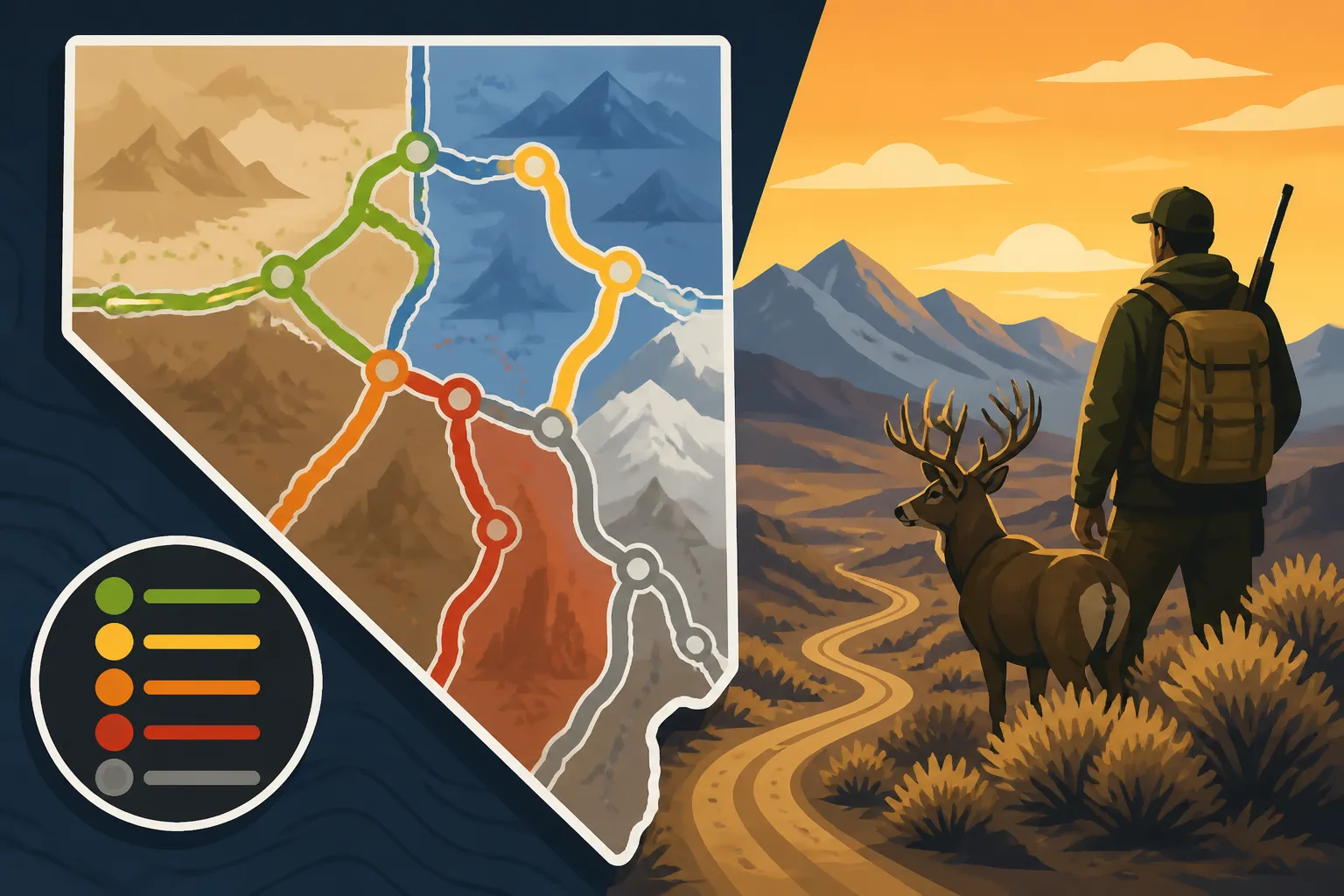
Let's be real: when you look at a map of Nevada, especially the sprawling public lands managed by the BLM and Forest Service, you see this intricate web of lines. Some are major highways, others are paved state routes, but the vast majority are those thin, often dashed, lines that represent dirt roads, two-tracks, and old mining trails. These aren't your well-maintained gravel roads you might find in other hunting states. These are wild, unpredictable arteries into the heart of the Great Basin, and they are constantly changing.
Not Your Paved Highway Experience
Forget everything you know about smooth driving once you turn off the blacktop. Nevada's remote roads are rarely graded, and when they are, it's usually only after significant storm damage or for specific resource management needs. This means you'll encounter a constant barrage of challenges. Expect sharp volcanic rock, which is notoriously hard on tires, often embedded in the roadbed just waiting to slice a sidewall. There will be deep ruts carved by previous vehicles, particularly after wet weather, that can test your suspension and clearance. Then there are the stretches of loose sand or fine dust, sometimes both, that can instantly rob your vehicle of traction or obscure your vision entirely. It's a grueling dance between slow, careful navigation and knowing when to power through a tricky spot. You're not just driving; you're actively engaging with the terrain, constantly adjusting your speed and line. This is why Vehicle Prep for Remote Nevada Roads is so critical.
The Impact of Weather and Time
The condition of a backcountry road in Nevada is seldom static. What was a passable two-track last season might be an impassable mess this year, all thanks to the weather. A heavy winter with significant snowmelt can turn dry washes into raging torrents, scouring out new channels and leaving behind deep erosion and impassable ruts. Summer thunderstorms, though often brief, can dump incredible amounts of water in short periods, creating flash floods that destroy existing roadbeds and leave behind deep mud that can trap even the most capable 4×4. Conversely, long dry spells turn everything to powder, creating suffocating dust clouds that reduce visibility to zero and coat every inch of your vehicle and gear in a fine, abrasive layer. The sun itself bakes the ground, creating hard-packed ruts that vibrate your vehicle apart, or cracking mud that becomes sharp and unforgiving. Checking Remote Road Conditions Across Nevada before you leave is non-negotiable, and always expect the unexpected.
Common Road Hazards You'll Encounter
When you're out in the sagebrush sea, hunting mule deer or elk, the road itself can be one of the biggest challenges. It's not just about reaching your destination; it's about making it back safely, too. Understanding the specific hazards common to Nevada's backcountry is the first step in preparing for them.
Rocks, Ruts, and Washouts
Nevada is a land of hard rock and rapid erosion. This means the roads are often paved with nature's nastiest tire destroyers: sharp, angular rocks, frequently from volcanic origins. These aren't smooth river stones; they're jagged fragments that love to find the weakest point in your tire. You'll often find them embedded in hard-packed dirt roads, or scattered across trails, demanding constant vigilance and slow speeds. Then there are the ruts, deep troughs carved into the road by previous vehicles driving through soft earth or mud. If your tire drops into a rut, it can yank your steering, hit your undercarriage, or even high-center your vehicle, leaving you stuck. Cross-axle ruts, where one wheel drops while the opposite wheel on the same axle lifts, are particularly challenging and can leave you spinning tires helplessly.
Washouts are perhaps the most dangerous and unpredictable of all. These are areas where flash floods have completely eroded the road, leaving behind deep gullies, exposed rocks, or sheer drops. They can appear suddenly after a rainstorm and might not be visible until you're right on top of them, especially if you're driving at dusk or in low light. Hitting a washout at speed can cause severe damage to your vehicle, even leading to rollovers. It's crucial to scout ahead on foot if you're unsure about a section of road, particularly through dips and low areas that funnel water. This is where patience truly becomes a virtue, saving you from a costly mistake or a dangerous situation far from help. What Nevada Backroads Do to a Tire is something you don't want to learn the hard way.
Sand, Mud, and Dust
Beyond the hard-packed, rocky trails, Nevada's varied terrain also presents challenges of a softer nature: sand, mud, and dust. Many valleys and lower elevations are characterized by fine, silty soil that, when dry, becomes incredibly loose and deep, forming soft sand traps. Driving through deep sand can quickly bog down your vehicle if you don't maintain momentum and appropriate tire pressure. It robs your tires of traction and can overheat your engine if you're constantly spinning.
Conversely, that same silty soil, when wet, transforms into a notorious, sticky mud that clings to everything. This isn't just slick; it's heavy and can pack into your wheel wells, preventing your tires from turning or even binding up your brakes. Getting stuck in Nevada mud means a serious recovery effort, often involving winches and shovels. And then there's the dust. Oh, the dust! On dry, windy days or when another vehicle passes, dust clouds can reduce visibility to zero for minutes, making driving incredibly hazardous. This fine dust also gets everywhere – into your air filter, under your hood, and inside every crevice of your vehicle and gear, causing wear and tear on components and making everything gritty. Always keep an eye on the weather, both current and recent, to anticipate these conditions.
Essential Gear for Navigating Remote Nevada Roads
Embarking on a hunting trip in Nevada’s backcountry without proper vehicle preparation and recovery gear is like forgetting your binoculars for a Glassing Grids Across a Nevada Basin session – you’re setting yourself up for failure. The distances are vast, cell service is often nonexistent, and help can be hours, if not a full day, away.
Vehicle Preparedness is Paramount
Your vehicle is arguably the most critical piece of gear you take into Nevada's remote hunting areas. It needs to be up to the task, not just "good enough."
First and foremost, tires. Invest in quality, aggressive all-terrain or mud-terrain tires with strong sidewalls. Many hunters swear by brands known for their durability in rocky conditions. You’ll want to carry at least one, preferably two, full-sized spares. Not just a donut, but a real wheel and tire that can handle the same abuse as your primaries. A heavy-duty jack, suitable for your lifted vehicle if you have one, and a lug wrench are also non-negotiable. Don't forget a quality tire repair kit, including plugs, patches, and a powerful air compressor capable of reinflating a truck tire quickly after airing down for sandy or rocky sections.
Next, vehicle maintenance. Before every serious backcountry trip, perform a thorough inspection: check all fluid levels, belts, hoses, and lights. Ensure your battery is strong. Have your suspension, brakes, and steering components checked. Driving rough roads puts immense stress on these systems, and a small issue can become a catastrophic failure far from civilization. A robust skid plate package for your undercarriage is also a wise investment to protect vital components from unseen rocks and high-centering.
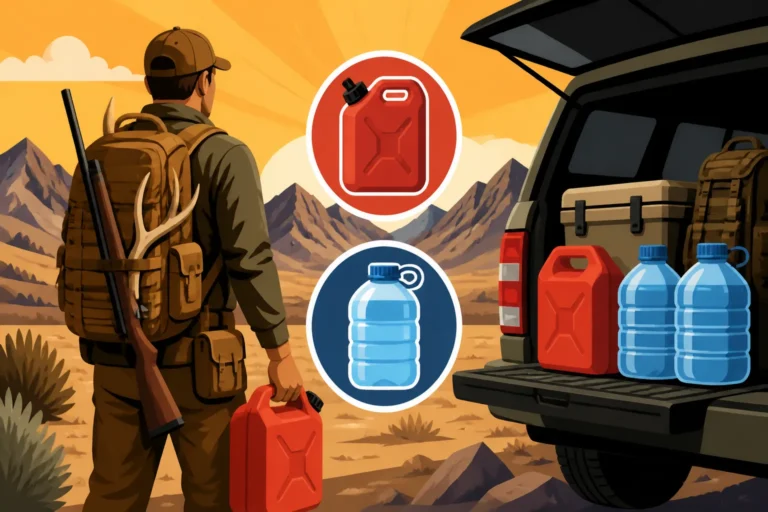
Finally, fuel and water. Nevada's fuel stops are few and far between once you leave the main arteries. Always carry extra fuel in approved cans, calculating your consumption for both the drive in and out, plus any scouting or side trips you anticipate. Carrying Extra Fuel on a Nevada Hunt could be the difference between making it home and a very long walk. Similarly, carry significantly more water than you think you'll need, not just for drinking, but also for emergency cooling your engine or washing dust from your eyes.
| Item Type | Specific Items | Importance in Nevada Backcountry |
|---|---|---|
| Tires & Repair | Two Full-Size Spare Tires, High-Lift Jack, Lug Wrench, Tire Repair Kit (plugs, patches), On-Board Air Compressor, Tire Pressure Gauge | Essential for surviving sharp rocks and remote blowouts. Airing down/up is key. |
| Recovery Gear | Winch (with synthetic rope), Tree Saver Strap, Snatch Block, Shovel, Recovery Boards (traction mats), Heavy-Duty Tow Strap, Gloves | Invaluable for self-recovery from mud, sand, or ruts when alone. |
| Navigation & Comm. | Paper Maps (USGS, BLM), GPS Device (Garmin, inReach), Satellite Messenger (Garmin inReach, Zoleo), onX Hunt/GoHunt App, Compass | Crucial for finding your way, knowing land status, and calling for help. |
| Fluids & Tools | Extra Fuel (in approved cans), Extra Water, Engine Oil, Coolant, Brake Fluid, Basic Tool Kit, Duct Tape, Zip Ties, Wire, Fuses | For emergency vehicle maintenance and sustained travel. |
| Safety & Survival | Comprehensive First-Aid Kit, Fire Extinguisher, Headlamps/Flashlights, Warm Layers, Emergency Blanket, Food Rations, Signaling Mirror | For personal safety and survival in case of extended delays or injury. |
| Comfort & Camp | Cooler with Ice, Camp Chairs, Tent/Sleeping Gear, Cook System, Trash Bags, Sun Protection, Insect Repellent | To maintain morale and basic necessities for multi-day trips. |
Recovery Gear You Can't Afford to Skip
Getting stuck in Nevada isn't a matter of if, but when. The right recovery gear can turn a potential disaster into a minor inconvenience.
A winch is perhaps the most powerful tool in your recovery arsenal. Mounted on the front of your vehicle, it can pull you out of almost any situation, whether you’re mired in mud, stuck in deep sand, or high-centered on a rock. Pair it with a tree saver strap (never wrap a wire cable directly around a tree, it can damage it) and a snatch block to double your pulling power.
Recovery boards, like those made by Maxtrax or similar brands, are incredibly versatile. They provide instant traction for tires stuck in sand, mud, or snow, allowing you to drive out of a bind without needing a second vehicle or a winch point. They also double as shovels in a pinch.
A good shovel is simple but essential. You’ll need it to clear rocks, dig out tires, or build a ramp. A heavy-duty tow strap is crucial if you're traveling with another vehicle, allowing one to pull the other free. Just make sure it's rated for the weight of your vehicle and designed for dynamic recovery, not just static towing.
Finally, don't underestimate common sense and communication. Always let someone know your route and expected return time. A satellite messenger or phone, like a Garmin inReach or Zoleo, is vital for emergency communication where cell service doesn't exist. This could be your lifeline if you truly get into trouble, whether it's a vehicle issue or a medical emergency in the field. Remember, Satellite Messenger Use in Remote Country is not a luxury, it's a necessity.
Planning Your Route and Staying Safe
Hunting in Nevada is an exercise in preparation. The vastness of the landscape and the isolation of its wild places mean that you need to be self-reliant and smart about your movements. This starts long before you ever turn off the pavement.
Utilizing Mapping Tools for Recon
Gone are the days when a crumpled paper map was your only guide (though you should still carry those!). Today, digital mapping tools are an absolute game-changer for navigating Nevada’s complex public lands. Apps like onX Hunt and GoHunt have revolutionized how hunters scout and navigate. These platforms allow you to overlay private and public land boundaries, track your real-time location, and download maps for offline use, which is critical given the sparse cell service.
Before your trip, spend hours on these apps, meticulously studying the terrain. Look for potential access roads, identify areas of wilderness or Wilderness Study Area Vehicle Limits where motorized travel is restricted, and mark critical waypoints like water sources, potential camp spots, and likely game travel corridors. Pay close attention to subtle changes in elevation that might indicate a wash or a steep climb. Many apps also show shaded relief, giving you a better sense of the topography and how roads might traverse it. Using tools like onX Hunt, you can even see if a road is designated as a "two-track" or a "primitive road," giving you a hint about its condition. You can also trace out potential routes and check for Motorized Travel Rules on Nevada Public Land to ensure you're not inadvertently trespassing or violating regulations. This advanced scouting saves countless hours and prevents frustrating dead ends once you're on the ground.
Communication and Contingency Plans
The sheer remoteness of Nevada means that relying on cell service is a gamble you cannot afford to take. Most of the prime hunting units are far beyond the reach of any cellular network. This makes a solid communication plan and robust contingency measures absolutely critical for your safety.
First, tell someone where you're going and when you expect to return. This seems basic, but it's often overlooked. Provide detailed information about your route, your destination, and any planned detours. Give them a "call-in" schedule so they know when to expect updates from you.
Second, invest in a satellite communication device. A satellite messenger, such as those offered by Garmin inReach or Zoleo, allows you to send and receive text messages from virtually anywhere, even without cell service. More importantly, they have an SOS function that can alert emergency services to your exact location if something goes seriously wrong. This isn't just for you; it's for your family back home who will have peace of mind knowing you can reach out.
Third, develop contingency plans. What if your vehicle breaks down? What if someone gets injured? What if a sudden storm makes roads impassable? Think through these scenarios. This might mean carrying extra food, water, and emergency shelter. It could mean having a plan for Packing an Animal Out of Roadless Country if your vehicle can't make it to your kill site. Knowing the nearest towns with services, even if they are hours away, can inform your decisions in an emergency. Always have a "Plan B" and even a "Plan C." This level of foresight is what separates a prepared hunter from one who ends up in a bad situation.
Dealing with Breakdowns and Emergencies
Despite all your careful planning and preparation, things can still go sideways in the Nevada backcountry. The isolation, the vast distances, and the harsh environment mean that knowing how to handle breakdowns and emergencies is just as important as knowing how to hunt.
Basic Field Repairs and Troubleshooting
You don't need to be a certified mechanic, but having a fundamental understanding of your vehicle and basic troubleshooting skills can get you out of a bind. A simple flat tire, if you have two spares and the tools, is manageable. But what about a more complex issue?
Always carry a basic toolkit: wrenches, screwdrivers, pliers, zip ties, duct tape, electrical tape, and a multi-tool. These simple items can fix a surprising number of minor problems. For instance, a cracked hose might be temporarily patched with duct tape and some wire to hold it in place, allowing you to limp back to civilization. A loose battery terminal can be tightened with a wrench. Knowing how to check your fuses and replace a blown one can resolve electrical issues like headlights or wipers failing.
Understanding basic engine functions is also helpful. Is it overheating? Check coolant levels, look for leaks, and assess if the radiator is clogged. Is it not starting? Check battery connections, fuel levels, and listen for the starter motor. Often, the solution is simpler than you think, but you need the tools and the confidence to investigate. Learning Vehicle Recovery Gear for Nevada Roads is a must for any hunter heading into the remote parts of the state. It might mean spending an afternoon in your driveway practicing with your high-lift jack or changing a tire, but that practice will pay dividends when you're under pressure in a remote canyon.
When to Call for Help (and How)
There's a fine line between self-reliance and stubbornness. Knowing when to admit you're in over your head and call for help is crucial. If a breakdown is beyond your ability to fix, if you're injured, or if weather conditions suddenly become life-threatening, don't hesitate.
As mentioned, a satellite messenger is your most reliable lifeline. These devices allow you to send SOS messages directly to emergency coordination centers, which can then relay your situation and location to local search and rescue teams. Make sure you have an active subscription for your device before you leave home!
If you're lucky enough to find a sliver of cell service, use it immediately to contact someone. Even a weak signal might be enough to send a text message outlining your situation and location. Always have emergency numbers pre-programmed, including local sheriff's departments, your outfitter (if you have one), and trusted friends or family.
When contacting help, be clear and concise. Provide your exact GPS coordinates, the nature of your emergency (e.g., "vehicle stuck, no injuries" or "broken leg, cannot move"), the number of people in your party, and any medical conditions. The more information you can provide, the better equipped rescuers will be. Remember, help can still be hours away, even after an SOS is sent. Always stay with your vehicle, as it's much easier for rescuers to spot than an individual. Keep warm, stay hydrated, and conserve your resources while you wait. These critical moments are why Cell Coverage Across Nevada Hunt Units is always a gamble and never something to rely on.
Disclaimer
This article is for general informational purposes only and does not constitute professional advice. Laws, prices and regulations vary by location and change over time. Consult a qualified professional for guidance on your specific situation.