Muzzleloader Deer Runs One Week in Select Nevada Units
If you've ever felt the rush of a short, high-stakes hunting season, you know the intensity it brings. Nevada's muzzleloader deer season is exactly that – a brief, often one-week window in very specific units, making every application and every moment in the field incredibly valuable. This guide will walk you through the nuances of securing one of these coveted tags, preparing your traditional firearm, and executing a successful hunt in the vast, challenging landscapes of the Silver State.
Understanding Nevada's Muzzleloader Deer Season Structure
Nevada's approach to muzzleloader deer hunting is unique, often described as a "special weapon" season that falls outside the broader archery and rifle periods. Unlike some states where muzzleloader might be an extension of a general season, here it's a distinct opportunity, usually a short, intense window designed to provide a specific kind of hunting experience. This specialized season emphasizes traditional skills and equipment, often attracting hunters looking for a unique challenge or an earlier (or later) opportunity than general rifle seasons.
The Short Window and Unit Specifics
The most striking feature of Nevada's muzzleloader deer season is its incredibly short duration – typically just one week. This isn't a long, drawn-out affair; it's a focused sprint, demanding meticulous planning and execution. This compressed timeline means you have very little margin for error, and maximizing every single day in the field becomes paramount. These seasons don't run statewide; they are confined to a select number of game management units (GMUs), carefully chosen by the Nevada Department of Wildlife (NDOW) to manage specific deer populations or provide a diverse hunting experience.
Understanding Which Nevada Units Run a Muzzleloader Deer Hunt is your first critical step. Each unit has its own characteristics, from terrain and vegetation to deer density and historical success rates. This means that while the season length is consistent, the actual hunting experience can vary wildly from one unit to the next. Some units might be sprawling sagebrush basins, others steep mountain ranges, each demanding a different approach and skillset. The specific dates can also shift slightly year to year, so always confirm the current regulations well in advance of the application period.
Why Muzzleloader Seasons Exist
These limited-entry, special weapon seasons are a vital tool for wildlife management in Nevada. NDOW uses them to achieve several objectives. Firstly, they help distribute hunting pressure across different seasons and weapon types, preventing any single season from becoming overly crowded or impacting deer populations disproportionately. Secondly, by offering a muzzleloader-specific season, NDOW caters to a segment of the hunting community that values the challenge and tradition associated with these firearms. This helps foster a diverse hunting culture while still maintaining strict harvest quotas.
Furthermore, the timing of these seasons can be strategic. Often, they are set to coincide with specific phases of the deer's behavior, like the pre-rut or early rut, but before the full-on general rifle seasons kick in. This can offer a unique chance at mature bucks that might be more active or predictable, yet still under less pressure than during the peak rifle season. The "one week" structure is a deliberate choice to ensure harvest objectives are met without over-harvesting, maintaining the health and trophy potential of Nevada's mule deer herds for future generations. It’s a delicate balance, and these short windows are a testament to that careful management.
The Draw: Applying for a Muzzleloader Tag
Securing a Nevada muzzleloader deer tag is not a simple over-the-counter purchase; it’s a competitive draw process, much like all big game in the state. This means your success hinges on understanding the application timeline, the unique bonus point system, and how to strategically choose your units. Many hunters find this process daunting, but with the right information and a bit of foresight, you can significantly improve your odds.
Navigating the Application Process
The application period for Nevada big game, including muzzleloader deer, typically runs from late March to mid-May. Specifically, Nevada Applications Run March 23 to May 13. Missing this window, even by a minute, means you're out of luck for the entire year, so mark your calendar! You'll need to apply online through the NDOW website. Before you even think about applying for a tag, you'll need to purchase a valid Nevada hunting license for the current year. This is a prerequisite for any big game application. The application itself will allow you to select your preferred hunt choices, ranked in order of preference. You'll typically pay a non-refundable application fee for each species, plus the full tag fee upfront, which is only refunded if you are unsuccessful in the draw.
It’s crucial to thoroughly research the units and hunt codes before you submit your application. Each hunt choice is identified by a specific hunt number, which encodes details about the species, weapon type, and season dates. Reading a Nevada Hunt Unit Number is essential to ensure you're applying for the correct muzzleloader deer hunt in your desired unit. The NDOW Big Game Seasons and Application Guide, available on their website, is your bible during this time. Pay close attention to unit boundaries, public land access, and historical harvest data. This isn't just about picking a unit you like; it's about picking one where you have a realistic chance of drawing and a reasonable expectation of success if you do.
Understanding Nevada's Bonus Point System
Nevada operates a squared bonus point system, which means your loyalty to the draw is significantly rewarded over time. Instead of a simple one-to-one point advantage, your accumulated points are squared to give you a higher number of "chances" in the draw. For instance, if you have two points, you don't get two chances; you get 2×2 = 4 chances. If you have four points, you get 4×4 = 16 chances. This system can dramatically increase your draw odds compared to a straight lottery, especially as you accrue more points. Nevada Squares Your Bonus Points Into Draw Chances is a critical concept to grasp for any serious Nevada hunter.
Bonus points are species-specific, meaning points earned for deer only apply to deer draws, and so on. You accrue one bonus point each year you apply and are unsuccessful in drawing your first choice. If you successfully draw your first choice, your bonus points for that species reset to zero. If you only draw a second or third choice, your points do not reset. You can also purchase a "point only" application if you don't want to hunt a particular year but wish to continue building points. Many hunters utilize tools and data from services like GoHunt to analyze draw odds, track bonus point trends, and strategize their applications. Their filtering tools and unit breakdowns can be incredibly helpful in making informed decisions about which units offer the best balance of draw odds and trophy potential for a muzzleloader deer tag.
Choosing Your Muzzleloader and Setup for Nevada Terrain
Hunting with a muzzleloader adds a layer of complexity and tradition that many hunters cherish. However, in Nevada's vast and often unforgiving terrain, your equipment choices are even more critical. You need a setup that is reliable, accurate, and adheres to all state regulations, while also being capable of performing in diverse conditions.
Legal Requirements and Caliber Considerations
First and foremost, you must adhere to Nevada's specific regulations for muzzleloaders. For deer, a minimum .45 caliber is required. You can use a scope on a muzzleloader in Nevada, which is a significant advantage in the open country where long shots are common. However, it's important to verify the regulations each year, as they can occasionally change. Can You Use a Scope on a Muzzleloader? is a question many traditionalists ask, and in Nevada, the answer is generally yes for big game. This allows for greater precision at longer distances, which is often necessary when hunting mule deer in the expansive sagebrush basins and mountain slopes.
When it comes to projectiles, both saboted bullets and traditional patched round balls are typically legal. Sabot Bullets in a Muzzleloader generally offer superior ballistic coefficients and accuracy at longer ranges, making them a popular choice for Nevada's open landscapes. However, some traditionalists prefer conical bullets or patched round balls. Whichever you choose, ensure it's matched to your rifle's twist rate for optimal accuracy. As for ignition, percussion caps (both standard and 209 primer systems) and flintlocks are generally permitted. Pyrodex, Triple Seven, and other black powder substitutes are widely used, as they are less corrosive and easier to clean than true black powder. Always practice extensively with your chosen load to understand its trajectory and performance at various distances.
| Muzzleloader Component | Recommendation for Nevada Deer | Key Consideration |
|---|---|---|
| Caliber | .50 caliber | Minimum .45 required; .50 offers more power. |
| Ignition | 209 Primer System | Reliable in all weather, easier to load. |
| Projectile | Saboted Bullet (e.g., SST, ELD) | Superior ballistics, accuracy for longer shots. |
| Propellant | Pyrodex or Triple Seven | Less corrosive, easier cleanup, consistent. |
| Optics | Low-Power Variable Scope (e.g., 2-7x, 3-9x) | Legal in NV, aids precision at distance. |
| Barrel Length | 24-26 inches | Good balance of velocity and maneuverability. |
| Sights | Fiber Optic (if no scope) | Good visibility in low light; less precise than scope. |
Rigging Your Rifle for the Backcountry
Nevada hunting often means traversing vast distances, both by vehicle and on foot, over rugged, rocky terrain. Your muzzleloader needs to be set up to handle this. Weight is a factor; while you want accuracy, a heavy rifle can become a burden during long stalks and climbs. Consider a rifle with a synthetic stock for durability and weather resistance, as wood stocks can warp or get dinged up easily. A good quality sling is non-negotiable for carrying your rifle comfortably for hours.
Accuracy is paramount, but consistent accuracy under field conditions is even more important. Practice shooting from various positions – prone, kneeling, sitting, and using shooting sticks or a bipod – as you won't always have a bench rest in the field. Your scope, if you're using one, should be securely mounted and hold zero through bumps and jostling. Zero your rifle for the maximum effective range you're comfortable shooting, considering the ballistic limitations of muzzleloaders. A 100-yard zero is common, but knowing your drop out to 150 or even 200 yards with your specific load is vital. Remember, reliable ignitions are key. Carry extra percussion caps or 209 primers in a waterproof container, and keep your bore and breech plug meticulously clean to prevent misfires. A small cleaning kit, including patches and a bore snake, should always be in your pack.
Muzzleloader Tactics for Nevada Mule Deer
Hunting mule deer with a muzzleloader in Nevada's expansive, open country demands a thoughtful and patient approach. The terrain itself, characterized by vast sagebrush basins, rimrock, and scattered juniper, dictates specific strategies to be successful within the short, intense season window.
Glassing for Success in Open Country
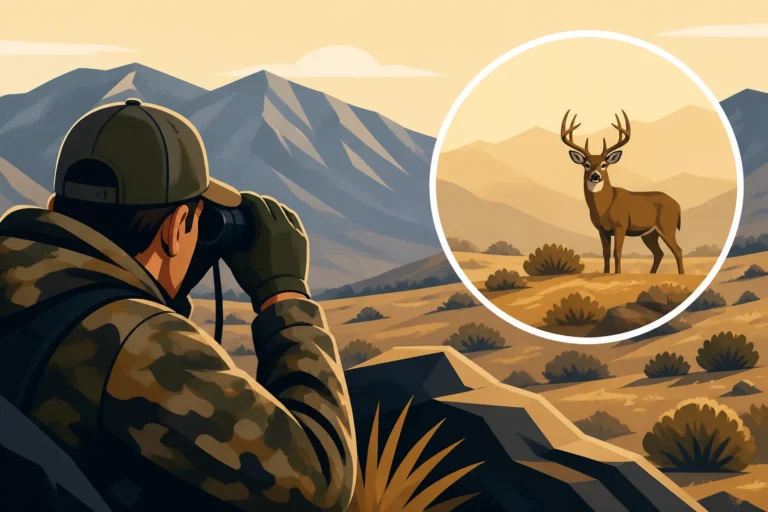
In Nevada, successful deer hunting, regardless of weapon, is overwhelmingly a glassing game. For muzzleloader hunters, this is even more critical because your effective range is generally shorter than a modern rifle, making initial detection and a well-planned approach absolutely essential. You're not typically still-hunting through thick timber; you're often surveying immense landscapes, searching for the tell-tale signs of a mule deer. Therefore, investing in top-tier optics – a high-quality spotting scope, powerful binoculars, and a sturdy tripod – is non-negotiable.
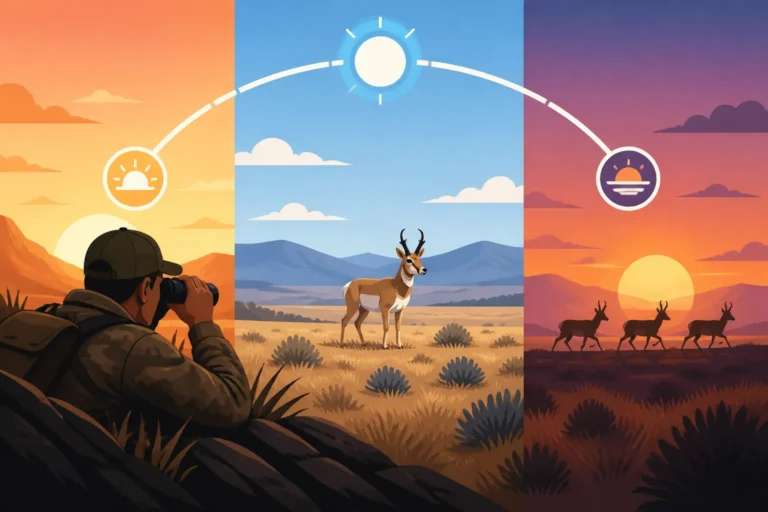
Position yourself on high points before first light, allowing you to survey as much country as possible as the sun begins to illuminate the landscape. Use the "grid glassing method" to systematically pick apart the terrain, ensuring you don't miss any pockets or shadows where a deer might be bedded or feeding. The goal is to spot deer from a great distance, ideally before they know you're there. Glassing Nevada's Basin and Range for Mule Deer provides invaluable insights into mastering this technique. Once a deer is spotted, particularly a buck you'd like to pursue, the real work begins: analyzing the terrain, planning your stalk, and constantly re-evaluating the deer's movements. This is where the short muzzleloader season adds pressure; you don't have endless days to find another buck if a stalk goes awry.
The Art of the Muzzleloader Stalk
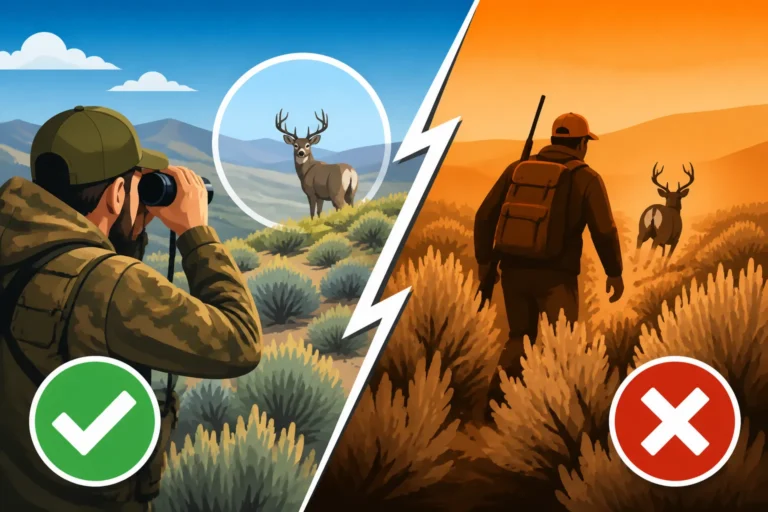
Once you've spotted your deer from afar, the challenge shifts to closing the distance while remaining undetected. This is the heart of muzzleloader hunting in open country. Unlike a rifle hunter who might be comfortable with a 300-yard shot, a muzzleloader hunter typically aims for 100-150 yards, sometimes pushing to 200 with extensive practice and ideal conditions. This requires getting significantly closer, which is a monumental task in Nevada's often-sparse cover.
Before moving, carefully study the topography on your map and with your optics. Identify draws, ridges, rock formations, and even large sagebrush clumps that can provide concealment. Pay meticulous attention to the wind direction and thermals. Mule deer have incredible noses, and a swirling wind will betray your presence instantly. Use any available cover to break up your silhouette and move slowly, deliberately, and often out of sight from the deer. It might mean adding miles to your stalk, but getting busted means the end of that opportunity. Practice playing the wind and using topography to your advantage. During the short muzzleloader season, you might only get one or two legitimate stalks on a mature buck, so making them count is paramount. Every rustle, every misplaced step, could send your target bounding away.
Key Units for Muzzleloader Deer Hunting
Nevada's muzzleloader deer opportunities are restricted to specific units, and understanding the characteristics of these units is crucial for both application strategy and on-the-ground success. Each unit, or unit group, presents its own unique challenges and rewards.
Researching Specific Hunt Units
Before you even fill out your application, you need to become intimately familiar with the units that offer muzzleloader deer hunts. This involves more than just looking at a map; it requires a deep dive into the unit's history, habitat, and regulations. Utilizing online resources is critical for this, and platforms like GoHunt provide extensive data on draw odds, harvest statistics, and unit profiles, helping hunters make informed decisions. Pay close attention to public land percentages – while Nevada is largely public land, some units might have significant private land holdings, which can affect access.
Beyond land ownership, research the habitat. Are these high-elevation units with aspen and pine forests, or vast expanses of sagebrush and juniper? This will dictate where deer are likely to be, what they're feeding on, and how you'll need to hunt them. Look at historical weather patterns for the season dates; early muzzleloader hunts might be warm, while late ones can bring significant snow. Consider factors like water sources – finding these can be key to locating deer, especially in dryer areas. Reading a Nevada Hunt Unit Before You Apply is a comprehensive process that should never be skipped. Don't just pick a unit because it's "known for big deer;" pick one that fits your hunting style, fitness level, and the specific challenges of muzzleloader hunting.
Understanding Unit Characteristics and Deer Behavior
The characteristics of a unit directly influence deer behavior and, consequently, your hunting tactics. In units dominated by vast sagebrush flats and rolling hills, deer are often more scattered but also more visible. Here, relentless glassing and long stalks are the norm. In units with more rugged mountains, timber, or dense juniper thickets, deer might be concentrated in certain areas, but finding them can be harder, requiring more deliberate still-hunting or methodical glassing of pockets and draws.
Consider the timing of the muzzleloader season within the unit. If it's an early season, deer might still be in summer patterns, focused on feed and water, often in higher elevations. Later seasons, closer to the rut, might see bucks beginning to cruise and become more active during daylight, potentially in slightly lower elevations as weather changes. Remember, mule deer in Nevada are migratory in many areas, moving between summer and winter ranges. Understanding these migration patterns, if applicable to your chosen unit, can put you in the right place at the right time. For example, some units might see increased deer activity as they begin to stage before a significant winter migration, creating excellent hunting opportunities during a late-season muzzleloader hunt.
Preparing for a Short, Intense Hunt
The one-week nature of Nevada's muzzleloader deer season means there's no time for easing into it. You need to be physically ready, mentally sharp, and have all your gear dialed in from day one. This demands a level of preparation far beyond what might be acceptable for a longer, more relaxed hunt.
Physical and Mental Conditioning
Nevada hunting is physically demanding. You'll be covering vast distances, often at high elevations, over uneven and rocky terrain. For a short, intense muzzleloader season, your body needs to be a well-oiled machine. This means starting a rigorous physical conditioning program months in advance. Focus on cardiovascular endurance – think long hikes with a weighted pack, trail running, or stair climbing. Strength training, particularly for your legs, core, and back, will help you navigate steep ascents and descents and carry out a harvested animal. Don't forget flexibility and balance exercises, as they'll help prevent injuries on uneven ground. Preparing Physically for Long Glassing Days is vital, as you'll spend hours behind your optics, often in uncomfortable positions.
Beyond physical fitness, mental toughness is equally important. Muzzleloader hunting can be frustrating, with long hours of glassing, failed stalks, and the pressure of a limited time window. You need to be prepared for setbacks and maintain a positive, persistent attitude. Visualize successful stalks, practice breathing techniques to calm nerves before a shot, and mentally rehearse challenging scenarios. The mental game is half the battle, especially when you know every day counts and your opportunities are limited.
Gear Preparation and Logistics
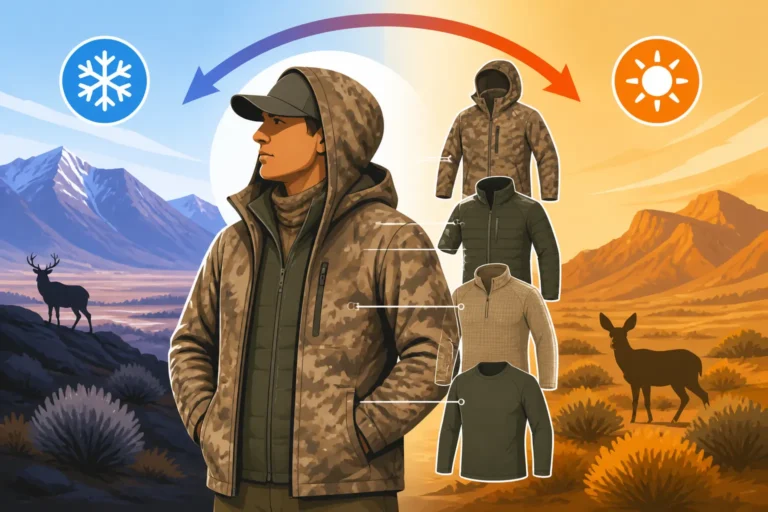
Your gear needs to be absolutely dialed in before you leave home. This includes your muzzleloader, optics, clothing system, camping setup, and survival essentials. Test your muzzleloader load repeatedly at the range to ensure pinpoint accuracy and familiarize yourself with its ballistics. Clean your optics, ensure your tripod is stable, and confirm all adjustments work smoothly. Your clothing system should be adaptable to Nevada's often drastic temperature swings, layering is key, especially during muzzleloader seasons that can span from crisp fall days to potentially snowy late-season conditions.
Logistically, the short season means you can't afford wasted time. Plan your travel, campsite, and daily hunting areas in detail. Have backup plans for changing weather or unexpected challenges. Carry sufficient water, food, and emergency supplies. In remote Nevada, services are few and far between, so being self-sufficient is paramount. Think through field care for your harvested animal, especially if temperatures are still warm or you're far from the truck. Having a plan for packing out meat, cooling it quickly, and getting it to a processor is essential. Remember, with a muzzleloader, your opportunity might be brief, so ensuring your gear and logistics are flawless is a non-negotiable part of maximizing your chances.
Field Care and Regulations Specific to Muzzleloaders
Once you've successfully harvested a deer with your muzzleloader, the work isn't over. Proper field care is crucial for preserving the meat and trophy, and strict adherence to Nevada's regulations is mandatory to avoid legal issues. The conditions you encounter during a muzzleloader season can vary, impacting your field dressing and cooling strategy.
Tagging, Field Dressing, and Meat Care
Immediately after harvesting your deer, you must comply with Nevada's tagging requirements. This means validating your tag by cutting out the day and month of the harvest and attaching it to the animal. There are strict rules on How Soon You Must Tag a Downed Animal, so this needs to be your very first priority. Take your time to fill out the tag accurately and secure it to the carcass as specified in the regulations.
Next comes field dressing. Remove the entrails as quickly and cleanly as possible to begin the cooling process. If the weather is still mild during an early muzzleloader season, rapid cooling is critical to prevent spoilage. Get the hide off quickly if possible, especially on the side exposed to the sun. Quartering the animal and hanging the meat in game bags in the shade or a cooler with ice (ensuring no direct water contact) are excellent strategies. For later seasons with cooler temperatures, cooling is less frantic but still important. Be aware of The Meat Salvage Requirements for Big Game in Nevada; you are legally obligated to remove all edible portions of the meat. Leaving edible meat in the field, other than gut piles, is illegal and unethical. Take care to save evidence of sex, typically the head with antlers for a buck, and transport it according to NDOW guidelines to avoid any issues during check-out or with game wardens.
Muzzleloader-Specific Considerations
Beyond general field care, there are a few considerations unique to muzzleloader hunting. Depending on your load, the muzzleloader can leave a distinct wound channel. While deer will react differently to various projectiles, it's always critical to assume the animal will run, even if it's a good shot. Always wait a reasonable amount of time before tracking, unless you saw the animal go down. Follow-up shots with a muzzleloader are not quick, so making the first shot count is paramount. This further emphasizes the importance of practice and shot placement.
Also, be mindful of your muzzleloader's condition after the shot. If it's a cap-and-ball or a traditional black powder rifle, it might need immediate basic cleaning to prevent fouling from hardening, especially if you plan to carry it loaded for subsequent days of the hunt (check state regulations on loaded muzzleloaders in vehicles). While modern inline muzzleloaders are less prone to this, a quick wipe down of the bore and breach plug area can't hurt. Ensure all parts are free of debris and moisture, especially if you're hunting in wet conditions. Remember, the limited nature of the season means every aspect of your hunt, from shot to field care, must be handled with efficiency and precision.
Beyond the Draw: Maximizing Your Chances
Drawing a Nevada muzzleloader deer tag is a huge accomplishment, but it's just the first step. To truly make the most of that one-week window, you need to go beyond the basics, diving deep into E-scouting, unit analysis, and meticulous planning that leverages every available piece of information.
Advanced E-Scouting and Data Analysis
In the modern hunting world, E-scouting is no longer a luxury, it's a necessity, especially for limited-entry hunts in vast states like Nevada. Before you even set foot in your unit, you should have spent countless hours poring over satellite imagery, topographical maps, and public land layers. Tools like onX Hunt, BaseMap, or the detailed data offered by GoHunt become your virtual scouting partners. Identify potential glassing points, bedding areas, water sources, migration corridors, and escape routes. Look for changes in vegetation, terrain features that might funnel deer, and remote pockets that might hold unpressured animals. E-Scouting a Nevada Unit Before the Season allows you to arrive in your unit with a solid game plan, saving precious time in the field.
Beyond mapping, deep dive into historical harvest data for your specific unit and weapon type. While past success doesn't guarantee future results, it can give you insights into deer density, buck-to-doe ratios, and typical harvest locations. GoHunt, for example, aggregates a wealth of this information, allowing you to compare units, analyze draw odds year over year, and even see what types of bucks are being harvested. This kind of data-driven approach helps refine your strategy, whether it's identifying overlooked areas, understanding how hunting pressure might impact deer movement, or simply affirming your chosen hunt plan.
Planning for the Unexpected
Even with the best E-scouting and preparation, Nevada hunting always throws curveballs. The vastness of the landscape, unpredictable weather, and the inherent wildness of mule deer mean you need contingency plans. What happens if your primary access road is washed out? What if a sudden snowstorm hits? What if your intended hunting area is already seeing heavy pressure from other hunters? Having backup plans for these scenarios can save your hunt.
This includes identifying secondary hunting areas within your unit, knowing alternative access routes, and packing an emergency kit that accounts for sudden weather changes. Always communicate your hunting plans with someone reliable back home, including your specific unit, planned routes, and expected return time. Carrying a satellite messenger or GPS device with emergency contact capabilities is highly recommended, as cell service is often non-existent in remote Nevada units. Remember, you only have one week for this special hunt. The more you've anticipated potential problems and prepared solutions, the more time you can spend effectively hunting, rather than problem-solving. Every minute counts when you're pursuing a Nevada mule deer with a muzzleloader.
Disclaimer
Please remember that hunting regulations can change. Always consult the most current Nevada Department of Wildlife (NDOW) regulations and season guides before planning or embarking on any hunt. This guide is for informational purposes only and does not supersede official state regulations.