Which Nevada Units Border Idaho
Hunting along state lines often presents a unique set of challenges and opportunities, especially when you're trying to nail down specific regulations and unit boundaries. It can be incredibly frustrating to pore over maps, trying to figure out where one state's jurisdiction ends and another's begins, and what that means for your hunt planning. This guide aims to clear up some of that confusion by detailing which Nevada hunt units share a border with Idaho, helping you confidently pinpoint your next Northern Nevada adventure.
Understanding the Nevada-Idaho Border Region for Hunters
The northern reaches of Nevada, where it kisses the Idaho border, are a landscape defined by dramatic changes in elevation, vast sagebrush flats, and rugged mountain ranges. This isn't your typical flat desert — we're talking about the transition into the Great Basin's more northerly and often wetter terrain, which supports different ecosystems and, crucially, different big game populations. For hunters, this border region offers a unique blend of opportunities, from high-desert mule deer to surprisingly robust elk populations, and even fantastic chukar hunting in the steep, rocky draws. However, hunting right on a state line means you need to be doubly diligent about knowing exactly where you are and understanding both Nevada's rules and the adjacent state's regulations, even if you only plan to hunt on one side.
This convergence of states also means that game animals, particularly migratory ones, might move freely across these invisible lines, following feed, water, and seasonal patterns. What happens in southern Idaho can absolutely influence the deer and elk movements in northern Nevada. The terrain itself is often remote, characterized by long, lonely stretches of dirt road and vast expanses of public land. This creates an experience for the hunter who truly wants to get away from it all and isn't afraid of putting in the miles, both in the truck and on foot. It’s a place where a good pair of binoculars and a solid understanding of topographic maps are worth their weight in gold, allowing you to Glassing Grids Across a Nevada Basin to locate game from a distance.
The Landscape and Its Influence on Game
The Nevada-Idaho border region is a mosaic of high desert, juniper and pinyon pine forests, and aspen groves at higher elevations. This diverse habitat is critical for sustaining various game species. For instance, the abundant sagebrush provides essential forage and cover for mule deer and sage grouse, while the more mountainous areas with timber and riparian zones are crucial for elk. Water sources, whether natural springs or man-made guzzlers, become critical focal points in this arid environment, often concentrating game, especially during drier periods. Understanding these micro-environments within a unit is key to successful scouting and hunting.
Consider the role of elevation: as you move from the valley floors up into the mountain ranges like the Jarbidge Mountains or the Independence Range, the vegetation changes dramatically. You might start in wide-open sagebrush flats perfect for spotting antelope or long-range mule deer, then transition into steep, rocky canyons ideal for chukar, and finally reach higher elevations with scattered timber where elk might be found. This means that a single hunt unit bordering Idaho could offer a surprising variety of hunting experiences, requiring hunters to be versatile in their tactics and gear. Preparing for these varied conditions, from intense sun to sudden cold snaps, is essential for Layering for Basin and Range Temperature Swings.
General Hunting Opportunities in the Border Region
Hunters venturing into these northern Nevada units often have their sights set on trophy mule deer and the opportunity to draw an elk tag in what can be truly wild country. While draw odds can be notoriously tough for elk in Nevada, the quality of animals, particularly the Nevada Elk Herds Grew From Nothing Into a Trophy Draw, makes the wait worthwhile for many. Mule deer opportunities can range from archery hunts in August, when temperatures demand careful Heat Management on an August Archery Hunt, to late-season rifle hunts that can offer incredible chances at mature bucks during the rut.
Beyond big game, this region is a mecca for upland bird hunters, particularly those seeking the notoriously challenging chukar. The steep, rocky slopes along the border are prime chukar habitat, offering a physically demanding but incredibly rewarding experience. There are also opportunities for other small game like cottontails and jackrabbits, and predator hunting, particularly for coyotes, which are present year-round. Always make sure you understand the specific seasons and regulations for any species you plan to pursue, as they can vary greatly from year to year and by unit.
Specific Nevada Units Along the Idaho Border
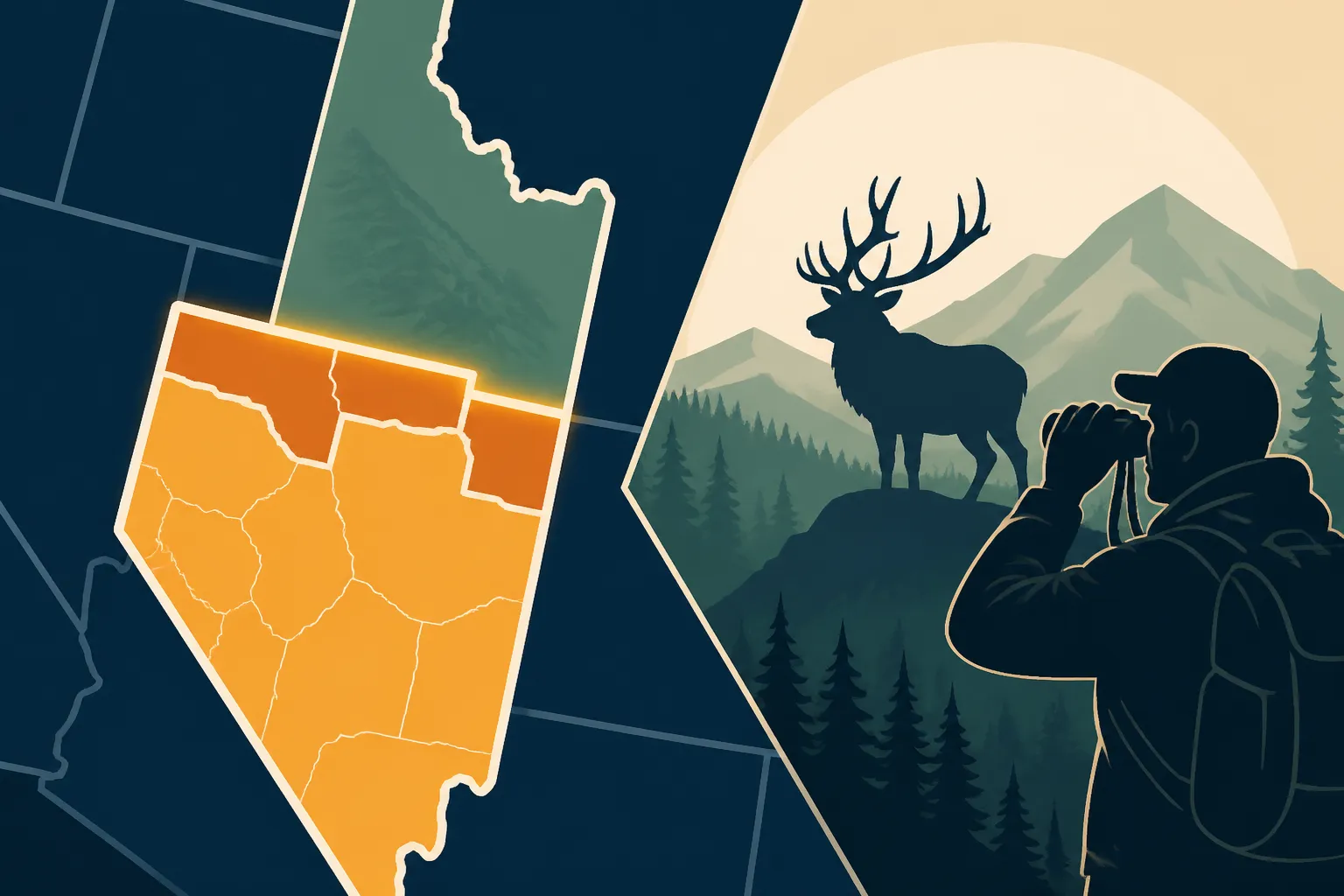
When you pull out your maps and really zoom in on the northernmost edge of Nevada, you'll see a distinct line of hunt units that share a boundary with Idaho. These are the units where you need to be extra vigilant about property lines, state lines, and making sure your harvested animal is tagged and transported according to Nevada law, not Idaho law, if taken on the Nevada side. The terrain in these units is rugged and remote, requiring self-sufficiency and a good handle on navigation. Tools like onX Hunt are invaluable here, allowing you to instantly see your position relative to state lines, unit boundaries, and land ownership, preventing accidental trespass or jurisdictional mix-ups.
This table gives a quick overview of the primary Nevada hunt units that directly share a border with Idaho, moving roughly from west to east:
| Nevada Hunt Unit | Adjacent Idaho Region | Primary Game Species | General Terrain Description |
|---|---|---|---|
| Unit 011 | Owyhee County, ID | Mule Deer, Elk, Pronghorn, Chukar | Vast sage flats, rolling hills, deep canyons, some mountain peaks |
| Unit 012 | Owyhee County, ID | Mule Deer, Elk, Chukar | Mountainous, rugged, dense sagebrush, some timber |
| Unit 013 | Owyhee County, ID / Twin Falls County, ID | Mule Deer, Elk, Chukar | High desert plateaus, deep river canyons, isolated mountain ranges |
| Unit 014 | Twin Falls County, ID | Mule Deer, Elk, Pronghorn, Chukar | Mixed sagebrush and grasslands, volcanic rock formations |
| Unit 021 | Cassia County, ID | Mule Deer, Elk, Pronghorn, Chukar | High elevation mountains, sage valleys, some aspen/pine |
| Unit 022 | Cassia County, ID | Mule Deer, Elk, Chukar | Rugged mountains, steep canyons, limited access |
| Unit 031 | Oneida County, ID | Mule Deer, Elk, Pronghorn | Rolling hills, sagebrush flats, agricultural fringes |
| Unit 032 | Oneida County, ID / Box Elder County, UT | Mule Deer, Elk, Pronghorn | Broad valleys, low mountains, transitioning to Utah border |
Note: These are the primary units. Small segments of other units might touch the border, but these are the most significant for hunting considerations.
Unit 011: The Owyhee Front
Unit 011 is a massive expanse of northern Nevada that borders Idaho's Owyhee County. This unit embodies much of what northern Nevada hunting is about: vast, sparsely populated country. It’s known for its mule deer, and while elk are present, drawing a tag can be a multi-year endeavor. The terrain varies from the flat-topped mesas and deep, carved canyons characteristic of the Owyhee Breaks to more rolling sagebrush hills. Hunters here need to be prepared for long drives on rough roads and even longer hikes. Glassing Nevada's Basin and Range for Mule Deer is the name of the game in these wide-open spaces. You'll spend hours behind your optics, meticulously scanning draws and hillsides for the telltale flick of an ear or the outline of a bedded buck.
Access to water can be a major factor, especially for early archery hunts. Knowing where springs and guzzlers are located, often through tools like onX Hunt, can make or break a hunt. The chukar hunting in Unit 011 can be phenomenal, but it requires serious physical conditioning to tackle the steep, rocky terrain where these birds thrive. Remember, while the border is a line on a map, animals don't respect it, so understanding movement patterns into and out of Idaho is crucial for anticipating where game might be.
Units 012 and 013: Rugged Mountain Pockets
Moving east, Units 012 and 013 represent a more mountainous and rugged section of the Idaho border. These units often hold more dense vegetation in certain areas, providing better cover for elk. Unit 012, in particular, is known for its challenging terrain and potential for big bulls if you're lucky enough to draw a tag. The remoteness means less hunting pressure in some of the deeper canyons and higher peaks, but it also means greater logistical challenges. Packing an animal out of these areas can be a monumental task, often requiring significant physical effort or the use of pack animals.
Unit 013 offers a mix of high desert plateaus and deeper river canyons, some of which feed into Idaho. Both units are excellent for chukar, with seemingly endless steep slopes to explore. For mule deer hunters, these units offer a different challenge than the flatter country of 011, often requiring more still-hunting tactics through sparse timber or carefully navigating rimrock country. Staying oriented is paramount, and a reliable GPS combined with paper maps is always a wise choice in these areas, as cell service is virtually nonexistent. Learning how to Reading a Nevada Hunt Unit Before You Apply becomes incredibly important to understand the specifics of these varied landscapes.
Units 021, 022, 031, and 032: Towards the Eastern Edge
As we continue eastward along the border, units like 021 and 022 venture into the high elevations of the Jarbidge Mountains, which are shared with Idaho. The Jarbidge Wilderness Area, with its limited access and incredible backcountry potential, influences these units significantly. These are prime areas for those seeking a true wilderness experience for elk and mule deer. Elk populations here have benefited from successful management strategies, leading to some of Nevada's most coveted elk tags. The terrain here can be brutal, with steep ascents, dense timber in some areas, and unpredictable weather, especially in late fall.
Units 031 and 032 mark the transition as the Nevada-Idaho border bends towards Utah. These units often feature more rolling hills, expansive sagebrush flats, and sometimes even agricultural fringes that spill over from Idaho. Pronghorn become a more prominent target in these open valleys, offering exciting spot-and-stalk opportunities. While still rugged in places, the general topography can be less extreme than the Jarbidge area, potentially offering slightly easier access in some areas. However, don't let "easier access" fool you; remote stretches are still the norm. Always check detailed maps (like those from GoHunt or onX Hunt) to understand specific land ownership and road networks before heading out.
Planning Your Hunt in Nevada's Border Units
Hunting in a border unit demands a bit more forethought than hunting deep within a state. You're not just dealing with the vastness of Nevada's public lands; you're also navigating potential pitfalls related to adjacent state regulations and cross-border game movements. Being prepared means not only having the right gear but also possessing a deep understanding of the rules and the environment. This region is home to some of Nevada's best hunting, but it doesn't give up its secrets easily.
One of the biggest concerns for many hunters is avoiding accidental trespass, especially when unit boundaries or state lines are not clearly marked on the ground. This is where modern mapping applications become indispensable. An app like onX Hunt allows you to see your exact location on a map overlaying private and public land, as well as state and hunt unit boundaries. This real-time awareness helps you make informed decisions, whether you're stalking a buck or just looking for a good place to glass.
Navigating Regulations and Boundaries
The Nevada Department of Wildlife (NDOW) publishes detailed regulations each year, outlining seasons, legal methods of take, and unit boundaries. It's imperative that you download and thoroughly read the current regulations. Never assume that regulations from a previous year, or from Idaho, apply to your Nevada hunt. Pay close attention to descriptions of unit boundaries, which often reference specific roads, power lines, or geographic features. Sometimes these can be ambiguous on older maps, making a modern GPS and mapping app critical. Knowing how to decipher Reading a Nevada Hunt Unit Number and its associated description is a fundamental skill.
For example, if you're hunting Unit 011, which borders Idaho, you need to be acutely aware of where the state line truly lies. If you down an animal that crosses into Idaho, or if you accidentally cross the border while pursuing an animal, you could run into serious legal issues. Similarly, understanding specific rules like blaze orange requirements (which can vary by season and weapon type), rules on hunting from a vehicle, or trail camera regulations is vital to staying legal. The remoteness of these areas means wildlife enforcement officers cover vast territories, and ignorance of the law is never an excuse.
Essential Gear for Border Unit Hunts
Hunting these remote border units is not for the faint of heart or the unprepared. Beyond your weapon of choice and appropriate hunting attire, a few key pieces of gear are absolutely essential:
- Reliable Navigation: A GPS unit (with extra batteries) and a mapping app like onX Hunt on your smartphone are critical. Download offline maps before you leave cell service. A physical map and compass are also wise backups.
- High-Quality Optics: Nevada is a glassing state, especially in the open country of the north. A good pair of binoculars (10x or 12x) and a spotting scope are indispensable for finding game at distance. Considering Optics Power for Nevada's Long Sightlines is key for success.
- Plenty of Water and Food: Water sources can be few and far between. Carry more than you think you'll need, especially during warmer seasons. Dehydrated meals and high-energy snacks are perfect for multi-day excursions.
- First-Aid and Emergency Gear: These units are remote. A comprehensive first-aid kit, a satellite messenger or inReach device, and emergency shelter are vital.
- Appropriate Vehicle: You'll likely be driving many miles on rough, unmaintained dirt roads. A high-clearance 4×4 vehicle with good tires, a full-size spare, and extra fuel is strongly recommended. Breaking down 50 miles from the nearest paved road or town is a serious problem. Knowing about Vehicle Prep for Remote Nevada Roads can save your hunt.
Key Species and Terrain in Border Units
The Nevada units bordering Idaho offer diverse habitats that support a range of big game and upland species. While mule deer are a primary draw for many hunters, the potential for elk, pronghorn, and chukar adds to the allure of these remote landscapes. Understanding the preferred habitats and behaviors of these animals within the unique terrain of northern Nevada will significantly increase your odds of success.
The rugged nature of the Jarbidge Mountains and other ranges like the Independences, which spill into these units, provides critical refuge and forage for bigger game. These areas can hold pockets of timber and water that are magnets for elk and larger mule deer bucks. Conversely, the vast sagebrush flats and rolling hills are ideal for pronghorn, where their incredible eyesight and speed are put to the test.
Mule Deer Opportunities
Mule deer are undeniably the flagship species for many hunters in Nevada, and the northern border units are no exception. The terrain here offers varied hunting styles. In the wide-open sage flats of Unit 011 and parts of 031, long-range glassing is king. Hunters will typically set up on a high point, systematically The Grid Glassing Method, Step by Step, looking for deer many miles away. Once spotted, a patient and often arduous stalk is required, utilizing every piece of cover available.
In more broken, mountainous units like 012, 013, 021, and 022, mule deer might be found in smaller pockets of cover, in aspen groves, or along steep canyon walls. Here, a combination of glassing and still-hunting, moving slowly and deliberately through favorable terrain, might be more effective. The late rifle seasons in these northern units can be particularly productive as deer begin to move down from higher elevations and the rut approaches, offering opportunities for Hunting the Post-Rut Migration for Big Bucks. Always remember to carry a good rangefinder, as judging distance in the expansive Nevada landscape can be tricky.
Elk Hunting Potential
Nevada elk are highly sought after, and the border units, particularly 012, 013, 021, and 022, are among the places where healthy populations reside. Drawing an elk tag here is a testament to perseverance in the draw system, but the reward can be a truly wild bull hunt. These areas often have more mountainous, timbered, and riparian habitat than the central Nevada desert, which is ideal for elk. During the early archery seasons, hunters might find success by focusing on Bugling Bulls in Nevada's Northern Mountains or by sitting water sources.
Muzzleloader and rifle seasons offer different challenges. Elk in these units are smart and can disappear into dense cover with remarkable speed. Physical fitness is a major advantage, as successful elk hunts often involve covering many miles of steep, uneven terrain. Whether you're calling, still-hunting, or setting up on travel corridors, persistence is key. Even if you haven't drawn an elk tag, just knowing that these magnificent animals roam these units adds another layer of excitement to any hunt plan.
Upland Bird Hunting: Chukar and More
For many, Northern Nevada is synonymous with chukar hunting, and the units bordering Idaho are prime real estate for these tenacious birds. Chukar thrive on steep, rocky slopes, often interspersed with sagebrush, and they are masters of using the terrain to their advantage. A chukar hunt is an intense physical challenge, requiring sturdy boots, plenty of water, and a willingness to climb. When you finally get into a covey, the action is fast and furious.
Beyond chukar, these units also offer opportunities for Hungarian partridge in some of the more agricultural or grassy areas, and sage grouse in units with extensive, healthy sagebrush habitat. Sage grouse hunting requires a special permit and is highly regulated to protect their populations, so always check the specific rules. The diversity of upland birds means that even if you're primarily pursuing big game, you can often add some exciting bird hunting to your trip, providing a unique and rewarding experience in Nevada's northern reaches.
Disclaimer
This article is for general informational purposes only and does not constitute professional advice. Laws, prices and regulations vary by location and change over time. Consult a qualified professional for guidance on your specific situation.