Youth Requirements to Hunt Unsupervised
It's a question every parent who loves to hunt in Nevada eventually asks: "When can my child finally head out into the sagebrush country on their own, carrying their own rifle or bow, truly unsupervised?" The desire for independence is strong in young hunters, and as parents, we want to foster that growth, but also ensure they're safe, capable, and legal. This guide will walk you through the specific requirements and practical considerations for youth hunting unsupervised in Nevada, helping you understand the pathway from mentored hunts to independent adventures.
When Can Young Hunters Go Out Alone in Nevada?
The dream of a young hunter stalking their first mule deer buck or pronghorn on their own is a powerful one, but Nevada law has clear guidelines to ensure safety and responsibility. It’s not just about age; it's a combination of education, experience, and legal consent. Understanding these foundational elements is crucial for both parents and aspiring independent young hunters.
The Hunter Education Mandate: A Non-Negotiable Starting Point
Before any young person can even consider hunting in Nevada, whether supervised or unsupervised, they must complete a certified hunter education course. This isn't just a suggestion; it's a legal requirement. Specifically, Anyone Born After 1959 Needs Nevada Hunter Education. This rule applies to everyone, regardless of age, who wishes to hunt big game in the state, but it's particularly important for youth as it forms the bedrock of their eligibility.
A hunter education course covers far more than just firearm safety; it delves into wildlife identification, hunting ethics, conservation principles, basic first aid, and survival skills vital for navigating Nevada's often remote and challenging terrain. For a young hunter, this course is their first formal step toward becoming a responsible and self-sufficient outdoors person. It ensures they understand not only how to handle a weapon safely but also the importance of respect for wildlife and the land. Nevada is quite accommodating regarding where you can get this certification, as Nevada Accepts Hunter Education From Any State, provided the course is approved by the International Hunter Education Association (IHEA-USA). So, if your child took a course in a neighboring state, chances are it's valid here.
Legal Age for Unsupervised Hunting: Understanding the Nuances
This is where the rubber meets the road for parents. In Nevada, the law makes a distinct difference between hunting with a license and hunting unaccompanied by an adult. For general hunting with a license, a person must be at least 12 years old. However, for a 12 or 13-year-old, the law explicitly states they "may hunt only when accompanied by an adult." This means even if they have their hunter education certificate and a valid license, they cannot legally hunt big game alone.
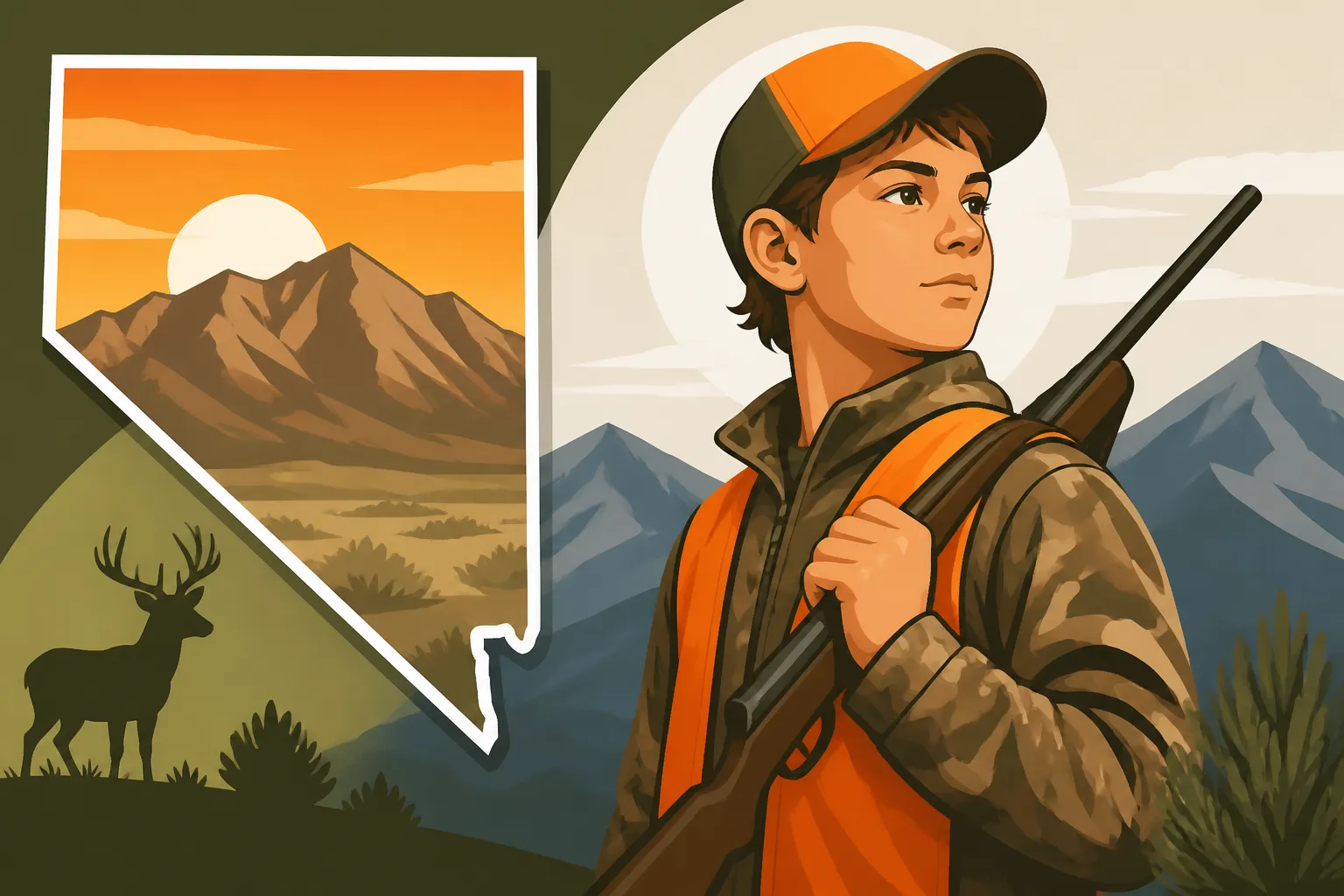
The real threshold for unsupervised hunting in Nevada begins at 14 years of age. A person who is 14 years of age or older but less than 18 years of age can hunt without being accompanied by an adult, provided they have a valid hunting license, a hunter education certificate, AND their parent or legal guardian provides written consent to the Nevada Department of Wildlife (NDOW). This written consent is not a mere formality; it's a critical legal step that signifies the parents acknowledge and approve of their child hunting independently. Without this specific written consent filed with NDOW, a 14 to 17-year-old is still legally required to be accompanied by an adult. This provision allows for a measured approach to independence, giving parents the final say on when their child is truly ready to tackle the vastness of Nevada's hunting grounds solo.
What "Supervised" Actually Means in Nevada Law
Before a young hunter reaches that 14-year-old mark with parental consent, or if they are 12-13 years old, they must be "accompanied by an adult." But what does "accompanied" truly mean in the eyes of the law? It's more than just being in the same general area. In Nevada, an accompanying adult must be at least 18 years of age. This adult is responsible for the direct supervision of the minor hunter. While the regulations don't specify an exact distance, the general interpretation, and certainly the safest practice, is that the adult must be close enough to have direct control and communication with the young hunter at all times.
This isn't just about legal compliance; it's about active mentorship. A supervising adult is there to guide, instruct, and intervene if necessary. They are teaching field craft, decision-making, and ethical hunting practices. It means being able to see and hear your young hunter, offer immediate advice on shot placement, animal identification, or safety, and respond to any unforeseen circumstances. This close supervision is invaluable, particularly when navigating tricky terrain or dealing with the excitement and pressure of a big game encounter. It's an opportunity to pass on years of wisdom and solidify safe hunting habits before a child embarks on their own independent journey.
Beyond the Law: Practical Readiness for Independent Hunting
While Nevada law outlines the minimum age and requirements for unsupervised youth hunting, legal readiness is only one piece of the puzzle. Practical readiness, built on experience, judgment, and self-sufficiency, is arguably more important. Nevada's hunting landscapes are vast, rugged, and unforgiving, demanding a high level of preparedness from any hunter, especially a young one venturing out alone.
Cultivating Essential Field Skills and Sound Judgment
A hunter education course provides a solid theoretical foundation, but true competence comes from countless hours in the field. Before allowing a young hunter to go out unsupervised, consider their mastery of crucial field skills. Can they accurately read a topographic map and navigate with a GPS unit or a smartphone app like GoHunt? Do they understand how to interpret animal sign, read wind, and execute a safe, ethical stalk? Playing Thermals on a Rimrock Stalk or Reading Wind on a Long Sage Stalk are skills honed over many hunts, not learned overnight.
Sound judgment is perhaps the most critical skill. Can they differentiate between legal and illegal game? Can they make the tough decision to pass on a shot that isn't ethical, even when buck fever is setting in? Do they know when to call for help, when to wait out a storm, or how to react to unexpected encounters with other wildlife or people? Hypothetically, imagine a young hunter spots a magnificent bull elk, but it’s just beyond their comfortable shooting range, or the light is fading fast. Would they have the discipline to wait for a better opportunity, or would they push for a marginal shot out of excitement? These are the kinds of judgments that define a responsible hunter, and they are best developed through years of supervised experience and candid post-hunt discussions.
Equipping for Self-Sufficiency and Safety in Nevada's Backcountry
Nevada is not a place to be unprepared. Its remote units can be miles from any paved road, let alone cell service. An unsupervised young hunter must be fully equipped and know how to use every piece of their gear effectively. This includes more than just their hunting weapon.
- Navigation: A reliable GPS device or a smartphone with downloaded offline maps (like those offered by GoHunt), coupled with a compass and physical map, is non-negotiable. They must know how to mark their starting point, track their path, and find their way back.
- Communication: A satellite messenger or a two-way radio (if hunting with another party within range) is vital for emergencies, as cell service is spotty at best across much of the state. They need to understand how to use it to call for help.
- First Aid and Survival: A comprehensive first-aid kit and basic survival gear (fire starter, emergency shelter, sufficient water, and purification tablets) are essential. They should know how to use each item. Water You Must Carry on a Desert Day Hunt is a crucial consideration, as dehydration can set in quickly.
- Appropriate Clothing: Layering for Nevada's extreme temperature swings, often from freezing mornings to scorching afternoons, is key. They should understand Layering for Basin and Range Temperature Swings.
- Firearm Proficiency: Beyond just knowing how to shoot, they must be intimately familiar with their specific rifle or bow, understanding its capabilities and limitations. For instance, knowing the Rifle Zero Distance for Long Sage Shots or the Minimum Bow Draw Weight for Big Game is fundamental.
A practical scenario: A young hunter successfully downs a mule deer in a remote canyon. Do they know how to field dress it efficiently to start the cooling process, especially if it’s an early season hunt where Field Dressing in August Heat is a concern? Do they have a plan for Packing an Animal Out of Roadless Country? These aren't just skills; they're essential elements of self-reliance that must be mastered before striking out alone.
Navigating Complex Public Lands and Respecting Boundaries
Nevada boasts an incredible amount of public land, but it's not always a seamless mosaic. Interspersed private parcels, Wilderness Study Areas with vehicle restrictions, and tribal lands mean a young hunter needs to be extremely proficient at understanding land ownership. The phrase "know before you go" takes on new meaning here.
They must know how to accurately Reading a Nevada Hunt Unit Before You Apply and precisely identify unit boundaries and land ownership on a map. Tools like those from GoHunt or other mapping apps that display public/private land layers are invaluable, but a young hunter must be able to interpret them correctly to avoid accidental trespass. What looks like public access on a topo map might actually be surrounded by private land. They need to know Wilderness Study Area Vehicle Limits and where motorized travel is permitted. A lack of attention to these details can lead to fines, loss of hunting privileges, or severe repercussions with landowners. Hypothetically, imagine a young hunter pursuing a coyote across a valley, only to unknowingly cross onto posted private property. Knowing where they are at all times, and respecting all signage and property lines, is paramount.
Securing Licenses, Tags, and Understanding Youth Opportunities
Once a young hunter has met the legal age and parental consent requirements, and demonstrated sufficient practical readiness, the next step is navigating Nevada's licensing and tag application system. The state has specific provisions for youth hunters, and understanding these is key to successful and legal participation.
The Nevada Junior Combination License and Draw Process
Before a young hunter can even apply for a big game tag, they must first purchase a Nevada Junior Combination License. This license typically covers hunting and fishing privileges for residents and is a prerequisite for entering any big game draw. The application process for big game tags can be complex, even for experienced adult hunters. For youth, it's about understanding which hunts they are eligible for and how to maximize their chances.
Nevada utilizes a bonus point system that squares points, which means that the more years you apply without drawing, the exponentially greater your chances become. While youth are subject to the same draw odds as adults, their participation in the draw builds their bonus points over time, significantly increasing their prospects for coveted tags in future years. It's important to keep track of key dates, like The Nevada Application Deadline in May, to ensure applications are submitted on time. While many parents handle these logistics for their younger children, an independent young hunter should begin to understand the nuances of the draw, what it means to Reading a Nevada Hunt Unit Number, and how to select their hunt choices.
Exploring Youth-Specific Hunt Codes and Seasons
Nevada offers specific opportunities designed to encourage youth participation, often referred to through Nevada Junior Only Hunt Codes. These hunts are typically for specific units and seasons and are exclusively open to junior hunters. The quota for these hunts is often smaller, but so is the applicant pool, potentially offering better draw odds for certain species or areas compared to general public draws.
These youth-only seasons can be a fantastic way for a young hunter to gain valuable experience in a less pressured environment. They might be offered for antlerless deer or cow elk tags, or during times outside the peak general seasons. Exploring these options can be highly beneficial for a young hunter seeking their first big game harvest. It's a stepping stone that provides unique opportunities for success and builds confidence before they tackle the broader, more competitive general hunts.
Leveraging Technology for Successful Youth Applications
In today's hunting world, digital tools are indispensable. For young hunters and their parents, leveraging platforms like GoHunt can make the application process much more manageable. GoHunt provides detailed draw odds, unit analyses, and season information, allowing families to research potential hunts and make informed decisions. This is especially useful for understanding the complexities of Nevada's diverse units, from the high mountain elk country to the vast sagebrush flats where pronghorn roam.
By using such tools, a young hunter can begin to engage with the strategic side of hunting – not just the in-field pursuit, but the planning and analysis that goes into securing a tag. Learning how to navigate draw statistics, understand population trends, and identify units with good success rates for junior hunts is an important part of becoming a well-rounded and independent hunter. It empowers them to take ownership of their hunting journey from the application stage right through to the harvest.
| Requirement Category | Specific Rule for Unsupervised Youth (14-17) | Rules for Supervised Youth (12-13) |
|---|---|---|
| Hunter Education | Required (IHEA-USA Certified) | Required (IHEA-USA Certified) |
| Minimum Age | 14 years old | 12 years old |
| License | Nevada Junior Combination License Required | Nevada Junior Combination License Required |
| Parental Consent | Written consent to NDOW required | Not required for supervision, but parent must be aware |
| Accompanying Adult | Not required | Required (Adult 18+ responsible for direct supervision) |
| Big Game Tag | Must draw a valid tag for species/unit | Must draw a valid tag for species/unit |
Mentorship and Progressive Independence: A Parent's Role
The journey from a mentored youth hunter to a fully independent and responsible adult hunter is a process, not a switch that flips overnight. Even when a child legally qualifies to hunt unsupervised, parental guidance and a thoughtful approach to increasing independence remain paramount. It's about building a solid foundation of ethics, safety, and self-reliance.
Gradual Steps Towards Solo Hunting Responsibility
Allowing a young hunter to go unsupervised doesn't mean sending them off into the wilderness alone for a week-long expedition right away. It's often best to introduce independence gradually. Start with shorter, less remote hunts. Perhaps they hunt a familiar area that still has good cell service, or they hunt in a different canyon while you are still nearby in a vehicle. Preparing Physically for Long Glassing Days is a critical skill for any hunter in Nevada, and even more so for a young, independent hunter.
These early unsupervised hunts can be opportunities for them to prove their skills, make their own decisions, and learn from mistakes in a lower-stakes environment. Encourage them to communicate regularly via satellite messenger or text if available, checking in at pre-arranged times. Discuss their plans in detail beforehand, including their intended route, backup plans, and emergency contacts. This gradual approach allows for continued learning and provides a safety net as they gain confidence and experience. It helps them prepare for larger, more challenging hunts, such as the Late Rifle Deer Seasons in Nevada which can involve colder weather and more difficult tracking conditions.
Fostering a Deep Understanding of Ethics and Conservation
Beyond the legal requirements and practical skills, fostering a deep appreciation for hunting ethics and conservation is perhaps the most important role of a parent. An independent hunter is an ambassador for the sport, and their actions reflect on all hunters. This means understanding and adhering to fair chase principles, respecting private property, ensuring quick and humane kills, and proper game care.
Discuss scenarios with them: What would you do if you saw another hunter acting unethically? How would you handle a situation where you couldn't immediately recover a wounded animal? These conversations instill a strong moral compass. Emphasize that hunting is not just about the harvest; it's about connecting with nature, understanding wildlife, and contributing to conservation efforts. This includes understanding why certain regulations exist, such as Baiting and Trail Camera Rules in Nevada, and why it’s important to follow them even when no one is watching.
Preparing for Unforeseen Challenges in Remote Nevada Terrain
Nevada's vast and often extreme environment presents unique challenges. Even experienced hunters can find themselves in difficult situations due to rapidly changing weather, vehicle breakdowns on remote roads, or unexpected encounters with wildlife. A young hunter venturing out alone must be prepared for these possibilities.
- Weather Awareness: They need to understand how to read weather patterns and anticipate sudden changes, especially in mountainous regions. A sunny morning can quickly turn into a snowstorm or a flash flood.
- Vehicle Preparedness: If driving, they should know basic vehicle maintenance and have recovery gear. Vehicle Prep for Remote Nevada Roads is not just for adults; a young driver needs to be just as prepared for flat tires or getting stuck.
- Wildlife Encounters: While deer and elk are the primary targets, encounters with mountain lions, bears, or venomous snakes are possible. They should know how to react safely to these situations. Snake Awareness on an August Archery Hunt is a good example of specific knowledge required.
- Emergency Protocols: Rehearse what to do in a true emergency, from a hunting accident to getting lost or injured. Knowing exactly how to use a satellite communicator to describe their location and condition can be life-saving.
Ultimately, allowing a young hunter to pursue game unsupervised in Nevada is a testament to their maturity, skill, and your trust in their judgment. It’s a privilege that comes with significant responsibility, and through careful mentorship and preparation, it can lead to a lifetime of rewarding and independent outdoor adventures.
Disclaimer
Always check the current year's Nevada Department of Wildlife (NDOW) hunting regulations for the most up-to-date and specific legal requirements before engaging in any hunting activities. This article is for informational purposes only and does not constitute legal advice.