Late Season Deer Hunts in Nevada
The crisp air of a Nevada autumn hunt is a memory for many by the time November rolls around, leaving some hunters feeling like their opportunity for a big buck has passed. But that couldn't be further from the truth! While the early archery and general rifle seasons get a lot of attention, there's a unique, often overlooked challenge and reward waiting for those willing to embrace the colder, wilder side of the Great Basin: the late season deer hunts. This guide will walk you through everything you need to know about pursuing mule deer when winter truly sets in.
Understanding Nevada's Late Season Deer Hunts
When we talk about "late season" deer hunts in Nevada, we're generally referring to rifle hunts that take place from late November through December. These aren't your leisurely, T-shirt weather hunts; these are expeditions into the heart of winter, often coinciding with significant weather events and the tail end of the mule deer rut. Many hunters shy away from these dates, imagining brutal conditions and sparse deer, but for those who know how to prepare and where to look, these tags offer some of the most exciting and potentially rewarding experiences.
What Defines a Late Season Tag
A late season tag in Nevada is typically characterized by a season date that falls entirely or predominantly within the months of November and December. Unlike the earlier hunts when deer are still scattered across summer and fall ranges, these late seasons often put hunters squarely in the migration corridors or on the wintering grounds. The Nevada Department of Wildlife (NDOW) structures these seasons with a keen eye on managing herd health and providing diverse opportunities, acknowledging that deer behavior shifts dramatically as temperatures drop and snow begins to fly. For many units, these late hunts are specifically designed to target mature bucks after the peak of the rut, ensuring that hunters are pursuing animals that have already contributed to the breeding cycle. It's a strategic approach that means the deer you're pursuing are often at their most vulnerable, driven by the biological imperative to feed and recover, or still caught up in the waning days of the breeding frenzy.
Why These Seasons Exist
The primary reasons behind the existence of late season deer hunts in Nevada are multifaceted, blending population management goals with hunter opportunity. Firstly, by scheduling hunts after the main rut, NDOW aims to allow most breeding to occur undisturbed, contributing to robust fawn crops in the spring. Secondly, these hunts often coincide with deer migrating to lower elevations to escape heavy snow, concentrating animals and making them more accessible in certain areas. This can be a huge advantage when you're glassing vast landscapes. Thirdly, and perhaps most exciting for trophy hunters, these seasons provide an opportunity to encounter some of the biggest bucks of the year. While the bucks might be a bit run down from the rut, their guard is often lower, and they are more actively moving during daylight hours in search of food and does. It's also a way to offer more tags in certain units without increasing pressure during peak times, spreading out hunting effort and providing a different kind of challenge for dedicated hunters.
Key Advantages of Hunting Later in the Year
While the thought of chasing mule deer in freezing temperatures might deter some, the late season offers some truly compelling advantages that can make for an unforgettable hunt. From rutting bucks to tracking snow and potentially less competition, these elements combine to create a unique hunting experience.
Hunting the Post-Rut Migration for Big Bucks
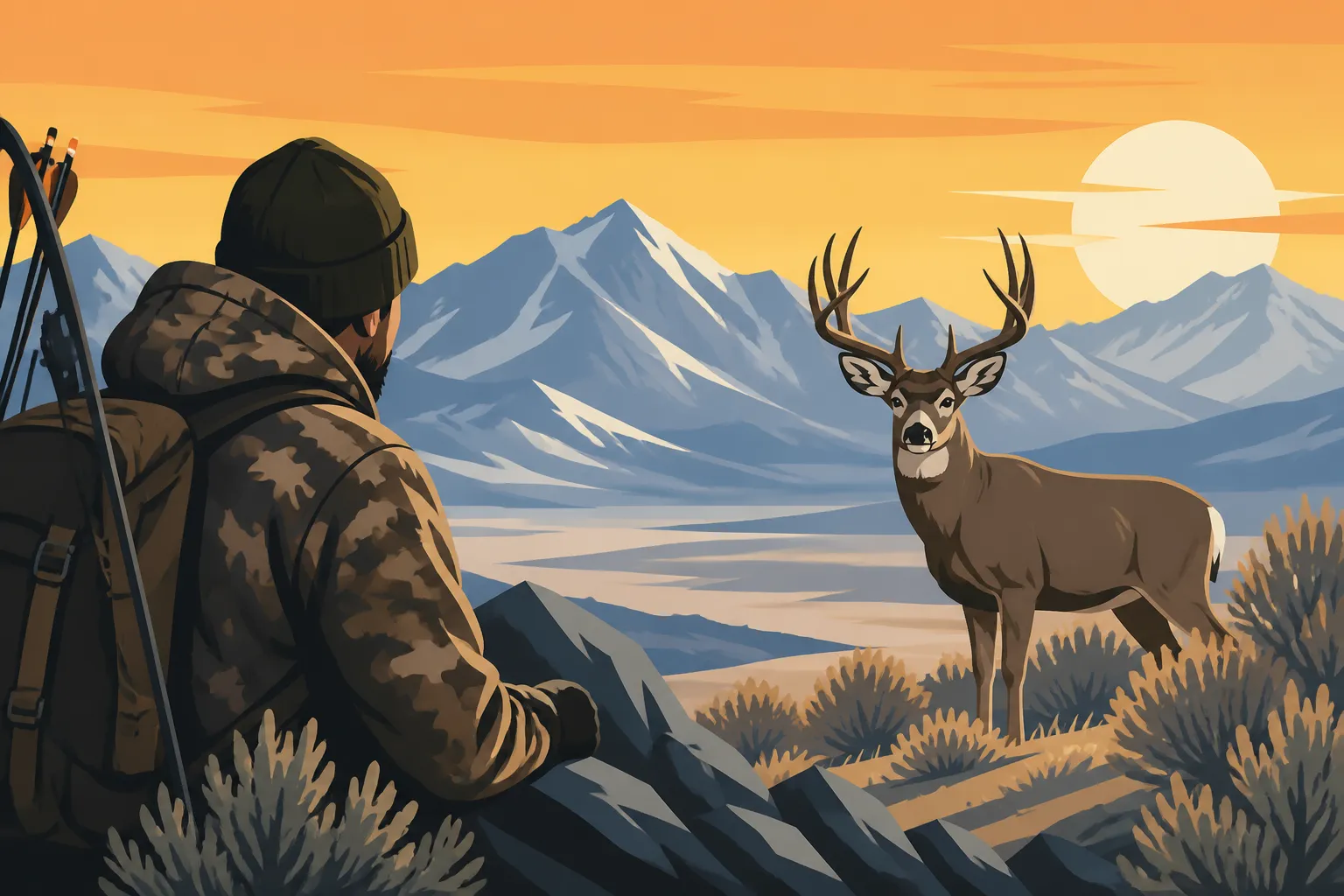
The biggest draw for many experienced hunters eyeing a late season tag is the chance to hunt the rut, or more specifically, the post-rut migration. As November progresses into December, mule deer bucks are either in the thick of the breeding season or just recovering from it. This means they are often less cautious than at other times of the year, driven by the powerful urge to find does or replenish their energy stores. You’ll often find these bucks actively moving during daylight, following does that are still receptive or simply trying to get a square meal before winter truly sets in.
This period is often when hunters have the best chance to lay eyes on the biggest, most elusive bucks that have been ghosts the rest of the year. They’re no longer holed up in their high-elevation summer sanctuaries, but instead, they're often visible on migration routes or in lower elevation wintering areas. The sheer visibility of deer can increase dramatically, making the long hours of glassing much more productive. If you've been putting in your time scouting and watching historical data, a late season tag can perfectly align with Hunting the Post-Rut Migration for Big Bucks as they move into more accessible terrain. This behavior shift is a game-changer for many, turning an otherwise challenging pursuit into a high-stakes chess match with a deer whose focus is elsewhere.
Weather Advantages: Snow and Concentration
While early season hunts often struggle with deer spread out across vast landscapes, the late season brings a powerful ally: winter weather. Snowfall, especially significant accumulations, can drastically alter deer behavior in ways that benefit hunters. First and foremost, snow concentrates deer. As higher elevations become buried and food sources are covered, deer are forced down to lower, often more accessible, wintering grounds. This means you might find large groups of deer, including mature bucks, congregated in smaller areas, making them easier to locate.
Beyond concentration, snow offers a significant advantage for tracking. Fresh snow lays down a clean slate, revealing every deer movement. Tracking a trophy buck through fresh powder becomes a real possibility, allowing you to interpret their movements, feeding patterns, and even bed locations. Furthermore, a fresh blanket of snow can silence the landscape, making your approach quieter and giving you a better chance to move undetected. When considering Late Rifle Deer Seasons in Nevada, remember that snow can be your best friend, transforming challenging terrain into a readable canvas of hoof prints and bedding sites, and making the hunt far more strategic and engaging.
Potential for Reduced Hunter Pressure
It might seem counterintuitive, but late season hunts in Nevada can sometimes offer a reprieve from the crowds you might encounter during earlier, more popular seasons. Many hunters prefer the milder weather of September or October, or they prioritize drawing those early season tags. This often means that by late November and December, while the conditions are tougher, you might find yourself with more solitude in certain units.
The commitment required for a late season hunt—dealing with colder temperatures, potential snow, and shorter daylight hours—naturally filters out some of the less determined hunters. For those who are well-prepared and willing to brave the elements, this can translate into less competition for prime hunting spots and undisturbed deer. Of course, this isn't universally true for all units, especially those with historically good late season rut activity. But generally, the sheer discomfort of winter hunting leads to a quieter backcountry. Less pressure means deer are often less jumpy, adhering more to their natural patterns, which can be a significant advantage when you're trying to execute a careful stalk or patiently glass a hillside.
Specific Challenges of Late Season Deer Hunting
While the rewards of a late season hunt can be immense, it's crucial to acknowledge the distinct challenges that come with pursuing deer when winter is knocking on Nevada's door. These aren't hunts for the unprepared, and overlooking these difficulties can quickly turn an exciting adventure into a miserable ordeal.
Extreme Weather Conditions
The most obvious challenge of late season deer hunting is the weather. Nevada winters, particularly in the mountain ranges and higher valleys, can be brutally cold, often dipping well below freezing. Snowfall is common, ranging from a light dusting to several feet, and can accumulate rapidly, especially at elevation. You'll likely encounter icy conditions, strong winds that cut through layers, and whiteout blizzards that can arrive with little warning. These aren't just uncomfortable conditions; they pose significant safety risks like hypothermia and frostbite.
Daylight hours are also significantly shorter during the late season, meaning less time to hunt and more time navigating in the dark if you're not careful. This demands meticulous planning for every movement, from getting to your glassing point before dawn to packing out an animal after sunset. Being prepared means carrying emergency shelter, extra layers, and understanding the signs of impending weather changes. You might also want to consult resources on Layering for Basin and Range Temperature Swings to ensure you have the right insulation system to stay warm and dry through the entire hunt, regardless of what Mother Nature throws at you.
Altered Deer Movement and Behavior
As temperatures plummet and snow deepens, deer movement and behavior change drastically from earlier seasons. The frantic activity of the rut begins to wane, and bucks, often exhausted from breeding, become focused on survival. Their primary concerns shift to finding reliable food sources and thermal cover to conserve energy. This means they'll often be found in different areas than during the rut's peak, perhaps hunkering down on south-facing slopes that catch more sun or seeking refuge in dense junipers or pinyon pines.
They might move less during the day, choosing to feed in low light conditions or only venturing out during the warmest parts of the afternoon. Understanding these shifts is paramount. You can't expect to find deer in the same places or behaving in the same ways as in October. Instead, you need to think like a winter-weary deer, identifying areas that offer protection from the elements and access to remaining forage. This often means focusing your efforts on lower elevation winter ranges, sheltered draws, and benches where snow might be less deep or melt faster.
Access Issues and Road Closures
One of the most frustrating challenges of late season hunting in Nevada can be access. Those wonderfully remote two-track roads you used in September can become impassable death traps in November and December. Snowfall can quickly render dirt roads impassable, even with a capable 4×4, and ice can turn seemingly gentle slopes into treacherous slides. Many forest service and BLM roads at higher elevations are intentionally closed for the winter, limiting your reach into vast hunting grounds.
This means your pre-season scouting, especially using tools like GoHunt to check road networks and potential access points, needs to account for winter conditions. What looks like a promising approach on a map might be a snow-choked dead end in reality. You might need to adjust your strategy to include longer hikes, snowshoeing, or even skiing to reach prime areas. Furthermore, vehicle breakdowns in remote, snowy conditions are not just inconvenient; they can be life-threatening. Always be prepared with recovery gear, extra fuel, and communications, keeping in mind the lessons on Vehicle Prep for Remote Nevada Roads and Carrying Extra Fuel on a Nevada Hunt. It's not uncommon to spend an entire day navigating just to get within striking distance of your hunting area, so patience and adaptability are key.
Increased Physical Demands
Hunting in the late season dramatically ratchets up the physical demands of the hunt. Even relatively flat terrain can become an arduous trek through deep snow. Climbing hills that were challenging in dry conditions become lung-burning, muscle-straining endeavors when you're post-holing through several feet of powder. Every movement requires more energy, from simply walking to climbing into your glassing perch.
The cold itself saps energy, and carrying extra layers, emergency gear, and potentially a heavier rifle adds to the load. You might be spending hours glassing from exposed ridges where the wind chill bites deep. Field dressing an animal in sub-freezing temperatures is far more difficult and demanding than in mild weather, and then comes the real test: Packing an Animal Out of Roadless Country through snow and ice. This isn't a casual stroll; it's a marathon. Maintaining a high level of physical fitness throughout the year, with a focus on endurance and strength, is not just recommended for late season hunts—it's absolutely essential for both success and safety.
Strategies for Success on a Late Season Hunt
Succeeding on a late season deer hunt requires a deliberate shift in strategy, embracing the unique conditions and focusing on the factors that drive deer behavior when winter arrives. It's about adapting your approach and leveraging technology and hard-earned knowledge to your advantage.
E-Scouting and Pre-Season Preparation
Your e-scouting game needs to be top-notch for late season hunts. Before you even think about hitting the road, spend countless hours poring over satellite imagery, topographical maps, and historical weather data. Tools like GoHunt offer invaluable insights into unit boundaries, public land ownership, and even historical harvest success, allowing you to identify potential wintering areas, migration corridors, and thermal cover. Look for south-facing slopes that shed snow faster and offer more forage, dense stands of timber or juniper that provide protection from wind and cold, and obvious travel routes between higher summer ranges and lower wintering grounds.
Don't just look at where deer might be; consider how you'll access those areas. Mark potential road closures, assess terrain difficulty in snow, and plan multiple entry and exit points. Check historical snowfall data for your chosen unit and unit group to get a sense of typical conditions. Understanding Reading a Nevada Hunt Unit Before You Apply will help you decipher the nuances of specific regulations that might pertain to these late season dates. Pre-season prep also extends to your gear—ensure your vehicle is winter-ready, your clothing system is dialed in for extreme cold, and all your optics are clean and functioning perfectly.
The Art of Winter Glassing and Spotting
In the vast, open landscapes of Nevada, glassing is always king, but in the late season, it becomes even more critical. Deer often concentrate in smaller areas, but they can still be incredibly difficult to spot against a backdrop of snow, rock, and sparse vegetation. High-quality optics are non-negotiable. A good pair of 10x binoculars and a high-power spotting scope are your primary tools for systematically picking apart distant hillsides. Consider Optics Power for Nevada's Long Sightlines and how it impacts your ability to spot bedded deer or faint movement far away.
When glassing in winter, pay particular attention to areas that offer both food and shelter: the edges of timber, the bases of south-facing slopes, and brushy draws. Deer will often bed down early and move late, so patience is key. Employ a systematic approach, like Glassing Grids Across a Nevada Basin, to ensure you cover every inch of potential habitat. Look for subtle cues: a horizontal line in a vertical landscape, the glint of an antler, or a patch of contrasting color. Thermal binoculars, while an investment, can also be a game-changer in low light conditions or when deer are tucked away in dense cover, revealing heat signatures that the naked eye would miss.
Tracking and Still Hunting in the Snow
A fresh blanket of snow completely transforms hunting tactics, making tracking and still hunting incredibly effective, especially if you're comfortable with Reading Wind on a Long Sage Stalk. Snow silences your footsteps, allowing you to move through terrain more quietly than at any other time of year. Every track becomes a story, revealing direction of travel, pace, and even how recently an animal passed.
If you find fresh tracks from a good-sized buck, don't be afraid to slow down and follow. Pay attention to the age of the track, the stride, and any accompanying signs like fresh droppings or rubs. When tracking, move slowly, constantly scanning ahead and to the sides, as deer will often circle back to watch their trail. The goal is to spot the deer before it spots you. For still hunting, move at a snail's pace, taking a few steps then stopping for several minutes to observe. Use your binoculars to scrutinize every patch of cover. The quiet provided by snow allows you to hear the subtle sounds of deer moving, feeding, or even bedding down, giving you a distinct advantage.
Focusing on Winter Range and Food Sources
Deer, particularly in the late season, are driven by two main instincts: survival and reproduction. While the rut might be winding down, the need for food and thermal protection intensifies. This means your focus should shift dramatically to identifying prime winter range and specific food sources that remain available. Look for areas with browse species like bitterbrush, sagebrush, or mountain mahogany that retain their nutritional value even in winter. South-facing slopes are gold because they melt snow faster, exposing forage and soaking up crucial solar radiation, offering warmth.
Water sources are also critical, although snow can serve as a water source for deer. Identifying reliable springs, seeps, or guzzlers that aren't frozen solid can concentrate deer, especially during drier periods. Remember that deer will seek out dense cover to bed down and escape the wind and cold. This might be a thick juniper stand, a deep canyon bottom, or even a protected rock outcropping. Understanding these microhabitats and how they interact with food availability is the key to unlocking late season success. Leverage maps and satellite imagery to pinpoint these areas long before your hunt begins.
Nevada Units Known for Late Season Opportunities
While drawing a premium deer tag in Nevada is always a challenge, some units historically offer better late-season potential, primarily due to their terrain, migration patterns, and herd characteristics. It's about finding units where the conditions and deer behavior converge to create unique hunting opportunities.
Characteristics of Productive Late Season Units
Productive late season units in Nevada typically share several key characteristics. First, they often contain significant elevation changes, allowing deer to migrate from high summer ranges down to more accessible wintering grounds as snow pushes them. These units will have well-defined migration corridors and diverse habitat that includes both high-elevation summering areas and lower, milder winter ranges with accessible forage. Think units with a mix of sagebrush flats, pinyon-juniper benches, and scattered mountain ranges.
Secondly, these units often have robust deer populations, including a healthy number of mature bucks that have survived previous seasons. While draw odds might still be tough for these sought-after tags, the potential reward is high. Many of these units are also well-known for their late-season rut activity, drawing bucks out into the open. Using tools like GoHunt to study historical harvest statistics and draw odds for different hunt codes can give you a crucial edge in identifying these units. Pay attention to specific hunt codes that are designated for late November or December, as these are often specifically designed to target bucks during or just after the rut, or during their winter migration.
Geographic Hotspots for Late Season Tags
While I can't guarantee you a tag, certain regions and types of units in Nevada have a reputation for late season deer hunting. Generally, eastern and central Nevada units that encompass vast sagebrush basins and mountain ranges with healthy pinyon-juniper ecosystems often shine. These areas experience significant snowfall, which pushes deer down, and the terrain allows for effective glassing of large expanses.
Some units in areas like the Ruby Mountains, Schell Creek Range, and the Jarbidge Wilderness, while rugged, can be excellent if you draw a late tag, as the deer are pushed to lower elevations where access might still be challenging but more feasible than in the highest peaks. Units that border agricultural areas or have significant private land in their lower elevations can also be productive, as deer will often seek refuge or food in these areas, particularly as winter progresses. Remember that specific unit boundaries are crucial, so understanding how Reading a Nevada Hunt Unit Before You Apply can help you pinpoint the best areas. Always consult the most current NDOW regulations and unit descriptions, as tag allocations and season dates can shift year to year based on herd health and management objectives.
General Late Season Deer Hunt Overview
To give you a clearer picture, here's a general comparison of typical early vs. late season characteristics for deer hunting in Nevada:
| Feature | Early Season (August-October) | Late Season (November-December) |
|---|---|---|
| Weather | Mild to warm, potential for heat, dry | Cold to freezing, snow, wind, ice |
| Deer Location | Higher elevations, scattered, summer ranges | Lower elevations, concentrated, winter range |
| Deer Behavior | Patterned, predictable, less rut activity | Rut/post-rut, survival-focused, less wary |
| Access | Generally good, clear roads | Challenging, snow-packed roads, closures |
| Visibility | Dense cover, green foliage can hide deer | Snow highlights deer, open leafless terrain |
| Physical Demands | Moderate, heat management | High, cold and snow make movement tough |
| Success Factors | Scouting summer range, patience | Glassing winter range, tracking snow, endurance |
This table clearly illustrates the stark differences, emphasizing why late season hunting demands a unique mindset and preparation.
Essential Gear and Physical Preparation
Success and safety on a late season Nevada deer hunt hinge entirely on proper gear and being in peak physical condition. You're heading into some of the most challenging conditions the Great Basin has to offer, and cutting corners here is not an option.
Layering for Extreme Cold
Staying warm and dry is paramount. Forget cotton entirely; it has no place in a late season kit. Your clothing system needs to be a well-thought-out layering approach, allowing you to adapt to changing temperatures and exertion levels. Start with a moisture-wicking synthetic or merino wool base layer to pull sweat away from your skin. Next, add an insulating mid-layer, like a fleece or down jacket, that provides warmth without excessive bulk. Your outer layer should be a waterproof and windproof shell that protects you from snow, rain, and biting winds.
You'll need insulated pants, waterproof gaiters to keep snow out of your boots, and multiple pairs of wool or synthetic socks. Don't forget your head and hands: a warm beanie, neck gaiter, and insulated, waterproof gloves are essential. Many hunters carry a second, heavier puffy jacket in their pack for when they stop to glass or for emergencies, allowing for maximum warmth when inactive. Consider what you learned from Layering for Basin and Range Temperature Swings to choose the right materials and combinations for the dramatic temperature shifts you'll experience from early morning to afternoon.
Optics for Low Light and Long Distances
Just as in other Nevada hunts, high-quality optics are absolutely critical for late season success, perhaps even more so due to shorter daylight hours and often overcast conditions. You'll be spending long hours glassing, and your eyes will thank you for investing in the best binoculars and spotting scope you can afford. Look for optics with excellent light transmission, crisp edge-to-edge clarity, and robust, waterproof construction.
A good pair of 10x binoculars is your primary tool for scanning the landscape and locating deer. A high-power spotting scope, 60x or even 80x, mounted on a sturdy tripod, is essential for confirming distant animals, judging size, and planning your approach. The ability to distinguish a buck from a doe, or a legal animal from a smaller one, at extreme distances in fading light is invaluable. Consider bringing a lens cleaning kit, as snow, dust, and condensation can quickly obscure your view. And if you're serious about taking your glassing to the next level, understanding Spotting Scope Power for Open Country can help you choose the right magnification for Nevada's expansive terrain.
Vehicle Preparation and Safety Gear
Your vehicle isn't just transportation; it's often your mobile base camp and a lifeline in late season Nevada. It needs to be meticulously prepared for harsh winter conditions. Ensure your tires are in excellent condition, preferably with good mud/snow ratings, and carry a full set of tire chains, knowing how to put them on. Pack a shovel, traction boards, a high-lift jack, and a recovery strap—because getting stuck in remote, snowy country is a very real possibility.
Extra fuel is a must, as are at least two spare tires. Carry an emergency kit that includes blankets, extra food and water, a first-aid kit, a headlamp, and a fully charged satellite communication device (like a Garmin inReach or Zoleo), as cell service is often non-existent. Inform someone of your itinerary and expected return time. Checking Vehicle Prep for Remote Nevada Roads and Carrying Extra Fuel on a Nevada Hunt will highlight the vital steps to ensure your vehicle can handle the rigors of winter travel in the backcountry. Don't underestimate how quickly a minor mechanical issue can become a serious problem when temperatures drop and help is hours away.
Physical Conditioning for Tough Climbs
As mentioned earlier, the physical demands of late season hunting are immense. You'll be climbing steep, rocky terrain, often covered in snow and ice, potentially carrying a heavy pack. Your physical conditioning needs to be at its peak. Focus on building endurance through hiking with a weighted pack, especially on varied terrain. Leg strength is crucial for navigating snow and steep ascents, so incorporate exercises like squats, lunges, and step-ups.
Cardiovascular fitness is also key, as you'll be exerting yourself at elevation, where the air is thinner. Don't neglect core strength, which helps with stability and carrying heavy loads. Beyond general fitness, practice walking in your hunting boots with a weighted pack to break them in and identify any hot spots, especially if you're considering Choosing Boots for Sharp Volcanic Rock. Being physically prepared means you can focus on the hunt, not on your aching muscles or struggling to keep up. It also dramatically reduces the risk of injury when you're far from help.
Disclaimer
Hunting is an inherently dangerous activity that carries a risk of injury or death. This article provides general information and should not be considered a substitute for professional instruction, comprehensive research, or adherence to all applicable laws and regulations. Always prioritize safety, respect wildlife and the environment, and be prepared for all potential hazards. Regulations and conditions can change rapidly; always consult the Nevada Department of Wildlife (NDOW) for the most current and accurate information before planning any hunting trip.