The All-In Cost of a Nevada Mule Deer Hunt
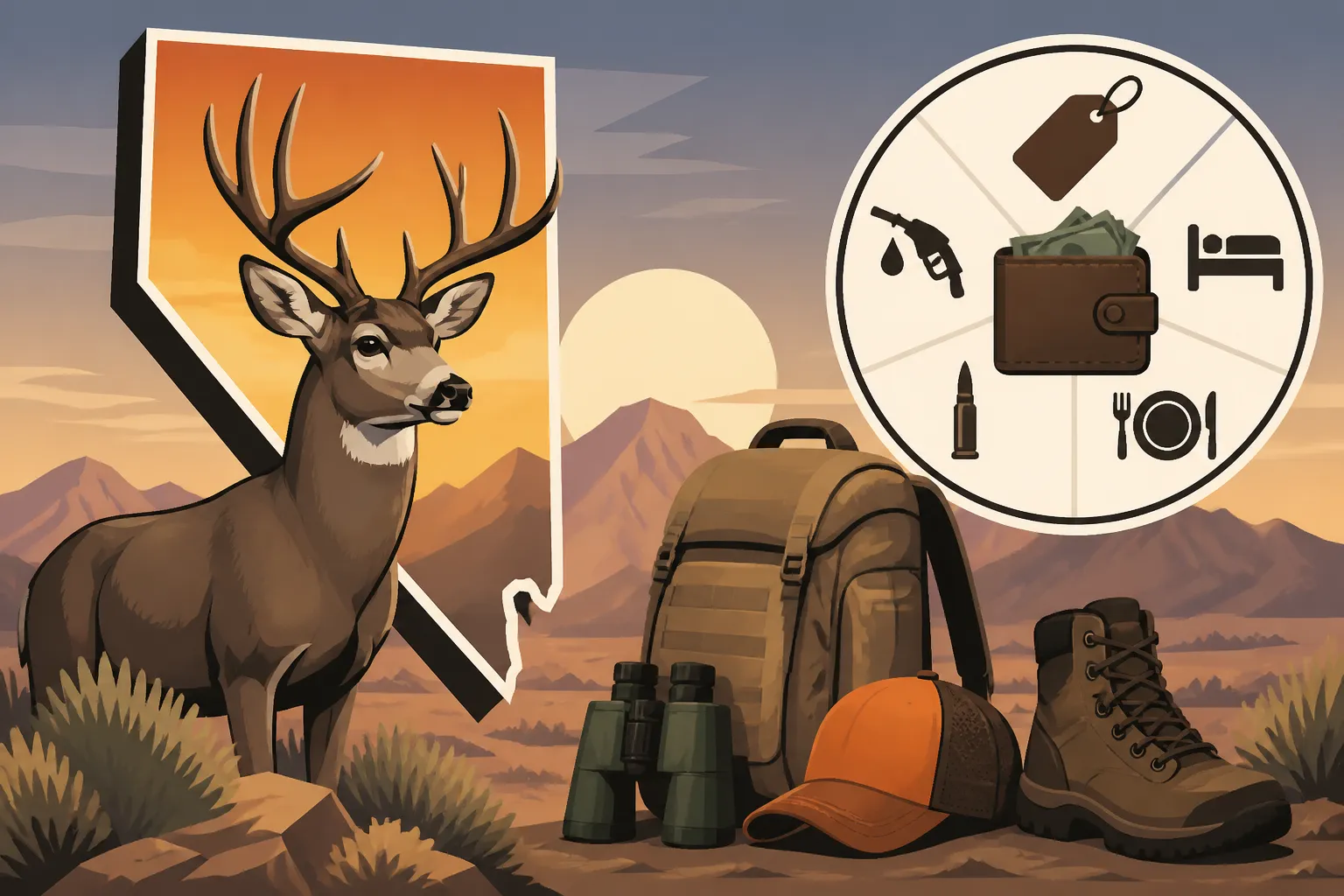
Oh, the dream of chasing a Nevada mule deer! It’s a vision many of us hold dear: the crisp, cool air of the high desert, the vast sagebrush flats stretching to distant mountain ranges, and the chance to spot that trophy buck. But let's be real, the moment you start planning, the question inevitably pops up: What is this actually going to cost me? It’s not just the tag price, is it? There are so many moving parts, hidden expenses, and logistical hurdles that can quickly turn your dream hunt into a budget nightmare if you're not prepared. This guide is here to lay out all the financial realities, from licenses and tags to fuel, gear, and even the vital tools you'll need to make your Nevada mule deer hunt a success without breaking the bank unexpectedly.
Breaking Down the Initial Application Costs
When you commit to a Nevada mule deer hunt, you're not just buying a tag; you're entering into a lottery system, and that process alone has its own set of costs. It can feel like you're putting money down on a hope and a prayer, and it's easy to overlook the initial fees that add up long before you even draw a tag.
The Combination License is Your Gateway
Before you can even think about applying for a deer tag in Nevada, every hunter, resident or nonresident, needs to purchase a valid hunting license. This isn't just a formality; it's your entry ticket to the draw system. Nevada offers a "combination license" which covers both hunting and fishing, even if you only plan to hunt.
For residents, this is a relatively modest fee, typically under $50. It’s an investment in your outdoor pursuits for the entire year. However, for nonresidents, the price jumps significantly. A nonresident combination license usually runs well over $150, sometimes closer to $160-$170. This upfront cost is non-refundable, regardless of whether you draw a tag or not. It's simply the price of admission to participate in the draw. Think of it as purchasing the right to apply, rather than a guarantee of a tag. Many hunters find this frustrating, especially when they fail to draw for several years in a row, essentially paying this fee year after year just for the chance.
Application Fees and Points
Beyond the combination license, there’s a specific application fee for each species you apply for. For mule deer, this fee is typically around $15 to $20. Again, this is a non-refundable fee. You're paying for the processing of your application, not for the tag itself.
Here’s where Nevada's unique bonus point system comes into play, and it's something every serious applicant needs to understand. Nevada squares your bonus points, meaning that if you have, say, four points, you actually get 17 "chances" in the draw (your current application + 4 points squared, so 1 + 16). This system heavily favors those who have been building points for years. The good news is, if you don't draw a tag in a given year, you still acquire a bonus point for that species, which rolls over and is squared again for the next draw.
You can also opt to purchase a bonus point without actually applying for a tag that year. This is a common strategy for hunters who know their odds of drawing are slim for popular units or species, but they want to keep building points for a future "dream tag." The cost for a point-only application is usually the same as the application fee itself, plus the required hunting license. So, you might spend around $170 for a nonresident license and application fee just to gain a single point, without even applying for a tag. It's a long-term investment that many savvy hunters make, recognizing that Why Nevada's Squared Bonus Points Work means every point truly counts.
Tag Fees – The Big Ticket Item
Now, let's talk about the actual big expense: the tag itself, if you're lucky enough to draw. This is where the price difference between residents and nonresidents becomes truly stark.
For Nevada residents, a mule deer tag is incredibly affordable, typically less than $100. This is one of the perks of living in a state with such abundant public land and hunting opportunities.
However, for nonresidents, prepare for a significant hit to the wallet. A nonresident Nevada mule deer tag typically costs well over $300, often closer to $350 or $360. This fee is only charged if you are successful in the draw, but when it hits, it’s a substantial amount. The total cost, including your combination license, application fee, and the tag itself, means a nonresident could easily be looking at an upfront cost of around $500 to $550 just for the privilege of holding that mule deer tag in their hand, before a single boot touches the sagebrush. It makes you really value that slip of paper, doesn't it?
Here’s a quick overview of the typical initial costs:
| Cost Item | Resident (Estimate) | Nonresident (Estimate) | Notes |
|---|---|---|---|
| Combination License | $38 | $165 | Mandatory to apply. Non-refundable. |
| Mule Deer Application Fee | $15 | $15 | Non-refundable, pays for application processing. |
| Mule Deer Tag Fee (if drawn) | $45 | $360 | Charged only upon successful draw. This is the largest single upfront cost. |
| Total (if drawn) | ~$98 | ~$540 | Excludes any point-only purchases in previous years. |
Remember, these are estimates and can fluctuate slightly year to year. Always check the current Nevada Department of Wildlife (NDOW) regulations for the most up-to-date fees.
Essential Gear and Equipment Investments
So, you’ve drawn your coveted Nevada mule deer tag. Congratulations! Now the real work (and expense) begins. Nevada isn't a state where you can just show up with any old gear and expect to be successful. The terrain, the vast distances, and the unpredictable weather demand specific, often high-quality, equipment. This is where many hunters, especially those new to western hunting, can underestimate the financial commitment.
Optics: Your Eyes in the Great Basin
If there's one area where you absolutely cannot skimp when hunting mule deer in Nevada, it's optics. This isn't timber hunting where you might get a 50-yard shot. Nevada is a glassing game, pure and simple. You'll spend hours, often days, behind binoculars and a spotting scope, picking apart distant hillsides and canyon bottoms.
You'll need a good pair of binoculars, at least 10×42, but many experienced hunters opt for 10×50 or even 12×50 for better light gathering and magnification. Expect to pay anywhere from $300 for a decent entry-level pair from brands like Vortex or Leupold, all the way up to $2,000+ for premium glass from Swarovski, Zeiss, or Leica. For many, the sweet spot for performance and value is in the $800-$1,500 range.
A spotting scope is equally critical for Glassing Nevada's Basin and Range for Mule Deer, especially for judging bucks at extreme distances before you commit to a long, arduous stalk. A 65mm or 80mm objective lens is standard, with magnification ranging from 15-45x or 20-60x. Again, prices start around $500 and can quickly climb to $3,000+. Don't forget a sturdy tripod for both your binoculars (a bino adapter is a game-changer) and your spotting scope; a good carbon fiber tripod can add another $200-$600 to your budget.
Total optics budget? Realistically, for a solid setup, you're looking at $1,000 to $3,000 minimum. This is an investment that will last for many hunts, though.
Weaponry and Ammunition
Your choice of weapon will also dictate a significant part of your cost.
- Rifles: A reliable bolt-action rifle chambered in a flat-shooting caliber suitable for open country is essential. Think .270 Win, .30-06, 7mm Rem Mag, .300 Win Mag, or 6.5 PRC. While you might already own a rifle, consider the cost of a quality scope (another $300-$1,000+), mounts, and sling. You'll also need premium hunting ammunition, which can run $40-$80 per box, and you'll want several boxes for sighting in and practice. Don't forget shooting sticks or a bipod for those long shots across wide basins. A good bipod like those from Harris or Atlas runs $100-$300.
- Muzzleloaders: If you're chasing a muzzleloader tag, you'll need a modern in-line muzzleloader, often with a scope. The rifle itself might be $400-$800, plus a specialized muzzleloader scope ($200-$500), powder, primers, and sabots/bullets. Muzzleloader components can add up quickly, and practice is paramount.
- Archery Gear: Bowhunting in Nevada is an incredible challenge, requiring precision and dedication. A modern compound bow setup (bow, sight, rest, quiver, stabilizer) can easily cost $800-$2,000. Add in a dozen quality arrows ($100-$200), broadheads (fixed blade or expandable, though check Are Expandable Broadheads Legal? for current regulations), a release aid, and a rangefinder, and you're looking at a significant investment.
Regardless of your chosen weapon, extensive practice is non-negotiable. Factor in range fees and additional ammunition costs.
Backcountry Essentials
Nevada hunting often means getting deep into remote country, far from roads and services. Your personal gear needs to be up to the task.
- Clothing: Layering is key for Nevada's drastic temperature swings. You'll need quality base layers, insulating mid-layers, and a durable, weather-resistant outer shell. Brands like Sitka, Kuiu, or First Lite offer excellent systems, but they come at a premium, often $800-$2,000+ for a full setup. Cheaper alternatives exist but may not perform as well in harsh conditions.
- Footwear: Your boots are arguably the most critical piece of clothing. You need comfortable, supportive, and durable boots that can handle miles of rocky, uneven terrain. Investing in quality boots designed for rough country, like those from Kenetrek or Schnee's, can cost $300-$500, but they're worth every penny for preventing blisters and twisted ankles when Choosing Boots for Sharp Volcanic Rock.
- Pack System: A good hunting pack, capable of comfortably carrying your gear for long days and potentially hauling out meat, is essential. Mystery Ranch, Kifaru, and Stone Glacier offer excellent frame packs, but they'll set you back $400-$800. For day packs, you might spend $150-$300.
- Navigation & Safety: A reliable GPS unit (Garmin inReach or Fenix watch with mapping capabilities) or a dedicated app like onX on your phone is crucial. You'll also want a satellite messenger device for emergency communication, as cell service is nonexistent in most hunt units. These devices can cost $250-$500, plus a monthly or annual subscription plan ($15-$60/month). A comprehensive first-aid kit is also a must.
Travel, Logistics, and On-the-Ground Expenses
Even if your gear closet is fully stocked, getting to and operating within a Nevada hunt unit presents its own set of financial challenges. The sheer size of the state, its vast public lands, and the distances between services mean you need to budget wisely for travel and on-the-ground support.
Fuel and Vehicle Preparation
Nevada is a massive state, and its hunt units often require hundreds, if not thousands, of miles of driving. You’ll drive long distances just to get to your unit, and then you'll drive even more miles scouting and hunting remote two-track roads. Many of these roads are rough, rocky, and can be brutal on tires.
Fuel costs alone can easily exceed $500, sometimes even $1,000 for a multi-week hunt, especially if you’re coming from a distant state. It's not uncommon to put 1,500-2,000 miles on your truck during a single hunt. You absolutely must carry extra fuel, as gas stations are few and far between in most hunting areas; Carrying Extra Fuel on a Nevada Hunt isn't just a suggestion, it's a necessity. Two 5-gallon jerry cans filled with gas will add another $70-$100 to your initial outlay.
Beyond fuel, consider the wear and tear on your vehicle. A good set of all-terrain tires is almost mandatory ($800-$1,500 for a set), and a spare is critical. Packing recovery gear like a high-lift jack, shovel, and tire repair kit is smart, which are additional upfront costs. Getting a flat tire 50 miles from the nearest paved road without a spare is a hunt-ender, and a costly tow. It's all part of Vehicle Prep for Remote Nevada Roads.
Lodging and Camping
Your choice of accommodation will significantly impact your budget.
- Hotels/Motels: If you prefer the comforts of a bed and hot shower, you might opt to stay in a small town near your hunt unit. Expect to pay $80-$150 per night for even basic accommodations. For a week-long hunt, this adds $560-$1,050 to your cost, quickly making your hunt very expensive.
- Dispersed Camping: Most hunters choose to camp on public land. Nevada is largely federal land, with BLM Ground Is Where Most Nevada Hunting Happens, making dispersed camping a popular and free option. However, "free" doesn't mean "no cost." You'll need a good tent (or camper/RV), sleeping bag rated for cold nights, sleeping pad, and cooking gear. If you're starting from scratch, a quality camping setup can cost $500-$1,500. Even if you already have gear, you'll still burn through propane for heating/cooking and fuel for generators if you bring an RV.
- Camp Supplies: Don't forget chairs, tables, lighting, and general camp comfort items. These are all one-time purchases initially but require maintenance or replacement over time.
Food, Water, and Supplies
Being self-sufficient in Nevada is paramount. Grocery stores can be hours away, and convenience stores are even rarer.
- Food: Planning and purchasing all your meals for the duration of your hunt beforehand is crucial. High-calorie, easy-to-prepare meals for camp, and lightweight, nutritious snacks for your pack will be your lifeline. For a week-long hunt, budget at least $150-$300 per person for groceries.
- Water: This is non-negotiable. You cannot simply rely on finding water sources in most Nevada hunt units. You must pack in all the water you will need for drinking, cooking, and basic hygiene. Plan on at least 1-2 gallons per person per day. For a 7-day hunt, that's 7-14 gallons, which is heavy and takes up significant space. If buying bottled water, this adds to the cost. If you have a filtration system, that's an upfront cost, but still, Water You Must Carry on a Desert Day Hunt is a critical logistical and financial consideration. Large water jugs (like those from Reliance or Igloo) are a good investment, costing $20-$40 each.
- Miscellaneous Supplies: Ice for coolers (especially important for Getting Meat Cooled on an Early Season Hunt), propane, firewood, trash bags, paper towels, and personal hygiene items all add up. A few hundred dollars should be allocated here.
Post-Harvest Expenses
The work doesn’t stop once you pull the trigger. If you're successful, there are additional costs.
- Meat Processing: Unless you plan to butcher the animal yourself (which requires a whole different set of tools and skills), you'll likely take your deer to a local meat processor. Depending on the processor and cuts you choose, this can cost anywhere from $100-$300 for a mule deer.
- Taxidermy: If you harvest a trophy and want to get it mounted, prepare for a substantial expense. A shoulder mount for a mule deer can range from $700 to $1,500 or more, depending on the taxidermist.
- Shipping: If you're a nonresident, getting your meat and/or trophy back home adds shipping costs, which can vary wildly based on distance, weight, and chosen carrier. Cooler rentals, dry ice, and insulated shipping boxes might also be necessary.
The Value of Information and Planning Tools
In the complex world of western big game hunting, accurate information isn't just helpful; it's a strategic advantage that can save you countless hours and thousands of dollars in wasted effort. While there might be an upfront cost, these planning tools are an integral part of the "all-in" budget for a Nevada mule deer hunt.
E-Scouting Subscriptions
Gone are the days when a paper map and a compass were your only scouting tools. Today, powerful e-scouting platforms provide a wealth of data that can dramatically improve your draw odds and on-the-ground success. Services like GoHunt, onX Hunt, and BaseMap offer detailed topographic maps, satellite imagery, public/private land boundaries, and crucial data overlays like water sources, road systems, and even historical harvest data.
A subscription to a premium e-scouting service like GoHunt typically runs between $100-$150 annually. While this might seem like another expense, consider the value:
- Draw Odds: GoHunt provides incredibly detailed draw odds analysis for every unit and weapon type, helping you make informed decisions about where to apply and Why Nevada Draw Odds Vary So Much by Unit. This prevents you from wasting application fees on units where your chances are virtually zero.
- Unit Breakdown: These platforms help you analyze units for factors like road access, wilderness areas, and terrain features. This is critical for E-Scouting a Nevada Unit Before the Season, allowing you to identify potential hunting areas, escape routes, and glassing points long before you ever set foot in the field.
- Offline Maps: The ability to download maps for offline use is indispensable in areas without cell service, ensuring you always know where you are and where you're going.
Think of it as an investment in intelligence. The money spent on a GoHunt membership can save you money by helping you avoid fruitless applications or by guiding you to areas with higher potential, ultimately increasing your odds of a successful hunt.
Hunter Education
For anyone born after 1959, Nevada requires a hunter education certificate to purchase a hunting license. If you already have one from another state, Nevada accepts it. However, if you're new to hunting or just now meeting the requirement, you'll need to complete a course.
The cost of a hunter education course is usually quite low, often $15-$30 for online courses, or sometimes free for in-person classes through NDOW or local organizations. This is a one-time fee, but it's a non-negotiable part of the "all-in" cost if you fall under the Anyone Born After 1959 Needs Nevada Hunter Education rule. It's a small but essential item on the checklist.
Other Information Sources
While not direct costs, the time invested in researching and studying Nevada regulations, unit reports, and online forums is invaluable. The NDOW website is a treasure trove of information, providing season dates, quotas, and maps. Learning Reading a Nevada Hunt Unit Before You Apply can literally make or break your application strategy. This "cost" is measured in hours, not dollars, but it's an essential part of the overall investment in a successful hunt.
Summary of Estimated Costs for a Nonresident Nevada Mule Deer Hunt
Let's pull it all together and give you a realistic "all-in" picture for a nonresident hoping to undertake a Nevada mule deer hunt. This assumes you already have a basic level of camping gear, but might need to upgrade some hunting-specific items.
| Category | Item | Low Estimate ($) | High Estimate ($) | Notes |
|---|---|---|---|---|
| Pre-Hunt/Draw | Combination License | 165 | 165 | Mandatory, non-refundable. |
| Application Fee | 15 | 15 | Non-refundable. | |
| Mule Deer Tag Fee (if drawn) | 360 | 360 | Only if successful in draw. | |
| Subtotal (Guaranteed if Drawn) | 540 | 540 | ||
| Gear & Equipment | Quality Optics (bino, spotter, tripod) | 1,000 | 3,000 | Crucial for Nevada's open terrain. |
| Weapon/Ammo/Accessories (scope, bipod, etc.) | 500 | 1,500 | Assuming you own a rifle, includes upgrades and practice. | |
| Clothing System (layers, waterproof) | 500 | 1,500 | Quality layers for unpredictable weather. | |
| High-Quality Boots | 300 | 500 | Essential for rough terrain. | |
| Hunting Pack (day or frame) | 150 | 800 | For carrying gear and potentially meat. | |
| Navigation/Comm (GPS/onX, sat messenger) | 250 | 500 | Plus annual subscription for messenger. | |
| Subtotal (Gear Investment) | 2,700 | 7,800 | Many items are one-time or infrequent purchases, amortized over many hunts. | |
| Travel & Logistics (7-day hunt) | Fuel (driving to/from/within unit) | 500 | 1,000 | Highly variable based on distance traveled. |
| Vehicle Prep (tires, recovery gear) | 300 | 1,000 | Initial cost of upgrades/preparedness. | |
| Food & Water (groceries, jugs, ice) | 250 | 500 | For a week-long hunt. | |
| Camp Supplies (propane, minor items) | 100 | 200 | Assumes you have basic camp gear. | |
| Lodging (if not camping, 7 nights) | 0 | 1,050 | Dispersed camping is free, hotels are costly. | |
| Subtotal (On-Ground) | 1,150 | 3,750 | ||
| Post-Harvest | Meat Processing | 100 | 300 | |
| Taxidermy (optional) | 0 | 1,500 | ||
| Shipping Meat/Trophy (optional) | 0 | 500 | ||
| Subtotal (Post-Harvest) | 100 | 2,300 | ||
| Information Tools | E-Scouting Subscription (e.g., GoHunt) | 100 | 150 | Annual cost, highly recommended. |
| Hunter Education (if needed) | 15 | 30 | One-time cost. | |
| Subtotal (Information) | 115 | 180 | ||
| GRAND TOTAL ESTIMATE | (excluding existing gear value) | $4,605 | $14,570 | This range covers a spectrum from budget-conscious to higher-end preparedness. |
This table illustrates that a nonresident Nevada mule deer hunt is a significant financial undertaking. While some gear costs are one-time investments, the recurring annual costs of licenses, application fees, travel, and on-the-ground expenses still add up considerably, even for experienced hunters with existing equipment.
Disclaimer
The information provided in this article is for general guidance and informational purposes only. Hunting regulations, fees, and season dates are subject to change annually by the Nevada Department of Wildlife (NDOW). Always consult the official NDOW regulations and proclamations for the most current and accurate information before planning and executing any hunt. Success in drawing a tag or harvesting an animal is never guaranteed, and past performance is not indicative of future results. Hunters are responsible for understanding and adhering to all applicable laws and regulations.