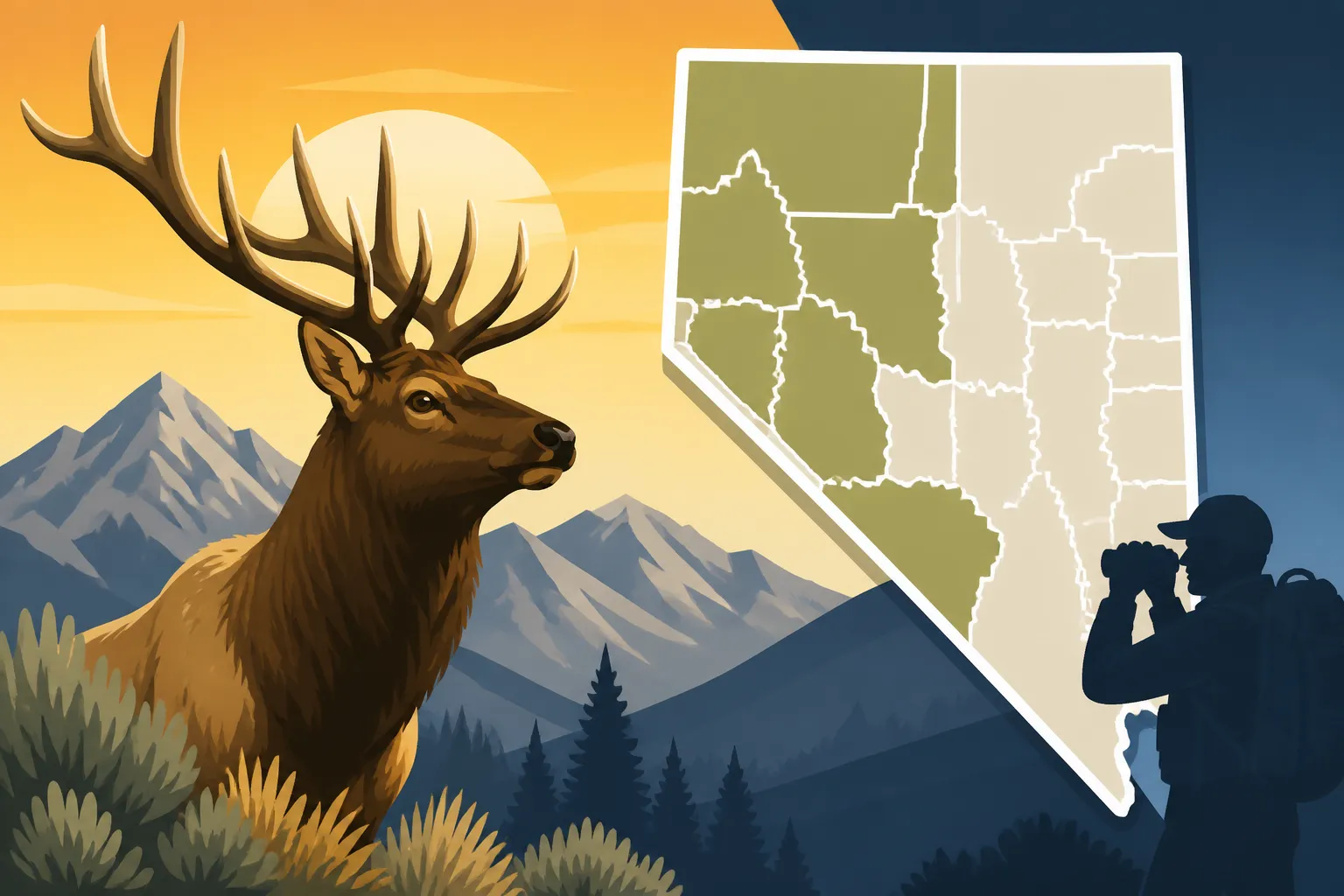
Which Nevada Elk Units Nonresidents May Draw
For nonresidents dreaming of a Nevada elk hunt, the journey often begins with a hefty dose of reality: drawing a tag for these majestic animals is one of the toughest challenges in Western big game hunting. It’s not just about luck; it's about understanding a complex draw system and knowing which units, however few, even offer a sliver of opportunity. This guide will walk you through the nuances of Nevada’s elk draw for out-of-state hunters, helping you pinpoint units where your application might stand a chance and how to strategize for success.
Understanding Nevada's Elk Draw for Nonresidents
Nevada's elk population has made an incredible comeback over the decades, transforming from nearly non-existent to a true trophy destination. This success, while great for wildlife, means intense competition for tags, especially for those coming from out of state.
The Core Challenge of Nonresident Elk Tags
The simple truth is that nonresident elk tags in Nevada are incredibly scarce. The demand far, far outweighs the supply, creating a lottery system that often feels like hitting the Powerball. Many units are celebrated for their massive bulls, a testament to how Nevada Elk Herds Grew From Nothing Into a Trophy Draw, but these premier units are virtually impossible for a nonresident to draw without decades of accumulated bonus points. It’s a game of patience, persistence, and careful strategy, where understanding the odds is paramount. You're not just competing against other nonresidents; you're competing against a vast pool of resident hunters who have a significant advantage in tag allocation. This high competition means every detail of your application needs to be considered.
Nevada's Allocation of Nonresident Tags
The Nevada Department of Wildlife (NDOW) is tasked with managing these limited resources. By state law, only a small percentage of total big game tags are allocated to nonresidents. For elk, this usually hovers around 5% to 10% of the total tags available for a given species within each unit group. This tiny slice of the pie is then spread across numerous hunt codes and units, making individual nonresident draw odds minuscule for prime opportunities. It's a significant financial commitment just to apply, with A Nonresident Nevada Elk Tag Runs $1,200 if you're successful. The upfront application fees, combined with the low odds, mean nonresidents often spend years applying and buying points before even having a remote chance. This is why a strategic approach, rather than simply hoping for luck, is absolutely essential.
The Importance of Bonus Points
Nevada operates on a squared bonus point system, which is a critical factor for any nonresident hoping to draw an elk tag. Unlike some states where points give you an additional entry, Nevada's system squares your accumulated points, giving you an exponentially higher number of "chances" in the draw. For example, if you have 5 bonus points, you'll get 5×5 = 25 entries in the draw, plus your current year's application, totaling 26 chances. This means consistently accumulating points year after year is the primary way to increase your long-term odds. Without a solid foundation of points, drawing a coveted elk tag as a nonresident is almost unheard of. Understanding Nevada's Squared Bonus Points Into Draw Chances is key to building a realistic strategy. Each year you don't draw, you gain another point, making the next year's application even more valuable.
Realistic Elk Unit Options for Nonresidents
Given the challenging draw odds, a nonresident's best bet isn't to aim for the units with the biggest bulls, but rather to identify units that consistently have any nonresident tags allocated, even if the success rates are lower or the animals are not world-record class.
High-Opportunity Units vs. Trophy Units
When you look at Nevada's harvest statistics, units like the famed Unit 162 are often highlighted for their massive bulls. These are the "trophy units" that draw thousands of applications and are virtually un-drawable for a nonresident with anything less than a decade or more of maximum points. For instance, Unit 162 and Its Record Book Bulls is a dream unit for many, but its nonresident draw odds are often in the low single digits, even with significant points.
Instead, nonresidents should focus on "high-opportunity" units. These might not be renowned for 400-inch giants, but they tend to have slightly more nonresident tags, or simply a greater number of total tags, which translates to infinitesimally better odds. These often include units with less rugged terrain, higher elk densities but perhaps smaller average antler size, or those with more general season rifle hunts rather than highly specialized archery or muzzleloader hunts. It’s about managing expectations and playing the long game. Sometimes, focusing on units that are less popular due to access, herd size, or a lower trophy potential can marginally increase your chances of finally getting a tag in hand.
Analyzing Draw Odds with GoHunt and NDOW Data
The most effective way to identify these potential units is through diligent research using both official NDOW draw statistics and platforms like GoHunt. NDOW publishes detailed draw reports each year, showing how many applicants, how many tags, and the points required to draw for every hunt code. This raw data can be overwhelming, but it's the foundation.
This is where a service like GoHunt truly shines for nonresident hunters. GoHunt compiles and analyzes all that complex NDOW data, providing user-friendly tools that allow you to sort units by draw odds, success rates, and even trophy potential. You can filter for nonresident-specific data, looking for patterns where any nonresident tags were drawn in recent years, even if it was only one or two. They make it much easier to identify units that might be overlooked by other applicants. Before you even think about applying, spend significant time Checking Nevada Draw Odds Before You Apply. Look not just at first choice odds, but also second and third choice, and how many points the lowest successful applicant had. Pay close attention to the number of non-resident tags issued historically for various hunt codes; this is often the most telling indicator.
Exploring General Season vs. Archery/Muzzleloader Hunts
Another crucial strategy for nonresidents involves considering different weapon types and their associated hunt dates. While rifle hunts are often the most popular and thus the hardest to draw, archery and muzzleloader seasons can sometimes present slightly better odds. This isn't a guarantee, but it's a trend worth observing.
Archery seasons, particularly early August hunts, often require a higher level of commitment and skill due to the closer distances required for a shot, as well as the intense heat. Similarly, Nevada Elk Muzzleloader Season Timing can sometimes fall during challenging weather windows or require specialized equipment, leading to fewer applicants. Reviewing past draw statistics might reveal a particular archery or muzzleloader hunt code in a specific unit that had a successful nonresident draw at lower points than a comparable rifle hunt. However, be mindful that a Nevada Elk Rifle Season Structure often means more tags available overall, so it's a trade-off between higher tag numbers (rifle) and potentially lower applicant numbers (archery/muzzleloader). Analyzing the specific unit and hunt code trends is vital.
Here’s a simplified look at how unit types might influence nonresident draw chances:
| Unit Type/Characteristic | Typical Nonresident Draw Odds | Required Bonus Points (Estimate) | Key Consideration |
|---|---|---|---|
| Trophy Units (e.g., 162) | Extremely Low (<0.1%) | 20+ years | Highly competitive; focus for max points. |
| High-Density/General Season | Very Low (0.1% – 1%) | 10-20 years | More tags, but high applicant volume. |
| Archery/Muzzleloader Specific | Slightly Better (0.5% – 2%) | 8-15 years | Fewer applicants, but specialized skills/gear. |
| Cow Elk Hunts | Moderately Better (2% – 5%) | 5-10 years | Management tags; excellent meat hunting. |
Note: This table provides general estimates. Actual odds vary drastically by unit, year, and specific hunt code.
Strategies for Improving Your Nonresident Elk Draw Chances
Drawing a nonresident Nevada elk tag isn't about hoping for a miracle; it's about making smart, long-term decisions that incrementally improve your mathematical chances.
Building a Long-Term Point Strategy
The single most important strategy for any nonresident hoping to hunt elk in Nevada is to commit to a long-term bonus point accumulation plan. This means consistently applying for a bonus point every single year, regardless of whether you intend to hunt that specific year. The cost to apply for a point-only application is significantly less than applying for a tag, and it ensures you’re continuously building that crucial base. As discussed earlier, Nevada's squared point system makes each additional point dramatically more valuable than the last. You can initiate this by simply Buying a Nevada Point-Only Application during the application period. Don't skip a year, as losing momentum in Nevada's point system can set you back significantly. The Nevada Applications Run March 23 to May 13 each year, so make sure to mark your calendar and get your point purchased within that window. It's a marathon, not a sprint.
Applying for Less Popular Hunt Codes
Beyond choosing a unit, the specific hunt code attached to your application can be a game-changer. NDOW's regulations are broken down into precise hunt codes that specify the unit, weapon type, season dates, and sometimes even the sex of the animal (bull, cow, or antlerless). While everyone is vying for the prime bull hunts during the rut, nonresidents should meticulously scour the draw odds for less popular alternatives.
Consider applying for cow elk tags or antlerless tags if your primary goal is simply to hunt Nevada elk and get meat in the freezer. These hunts often have significantly better draw odds for nonresidents. Additionally, specific late-season hunts or hunts in less accessible areas might see fewer applications. Learning to read and interpret Reading a Nevada Hunt Unit Before You Apply and all its associated codes is paramount. Understanding How Nevada Splits Elk Units Between Rifle Hunts can reveal options you might not have considered. It's about being flexible and prioritizing a tag over the tag. This detailed analysis is another area where platforms like GoHunt can save you countless hours by quickly filtering and comparing draw odds across various hunt codes.
Considering Group Applications and Their Impact
Nevada allows group applications, which can be a double-edged sword for nonresidents. If you apply as a group, all applicants' bonus points are averaged. For example, if one hunter has 10 points and another has 2, the group's application will be entered with 6 points. While this can allow a lower-point hunter to benefit from a higher-point partner, it also means the higher-point hunter's individual odds are reduced.
For nonresidents aiming for highly coveted elk tags, applying as a group might not be the most strategic move unless everyone in the group has a very high and similar number of points. However, if your goal is to simply hunt elk in Nevada and you have a friend with more points, a group application might be your only realistic path to drawing a tag sooner. Always weigh the impact on individual odds versus the desire to hunt together. Remember, everyone in the group will also need to secure The Nonresident Nevada Combination License before applying for any big game tags.
Conclusion
Drawing a nonresident Nevada elk tag is undeniably one of the toughest challenges in Western hunting, a testament to the quality of the resource and the popularity of chasing these magnificent animals in the Silver State. It's easy to get discouraged by the low odds, but a well-thought-out strategy can significantly improve your chances over time. By consistently building bonus points, meticulously analyzing draw data with resources like GoHunt, and being flexible with your unit and hunt code choices, you can turn a distant dream into a realistic possibility. Patience, persistence, and a deep understanding of the draw system are your most valuable assets in this long game.
Disclaimer
Please be aware that hunting regulations, seasons, and draw odds can change annually. While this guide provides comprehensive information, always consult the official Nevada Department of Wildlife (NDOW) regulations for the most current and accurate details before planning your hunt or submitting any applications.