Why Late Seasons Find Nevada’s Biggest Bucks
For many deer hunters in Nevada, the thought of chasing mule deer often conjures images of crisp autumn mornings, vibrant aspen groves, or the early archery window when everything feels fresh and alive. However, if your sights are truly set on those elusive, heavy-antlered bucks, you might be overlooking a critical period: the late season. It's a time when the landscape transforms, deer behavior shifts dramatically, and the biggest bucks, often hidden for months, become significantly more vulnerable. This guide dives deep into why these later hunts offer an unparalleled opportunity to encounter the giants of Nevada's mule deer world.
Understanding the Mule Deer Rut in Nevada
The mule deer rut is, without a doubt, the single biggest factor influencing the behavior and visibility of mature bucks. During this period, their typical reclusive nature gives way to a driven, almost reckless pursuit of does, making them more active and less cautious than at any other time of the year.
The Phases of the Rut and Buck Behavior
The mule deer rut isn't a single event but a series of overlapping phases, each presenting different opportunities for hunters. In Nevada, this spectacle typically begins to ramp up in late October, peaks through November, and can extend into early December, depending on the unit and local conditions.
During the pre-rut, which kicks off in late October, bucks begin to shed their velvet and spar playfully, establishing a hierarchy. They're still somewhat cautious but start to move more, looking for receptive does. As we move into the peak rut in November, the biggest bucks become highly visible. They're actively chasing does, pushing smaller bucks around, and often seem to forget about human presence entirely. This is when you'll see those impressive displays of dominance and hear the tell-tale grunts and snorts. It’s also often when a hunter with a late-season tag will have their best chance at a truly trophy-class animal. The sheer amount of ground a mature buck will cover during this period, often crossing open country he’d avoid any other time of year, puts him in plain sight. This intense activity might only last a couple of weeks, but those weeks are golden.
Why Mature Bucks Become More Visible
Mature bucks are masters of survival. For most of the year, they are notoriously reclusive, often residing in thick cover or remote, inaccessible terrain. They've learned to avoid predators, including hunters, and their instincts drive them to be cautious. However, the biological imperative of reproduction during the rut overrides much of this innate wariness.
During the rut, a big buck's focus shifts entirely to finding and breeding does. They spend less time bedded and more time on their feet, constantly cruising for estrous females. This increased movement, often into more open areas they'd typically avoid, significantly boosts a hunter's chances of spotting them. Imagine a wise old buck who's spent years avoiding detection, suddenly becoming obsessed with a doe and ignoring that slight rustle in the sagebrush. That's the power of the rut. While early season hunts rely heavily on patience and precision stalking, understanding the timing of the rut allows you to capitalize on the buck's own biology. This is a critical insight for anyone looking into Why Late Seasons Produce Bigger Bucks.
The Impact of Habitat and Migration on Late Season Bucks
Nevada's vast, arid landscape plays a huge role in how mule deer, especially the bigger bucks, behave as the year draws to a close. Understanding these environmental influences is key to locating your quarry.
Winter Range and Concentrated Populations
As temperatures drop and snow begins to fall in the higher elevations, mule deer, particularly in the northern and eastern parts of the state, begin their annual migration to lower-elevation winter ranges. These winter ranges are typically characterized by more accessible forage and less snow depth, making survival easier.
This migration often means that deer, which were previously scattered across vast mountainous terrains, become concentrated in specific, predictable areas. Imagine a unit where deer are spread out over 100,000 acres in September, but by late November, they're funneling into a few drainages or sagebrush flats comprising only 20,000 acres. This concentration makes it easier for hunters to find them, and by extension, easier to find those mature bucks that might have been nearly impossible to pin down earlier in the year. Many of these animals move from national forests down to BLM ground, making them accessible to public land hunters. These specific areas, often identified through Reading a Nevada Hunt Unit Before You Apply, are where you'll want to focus your late-season efforts.
Challenging Terrain and Increased Accessibility
Nevada's terrain is notoriously rugged, with steep mountain ranges giving way to expansive sagebrush basins. In the early season, bucks can hide themselves away in the densest, most difficult-to-access pockets of these mountains. However, as winter approaches, the high country becomes less hospitable, driving deer to areas that, while still challenging, are often more accessible to hunters.
While this doesn't mean easy hunting, it does shift the balance. The areas where the biggest bucks were previously unassailable might become empty, forcing them into terrain where they are more likely to be encountered. For hunters willing to brave the colder conditions and potential snow, these migration corridors and wintering grounds represent prime hunting territory. You might be climbing less sheer rock, but covering more ground on foot or via strategically placed vehicle access points becomes paramount. Understanding the nuances of Hunting the Post-Rut Migration for Big Bucks is crucial here.
Weather Patterns and Buck Movement in Later Seasons
The weather in late fall and early winter in Nevada is often unpredictable, but these shifts are exactly what can trigger significant buck movement and increase your chances of success.
Cold Snaps and Snowfall
Nothing gets mule deer moving like a drastic change in weather, especially cold snaps accompanied by snow. When a storm rolls in, it often pushes deer out of higher elevations and into the lower, more sheltered areas where they seek refuge from the elements. This is a primary driver of the migration discussed earlier.
A sudden drop in temperature or a fresh blanket of snow can act like a giant alarm clock for deer. Bucks that were perhaps still lingering in higher pockets will move, making them more visible. Snow also provides a critical advantage for hunters: it makes tracks incredibly easy to spot and follow, and it can reduce scent contamination, making it easier to stalk. For hunters in Nevada, a late-season tag coinciding with a good snowstorm can be a game-changer. It’s also a time when you need to be especially prepared for the cold; Layering for Basin and Range Temperature Swings isn't just a comfort thing, it's a survival strategy.
Increased Daylight Movement for Foraging
During the milder parts of the year, big bucks are often crepuscular, meaning they are most active at dawn and dusk. This allows them to avoid the heat of the day and minimize exposure to predators. However, as winter sets in, and especially after a snow event, their feeding patterns can change dramatically.
With colder temperatures and reduced forage availability, deer need to consume more calories to maintain their body heat. This often means they'll feed more frequently and for longer durations, sometimes even throughout the middle of the day. A cold, clear day after a snowfall can see bucks out grazing on sunny slopes, trying to soak up warmth and fill their bellies. This increased daytime activity significantly broadens the window of opportunity for hunters, especially those employing glassing strategies across Nevada's open basins. Being out there during the middle of the day when others are back in camp can often be the secret to finding a hidden giant.
Scouting and Strategy for Late Season Giants
Finding a big buck in Nevada's late season isn't just about showing up; it requires dedicated scouting and a strategic approach tailored to the unique conditions of these hunts.
E-Scouting and Understanding Unit Dynamics
Before you even set foot in the field, robust e-scouting is paramount. Tools like GoHunt's INSIDER platform can be incredibly valuable here, offering detailed maps, unit statistics, and draw odds that provide insights into historical buck harvests and unit compositions. For a hunter with a Late Rifle Deer Seasons in Nevada tag, this is where you start.
Begin by overlaying public land boundaries, historical burn areas (which often produce new forage), and identifying potential migration corridors between summer and winter ranges. Look for pinch points, saddles, and south-facing slopes that will shed snow faster and offer prime feeding. Utilize satellite imagery to identify sheltered areas, thickets of juniper, and draws where deer might bed down to escape the wind. Pay close attention to water sources as well, even in late season, as they can still concentrate animals. The goal is to narrow down vast landscapes into manageable, high-potential areas. E-Scouting a Nevada Unit Before the Season is not just a suggestion, it's a prerequisite for success.
Effective Glassing and Patience
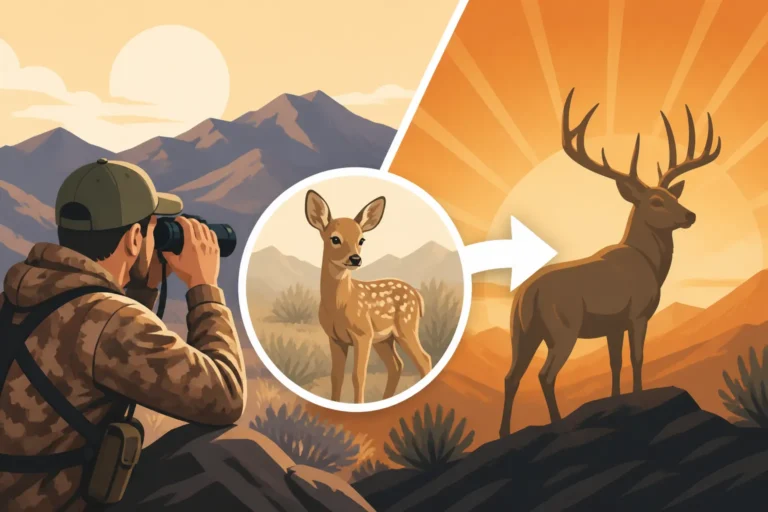
Nevada is a glassing game, and this is never truer than in the late season. With deer often concentrated and sometimes moving more during the day, your optics become your most important tool. A good spotting scope and binoculars are non-negotiable for anyone planning to hunt these vast landscapes.
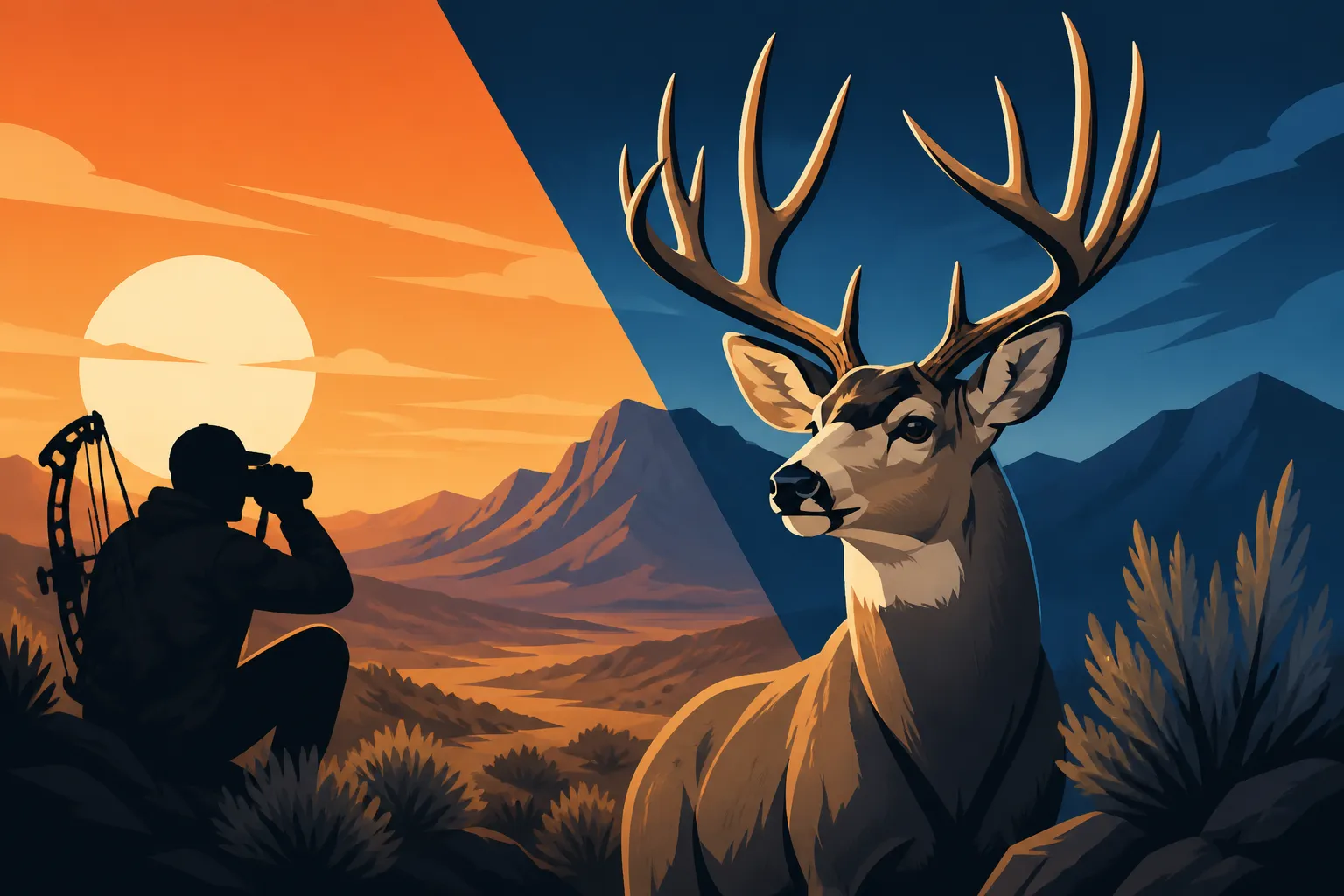
Set up on a high vantage point, preferably one that offers a panoramic view of several basins or migration routes. Spend hours, not minutes, meticulously picking apart every patch of sagebrush, every shadow, and every rimrock with your glass. Use a grid pattern to ensure you don't miss anything. The biggest bucks aren't always going to be standing out in the open; sometimes, it's a flick of an ear, a patch of antler, or a subtle movement that gives them away. Be patient. Don't rush your scans. In the late season, with potentially fewer hunters, the deer might not be as pressured, allowing them to feel more comfortable in open areas, but they still retain their natural caution. For a deep dive, check out Glassing Nevada's Basin and Range for Mule Deer.
Stalking and Shot Placement in Winter Conditions
Once you’ve spotted a buck, the real work begins: the stalk. Late season conditions, particularly snow and colder temperatures, introduce both challenges and opportunities. Snow can make stalks quieter, as it dampens sound, but it also creates a visual contrast that can make you more conspicuous.
Plan your approach carefully, always playing the wind and using available terrain features like draws, ridges, and even dense sagebrush to break up your silhouette. Move slowly and deliberately, taking advantage of any natural cover. If there’s snow, be mindful of crunching footsteps. When you finally get into position, shot placement is absolutely critical, especially with potentially longer shots often encountered in Nevada. Ensure you have a stable shooting platform, whether it’s shooting sticks, a bipod, or a solid rest against a rock. Practice shooting in cold weather with your hunting rifle to ensure familiarity and accuracy when it counts. Many hunters will choose a reliable caliber for open country, and understanding Rifle Zero Distance for Long Sage Shots is paramount.
Gear and Preparedness for Cold Weather Hunts
Late season hunting in Nevada means facing the elements head-on. Proper gear isn't just about comfort; it's about safety and increasing your chances of success.
Essential Cold Weather Clothing Systems
The key to staying warm and effective in fluctuating Nevada winter conditions is a well-thought-out layering system. Temperatures can swing from below freezing in the morning to surprisingly mild in the afternoon, only to plummet again as the sun sets.
Start with a moisture-wicking base layer to draw sweat away from your skin. Next, add an insulating mid-layer, such as fleece or synthetic puffy jacket, to retain warmth. Your outer layer should be waterproof and windproof, protecting you from snow, rain, and the often relentless Nevada winds. Don't forget insulated gloves or mittens, a warm hat, and quality, waterproof boots designed for cold weather and rugged terrain. Having an extra set of dry clothes in your vehicle is also a smart move, especially if you get caught in unexpected wet weather. Remember, a cold hunter is an uncomfortable and often less effective hunter.
Navigation, Safety, and Emergency Planning
Hunting in Nevada's remote, vast country during the late season requires a robust safety plan. Cell service is spotty at best in most hunt units, making reliable navigation and communication tools essential.
Carry a GPS device with pre-loaded maps, or use a reliable smartphone app with downloaded offline maps (like GoHunt's mapping features). A satellite messenger device, such as a Garmin inReach or Zoleo, is crucial for communicating with loved ones and summoning help in an emergency. Always let someone know your hunting plan, including your intended route and expected return time. Pack a well-stocked first-aid kit, emergency shelter, fire-starting materials, and plenty of extra food and water. You also need to be prepared for the possibility of retrieving a heavy animal from challenging terrain. Thinking through Packing a Buck Out of Roadless Country before the hunt can save you a lot of headache and potentially a lot of meat.
Here's a quick comparison of early vs. late season conditions to help you prepare:
| Feature | Early Season (August – Early October) | Late Season (Late October – December) |
|---|---|---|
| Buck Behavior | Bachelor groups, cautious, nocturnal, seeking shade | Rut-driven, active, visible, less cautious, seeking does |
| Weather | Hot, dry, potential thunderstorms, mild nights | Cold, freezing nights, snow potential, high winds, dramatic swings |
| Terrain | Higher elevations, scattered, abundant forage | Lower elevations, winter range concentration, migration corridors |
| Visibility | Limited by cover, heat | Increased due to rut movement, snow background, less cover |
| Hunter Comfort | Dealing with heat, hydration, insects | Dealing with extreme cold, wind, snow |
| Footing | Dry, rocky, dusty | Potentially icy, muddy, snowy, slippery |
| Crowding | Often higher pressure, especially on opening weekends | Generally lower pressure, more dispersed |
| Optics Use | Spotting in shadows, long-distance identification | Spotting moving deer in open, tracking on snow |
Managing Expectations and Draw Odds for Late Tags
Drawing a late-season deer tag in Nevada can be challenging, but understanding the system and setting realistic expectations will help you navigate the process.
Understanding Nevada's Draw System and Bonus Points
Nevada operates on a bonus point system that squares your points, significantly increasing your odds with each accumulated point. This means that hunters with more points have a much greater chance of drawing highly sought-after tags, like those for late-season trophy buck hunts. It’s a competitive system, and patience is often rewarded.
Many hunters dedicate years to building points specifically for a late-season mule deer hunt. GoHunt's detailed draw odds can help you determine how many points you might need for a specific unit and season, allowing you to strategize your applications. It’s important to understand that a late-season rifle tag for a prime unit might take 10+ points for a non-resident. However, there are still excellent opportunities in various units, especially if you're flexible with your unit choices. Diving into Nevada Squares Your Bonus Points Into Draw Chances will give you a solid foundation for your application strategy.
The Value of Patience and Persistence
Even with a coveted late-season tag in hand, success is far from guaranteed. Nevada mule deer hunting, especially for big bucks, is a game of patience, persistence, and often, a little bit of luck. The conditions can be brutal, the terrain unforgiving, and the deer can be incredibly elusive.
You might go days without seeing a buck that meets your criteria, or you might spot a giant only to have the stalk fall apart due to swirling winds or unexpected movement. Don't get discouraged. Stick to your scouting plan, adapt to changing weather and deer behavior, and keep glassing. Those big bucks didn't get big by being easy to find. The reward, however, of connecting with a mature Nevada mule deer buck in the late season, after enduring the elements and executing a well-planned hunt, is an experience that few other hunts can match. It’s the kind of hunt that truly tests your mettle and builds unforgettable memories. Preparing Physically for Long Glassing Days is not just about the hunt, it's about enjoying the entire experience.
Disclaimer
Hunting is an inherently dangerous activity. Always prioritize safety, adhere to all Nevada Department of Wildlife (NDOW) regulations, and understand your physical limitations. This guide is for informational purposes only and does not substitute for professional instruction, proper research of current regulations, or careful personal planning.