Why Elk Numbers Vary Across Nevada
It’s a common frustration for Nevada hunters, isn't it? One year, you scout a unit and see elk sign everywhere – fresh tracks, rubs, even hear a few bugles. The next year, you go back, full of hope, and it feels like the ghosts of elk past are all that remain. Or you hear stories of incredible herds in one mountain range, while another, seemingly similar range, holds only a handful. This isn't just a figment of your imagination; elk numbers genuinely do vary widely across Nevada, and understanding why can be the key to more successful hunts and realistic expectations. This guide will dive into the complex web of factors that cause these fluctuations, from the very ground the elk walk on to the management decisions designed to help them thrive.
The Foundation: Habitat and Elevation
Nevada is a land of extremes, from scorching desert floors to towering alpine peaks, and elk are incredibly sensitive to their surroundings. The quality and availability of suitable habitat are arguably the most critical drivers of where elk can survive, let alone flourish.
Mountain Ranges and Water Availability
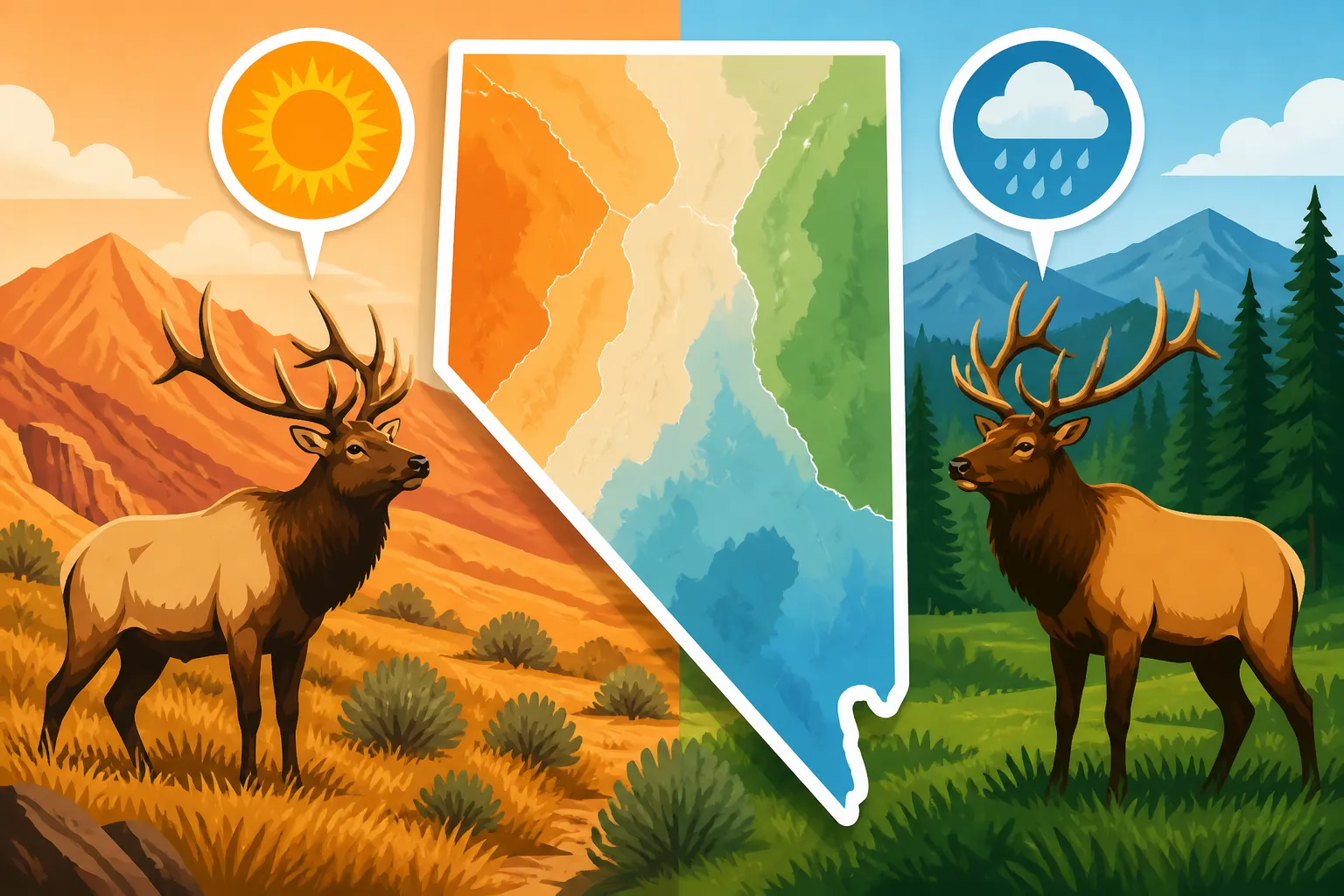
Elk need mountains. They thrive in rugged, broken country that offers cover, forage, and crucially, water. Nevada's landscape is defined by its "basin and range" topography – long, north-south trending mountain ranges separated by arid valleys. While these ranges provide the necessary elevation and cover, water is often the limiting factor. The units with consistently higher elk numbers are almost always those with more reliable water sources: perennial springs, snowmelt-fed creeks, and sometimes even man-made Water Development Projects Built for Wildlife like guzzlers.
Imagine a range like the Ruby Mountains or parts of the Schell Creek Range. These areas tend to receive more precipitation, have more timbered slopes, and hold snow longer into the spring, creating a network of seeps and springs. Compare that to a lower, drier range with sparse pinyon-juniper. Even if the forage looks decent, a lack of consistent water will dramatically restrict how many elk can live there and how widely they can disperse. Water is life, especially for large animals that need a lot of it, and this simple fact profoundly impacts What Limits Elk Expansion in the Great Basin. You can look at any map on a resource like GoHunt and see the correlation between consistent water sources and historic elk populations.
Vegetation and Forage Quality
Beyond water and cover, elk are grazers and browsers, meaning they depend on a diverse diet of grasses, forbs (herbaceous flowering plants), and woody browse. The type and quality of vegetation change dramatically with elevation and soil type. Higher elevations, with more moisture and cooler temperatures, often support more nutritious and abundant forage. Aspen groves, mountain meadows, and north-facing timbered slopes are prime elk real estate.
In contrast, lower, drier areas might have less palatable or less nutritious forage, forcing elk to expend more energy to find enough to eat. Good nutrition directly impacts an elk's body condition, its ability to survive winter, and a cow's capacity to conceive and raise healthy calves. A prime unit isn't just about big bulls; it's about a robust ecosystem that provides year-round nutrition. Without diverse and healthy forage, elk herds simply can't reach their full potential, regardless of how much square mileage a unit boasts.
Climate and Environmental Stressors
Even the best habitat can be severely impacted by the vagaries of Nevada's weather patterns. Climate plays a huge, often unpredictable, role in how elk populations ebb and flow from year to year and across different regions.
Drought and Its Impact
Nevada is, after all, largely desert. Prolonged drought is a constant threat and perhaps the single greatest natural factor affecting elk numbers. When rains fail and snowpacks are meager, several things happen simultaneously that stress elk herds. First, natural water sources dry up. Elk are forced to congregate around fewer, more distant waters, increasing competition and making them more vulnerable to predators or human disturbance. Second, forage production plummets. Grasses don't grow, forbs wither, and even woody browse can become sparse and less nutritious.
This lack of water and food directly leads to poorer body condition in elk. Cows may not get pregnant, or they might abort calves. Calves that are born are often weaker and have a lower survival rate. Drought years can devastate an entire year-class of calves, and it can take several good moisture years for a herd to recover. Hunters who pay close attention to precipitation reports and range conditions, perhaps using tools on GoHunt, know that a dry year often foreshadows a tough elk season a year or two down the line. It's a harsh reality of hunting in arid environments.
Winter Severity and Survival
While Nevada's winters can be mild in some areas, the mountain ranges that elk call home can experience brutal conditions. Deep snow can cover forage, making it impossible for elk to access, especially if there's a crust of ice. Extremely cold temperatures require elk to burn more calories just to stay warm. This is where body condition from the summer and fall truly matters.
Weakened animals, particularly calves and older cows, are highly susceptible to winterkill. A severe winter can decimate a portion of the herd, especially in units where winter range is limited or less accessible. Conversely, a mild winter allows more elk to survive, leading to higher numbers the following year, assuming summer conditions are favorable. This push and pull between harsh winters and forgiving ones creates significant year-to-year variability in local herd sizes and overall Elk Harvest Success Broken Down by Unit.
Management and Human Influence
It's not all up to Mother Nature. The Nevada Department of Wildlife (NDOW) actively manages elk populations, and human activities – from land use to hunting pressure – also leave a significant footprint on where elk are found and how many there are.
NDOW Management Strategies
The Nevada Department of Wildlife plays a crucial role in shaping elk populations through various management strategies. They set tag quotas based on herd objectives, which are often informed by aerial surveys, herd health assessments, and hunter harvest data. If a specific unit's elk population is below its objective, NDOW might reduce tag numbers to allow the herd to grow. Conversely, if a herd is above objective or causing significant agricultural depredation, they might increase tags, including Nevada Antlerless Elk Tag Availability or cow hunts, to reduce numbers.
NDOW also engages in habitat improvement projects, like prescribed burns to stimulate new forage growth, or the enhancement of water sources. They monitor for disease and conduct transplant programs to establish new herds or augment existing ones. For example, the success story of Nevada Elk Herds Grew From Nothing Into a Trophy Draw is a direct result of strategic management and reintroduction efforts. Understanding Reading a Herd Management Plan can give you insight into the specific goals for the elk in your chosen unit. While it's a huge state, NDOW's careful approach, aided by tools often shared on platforms like GoHunt, is vital in shaping elk distribution and abundance.
Land Use and Access
Human land use significantly impacts elk populations. While much of Nevada is public land – BLM Ground Is Where Most Nevada Hunting Happens – private ranchlands often encompass critical winter range or riparian areas. If these private lands are developed for housing or agriculture, it can fragment habitat, disrupt migration corridors, and displace elk. Ranching practices, while sometimes providing open spaces, can also lead to competition for forage or create barriers to elk movement.
Access, or the lack thereof, also shapes where elk reside. Areas with limited road access, whether due to wilderness designations or remote, rough terrain, can act as refuges for elk, allowing them to feel secure and grow. Conversely, units crisscrossed by numerous roads might see elk pushed into more secluded pockets. The constant presence of human activity can make elk more nocturnal or push them into less desirable, but more secure, areas. How Mining Affects Nevada Wildlife Habitat is another example; while mining operations can disrupt habitat, reclaimed mines can sometimes create new forage areas.
Disease and Predation Dynamics
Even with good habitat and sound management, elk populations face natural challenges from disease and predators, which can cause significant localized variations.
Disease Transmission and Herd Health
Disease can sweep through an elk herd, especially when animals are concentrated or stressed by drought and poor nutrition. While Nevada's elk herds generally enjoy good health, various diseases, from respiratory illnesses to chronic wasting disease (CWD), can impact localized populations. NDOW closely monitors for these threats. For instance, while CWD has not been found in Nevada's wild elk, the state has robust monitoring programs in place, and hunters are asked to submit samples. The rapid spread of disease, as seen in populations of other species like Bighorn Disease Die-Offs Explained, can swiftly reduce numbers and impact herd recruitment for years.
When elk are stressed by lack of food or water, their immune systems can be compromised, making them more susceptible to pathogens. This is another reason why fluctuations in habitat quality and climate indirectly contribute to disease impacts. A unit might look healthy on paper, but a localized outbreak could dramatically reduce numbers without external indicators being immediately obvious.
Predator-Prey Relationships
Nevada's ecosystem includes apex predators like mountain lions and a growing black bear population in certain regions. These predators, particularly lions, rely on deer and elk as primary food sources. While healthy elk populations can sustain some level of predation, localized increases in predator numbers, or a significant decline in an elk herd's health, can tip the balance. Young calves are particularly vulnerable to predation, and a high calf mortality rate due to predators can severely impact a herd's ability to grow.
The relationship is dynamic: abundant elk can support more predators, which in turn can increase predation pressure on other species like mule deer. Conversely, if elk numbers drop due to other factors (like drought or severe winter), predators might put more pressure on the remaining elk, slowing their recovery. Understanding these complex interactions is part of appreciating the whole ecosystem and Why Fawn Ratios Predict Next Season is such a critical metric for wildlife managers, applying to both deer and elk.
Here's a quick overview of how these factors contribute to the variability you see in Nevada's elk numbers:
| Factor | Impact on Elk Numbers | Variability Driven By |
|---|---|---|
| Habitat Quality | Supports or limits population size and health | Elevation, vegetation type, soil quality, unit boundaries |
| Water Availability | Crucial for survival; dictates distribution and density | Precipitation, springs, creeks, guzzlers, drought |
| Drought | Reduces forage, dries water, increases stress, lowers reproduction | Long-term weather patterns, annual rainfall |
| Winter Severity | Determines overwinter survival, especially for calves | Snowpack depth, duration, temperature, ice crusts |
| NDOW Management | Regulates harvest, influences population goals, habitat projects | Tag quotas, season structure, transplant programs |
| Land Use/Access | Affects movement, secure areas, forage availability | Development, private land, roads, wilderness areas |
| Disease | Can cause localized die-offs, impact herd health | Concentration of animals, stress, specific pathogens |
| Predation | Impacts calf recruitment and overall herd size | Predator populations, elk health, vulnerability of young |
In conclusion, the variations in Nevada's elk numbers are not simple. They are the result of a delicate and constantly shifting balance between prime habitat, challenging environmental conditions, deliberate human management, and the natural dynamics of disease and predation. The next time you're Reading a Nevada Hunt Unit Before You Apply or studying Where Nevada Publishes Harvest Data, remember that each number tells a story influenced by this intricate dance of factors. It's what makes hunting in Nevada both endlessly challenging and incredibly rewarding.
Disclaimer
This article is for general informational purposes only and does not constitute professional advice. Laws, prices and regulations vary by location and change over time. Consult a qualified professional for guidance on your specific situation.