Reading Wind on a Long Sage Stalk
There’s almost nothing more deflating than putting in hours of glassing, finally pinpointing that trophy buck or bull, planning your approach down to the last step, and then having the fickle winds of Nevada betray you at the last minute. We’ve all been there, watching that perfectly executed stalk crumble because of an unseen eddy or a sudden shift in the breeze that carries your scent right to their nose. This guide is here to help you truly understand the complexities of reading wind in Nevada's vast sage country, turning a common frustration into a critical advantage for your next hunt.
The Invisible Enemy: Why Wind Matters So Much in Sage Country
Hunting in Nevada's wide-open sagebrush isn't like still-hunting dense timber. Here, cover is minimal, sightlines are long, and the air itself becomes your most significant challenge, or your greatest ally. Understanding the wind isn't just a suggestion; it's a fundamental pillar of success, particularly when you're trying to close the distance on a wary animal.
Thermal Currents and Shifting Breezes
Nevada's basin and range topography, characterized by vast, flat valleys punctuated by steep mountain ranges, creates a fascinating and often frustrating dynamic with air currents. As the sun rises, the dark earth of the valley floors and lower slopes heats up quickly, causing air to expand and rise. This rising air creates an upward draft, a thermal current that can carry your scent up the mountain. Conversely, as the sun sets and the earth cools, the heavier, cooler air begins to sink, creating a downward flow. These predictable morning and evening thermals are your baseline, but they're rarely the whole story.
Beyond the major thermals, micro-climates exist everywhere. A small canyon, a rock outcropping, or even a dense patch of bitterbrush can create localized swirls and eddies that defy the broader thermal pattern. You might be climbing a ridge, feeling the steady updraft, only to hit a saddle where the wind suddenly drops into a swirling vortex, dragging your scent down into the opposing drainage. These unpredictable shifts are where many stalks go awry, and they're exactly why you need to be constantly vigilant and prepared to adapt.
The Olfactory Challenge
Big game animals, especially deer and elk, possess an incredible sense of smell that far surpasses our own. A mule deer's nose is designed to detect the faintest hint of a predator, and your human scent, laden with everything from sweat to campfire smoke, stands out like a neon sign in their world. If the wind carries your scent stream to an animal, your hunt is over. It's that simple. They don't need to see you, hear you, or even glimpse movement; a single whiff is enough to send them spiraling out of the country, often without you ever knowing they were there.
This makes keeping the wind in your favor absolutely non-negotiable. You can be the quietest, most camouflaged hunter in the world, but if your scent gets ahead of you, you've lost. This isn't just about avoiding direct downwind positions; it's about understanding how your scent disperses and planning your entire approach to stay consistently out of their "nose cone." This requires not just knowing the wind direction, but predicting its potential shifts and how it will interact with the terrain between you and your quarry.
Beyond Scent: Noise and Movement
While scent control is paramount, wind also plays a critical role in managing noise and movement. A steady breeze can be your best friend, muffling the sound of your footsteps on crunchy sagebrush or loose rock. It can hide the rustle of your clothes as you navigate thick cover or the click of a safety. This allows you to move with greater confidence and less stealth than you might need on a calm day.
However, wind can also betray you. A sudden gust can make your gear flap loudly, or, if you're not careful, it can expose your silhouette against the sky as it whips through sparse vegetation. Strong winds can also make it difficult for you to hear animals moving, making an undetected stalk even more challenging. The best hunters learn to use the wind to their advantage, timing their movements with gusts, and recognizing when stillness is required during lulls. It’s a delicate dance of observation and anticipation, where every rustle and whisper of the wind can either hide you or highlight your presence.
Essential Tools for the Savvy Wind Reader
You can’t fight the invisible, but you can certainly detect it. Carrying the right tools and knowing how to read natural indicators can make all the difference in understanding the subtle, and sometimes not-so-subtle, shifts in the air around you.
The Low-Tech, High-Impact Solutions
Forget fancy gadgets for a moment; some of the most effective wind tools are deceptively simple and incredibly reliable. One classic is milkweed, specifically the silky floss from the mature pods. A small handful of this feather-light material released into the air will show you the exact direction and even the subtle swirling of the wind. It travels slowly, allowing you to trace the air current's path through complex terrain. The drawback, of course, is that it's seasonal and can be hard to find consistently.
Another excellent option is a small bottle of unscented talcum powder or a dedicated wind-check bottle filled with fine, non-clumping powder. A gentle squeeze releases a puff of powder that instantly reveals the wind's direction. It’s compact, readily available, and works in all seasons. The only minor downside is that it doesn't stay aloft as long as milkweed, so you need to puff more frequently. Some hunters also swear by small, very light threads or even a strand of yarn tied to their bow string or rifle scope, which will subtly dance to the faintest breeze, offering a constant, passive wind indicator. The key with all these low-tech solutions is consistency – check them often, not just once at the start of your stalk.
Digital Aids and Weather Apps
In today’s hunting world, technology offers some fantastic resources to complement your fieldcraft. Before you even leave camp or head out for the day, checking a reliable weather app can give you a crucial overview of predicted wind speeds and directions. Apps like Weather Underground, AccuWeather, or even specific hunting apps that integrate weather data (like GoHunt provides for its users) can offer forecasts for your specific location. These predictions can help you plan which areas might be favorable for a morning or evening stalk, or when you might need to adjust your approach significantly.
However, it's vital to remember that these digital tools are forecasting macro weather patterns. They are excellent for general guidance but can't account for the micro currents and localized thermals created by Nevada's unique terrain. A weather app might say the wind is blowing consistently from the west, but a deep draw on a west-facing slope could still funnel a swirling eddy directly into your face. Use these apps for big-picture planning, but always, always confirm with your low-tech tools and environmental observations once you're on the ground. Think of them as a useful starting point, not the definitive answer.
Reading the Environment Around You
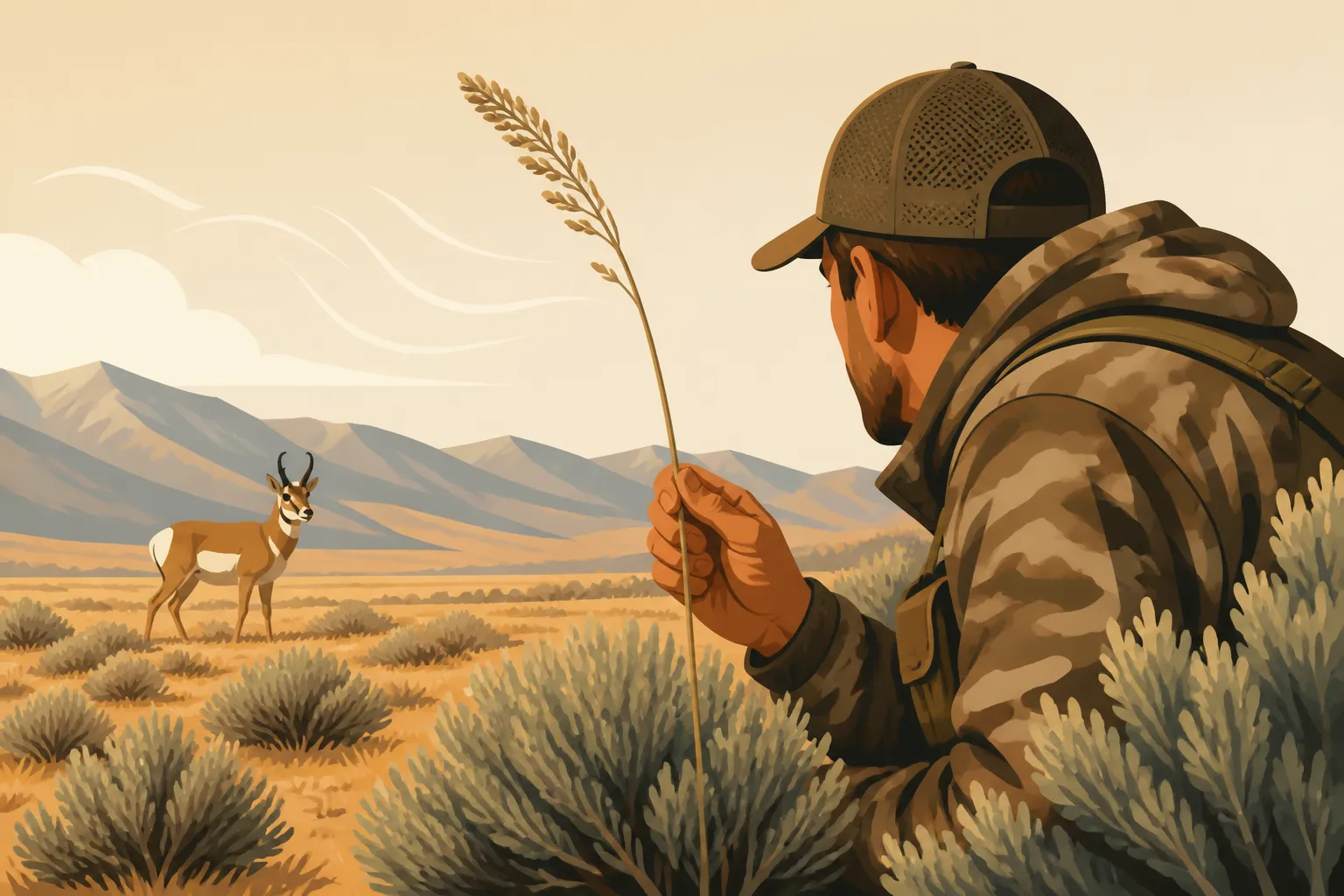
The landscape itself is constantly giving you clues about wind direction, if you know how to read them. Pay attention to the most obvious indicators first: the movement of tall grasses or sagebrush leaves. Even a subtle ripple can indicate a gentle breeze. If there are any trees in the area – perhaps a scattered juniper or ponderosa pine – watch how their branches sway. The fine dust on Nevada's roads and trails can also be a reliable indicator. A faint plume of dust kicked up by your boot, or even just visibly shifting, tells a story about the air currents at ground level.
Don't forget to look higher, too. The movement of clouds, especially those wispy cirrus clouds, can give you a sense of higher-altitude winds, which might eventually influence ground-level conditions. Smoke from a distant wildfire or even the steam from a hot cup of coffee can paint a picture of invisible air currents. Even the feel of the wind on your exposed skin – your ears, cheeks, or the back of your neck – provides constant feedback. It’s all about becoming a student of your surroundings and integrating these observations with your specialized wind tools. The more you practice, the more intuitive these environmental cues will become, helping you gauge the Reading Wind on a Long Sage Stalk even before you pull out your powder.
Mastering the Stalk: Wind Strategy in Action
Once you've located your quarry, the real chess match begins. The wind isn't a static element; it's a dynamic force you must constantly monitor and adapt to. A successful stalk isn't just about moving silently; it's about navigating the invisible currents of the air.
The Art of the Approach
Planning your approach with the wind in mind is paramount, especially when hunting species like mule deer or antelope in Nevada's expansive country. Your goal is always to approach from directly downwind or, more realistically, from a crosswind position that gives you enough buffer. A common mistake is to simply take the most direct route downwind. Instead, consider wider arcs, zig-zags, or even a complete circle if necessary to maintain a wind advantage. You might have to add significant distance to your stalk, but every extra yard walked to stay out of their nose is an investment in success.
When planning, visualize the animal's potential escape routes and consider how the wind will play into those. If the wind is steady, you might be able to use a long ridge as cover while you traverse. If it's swirling, you'll need to be far more conservative, constantly checking your milkweed. Sometimes, the best approach might mean waiting for the thermals to shift or for a stronger, more consistent breeze to pick up. Patience here is key; rushing a stalk into unpredictable wind is almost always a recipe for disaster. This planning phase is where E-Scouting a Nevada Unit Before the Season can really shine, allowing you to identify potential wind traps or favorable terrain features from home.
Dealing with Swirling and Unpredictable Winds
Ah, the dreaded swirling wind. This is the nemesis of every hunter in open country. Swirling winds occur when topography, like deep canyons, draws, or clustered hills, creates eddies and vortices that contradict the prevailing wind direction. You might feel the wind in your face for a moment, then on your back, then from the side – it feels like it’s coming from everywhere! This is often most pronounced in the mid-morning or late afternoon, when thermals are transitioning or when a front is moving in.
When you encounter this, the first rule is to slow down, almost to a halt. Increase the frequency of your wind checks. If your milkweed or powder is truly swirling unpredictably, it's often a sign that you need to re-evaluate your position. Sometimes, the best move is to back out, reposition, and wait for the wind to stabilize. Moving up to a higher vantage point or moving around a significant terrain feature might get you out of the turbulent zone. If you push into truly chaotic wind, you're relying purely on luck, and luck is a fickle hunting partner. Remember, How Far to Stalk a Bedded Mule Deer becomes even more critical when wind is shifty; you might need to stop your approach further out.
Setting Up for the Shot
Even as you close the last few yards and prepare for your shot, maintaining wind advantage remains critical. This is where subtle shifts can still blow your cover. Before you commit to your final shooting position, take one last, thorough wind check. You might have been perfectly downwind for 500 yards, but that last little depression or rise could create an unexpected downdraft or updraft that pushes your scent towards the animal.
Adjust your body position, if possible, to keep your scent path clear. This might mean dropping to a knee a few feet to the side, or even taking a few steps back to a slightly higher or lower point to catch a more favorable breeze. If you're bowhunting, this becomes even more vital, as you need to How Close a Bowhunter Needs to Get on Mule Deer. Consider the direction you'll need to turn your body for the shot and how that might expose you to the wind. Sometimes, waiting for the animal to take a few steps or turn its head can buy you the precious seconds needed for a final wind check or adjustment, ensuring your presence remains undetected as you settle in for the shot.
Real-World Scenarios and Common Mistakes
Nevada's landscape throws unique challenges at hunters, and mastering the wind in these specific environments is a learned skill. Understanding how the air flows around different terrain features can save your stalk.
The Ridge Line Riddle
Ridge lines are classic hunting terrain for a reason – they offer vantage points and natural travel corridors for game. However, they are also notorious for tricky winds. When you're approaching an animal on a ridge, you often encounter a prevailing wind blowing up or down the general direction of the ridge. But the moment you drop off one side, or climb up from a draw, you're likely to hit a localized thermal or crosswind.
A common mistake is assuming the wind on top of the ridge is the same as the wind 50 yards down the face. Often, as the sun heats one side of the ridge, warm air rises, creating an updraft. The shaded side might have cool air sinking, creating a downdraft. This means you can have radically different wind directions on opposing slopes, sometimes only a few yards apart. Always check the wind at multiple points along a ridge stalk. When using a rim to break your silhouette, for example, be mindful that the wind over the rim might be different from the wind below it. This is where Using a Rim to Break Your Silhouette becomes more complex than just visual cover.
Valley Floor Vortices
The wide-open valley floors of Nevada, often covered in dense sagebrush, might seem like straightforward wind environments. However, they can be surprisingly complex, especially where subtle drainages or washes cut through the terrain. These seemingly minor depressions can act as miniature canyons, channeling or even swirling air currents in unexpected ways.
Imagine a large valley with a consistent crosswind. If you follow a slight dip or wash hoping for cover, you might find that the main wind flows over the depression, while a slower, swirling eddy forms within it. This can drag your scent along the bottom of the wash, or worse, swirl it back towards your target. Animals often bed in these very depressions for cover, making them prime spots for wind surprises. When stalking across a valley floor, try to stay on slightly higher ground or the edges of these drainages, continuously checking your wind at ground level. Never assume a wide-open space means a simple wind direction; the subtle contours of the earth can create powerful, localized effects.
When to Cut Your Losses
This is perhaps the hardest lesson for any hunter to learn: knowing when to back out. We pour so much time, effort, and emotion into a stalk that it's tempting to push through marginal conditions, hoping for a stroke of luck. But in open country, with animals that rely heavily on their nose, a bad wind situation rarely improves on its own. If you’re consistently getting swirling winds, if your powder is flying in every direction, or if the wind suddenly shifts directly into your target and stays there, it’s often time to retreat.
Pushing forward in these conditions usually results in busting the animal, educating it, and ruining any chance you had. A wise hunter knows that busting an animal cleanly, without alerting it to your exact location or presence, is sometimes the best outcome. It means you can potentially relocate it later, or even return to the same area another day when conditions are more favorable. It’s a humbling decision, but one that respects the animal and your own hard-earned effort. Sometimes, the most successful stalk is the one you decide not to make, choosing instead to live to hunt another day.
Practice Makes Perfect: Refining Your Wind Skills
Like any critical hunting skill, truly mastering wind reading requires consistent practice and deliberate observation, both in and out of hunting season.
Off-Season Drills and Observation
Don't wait until opening morning to start thinking about the wind. The off-season is the perfect time to hone your wind-reading abilities. Take your wind-check bottle with you on hikes, fishing trips, or even just a walk around your local park. Observe how the powder moves when it hits a building, a tree line, or a dip in the terrain. Watch leaves rustle in different conditions. This constant, low-pressure observation builds intuition.
Consider areas that mimic hunting terrain you frequent. If you hunt the sagebrush basins, visit similar areas in the off-season. Pay attention to how the thermals develop in the morning and evening. Observe how a steady breeze gets deflected or funneled by washes, small ridges, or rock outcroppings. The more you consciously analyze these patterns, the more second nature it will become when a trophy animal is finally in your sights. It’s about building a mental library of wind behaviors in different scenarios. You can even combine this with Preparing Physically for Long Glassing Days during your off-season hikes, doubling up on your field skills.
Learning from Every Experience
Every hunt, successful or not, is a learning opportunity. After a stalk, whether you filled your tag or watched a deer vanish, take a few minutes to re-trace your steps in your mind. Where did the wind seem consistent? Where did it swirl? Did you have a moment where you felt a shift you didn’t anticipate? If an animal busted, can you pinpoint exactly when and why, particularly in relation to the wind?
Keep a small hunting journal. Make notes on wind direction, terrain, time of day, and how the animals reacted. Over time, these observations will form a valuable database. You’ll start to notice patterns specific to your hunting units, to certain types of weather, or even to particular drainages. For instance, you might learn that a certain east-facing slope always gets a tricky downdraft for the first hour after sunrise. Or that a particular pass always funnels a strong west wind. This reflective practice, coupled with tools like the GoHunt app for recording hunt details and mapping, turns every outing into a productive lesson, transforming you from a hopeful hunter into a seasoned wind master.
Integrating Wind with Other Hunting Methods
Wind isn't an isolated factor; it's intricately woven into every aspect of a successful Nevada hunt. The most effective hunters understand how to combine their wind intelligence with other critical skills, creating a holistic approach to the field.
Pairing Wind Reading with Glassing
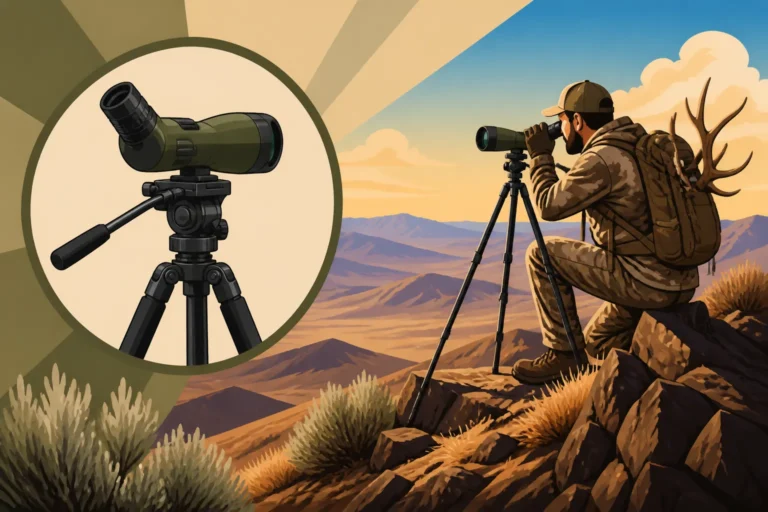
In Nevada, Why Nevada Deer Hunting Is a Glassing Game is undeniably true. You spend countless hours behind your optics, scanning vast expanses of country. This dedicated glassing time isn't just for locating animals; it's also your prime opportunity to observe the wind patterns from a distance. As you watch a distant slope, pay attention to how the sagebrush moves, how dust swirls, or how any wisps of cloud or smoke travel. You might see thermals clearly defined by the movement of air or the behavior of small birds.
This reconnaissance helps you formulate an initial stalk plan. If you spot an animal on a far ridge and notice the wind is consistently blowing directly up to it, you know your approach will have to be a wide loop to get above or around it. If the wind appears shifty in a particular drainage, you can factor that into your strategy from the outset. Don't wait until you're already 200 yards into your stalk to realize the wind is terrible. Use your powerful optics to gather as much wind intelligence as possible before you even take your first step. Remember, the Glassing Grids Across a Nevada Basin method isn't just about finding game, it's about dissecting the entire environment, wind included.
Wind and Water Sources
In Nevada's arid environment, water sources are precious magnets for wildlife. Whether it's a natural spring, a small creek, or a man-made guzzler, animals will visit them, often predictably. However, hunting water requires extreme diligence with wind. A slight shift in direction can quickly compromise your ambush.
When you're Sitting Water on a Nevada August Hunt, consider how the terrain around the water source will influence wind. Is it in a small basin where thermals will dictate morning and evening breezes? Is there a prevailing wind that funnels down a draw towards it? Animals will almost always approach water from a direction that allows them to scent-check the area, meaning they'll approach from downwind of their intended drinking spot. Positioning yourself incorrectly, even by a few yards, can ruin the setup. Always have your wind checker ready, and be prepared to adjust your hide or even completely relocate if the wind turns against you, especially during those crucial morning and evening visits. Understanding Hunting Water in Nevada's Driest Country involves a deep understanding of how wind and water intertwine.
Reading Terrain for Wind Advantage
The physical landscape of Nevada is not just visual cover; it's also a powerful shaper of air currents. Understanding how different terrain features interact with the wind is a skill that comes with experience, but you can accelerate your learning by consciously observing. A steep canyon can act as a wind tunnel, accelerating and channeling air in a consistent direction. A wide, open basin might allow the prevailing wind to dominate, but a series of small, rolling hills can create numerous pockets of swirling air.
When you're planning your approach, look for terrain that can offer a wind advantage. Can you use a long, high ridge to stay above a thermal? Can you skirt around a prominent peak to get into a more consistent crosswind? Conversely, identify terrain features that might create unpredictable wind traps, like a deep, bowl-shaped depression or a narrow saddle between two peaks. The goal is to choose a path that gives you the most consistent and favorable wind, minimizing your exposure to swirling or adverse currents. The better you become at reading the terrain, the better you'll become at predicting its effect on the wind, ultimately improving your chances of a successful stalk in Nevada's challenging environment. Understanding Terrain That Hides an Approach in Open Country is really about understanding how that terrain interacts with the wind.
| Wind Indicator | Pros | Cons | Best Use Scenarios |
|---|---|---|---|
| Milkweed Floss | Ultra-light, stays aloft long, shows subtle swirls. Natural, no scent. | Seasonal availability, can be hard to collect. | Extremely light breezes, detailed scent path analysis. |
| Unscented Powder Bottle | Readily available, compact, consistent puff. Works in all conditions. | Does not stay aloft as long as milkweed, requires frequent checks. | Quick, frequent checks on a stalk, moderate to strong winds. |
| Light Thread/Yarn | Passive, always visible, good for constant subtle feedback. | Can be snagged, less effective in very light or swirling wind. | Constant monitoring on bow or rifle, subtle shifts. |
| Digital Weather App | Big-picture planning, long-range forecasts, general wind direction/speed. | Macro view only, doesn't account for micro-terrain. | Pre-hunt planning, identifying general wind patterns for the day. |
| Environmental Cues (Grass, Dust) | Always present, free. Good for ground-level wind. | Can be subtle, requires observation skills. | Constant, passive feedback; confirming other indicators. |
Disclaimer
Please remember that hunting regulations, seasons, and requirements can change. Always consult the most current Nevada Department of Wildlife (NDOW) regulations before planning and embarking on any hunting trip. This guide is for informational purposes only and should not be considered a substitute for official legal documentation.