Airport Transfers From Reno for a Hunt
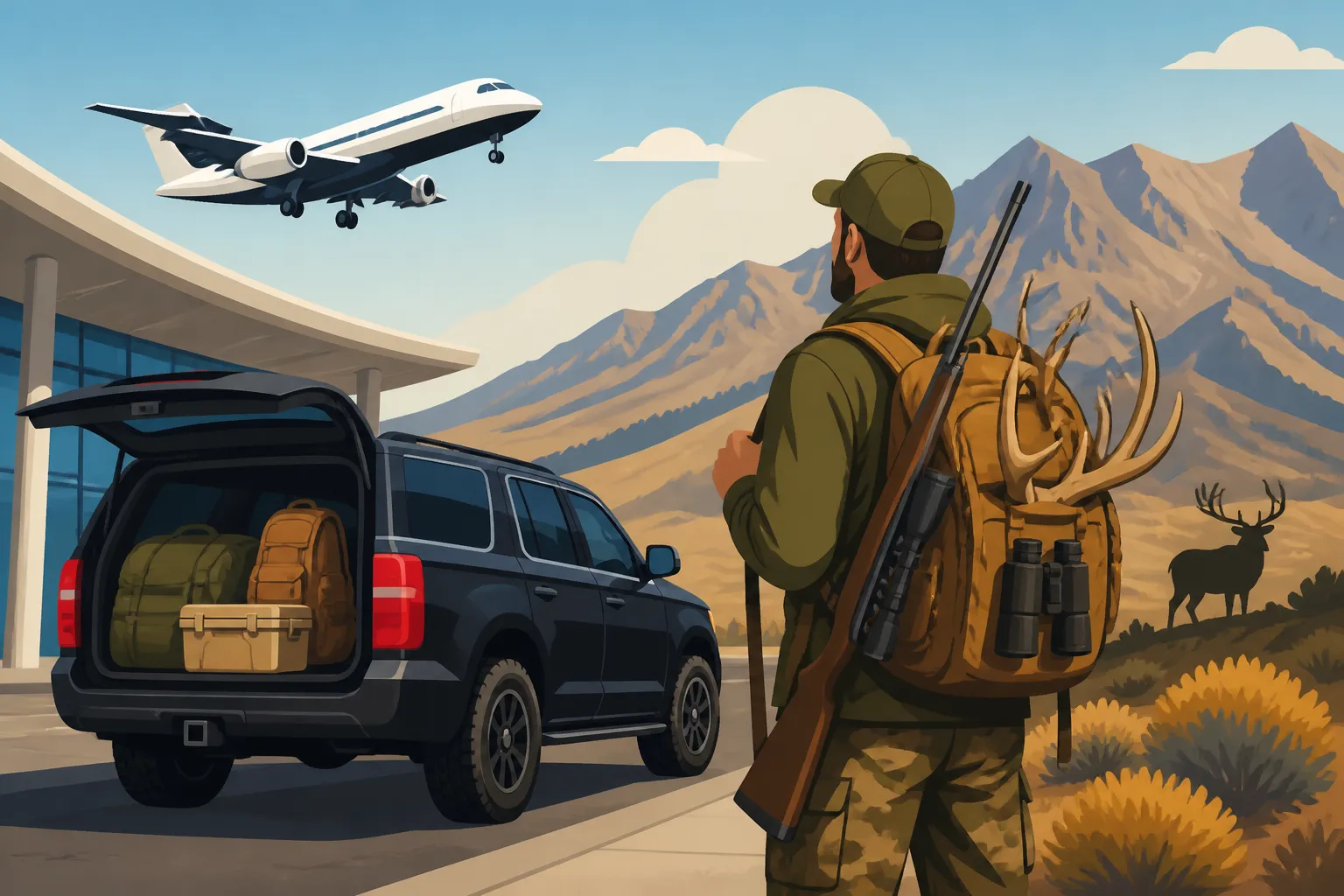
Landing at Reno-Tahoe International Airport (RNO) with a big game hunt on your mind often means you're still a long, long way from where your actual hunting adventure will begin. The sheer distances and unique terrain of Nevada can make getting from the airport to your hunt unit one of the biggest logistical hurdles you'll face. This guide is all about helping you smoothly navigate those crucial airport transfers, ensuring you arrive at your destination ready to hunt, not worn out by travel woes.
Understanding Reno-Tahoe International Airport (RNO) as Your Gateway
Reno, often called "The Biggest Little City in the World," is the primary airport hub for anyone looking to access much of Nevada's vast public lands. While it might seem like a straightforward flight in, the moment you step off that plane, the reality of Nevada's scale sets in. You're likely still hundreds of miles from your target hunting unit, and that journey requires careful planning.
The Reality of Distances from RNO
It's easy to look at a map and think "Oh, that's just a few hours' drive," but Nevada miles are different. They're often on two-lane highways that traverse mountain ranges and expansive valleys, with few services in between. A "short" drive from Reno can easily be three to five hours to reach the general vicinity of a central or eastern Nevada unit. Getting all the way to some of the remote corners of the state could mean a full day's drive, even after your flight. Factor in stops for gas, food, and stretching your legs, and suddenly, what looked like a quick jaunt becomes a significant travel day. You're not just driving to a trailhead; you're often driving to a small, isolated town that serves as a launching point, and then still have rough dirt roads to navigate into the actual hunting ground. This initial leg of your journey demands respect and proper planning, almost as much as the hunt itself.
Imagine landing late in the afternoon at RNO after a cross-country flight, only to realize your hunting unit near Ely or Elko is still a six to eight-hour drive away. Pushing through that in the dark, on unfamiliar roads, can be dangerous and exhausting. It sets a poor tone for the start of your hunt. Acknowledging these distances upfront allows you to plan accordingly, perhaps by scheduling an overnight stay in a town closer to your unit.
Rental Car Considerations for Remote Travel
Choosing the right rental car is perhaps the single most important decision for your airport transfer in Nevada. This isn't a trip where a compact sedan will cut it for most big game hunts. You'll likely be heading off paved roads, onto gravel, dirt, and even rugged two-tracks. A standard rental car is not only likely to get stuck or damaged but might also violate your rental agreement.
Most hunters will need a high-clearance, four-wheel-drive (4×4) vehicle, like a full-size SUV or a pickup truck. These vehicles offer the ground clearance to navigate rough terrain and the traction to handle loose gravel, mud, or light snow. Rental companies typically offer these, but they come at a higher price point and are in high demand, especially during hunting seasons. Always check the rental agreement for clauses about off-road use; some explicitly forbid it, while others have vague language. It's also crucial to understand your insurance coverage. Your personal auto insurance might not cover rental vehicles in off-road situations, and the rental company's supplemental insurance can be costly but potentially worth the peace of mind. Make sure to book your vehicle well in advance—think months, not weeks—to ensure availability and better pricing.
Gear and Luggage Limitations
Flying with hunting gear, especially firearms, requires careful adherence to TSA and airline regulations. Every airline has specific rules for checked firearms, ammunition, and other hunting equipment like optics, knives, or even large backpacks. Typically, firearms must be unloaded, in a locked, hard-sided case, declared at check-in, and ammunition must be in its original packaging or a suitable container, separate from the firearm, and within weight limits.
The sheer bulk and weight of hunting gear can quickly add up, leading to exorbitant baggage fees. A rifle case, an archery case, a large duffel for clothing, a backpack, and potentially a cooler for the return trip can easily exceed standard allowances. Consider strategies to mitigate this: ship non-essential gear ahead of time to your destination town or outfitter, or consolidate items where possible. For instance, sometimes a large backpack can be checked as luggage, and smaller items like optics and documents can be carried on. Being intimately familiar with your chosen airline's specific policies will save you a lot of headache and unexpected costs at the airport counter.
Navigating Rental Cars and Local Transportation Options
Once you've landed at RNO, the real work of getting yourself and your gear to the hunt unit begins. Most hunters rely on rental vehicles, but it's important to know the ins and outs of this process in Nevada.
Choosing the Right Vehicle for Nevada Terrain
As we touched on, a sedan just won't cut it. When you're driving into the heart of Nevada's big game country, you'll inevitably encounter dirt and gravel roads that are often poorly maintained. These roads can be rocky, rutted, or sandy, and a low-slung vehicle is a recipe for disaster. Opt for a full-size pickup truck or a large SUV with true 4×4 capability, not just all-wheel drive. Choosing a Rifle for Basin and Range Country might be about the weapon, but choosing a vehicle for that same country is just as critical. Many remote units are accessed via roads that might be suitable for two-wheel drive in ideal, dry conditions, but a sudden thunderstorm can turn them into impassable mud pits, or rocky climbs can chew up ordinary tires.
Consider the tires on your rental as well. Many rental SUVs come with highway-oriented tires, which are fine for pavement but can be easily punctured by the sharp volcanic rock prevalent in much of Nevada. While you can't typically specify tire type with a rental, understanding this limitation means you might need to drive more cautiously on rougher tracks. Furthermore, ensure the vehicle has a full-size spare tire, not just a donut, and that you know how to change it. Being stranded miles from cell service with a blown tire is a nightmare scenario that proper vehicle selection can help prevent. Your vehicle is your lifeline in remote Nevada. Vehicle Prep for Remote Nevada Roads often starts right at the rental counter.
The Logistics of Rental Agencies at RNO
Reno-Tahoe International Airport hosts all the major rental car companies – Hertz, Avis, Budget, Enterprise, National, Alamo, and Dollar, among others. Their counters are conveniently located within the terminal, often a short walk from baggage claim, with vehicle pick-up typically in an adjacent parking garage or a quick shuttle ride away. While this is convenient, it also means there's often a queue, especially during peak travel times and hunting seasons.
Pre-booking is paramount, and if you have specific needs like a full-size 4×4 truck, make sure your reservation explicitly states this, rather than just "SUV or similar." Even then, rental companies operate on a "fleet availability" basis, and sometimes the exact vehicle type you want might not be there. Have a backup plan or be prepared to wait for a suitable vehicle. When picking up, do a thorough walk-around and photograph any existing damage to avoid disputes later. Understand the fuel policy (full-to-full is usually best) and the return process. For early morning or late-night flights, ensure the return facilities are open or if there's a key drop-off option, and where exactly to leave the vehicle.
Alternative Transport: Shuttles and Private Services
For most hunters traveling to remote areas in Nevada, a rental car is the only truly viable option. Public transportation effectively vanishes outside of metropolitan areas. Ride-sharing services like Uber or Lyft might get you from RNO to downtown Reno or a nearby town, but they will not take you to a remote trailhead or a hunting camp hundreds of miles away. The drivers often don't have suitable vehicles, and the cost would be astronomical, assuming a driver would even accept such a long trip.
Some outfitters might offer airport pickup as part of their guided hunt package. If you've booked a fully guided hunt, it's worth asking if this service is included. However, this is usually an exception, not the rule, and often applies only if your outfitter is based relatively close to Reno. For DIY hunters, relying on a friend or family member for pickup is another option, but still requires coordinating schedules and having an appropriate vehicle for the long drive. For the vast majority, the rental car is your ticket to freedom and access in the Silver State.
Planning Your Route and Logistics Beyond Reno
Getting the right vehicle is just the first step. The next is meticulously planning your drive to the actual hunting grounds. This involves more than just plugging an address into your phone.
Mapping Your Journey to the Hunt Unit
While cell service is surprisingly decent on many major highways, it becomes spotty to non-existent the moment you turn off onto less-traveled roads. You absolutely cannot rely on your phone's GPS alone once you leave the main arteries. Before you even leave home, use tools like E-Scouting a Nevada Unit Before the Season to identify your precise access points and routes. Download offline maps to your phone or, even better, invest in a dedicated GPS unit with detailed topographic maps. Paper maps (like BLM Surface Management Maps) are also invaluable backups, especially for Reading a Nevada Unit Boundary Before You Apply.
Identify critical waypoints: your specific hunting area, potential campsites, and most importantly, fuel stops. Nevada is a state of vast distances between towns, and it's not uncommon to go 100 miles or more without seeing a gas station. Knowing How Far Apart Nevada Fuel Stops Are is essential. Plan to fill up whenever you have the opportunity, even if your tank is only half-empty. It's far better to be safe than sorry when it comes to fuel in the remote high desert. Consider carrying extra fuel in approved containers for those deepest forays into the backcountry; Carrying Extra Fuel on a Nevada Hunt is a common strategy.
| Vehicle Type | Terrain Suitability | Typical Rental Cost | Pros | Cons |
|---|---|---|---|---|
| Sedan/Compact | Paved roads only | Lowest | Fuel efficient, easy to park | No ground clearance, easily damaged, unsuitable for hunt access |
| Standard SUV (2WD) | Paved/well-maintained gravel | Moderate | More space than sedan | Limited off-road capability, can get stuck |
| 4WD SUV | Moderate dirt roads, some rougher tracks | Higher | Good clearance, reliable for most access | Less cargo space than truck, higher fuel consumption |
| Full-Size Pickup (4WD) | Rough dirt roads, deep ruts, off-road | Highest | Excellent clearance, ample cargo, versatile | High fuel consumption, larger turning radius |
Accommodating Firearms and Ammunition
Once your firearms and ammunition are safely retrieved from the airport and checked into your rental car, you still need to transport them responsibly to your hunt unit. In Nevada, firearms generally must be unloaded during transport in a vehicle. It's good practice to keep them cased and out of plain sight. Ammunition should be kept separate from the firearm itself.
If your drive involves an overnight stay in a hotel or motel, ensure your firearms are securely stored. Never leave them openly visible in your vehicle, even if it's locked. Many hunters will bring their cased firearms into their room for security. Always verify local laws regarding firearm storage if you're staying in a different jurisdiction, though state laws typically prevail on transport. Remember, safety and security are paramount; you don't want to start your hunt dealing with lost or stolen gear.
The Importance of Communication and Contingency Plans
Nevada's vastness means that many hunting units are truly off the grid when it comes to cell service. Don't expect to have a signal once you leave main highways and populated areas. Cell Coverage Across Nevada Hunt Units is often non-existent. This is where planning for communication failures becomes crucial.
Invest in a satellite messenger or a satellite phone. Devices like Garmin InReach or Spot X allow you to send and receive text messages, share your location, and, most importantly, send an SOS signal in an emergency, even when miles from any cell tower. These are invaluable for safety. Let someone at home know your travel plans, your expected route, and your estimated arrival time. Check in with them regularly using your satellite device. Have emergency supplies in your vehicle: extra food, water, a first-aid kit, blankets, and recovery gear like a shovel, traction boards, and jumper cables. Breakdowns happen, and getting stuck in a remote part of Nevada without a plan can quickly turn dangerous. Satellite Messenger Use in Remote Country isn't just a suggestion; it's a necessity for safe hunting in Nevada's backcountry.
Practical Tips for a Smooth Transfer
A well-planned airport transfer sets the stage for a successful hunt. Here are a few more tips to make your journey from Reno-Tahoe International Airport as seamless as possible.
Timing Your Arrivals and Departures
When booking your flights, try to arrive at RNO during daylight hours. Landing in the late afternoon or evening means you'll be starting a potentially multi-hour drive to your hunt unit in the dark. Navigating unfamiliar roads, especially if they transition from paved to dirt, is significantly harder and more dangerous at night. Give yourself a buffer day if your unit is particularly far or requires extensive off-road travel. Consider arriving a day early and staying in Reno or a town closer to your hunting unit to break up the drive. This allows you to get a good night's sleep, pick up any last-minute supplies, and start your journey fresh in the morning.
The same logic applies to departures. Don't plan to hunt until the last possible minute and then rush back to the airport. Allow ample time to pack up camp, drive back from your unit (which might be slower with a harvested animal), refuel your rental, and make it to RNO for your flight. Factor in potential delays like flat tires, unexpected road closures, or just slower travel on rough terrain, especially if you're Packing an Animal Out of Roadless Country. Rushing creates stress and increases the chance of forgetting something important or missing your flight.
Packing Smart for the Journey
Think about how your gear will move from the airport, into the rental car, and potentially to an overnight stop. Consolidate your items into durable, easy-to-handle bags. Soft-sided duffels often work better than rigid suitcases for fitting into irregular vehicle spaces. Have a small "go-bag" or daypack with essentials like snacks, water, any critical medications, important documents, and maybe a change of clothes readily accessible in the rental car. This prevents you from having to dig through all your hunting gear just to get a toothbrush or a jacket.
For hunters bringing coolers for meat transport on the return trip, consider purchasing a collapsible cooler or a soft-sided cooler that can be easily packed in your luggage on the way out. Alternatively, many grocery stores in larger Nevada towns (like Winnemucca, Elko, or Ely) sell inexpensive foam coolers. You can always pick one up on your way to your hunt. Remember that you'll also need ice, and knowing where to get that in your destination town is part of smart planning.
Budgeting for Travel Beyond the Flight
The cost of your flight to Reno is just one piece of the travel budget. You need to account for the full expense of getting from RNO to your hunt unit and back. Rental car costs, especially for a 4×4, can be significant, often hundreds of dollars for a week-long hunt. Factor in fuel costs, which can add up quickly over hundreds of miles in a large, less fuel-efficient vehicle. Prices for gas in remote Nevada towns can also be higher than in urban areas.
Don't forget potential costs for an overnight hotel stay if you break up the drive, meals on the road, and any additional insurance or mileage fees from the rental company. Some rental agreements have daily mileage limits, and exceeding them can incur hefty surcharges. If you're using a satellite messenger, remember the subscription fees for that service. A well-thought-out budget for your entire travel itinerary helps prevent unpleasant financial surprises and allows you to focus on the hunt itself. It's all part of the preparation, just like Preparing Physically for Long Glassing Days or Layering for Basin and Range Temperature Swings.
Disclaimer
This article is for general informational purposes only and does not constitute professional advice. Laws, prices and regulations vary by location and change over time. Consult a qualified professional for guidance on your specific situation.