The Ruby Mountains for Nevada Hunters
For many Nevada hunters, the very mention of the Ruby Mountains conjures images of rugged peaks, deep canyons, and the promise of truly wild game. Yet, for all their allure, these mountains can be incredibly intimidating, presenting unique challenges that can easily overwhelm the unprepared. This guide is designed to peel back the layers of mystique surrounding the Ruby Mountains, offering practical advice and deep insights to help you understand this incredible hunting ground, from its challenging terrain to its coveted big game.
Understanding the Ruby Mountains: Geology and Access
The Ruby Mountains, often called the "Nevada Alps," stand as an island range in northeastern Nevada, dramatically rising from the high desert floor. Unlike much of the state's characteristic basin and range topography, the Rubies boast glacially carved canyons, alpine lakes, and some of the highest peaks in Nevada, creating a completely different hunting experience than the sagebrush lowlands. This unique geology directly impacts how you'll approach a hunt here, from where you can drive to how you'll move through the landscape.
Topography and Elevations Shaping the Hunt
The Ruby Mountains are a hunter's paradise for those who love elevation changes. Peaks like Ruby Dome reach over 11,000 feet, plunging down into deep canyons like Lamoille Canyon, which itself is a testament to ancient glacial forces. This extreme vertical relief means hunters must be prepared for everything from dense aspen groves and pine forests in the mid-elevations to barren, rocky alpine tundra near the summits. The aspect of a slope can vary wildly, with north-facing slopes often holding snow much later into the season and supporting different vegetation than their sun-baked southern counterparts. Understanding these elevation bands is crucial, as game animals will move vertically throughout the season, seeking forage, cover, and respite from heat or cold. Elevation Bands Worth Understanding in Nevada is a great resource for wrapping your head around this. This dramatic terrain isn't just scenic; it dictates animal movement, glassing opportunities, and your physical exertion levels. Packing lightweight gear and being in peak physical condition are not just recommendations here; they're requirements if you plan to get into the backcountry.
Main Access Routes and Trailheads
Access into the Ruby Mountains is primarily concentrated on the range's western side, with Lamoille Canyon Road being the most well-known entry point. This paved road offers breathtaking views and leads to several popular trailheads, providing access to the Ruby Mountains Wilderness. Other access points exist further north, such as Soldier Creek and Harrison Pass, which are generally gravel or dirt roads that can become impassable with bad weather. East of the main crest, access becomes significantly more challenging, often requiring high-clearance 4×4 vehicles and a willingness to navigate rough, unmaintained tracks. For example, some of the roads accessing the remote eastern slopes near Secret Pass are incredibly primitive.
You'll quickly realize that while these roads get you into the mountains, they often only serve as jumping-off points. The real hunting ground, especially for trophy animals, lies deep within the wilderness areas and roadless backcountry, accessible only by foot or horseback. Before you even think about putting boots on the ground, familiarize yourself with the specific unit boundaries and motor vehicle use maps. Tools like onX Hunt are invaluable for understanding these complex access rules and identifying trailheads. It’s imperative to understand that motorized travel rules on public land, especially near or within designated wilderness, are strictly enforced, and you certainly cannot drive off-road to retrieve game in these areas.
Here's a quick look at some key access points:
| Access Point | Type of Road | General Terrain | Primary Access For | Nearest Town | Notes |
|---|---|---|---|---|---|
| Lamoille Canyon Road | Paved (Seasonal) | Glacial Canyons, Alpine | Hiking, Backpacking | Elko | Leads to popular trailheads, high traffic |
| Harrison Pass Road | Gravel/Dirt | Mid-Elevation Forests | General Hunting, ATVs | Ruby Valley | Can be rough, less crowded |
| Soldier Creek | Gravel/Dirt | Canyon, Forest | Hiking, Backcountry | Lamoille | Good for northern Ruby access |
| Secret Pass Road | Rough Dirt/4×4 | Remote, Steep East | Backcountry Hunting | Wells | Very challenging, often unmaintained |
| Clover Valley Road | Dirt/Gravel | Eastern Foothills | Lower Elevation Hunt | Wells | Accesses lower eastern slopes |
Key Game Species and Habitat in the Rubies
The Ruby Mountains are renowned for their diverse big game populations, offering opportunities for some of Nevada's most coveted tags. While mule deer are often the primary draw, healthy elk herds and the state's only Rocky Mountain goat population add to the allure, each thriving in specific habitats dictated by the range's unique topography and vegetation.
Mule Deer Hotspots and Seasonal Movement
Mule deer are undeniably the flagship species for hunters in the Ruby Mountains. These mountains offer incredible habitat, from the rich aspen and mountain mahogany stands in the mid-elevations to the sparse but nutritious forbs of the high alpine basins. During early archery seasons, deer might be found higher up, enjoying the cooler temperatures and abundant feed. As rifle seasons approach and temperatures drop, they begin to filter down into the more sheltered slopes and deeper canyons, especially with the first snows. Why Late Seasons Produce Bigger Bucks is a concept that holds true here, as the later hunts often coincide with the rut, concentrating mature bucks.
Hunters often focus on the transition zones between different vegetation types – where timber meets open sage, or where a north-facing slope with dense cover meets a south-facing feeding ground. Pay close attention to historical burn areas, as these can create excellent new growth that attracts deer. Finding water sources is also crucial, particularly during warmer hunts. Scouting with tools like GoHunt, which can provide historical harvest data and habitat analysis, can give you a significant advantage in pinpointing these hotspots. Don't be surprised to find deer in unexpected places; the Rubies are vast, and these animals are experts at using the broken terrain to their advantage.
Elk Herd Dynamics and Trophy Potential
Nevada's elk herds have experienced a remarkable recovery, and the Ruby Mountains are a prime example of this success story, boasting a healthy population with strong trophy potential. Unlike deer, elk often utilize larger territories and are more concentrated in certain areas, particularly during the rut. Hunters fortunate enough to draw an elk tag will typically find bulls bugling in the timbered slopes and aspen parks during the early season, often in the higher reaches of the range. Later in the season, they might be found in more secluded, thicker timber or moving towards lower elevation wintering grounds.
The challenge with Ruby Mountain elk is their elusiveness and the sheer size of the country. They are adept at using the rugged terrain to avoid pressure, often retreating into the deepest, steepest canyons or dense timber stands when disturbed. Nevada Elk Rifle Hunts Stretch From October Into December means that a lot of your hunting will involve tracking and careful stalking, especially as the season progresses. Expect to cover a lot of ground and use powerful optics for extensive glassing sessions. The rewards, however, can be immense, with bulls that rival those found in more famous elk states.
Rocky Mountain Goats and Other Opportunities
One of the truly unique hunting opportunities in the Ruby Mountains is for Rocky Mountain goats. This is Nevada's only population of this magnificent species, and drawing a tag is a once-in-a-lifetime event. Rocky Mountain Goats in Nevada's Highest Ranges discusses how these animals thrive in the extreme alpine environment, typically inhabiting the highest, most precipitous ridges and peaks, often above timberline. Hunting goats here is not for the faint of heart; it involves extreme physical exertion, navigating treacherous terrain, and often battling unpredictable weather conditions at high altitude. Expect to spend days glassing sheer cliffs and rockslides, where these animals blend in perfectly with their surroundings.
Beyond the big game, the Ruby Mountains also offer opportunities for other species. While not widely recognized for upland birds, you might encounter blue grouse in the higher timbered areas. Predator hunting for coyotes or mountain lions is also an option, though lion tags are quota-based and highly sought after. Remember that each species has its own season, regulations, and preferred habitat, so always consult the latest Nevada hunting regulations before planning any trip.
Hunting Strategies and Challenges in the Rubies
Hunting the Ruby Mountains is a test of skill, endurance, and mental fortitude. The landscape itself is a formidable opponent, and success often hinges on meticulous planning and adapting proven strategies to the unique demands of this high-country environment.
Glassing Techniques for Vast Open Country
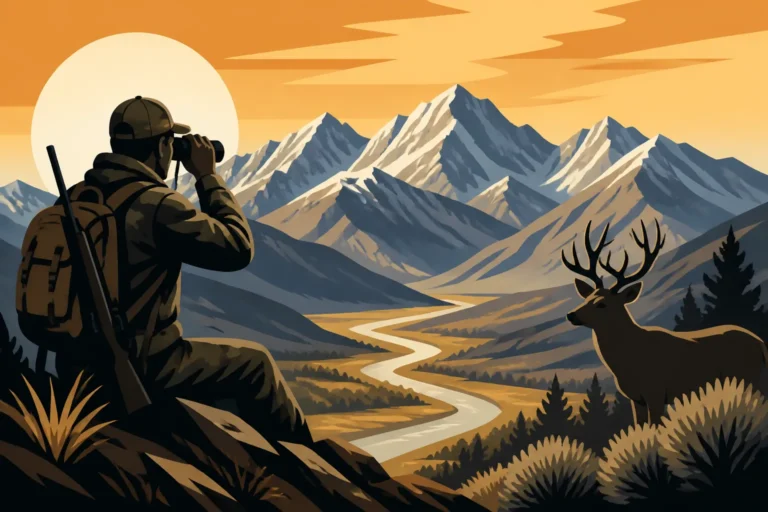
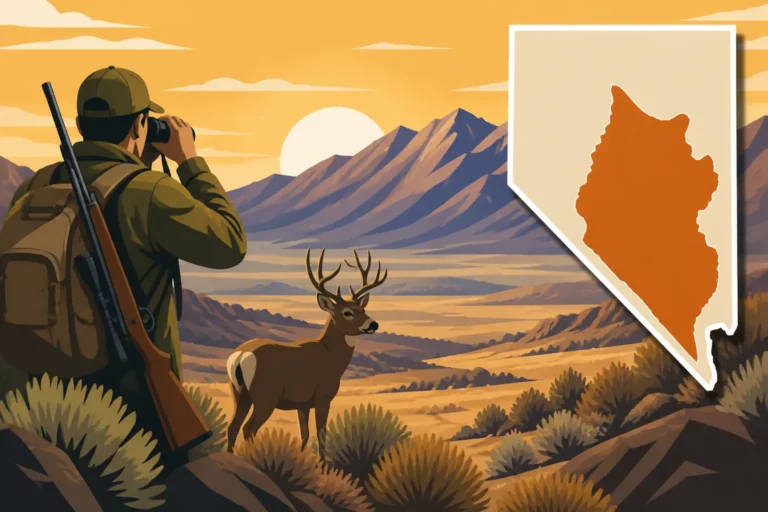
In the expansive and often steep terrain of the Ruby Mountains, glassing is not just a tactic; it's the foundation of a successful hunt. Unlike dense forest hunting, where still-hunting or tracking might be primary, the Rubies demand patience and a systematic approach to scanning vast landscapes. Setting up on a high vantage point, preferably with a clear view of multiple drainages and slopes, is paramount. You’ll want quality optics – a good pair of 10x or 12x binoculars on a tripod, and a high-power spotting scope are essential. Optics Power for Nevada's Long Sightlines is a great article to help you choose.
Start by breaking down the landscape into smaller, manageable grids, slowly scanning each section for movement or telltale shapes. Pay close attention to shadowed areas, pockets of timber, and benches where animals might bed down. The "grid glassing method" is a highly effective technique here, ensuring no stone is left unturned. Animals in the Rubies are incredibly good at blending in, so look for abnormal colors, horizontal lines against vertical terrain, or the flick of an ear. Early mornings and late evenings are prime times, as animals are often more active and visible. The adage "let your optics do the walking" truly applies when you're glassing Nevada's basin and range for mule deer.
High-Country Stalking and Approaching Game
Once you’ve spotted an animal worth pursuing, the real challenge begins: the stalk. High-country stalking in the Rubies is an art form, requiring acute awareness of wind direction, terrain features, and the animal's behavior. The broken, rocky ground can be both a blessing and a curse; it offers excellent cover but can be incredibly noisy underfoot. Always approach from downwind, using draws, ridges, and rock formations to break your silhouette and remain out of sight. Using a Rim to Break Your Silhouette is a critical skill here.
Thermals, the upward or downward movement of air currents driven by temperature changes, play a massive role in the mountains. In the mornings, thermals generally rise, carrying your scent uphill. In the evenings, they fall, carrying it downhill. Misjudging the thermals can quickly send your quarry bolting. Plan your approach carefully, taking into account the time of day, the animal's location, and the natural wind patterns. A successful stalk might take hours, involving long detours to maintain cover and favorable wind. Patience and slow, deliberate movements are your best friends.
Reading Weather Patterns and Terrain Challenges
The Ruby Mountains are notorious for their unpredictable weather. A clear, calm morning can quickly turn into a raging snowstorm or a violent thunderstorm, even in early fall. Hunters must be prepared for all conditions, carrying appropriate layers, rain gear, and emergency supplies. Layering for Basin and Range Temperature Swings is essential reading. Sudden drops in temperature, high winds, and snow can create dangerous situations, especially at higher elevations or when you're miles from the nearest road.
Beyond weather, the terrain itself poses significant challenges. Loose scree slopes, steep inclines, and deep ravines can make travel arduous and dangerous. Knowing how to navigate this difficult ground safely is paramount. Always inform someone of your route and expected return time. Carrying a reliable GPS or satellite communication device is highly recommended, as cell service is virtually nonexistent in much of the backcountry. This extreme environment means that Packing an Animal Out of Roadless Country will be a Herculean effort, often requiring multiple trips or a carefully planned pack-out strategy. Assess your capabilities and the terrain honestly before you commit to a stalk.
Regulations and Special Considerations for the Rubies
Hunting in the Ruby Mountains, while incredibly rewarding, comes with a specific set of regulations and considerations that differ slightly from other parts of Nevada, particularly due to the presence of designated wilderness areas and unique wildlife populations. Being well-informed is not just about legality, but about respecting the land and ensuring a safe, ethical hunt.
Specific Unit Boundaries and Wilderness Rules
The Ruby Mountains span several Nevada hunt units, primarily falling within Unit 102 and sections of Unit 101, 103, and 104, depending on the specific species and season. It is absolutely vital to understand Reading a Nevada Hunt Unit Before You Apply and to know your exact unit boundaries. These boundaries determine which tags are valid in which areas. Moreover, a significant portion of the higher Ruby Mountains is designated as the Ruby Mountains Wilderness. This designation comes with strict rules regarding motorized and mechanized travel. This means no ATVs, dirt bikes, or even mountain bikes are allowed within wilderness boundaries. Horseback riding is generally permitted, but even then, there are often restrictions on where you can make camp or tie out animals.
These wilderness rules mean that any game harvested within these areas must be packed out entirely by human power or pack stock. This is a crucial logistical detail that must be planned for in advance, especially for larger animals like elk. Always double-check current regulations from the Nevada Department of Wildlife (NDOW) before your hunt, as rules can change. Understanding the legal shooting hours and blaze orange requirements in Nevada is also essential, regardless of your specific unit.
Road and Vehicle Restrictions
While the main paved roads like Lamoille Canyon are generally open (seasonally), many of the secondary and tertiary roads throughout the Ruby Mountains are subject to various restrictions. Many are unmaintained dirt or gravel roads, requiring high-clearance 4×4 vehicles. Furthermore, some roads may be seasonally closed due to snow, mud, or to protect wildlife during sensitive periods like winter migration. Seasonal Road Closures Across Nevada can impact your access significantly, especially for late-season hunts. Always check with the local Humboldt-Toiyabe National Forest or BLM office for current road conditions and closures before heading out.
Within the Ruby Mountains, especially near wilderness study areas, there are stringent rules about off-road travel. You cannot simply drive wherever you please. Stay on established roads and trails. This is not only for legal compliance but also to protect the fragile high-desert and mountain ecosystems. Ignorance of these rules is not an excuse, and violations can result in hefty fines. Using a detailed map like those found on onX Hunt, which clearly delineates motor vehicle use areas and wilderness boundaries, is indispensable for avoiding accidental trespass or violations.
Water Sources and Environmental Considerations
Water is a critical element in any Nevada hunt, and while the Ruby Mountains are generally wetter than the surrounding desert, finding reliable sources can still be a challenge, especially during dry years or later in the season when some springs might dwindle. Hunters should always carry sufficient water for themselves and be aware of potential water sources for pack animals if applicable. Many of the alpine lakes and streams are reliable, but always filter or treat any water gathered from natural sources. Hunting Water in Nevada's Driest Country offers principles that apply even in the comparatively wetter Rubies.
Beyond water, hunters must practice Leave No Trace principles to minimize their impact on this pristine environment. Pack out all trash, properly dispose of human waste, and avoid disturbing archaeological sites or sensitive habitats. Be aware of fire restrictions, which are often in place during the dry summer and fall months. Understanding how wildlife interacts with its habitat, like the impact of wildfire on sagebrush, helps ensure that future generations can enjoy these incredible resources. The Ruby Mountains are a special place, and it’s up to every hunter to help keep them that way.
Planning Your Ruby Mountains Hunt
A successful hunt in the Ruby Mountains isn't just about drawing a tag; it's about meticulous preparation that accounts for the unique challenges of this high-altitude, rugged environment. From digital scouting to physical conditioning, every step you take before you even set foot in Nevada will contribute to your chances of success and, more importantly, your safety.
Maps, E-Scouting, and Digital Tools
Before you even consider applying for a tag, your planning needs to start with thorough e-scouting. This involves using online mapping tools and resources to familiarize yourself with the terrain, access points, and potential hunting areas. Platforms like onX Hunt are incredibly valuable, allowing you to study satellite imagery, topo maps, public land boundaries, and even historical burn data. You can mark potential glassing knobs, water sources, and escape routes from the comfort of your home. E-Scouting a Nevada Unit Before the Season can save you countless hours of unproductive walking once you're on the ground.
GoHunt is another excellent resource, offering unit-specific data, draw odds, and harvest statistics that can help you prioritize which areas within the Rubies might offer the best chances for your target species. While these tools are powerful, remember they are supplements, not replacements, for physical scouting and on-the-ground experience. Download offline maps to your phone or GPS device, as cell service will be virtually non-existent once you leave the main roads. Always carry a physical map and compass as a backup – batteries die, and technology fails.
Logistics, Supplies, and Emergency Preparedness
Hunting in the Ruby Mountains means being self-sufficient. Services are far apart, and help can be hours, if not days, away. Your packing list needs to reflect this reality. Beyond your hunting gear, think about emergency supplies: a first-aid kit, emergency shelter, fire-starting tools, extra food, and water purification. Water You Must Carry on a Desert Day Hunt includes many tips applicable here, even if the Rubies are not strictly "desert." A satellite messenger or phone is a non-negotiable item for communication in remote country.
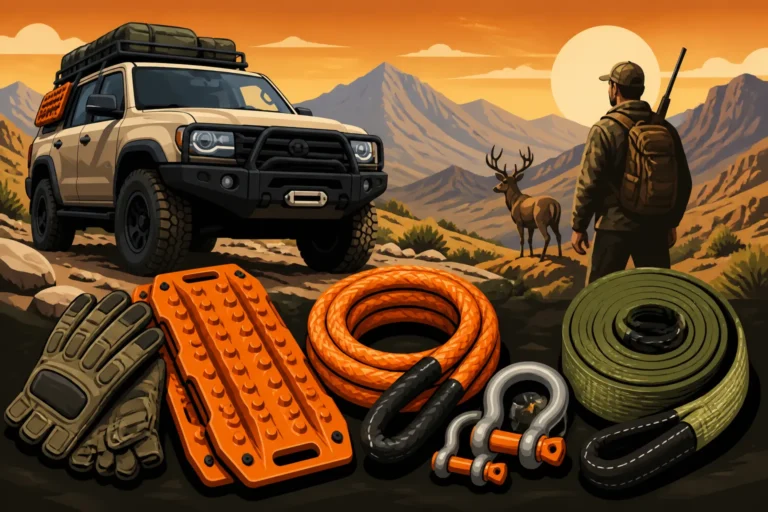
For vehicle prep, assume the worst. Many of the dirt roads in the Rubies are rough, rocky, and prone to washouts. Carry a full-size spare tire, tire repair kit, extra fuel, and recovery gear like a shovel and traction boards. Vehicle Prep for Remote Nevada Roads is crucial reading. Plan your fuel stops carefully, especially if coming from out of state; towns with services are few and far between. Consider camping rules on Nevada BLM ground, as dispersed camping is generally allowed but comes with responsibilities like packing out all trash and adhering to fire restrictions.
Physical Conditioning and Mental Fortitude
This cannot be stressed enough: hunting the Ruby Mountains demands peak physical conditioning. The steep climbs, high altitudes, and vast distances will test your endurance like few other places. Even if you consider yourself fit, start a specific training regimen months before your hunt. Focus on cardiovascular endurance, leg strength, and carrying a heavy pack over varied terrain. Preparing Physically for Long Glassing Days should be a cornerstone of your routine. Incorporate hikes with elevation gain, ideally with your loaded hunting pack.
Beyond physical strength, mental fortitude is equally important. The Rubies can be unforgiving. You might face extreme weather, long days without seeing game, and the psychological challenge of immense, empty landscapes. Develop patience, resilience, and a positive mindset. Understand that setbacks are part of the game, and adaptability is key. This level of preparation isn't just about increasing your chances of success; it's about ensuring your safety and enjoyment in one of Nevada's most spectacular and demanding hunting grounds.
Disclaimer
This article is for general informational purposes only and does not constitute professional advice. Laws, prices and regulations vary by location and change over time. Consult a qualified professional for guidance on your specific situation.