Wilderness Study Areas and Vehicle Limits
You've finally drawn that coveted Nevada tag, or perhaps you're simply scouting for new opportunities on public land, pouring over maps, dreaming of untouched country. Then you see those dashed lines, those confusing symbols: "WSA." You might feel a pang of frustration, wondering if your vehicle access is suddenly cut off, if that perfect glassing knob is now miles beyond a dusty hike. Trust me, I've been there. Wilderness Study Areas (WSAs) can definitely throw a wrench in your plans if you don't understand the rules, but they also offer some of the most rewarding, quiet hunting experiences in Nevada. This guide will walk you through what WSAs are, how they impact your hunting access, and how to effectively navigate them to find success.
What Exactly Is a Wilderness Study Area?
Before we dive into the nitty-gritty of vehicle limits, let's get a clear picture of what a Wilderness Study Area actually is. Imagine a vast expanse of public land—often managed by the Bureau of Land Management (BLM)—that Congress or the managing agency has identified as having wilderness characteristics. This isn't full-blown designated Wilderness, not yet, but it's land under consideration. The goal is to protect these areas in a "wilderness character" state until Congress makes a final decision on whether to formally designate them as part of the National Wilderness Preservation System.
The Purpose Behind Wilderness Study Designations
The idea behind WSAs stems from the Wilderness Act of 1964, which sought to preserve certain federal lands in their natural, untrammeled condition. While the Act immediately designated some areas as Wilderness, it also tasked agencies like the BLM with inventorying their lands for potential future wilderness designations. This inventory process is where WSAs come in. They are essentially areas that meet certain criteria: they must generally be at least 5,000 acres, be roadless, and possess primeval character, offering outstanding opportunities for solitude and primitive recreation. The "study" part means they're under evaluation, and during this interim period, their wilderness values must be protected. This often translates directly into restrictions on motorized and mechanized travel.
Think of it as a holding pattern. The government is evaluating if these wild places should remain wild, forever free from human-made disturbances like roads and permanent structures. This distinction is crucial because it means that while you might find a two-track road leading to a WSA, the moment you cross that boundary, the rules often change dramatically. It’s all about maintaining that sense of solitude and natural quiet that draws many of us to the backcountry in the first place, even if it means a longer walk to get there.
How WSAs Differ from Designated Wilderness Areas
It's easy to confuse WSAs with capital-W Wilderness Areas, but there are key differences that impact a hunter. Designated Wilderness Areas have received full Congressional approval and are permanently protected. Their management is very strict, often prohibiting mechanized transport entirely (even bicycles). WSAs, however, are still in a "study" phase. While they are managed to preserve their wilderness characteristics, the rules can sometimes be a tiny bit less rigid than full Wilderness, though often not by much when it comes to vehicles.
For example, in a designated Wilderness, you absolutely will not find any motorized vehicle access, period. In a WSA, the intent is usually the same, but sometimes existing primitive routes or trails might have been "grandfathered in" under specific conditions during the inventory process, though this is rare and needs careful verification. The general rule of thumb for both, when it comes to hunting, is to assume no motorized vehicle access beyond the boundary unless explicitly stated otherwise on official maps or regulations. The consequences of not knowing the difference can range from a warning to a hefty fine, and nobody wants that when they're trying to enjoy a hunt. Always double-check your maps and unit regulations—that's where tools like onX Hunt become invaluable, showing those boundaries clearly.
Navigating the Vehicle Restrictions: What You Can and Can't Do
This is where the rubber meets the road, or more accurately, doesn't meet the road in a WSA. The primary purpose of these areas is to maintain their roadless character, which means significant restrictions on how you can travel within them. Understanding these limitations is paramount for both compliance and successful hunting.
Understanding "Motorized" and "Mechanized" Travel
When federal agencies talk about travel restrictions in WSAs, they usually use terms like "motorized" and "mechanized." It's important to know what these mean for a hunter.
-
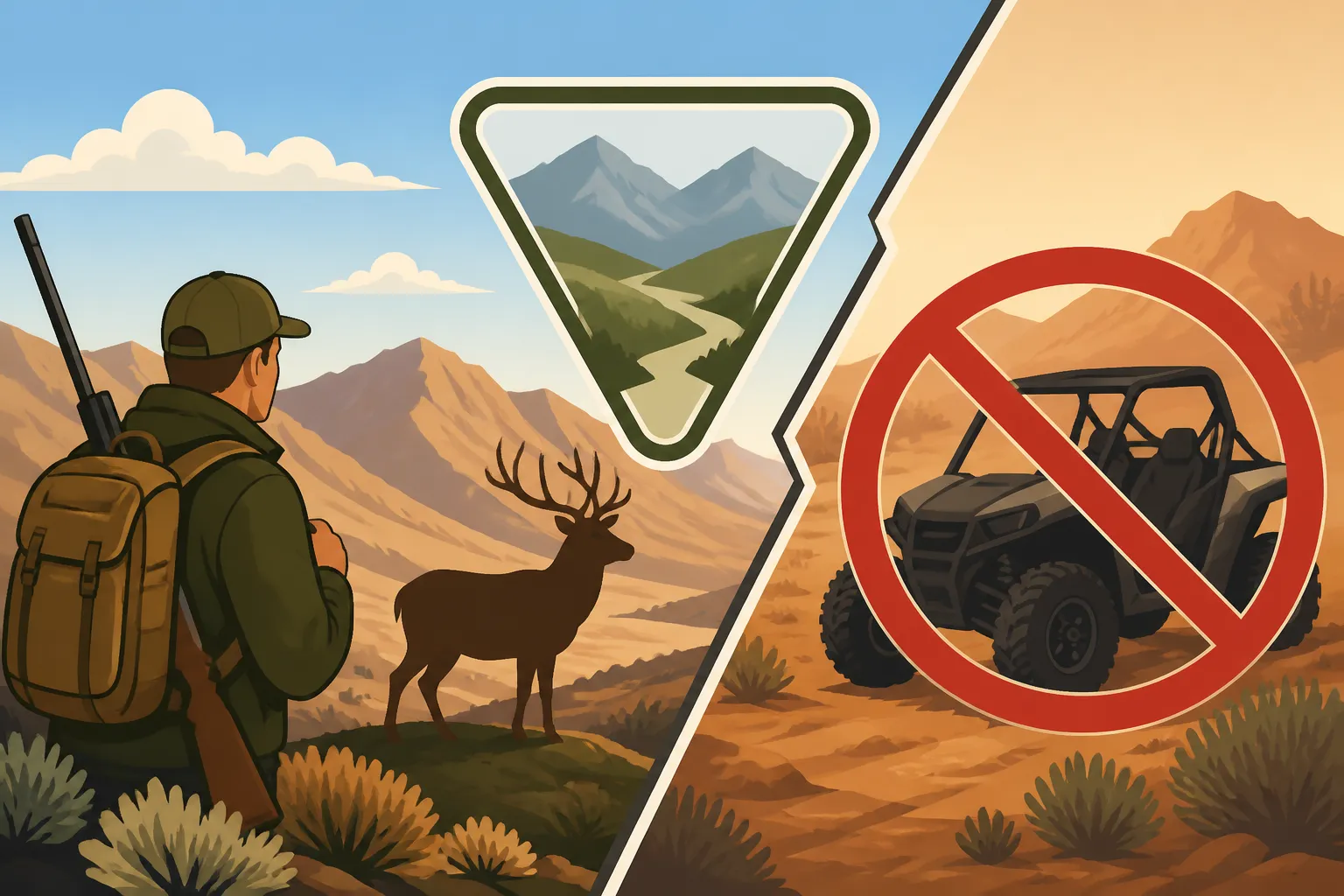
Motorized Travel: This is pretty straightforward. It refers to any vehicle powered by a motor. This includes your truck, SUV, ATV, UTV, dirt bike, and even electric bikes (e-bikes) are generally considered motorized. In most WSAs, motorized travel is explicitly prohibited beyond the designated boundary or established routes that might lead to the WSA, but not through it. This means you’ll be parking your vehicle outside the WSA boundary and proceeding on foot or by other non-motorized means. This restriction is the most significant hurdle for many hunters, especially those accustomed to covering vast distances by vehicle in other parts of Nevada's public land. You can find more detail on this in Motorized Travel Rules on Nevada Public Land.
-
Mechanized Travel: This term often covers anything that isn't motorized but still provides a mechanical advantage, such as bicycles. While not always as strictly prohibited as motorized travel in all WSAs (some might have exceptions for bikes on certain trails, though this is rare in Nevada's backcountry WSAs), the general spirit of wilderness preservation often discourages or prohibits them. For hunting purposes, it's safer to assume that bicycles are also not allowed in WSAs if the goal is primitive recreation and solitude. For hunters, this means your mountain bike, which might be a lifesaver for accessing remote chukar spots or Reading Fresh Elk Sign in Thin Timber in other areas, is likely off-limits here. Your best bet is always shanks' mare.
The intent is to ensure that the experience within these areas is one of self-reliance and minimal impact, preserving the natural soundscape and character. This means a significant shift in your hunting plan if your unit has large WSA components.
Common Scenarios and Practical Implications for Hunters
Let's talk about what this actually looks like when you're out there.
Scenario 1: Parking and Access. You've e-scouted a fantastic looking basin within a WSA. You drive to the nearest legal access point, which might be a county road, a BLM-maintained dirt road, or a primitive two-track that stops abruptly at the WSA boundary. From that point, you're on foot. This means your hike into prime hunting country could be several miles before you even start looking for game. For a mule deer hunt, this might mean a very early start to Preparing Physically for Long Glassing Days, packing enough water, and knowing that anything you harvest will need to be packed out the same way you came in. Packing an Animal Out of Roadless Country becomes a critical skill here, often requiring multiple trips or a carefully planned approach with a solid pack frame.
Scenario 2: Game Retrieval. This is perhaps the most challenging aspect of hunting in a WSA. Let's say you've put in the miles, found a magnificent bull elk, and successfully harvested it deep within a WSA. Congratulations! Now comes the real work. You cannot drive your truck or ATV in to retrieve it. You are legally required to pack out all edible meat and evidence of sex. This could mean boning out an entire animal and making several arduous trips with heavy loads over rugged terrain. This is why advance planning for these areas is so important. Consider the distance, the elevation changes, and the time of year. A late-season elk in December is one thing; an August archery deer hunt in a WSA demands meticulous Heat Management on an August Archery Hunt and rapid meat cooling.
Scenario 3: Camp Setup. Dispersed camping is generally allowed on BLM land, and often within WSAs, but again, without vehicle support. This means your camp will need to be backpacking-style, carrying everything on your back. If you plan an overnight trip, you'll need to haul your tent, sleeping gear, food, and water (or filtration system) in on foot. This adds another layer of logistical complexity and physical demand to your hunt. It forces a minimalist approach, focusing on essential gear and lightweight solutions.
| Type of Travel/Activity | Generally Allowed in WSAs | Generally NOT Allowed in WSAs |
|---|---|---|
| Foot Travel | Yes | No Exceptions |
| Horseback/Pack Stock | Yes (check specific rules) | No (sometimes restricted to trails) |
| Bicycles | No (usually considered mechanized) | Yes (on designated routes only, rarely in WSAs) |
| ATVs/UTVs | No | Yes |
| Trucks/SUVs | No | Yes |
| Motorized Game Retrieval | No | Yes |
| Camp Trailers | No (must be parked outside) | Yes |
| Permanent Structures | No | Yes |
This table provides a general overview. Always consult the specific land management agency (e.g., BLM field office) and your Nevada hunt regulations for the most accurate and up-to-date information for the specific WSA you plan to hunt.
Hunting Strategies for WSA Terrain: Adapting Your Approach
Hunting in Wilderness Study Areas demands a different mindset and skillset than cruising dusty two-tracks on BLM ground. It's about embracing the challenge and adapting your strategies to the unique opportunities and limitations these remote areas present.
Gear and Physical Preparation for Roadless Country
The biggest change when hunting a WSA is the reliance on your own two feet and the gear you can carry. This isn't just a suggestion; it's a necessity.
- Physical Conditioning: This isn't the time to skimp on your fitness. Long hikes, often with significant elevation gain and loss, are the norm. And remember, you'll be doing those hikes with a heavy pack on the way out if you're successful. Start your physical prep months in advance. Hiking with a weighted pack, inclines, and core strength exercises will pay dividends. Think of it as preparing for a marathon, not a sprint. The less you struggle with the approach, the more energy you'll have to hunt effectively.
- Lightweight, Durable Gear: Every ounce counts when it's on your back. Invest in lightweight backpacking tents, sleeping bags, and cooking systems. Your optics need to be top-notch but also manageable in weight; a high-quality pair of Binocular Size That Survives an All-Day Session and a spotter on a lightweight tripod are often critical for Glassing Nevada's Basin and Range for Mule Deer. Don't forget proper footwear: Choosing Boots for Sharp Volcanic Rock is essential to prevent blisters and ensure stability over uneven terrain.
- Water Management: Nevada is dry. Period. When you're miles from your vehicle, natural water sources can be nonexistent or unreliable. You need to carry enough water for your trip, plus a reliable filtration system or purification tablets. Water You Must Carry on a Desert Day Hunt isn't a suggestion, it's a lifeline. Hunting Water in Nevada's Driest Country also means knowing how to identify and use guzzlers or natural springs, which might require extra planning and mapping before you even leave home.
- Navigation Tools: You absolutely need reliable navigation. GPS devices, satellite communicators, and mapping apps like
onX Huntare non-negotiable. Download offline maps for your entire hunt unit, as cell service will likely be non-existent. Knowing your precise location relative to WSA boundaries, your vehicle, and potential game is critical. Satellite Messenger Use in Remote Country is highly recommended for safety.
Adapting Your Hunting Tactics for Primitive Areas
Since you can't rely on vehicles to cover ground or retrieve game, your hunting tactics will naturally evolve.
- Slow Down and Focus on Foot Travel: Forget covering dozens of miles in a day with your truck. In a WSA, you'll cover ground much slower, but often more thoroughly. This means you might focus on a smaller, more manageable area, and spend more time still-hunting, glassing, and stalking. Learn to read the terrain, use draws and ridges for concealment, and Playing Thermals on a Rimrock Stalk.
- Extended Glassing Sessions: With vast, open country characteristic of much of Nevada's Basin and Range, glassing becomes even more crucial. Instead of driving to new glassing points every hour, you might hike to one strategic vantage point and spend half a day or more systematically breaking down the landscape. The Grid Glassing Method, Step by Step is an excellent technique for this. A good Spotting Scope Power for Open Country will help you identify animals at incredible distances, saving you precious miles of walking.
- Strategize Game Retrieval: Before you even leave your truck, have a plan for game retrieval. This might mean only taking shots relatively close to the boundary, or preparing for an overnight stay if you get an animal down late in the day. Consider if you'll be hunting solo or with a partner. A hunting partner can drastically reduce the burden of packing out meat and increase safety.
- Embrace the Solitude: One of the best "advantages" of a WSA is the reduced pressure. Many hunters shy away from these areas precisely because of the vehicle restrictions. This means if you're willing to put in the work, you often find less pressured animals and a true wilderness experience. This solitude is one of the key benefits these areas offer, providing a genuine sense of escape and connection to the wild. You might have an entire basin to yourself, which is a rare and beautiful thing in today's hunting world.
Finding WSAs and Planning Your Hunt
The key to successfully hunting in Wilderness Study Areas lies in meticulous research and planning. You don't want to stumble into one by accident; you want to deliberately integrate them into your hunt strategy.
Utilizing Mapping Tools and Resources
Modern mapping technology has made planning for WSAs infinitely easier than it used to be.
- Digital Mapping Apps (onX Hunt, etc.): This is your most powerful tool. Applications like
onX Huntclearly delineate WSA boundaries with specific overlays. They show public and private land, topo lines, and often roads and trails. You can toggle on the "Wilderness" or "WSA" layers to see exactly where these areas are. This allows you to identify access points, potential parking spots, and visualize the terrain you'll need to cover on foot. Before you leave home, identify all WSAs within your chosen unit. - Government Websites: The BLM website is another invaluable resource. They often have maps and management plans specific to individual WSAs or field offices. These can provide very detailed information on permissible activities, exact boundary descriptions, and any specific quirks of that particular area. A quick search for "Nevada unit boundary maps" will often lead you to resources that illustrate these areas.
- GoHunt's Unit Profiles: For those using
GoHuntfor their draw research, many unit profiles will mention the presence of WSAs or designated Wilderness and how they might affect huntability or access. This information, combined with detailed draw odds, helps you make informed decisions about whether a unit with significant WSA acreage aligns with your hunting style and physical capabilities. Understanding these elements beforehand can greatly influence your success.
When using any map, especially in Nevada, remember that digital maps are excellent, but having a paper topo map as a backup is always a good idea, especially in remote areas where electronics can fail. Mark your WSA boundaries on it so you have a visual reference that doesn't rely on battery life.
Incorporating WSAs into Your E-Scouting Routine
E-scouting is already a critical step for any Nevada hunt, but it becomes even more vital when WSAs are involved.
- Identify Access Corridors: Use your mapping software to find every road that approaches or skirts the WSA boundary. Look for pull-offs, old mining cuts, or faint two-tracks that might serve as a parking spot. Remember, you're looking for legal access that stops before the WSA. Zoom in to see the terrain leading into the WSA from these access points. Are there steep canyons, dense timber, or open sage flats? This will dictate your approach.
- Analyze Terrain for Game Movement: Just like any other public land, game animals don't recognize WSA boundaries. They use the terrain, water, and forage. Look for traditional migration corridors, bedding areas on north-facing slopes, or pockets of prime forage within the WSA. Identify potential water sources like springs or small seeps using topo maps or Reading Water Sources Before an August Hunt data. These can be magnets for deer and elk, especially in arid regions.
- Plan Your Foot Routes: Once you've identified potential game habitat, trace out possible hiking routes on your map. Estimate distances and elevation changes. Consider where you might establish a spike camp if an overnight trip is feasible. Pay attention to natural features that could act as navigation aids or hide your approach, such as large ridges or extensive draws. This helps you mentally prepare for the physical demands and strategize your daily movements. How Far to Stalk a Bedded Mule Deer becomes a much more involved calculation when every step is earned.
The Trade-Off: Challenge vs. Reward
Hunting WSAs is a trade-off. You sacrifice vehicle access and convenience for something arguably more profound: a truly wild experience. The challenges are real—the long hikes, the difficult game retrieval, the need for robust self-sufficiency. But the rewards can be immense.
- Less Pressure: As mentioned, many hunters opt for easier access. This means WSAs often hold less pressured animals, which can be less skittish and more predictable. Finding solitude on public land in prime hunting units is becoming increasingly rare, and WSAs offer that in spades.
- True Wilderness Experience: There's a deep satisfaction that comes from earning your animal entirely on foot in a wild, roadless landscape. It strips away the distractions and connects you more intimately with the hunt and the environment. This is the kind of experience that builds character and creates lasting memories, the kind we write about around the campfire.
- Trophy Potential: Less pressure can often translate to older, more mature animals. If you're targeting a trophy-class mule deer or bull elk, putting in the effort to access deep into a WSA might give you an edge. Many record-book animals come from country that requires significant boots-on-the-ground effort.
Ultimately, deciding whether to hunt a WSA comes down to your personal hunting style, physical condition, and desire for a more challenging, primitive experience. For those willing to put in the work, these areas represent some of Nevada's most pristine and rewarding hunting opportunities.
Respecting the Wilderness Ethic: Why These Rules Matter
It’s easy to focus on the restrictions of Wilderness Study Areas and feel a bit miffed about the extra effort they demand. But stepping back to understand the "why" behind these rules can transform that frustration into appreciation. These regulations aren't arbitrary; they serve a vital purpose in conserving a unique and irreplaceable part of our natural heritage.
Preserving Solitude and Natural Character
The core of the wilderness ethic, and thus the reason for WSA regulations, is the preservation of solitude and the natural character of the land. When you enter a WSA, you're stepping into a place where the sights and sounds of civilization are intentionally minimized. This means no rumbling ATVs, no permanent structures, and no signs of extensive human development.
For a hunter, this translates to an opportunity to experience nature on its own terms. The quiet of a WSA isn't just a pleasant amenity; it's a fundamental part of the ecosystem. Animals are less accustomed to the noise and intrusion of vehicles, which can alter their behavior, feeding patterns, and even their range. By limiting motorized access, we allow wildlife to exist in a more natural state, and we give ourselves the chance to observe and interact with that wildlife without the constant hum of an engine. This creates a hunting experience that is far more immersive and, dare I say, spiritual. It's about hearing the wind, the crunch of your boots on volcanic rock, and the distant call of an elk, rather than the roar of a UTV. This commitment to maintaining the natural world is a gift to future generations of hunters and outdoor enthusiasts.
Minimizing Human Impact on Fragile Ecosystems
Nevada's desert and mountain ecosystems, while seemingly rugged, can be surprisingly fragile. Off-road vehicle travel, even on seemingly harmless two-tracks, can lead to soil erosion, damage sensitive vegetation, and disturb delicate biological crusts that take decades to form. In areas with high rainfall or specific soil types, a single vehicle track can become a permanent gully, scarring the landscape for years.
WSAs aim to prevent this kind of damage. The "roadless" requirement isn't just about aesthetics; it's about protecting the very integrity of the ecosystem. By restricting vehicles, we minimize soil compaction, prevent the spread of invasive species often carried on tires, and reduce direct disturbance to critical wildlife habitats like fawning grounds or wintering areas. This stewardship is vital for the long-term health of the game populations we cherish and the landscapes they call home. When you consider the effort put into projects like Water Development Projects Built for Wildlife, it makes sense to protect the surrounding habitat from unnecessary damage.
Ensuring Future Opportunities for Primitive Recreation
Finally, these rules are about the future. By managing WSAs with a wilderness ethic, we are ensuring that these special places will continue to exist for future generations who seek primitive, unmechanized recreation. This isn't just for hunters; it's for hikers, backpackers, wildlife watchers, and anyone who cherishes the profound experience of truly wild country.
As human populations grow and development expands, places where one can find true solitude and challenge become increasingly rare. WSAs are designated to safeguard these dwindling opportunities. For hunters, this means that the effort you put in today to hike deep into a WSA is an investment in the future, preserving a type of hunting experience that is becoming harder and harder to find. It's about ensuring that the option for a true backcountry adventure, where you rely solely on your own two feet and wits, remains open for our children and grandchildren. Think of the stories they'll tell about Packing a Buck Out of Roadless Country or finding Bugling Bulls in Nevada's Northern Mountains miles from the nearest road, just like we do today.
Disclaimer
This article is for general informational purposes only and does not constitute professional advice. Laws, prices and regulations vary by location and change over time. Consult a qualified professional for guidance on your specific situation.