Quail Species Found in Nevada
If you've spent any time at all looking for upland birds in the Silver State, you know that Nevada's diverse landscapes offer some truly unique quail hunting opportunities. From the sun-baked southern deserts to the high-elevation pine forests, finding and understanding the different species of quail can feel like a puzzle, but this guide will help you understand where to find these elusive birds and how to pursue them successfully.
Understanding Nevada's Quail Diversity: A Hunter's Guide
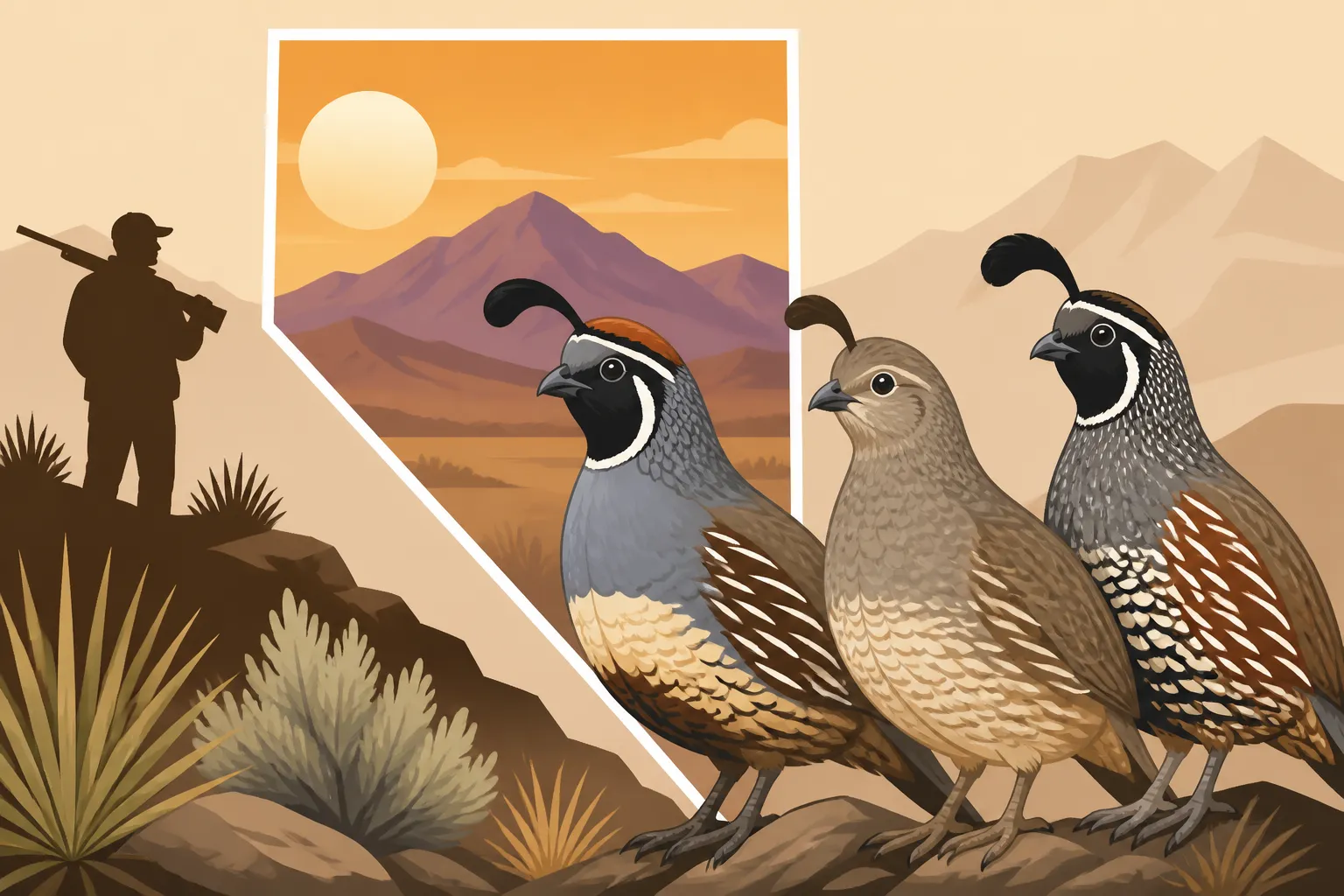
Nevada isn't just about mule deer and elk; it's a hidden gem for upland bird hunters, especially those chasing quail. What often surprises newcomers is the sheer diversity within the state's borders. We're not talking about just one type of quail; Nevada is home to three distinct species, each with its own preferred habitat, behavioral quirks, and, frankly, different challenges for the hunter. Understanding these differences is your first step toward a successful hunt, transforming a hopeful walk into a targeted pursuit.
California Quail: The Valley Dweller
When most folks think of quail, especially out West, the California Quail is often what comes to mind. These vibrant birds, with their distinctive topknots and "chi-ca-go" call, are widely distributed throughout Nevada, particularly in the western and northern parts of the state. You'll find them thriving in brushy riparian corridors along rivers and streams, in agricultural areas, and in pockets of dense cover around human habitation. They absolutely love dense cover, like thick willows, Russian olive, or even overgrown backyard hedges, where they can escape predators and roost safely at night.
California Quail are social creatures, often found in large coveys, especially outside of the breeding season. A good covey might consist of dozens of birds, making for exhilarating flushes when you hit them just right. However, they're not always easy targets. They're notorious for holding tight in thick cover, then exploding into flight, scattering in every direction. If you manage to flush a covey, mark where they land – these birds will often run along the ground, regrouping quickly, giving you a second or even third opportunity if you work the area methodically. Don't be surprised to find them concentrated around water sources in drier areas, especially in the late season. For more insights on their preferred areas, check out California Quail on Nevada Farm Ground.
Gambel's Quail: King of the Desert Wash
Heading south into the hotter, more arid regions of Nevada, you'll encounter the Gambel's Quail. These striking birds, sporting a comma-shaped topknot and a slightly more robust build than their California cousins, are perfectly adapted to the desert environment. Their range primarily covers southern Nevada, extending into the central and western parts where suitable desert habitat exists. Think creosote flats, mesquite bosques, and especially the dense, thorny tangles found in desert washes and canyons. Cactus is often their best friend, providing both food and impenetrable escape cover.
Hunting Gambel's Quail is an entirely different ballgame. These birds are famous, or infamous, for their incredible ability to run. When pressured, a covey of Gambel's will often choose to sprint ahead through the sparse desert vegetation rather than fly, leading hunters on a frustrating chase. To counter this, many hunters try to "head them off" by circling ahead, or push them into areas where flying is their only option, like a steep-sided wash. Just like California quail, water is crucial for Gambel's, especially in the harsh desert environment, so focusing your efforts around springs, guzzlers, and temporary puddles after a rain can be incredibly effective. For more about their specific haunts, see Where Gambel's Quail Live in the South.
Mountain Quail: The High Country Elusive
The Mountain Quail is perhaps the most enigmatic and least encountered of Nevada's quail species. These are truly magnificent birds, larger than their lowland counterparts, with a rich chestnut coloration and a long, straight head plume that makes them unmistakable. As their name suggests, they inhabit higher elevations, typically in the mountain ranges of northern and eastern Nevada. You'll find them in relatively dense timber and brushy hillsides, often around aspen, pine, and fir forests, usually near a reliable water source. Their calls are a series of loud, rising whistles that can carry a good distance through the mountains.
Hunting Mountain Quail is a test of endurance and perseverance. They live in steeper, more rugged terrain, and their populations are generally less dense than California or Gambel's quail. When flushed, they typically fly downhill, often for considerable distances, making follow-up shots tricky. They also tend to be found in smaller coveys, often just a few birds, which means covering a lot of ground to find them. These birds are a true trophy for the upland hunter, not just for their beauty but for the effort required to pursue them in their demanding habitat. Exploring areas known for their presence, such as specific canyons or ridges within national forests, can increase your odds. Discover more about their habitat in Mountain Quail in Nevada's Ranges.
Essential Tactics for Chasing Nevada Quail
Quail hunting in Nevada is rarely a walk in the park. Each species presents its own set of challenges, often dictated by the rugged terrain and the birds' survival instincts. From long hikes in the desert heat to scrambling up steep mountainsides, being prepared with the right tactics and gear is paramount. It’s a hunt that rewards effort, observation, and often, the companionship of a good bird dog.
Scouting and Location Strategies
The key to finding any quail in Nevada, especially the more elusive ones, is thorough scouting. This isn't just a pre-season activity; it's an ongoing process throughout your hunt. Start long before the season by utilizing mapping tools. Services like GoHunt allow you to scrutinize satellite imagery for promising habitats: look for those dense riparian zones for California quail, map out the intricate network of desert washes and mesquite thickets for Gambel's, and identify steep, brushy slopes in higher elevations for Mountain quail. Pay close attention to water sources—springs, guzzlers, and even stock tanks—as these are magnets for all quail species, particularly in drier units. Understanding Hunting Water in Nevada's Driest Country is a critical skill for any desert hunter.
E-scouting can save you countless miles of walking, helping you narrow down areas before you ever set foot on the ground. Once you're in the field, look for sign: tracks in dusty washes, droppings under roosting trees, and feathers near feeding areas. Listening for their distinctive calls at dawn and dusk is also incredibly effective. California quail often give a loud "chi-ca-go" call, Gambel's have a more excited "chuck-chuck-chuck-churrr," and Mountain quail emit a series of long, mournful whistles. These sounds are often the first clue that birds are in the vicinity. Having a strategy for E-Scouting a Nevada Unit Before the Season can significantly boost your success.
Hunting Techniques for Each Species
The way you approach each quail species needs to be tailored to their behavior and habitat.
-
California Quail: These birds love dense cover. The most effective technique is to work through thickets and brushy areas methodically, often with one or more hunters acting as "pushers" and others strategically placed to intercept flushed birds. If you have a good bird dog, this is where they truly shine, sniffing out coveys holding tight and retrieving downed birds in the thick stuff. After a covey flushes, mark where they land and then slowly work that area, as scattered birds will often hold tighter, offering singles or small groups.
-
Gambel's Quail: The biggest challenge here is their tendency to run. To counter this, many hunters try to get ahead of running coveys by circling or "pinching" them against a natural barrier like a steep bank or a dense tangle of catclaw acacia. Another effective tactic is to push them hard until they finally decide to fly, often because they've run out of suitable ground cover. Dogs are incredibly helpful here, not just for finding birds but for holding them long enough for a shot. Be prepared for a lot of walking, often through difficult terrain and prickly vegetation.
-
Mountain Quail: These are typically found in smaller groups and in rugged, steep country. The best approach is often a slow, quiet still-hunt through likely looking habitat, paying close attention to thick brush and pockets of timber. When a covey flushes, they almost always fly downhill, often at high speed. Be ready for quick shots. Following a flushed covey can be challenging due to the terrain, so making the most of initial opportunities is crucial. These hunts are physically demanding, so proper conditioning and gear are essential. For general preparation, consider Preparing Physically for Long Glassing Days.
Gear Considerations for Quail Hunters
Regardless of the species you're pursuing, certain gear is non-negotiable for a successful and safe Nevada quail hunt.
- Footwear: Comfortable, durable hiking boots are paramount. You'll be covering miles, often on uneven, rocky, or thorny terrain. Look for boots with good ankle support and sturdy soles that can withstand sharp volcanic rock or embedded cactus spines.
- Clothing: Layering is key, especially when hunting in the desert or mountains where temperatures can swing wildly from morning to afternoon. Blaze orange isn't always legally required for upland birds in Nevada but it's always a good idea for safety, especially if other hunters are in the area. Lightweight, breathable, and tear-resistant pants are a must, particularly for pushing through thick brush.
- Water: This cannot be stressed enough. Whether you're in the scorching southern desert or the dryer northern ranges, carrying plenty of water is essential. A hydration pack is often more convenient than bottles. For desert hunts, double your estimates for water. Understand Water You Must Carry on a Desert Day Hunt.
- Shotgun & Ammunition: A fast-handling shotgun, typically a 12 or 20 gauge, is ideal for the quick, often unpredictable shots presented by quail. Light game loads (7.5 or 8 shot) are standard. Carry plenty of shells; you'll likely shoot more than you expect.
- Bird Vest/Pack: A comfortable vest with ample game pockets and shell loops is indispensable. Many modern vests also have hydration sleeves.
- GPS/Mapping Device: A reliable GPS unit or a smartphone with a mapping app (like GoHunt) is crucial for navigating often featureless terrain, marking covey flushes, and ensuring you know where you are in relation to public/private land boundaries. Reviewing Reading a BLM Surface Management Map can help you get the most out of your mapping tools.
Navigating Nevada's Quail Regulations and Conservation
Before you even think about loading your shotgun, it's vital to be intimately familiar with Nevada's hunting regulations. These rules are in place not only for safety but also to ensure the sustainability of our precious quail populations for generations to come. Like all hunting, pursuing quail here requires a commitment to ethical practices and an understanding of the state's conservation efforts.
Season Dates and Bag Limits
Nevada's upland game bird seasons, including quail, typically open in the fall and can run through the winter months. However, the exact dates can shift slightly year to year, and bag limits are carefully set to reflect population health. For instance, the general statewide daily bag limit for California and Gambel's quail might be fairly generous, but Mountain quail, due to their lower populations, often have a much more restrictive limit. It's absolutely critical to consult the most current Nevada Department of Wildlife (NDOW) regulations booklet or their website before you head out. Never rely on last year's information. Getting caught with too many birds, or hunting outside the legal season, can result in hefty fines and loss of privileges. A quick check will show you the specifics of Nevada Quail Bag Limits by Species.
The longer season allows for plenty of opportunity, but it also means hunters need to be aware of changing conditions. Early season hunts can be very warm, especially in southern Nevada, demanding extra vigilance regarding hydration and proper game care. Later in the season, colder temperatures and even snow can concentrate birds, but also make access more challenging.
Licensing Requirements
To legally hunt quail in Nevada, you'll need to purchase a valid Nevada hunting license. Non-residents will need a non-resident hunting license, and possibly a Nevada Upland Game Bird Stamp, depending on the current regulations. Youth hunters have specific requirements as well, which are always clearly outlined by NDOW. It's your responsibility to ensure all your licensing is up to date and in your possession while hunting. NDOW's online portal, which you might use to review draw odds or apply for big game, is also the place to purchase your upland game licenses. Before applying for any big game draws, you'll need to acquire Nevada's Combination License Comes Before Any Tag for almost all hunting activities.
Always keep your physical or digital license readily accessible while afield. Game wardens conduct regular checks, and being prepared makes the process smooth. Remember, these license fees directly contribute to wildlife management, habitat restoration, and conservation efforts across the state, benefiting all wildlife and public land users.
Habitat and Conservation Efforts
Nevada's quail populations, like all wildlife, are intrinsically linked to the health of their habitat. California quail thrive where there's dense cover and water, often benefiting from agricultural runoff and riparian areas. Gambel's quail depend on the unique ecosystems of desert washes and canyons, where mesquite, palo verde, and various cacti provide food and shelter. Mountain quail, in turn, rely on healthy, diverse high-elevation brush and timber.
Conservation efforts in Nevada are focused on maintaining and enhancing these critical habitats. This includes everything from protecting riparian corridors from degradation to managing invasive species like cheatgrass, which can alter fire regimes and reduce native forage. NDOW, often in partnership with organizations like GoHunt and various local conservation groups, works on projects such as installing and maintaining "guzzlers" – artificial watering devices – in arid regions to provide crucial water for all desert wildlife, including quail. Understanding Water Development Projects Built for Wildlife highlights the ongoing commitment to sustaining these populations. As hunters, we play a direct role in this through our license fees and by practicing ethical hunting, leaving the habitat as we found it, and respecting private land and other users.
It's a continuous balance, especially in a state like Nevada where rapid development and climate fluctuations can put pressure on natural resources. By staying informed, adhering to regulations, and supporting conservation, we ensure that the thrill of a covey flush remains a cherished part of Nevada's outdoor heritage.
| Quail Species | Primary Habitat | Key Characteristics | Hunting Challenge |
|---|---|---|---|
| California Quail | Riparian zones, agricultural fringes, dense brush | Prominent topknot, large coveys, distinctive "chi-ca-go" call | Holding tight, explosive flushes, quick regrouping |
| Gambel's Quail | Desert washes, mesquite thickets, cactus | Comma-shaped topknot, desert-adapted, "chuck-chuck-churrr" call | Extreme running, evasiveness in sparse cover, desert heat |
| Mountain Quail | High elevation timber, steep brushy slopes | Long straight plume, larger body, whistling call | Rugged terrain, smaller coveys, flying downhill long distances |
Disclaimer
This article is for general informational purposes only and does not constitute professional advice. Laws, prices and regulations vary by location and change over time. Consult a qualified professional for guidance on your specific situation.