BLM Ground Is Where Most Nevada Hunting Happens
For many hunters, the vastness of Nevada can feel like both an incredible opportunity and an overwhelming challenge. When you hear "public land," it often conjures images of boundless wilderness, but actually navigating where you can hunt, how you can get there, and what rules apply can be a dizzying prospect. This guide aims to clear up some of that confusion, focusing specifically on how to successfully find, access, and hunt the extensive Bureau of Land Management (BLM) acreage that makes up the lion's share of Nevada's hunting landscape.
Understanding Nevada's Public Land Landscape
Nevada truly is the Silver State, not just for its mining history, but for its silver lining of public land. It's unique in the Lower 48 for having such an incredibly high percentage of federally owned land, and understanding this is the first step to unlocking its hunting potential. The sheer scale can be daunting, but with a bit of knowledge, you'll see it as a mosaic of opportunity.
The Vastness of BLM Acreage in Nevada
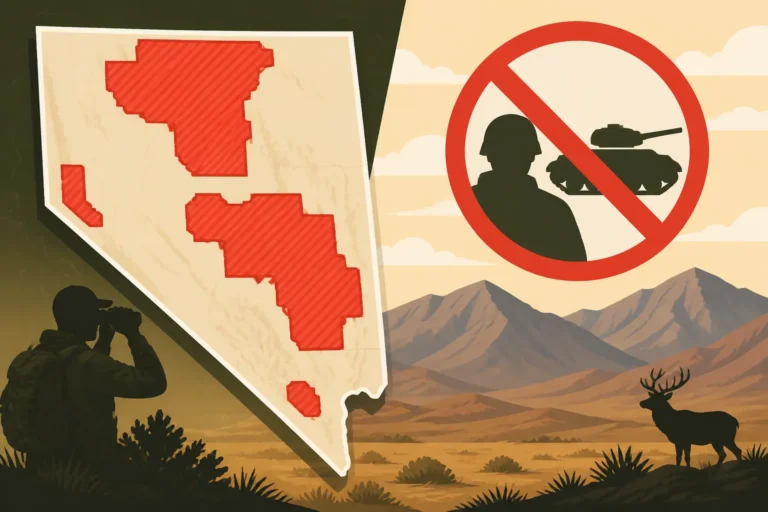
Let's just get this out of the way: if you're hunting in Nevada, you're almost certainly going to be spending a lot of time on BLM ground. The Bureau of Land Management oversees the majority of Nevada's public land, which is a staggering amount. We're talking millions upon millions of acres, far more than any other agency. This isn't just a few isolated parcels; it encompasses entire mountain ranges, sagebrush basins, and high desert plateaus. For the hunter, this means immense possibility for everything from trophy mule deer and elk to chukar and coyotes. But with that vastness comes the responsibility of understanding the unique characteristics of this land and how to operate within its framework. It's not all the same, and knowing the nuances can make or break a hunt. Getting a handle on BLM Acreage Across Nevada is crucial.
The sheer volume of BLM land is what defines hunting in Nevada. Unlike states with large national forests or state-owned parcels, Nevada's public hunting opportunities are predominantly found on land managed by the BLM. This landscape is characterized by its open, often sparsely vegetated terrain, with mountain ranges rising abruptly from expansive valleys. This means that successful hunting here often revolves around glassing vast distances, understanding the subtle movements of game across open country, and being prepared for extreme weather conditions that can swing wildly from scorching heat to bitter cold, sometimes within the same day. It's a land of big country and often, big animals, for those willing to put in the work to find them.
Distinguishing BLM from Other Public Lands
While BLM land dominates, it's not the only type of public land out there. Nevada also has National Forests, National Wildlife Refuges, State Wildlife Management Areas, and even some state-owned lands. Each of these can have slightly different rules and regulations regarding hunting, vehicle access, camping, and even specific weapon types. It's absolutely critical to know what type of land you're on at all times. For example, National Forests, like portions of the Humboldt-Toiyabe, might offer more timbered cover and different road systems than the vast, open sagebrush flats of BLM land. National Wildlife Refuges, while often offering great habitat, frequently have specific, limited hunting seasons or require special permits beyond your state tag.
The key takeaway here is that "public land" isn't a monolithic entity. While the general principle of access often applies, the specifics can vary significantly. A good mapping tool can help you discern these boundaries clearly. Understanding How Much of Nevada Is Public Land overall is a good starting point, but then you need to drill down into the specifics. You might find a great glassing knob that's on BLM, but the canyon bottom where you expect to find bedded deer is actually part of a small state park with no hunting allowed. Always double-check your maps and the current regulations for the specific land management agency that governs the area you intend to hunt. This due diligence can save you from an accidental trespass or a run-in with a game warden.
Identifying and Accessing BLM Land for Hunting
Finding BLM land is one thing, but understanding its boundaries, access points, and features is another. In a state where private parcels can often be checkerboarded within public areas, having the right tools and knowledge is non-negotiable for any hunter.
Using Digital Mapping Tools like onX Hunt
Forget those old paper maps that always seem to be outdated or crumble at the crease. In today's hunting world, digital mapping applications are your best friend, and onX Hunt is practically standard issue for navigating Nevada's public lands. This app, available on your smartphone or tablet, overlays land ownership data directly onto satellite imagery or topographic maps. You can instantly see if you're on BLM, National Forest, private ground, or even a tribal reservation. This capability is invaluable in Nevada, where land ownership can be notoriously complex, especially around ranching operations or historical mining claims.
What makes onX Hunt so powerful for BLM hunting is not just the colored land ownership layers, but the ability to download maps for offline use (crucial in Nevada's vast cell-service-free zones), mark waypoints for water sources, old two-tracks, or potential ambush points, and track your movement in real-time. Before you even leave home, you can spend hours e-scouting a unit, identifying likely bedding areas, migration corridors, and potential access routes. This allows you to plan your approach with confidence, knowing exactly where public access begins and ends, and avoiding accidental trespass. Being able to visualize the terrain and its ownership is a game-changer when you're targeting big game across a massive BLM unit. Remember, E-Scouting a Nevada Unit Before the Season can save you days of boots-on-the-ground searching.
Reading Traditional BLM Surface Management Maps
While digital tools are powerful, never underestimate the value of understanding traditional maps. BLM Surface Management Maps, sometimes called quadrangle maps or visitor maps, offer a different kind of detail that complements your digital resources. These maps provide a broad overview of land status, topography, roads, trails, and water features. They are physical documents, so they never run out of battery, making them an essential backup. Learning to interpret the symbols, contour lines, and coloration on these maps will deepen your understanding of the terrain.
These maps often highlight designated routes, primitive roads, and areas with specific restrictions that might not be immediately obvious on a digital app's basic overlay. For instance, an old two-track might be clearly marked as closed or designated for non-motorized use on a paper map, which could prevent you from driving down a dead-end road only to have to turn around. They also offer a fantastic way to grasp the macro-level layout of a unit and how different features connect across miles of open country. Knowing how to read a Reading a BLM Surface Management Map and pairing it with your digital app provides a robust navigational strategy. Always have a physical map and compass, even if your phone is fully charged.
Navigating Landlocked Public Parcels
One of the frustrating realities of hunting certain parts of the West, and Nevada is no exception, is encountering "landlocked" public land. These are parcels of BLM or other public ground that are completely surrounded by private land, with no legal public access route. You might see a huge block of prime public hunting ground on your map, only to find a locked gate or "No Trespassing" signs when you try to reach it. This is a common point of contention and a real headache for hunters.
Successfully navigating these areas requires careful planning and, sometimes, direct communication. Before heading out, scrutinize your maps for these situations. Sometimes, what looks like a landlocked parcel might have a tiny sliver of public road or a designated easement you can use, but you have to know where to look. In other cases, the only way to access these parcels is by securing permission from the private landowner to cross their property. This isn't always easy, and it requires courtesy and respect. Always ask for permission well in advance, and be prepared for a "no." Understanding the rules around Crossing Private Ground to Reach Public is essential to avoid legal issues and maintain good hunter-landowner relations. Sometimes, a long walk is the only legal option, or you might have to shift your hunting plans to a different area with clearer access.
Motorized Travel and Access Rules on BLM Ground
The sheer size of Nevada's BLM land often necessitates vehicle travel to get to hunting areas. However, this isn't a free-for-all. Strict regulations are in place to protect the fragile desert environment and ensure sustainable access for all users. Understanding these rules is critical to avoid fines, damage to your vehicle, or harm to the landscape.
Understanding Designated Routes and OHV Use
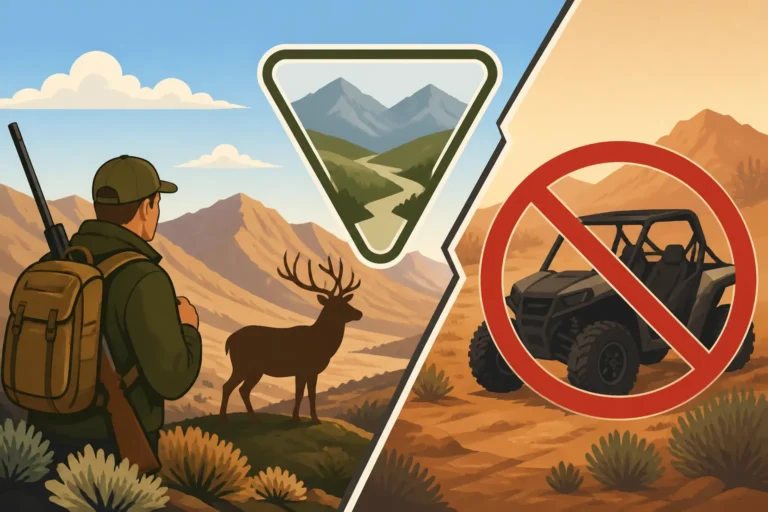
On much of Nevada's BLM land, motorized travel is restricted to "designated routes." This means you can't just drive wherever you see a two-track or think you can forge a new path across the sagebrush. Designated routes are typically marked on maps (both digital and traditional) and sometimes with signs on the ground. These routes are often existing roads, old mining trails, or administrative tracks that have been deemed appropriate for vehicle use. The intent is to prevent the proliferation of new roads, reduce habitat fragmentation, and minimize soil erosion.
The rules around off-highway vehicle (OHV) use, including ATVs, UTVs, and dirt bikes, are also stringent. While these vehicles can be incredibly useful for covering ground and accessing remote areas, they too must stay on designated routes. Straying off-road, even for a short distance, can result in significant penalties. Before you head out, make sure you have the most current motor vehicle use maps for your specific hunting unit. You can often download these from the BLM's website or check them on an app like onX Hunt. This knowledge is vital, especially when you're Motorized Travel Rules on Nevada Public Land. Ignoring these rules not only risks a citation but also contributes to land degradation, which can lead to further restrictions for all hunters.
Seasonal Road Closures and Their Impact
Nevada's diverse climate means that some roads on BLM land, especially those leading into higher elevations or through sensitive riparian areas, are subject to seasonal closures. These closures are typically implemented to protect roads from damage during wet periods (when mud makes them impassable and susceptible to deep ruts) or during critical wildlife seasons, such as winter range use for deer and elk. A road that was perfectly passable in August might be locked up tight by late November.
These closures can drastically impact your hunting plans. What looked like a convenient access point or an easy retrieve route on your map could be impassable or illegally closed during your season. It's not uncommon to encounter a locked gate where you expected to drive through. Always check with the local BLM field office or the Nevada Department of Wildlife (NDOW) website for current road conditions and closure notices before your hunt. Winter range closures, in particular, are strictly enforced to minimize disturbance to stressed animals. Knowing When Nevada Road Closures Take Effect can save you a lot of wasted time and frustration, forcing you to adjust your approach or be prepared for a longer hike.
Vehicle Retrieval of Game on BLM Land
So you've successfully harvested an animal deep in a BLM unit. Now what? The desire to drive directly to your downed animal for retrieval is strong, especially with large game like elk or big mule deer. However, this is where designated route rules become particularly important. In most cases, you cannot drive off a designated route, even to retrieve game. This means that if your animal falls more than a short distance from an open, legal road, you'll be packing it out by hand, with a game cart, or on horseback.
There are very limited exceptions, and these are often specific to certain areas or require special permits (which are rare and not usually granted for individual game retrieval). Always operate under the assumption that you will have to pack your animal out to a designated route. This is why Packing an Animal Out of Roadless Country is a critical skill for Nevada hunters. Planning your approach with this in mind – hunting closer to roads or utilizing areas accessible by pack animals – can save you immense effort and potential legal trouble. Failing to adhere to these rules can not only result in fines but also damage the landscape, creating ruts and disturbing sensitive areas.
Camping and Extended Stays on BLM Land
Given the vastness and remote nature of many Nevada hunt units, camping on BLM land is often a necessity. It offers an unparalleled immersion in the landscape, but it also comes with specific responsibilities and regulations designed to protect the environment and ensure continued public access.
Dispersed Camping Regulations and Ethics
Dispersed camping, often called "boondocking" or "primitive camping," is generally allowed on most BLM land in Nevada, meaning you can set up camp virtually anywhere that isn't specifically designated as a developed campground or restricted area. This freedom is a huge draw for hunters looking to get away from crowds and set up close to their hunting grounds. However, this freedom comes with a few crucial rules and ethical considerations. Typically, there's a limit to how long you can stay in one spot (often 14 days in a 28-day period), and you must be a certain distance from developed recreation sites, water sources, and paved roads.
The "Leave No Trace" principles are paramount for dispersed camping. This means packing out everything you pack in, including all trash and human waste (which might require portable toilet systems in some areas). Campfires are often allowed, but only when fire restrictions aren't in place, and always contained within a fire pan or ring. You should park your vehicle on existing disturbed areas or durable surfaces and avoid driving off-road to create new campsites. Understanding Camping Legally on Nevada BLM Ground means being a good steward of the land, ensuring that future hunters and recreationists find the same pristine conditions you did.
Fire Restrictions and Leave No Trace Principles
Fire is a constant concern in the arid Nevada landscape, especially during the hot, dry summer and fall hunting seasons. Fire restrictions can escalate quickly, moving from "no open campfires" to "no charcoal BBQs" to "no open flame whatsoever." These restrictions are put in place for very good reasons – a single spark can devastate thousands of acres of critical wildlife habitat, destroy personal property, and endanger lives. Ignoring fire restrictions is not only illegal but deeply irresponsible.
Before every trip, check the current fire restrictions for the specific BLM district you'll be in. These are often posted on BLM and Forest Service websites, local news outlets, and at trailheads or entry points to public land. Always have a shovel and plenty of water on hand to completely extinguish any permitted fires. Beyond fire, the overall ethos of Leave No Trace means leaving your campsite and the surrounding area better than you found it. This includes picking up any litter, scattering fire ashes, and avoiding cutting live trees for firewood. Your impact, no matter how small, adds up across millions of acres.
Setting Up Basecamps for Multi-Day Hunts
For a multi-day hunting trip on BLM land, a well-planned basecamp can make all the difference. This might be a wall tent setup, a travel trailer, or a series of smaller spike camps. The advantage of BLM's dispersed camping rules is the flexibility to locate your camp strategically – perhaps close to a specific glassing knob, a water source, or a key access point into a drainage. However, consider the impact of your camp. A larger camp might mean more vehicles, more trash, and a greater footprint.
When choosing a spot, look for areas that are already somewhat disturbed or on durable surfaces. Avoid setting up directly in drainages or washouts, which can quickly become dangerous during flash floods. Consider privacy and proximity to other hunters. While Nevada's BLM is vast, some popular units or areas can see increased pressure, especially during opening weekend. A good basecamp should also be secure, allowing you to leave gear safely while you're out hunting. Proper planning, including having enough water, food, and emergency supplies for the duration of your stay, is essential for a comfortable and safe multi-day hunt in Nevada's remote backcountry.
Hunting Opportunities and Challenges on BLM
BLM land in Nevada offers a unique blend of hunting experiences, from classic sagebrush basin mule deer hunting to rugged chukar pursuits. But this distinctive landscape also brings its own set of challenges that every hunter must be prepared to face.
Big Game Hunting Across Sagebrush Basins
When most people think of big game hunting in Nevada, they picture expansive sagebrush basins – and for good reason. This is the quintessential BLM landscape and where many of the state's mule deer and pronghorn antelope roam. Elk also frequent these areas, especially in the northern and eastern parts of the state. Hunting here is often a glassing game, covering vast amounts of territory with high-quality optics. The challenge is that game animals can seem like specks in a boundless ocean of sage, and judging them at a distance is a learned skill.
The terrain might look flat from afar, but it's actually a nuanced landscape of rolling hills, dry washes, scattered junipers, and hidden pockets that can conceal animals. Why Nevada Deer Hunting Is a Glassing Game is a concept you'll quickly understand. Patience is key. You'll spend hours behind the glass, meticulously picking apart slopes and draws, waiting for movement or a tell-tale flicker of an ear. Once an animal is spotted, the real challenge begins: planning a stalk across open, often rocky ground, while contending with thermals, wind, and the animal's keen senses. The rewards, however, can be immense, as these open landscapes often produce impressive animals that have grown wary in such exposed country.
Upland Bird Hunting in BLM Canyon Systems
Beyond big game, Nevada's BLM lands offer incredible upland bird hunting, most notably for the notoriously challenging chukar partridge. These hardy birds thrive in the steep, rocky canyon systems that dissect much of the high desert BLM country. Chukar hunting is not for the faint of heart; it involves significant physical exertion, traversing steep slopes, loose scree, and rugged terrain. However, the thrill of hearing that distinctive "chuk-chuk-chukar" call echo through the canyons, and the explosion of a covey from beneath your feet, is addicting.
Other upland species like Gambel's quail (in southern Nevada's desert washes) and even Hungarian partridge (in northern agricultural fringes often bordering BLM) can also be found on BLM ground. The key to successful upland hunting on BLM is often water. Like big game, birds are tied to available moisture in this arid environment. Scouting for springs, guzzlers, and riparian corridors is critical. Having a good bird dog is almost essential for chukar, as they are expert at running and hiding. Understanding the specific habitat requirements for these birds and being prepared for a strenuous day is vital.
Water Sources and Their Importance on BLM
Water, or the lack thereof, is perhaps the single most defining feature of hunting on Nevada's BLM lands. In this arid environment, water sources act as magnets for all wildlife. From natural springs to man-made guzzlers, understanding where these vital resources are located can be the key to locating game, particularly during early-season archery hunts when temperatures are scorching. Hunting Water in Nevada's Driest Country is a tactic as old as time itself.
Many BLM units have widely dispersed water sources, and game will often travel significant distances between bedding areas and these precious watering holes. Scouting these locations, both remotely with maps and on the ground, can provide crucial intel. You might find active game trails leading to a hidden spring or fresh sign around a guzzler. However, it's also important to remember that these are shared resources, and careful consideration must be given to ethical hunting practices around them. Avoiding "sitting" water sources constantly, for instance, helps minimize disturbance to animals that rely on them for survival. Knowing How Guzzlers Concentrate Desert Game is invaluable for planning a successful hunt.
| BLM Rule Category | Typical Guidelines for Nevada Hunters | Key Considerations |
|---|---|---|
| Vehicle Use | Restricted to designated routes (existing roads, two-tracks). | Check MVUMs. No off-roading for game retrieval. Seasonal closures common. |
| Camping | Dispersed camping allowed (14-day limit in 28-day period). | 200 ft from water sources/developed sites. Pack out all trash. Leave No Trace. |
| Campfires | Permitted unless fire restrictions in effect. | Always check local fire danger. Use fire pan/ring. Have water/shovel for extinguishment. |
| Waste Disposal | Pack out all trash. Bury human waste 6-8 inches deep (200 ft from water). | Use WAG bags or portable toilets in heavily used areas. |
| Private Inholdings | Respect boundaries. No corner crossing. Obtain permission to cross private. | Use onX Hunt or detailed maps to identify. Always ask for written permission. |
| Weapon Discharge | Safe distance from roads, buildings, and occupied areas (usually 1/4 mile). | Know local ordinances. Use proper backstops. |
Respecting Private Inholdings and Boundaries
While BLM land offers vast public hunting opportunities, it's not always a continuous block. Nevada's landscape is often a mosaic, with private ranches, mining claims, and other private parcels interspersed within or adjacent to public lands. Navigating these boundaries legally and ethically is paramount.
Identifying Private Land Within BLM Blocks
One of the biggest frustrations for hunters on western public lands is encountering private inholdings – privately owned parcels completely surrounded by public land, or checkerboarded sections where public and private alternate. These can often contain prime habitat, especially if they include water sources or agricultural fields. The challenge is identifying these boundaries accurately to avoid accidental trespass. This is where digital mapping tools truly shine. Without them, you might be walking across a private ranch without even realizing it.
Maps like those found on GoHunt or onX Hunt clearly delineate public and private land boundaries with different colors. It's essential to zoom in and understand these lines. Don't assume that because a road is open and well-traveled, it's always on public land. Ranchers often have easements across public land, and public roads might traverse private sections. Always err on the side of caution. If there's any doubt, stay clear, or verify directly with the landowner or land management agency. Ignoring these boundaries can lead to legal issues, damage hunter-landowner relations, and create negative perceptions of hunters as a whole. Being meticulous about Reading a Nevada Unit Boundary Map and Downloading Nevada Unit Boundary Layers for offline use is crucial.
Corner Crossing and Trespass Laws
The issue of "corner crossing" has gained national attention, and it's particularly relevant in states like Nevada with checkerboard land patterns. Corner crossing refers to stepping from one piece of public land to another where the corners meet, without ever touching the private land that touches those same corners. While some argue this is legal as no private land is actually trodden upon, the legal precedents and interpretations vary by state and even by specific circumstances. In Nevada, it's generally best to avoid corner crossing unless you have explicit legal clarification for that specific location and situation, or you've obtained permission.
Nevada's trespass laws are clear: if land is private and you don't have permission to be on it, you're trespassing. This includes crossing private land to access public land, even if the private land isn't fenced or posted. While not all private land is clearly marked, a reasonable effort to identify private land is expected. The best practice is always to respect boundaries. If you identify a private parcel blocking your access to public land, either seek an alternative public access route or obtain explicit permission from the landowner. A respectful request can sometimes open doors, but a blatant trespass will close them for everyone.
Seeking Permission from Private Landowners
Sometimes, the best hunting opportunities, or the only way to access desirable public land, lies in crossing private property. Nevada's vast ranches and agricultural areas often sit along critical wildlife corridors or encompass crucial water sources. Building relationships with private landowners can unlock incredible hunting experiences and help bridge the gap between private and public interests.
However, asking for permission isn't as simple as knocking on a door the morning of your hunt. It requires respect, courtesy, and ideally, advance planning. Approach landowners well before the season, during a time when they aren't busy with ranch work. Be polite, dress respectfully, and clearly state your intentions. Offer to provide your contact information, license plate number, and even your hunting license number. Make it clear you understand and respect their property and rules. Offer to share your harvest, help with a chore, or simply drop off a thank-you note if granted access. A simple "no" should be accepted gracefully. Remember, How to Ask a Nevada Rancher for Access is a skill that can greatly expand your hunting opportunities in the state.
Wildlife Management and Conservation on BLM
The vast stretches of BLM land in Nevada aren't just empty spaces; they are living ecosystems managed for multiple uses, including wildlife habitat. Understanding the conservation efforts and challenges unique to this landscape is important for any responsible hunter.
Guzzlers and Water Developments on BLM
In the arid environment of Nevada, natural water sources are few and far between. To augment these, the Nevada Department of Wildlife (NDOW), along with various conservation groups, has installed hundreds of man-made water developments, commonly known as "guzzlers," across BLM lands. These structures collect rainwater or snowmelt and store it in underground tanks, making it available to wildlife year-round. Guzzlers are absolute lifelines for desert bighorn sheep, mule deer, elk, and countless other species, especially during prolonged droughts.
For hunters, guzzlers are critical features to identify on your maps. They often concentrate game, providing predictable locations for animals to drink. Learning How to Locate a Guzzler From Home using online mapping resources or specialized hunting apps can be a powerful e-scouting tactic. However, it's important to treat these sites with respect. Avoid prolonged camping directly on top of guzzlers, as this can deter game. Also, remember that these are cooperative projects. Many are maintained by volunteers, and financial support from hunters through tag fees and conservation organizations helps fund their construction and upkeep. Their presence is a testament to dedicated wildlife management on BLM land.
Impact of Wild Horses on BLM Habitat
Nevada has the largest population of wild horses and burros in the United States, and many of these herds reside on BLM-managed land. While these animals hold a romantic place in the imagery of the American West, their unmanaged populations can exert significant pressure on fragile desert ecosystems. Overgrazing by large herds of wild horses can degrade vital forage and water resources, directly impacting the quality of habitat available for native wildlife like mule deer, bighorn sheep, and sage grouse. This competition for resources is a complex issue for land managers.
Hunters often observe the impacts of wild horses firsthand – areas with high horse populations may show fewer deer or elk, or visible signs of overgrazed vegetation. Understanding this dynamic is part of understanding the challenges of managing wildlife on BLM. The BLM actively manages these herds through roundups and fertility control, but it's a constant balancing act with limited resources. While you're unlikely to directly interact with wild horses during your hunt, their presence shapes the landscape and influences where and how game animals distribute themselves across the range. It's a key part of Wild Horses and Competition for Forage that exists in many areas.
Working with Agencies to Preserve BLM Hunting
Preserving and enhancing hunting opportunities on BLM land is a collaborative effort between hunters, conservation organizations, and state and federal agencies. NDOW works closely with the BLM to set seasons, manage wildlife populations, and implement habitat improvement projects. Hunters play a crucial role by providing boots-on-the-ground observations, participating in surveys, and, importantly, by funding wildlife management through the purchase of licenses and tags.
Beyond direct funding, many conservation groups actively engage in projects on BLM land, such as installing guzzlers, restoring riparian areas, or conducting noxious weed removal. Groups like the Mule Deer Foundation, Rocky Mountain Elk Foundation, and Nevada Bighorns Unlimited have a strong presence in Nevada, often working directly with the BLM and NDOW. As a hunter, getting involved with these organizations, even through membership, is a way to directly contribute to the future of hunting on BLM lands. Your voice, informed by your experiences in the field, is important in advocating for responsible land management and continued public access.
Planning a Successful Hunt on BLM Ground
Hunting Nevada's vast BLM requires more than just a tag; it demands careful planning, the right gear, and a realistic assessment of your physical capabilities. The remote nature of this country means self-reliance is key.
Gear and Supplies for Remote BLM Trips
Venturing into Nevada's remote BLM lands means being prepared for anything. Cell service is often nonexistent, help can be hours away, and weather can change dramatically. Your gear list for a BLM hunt needs to be robust and well-thought-out. Beyond your rifle or bow, ammunition, and optics, consider these essentials:
- Water: You cannot carry enough. Plan for at least a gallon per person per day for drinking, plus extra for cooking and hygiene. Consider water filters or purification tablets for emergency refills from sketchy sources. Water You Must Carry on a Desert Day Hunt is a good rule of thumb.
- Navigation: Your primary digital mapping device (like onX Hunt) with downloaded maps, plus a backup GPS and a physical map and compass. Know how to use all of them.
- Emergency Communications: A satellite messenger or satellite phone is a must for calling for help in areas without cell service. Don't rely solely on your phone.
- Vehicle Preparedness: A well-maintained 4×4, full-size spare tire, tire repair kit, air compressor, jump starter, shovel, tow strap, and extra fuel. Nevada's roads can be brutal. Consider Vehicle Prep for Remote Nevada Roads and Carrying Extra Fuel on a Nevada Hunt.
- First Aid: A comprehensive kit for minor injuries, severe trauma, and snake bites. Know how to use it.
- Game Retrieval: Game bags, a sharp knife, bone saw, and a plan for cooling meat, especially for early-season hunts. Field Dressing in August Heat is a serious concern.
- Shelter & Layers: Be prepared for extreme temperature swings. A quality tent, sleeping bag rated for colder than expected temps, and a robust layering system are essential. Layering for Basin and Range Temperature Swings is critical.
Physical Conditioning for BLM Terrain
This isn't a walk in the park. Nevada's BLM lands, particularly the mountain ranges and canyon systems, are physically demanding. You'll be climbing steep, rocky slopes, traversing loose scree, and walking for miles across uneven sagebrush flats. Chasing chukar can feel like climbing stairs for hours, and a mule deer stalk might involve scrambling up and down multiple drainages. Your physical condition can directly impact your success and, more importantly, your safety.
Start your conditioning program months before your hunt. Focus on cardiovascular fitness (hiking, trail running), leg strength (squats, lunges, step-ups with a pack), and core stability. Incorporate weighted pack training on uneven terrain to simulate actual hunting conditions. If you're planning a mountain hunt, seek out local hills or stairs to train on. Being Preparing Physically for Long Glassing Days means more than just sitting behind binos; it means having the stamina to get to those high vantage points and then execute a tough stalk. Don't underestimate the impact of elevation, even in lower ranges. A strong physical foundation will make your hunt more enjoyable and increase your odds of success.
Scouting and E-Scouting BLM Units with GoHunt
Effective scouting is the backbone of a successful Nevada BLM hunt. Given the sheer scale of the landscape, you can't just drive around hoping to stumble upon game. This is where e-scouting, using tools like GoHunt and onX Hunt, becomes invaluable. E-scouting allows you to spend hours virtually exploring your unit from home, identifying key features and potential hotspots.
GoHunt offers powerful tools for researching units, including draw odds, harvest statistics, and habitat reports, which can help you narrow down units or understand the nuances of the one you've drawn. Once you have a unit in mind, layer in onX Hunt to identify:
- Land Ownership: Crucial for staying on public land and identifying access points.
- Topography: Look for saddles, ridges, draws, and secluded pockets where animals might bed or travel.
- Water Sources: Mark all springs, guzzlers, and potential water catchments. These are game magnets.
- Roads and Trails: Plan your motorized and non-motorized access. Identify potential retrieve routes.
- Habitat Changes: Look for areas of diverse vegetation, burn scars, or transition zones between different habitat types.
After extensive e-scouting, if possible, try to do some boots-on-the-ground scouting, even if it's just a weekend trip. This allows you to verify what you've seen on the map, learn the nuances of the terrain, and identify fresh sign. Combining thorough e-scouting with physical scouting is the most effective way to prepare for a challenging but rewarding hunt on Nevada's expansive BLM lands.
Disclaimer
This article is for general informational purposes only and does not constitute professional advice. Laws, prices and regulations vary by location and change over time. Consult a qualified professional for guidance on your specific situation.