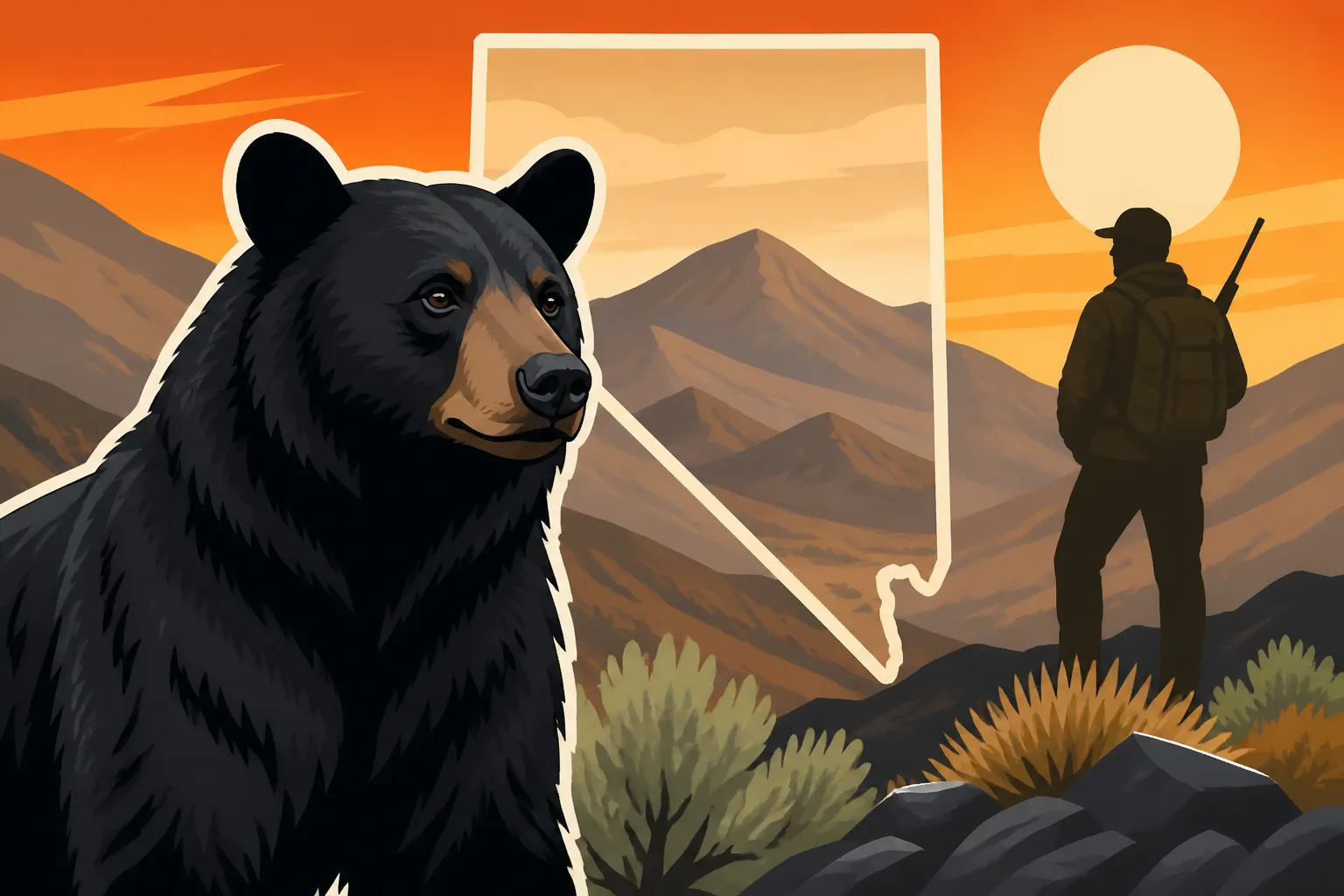
Black Bear Returned to Western Nevada
If you've spent any time researching hunting opportunities in Nevada, you might be surprised to learn that black bears are not only present but thriving in certain parts of the state. For many, Nevada conjures images of vast, open desert and sagebrush flats, not dense forests where bears roam. This guide aims to pull back the curtain on Nevada's fascinating black bear population, diving deep into their history, current habitat, the intricacies of managing them, and what it takes to pursue one of these incredible animals.
The Resurgence of Black Bear in Nevada's Landscape
Nevada, a state often characterized by its arid landscapes and open basins, might not be the first place that comes to mind when you think of black bears. Yet, hidden within its western mountain ranges, a healthy and growing population of American black bears has made a remarkable comeback, establishing themselves as a true big game species. Their journey from near absence to a managed hunting opportunity is a testament to wildlife adaptability and strategic conservation.
Historical Presence and Modern Return
Historically, black bears were indeed part of Nevada's fauna, primarily in the forested areas of the Sierra Nevada. Early accounts from pioneers and Native American tribes mention their presence, but as human settlement expanded, particularly with logging, mining, and uncontrolled hunting in the late 19th and early 20th centuries, bear populations dwindled significantly. By the mid-20th century, sightings were rare, leading many to believe they were largely extirpated from the state.
However, nature abhors a vacuum, and beginning in the latter half of the 20th century, bears began a slow but steady natural recolonization. The Sierra Nevada mountains, which straddle the California-Nevada border, served as a crucial source population. Bears from California’s robust populations, finding suitable habitat and less pressure, started to expand their territories eastward into Nevada. This gradual expansion across the border, driven by younger bears seeking new territories, was the primary catalyst for their modern return.
This isn't a story of reintroduction, but rather a natural re-establishment. Over decades, as habitat recovered and conservation efforts across the region matured, bears found the conditions favorable to reclaim their historical range. Their quiet return went largely unnoticed by the broader public until increased sightings in residential areas near the Carson Range began to draw attention, signaling that the bears were truly back and here to stay.
Where Black Bear Live in Western Nevada
Today, the vast majority of Nevada's black bear population is concentrated in the western portion of the state, particularly along the eastern front of the Sierra Nevada and the adjacent ranges. This includes the Carson Range, which forms the western boundary of Carson City and skirts the shores of Lake Tahoe, extending south into the Pine Nut Mountains. Further south, the Wassuk Range and even portions of the Walker River drainage are seeing increasing bear activity. These areas provide the specific habitat requirements that bears need to thrive.
These mountainous regions offer a mosaic of preferred habitats. Bears favor areas with dense cover, primarily coniferous forests dominated by ponderosa pine, Jeffrey pine, and fir species. These forests provide not only seclusion for denning and loafing but also vital food sources. You’ll often find them utilizing riparian zones along creeks and rivers, especially during drier periods, as these corridors offer water, lush vegetation, and often more diverse forage.
Elevation plays a significant role in bear distribution. While they can be found at lower elevations, especially during specific foraging seasons or when venturing into human-populated areas, their core habitats typically lie between 5,000 and 9,000 feet. This elevation band provides cooler temperatures, denser tree cover, and a reliable mix of food sources throughout the spring, summer, and fall. If you're looking for bears, understanding their preferred terrain is key. To learn more about specific areas, exploring resources like Where Black Bear Live in Western Nevada can be incredibly insightful for scouting trips.
Factors Contributing to Their Comeback
Several interconnected factors have contributed significantly to the successful resurgence and expansion of black bear populations in Western Nevada. One of the most critical has been the gradual recovery and protection of their natural habitat. As logging practices changed and wilderness areas expanded, large tracts of contiguous forestland became more secure, offering bears the space and resources they need without excessive human disturbance. This habitat connectivity, especially with the robust populations in California, has allowed for natural migration and gene flow.
Another major factor is the black bear's incredible adaptability. These animals are true omnivores, capable of utilizing a wide variety of food sources depending on the season and availability. This dietary flexibility means they can exploit everything from berries and acorns to insects, carrion, and even human-related food waste when natural forage is scarce. Their ability to switch food preferences quickly allows them to survive in areas that might experience annual fluctuations in specific natural food crops, unlike more specialized feeders.
Finally, improved wildlife management practices and public education campaigns have played an indirect but important role. As the Nevada Department of Wildlife (NDOW) recognized the re-establishment of bears, efforts were made to manage human-bear conflicts more effectively, reducing the number of bears that needed to be lethally removed. Educational programs have helped residents and visitors understand how to secure food and trash, minimizing negative encounters and allowing bears to coexist more peacefully in areas adjacent to human development.
Understanding Nevada's Black Bear Ecology and Behavior
To successfully pursue black bears in Nevada, or simply to understand their presence, it's crucial to delve into their ecology and behavior. These are intelligent, adaptable animals whose daily lives are deeply influenced by the seasons, food availability, and the rugged terrain they call home. Knowing their habits can reveal where and when to focus your efforts, whether for hunting or simply observing.
Diet and Foraging Habits
Black bears are true omnivores, meaning their diet is incredibly diverse and shifts dramatically with the seasons. In spring, as they emerge from their dens, their diet consists primarily of fresh, green vegetation like grasses, forbs, and budding plants, which help to jumpstart their digestive systems. They also scavenge on winter-killed carrion if available, seeking out crucial protein after months of fasting. This early season foraging is critical for regaining lost weight.
As summer progresses, bears capitalize on the ripening of various berries and fruits. Serviceberries, chokecherries, elderberries, and wild currants become staple foods. They'll also actively seek out insects, tearing apart logs for grubs and ants, and occasionally predate on fawns or other small mammals if the opportunity arises. Protein remains important, but carbohydrate-rich berries begin to fuel their caloric needs.
Autumn is perhaps the most critical foraging period, known as hyperphagia. During this time, bears enter a feeding frenzy, consuming massive amounts of food to build up fat reserves for the upcoming denning season. Acorns from oak trees, pinyon pine nuts, and other hard mast become incredibly important. Bears will spend hours, even days, in productive areas, packing on as much weight as possible. Understanding these seasonal dietary shifts is paramount for hunters, as bears will go where the food is.
Denning and Reproduction
Unlike true hibernators, black bears enter a state of winter dormancy known as torpor. This means their body temperature, heart rate, and metabolic rate drop significantly, but they can still be roused. Denning typically occurs from late fall through early spring, depending on factors like food availability and weather severity. Dens can be surprisingly varied – from hollow trees, rock caves, and brush piles to excavated holes under roots or logs. The primary criteria are security, insulation, and a dry environment.
Mating season for black bears generally occurs in late spring to early summer, usually between May and July. However, black bears exhibit a fascinating reproductive strategy called delayed implantation. After successful mating, the fertilized egg does not immediately implant in the uterus. Instead, it free-floats until late fall, usually around November, only implanting if the female has accumulated sufficient fat reserves during her hyperphagia period. If she hasn't, her body will reabsorb the embryo. This ensures she doesn't carry cubs she can't sustain.
Once implanted, gestation lasts about two months, with cubs typically born in the den during January or February. A litter usually consists of 1 to 3 cubs, born blind, toothless, and weighing less than a pound. They rely entirely on their mother’s milk and warmth for survival. Cubs remain with their mother for about 1.5 to 2.5 years, learning essential survival skills before dispersing to establish their own territories. This slow reproductive rate means that bear populations, while resilient, can take longer to recover from significant declines.
Black Bear Movement and Home Ranges
Black bears are highly mobile animals, and their movements are primarily dictated by the availability of food, water, and suitable cover, as well as the demands of the mating season. Generally, male bears tend to have much larger home ranges than females, often covering dozens or even hundreds of square miles. These expansive ranges allow them to seek out breeding opportunities and exploit widely dispersed food sources. For a hunter, this means a bear might be in one basin today and across a mountain range tomorrow.
Female bears, especially those with cubs, typically have smaller, more defined home ranges, prioritizing areas with reliable food, water, and escape cover to protect their offspring. Their movements become more localized, particularly during denning and early cub-rearing periods. However, even females will undertake significant movements if their preferred food sources, like a specific berry patch or oak grove, are experiencing a poor year in their immediate territory.
Seasonal movements are a key consideration. Bears will often move to higher elevations in late spring and early summer as snow recedes and fresh vegetation emerges, then drop to mid-elevations for berry crops, and finally, focus on lower-elevation oak or pinyon pine stands in the fall for acorns and nuts. Understanding these elevational and seasonal shifts is crucial for predicting where bears might be. Additionally, during the breeding season, males will travel extensively, often crossing through areas they wouldn't normally inhabit, increasing their visibility.
Nevada Department of Wildlife's Bear Management Philosophy
Managing a growing black bear population in a state known for its desert environment and increasing human-wildlife interface presents unique challenges. The Nevada Department of Wildlife (NDOW) takes a cautious, science-based approach to ensure the long-term health of the bear population while minimizing conflicts with humans and providing limited hunting opportunities. Their philosophy balances conservation with careful utilization, reflecting the complex ecological and social dynamics at play.
Population Estimates and Trends
Accurately estimating black bear populations can be incredibly challenging due to their elusive nature, wide-ranging movements, and dense habitat preferences. NDOW employs a variety of techniques to gather data, including hair snaring, ear tagging, and telemetry studies. Hair snares, which collect hair samples for DNA analysis, are particularly effective as they allow biologists to identify individual bears and estimate population sizes without direct capture. This non-invasive method provides valuable genetic data on population health and connectivity.
Through these efforts, NDOW has determined that Nevada's black bear population is healthy and, in some areas, experiencing growth. While specific numbers fluctuate, the overall trend points towards a stable or increasing population, particularly in the western regions. The Black Bear Population Estimate Explained details how these figures are derived and their significance for management. This robust population allows for a conservative hunting season, carefully managed to ensure sustainable numbers and healthy age structures within the bear population.
The department constantly monitors population trends, cub production, and mortality rates from all sources (hunting, vehicle collisions, conflict removals) to inform their management decisions. They aim to maintain a population that is biologically sustainable, genetically diverse, and able to coexist with human populations, recognizing the bears' ecological role and intrinsic value. NDOW's adaptive management means that quotas and seasons can be adjusted year-to-year based on the latest data.
Conflict Management and Human-Bear Interactions
As black bear populations have grown and expanded, particularly into areas bordering human development, so too have human-bear interactions. This can lead to conflicts, such as bears raiding trash cans, breaking into vehicles, or even entering homes in search of food. NDOW dedicates significant resources to managing these situations, striving to educate the public and mitigate conflicts before they escalate. The phrase "a fed bear is a dead bear" is a cornerstone of their public awareness campaigns.
NDOW’s conflict management strategy typically involves a multi-pronged approach. Initial responses often focus on hazing techniques, which aim to scare bears away from developed areas using non-lethal deterrents like rubber bullets, noise makers, or pepper spray. This teaches bears to associate human presence with negative experiences. For persistent offenders or bears causing property damage, relocation might be attempted, though this is often a temporary solution as bears frequently return or create new problems elsewhere.
Ultimately, bears that become habituated to human food sources and pose a public safety risk may need to be lethally removed. This is always a last resort, undertaken only after other methods have failed, and underscores the importance of proactive measures by residents and visitors. Public education on securing food, using bear-resistant containers, and proper camping practices is crucial in preventing these conflicts, allowing bears to remain wild and reducing the need for intervention.
Habitat Protection and Conservation Efforts
Beyond direct population and conflict management, NDOW is deeply invested in habitat protection and conservation efforts that benefit black bears and a host of other wildlife species. Recognizing that quality habitat is the foundation of any healthy population, they work to preserve and enhance the forested mountain ranges and riparian corridors that bears depend on. This often involves collaborating with federal land management agencies like the U.S. Forest Service and the Bureau of Land Management.
One key area of focus is maintaining habitat connectivity. This involves ensuring that bears can move freely between different foraging areas, den sites, and breeding grounds without encountering significant barriers. Preserving these corridors is vital for genetic diversity and allowing bears to adapt to changing food availability. Efforts to mitigate the impacts of wildfires, such as controlled burns and forest thinning, also play a role in creating healthier and more resilient bear habitats, though large, unmanaged fires can temporarily displace bears and alter food sources.
Conservation initiatives also extend to protecting critical food sources like oak groves and pinyon pine stands, which are vital during the fall hyperphagia period. NDOW participates in habitat enhancement projects, which might include planting native berry-producing shrubs or protecting riparian areas from degradation. These efforts reflect a comprehensive approach to black bear management, ensuring that both the animals and their essential environments are safeguarded for future generations.
The Structure of Nevada's Black Bear Hunting Season
For hunters, the opportunity to pursue a black bear in Nevada is both a privilege and a challenge, reflecting the animal's mystique and the conservative management approach. Unlike deer or elk, bear tags are limited, and the season structure is designed to be highly responsive to population data, ensuring a sustainable harvest. Understanding these specifics is vital for any prospective bear hunter.
Season Framework and Quotas
Nevada's black bear hunting season is generally a fall hunt, typically running from mid-September through November, though specific dates can vary slightly year to year. The season is open for both archery and rifle hunters, offering diverse methods of pursuit. However, the defining characteristic of Nevada's bear season is its quota-based management. This means there isn't just a set end date; the season will close immediately once a predetermined harvest quota is met, either for the overall statewide bear harvest or for female bears specifically.
This quota system underscores NDOW's conservative approach to bear management. The annual quotas are set after careful consideration of population estimates, previous harvest data, and reproductive rates, ensuring that the harvest remains well within sustainable limits. Hunters must monitor the NDOW website or hotline religiously, as the season can close with very little notice. This adds an element of urgency and uncertainty to the hunt, requiring hunters to be prepared and flexible.
The season is typically broken down by weapon type, with an early archery-only period followed by a general season that allows rifles, shotguns, and muzzleloaders. These distinct periods allow for different hunting experiences and help spread out hunting pressure. For precise dates and details, always refer to the current regulations published by NDOW, as they are subject to change annually. You can often find this information under Nevada Black Bear Season Dates on the NDOW website.
What Triggers a Nevada Bear Season Closure
The quota system for Nevada black bears is a critical element that every hunter must understand. There are two distinct quotas that can trigger an immediate season closure: the statewide total quota and the female bear quota. Both are designed to protect the overall population health and, particularly, the reproductive potential of the bear population. If either of these numbers is reached, the season will be called to a halt, regardless of the published end date.
For instance, if the total statewide quota for harvested bears is set at, say, 20 animals, and the 20th bear is reported on October 25th, the season will close for all hunters at that moment. Similarly, if there's a specific quota for female bears, perhaps set at 8, and the 8th female is reported on October 10th, the season will close then, even if the overall statewide quota hasn't been met. This emphasis on the female harvest quota is a common and effective conservation measure, as the number of breeding females is the most significant factor in population growth.
The critical takeaway for hunters is the need to stay informed and be ready for a sudden closure. NDOW maintains an active count of harvested bears during the season, and they update their website and a dedicated hotline frequently. Many a hunter has had their plans cut short by a sudden announcement. Checking How Nevada Closes a Bear Season Early will provide more context on the mechanics of this rapid closure system and why it's so vital for bear management. This system ensures that the harvest remains sustainable, even with unforeseen fluctuations in hunting pressure or bear activity.
Legal Weaponry and Methods
Nevada provides hunters with a range of legal weapon choices for pursuing black bears, allowing for diverse hunting styles, but also imposes strict rules to ensure ethical and fair chase. The most common methods include rifles, shotguns, and muzzleloaders during the general season, while an earlier archery-only period caters to bowhunters. Regardless of the weapon, ethical shot placement is paramount to ensure a quick and humane harvest, typically targeting the bear's vital organs.
For rifle hunters, a variety of popular big game calibers are suitable for black bear, with cartridges like the .30-06 Springfield, .300 Winchester Magnum, .270 Winchester, or 7mm Remington Magnum being common choices. The key is to use a bullet designed for deep penetration and reliable expansion to ensure it can reach vitals through dense muscle and bone. Shotgun hunters must use slugs, not shot, and muzzleloader hunters must meet minimum caliber requirements, typically .50 caliber or larger.
Archery hunters must adhere to minimum draw weight requirements and broadhead regulations. Fixed-blade or mechanical broadheads with a minimum cutting diameter are usually specified. Crucially, certain methods are explicitly prohibited in Nevada for black bear hunting. This includes baiting, which is illegal for big game, as well as spotlighting, the use of electronic calls, or hunting from a vehicle. For detailed information, referring to sections like Baiting Rules That Apply to Bears is essential for understanding what is and isn't allowed during your hunt. These regulations aim to uphold the principles of fair chase and ethical hunting.
Applying for and Drawing a Nevada Black Bear Tag
Drawing a Nevada black bear tag is a significant achievement for any hunter. These tags are not easy to come by, given the conservative quotas and the growing interest in bear hunting. Navigating the application process, understanding the draw odds, and selecting the right units are all critical steps toward securing this coveted opportunity.
Application Process and Fees
The process for applying for a Nevada black bear tag is integrated into the state's general big game draw, which typically opens in mid-March and closes in mid-May. This means you’ll be applying during the same window as you might for deer, elk, or pronghorn. The first and most crucial step is purchasing a valid Nevada Combination Hunting License, which is a prerequisite for applying for any big game tag, including bear. This license acts as your entry ticket into the draw.
Once you have your combination license, you can apply for a bear tag through the NDOW online application portal. There will be a non-refundable application fee for each species you apply for, including bear. It's important to remember that this fee is separate from the cost of the tag itself, which is only charged if you are successful in the draw. Non-residents face higher tag fees than residents, reflecting the state's allocation priorities for its wildlife resources.
During the application period, you'll select your hunt choice by unit and weapon type. It's vital to research units carefully and understand their specific bear activity, terrain, and access. The application deadline is firm, and missing it means waiting another year. For specific dates and a step-by-step guide, always check the NDOW website or relevant guides like Nevada Applications Run March 23 to May 13 to ensure you meet all requirements and submit your application correctly and on time.
Draw Odds and Bonus Points
Drawing a Nevada black bear tag can be tough, often considered one of the more challenging tags to acquire in the state's big game lottery. Because the quotas are so conservative, the number of tags issued each year is relatively low, leading to high demand and consequently, low draw odds. This is where understanding Nevada's bonus point system becomes essential. While the squared bonus point system applies to species like deer and elk, bear tags generally accrue points in a simpler fashion, where each year you apply and are unsuccessful, you gain a bonus point, increasing your chances in future draws.
These bonus points are species-specific, meaning points earned for bear do not transfer to other species. They accumulate year after year until you draw a tag, at which point your points for that species are reset to zero. For many hopeful bear hunters, accumulating several years' worth of bonus points is a deliberate strategy to improve their odds over time. Patience is certainly a virtue in the Nevada draw system, especially for highly sought-after tags like bear.
To get a real sense of your chances, it's highly recommended to consult draw odds data. Resources like GoHunt provide excellent tools and detailed statistics, allowing you to see historical draw odds by unit, weapon type, and point level. This information is invaluable for making informed application choices and setting realistic expectations. By analyzing past success rates, you can tailor your application strategy to maximize your long-term potential for drawing a coveted Nevada bear tag.
Understanding Bear Hunt Units
Nevada's black bear hunting is organized by specific hunt units, which often overlay the existing deer and elk management units but are designated explicitly for bear. It's not a statewide free-for-all; you must hunt within the unit for which your tag is valid. These units are primarily concentrated in Western Nevada, along the Sierra Nevada range and its eastern foothills, which is where the vast majority of the bear population resides.
The primary bear units typically include areas like units 194, 201, 202, 203, and 204. These units encompass the dense coniferous forests of the Carson Range, the Pine Nut Mountains, and extending into portions of the Wassuk Range. Each unit will have its own specific characteristics regarding terrain, public land access, and bear density, all of which should factor into your application choice. Some units might be more rugged and remote, favoring hunters willing to pack in, while others might have more road access.
It’s crucial to delve into detailed maps and scouting resources for these units before applying. Look for areas with a good mix of food sources (oak groves, berry patches), water, and heavy cover for bedding and security. Understanding the unit boundaries and the type of habitat within them is key, as the unit you draw will define your hunting area. GoHunt's mapping tools or NDOW's unit maps are excellent resources to help visualize these areas and plan your strategy.
Strategies for a Successful Nevada Black Bear Hunt
Once you've beaten the odds and drawn a Nevada black bear tag, the real work begins. Hunting black bears in the rugged terrain of Western Nevada requires careful planning, keen observation, and a solid understanding of bear behavior. It's a challenging but incredibly rewarding experience, demanding dedication and adaptability from the hunter.
Scouting and E-Scouting for Bear Habitat
Effective scouting is perhaps the most critical component of a successful Nevada bear hunt. Bears are creatures of habit and location, so finding where they are consistently feeding, bedding, and traveling is paramount. Before you even set foot in the field, leveraging modern e-scouting tools can give you a significant advantage. Using satellite imagery from platforms like GoHunt or onX, you can identify potential bear habitat from the comfort of your home. Look for dense pockets of timber, north-facing slopes with thicker vegetation, and especially riparian corridors that offer water and lush forage.
When e-scouting, pay close attention to areas that show a distinct change in vegetation, indicating a potential food source. Oak groves, which produce acorns, are gold mines in the fall. Similarly, identifying areas with berry patches (often indicated by specific shrub species or clearings) can tell you where bears will be during summer and early fall. Mark these points of interest on your map. Also, look for natural funnels, saddles, and benches along ridges that bears might use for travel between bedding and feeding areas. To refine your early season scouting, consider how to optimize E-Scouting a Nevada Unit Before the Season.
Once you're in the field, ground scouting is essential to confirm your e-scouting findings and look for fresh sign. Bears are relatively easy to find sign for, if they are present. Look for tracks in mud or dust, scat (which can tell you what they've been eating), rub trees (where bears scratch and bite trees to mark territory), and overturned rocks or logs from foraging. Concentrate your efforts in areas near water sources, especially during dry periods, as bears will frequently visit. The fresher the sign, the closer you are to a bear.
Still-Hunting and Spot-and-Stalk Tactics
In Nevada's diverse western landscapes, both still-hunting and spot-and-stalk tactics can be highly effective for black bears, depending on the specific terrain and cover. Still-hunting involves moving very slowly and deliberately through dense cover, pausing frequently to scan and listen. This method is best employed in thick timber or heavy brush where visibility is limited, forcing you to rely on your senses. Focus on the wind, always trying to keep it in your favor, as bears have an exceptional sense of smell. Move quietly, putting one foot down before lifting the other, scanning every shadow and break in the cover for the tell-tale black shape of a bear.
Spot-and-stalk is a powerful tactic in more open or broken country, common in many Nevada bear units with interspersed timber and clearings. This involves finding a high vantage point at dawn or dusk and systematically glassing slopes, clear-cuts, and open sagebrush pockets for bears as they move to and from feeding areas. Once a bear is spotted, the stalk begins. This is where your knowledge of terrain, wind, and cover comes into play. You’ll need to plan an approach that keeps you out of sight and scent of the bear, using draws, ridges, and vegetation to close the distance. For tips on maximizing your glassing efforts, check out Best Time of Day to Glass a Basin.
Regardless of the method, patience is paramount. Bears often move slowly, especially when feeding, and can disappear into cover instantly. Hunt during the early morning and late evening hours, as bears are most active during these cooler periods. Be prepared to spend long hours observing and moving deliberately. Success often comes to those who are disciplined, methodical, and willing to put in the time to understand their quarry and its habitat.
Hound Hunting for Black Bear
Hound hunting for black bear is a legal and deeply rooted tradition in Nevada, offering a unique and exciting way to pursue these animals. This method relies on a pack of trained dogs to locate, pursue, and tree or bay a bear, allowing the hunter to then make an ethical harvest. While not for everyone, it is a highly specialized and often successful approach, particularly in the rugged and brushy terrain that bears inhabit. For those interested in this method, understanding the rules, and working with experienced outfitters are key.
A typical hound hunt involves releasing dogs on a fresh bear track or in an area known for bear activity. The dogs then follow the scent, baying and pushing the bear until it climbs a tree or corners itself on the ground. The hunters, often with the help of a guide, follow the dogs' progress, sometimes on foot over challenging terrain, or occasionally by vehicle on accessible roads, until they reach the treed bear. This can be an incredibly physically demanding endeavor, requiring hunters to be in good shape and prepared for long, arduous hikes. You can find general information about hound hunting under Hound Rules for Mountain Lion Hunting, and the principles apply to bear as well.
Working with a reputable hound outfitter is crucial for anyone considering this method. Experienced hound men know how to read the dogs, understand bear behavior, and ensure a safe and ethical hunt. They often have years of experience tracking and handling hounds, and their dogs are specifically trained for bear. This method offers a higher success rate than still-hunting or spot-and-stalk in certain challenging terrains but requires a significant investment and a willingness to embrace a truly traditional hunting experience.
Field Care and Reporting Your Harvest
Once a black bear is harvested in Nevada, prompt and proper field care is essential to preserve the meat and hide, especially given the typically warmer early fall temperatures. Bears, being insulated with a thick layer of fat, can spoil quickly if not cooled down. The immediate priority is to field dress the bear as soon as possible, removing the viscera to allow the carcass to cool internally. Skinning the bear and quartering it are often recommended for faster cooling and easier packing out, particularly if you are in remote country.
Because black bears carry significant fat, it's a good practice to remove as much fat from the meat as possible during skinning and quartering, as bear fat can go rancid quickly. The meat should be kept clean and cooled rapidly. If hunting in warmer conditions, bringing plenty of ice or dry ice to camp is crucial. Transporting the meat in breathable game bags, away from vehicle heat sources, is also important. For detailed guidance on preserving your meat in challenging conditions, consult Field Dressing in August Heat.
Nevada also has a mandatory reporting requirement for all harvested black bears. Successful hunters must contact NDOW within 72 hours of harvesting a bear to report the kill. This reporting is vital for NDOW's management efforts, allowing them to track harvest numbers and, most importantly, monitor the quotas. Depending on the regulations, you might need to present the skull and hide to NDOW for sealing and data collection. Failing to report a harvest promptly can result in penalties, so always be sure to understand and follow all post-harvest requirements. For more information, refer to Mandatory Reporting After a Nevada Harvest.
Essential Gear for Nevada Bear Hunting
Heading into the Nevada backcountry for a black bear hunt demands specific gear to ensure safety, comfort, and success. The rugged terrain, potential for quick weather changes, and the secretive nature of bears mean you need to be prepared for almost anything. Gathering the right equipment beforehand can make all the difference between a frustrating trip and a memorable hunting experience.
Optics and Glassing Equipment
In Nevada’s vast, open-ish landscapes, even when hunting forested areas, optics are paramount for locating bears. A quality pair of binoculars, usually 10x or 12x magnification, is your primary tool for scanning hillsides, clearings, and the edges of timber patches. Don't skimp on glass; clear, bright optics from reputable brands like Swarovski, Zeiss, or Vortex will reduce eye strain during long hours of searching and help you discern a bear from a shadow or a rock.
Beyond binoculars, a spotting scope mounted on a sturdy tripod is almost indispensable, especially if you plan to cover large areas through spot-and-stalk methods. A spotting scope, typically in the 20-60x range, allows you to pick apart distant slopes, confirm details, and evaluate a bear's size and sex from afar without spooking it. Remember, bears often look much smaller at a distance than you anticipate. Using a system like GoHunt to mark potential sightings can help you keep track of areas of interest. For advice on power, refer to Spotting Scope Power for Open Country.
The tripod isn't just for your spotting scope; it can also be used to mount your binoculars for extended glassing sessions, dramatically reducing fatigue and increasing stability. This is particularly useful when systematically gridding a basin or focusing on a specific feeding area for hours. Investing in quality optics is an investment in your hunting success, allowing you to effectively scout, locate, and judge bears in challenging terrain.
Firearms and Ammunition
Selecting the right firearm and ammunition for black bear hunting is a critical decision, balancing power, accuracy, and ethical considerations. While black bears are not grizzly bears, they are tough animals with heavy bones and dense muscle, requiring a cartridge capable of delivering sufficient energy and penetration for a clean kill. Most common big game calibers, ranging from .270 Winchester to .300 Winchester Magnum, are considered adequate. The .30-06 Springfield, .308 Winchester, and 7mm Remington Magnum are popular and effective choices.
Regardless of the caliber, the choice of bullet is arguably more important than the cartridge itself. Opt for premium, controlled-expansion bullets designed for deep penetration, such as Nosler Partition, Barnes TSX, Hornady Interbond, or Federal Terminal Ascent. These bullets are engineered to hold together and drive through bone and tissue, increasing your chances of reaching vital organs even on an angling shot. Avoid lightweight, frangible bullets designed for varmints or thin-skinned game, as they may not perform reliably on a bear. For a general overview of versatile calibers, consider Best All-Around Caliber for Open Country.
For bowhunters, meeting Nevada's minimum draw weight and broadhead requirements is non-negotiable. Expandable broadheads are legal but must meet specific cutting diameter minimums. Ensure your bow is sighted in perfectly, and practice extensively at various distances and from different shooting positions. For muzzleloader hunters, a .50 caliber or larger is typically required, and saboted bullets can enhance accuracy and performance. Ultimately, confidence in your weapon and shot placement are the most crucial factors.
Navigation, Communication, and Safety Gear
Navigating the remote and often rugged backcountry of Western Nevada demands reliable tools. A GPS unit (either handheld or integrated into a smartphone app like onX) paired with physical maps and a compass is non-negotiable. Relying solely on a phone can be risky due to limited cell service and battery life. Always know your location, planned route, and escape routes.
Cell service is spotty to non-existent in many Nevada bear units, making a satellite messenger or personal locator beacon (PLB) an essential safety item. Devices like the Garmin inReach or Zoleo allow you to send emergency messages, communicate with loved ones, and provide your location even when off-grid. For more on this, check out Satellite Messenger Use in Remote Country. Bear spray, while not always necessary for black bears, can be a prudent item, especially if you anticipate close encounters in dense cover. Understand its proper use and carry it readily accessible.
Beyond navigation and communication, pack a comprehensive first-aid kit, ample water (more than you think you’ll need), high-energy snacks, a headlamp with extra batteries, fire-starting materials, and appropriate layering for Nevada's unpredictable weather. Temperatures can swing dramatically from morning to afternoon, and at higher elevations, an unexpected storm can roll in quickly. Proper layering, including a waterproof outer shell, is key to staying comfortable and safe. For advice on dressing for the conditions, look at Layering for Basin and Range Temperature Swings. Being self-sufficient and prepared for emergencies is the hallmark of a responsible Nevada bear hunter.
Disclaimer
The information provided in this guide is for general informational purposes only and should not be considered legal advice. Hunting regulations, season dates, quotas, and fees are subject to change annually by the Nevada Department of Wildlife (NDOW). Hunters are solely responsible for consulting the most current official Nevada hunting regulations, maps, and proclamations before planning or engaging in any hunting activities. Always prioritize safety, ethical hunting practices, and compliance with all local, state, and federal laws.